Roots and Root Care

Roots and Root Care

Get to he root of the problems of growing great plants.

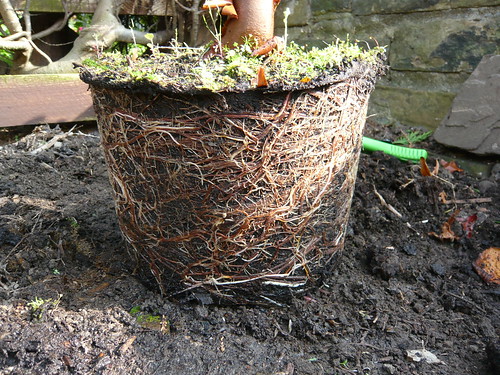
Root bound

Basic Roots  Knowhow

  • Roots grow below the soil to anchor and feed your plants.
  • The root only grows longer at the tip. This is where root hairs develop.
  • Root hairs take in water and nutrients through a permeable membrane.
  • Root hairs are usually fragile and short lived but as one dies one or more grows in its place.
  • Generally the root system thickens with age and anchors the plant as well as conveying nutrients to the stems and leaves.
  • Active growth tissue called pholem and xylem carry nutients up the plant and sugars back to the roots after photosynthesis.

Water Logging the Roots

Ten Tips to Deter Carrot Root Fly

Ten Tips to Deter Carrot Root Fly

Psila rosea or carrot root has larvae that feed on your root veg by burrowing into the flesh ‘ugh!’

Carrots

Five Tips to Deter Root Fly

    1. Select varieties to grow that have been bred for resistance to carrot root fly.

    2. Cover carrot crops with fleece to prevent low flying female flies from laying eggs on your crop.

    3. Follow good crop rotation to avoid overwintering pupae hatching in the middle of your crop.

    4. Grow in narrow beds with 18″ high polythene or fine mesh barriers to keep female flies at bay or in raised beds.

    5. Use biological controls such as nemotodes, Carrot root fly killer or sticky traps.

Five Scent Deterrents for Root Fly

    6. Sow seeds thinly to avoid thinning out which releases the scent of the carrots thus attracting flies.

    7. Grow carrots alongside strong smelling plants like alliums chives and garlic.

    8. Sow carrots in June after thee first generation of pest have gone.

    9. Do not grow your carrots with similar root veg like parsnips and celery as they too can harbour root flies.

    10. Sow carrots mixed in with other crops to make them harder for pests to single out for destruction.

Five Varieties Resistant to Root Fly

More carrot seeds at Thompson & Morgan

Photo = Carrots by Steve Wilhelm CC BY-NC-SA 2.0

Planning to Grow Fruit Trees

Planning to Grow Fruit Trees

So you want to grow Apples, Plums, Pears and some orchard type fruit trees. Well stone me these are right pips fresh from our garden tips.

Novice gardeners can expect to get fair crops from Fruit trees and bushes without too much effort. With extra care a great deal more can be achieved.

Beginners Tips

Go for well know fruit types do not start off with the exotic.
Buy good quality plants from a local nursery. Ask nurserymen what varieties grow well locally and do they need other trees as pollinators.
Give them enough space to grow in fair soil with some sunshine. Do not just cram them into a small corner space.
Trees need time to establish themselves but get better with time so do not rush the crops.
Bushes and canes will produce a crop quicker.

Read More Read More

Growing Autumn Raspberries

Growing Autumn Raspberries

Autumn raspberries provide fresh fruit from August to October.
Raspberries can be planted as bare-root plants in the autumn. For late summer and autumn fruiting varieties you can leave it until late autumn to plant but a bit of soil warmth will help them get established.

Primocane varieties are cut down to the ground each year and grow a new cane which fruits later that summer or autumn.
Floricane varieties that we grow for summer raspberries fruit on the canes produced the previous year and we think of them as summer varieties.

Tending Tips for Autumn Raspberries.

Lewisia Trendy, Bright and Breezy

Lewisia Trendy, Bright and Breezy

What is not to like about Lewisia? Not a lot in my view but I like brash colours.

lewisia-cotylodion

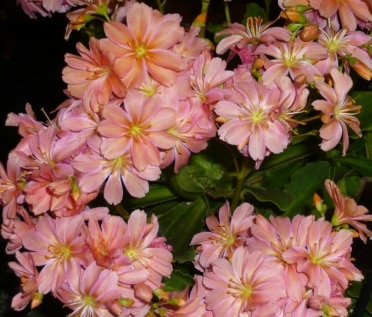
Lewisia are very showy plants that are currently popular as availability and resiliance increases. This is a Lewisia cotyledon which makes a rosette of flat fleshy leaves and sprays of flowers from white through to reds and mauves.

Tips for Growing Lewisia

  • Whilst Lewisia are perennial plants are very susceptible to winter wet rot. Over winter under glass if needs be.
  • As Lewisia are very low growing it is common to grow in pots or containers so the flowers can be seen.
  • The clump forming Ashwood Strain is recommended as a particularly good mix producing large semi-double flowers in a wide range of colours.
  • With judicious deadheading Lewisia will bloom from April to the end of September, particularly if kept in an alpine house or cold greenhouse.
  • In an Alpine garden surround the base of the plant with rock chips to prevent rot. Lewisias prefer sites with abundant spring moisture followed by a dry, cool summer.
  • Other species to try include Lewisia; Pygmea, Rediviva, Brachycalyx, or hybrids Heckneri or Phyllellia Obtain plants from various nurseries or your local garden centre.

read also G T’s growing tips

Book Cover

RHS Recommended Lilies

RHS Recommended Lilies

To end our lily week we go back to an earlier post about RHS lilies.
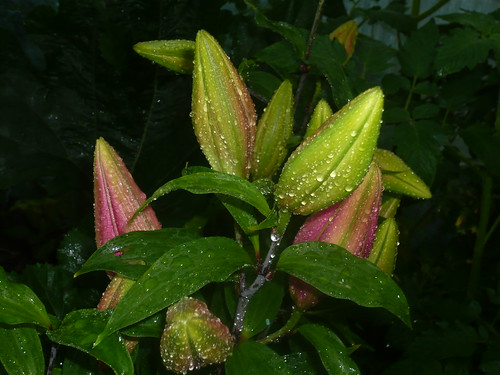
.a title=”Wet Evening Lily Buds by brianpettinger, on Flickr” href=”http://www.flickr.com/photos/hortoris/3746351513/”>Wet Evening Lily Buds

Each month the Royal Horticultural Society offer a plant collection or two for sale with the Garden magazine. Back in 2009 the RHS Lily collection included three varieties.

Lilium Vico Queen with orange, trumpet shaped flowers up to 6 inches long on plants 6 feet tall. The outward facing, slightly pendant blooms are well scented and are good for the middle or back of the border.
Lilium paradalinum giganteum can grow 10 feet tall can carry stems with up to 30 crimson, turkscap flowers speckled with yellow & scarlet. A variety that tolerates alkaline soil.
Lilium leichtlinii has rich yellow flowers heavily speckled with reddish-brown

Cultivation of Lilies

Annual Poppy – Papaver paeoniflorum somniferum

Annual Poppy – Papaver paeoniflorum somniferum

Autumn sowing in pots or compressed peat pellets avoids root disturbance. Spring is the time for direct sowing and thinning but I am going to risk some over wintering of direct autumn sown plants.

Poppy

Soil Preparation

Poppies like deep, well-drained, fertile soil in full sun.
Feed the soil with manure or bone meal ahead of planting.
Poppy somniferums grow quickly given sufficient water and a nitrogen rich soil. to increase both the number of flowers and their individual size. Although these poppies gobble up the nutrients, their eventual show will be more than worth the proper environment.

Sowing
Seeds should germinate in less than two weeks and seedlings will appear approx 6 later.

Read More Read More

Japanese Anemone – Autumn Wind Flowers

Japanese Anemone – Autumn Wind Flowers

Anemone japonica are not the cheap and cheerful flowers from corms but a special group of autumn flowering perennial plants that grow  3-4 feet high. Planted in June they will flower this year on long stately stems in a range of rose, pink and the clear white with yellow boss of Honorine Jobert (see below).

The leaves are dark green and new growth breaks through in June to produce ever increasing sized plants. The large, long lasting blooms float above the deep green foliage which dies back in winter.

Honorine Jobert

Tips for Japanese Anemone

  • Increase stock by taking root cuttings. A 3”-4” length of root laid horizontal on compost and lightly covered will root and sprout a new plant.
  • Read More Read More

Lily Photos for All Seasons

Lily Photos for All Seasons

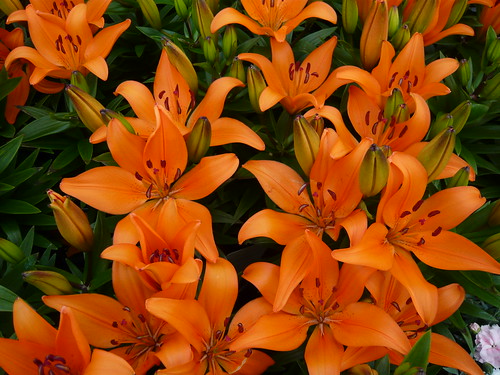
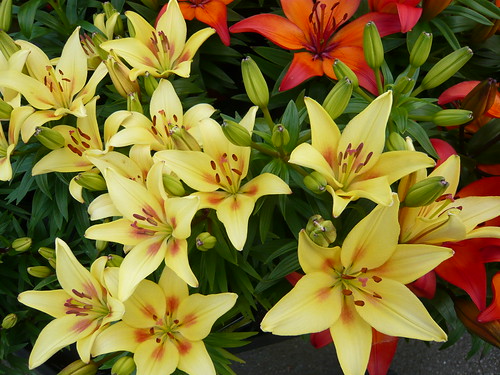
Spring, summer or autumn there are Lilies for all occasions, even hatches, matches and dispatches.
Asian lily

Beware garish garden centres selling plants that defy belief or at least defy the seasons. I have just returned from a weekend break and can contrast a plant nursery that I visited with a so called garden centre. The later was selling these lilies in full April flower.
These colours are not those you expect or associate with spring flowers! I am all for ‘shock and awe in the garden but you would want plants that last longer than a couple of days and look more natural than these Lily photos.

Asian lily

Read More Read More

Agapanthus White African Lily

Agapanthus White African Lily

Agapanthus 'alba'
Agapanthus are one of the trendy flowers of this decade. The ball shaped umbrels are masses of tubular flowers in blue, violet or white. The deciduous sword shaped leaves grow from a bulb and root clump. Since new vvarieties have been bred to be hardy it has been practical to move Agapanthus from the cold greenhouse into pots and now into the border.

Gardeners Tips about Agapanthus

Read More Read More