Colour Range of Different Corydalis
Colour Range of Different Corydalis

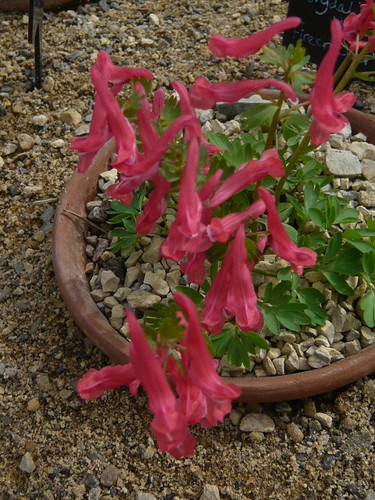
Corydalis salida Firecracker

This Corydalis solida Firecracker is a relatively new plant introduced in 2006

Corydalis Colours

  • Corydalis solida Beth Evans produces delicate, pink-spurred flowers
  • Corydalis solida Purple Beauty
  • Corydalis turtschaninovii Gorin divided foliage with good-sized spikes of clear electric blue or turquoise flowers.
  • Corydalis solida George Baker deep red but hard to grow
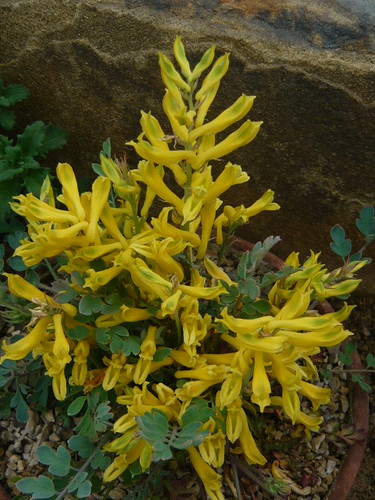
  • Corydalis wilsonii profuse yellow flowers
  • Corydalis solida Zarla Povolzya warm pink
  • Corydalis solida Dieter Schacht light pink flowers
  • Corydalis popovii elongated white flowers held on sturdy spikes


Hardy, tuberous corydalis are often misnamed because the green pods drop their fast-maturing seeds close to the parent plant but the seedlings vary and many nurseries supply tubers formed from seedlings. As a result there are wishy-washy impostors masquerading under the ‘George Baker’ and ‘Beth Evans’ names.

It is better to buy any form or subspecies of Corydalis solida when in flowers and remember that the colour deepens after colder winters.
Corydalis wilsonii


See also Growing Corydalis and a picture of Popovii
Conservatory Flowers

Conservatory Flowers

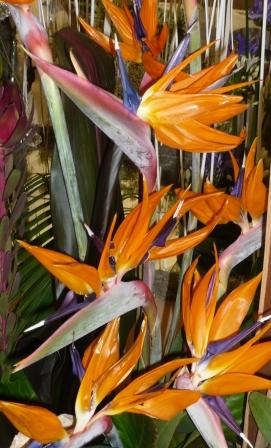
strelitza

Start six months ahead of time to plan for winter flowers and colour in your Conservatory or Glasshouse.

Growing Exotics

Streltzia regina or Bird of Paradise flowers are as exotic as they come. Keep them dry and remember that as part of the banana family Strelitza are ‘heavy’ feeders.
Succulents and Cacti are becoming popular again and the Schlumbergera or Rhipsalidopsis are worth persevering with.
Anthurium thrive at temperatures between 60-72 degrees and at lower light levels than other house plants.

Forcing Bulbs for Christmas

Narcissus Paperwhite are one of the most popular bulbs for indoor growing. Try White Ziva variety from Thompson Morgan.
Hyacinth bulbs give off a tremendous scent that can fill a room. I would certainly give them house room. Start them off in the dark and allow the roots to develop in the cool. Stagger the planting time and grow several varieties so you can have them in bloom from Christmas to April.
Another plant that continues to grow in popularity is the Amyrillis with very showy flowers.

Read More Read More

What Kills Rhododendrons

What Kills Rhododendrons

It would be nice if your Rhododendrons were only to die from old age. Rhododendrons are generally long lived shrubs that would then outlive most of us and this article wouldn’t be needed.
However the natural world is not like that and accidents do happen. Gardener inflicted death can be caused by being over protective or trying too hard.

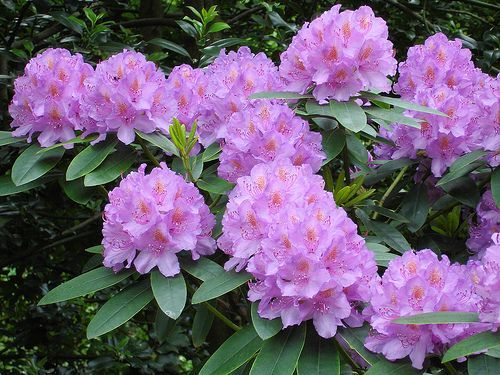
Rhododendron

What Makes a Rhododendron Die

  1. Rhododendrons are fibrous, shallow rooted plants that need good drainage to perform well and excess water is currently the major cause of death. Digging a big planting hole that creates a water sump is the way to drown your Rhododendrons.
  2. Rhododendrons do not have taproots to take a drink, unlike trees. Therefore Rhododendrons need frequent watering particularly when young or if spring is very dry.
  3. Another cause of rhododendron death is the excessive application of fertilizer directly at the base of the trunk of the plant. A good rule of thumb is to fertilize more frequently at lower concentrations rather than one large dose especially for small plants or newly transplanted plants.
  4. A fourth reason for rhododendron death is planting too deep. As indicated earlier, rhododendrons are shallow rooted plants and if buried they will stagnate or even die.
  5. Another reason that rhododendrons die is from cold winter temperatures with deep frozen soils. Most rhododendron can be grown in cold areas but I mulch around tender species.
  6. Not many varieties can survive unprotected all-day sun and some say they ‘are doomed’. In general rhododendrons in extreme climates benefit from filtered light and partial shade but there are some varieties that can stand direct sun.
  7. Sudden oak death fungus Phytophthora ramorum has recently infected Rhododendron ponticum and some container grown plants so this problem is moving up the chart of the causes of dieing.
  8. Fungus that causes ‘die back’ thrives in the same general conditions preferred by most rhododendrons. I am sometimes tempted to use a fungicide.
  9. Physical damage by rabbits, Deer or football playing grand children may cause breakages but should not lead to death.

Frost damaged Rhododendron

None Fatal Rhododendron Problems

Rhododendrons are a hardy species – they need to be coming as most do from the Himalayas
Frost has got to these rhododendron flowers but that is not cold enough to kill the plant.
Dried black buds may be caused by insect damage or water shortage.
Burned tips on this year’s new growth is typically indicative of lack of water as the plant withdraws water from the tips of the new foliage first.

June Rhododendron

Serendipity in Nature and the Garden

Serendipity in Nature and the Garden

Reflective Pollination

I like the way the insects wings have veins that are replicated in the crocus petals.
Also the shadow of the bee caused by the early spring sunshine gives another dimension to the photograph.
I can’t claim any special skill or patience when I took this picture but put it down to serendipity.

Serendipity can play a big part in our gardens. The happy harmony of two colours working well together, the apparently random self-sown seedlings that appear in the right place or even the new seedling that has characteristics not previously noted are all part of serendipity, sometimes you just need to look for it. Many variegated leaved plants were discovered and propagated after acute observation.

Be alert,
(Gardens need Lerts).

Book Cover
‘The Lucky Buggers Case Book’ the harder you Garden the luckier you get.


I am trying to become alert having discovered the way to white wash my greenhouse for shading is to paint the inside. For years I have struggled to clean the windows from the outside after whitening them to provide some shade.

Tips for Weeding a Garden

Tips for Weeding a Garden

March is a great time to sort out any weeds that are showing after winter. Perennial weeds need to have the root sorted whilst annuals like bitter cress can be hoed off and starved of moisture.

weed
Some tips for weeding a garden.

Firstly – Is It a Weed?

One of the most common questions in gardening is – what is a weed? Well one answer is that a weed is a plant that shouldn’t be there. This may differ from gardener to gardener. In fact, I like to tolerate daisies in my lawn because I think they look attractive. However, to others they may appear weeds. Of course there are some weeds that nobody would want in their garden like bindweed, Japanese knot weed e.t.c

Be Thorough.

Read More Read More

Growing Aubretia in Blue and Purple

Growing Aubretia in Blue and Purple

Aubretia

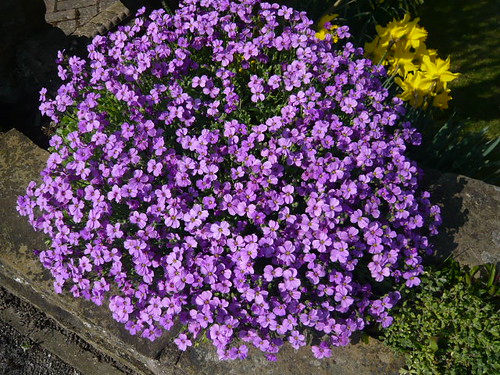
Aubretia is available in many colours of blue through to the deepest purples. Reddish tinges help create the pinker varieties but it is the blues and mauves which really catch the eye.

  • Aubretia will tumble happily from cracks in walls, creep across rockeries, and crawl through the front of mixed borders.
  • Aubretia forms dense mats of evergreen foliage with a profusion of spring blooms, these little plants thrive in reasonably poor soils with a toughness that belies their beauty.
  • The leaves are a grey green and are not unsightly but cut back hard after flowering to promote a fresh flush of growth and maintain its compact form.
  • Aubretia is perennial and will spread for upto 24 inches at a low height of 2-3 inches.
  • Plant in any reasonably drained fertile soil and will spread naturally by seed. Aubretia is quite hardy.
  • Aubretia is also know and sold as Purple Rock Cress and Aubretia deltoides.

Aubretia plants and seeds are available from Thompson Morgan.  Once established you will get many years of happy spring  flowering.

Read More Read More

Tips for Growing Million Bells Petunia – Calibrachoa

Tips for Growing Million Bells Petunia – Calibrachoa

A very popular plants for hanging baskets, pouches and containers, due to their fantastic flower power and colour range!

Characteristics of Million Bells
Upright plant with a mound forming habit, height 12″-15″ spread up to 20″
Blooms all season long, June to October
Easy to grow and maintain, deadheading unnecessary.
Heavy bloomer, well-branching that withstands hot summers.
Versatile in baskets, containers and borders.

Some of the named varieties also hint at the colour range now available :- Million Bells® Flamingo, Crackling Fire, Terracotta, Tangerine, Peaches and Cream, Lime, Neon Yellow and Apricot. Calibrachoa is the more accepted name and the series have been developed and registered by Suntory.

Growing Tips
Buy as plug plants and pot up plugs into 4″ pots to grow on for transplanting into final containers or baskets late May.

Read More Read More

Help Growing Petunias

Help Growing Petunias

Petunia

Petunias do not need to be lonely and relegated to the onion patch. Petunias are generally a very forgiving species of half-hardy annuals that are easy to grow from seed. Some special varieties may be easier to grow from plug plants or cuttings although it is not worth the effort of over wintering the plants.

Description of Petunias

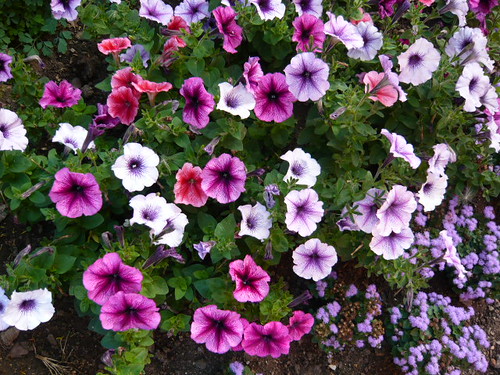
  • Petunias generally have masses of vibrant coloured flowers throughout summer.
  • Leaves are fleshy, unremarkable and grey-green. That is no problem as they are usually covered in lots of blooms
  • Plants grow 6-12″ high or trail in the case of Surfina varieties.
  • A wide range of colours are available as demonstrated in these photos.
  • Grandiflora flowers can be large, showy and 4″ across or Million Bells varieties have masses of 1″ flowers.

Cultivation Tips for Growing Petunias

  • Petunias spread during summer and do well if watered and fed.
  • Use Petunias in containers, borders or hanging baskets.
  • Seed is very fine and hard to collect for next year.
  • Sow seed in late winter – mid spring at 21-27C on the surface of a good seed compost.
  • Do not exclude light, keep compost damp but not wet and seal in a polythene bag after sowing.
  • Germination usually takes 10-21 days.

Read More Read More

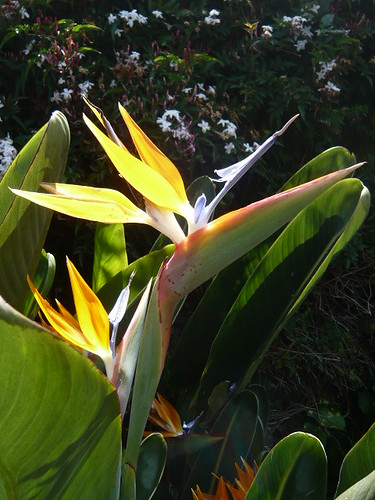
Growing Strelitzia – Bird of Paradise Flower

Growing Strelitzia – Bird of Paradise Flower

Strelitzia

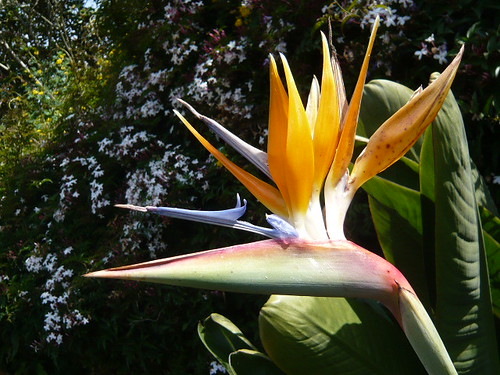
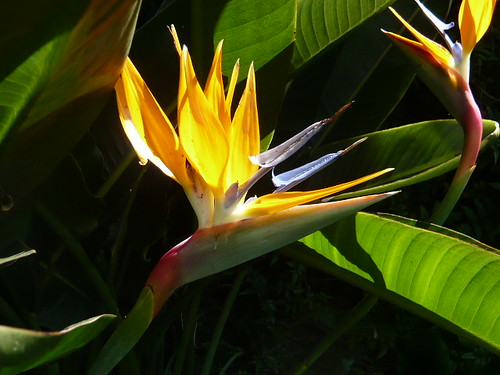
Strelitzia is a genus of five species of perennial plants, native to South Africa. The common name is the bird of paradise or crane flower, because of a supposed resemblance of its flowers to the bird of paradise.

Strelitzia

The leaves are similar to a banana leaf in appearance and can be upto 5 feet long.

To show the wonders of nature ‘The flowers are produced in a horizontal inflorescence emerging from a stout spathe. They are pollinated by Sunbirds, which use the spathe as a perch when visiting the flowers; the weight of the bird on the spathe opens it to release the pollen onto the bird’s feet, which is then deposited on the next flower it visits.’

Strelitzia

Resources

Growing Conservatory Flowers

Seeds available from Thompson & Morgan
Moonbells Allotment blog contains a diary of Strelitzia growing and provided these further links

http://www.plantzafrica.com/plantqrs/strelitregmandelagold.htmThe Mandela´s Gold form, yellow petals not orange. Previously known as Kirstenbosch Gold. Also tells you how to hand-pollinate.
http://www.plantzafrica.com/plantqrs/strelitziareginae.htm The main page for Strelitzia on PlantzAfrica
http://finebushpeople.co.za/farmstore/catalog/accessorystore.htmSmoke primer disks – which I´ve got two of, but have yet to try out! See next entry for seeds.
http://finebushpeople.co.za/cgi-bin/farmshop.pl?TP=Mandelas_Gold.html&ID=!ID!SEEDS!!!! Cheapest I´ve found so far… and legal to export to the EU.


Wikipedia
* Strelitzia alba (syn. S. augusta) – White bird of paradise;
* Strelitzia caudata – Mountain Strelitzia;
* Strelitzia nicolai – White or Giant bird of paradise; Wild banana; Blue-and-white Strelitzia[2]
* Strelitzia reginae (syn. S. parvifolia) – Strelitzia, Bird of paradise, or Crane lily;
* Strelitzia juncea (Ker Gawl.) – African desert banana. Cite.
* S. × kewensis (hybrid between S. reginae and S. augusta)