Browsed by
Category: Gardening

General gardening tips and hints

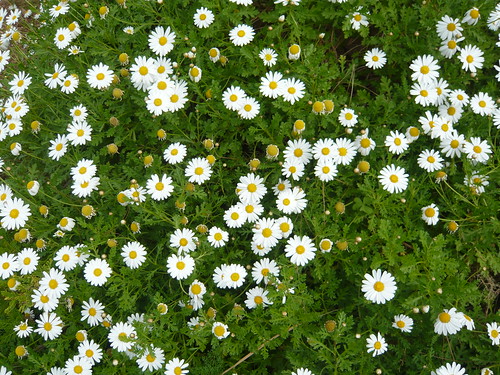
Growing Daisy Flowered Tansy or Feverfew

Growing Daisy Flowered Tansy or Feverfew

Tanacetum ferulaceum

White daisy like flowers cover this tansy relative, Tanacetum ferulaceum, which is one of 70 or so types of Tansy that can be grown in your garden.

Growing Tansy

  • Flowers are generally white single or yellow double
  • Common names include Bachelor’s Buttons, Ragwort,Bitter Buttons, Boerenwormkruid, Gold-buttons, Ponso, and Yomogi-Giku
  • Many varieties have a strong odour that I dislike but other may appreciate.
  • Feverfew grows easily from seed Tanacetum parthenium
  • The ragworts grow rapidly by underground rhizomes and can become a pest.
  • Heat and drought tolerant, Tansy will not mind if you ignore it.

Feverfew has medicinal properties

Growing Corydalis for Colour and Fine Foliage

Growing Corydalis for Colour and Fine Foliage

Cordialis popovii

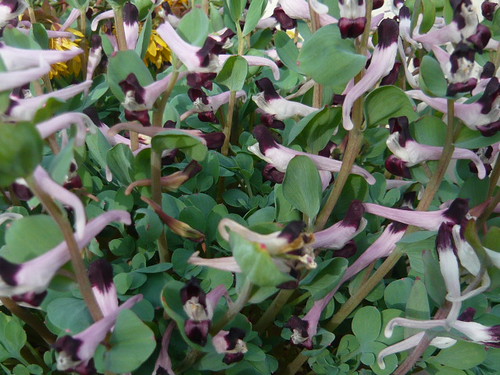
Corydalis popovii
is a small bulbous plant flowering up to 6 inches in height. In spring it assumes a white colouring after the purple flowers. This plant comes from Central Asia and is easy to grow and long-lived in a well-drained compost in a pot.
They can be grown in the open garden in full sun and freely drained soil.
Fertilize with a specific fertilizer for bulbous plants, every 2-3 weeks, from when the first flowers start withering.
Corydalis plants don’t like cold temperatures or wet conditions and need a rest period before being brought back into growth.

Corydalis wilsonii

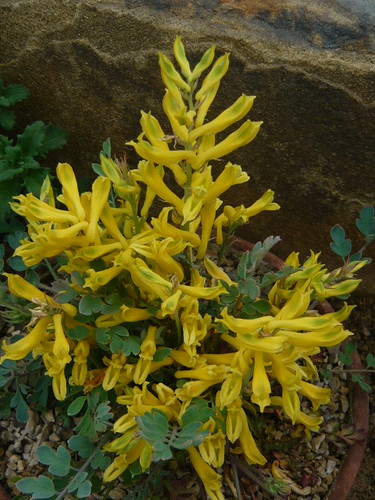
Corydalis wilsonii arrived from it’s native china comparatively recently.
It is a compact herbaceous plant with light green leaves.
It flowers on errect spikes, 1″ long, in a deep yellow during late spring.
This variety is suitable for growing in pots.

I have just bought a Corydalis Kingfisher from the local AGS meeting. Kingfisher has blue flowers with a hint of green from March to Aug and is only without flowers when dormant during winter.

Alpine Species

Read More Read More

Grow Ericaceous Cassiope

Grow Ericaceous Cassiope

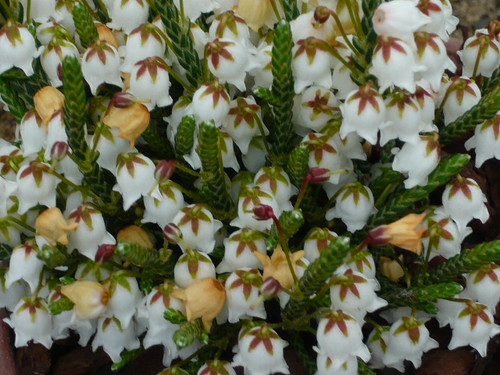
Cassiope Badenoch

Cassiope are a valuable group of small wiry stemmed ericaceous perennials with white bell-like flowers blooming in spring. Leaves are unstalked and densely overlap.

Tips for Growing Cassiope

  • Grow in lime free sandy or mossy soil. Very hardy if given good drainage.
  • The smaller varieties are good alpine house and pot plants growing below 12″ high.
  • Plants are cheap to buy and can be propagated from cuttings or by pegging down.
  • Plants hybridise quite easily.
  • Grow in a cool shady or semi-shady places in the rock garden or shrub border.

Hybrids and Species to Grow

  • Cassiope Randle Cooke is a super little Cassiope with deep green leaves closely clasping the stems.
  • Cassiope Badenoch shown above has a mass of off-white bell shaped flowers
  • Cassiope Edinburgh another wiry stemmed ericaceous perennial with tightly packed deep green leaves and larger white bell-like flowers in spring.
Shade Loving Perennials a Top Ten

Shade Loving Perennials a Top Ten

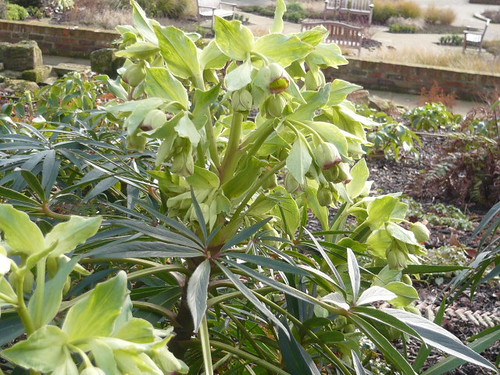
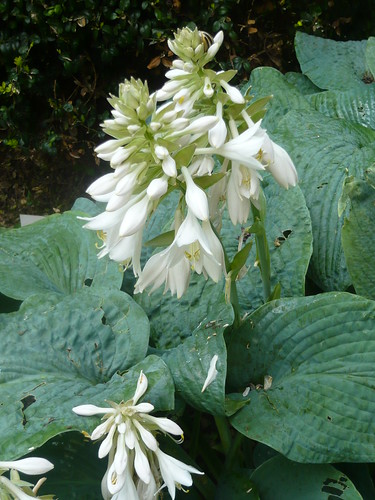
Helebore

Plants that thrive in the shade also tend to be heavy drinkers. Here is my top ten list

Top Ten Shade Loving Perennials for the UK

  1. Bergenia varieties including Bressingham White, Baby Doll, Rotblum and Bergenia cordifolia
  2. Hosta varieties including Aureo marginata, Moerheim, Halcyon, Wide Brim and Hosta venricosa.
  3. Dicentra varieties including Boothmans variety, spectabilis and formosa Luxuriant.
  4. Astilibe varieties including Deutchland, Europa, Fire Ostrich Plume and W M Buchan
  5. Alchemilla mollis
  6. Epimedium varieties including Roseum, Pinck Colchicum and Sulphureum
  7. Helleborus Oriental hybrids or species, cyclophyllus, foetidus and purpurescens.
  8. Polygonatum giganteum or multiflorum
  9. Pulmonaria varieties including Mary Motram, Dora Bielefeld and Roy Davis.
  10. Tellima grandiflora and grandiflora purpurea

Host flower slugged

Most gardeners have a shady spot so I hope this list gives you some ideas for new varieties to try growing. Of course most of these plants will tolerate some sunshine but then need even more water to thrive.

Shade Loving Ground Cover Perennials

  • Sweet Woodruff or Galium odoratum thrives in alkaline soil
  • Anemone nemorosa Robinsoniana has a carpet of ferny leaves and white flowers that all die down in summer
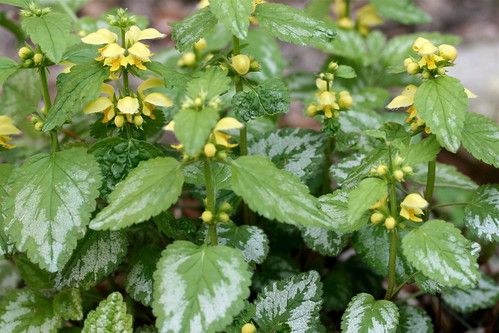
  • Lamium galebdolon dead nettle a scrambling, variegated evergreen.
  • Symphytum grandifolium or dwarf comfrey has leaves that make good compost
  • Saxifraga spathularis or St Patrick’s Cabbage is evergreen but not as cabbage looking as some gardeners.
  • Vincas minor Getrude Jekyll

Lamium

Credits
Lamium by Shotaku CC BY-NC-ND 2.0

Book Cover
Planting the Dry Shade Garden: The Best Plants for the Toughest Spot in Your Garden by Graham Rice
Dry Shade Perennials a Top Ten
Best Shade loving plants

Growing Bleeding Heart (Dicentra Spectabilis)

Growing Bleeding Heart (Dicentra Spectabilis)

bleeding heart

Dicentra spectabilis or bleeding heart name is actually – Lamprocapnos spectabilis.
Bleeding heart is a rhizomatous perennial herbaceous plant native to eastern Asia from Siberia south to Japan. It produces wonderfully delicate flowers from long arching stems. It makes a wonderful addition to any mixed border, and can be very easy to grow.

  • In the UK, after flowering, the plant tends to die back where it lies dormant until next spring.
  • In fact the biggest problem with Bleeding heart is forgetting where you planted and then digging it up or planting other shrubs too close.

bleeding heart

Bleeding Heart makes good cut flower.

  • The plant is a natural woodland plant so needs protection from intense sun. In the north of England full sun, will probably be fine. Though in warmer climates it may need protecting from glare of midday sun.
  • When hot and sunny, keep well watered
  • Being a woodland plant, Bleeding heart are not heavy feeders, a good soil should be adequate for feeding requirements.
  • It is easiest to grow from tubers, which can be split when dormant. To grow from seed requires patience. Also you need to use fresh seed – the seed is very tiny – almost powdery.
  • Bleeding Heart do not need to be dead-headed or pruned. They will definitely not get too big.

Read More Read More

Euphorbia Euphoria

Euphorbia Euphoria

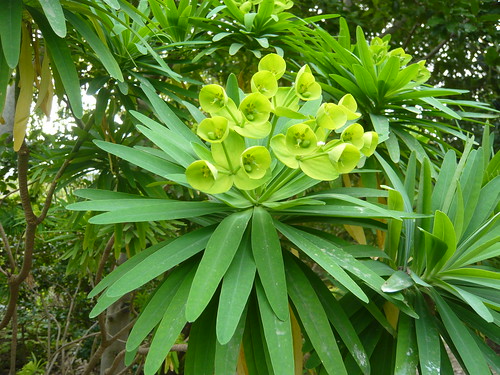
Euphorbia lambii

Euphorbia Facts

  • Euphorbia are the largest genus in the plant world with varieties on every continent except Antarctica.
  • 150 species that grow well in UK gardens are listed in the RHS Plant Finder from over 2000 species worldwide.
  • Euphorbia exist as tiny prostrate annuals, perennials and even Trees.
  • Some spiny Euphorbia can be confused with Cacti, If you are in Africa it will be a Euphorbia in America it will be a Cactus.
  • Spines of Euphorbia will be in pairs.
  • Euphorbia exude a white, sticky, irritating resin when scratched.

Euphorbia Groups

  1. Annuals, Biennials and Short Lived perennials  – grow, flower, seed and die in a season
  2. Annuals, Biennials and Short Lived perennials  – grow, flower, seed and die in a season
  3. Herbaceous Perennials – die back in winter so cut down when unattractive but some varieties have good autumn colour
  4. Biennial-Shooted evergreen perennials – grow leafy shoots that last 2 seasons then flower to be replaced by new shoots. Cut down to ground level when they look untidy
  5. Evergreen or deciduous shrubs – prune only when they grow too big.

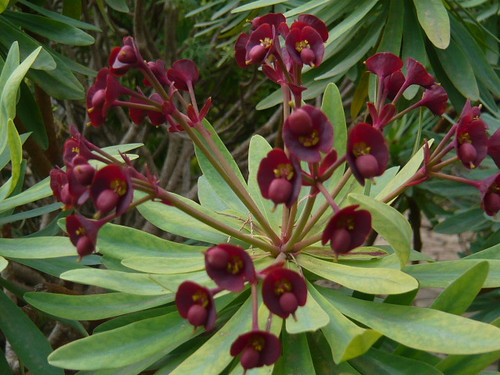
Euphorbia atropupurea

Read More Read More

Wisteria Hysteria due to Scale Bugs

Wisteria Hysteria due to Scale Bugs

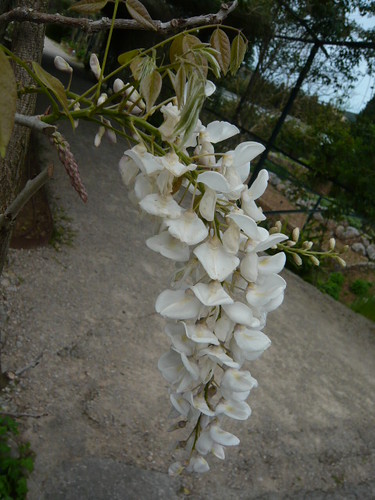
Wisteria

Spring flowering Wisteria are starting to clothe the walls with festoons of flowers.
It may be an excuse for newspapers to show pictures of Wisteria in full bloom but they are running a story about Asian insects wiping out our Wisterias.

The Problem

  • RHS entomologists are reputed to be very concerned about Wisteria scale insects  that are 10mm in diameter.
  • These insects deposit 1000’s of eggs to later feed on the plant’s sap.
  • Branches and whole plants will succumb over time.
  • Infections are worse around London and the south.
  • Stems can become heavily encrusted with scales.

The Future

  • Experts fear the bug may spread to other trees and fruit bushes.
  • Treat with a systemic insecticide – it is no time to worry about organic insecticides.
  • It also gives me a chance to show a white flowering Wisteria

White Wisteria

Tips for Moving Shrubs such as Forsythia

Tips for Moving Shrubs such as Forsythia

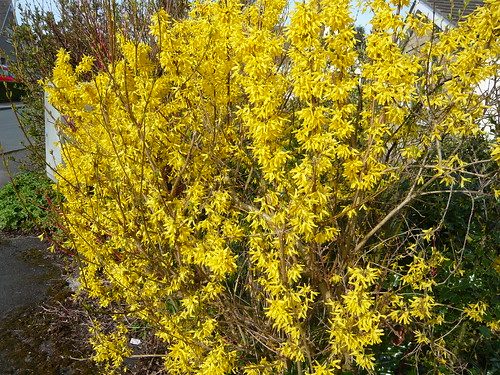
Forsythia

How do you move shrubs that have out grow their current location? When should you move flowering shrubs?

Tips for Moving Shrubs
Move plants only when unavoidable by digging around the plant to create a big root ball of soil.
Heavy rootballs can be dragged into place on a piece of sacking or an opened out compost bag.
Dig a £10 hole for a £5 plant, loosen the bottom of the hole, mix in some bone meal, back fill, tamp down the soil and water in.
Replant at the same depth – look for the soil level on the trunk or lower branches.
If the shrub is really big and bulky, prune it back hard before moving. You may loose some blossom the following season but it should regrow.

When to Move Plants

Move flowering shrubs in early winter when the shrub is dormant.
Incase of fatality take and root cuttings before moving.
If moving house ask permission of the new owner or stipulate your intentions when selling your property.
If you must move the plant when it is growing, water well for several days before, prune off unnecessary lush growth and do not allow the roots to dry whilst moving.

After Care
Keep your shrub well watered and mulched until it settles down.
Do not stress the plant by striving for excessive blooms in year one
Revitalise the soil around the old hole for your next plant. Humus and nutrients will be needed.

Join the Hardy Plant Society

Join the Hardy Plant Society

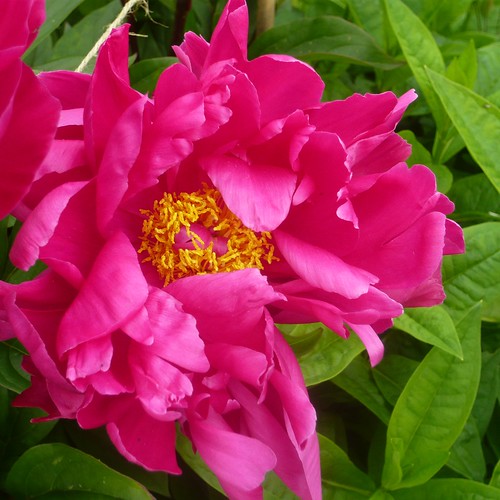
peaonie

The Hardy Plant Society is a friendly members organisation that specialises in perennials, plants that keep growing for years, and hardy plants, that will survive our British weather.

The regular feature ‘Plant of the month’ for May is Paeonia mascula ssp. russii. However they also give information on growing easier Peonies like Lutea and Peonie Ludlowii

Membership Benefits
All members of the Hardy Plant Society receive The Hardy Plant journal twice a year and a newsletter three times a year which provides information on all of the Society’s events, activities, interests and group contacts. There are also seed distributions, shows, open gardens, plant sales and a photo library for loan.

Specialist Groups within the society include:
Half Hardy Valerie Livesey 01970 880564 [email protected]
Hardy Geranium Oliver Folkard 01328 851468 [email protected]
Peony Gail Harland 01449 760553 [email protected]
Pulmonaria Barry Street 01494 [email protected]
Ranunculaceae Gill Regan 01795 890556 [email protected]
Variegated Plant Brian Dockerill 01443 402999 [email protected]

Local Groups
The Hardy Plant Society has around 40 local groups in the UK and national members are invited to join the group nearest to them. The wide range of gardening activities including informative lectures from local and national gardening speakers, garden visits and plant sales together with educational and social events throughout the year creates an active and informative club atmosphere .

Link for membership application form
Growing Basil a Sweetherb

Growing Basil a Sweetherb

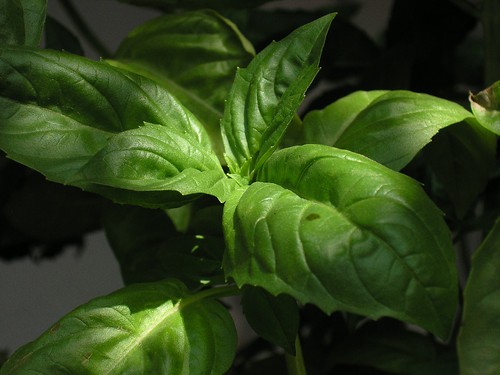
Fragrant and sweet tasting Basil is an easy to grow, popular herb. Aka Sweet Basil, with many other basil types including Sweet Genovese, Thai basil, Lemon basil and Mexican spice basil there is a good range to grow.

Sow From Seed
In May or June fill small pots with moist multi-purpose compost. I use 3″ plastic pots.
Sprinkle seeds thinly on the surface. About 10-12 seeds per pot.
Cover lightly with fine compost or vermiculite.
Keep on a warm windowsill and seedlings will appear in about 2 weeks.

Growing Onward
After 4-6 weeks the seedlings can be planted into individual pots.
Then leave on the windowsill or harden off for outdoor planting
Treat the Basil as an annual.

Outdoor Basil
Plant out in June or July in a sunny sheltered spot.
They make good fragrant container plants.
Feed with a general purpose liquid feed and water little and often.
Pinch out the growing tip to get a bushy plant.

Using Basil
Leave the stems on pick and come again plants taking a few leaves each time.
Grow several plants if you need large quantities for Pesto or other culinary uses.
The seeds can be used to flavour a drink.

Credits
Basil has medicinal and calming properties.
Photo by Marmot on flickr
Seed suppliers