Browsed by
Category: Fruit, Vegetables & Herbs

Tips on growing good Fruit, Vegetables and Herbs

Cottage Garden for Edible Crops
Cottage Garden for Edible Crops

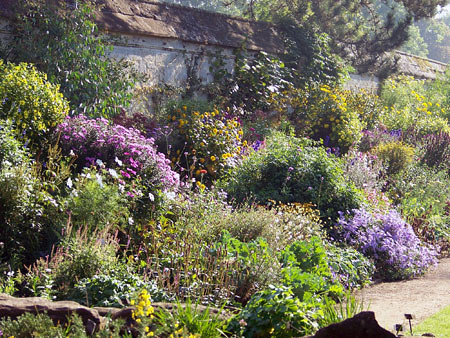
The traditional Cottage Garden was a working garden for the growing ornamental and edible crops. Planting included fruit, vegetables and herbs mixed with flowers such as Peonies, Delphiniums and Aquilegia to produce a haven for insects, an eye opener for gardeners and crops for the house.

Cottage Fruit Garden

  • Rhubarb would be one of my key plants in any cottage garden. In addition to the fruit pies from the pink and red stalks I would allow some plants to throw up the striking flower stalk. The Sutton or Victoria from Thompson Morgan would be appropriate varieties.
  • Gooseberries remind me of grandparents garden and Lancer is a green mid season fruit that crops well. Whinham’s Industry is a neat red.
  • Raspberries like Malling Jewel with some wire support near a wall or strung from two stout posts would also go into the cottage fruit patch.
  • Currants smell so good when the leaves are slightly crushed and redcurrant  Red Lake and the blackcurrant Wellington XXX would fill up the patch.
  • An old Apple tree in the corner may be supplemented by new ballerina columnar trained small trees.
  • If there is space for a Plum tree it will be an eating variety like Czar fan trained against a wall.

Cottage Vegetable Garden

  • Runner beans can hold there own amongst many flowers and I am growing Painted Lady variety this year.
  • French beans and broad beans are popular in my household so I will grow more of these than the brassicas which do not get eaten.
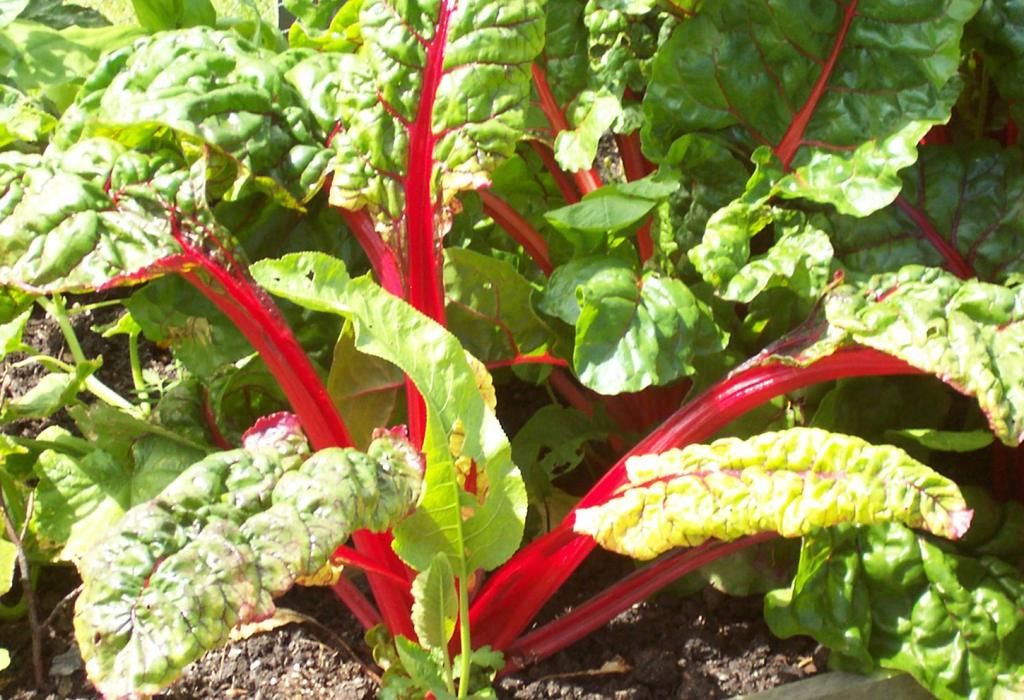
  • For colourful vegetables I will plant some Swiss Chard ‘ Bright Lights’.
  • I grow a mix of mangetout and garden peas that need regular picking.
  • You can also get away with a Tumbler tomato or two in a front garden.
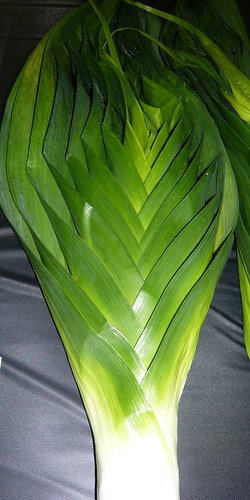
  • Leeks look flamboyant when grown with  large flags and a good leafy marrow will provide lush green growth.

It is hard to agree on a range of flowers for a cottage garden so I have ducked the issue a bit. Nasturtiums are edible and cottagy and where would a garden be without Sweet Peas.
Swiss Chard
Courgette & Marrow, Watering, Pollinating and Harvesting

Courgette & Marrow, Watering, Pollinating and Harvesting

Watering Marrows

  • Marrows are over 80% water and need plenty of watering when in full growth and the first fruits have set, at least 2 gallons per square yard per week or a gallon per plant per day.
  • Plant a cane or marker with the baby plant or seed so you know where the roots starts. Half bury an empty plant pot so you can pour water into it to get water directly to the roots.
  • Avoid splashing water on the stems of the young marrow plants.
  • You can apply a moist mulch of grass cuttings or compost after watering. This helps conserve soil moisture and keeps the weeds down.

Pollinating Marrows

  • If it is very cold, wet or windy while the plants are flowering then insect pollination is less likely to be successful.
  • Hand pollination is the best method in these circumstances and when growing under glass. Rremove the petals from a male flower; push the core into the centre of the female flower.
  • The female flowers are distinguished by the swelling below the bloom. Male flowers have a prominent phallus shaped central core, bearing yellow pollen. Male flowers may appear first but are regularly produced.

Harvesting Marrows

  • Ripe marrows have hardened skin and make a hollow sound when rapped with the knuckles.
  • Marrows mature quickly taking only two and a half months.
  • Young marrows may have been picked when very small, as courgettes but at the beginning of Autumn harvest all marrows leaving a long stalk on each. Do not wait until they have been frosted.
  • Store in nets suspended from a ceiling in a cool airy dry environment. They will keep for up to 6 months depending on variety.

Varieties to Grow

Read More Read More

St Davids Day Flowers

St Davids Day Flowers

St. David  is the patron saint of Wales and March 1st  is celebrated as his saints day and a patriotic & cultural festival by the Welsh. The leek is the national flower of Wales. Welsh people all over the world proudly wear the stalk, flower or a bit of leaf from a leek plant on March 1st.

The daffodil is quite a bit easier to find, yet the leaves look similar, so many use daffodils instead. It is now common to find both Leeks and Daffodils as national emblems for Wales.

History and Legend

‘Today the Welsh wear a leek in memory of some ancient battle against the Saxons where Bishop David advised them to wear leeks on their hats to distinguish themselves from  their enemies. Swords clashed as the men of Wales fought on for hours try to protect their land from the Saxon invaders. Despite their great efforts, the Welsh were slowly losing. In the heat of the battle it was difficult to tell friend from foe. The fact that both sides wore similar clothing made the fight all the more confusing.

A monk noticed that this was becoming a grave problem. As the Welsh lost more and more ground, the monk cried out to them, “Welshmen, you must mark yourselves so that you can better tell who is Saxon and who is Welsh. The monk plucked a leek plant from the ground and continued, “Here, wear these so you will know that any soldier who does not have a leek is your enemy.”

Some of the soldiers thought this was a rather odd idea, but the monk was one of God’s men so they went along with it. Soon every Welsh soldier was wearing a leek on his helmet. They attacked the invaders and before long, the Welsh had won the battle.

The monk who came up with the idea of wearing a leek was named David. David died on March 1st. After he died, the Catholic Church made him a saint.’

Read more about Leeks on Gardeners Tips

Earth and the Art of Gardening

Earth and the Art of Gardening

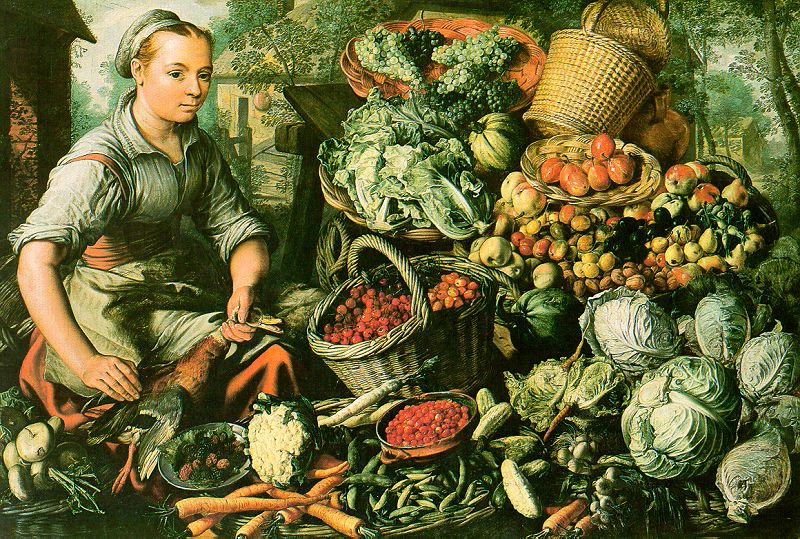
In 1569  Joachim Beuckelaer painted the Four Elements and this picture shows the bountiful earth.  The range of produce implies a market gardeners hand or a large garden capable of providing such bounty.

The 4 elements I need in the garden are Earth (hearty soil), Water (not too copious and not at the wrong time), Fire (or at least sunlight for photosynthesis) and Air (or  more space in which to grow).

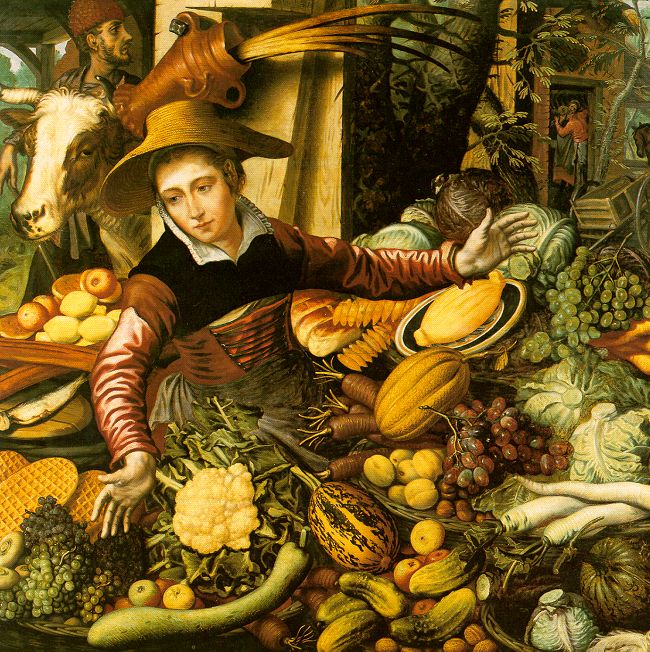
The Market Woman with Vegetable Stall, 1567, by Pieter Aertsen shows lemons and more exotic produce that implies international trade rather than local gardening.

At least we can see how some people were able to eat in the mid 16th Century. I would be happy to grow half these fruit and vegetables on display.

This is actually the painting of Earth from the Four Elements. The painting shown above top is the Market Seller Fruit Vegetables and Poultry. Fruit and vegetables was a subject Joachim Beuckelaer used frequently.

Cabbages as Ornamentals and Flowers

Cabbages as Ornamentals and Flowers

London 083

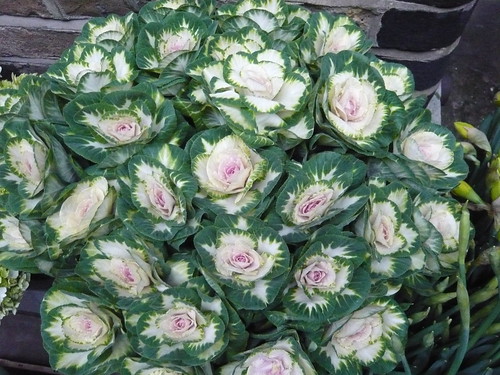
These long stemmed cabbage flowers were in a large bunch at a local florist. Doubtless they were flown into England from many carbon miles away but you can easily grow your own  ornamental cabbage.

Growing Ornamental Cabbage

  • Large ornamental plants with frilled edges and an ornamental coloured heart. Colour vary with cream, pink and maroon being popular.
  • Sow seeds in spring for summer bedding or summer for late autumn planting to replace summer bedding. Sow seeds 1/16in deep in a good seed compost. Germination takes 14-21 days
  • When large enough to handle, transplant to 3in pots. Harden off spring sown plants and plant out 12-18in apart in the border. Pot up summer sown plants into 5in pots or containers and stand out of doors on a sheet of polythene to prevent root penetration into the soil.
  • Water regularly and give weak doses of a high Nitrogen fertiliser every 14 days. Plant out in late summer in beds, window boxes, containers, etc.
  • The leaf colour change occurs as the night temperature drops in late summer.
  • In late winter they produce a tall flower spike which makes an unusual floral decoration.

Cabbage Northern Lights F1 Seeds from Thompson Morgan
Nutritional Information

  • Eaten raw or cooked, cabbages are an excellent source of Vitamin C.
  • Try to use all healthy outer leaves as the darkest green leaves contain the most nutrients.
  • Ornamental cabbages are edible when young  although the flavour can be rather strong.
  • Vary the colour of your coleslaw with some chopped ornamental leaves.
Growing Sweet Bell Peppers

Growing Sweet Bell Peppers

Pepper

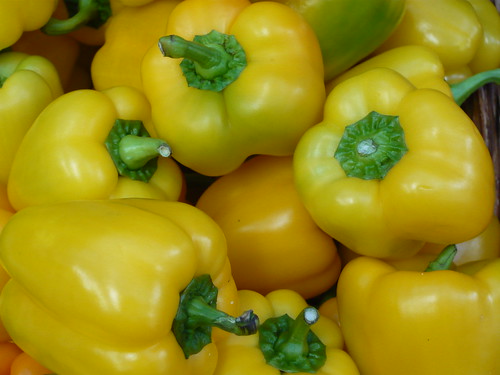
Sweet Peppers or Bell peppers can be grown from seed in a range of colours. Ideal for a greenhouse or conservatory they may also thrive in a hot summer.

Seed Selection

Sweet Jumbo F1 Seeds  produce Peppers that are green turning red. Often fruit are more than 6in long and 3½-4in across, ‘Jumbo Sweet’ can ‘weigh up to 200g (½lb) and we are sure much bigger, and dare we say – world records may be shattered with this super new hybrid. It is vigorous, early and a prolific cropper. It is very crisp and sweet eaten fresh and because it has a small central core it is ideal for stuffing. Best crops will be achieved in a greenhouse or conservatory but it is worth trying a few outdoor plants if the summer is hot.

With a flavour so juicy, crisp and clean you’ll eat them right ofl the plant! Sweet Pepper Big Banana produces fruits up to 25cm (10in) long and 5cm (2in) wide mature to a deep shiny scarlet. Amazing yield – up to 50 full-sized fruits per plant.

  • Capsicums Chinese are some of the hottest Chilli Peppers around. Seeds from 10 Habanero vaieties and Scotch Bonnet are able to compete with C. annuum ‘Tepin’ and C. frutescens ‘Zimbabwe Bird Pepper’ for the hottest seeds around.  Available from Thompson Morgan a seed, Chilli and vegetable specialist.


Sweet Pepper Sweet Chocolate is a delicious sweet pepper with a ‘come and eat me’ appeal once the fruits have ripened from green to a rich chocolate colour on the outside and brick red on the inside with thick, sweet flesh. Sweet Pepper Sweet Chocolate plants are very productive throughout the summer.

Orange bell   Very productive plants producing typical ‘blocky’, thick walled fruits with delicious sweetness. Sweet Pepper Orange Bell is very productive, with fruits that start green, ripening to a gorgeous orange.
Sowing Instructions

Sow seeds March to April. Place seeds on the surface of a free draining compost and cover with a fine sprinkling of compost or vermiculite. Place in a propagator at 18-21C (65-70F) until after germination, which takes 7-10 days. Do not exclude light as this helps germination.
Growing Instructions

Transplant seedlings when large enough to handle into 7.5cm (3 in) pots. Plant in final situation when 10cm (4in) high, 45cm (18in) apart. For indoor crops, plant into growbags or pots. For outdoor crops, acclimatise plants to outdoor conditions for a few days before planting in sunny, fertile, moist, well drained soil , after all risk of frost has passed.
Aftercare

For a heavier crop, feed all peppers once the flowers have started to set fruit with a high potash fertiliser each week .

Read Gardeners tips
Book Cover
The Complete Chilli Pepper Book: A Gardener’s Guide to Choosing, Growing, Preserving, and Cooking

Super Fruit Honeyberry not Honeybush

Super Fruit Honeyberry not Honeybush

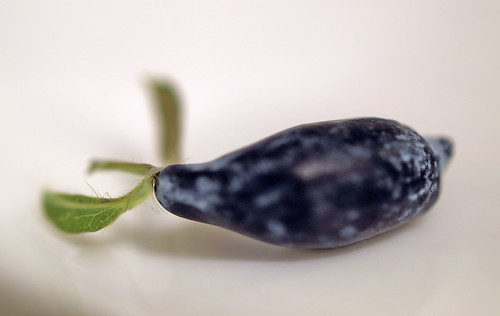
A recent arrival from Siberia, the Honeyberry is also called Lonicera caerulea and the variety edulis is the one to grow.
White flowers are followed by long ‘blueberry like’ fruit high in vitamin C
Pick in May June and eat raw or cooked in pies if you get a big enough crop.

  • Plant in sun or partial shade in any well drained soil.
  • Pollination is improved by two or more plants
  • Keep well watered whilst the shrub establishes itself.
  • Will grow to 4 feet tall and wide and should only be pruned when old wood needs removing.
  • Protect the fruit from birds who like the sweet summer delicacy.
  • Can be grown in large containers.

Do not confuse with the Honeybush a spectacular architectural feature plant that looks stunning planted in large ornamental or exotic borders and containers with its blue-green spiky foliage. Honeybush has a sweet peanut butter fragrance when crushed. Known as the Honeybush because its tall bronzered flower spikes project a beautiful honey fragrance seeds by Thompson Morgan

Heritage Seeds and Varieties

Heritage Seeds and Varieties

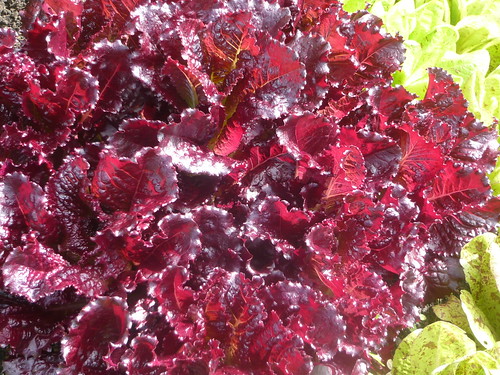
Lettuce -  Bijou & Freckles

Radishes not tasting like they use too?  Blemish free supermarket crops without taste or aroma?  A bland selection of seeds from your nurseryman to grow the same varieties as your neighbour? Well there is a movement to bring back and promote the old varieties that would change all that. Heritage varieties are an imposing collection of ancient vegetable and other varieties saved and collected by specialist companies to tempt our taste buds and maintain our heritage plants.

Here are some  UK seed supplier links together with many other international seedsmen offering specialist heritage and heirloom varieties.

Bilberry and Blueberry Pie or Muffin

Bilberry and Blueberry Pie or Muffin

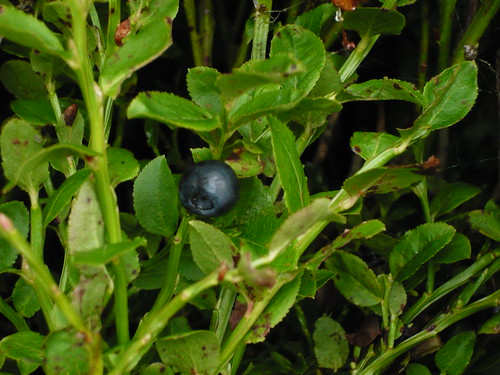
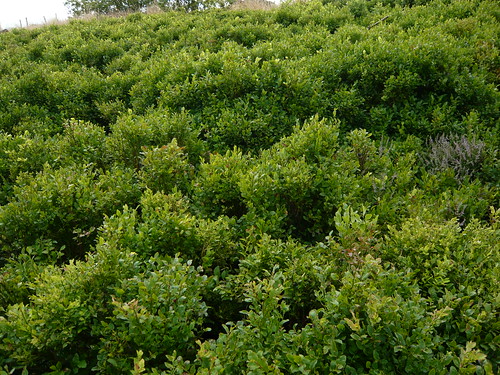
This is a wild Bilberry picked on August the 6th 2009 to make me a fruit pie. Bilberries are hard to grow in cultivation so the majority are picked from the wild moors and heaths as they like damp, acidic  soil. The fruit are small, very dark skinned with dark sweet juice, just right for those pies.

As a deep blue fruit, bilberries contain dense levels of anthocyanin pigments and are thought to be one of the ‘Super Fruits’ that have health benefits.  Below are a host of Bilberry plants or Vaccinium Myrtillus on our local moor. You need a lot of plants for one pies worth of Bilberries.

Below is a Blueberry or a cultivated Vaccinium with larger fruit and an easier plant to grow successfully. This plant is just coming into fruit with paler flesh than the Bilberry but it likes similar acid soil and moisture. The fruit are famous in USA for Blueberry Muffins but they are  not a patch on my Bilberry pie.

Growing Blinking Big Beetroot

Growing Blinking Big Beetroot

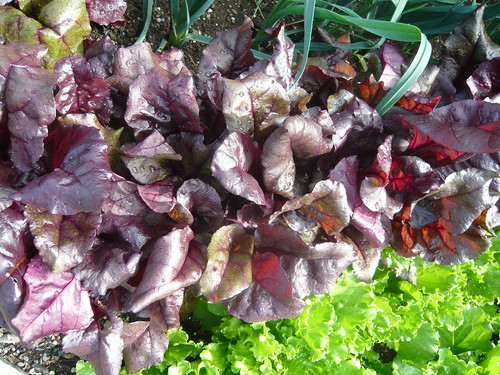
There are many different kinds of Beet and that is the root of the problem. Beetroot Bulls Blood shown above is  ornamental, edible and is a heritage variety worth seeking out. Seakale beet, Chards and Spinach beet are grown for their edible leaves and the young green leaves of all Beetroot can be eaten in a salad. However we want big roots to make our eyes blink.

Growing Big Beetroots

  • Soil should be deeply cultivated in Autumn with plenty of humus and or peat incorporated. Do not use farmyard manure to avoid canker and aim to keep the ph level below 6 as beetroot do not like lime.
  • In spring ridge up the soil to about a foot high with 2 feet between rows. Prize plants will eventually need 3 feet spacing.
  • Sow the seed in groups of 3 at the top of the ridge in late spring keep the ground moist until germination. Expect 4 months growing time for the big beetroots.
  • When seedlings reach 2 inches thin out to two plants per station. From each seed several plants may have grown as each seed is really a clusters of seed.
  • Key Tip. One evening when the beetroot are 6″ high carefully scratch away the soil on the ridges away from the roots leaving only the tips of the root in the soil and the plant laying on the ground looking half-dead. Water the plant and soil and next morning they will have recovered and be working extra hard by swelling to survive.
  • As they swell thin out for a final time to 3 feet apart. Feed with a balance liquid feed from mid-summer and use a heavily dilute foliar feed from summer in addition.
  • Giant Beetroot are weighed without soil or foliage but may be you are just going to turn them into soup and chutney.

In August 2008 the Times online reported ‘Ian Neale … once grew the world’s biggest beetroot at 51lb 9oz (there is no metric system in the world of giant veg) – gets his monsters off to a good start by feeding them rock dust, essence of pig slurry and a material called “dinosaur fertiliser”, from a “big pile on the top of a moor in Yorkshire”.  Will August 2009 top that weighty tale and will 2010 be your year to top 50lbs?