Browsed by
Category: Flowers and Plants

Annual, perennial and interesting flowers with advice on culture, information, tips and recommended varieties

Tips for Growing Pulsatilla the Pasque Flower
Tips for Growing Pulsatilla the Pasque Flower

pasque-flowers

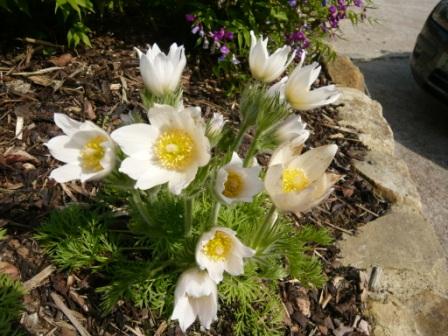
The Pulsatilla is also called the Pasque flower or meadow anemone and although related to the anemone it is a separate part of the buttercup family Ranunculus.

Also commonly known as the prairie crocus, Anemone Pulsatilla, Wind flower and Easter Flowe.

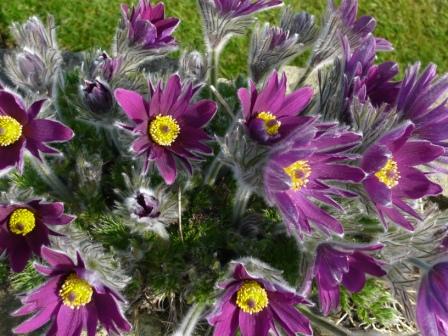
  • This clump forming herbaceous perennial is 6 inches tall and the flowers can be red, blue, purple or white and have six velvety petals with curled, pointed tips surrounding a ring of bright yellow stamens. Flowering around Easter they have the alternative native British name of Pasque flower.
  • All plant surfaces are covered in fine, soft hairs as can be seen in this images.The attractive seed heads which follow are spherical with silvery plume like styles raised on elongated flower stems.
  • Not to be out done the foliage is exquisite in spring.
  • The plant is best treated as poisonous although it is occasionally used in herbal medicine.
  • Protect from excessive wet winter weather. They tolerate alkaline soils and are found naturally in the wild.
  • They dislike root disturbance and can be difficult to establish. They can be grown from seed or propagated by root cutting but try not to disturb the main plant as they take several years to flower at their best. Plant when small and leave undisturbed.
  • Pulsatilla vulgaris Red Cloak is a great variety to grow from seed. Rubra is another red variety.

Seeds from Thompson & Morgan

Other Pulsatilla Facts
Pulsatilla vulgaris is the county flower for both Hertfordshire and Cambridgeshire.
Single flowers are followed by attractive fuzzy seedheads resembling those of clematis.
There is one double cultivar called Papageno

Passion flower Pulsatilla

Other Pulsatilla species  include:

Pulsatilla alpina
# Pulsatilla chinensis
# Pulsatilla grandis
# Pulsatilla halleri
# Pulsatilla montana
# Pulsatilla nigricans
# Pulsatilla patens
# Pulsatilla pratensis
# Pulsatilla vernalis
# Pulsatilla vulgaris
# Pulsatilla subslavica
# Pulsatilla cernua
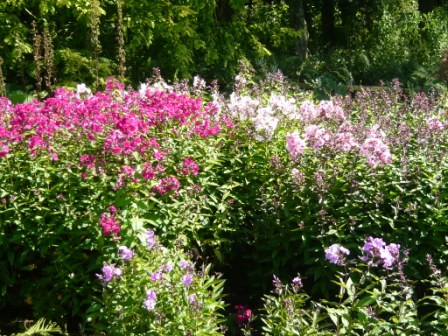
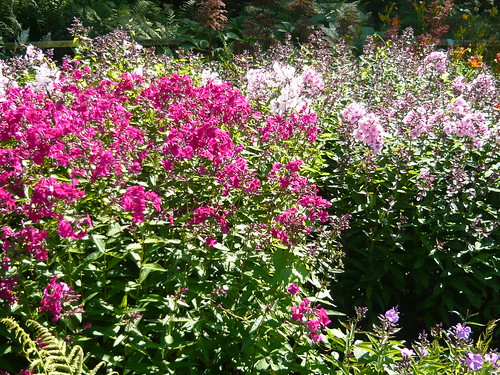
Pinnacle of Phlox

Pinnacle of Phlox

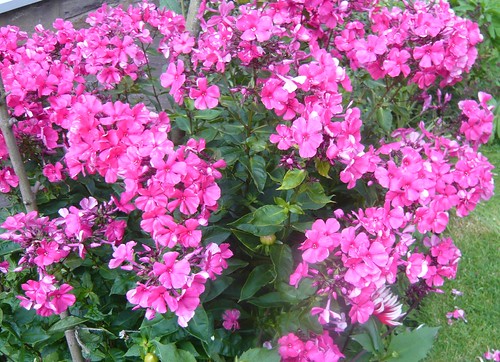
The top three tips to keep perennial Phlox Paniculata in perfect condition are:
1. Keep well watered to avoid mildew
2. Split large clumps and weed out weedy stems to aid air flow
3. Plant several colours and varieties for a great show.

Golden Acre phlox

Top Varieties

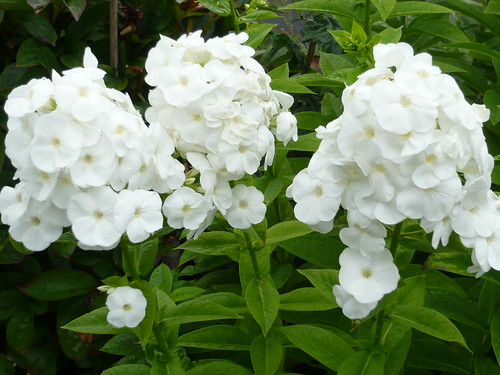
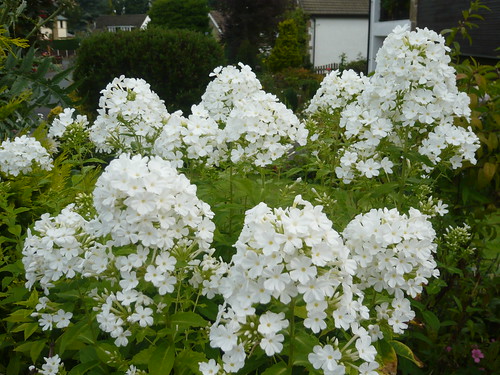
    3 feet tall the pure white ‘Phlox of Mount Fuji‘ earns its AGM. The flaring petals open out from twisted buds to form clusters of flat white scented flowers.
    Another AGM winner is Bright Eyes with pale pink flowers having a deeper red centre. The foliage may take on the red tinge during summer and it grows to about 4 feet tall.
    Phlox paniculata ‘Dodo Hanbury-Forbes’ AGM just for its name or Blue Ice or Blue Paradise to balance up the colour scheme.
    Phlox Tiara is a new double white flower.


Plus Points

    Various Phlox are available from Thompson & Morgan
    Phlox will flower in some shade but prefer and smell best in full sun.
    Phlox are easy to grow but some varieties may suffer from mildew. Bright Eyes is resistant.
    Clumps of Phlox do not need staking and supporting
    Phlox paniculata are a clump forming member of the Phlox family.
    Cut down the old stems in winter and give the plants a mulch.

Phlox paniculata

Phlox Problems

  • Phlox are prone to mildew but it won’t kill the plant – Phlox will come back next year.
  • Water stress is a main cause of Phlox mildew so water the roots, avoid splashing the leaves as this transfers spores of mildew.
  • Lack of air circulation is another cause of mildew.
  • In Autumn tidy up all fallen leaves.
  • Mildew attacks young sappy growth so do not feed late in the summer.
  • Perennial Favourite
    Read more about how to grow Annual Phlox

    Phlox

    Book Cover
    Phlox: A Natural History and Gardener’s Guide by James H. Locklear

Ranunculus Calandrinioides and Other Buttercups

Ranunculus Calandrinioides and Other Buttercups

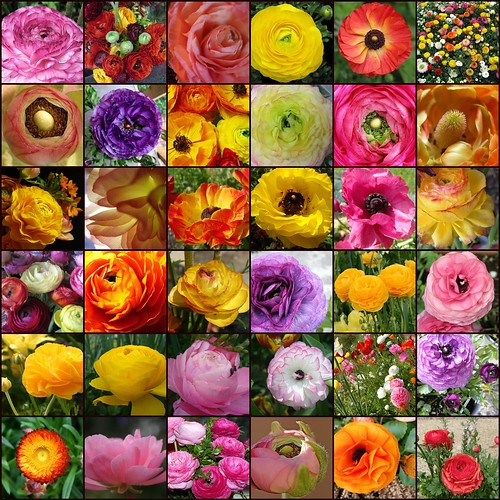
There are as many varieties of Ranunculus as there are buttercups in a meadow. Not surprising as a buttercup is a member of the Ranunculus family as is this Ranunculus calandrinioides.

What is Ranunculus Calandrinioides

  • This perennial plant is happy grown in containers or an alpine house.
  • Growing 8 inches tall and 6 inches wide.
  • In suitable climates some of the 200+ species can be useful as ground cover outdoors.
  • The roots are fleshy and thick and different species may be tubers or fiberous rooted.
  • The lance shaped leaves are bluish-green and upto 3 inches in length.
  • Flowers are cup shaped white or pink 2 inches wide.

Ranunculus

Growing Ranunculus Calandrinioides

  • Ranunculus Calandrinioides need full sunlight to reach their full potential with good flowering.
  • Moist soil that receives regular watering to a depth of 18 inch deep is favoured by most Ranunculus.
  • Soil should not be allowed to dry out.
  • Grown outdoors on the southern and western sides of buildings are favoured areas as they are usually are the sunniest.
  • Ranunculus calandrinioides should be easy to grow under cold glass in good soil or compost.
  • Winter growth may be lax due to low light levels that cause the plant to be drawn up.
  • Kept bone dry until mid winter it will stand freezing conditions
  • Watered in early autumn, after a summer rest it will grow well before Christmas.

Germination guide
Various Ranunculus from Thompson & Morgan
B&T Seeds say Ranunculus calandrinioides seeds will usually germinate in 30-90 days, even under good conditions germination may be erratic. Sow seeds about 2mm deep in a Well drained seed sowing mix at about 10°C.

Seeds will mostly germinate as the weather warms up in Spring, some may germinate during the Summer or Autumn but are more likely to stay dormant until the following Spring.

Photo credit
Grateful thanks to Robynejay for using CC BY-NC 2.0

Ranunculus by robynejay
Various Ranunculus from

Thompson & Morgan

Bromeliad Fascicularia bicolour

Bromeliad Fascicularia bicolour

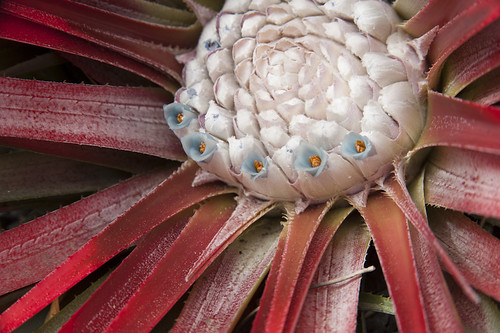
Blooming fascicularia

Kew publish some photographs for public consumption and use under a creative commons license BY-NC-SA 2.0 including this image of Blooming fascicularia More pics on google

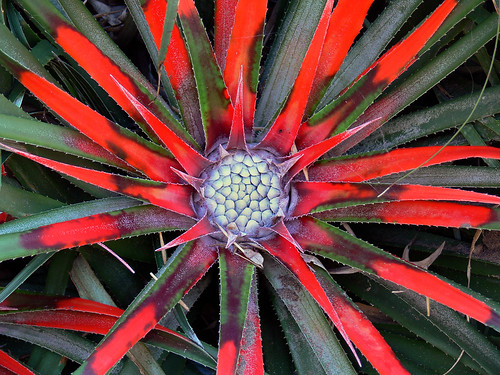
Fascicularia bicolor #1
This photo of Fascicularia bicolor #1 by J.G. in S.F. is under CC BY-NC-ND 2.0

Gardeners Comments
Fascicularia bicolor is native to Chile as is the longer leaved Fascicularia pitcairnifolia.
Fascicularia bicolor has long thin leaves to about 24″ and when mature turns a brilliant red.
The blooms are formed by large tight clusters of blue flowers in the center.
Do not give too much fertiliser if you want them to flower. They may flower better when pot bound.
It offsets to form large clusters.

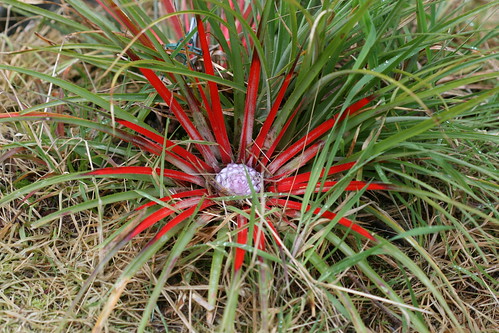
Fascicularia pitcairnifolia var. bicolor

Fascicularia pitcairnifolia var. bicolor by Silversyrpher, CC BY 2.0 Taken Benmore Botanic Gardens, Argyle, Scotland. Sept.09


A less flamboyant Bromeliad
Bromeliads are members of the Pineapple family and grow in the tropical and sub-tropical forests of the Americas…. read more

Funky Growing

Funky Growing

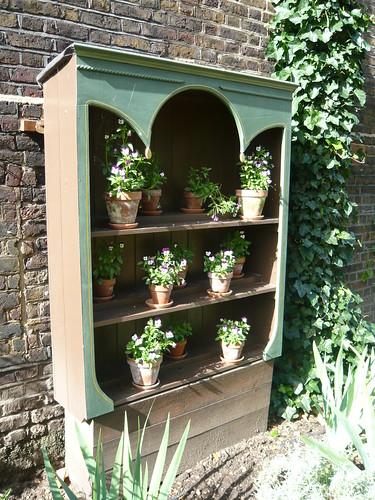
Going to the theater used to mean a trip out to see actors performing. Then someone built a stage to show off Auriculas and they called this an Auricula theatre.
Victorians and Edwardians grew some fine plants shown off in these neat custom built arenas like the one at the Geffrye Museum in London.

London liverpool st 132

So what has this to do with funky veg or the Hot Chilli & Sweet Pepper Kit by Plant Theatre – 6 Different Varieties to Grow?. Well I have given it away as these are products sold by Plant Theatre and available as gifts via Amazon.

More About Funky Veg

The kit is promoted as a really novel gift and would work for gardeners or cooks with just a window box.
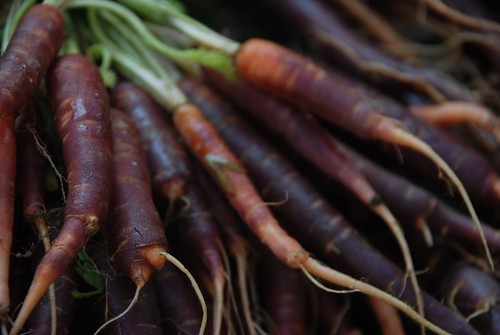
The kit contains 5 distinctive and unusual vegetables including the following varieties: Purple Carrot seeds, Yellow Courgettes seeds, Stripy Tomatoes seeds, Red Brussels Sprouts seeds and Multi Coloured Brightlights Swiss Chard seeds
Also included in the box are: 5 starter growing pots made from peat 5 peat blocks which expand when watered 5 plant markers and Sowing & Growing Tips.
All the seeds are of UK origin.
I would be a bit worried about the extent of the companies disclaimer of responsibility which says ‘The germination and growing results are the purchasers responsibility and depend on many factors such as planting time, seed depth, watering, light and weather conditions. These factors are out of Plant Theatres control and Plant Theatre or any company selling this product can not be held responsible for non germinating seeds. This kit is deemed as a novelty gift and is sold as such.’
A cynical gardener may think they doth cover their muddy footprints too much.

cosmic purple carrots
Cosmic (and funky) purple carrots by kthread CC BY-NC-SA 2.0

Stokesia Laevis Aster Like Flowers

Stokesia Laevis Aster Like Flowers

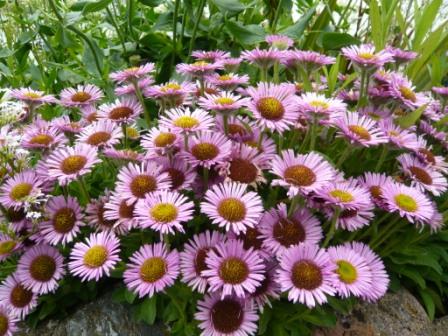
Stokes’ aster is an unusual plant with large cornflower-like blooms on low growing plants, with rosettes of narrowly lance-shaped, dark-green leaves. It has a long flowering season, from mid-summer until the first severe frost in mid-autumn. The flowers are very good for cutting.
Stokes' Aster

Growing Conditions

  • An evergreen, Stokesia Laevis preferring acid soil, a sunny spot, and very good drainage. The roots may rot if plants are too wet in winter.
  • The long lasting flower heads are produced on plants 12-18 inches high with a similar spread.
  • The summer flowers are generally purplish/blue in a starry pattern and are ideal for cutting or attracting butterflies.
  • Stokesia laevis like good drainage, particularly in the winter, so a raised bed or rock garden may be worth trying.
  • Stokes’ Aster is a North American native wildflower with a double Shasta Daisy in effect.
  • Plants form a low mound of leathery green leaves, remaining evergreen in mild winter areas.


Selected Varieties

Stokesia Laevis Purple Parasols
Stokesia Laevis alba
Stokesia laevis ‘Blue Danube’ with 4 inch wide lavender flowerheads
Stokesia laevis ‘Wyoming’ has the darkest blue flowerheads of all
Stokesia laevis ‘Omega Skyrocket’ is a vigorous variety growing 3-4 ft tall and has long-stems of white to pale blue flower.

STOKESIA

Photo credits
Stokes’ Aster by BlueRidgeKitties CC BY-NC-SA 2.0 ‘These pretty flowers were planted at the Daniel Boone Native Gardens in Boone. They are native to North Carolina, but more at home in the coastal plains than in the mountains. They are commonly cultivated for garden use. If you have them in your yard, cutting the dying flowers before they set seeds will make the plants produce more flowers throughout the entire summer. ‘
STOKESIA by Swami Stream, CC BY 2.0
Stokes Aster by cmcgough CC BY-NC-ND 2.0

Stokes Aster

Silene is Not Just Campion

Silene is Not Just Campion

June garden silene

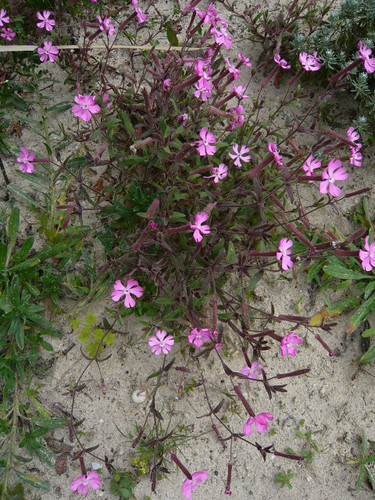
Silene is a genus of plants often called Campion. The ‘Catch fly’, red Campion and the white Campion, Silene latifolia, are quite well known and feature in many cottage gardens.
Siline acaulis is a variety that flowers much closer to the ground on short stems and is similar to Phlox . Some times referred to as the Cushion Pink it is a small mountain-dwelling wildflower

silene hookeri

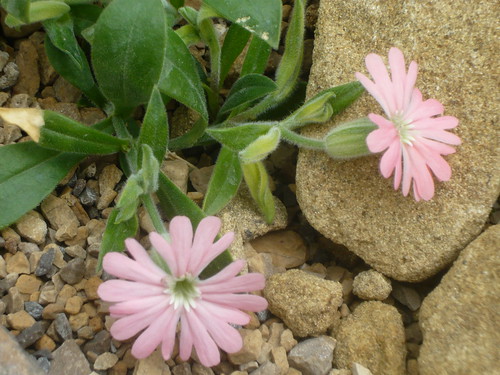
Silene Hookeri is grown as a North American rock plant and enjoys drier conditions. It has hairy gray leaves with many short spreading stems in a cluster. The flowers have deeply divided petals in white pink or purple.

Silene cambessedesii

Silene cambessedesii is synonymous with Silene aegyptica and has darker purple flowers.

Silene schafta agm is a mat-forming semi-evergreen perennial.
Silene Pendula Peach Blossom is a hardy annual also called Nodding Catchfly
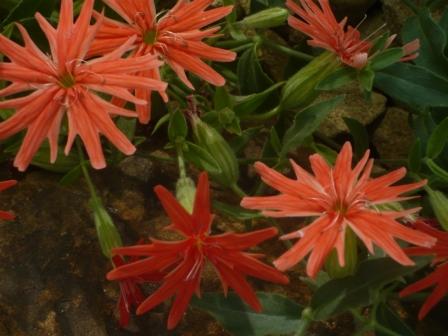
Silene Laciniata Jack Flash is an orange flowered hardy perennial.

More Silene plants and seeds at Thompson & Morgan

Many Silenes are mat forming and useful for rockeries and alpine gardens.

Instant Collection of Perennial Plants

Instant Collection of Perennial Plants

If you want a quick solution to building a stock of plants for your garden then consider buying a ready made collection.
In the Thompson & Morgan range you’ll find an impressive selection of perennial plants that are perfect for beginners and experienced gardeners alike. Also known as herbaceous plants, these perennials live for several years and flower every year.

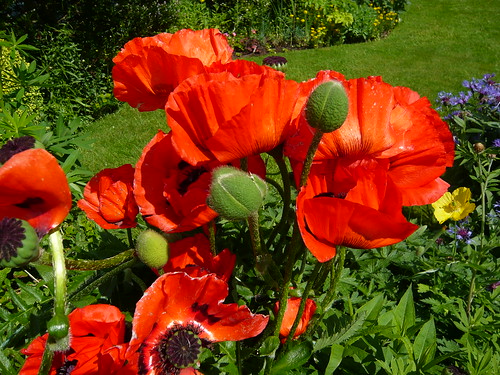
June garden 055 Oriental Poppy

Perennial Plant Collection

Fill your beds and borders with a special bargain collection of herbaceous perennials. Perennial plants bloom year after year, and many can also be cut and brought into the house for beautiful flower arrangements. Height of the plants in this collection vary up to 150cm (60″) Most will form increasingly larger clumps each year with a spread of 75cm (30″).

Buy a collection of ready grown plug plants at Thompson & Morgan

Perennial Collections may include some or all of the following

A. Coreopsis ‘Sunray’ – Neat, compact plants bear golden-yellow, semi-double flowers all summer long.
B. Echinacea ‘Magic Box’ – A stunning mix of daisy flowers and spectacular garden performance.
C. Scabiosa ‘Blue Jeans’ – Blue pincushion flowers attract bees and butterflies throughout summer.
D. Foxglove ‘Dalmatian Peach’ – Peachy trumpet flowers crowd sturdy, upright stems.
E. Poppy ‘Pizzicato’ Mixed – A neat semi dwarfing variety, producing up to 20 large flowers per plant.
F. Silene ‘Jack Flash’ – Scarlet blooms carried on elegant, slender stems over a long period.
G. Aquilegia ‘Swan’ Mixed – Long flowering, large blooms on upright, multi-branched stems.
H. Lavender ‘Munstead’ – A neat, compact variety of fragrant English lavender.
I. Heuchera ‘Palace Purple’ – Glossy, semi-evergreen purple leaves provide year round colour.
J. Delphinium ‘Pacific Giants’ – Excellent adding structure and presence to the back of borders.
K. Gaillardia ‘Arizona’ – A spectacular dwarf Blanket Flower with a long-flowering period.
L. Carnation ‘Ever-blooming Mixed’ (Hardy) – Richly fragrant blooms that are ideal for cutting.

June garden Aquilegia

When plants are well grown, gradually acclimatise them to outdoor conditions over 7 to 10 days before transplanting into borders and containers.
The herbaceous perennials in this collection can be grown in any moist, fertile soil, in sun or semi shade.
Work some compost or general fertiliser into the top 20cm of the soil prior to planting.
Water when the soil is dry and add aliquid feed to get the best out of your perennials.

Grow ‘Crocus sativus’ for Saffron

Grow ‘Crocus sativus’ for Saffron

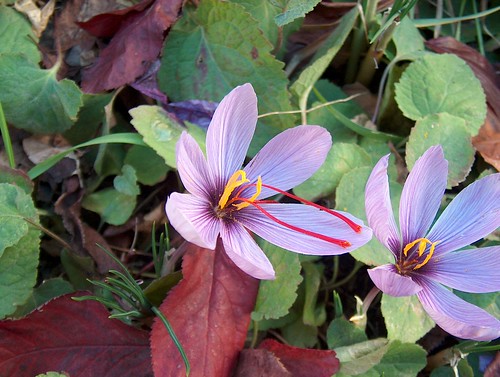
Saffron crocus

The expensive spice Saffron is made from the stamen of Crocus sativus.

What is Crocus sativus

  • Crocus sativas is an autumn flowering corm from the Iridaceae and crocus family.
  • The flowers are deep blue and the stigmas dark red or saffron coloured.
  • Crocus sativus throws up a spear of green leaves only after flowering.
  • Corms are cheap to buy and reproduction is by corm division. This crocus is infertile.
  • There are only 3 stigma to a flower so it takes 100,000 blooms to make a pound of saffron. This accounts for Saffron being worth more than gold weight for weight.

How to Grow Crocus sativus

  • Crocus sativus grow best in full sunlight.
  • I have just planted some corms in deep pots with good drainage and a bit of rotted bark to keep the compost open.
  • Raised beds would be another way of growing Saffron so harvesting and drainage problems are minimised.
  • Growing ‘Crocus sativus’ for a Saffron crop you need to collect the threads in the morning and dry the saffron.

You can buy Crocus sativus from Thompson & Morgan

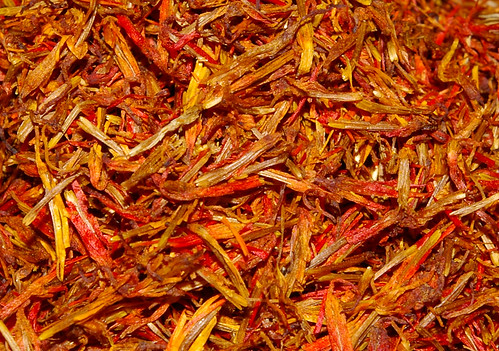
Saffron whole close up

How to Use Saffron

  • Saffron from Crocus sativus has been used for centuries to flavour and colour food.
  • It has been cultivated by Greeks, Romans and Chinese for 3500 years and is now a cash crop in Afghanistan, Kashmir and Spain.
  • The Chinese use it as a medicine, in food and as a dye.
  • Crocus sativus is a brightly coloured but short lived flower in the rockery at the end of summer or early autumn

For other Autumn crocus


Photo Credits
Saffron crocus by kightp CC BY-NC 2.0 ‘Crocus sativus. The red stigmas seen on the left bloom are the more-precious-than-gold ….. Stigmas have already been plucked from the bloom on the right. The half-dozen corms planted in my front garden bed three years ago have multiplied to the point where I’ve harvested nearly a tablespoon of threads this year – enough for several risottos, paellas and other dishes in the months ahead.’
Saffron whole close up by notafish CC BY-SA 2.0

Late Flowering Autumn Perennials

Late Flowering Autumn Perennials

Autumn perennials offer some really deep vivid colours. A final flurry before the end of the season.

Here in Oxford, there are some wonderful Autumn borders.

autumn flowers

Autumn border at Christ Church College, War memorial gardens, offers a stunning back drop for this rich autumn border.

autumn

Oxford Botanic Garden’s autumn border. (This border effortlessly moves from summer to Autumn)

Great Perennials to Try for summer Colour

  • Heleniums – Deep Red ruset, daisy like flowers. Easy to stake and grow. These flower from August to October.
  • Aster / Michaelmas Daisies. Very easy to grow. These may need staking, but many new varieties are medium height and self-supporting. They are fairly low maintenance, though tend to be afflicted by mildew towards the end of the season
  • Penstemon. Another great perennial, which can flower from June, until the first frosts. Really the best value perennials in my garden.
  • penstemon


Autumn BOrder

Heliotropes and Asters offer a mixture of deep hues.

Autumn BOrder

Free flowing planting allows a riot of colour.

Oxford Botanic Gardens

Michaelmas Daisies

Autumn BOrder

Lovely Red Dahlias, really stand out against the darker leaves. They remind us of the hot days of summer
autumn
A close up of the dahlias; these really are offering great value. They are an excellent plant for having such a long flowering season. Dahlias can overwinter in mild winters, if you give it a good mulch. However, for safety is better to lift in November and bring inside.

autumn

enjoying the flowers

Read More Read More