Browsed by
Category: Flowers and Plants

Annual, perennial and interesting flowers with advice on culture, information, tips and recommended varieties

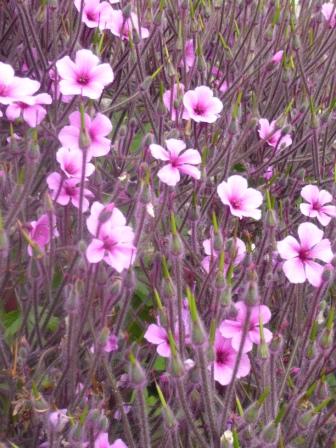
Geranium Maderense

Geranium Maderense

maderiensce

I saw this Geranium in pots in the walled vegetable garden at Harewood House and the gardener was happy to talk enthusiastically about this and other plants from Madeira. The plant was growing taller than the normal 4-6 foot and made a spectacular display.

How are Geraniums confused with Pelargoniums?

By way of contrast the Pelargonium ‘Attar of Roses’ was growing only feet away in the greenhouse but the flower colouring was similar. The Pelargonium had the edge for me because of the scent when you touched the leaves. They would make a good conservatory plant but need to be kept in check so they do not become too gangly.
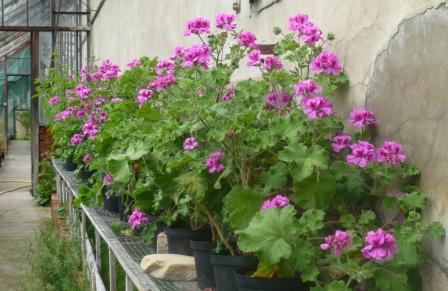
pelargonium-attar-of-roses

Read More Read More

Red Poppies

Red Poppies

Poppies are a great flower and the greatest colour must be red.
redpoppies

I was surprised to see these red poppies still flowering into Octobers. Simple to grow, these red poppies offer a dazzling display of late season colour.

redpoppies

Red Poppies from Seed

Red poppies are easy to grow from seed. Annuals grow quickly and tolerate a range of soils, preferring a sunny position. Perennial red poppies are also quite easy to grow, though the flowers are more blousy and may need staking.

redpoppies

Red Poppies against backdrop of Magadalen College, Oxford

Read More Read More

New Guinea Impatiens Failure

New Guinea Impatiens Failure

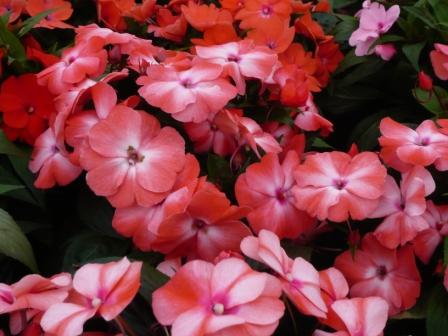
Back in 2009 I reported on my failure with impatiens. now I am tempted to try again. So far so good no of them have died but nor are they a run away success.
ng-imp

I had a disaster with New Guinea Impatiens 4 years ago. Rather than grow from seed I bought a pack of half a dozen plants to grow on. The only trouble is they haven’t grown on but got sickly and hardly survived.

Errors and correct treatment

  • I used a peat based compost to pot them into. I should have used a faster draining soil based John Innes No 2.
  • The leaves have gone brown and limp because they were on a windowsill getting too much hot sun before they were strong enough. I should have given them less direct sun whilst young.
  • Once or twice I must have let the soil dry out. New Guinea Impatiens must have moist soil at all times and I regret not standing them on some gravel to help humidity.
  • I have not fertilized the plants but as they have barely grown in 6 weeks it is due to other health problems. Feed when growing.
  • I have not got red spider mite – at least I have saved them from that problem.

I gave some of the lilac flowered plants away so  am interested to see if they have done any better. I also put some of my sickly plants in a plastic zip up greenhouse outside so I am now off to see how they have done.

New Treatments
I corrected the above issues but watering still gives me nightmares.
I potted the plug plants on into 3″ pots and they are more robust.
I like the plants when well grown as a summer houseplant.

Indoor Daffodil and Narcissus Tips

Indoor Daffodil and Narcissus Tips

In some ways the Narcissus is easier to grow indoors than the Hyacinth.

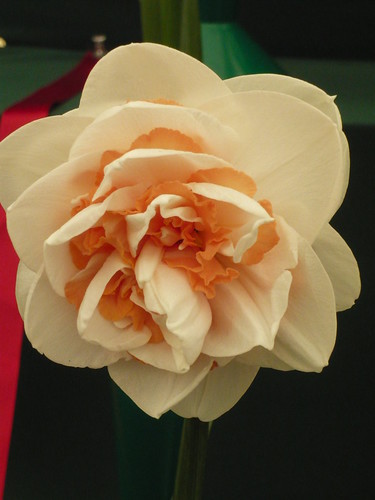
There is nothing fresher than the scent of spring flowers that you have grown yourself and Narcissus and Daffodils can be ordered now then planted in September/October. Daffodils are available as Multifloras, Doubles (as above) and recommended miniatures: Jonquilla are a particular scented favourite of mine flowering 4″ to one foot high with names such as Pipit, Suzy, Sugar Bush, Baby Moon and Martinette, then there are Tete-a-tete which are dead easy if you leave them in the cool to develop good roots.

Growing Tips

  • Grow in pots of bulb fibre with a deep root run and the nose level with the surface or the roots may push up the bulbs. Buy new bulbs each year and plant old stock in the garden.
  • You need to mimic a three month winter’s nap in the cold for hardy daffodils to ripen their flower buds. Keep cool to allow roots to form and avoid excessive warmth as that inhibits flowering.
  • Look for prepared bulbs specially supplied for forcing but keep in the cold until ready too flower.
  • Water the pot when planting and keep moist when in flower.


Experiment with varieties available.

Daffodils requiring a shorter cold period are Monal, and Rijnveld’s Early Sensation.
Cyclamineus varieties are good for forcing.
Most of the early to mid-season miniatures are also good forcers.
Traditional favourites include Paperwhites and Cheerfulness.

Mind Your Own Business Plants

Mind Your Own Business Plants

Do not get nettled if you are given a mind your own business plant even though it is in the same family.

Mind Your Own Business is not an instruction but a mat-forming plant also know as Baby’s Tears. It is a creeping perennial that bears minute flowers and forms a mat or small hummock of green foliage that creeps along the soil on thin stems and hangs down over the side of a plant pot. Indoors ‘Mind Your Own Business’ grows best in a cool room and will grow well with high humidity although that is not essential. Never let it dry out and the brighter the position the more water it will need.

There are 3 cultivars of Mind Your Own Business, Soleirolia soleoirolii the species which has green foliage, Variegata Silver Queen with grey-green foliage and Aurea Golden Queen.

Read More Read More

Aroid or Alcea Family

Aroid or Alcea Family

You may be wondering what is an Aroid? According to my Gardeners Encyclopedia it is any plant belonging to the family Aracea such as Arum Lilies, Anthuriums, Philodendron or Monstera. They are characterised by the cylindrical Spadix densely packed with tiny flowers, with the male on top of the female and having a single Bract known as a Spathe.
Aroids are grown primarily for the Spathe which is the most showy part of the plant. It may be flat as with the Anthurium below or rolled around the Spathe as with Calla Lilies or Lords and Ladies.

Read More Read More

G. T.’ S Top Ten Waterside Flowering Plants

G. T.’ S Top Ten Waterside Flowering Plants

If you need a stream of ideas of plants for your waterside look no further.

For bog gardens or the streamside there are many plants that will be happy with damp roots. This is our selection of the flowering plants that will grow well in a waterside position.

Flowering Waterside Plants a Top Ten

  1. Iris is one of the most popular waterside plants with several varieties suitable for this position including, Iris ensata Gracieuse’, Iris pseudacorus and Iris sibirica ‘Silver Edge’ .
  2. Snowflake or ‘Leucojum vernum’ is much larger than its relation the snowdrop. The flowers are held on long stems that droop gracefully. It is easy to grow  and multiplies freely in most gardens provided the soil is moist enough. Plants have been known to withstand flooding and standing water so it is an ideal choice for bog gardens
  3. Ligularia The Rocket has yellow flower heads held well clear of the foliage. Very architectural with its sturdy, upright habit giving good reflection in the water.
  4. Astilbe ‘Rheinland’ or Astilbe x arendsii ‘Spinell have wonderful plumes of flowers and love the damp conditions.
  5. Lysichiton camschatcensis The Giant white arum has beautiful white, arum-like flowers which are slightly later than yellow Lysichiton americanus. With smaller leaves it is a better plant for a small pond or bog garden. Slow to establish but very hardy.
  6. Read More Read More

Rip van Winkle and Miniature Daffodils

Rip van Winkle and Miniature Daffodils

Start early tpo plan your miniature daffodils for next year. The best bulbs sell out early and there is definately more to miniature daffodils than Tete-a-Tete.

Rip Van Winkle

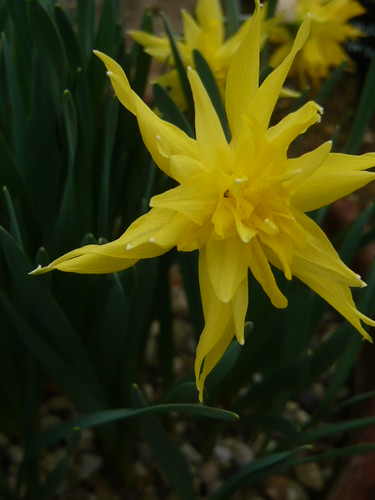
Rip van Winkle is a miniature Daffodils correctly called Narcissus minor pumilus ‘Plenus.’ It grows 6-8″ tall and the yellow spiky petals that are about half an inch wide.

Cultivation

  • Rip Van Winkle look particularly eye-catching when grown close together in drifts in borders.
  • They are particularly good for growing in pots in a cold greenhouse. This facilitates close inspection of the flowers which is well worthwhile due to the shredded ribbon nature of petals.
  • For houseplants pot in bulb fiber and water when necessary to keep the compost moist. As the growing shoots reach a height of 2” move the containers to a cool bright position indoors. Buy new bulbs each year.
  • When growing narcissus outdoors allow the foliage to die back naturally before removing it in June/ July to feed the bulb for the following year.
  • Rip van Winkle will bloom even in partial shade, though generally speaking the more sun the better.

Miniatures have the same descriptive divisions as the standard daffodil, only with smaller blooms.
Read more about Miniature Daffodils on Gardeners tips.

Read More Read More

Growing Scindapsus Aureus

Growing Scindapsus Aureus

Scindapsus Aureus is also called Devil’s Ivy due to its invasive nature in tropical climates. In the UK it is an evergreen house plant and the Devil can take the hindmost.

Epipremnum aureum (Linden & André) G. S. Bunting

The vine like plant has variegated leaves of yellow or white (Marble Queen)and Scindapsus is very similar to Epipremnum a sister plant in the Araceae family.

Growing Tips
This climbing plant will thrive on a moss pole or grow down from a basket.
The stems can reach 6 feet high.
Avoid burning from direct sunlight but variegation will fade in poor light.
Watering. Let soil dry out between regular watering in spring and summer.
Be very sparing with winter watering.
Minimum temperature 10 degree centigrade.
Scindapsus Aureus is often used in offices to help purify the air.
It is alleged that the plant can be stood on an aquarium with its roots in water to clean up the tank.

Scindapsus aureus tutor

Photo Credits
Epipremnum aureum by adaduitokla, on Flickr CC BY-NC-SA 2.0
Scindapsus aureus tutor by floresyplantas.net

Verbascum Austriacum and Verbascum Letitia

Verbascum Austriacum and Verbascum Letitia

Verbascum or Mulliens can be annuals, perennials or shrubs and these are some of my favourite yellow flowering varieties.

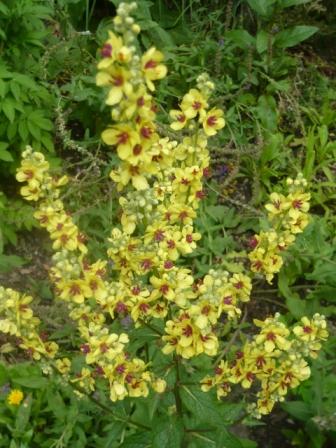
Not unlike its cousin Verbascum Banana Custard and others in the family this particular plant, Verbascum austriacum, is popular in Central Europe.

I liked the  red centre to the flower and the branching habit.

Verbascums australis can grow over 6′ tall and I like the spires in the back of my garden border.

These Verbascum seed quite freely and you will be able to scrounge a plant from any friend who grows them.


Verbascum letitia grown in a well lit alpine house.

Verbascum’Letitia’ AGM is a small bushy, evergreen shrub that grows 12″ high. , with hairy grey, oblong leaves and abundant purple-centred, bright yellow flowers