Browsed by
Category: Flowers and Plants

Annual, perennial and interesting flowers with advice on culture, information, tips and recommended varieties

Blackberry Growing and Care

Blackberry Growing and Care

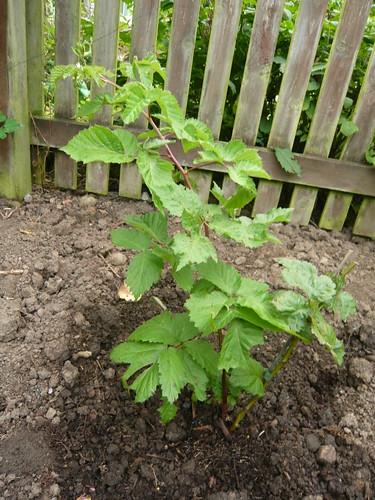
The Blackberry was my first choice in a new garden makeover project. Now three years on my crop is destined to be enormous.
I am rejuvenating and increasing the space dedicated to soft fruit.
My badminton partner has long espoused the success of the thornless varieties and I fancy a rest from foraging in the hedge rows that may have been chemically treated by well meaning farmers.
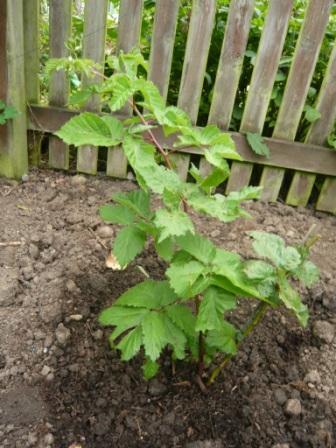
Blackberry 'Waldo'

Blackberry Waldo

  • Waldo is a completely thornless and early fruiting variety.
  • It should grow in a compact form with moderately vigorous growth making it ideal for a smaller space than some brambles.
  • I was seduced by the claim of ‘extremely large, attractive, glossy fruit. The berries are firm with exceptional flavour.’ Who ever checks back against these sales descriptions.
Planting my Blackberry Waldo

Read More Read More

Gooseberry Growing & Care

Gooseberry Growing & Care

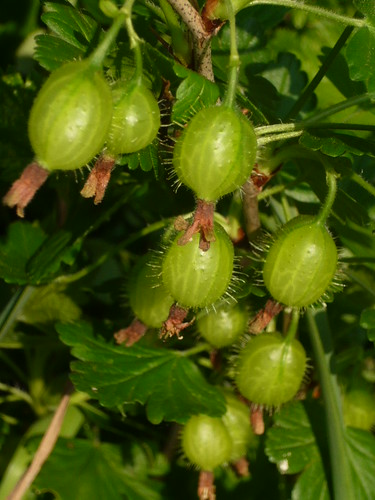
Gob stopper gooseberries are the order of the day. Mega crops this year are going to be a culinary delight fresh and from the freezer.
gooseberry

How To Plant New Gooseberries

Space bushes 5 feet apart.
Dig in lots of manure or well rotted compost
If planting container grown plants tease out the roots before planting firmly in a large hole.
Mulch to retain moisture and suppress weeds.
In late November I planted several new varieties of gooseberry bush as I am looking for more fruit (and fruit pies). These plants do not need any pruning until next year and then only very light pruning. Never the less I have had a good look to make sure that there are no damaged branches to trim and I will check again if we get some heavy snow.

Gooseberry 'Lancashire Lad'

Read More Read More

Holly is Not Just for Christmas

Holly is Not Just for Christmas

Get an early start on Christmas decorations before the birds eat your berries.
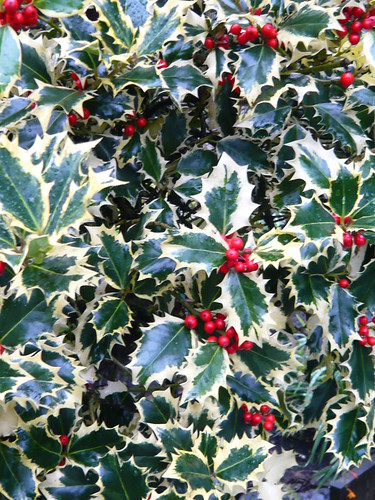
Get out and plan where you will pick your holly for Christmas decorations now. As the berries ripen the birds descend and scoff the lot just when you are not looking.
You can condition the stems, leaves and berries and placing stalks in a glycerin solution. They will take up the liquid and become supple and longer lasting. Crush the stems and use warm glycerin then leave for a couple of weeks.

Holly

Read More Read More

Growing Aubretia from Seed

Growing Aubretia from Seed

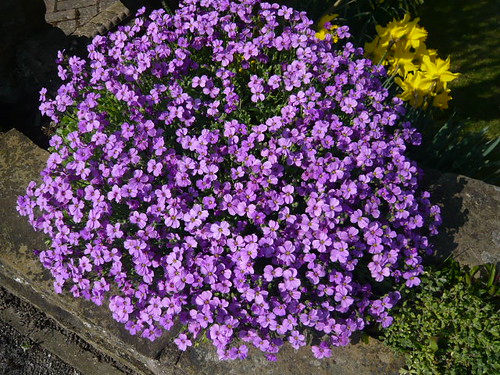
Aubretia

Aubretia is an excellent, 6″ high perennial that is almost smothered with flowers in early spring.
Aubretia is suitable for rockeries, walls, borders, edging paths, planters and window boxes. Spread is 12-18in and flower colours include blue, rich purple and pink shades.

Sowing Instructions

  • Sow by just covering the seed, from late winter to early summer, in a good free draining seed compost.
  • Add some grit or sharp sand to ordinary compost as Aubretia doesn’t like wet feet.
  • Make sure the compost is moist and not wet and seal in a polythene bag.
  • Germination usually takes 14-21 days at 65F .

Growing Instructions

  • Transplant, when large enough to handle, into boxes or 3in pots.
  • Later plant out 12in apart into a sunny, well drained garden soil preferably containing lime.
  • Trim with shears after flowering to keep plants tidy. Allow to trail if you like the unkempt look.
  • Desirable plants can be increased by cuttings or layering in late spring.

Old Hybrids to Look Out For

  • Doctor Muller – deep violet-blue
  • Mrs Rodewald – larger red flowers.
  • Bridesmaid – pale pink  with a deeper eye.
  • Barker’s Double -  a pink mix with semi and double flowers

You can buy seeds or plants from Thompson & Morgan and other seed suppliers

Aubretia deltoidea Variegata has white edged leaves.

Aubretia deltoidea Aurea has gold edged leaves. Aubretia is also in books with the spelling Aubrieta and Aubrietia

How to Store and Keep Apples

How to Store and Keep Apples

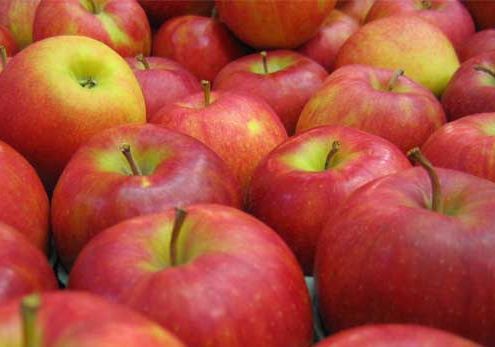
After a great crop you want to keep all that apple flavour in storage to use as and when.

My father stored his apples for up to six months in a cool, dark, humid old outhouse. The problems are the same but now a days the methods are more varied. Still one rotten apple in the barrel…….

Conditions for Storing

  • You need to prevent frost damage. Apple cells rupture and go too brown pulp if frozen.
  • Some gases encourage or speed up deterioration and rotting.
  • Some humid air is needed, not drying drafts which make apples shrivel and go mealy.
  • Some varieties store better and last longer.  Tart, firm skinned, late varieties store best – Cox, Sunset and Blenheim Orange are good keepers.
  • Avoid apples touching one another

Tips on Storing

  • Small quantities can be stored at the bottom of a fridge in the crisper
  • Only store sound, unblemished apples. Leave the stalk in the apple.
  • A large clear plastic bag can be used making inspection easy. Punch half a dozen holes in the bag to limit air ingress.
  • Wrap apples in paper to avoid rot passing from one apple to another and store in cool dark conditions as my Father did. You can use boxes or racks as available.
  • Make apple pies, fillings and apple sauce with damaged or wind fall apples. Puree with a bit of sugar can be frozen, which is good news for my apple pies.
  • Do not store near onions or the apples pick up the smell.
  • My favourite apple store is in the form of cider. hic!

Freezing Apples

For the best results select good sound apples for freezing
Wipe or wash them and then core them
Halve or quarter them according to size then drop cut pieces into water with a little salt or lemon juice to prevent them turning brown
Pack them into freezer bags and then pop them into the freezer. Great for future crumbles and pies
Amazon traditional apple storage
Book Cover

Buy British Flowers

Buy British Flowers

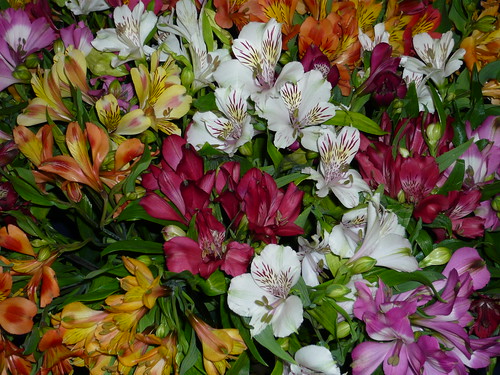
We are used to counting food miles so why not flower miles,  the miles a bunch of flowers incurs in getting to your vase. Many supermarket and petrol station now source flowers from long distances such as South Africa, Venezuela, or Kenya as well as Spain and Holland. If you must buy rather than grow your flowers look for British. Lincoln Cornwall and the Channel islands are normal UK suppliers but there is a trend for even more local supply.

Best Flower Sources in Great Britain

  • Your own garden should have a plentyful supply of flowers measured in flower yards not miles. Where would we be without Sweetpeas?
  • Your neighbors may be willing to give the odd bunch of flowers away and you can reciprocate with your excess Sweetpeas.
  • Allotments dug and fertilised by your own sweat are not just for Vegetable. Try some Chrysanthemums and Dahlias as part of a flower cutting area.
  • Wayside farm gates and smallholdings often have a bucket of locally grown flowers for sale at reasonable prices. Why pay for lots of transport and supermarket margins when you can support a British enterprise.

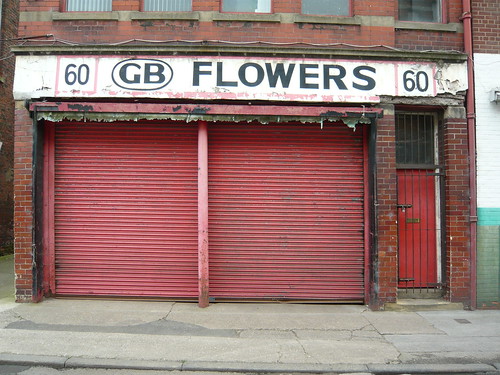
Is this about British national flowers or a shop owned by George Bernard Flowers or even the wholesale florist in Hull? The picture is the later the former is the main thrust of this section of the article.

National Flowers.

  • The rose was adopted as England’s emblem around the time of the War of the Roses 1455-1485 when Yorkshire sported the white rose and Lancastrians the red rose.The two roses were combined to make the Tudor rose (a red rose with a white centre) by Henry VII when he married Elizabeth of York.
  • In Northern Ireland the shamrock a three-leaved plant similar to a clover is the symbol. It is said that St. Patrick used the shamrock to illustrate the doctrine of the Holy Trinity.
  • The thistle is a prickly-leaved purple flower which was first used in the fifteenth century as a symbol of defence and the ‘Flower of Scotland’.
  • The national flower of Wales is usually considered to be the daffodil and is worn on St David’s day. However, the leek has even older associations as a traditional symbol of Wales
  • Holland and Hungary have both chosen the Tulip whilst France prefer the Iris. Germany have the knapweed and Greenland the willow herb but I guess nothing much flowers in Greenland anyway. Indonesia has cornered the flower market by selecting three national flowers Phalaenopsis, Rafflesia and Jasmine.

The rose, thistle and shamrock are often displayed beneath the shield of the Royal Coat of Arms.  There is a more comprehensive listing on The Flower Expert

Canterbury Bells not Cockleshells

Canterbury Bells not Cockleshells

LBA 067
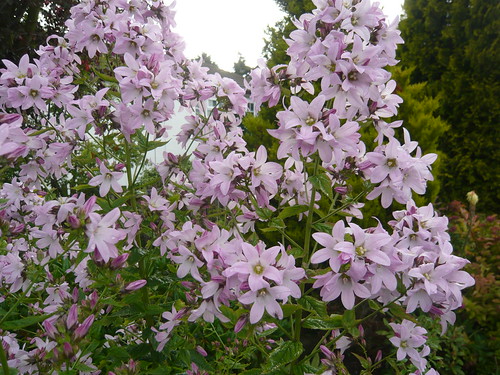
Campanula burghaltii is a showy Canterbury Bell or Campanula. The pale lavender flowers are borne on wiry stems that I find need no extra support. The leaves are leathery in texture and oval in shape.

LBA 062

Canterbury Bells are available in a range of sizes and colours. This Campanula lactiflora has been grown from seed and last year was even better as it made pyramids of flowers. Perhaps I should allow each plant a bit more space.

Bell Flower


This alpine version of the Canterbury Bell seems to be all flower and no leaf. It is performing well in  a moist plunge bed.
Book Cover
Dwarf Campanula by Graham Nichols
See also Campanula for the rockery here or Alpine campanulas.

canterbury bells

This Bell flower has self sown in my garden for many years. The stems need some support but they flower for a long period and I am loathed to pull them all up. I try help the white flowers as they seem less robust.

Read more about Growing Canterbury Bells

Read More Read More

British Apples Worth Growing

British Apples Worth Growing

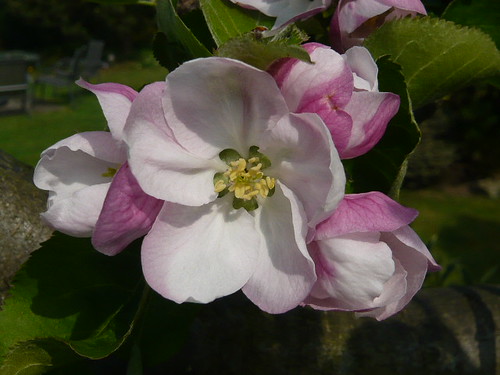
With over 600 varieties of apple to grow in the UK, you need to refine your search for a good variety. (There may be as many as 2000 worldwide.)

april apple blossom

Here are some British varieties

Ribston Pippin grown in Yorkshire since 1707
Egremont Russet tasty and nutty with white crumbly flesh
Claygate Pearman rich and scented and discovered in a hedgerow in 1820
Chelmsford Wonder a good cooker
Winter Wonder a recent breed which is crisp and juicy
Blenheim Orange, Beauty of Kent and Wyken Pippin may produce more taste than Breaburn, Gala and Pink Lady

Artistic view of Apples

‘Detailed watercolours depict the unrivalled range of form, colour and texture which characterize such varieties as Beauty of Bath, Peasgood Nonsuch, Cox’s Orange Pippin and Egremont Russet in this illustrious book by Rosie Sanders.

Book Cover

Also available from Amazon by clicking on the cover is the new book of Apples

Read More Read More

Top Ten Seeds for Children to Grow

Top Ten Seeds for Children to Grow

Sunflower -Valentine

Top Ten Flower & Veg Seeds for Children to Grow

  1. A Broad bean or runner bean grown in a jar with curled tube of blotting paper to hold the seed against the glass. The roots will start when the bean germinates and then a leaf will form. The bean can be planted or the shoots eaten.
  2. Mustard and or Cress sown on a wet cloth or flannel will germinate by growing a jelly coating and produce a fresh smell. In about 8 days there will be cress to eat.
  3. Sunflower seeds sown in the garden can make giant plants taller than the children. Put a cane in firmly as a stake to tie the growing plant too.
  4. Nasturtium seeds are big enough for even the smallest fingers. Plant in poor soil and they will trail and spread and the flowers leave new seed to collect for next year. The leaves and flowers can also be eaten so use this to teach children what can and can’t be eaten.
  5. Virginia stocks can be sown in a broadcast manner and produce sweetly smelling flowers quite quickly
  6. Forget-me-not can be sown in summer or autumn and will flower in spring when you haven’t forgotten them
  7. Cottage garden selections like Cornflower,
  8. Clarkia, are vquick to mature and flower in summer.
  9. Larkspur all provide a lot of colour for relatively low cost
  10. Calendula are hardy seedlings that do not require any effort other than broadcasting the sizable seed

Perhaps the best idea is to grow a mixture. You can buy seed mixtures aimed at different locations such as Cornfield mix and others from Thompson & Morgan