Browsed by
Category: Flowers and Plants

Annual, perennial and interesting flowers with advice on culture, information, tips and recommended varieties

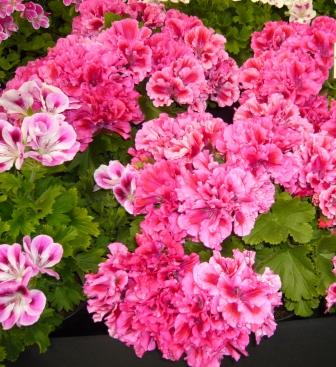
Fancy Pelargoniums Called Geraniums
Fancy Pelargoniums Called Geraniums

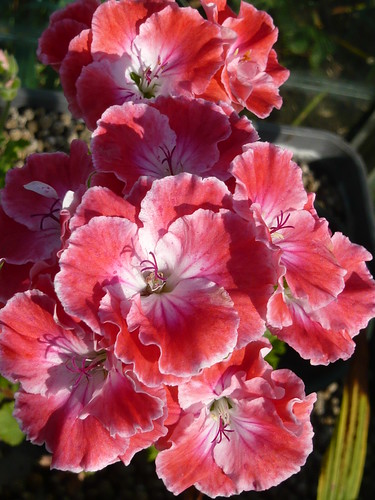
Pelargonium regal

I have a strong liking for Pelargoniums (which I will call Geraniums from now on). They are still producing lots of colour and variety late into October. Because we suffer strong winds and early frosts up on the Pennines of Yorkshire I am in the process of protecting the varieties I am keen to keep through winter.

How to Keep Geraniums Over Winter

  • Geraniums originate from South Africa and are tender in our UK climate.
  • Geraniums do not like damp humid conditions coupled with low light levels in winter.
  • Select the best varieties of Geranium plants that you wish to preserve over winter. Zonal Geraniums are going to be cheap and plentiful next year so if space is limited they may be the ones to sacrifice.
  • I am taking late cuttings of my chosen Regal and scented Geraniums in case the stock plant fails. I also took some earlier cuttings in August. Do not use hormone rooting powder as this tends to attract black rot.
  • Keep the cuttings in a light frost free spot. For small cuttings I put 3 or 5 to a pot of well drained compost.
  • The host plants need to be tidied up with any brown or nibbled leaves removed. I have pruned long stems to restrict the plants and provide cutting material.
  • Keep the plants frost free and on the dry side over winter. If they are kept in a centrally heated house they will need some water and may repay with a supply of flowers.
  • Strong light is not essential but they will prefer some natural light.
  • In spring a weak feed and more light will revive the slumbering plants. New growth can provide stock for many more cuttings.
Pelargonium

Some Types of Geranium

Regal Geraniums once called Pelargonium domesticum, P. Cucullatum or P. grandiflorum are showy flowering plants at their best between April and June. Named varieties to look out for include Black Knight, Bridesmaid, Caribrooke, Marylyn (above)Wooton and Lord Bute.The velvety textured petals can combine to make large flowerheads and look stunning in a pot or container. The growing habit is looser than Zonal geraniums.

Ivy-leaved geraniums are trailing plants best known in hanging baskets and from the balconies of Swiss Chalets. The colour range is not as wide as that for Regals but the volume of flower over a long summer make them desirable plants.

Fancy Leaved Geraniums are sometimes called ‘show-off’ Geraniums and as you would expect have a variety of leaf colour that make them attractive in the house or as an edging plant. There are also many scented leaf geraniums with a variety of like citrus scents.

Pelargonium Endlicherianum or the Turkish Pelargonium is more hardy than other Geraniums. They produce large bright pink flowers in early summer. They have succulent roots and need very well drained, rocky soil in a protected spot in full sun. The round, greyish-green leaves and pretty flowers make them an excellent plant for the rock garden.

Dwarf and Miniature Geraniums are fascinating plants that have all the features of normal geraniums but on a smaller scale. The plant below is now flowering with pink petals on the typically geranium like inflorescence.
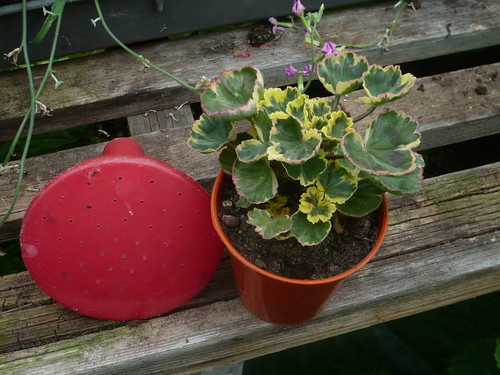
Miniature Geranium

Other links and information on Pelargoniums

Top 10 Scented leaved Pelargoniums
Pelargonium Grandiflorum and other ‘Geraniums’
Stellar Pelargonium – Bird Dancer Geranium
Photogenic Pelargonium
The Secret of Geranium (Pelargonium) Cuttings
Growing Regal Geranium Pelargonium
Miniature Pelargonium
Dwarf Pelargonium aka Geranium
Tips for Growing Geraniums (Pelargonium)
Growing Regal Geranium Pelargonium

Growing Regal Geranium Pelargonium

reba-regal

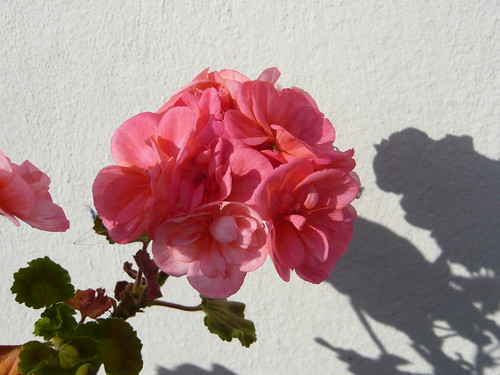
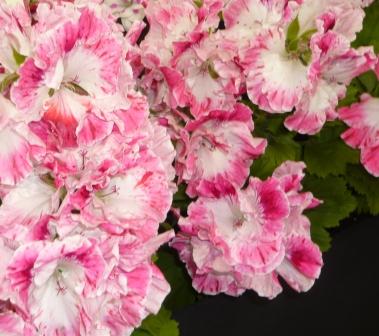
Regal Pelargoniums or exotic Geraniums are getting more fancy and colourful. This pink frilled flower is called Reba Regal. I grow Regal pelargoniums for in house but they can go outside after the last frost although some flowers are a bit susceptible to rain damage.

Tips on Growing Regal Pelargoniums.

  • Pinch out the growing tips to get a bushy plant although most varieties are branching types.
  • Water Regals more  than standard pelargoniums and feed with potash feed as they near flowering.
  • Those with large blooms and ruffled petals need a sheltered spot such as in a porch where they won’t be spoilt by the wind or rain.

    Read More Read More

Saxifrages in Alpine Gardens

Saxifrages in Alpine Gardens

There are a host of different Saxifraga or singular Saxifrage. They make for an interesting group to grow and collect both in the garden and in troughs or pots depending on the variety. Saxifrage kolenatiana has rosettes that throw up spikes of flower in summer similar to its better known Saxifrage relative ‘London Pride’.

Groups of Saxifrages

These are just some of the groupings of Saxifrage each contain many variants, varieties and species for which you need a more detailed document. See links below.

  • Saxifraga x arendsii or Mossy Saxifrage is useful for walls, troughs and shady rockeries.
  • Saxifraga stolonifera  groundcover under flowering shrubs or small trees OK in shade or Saxifraga x urbium London Pride
  • Saxifraga cotyledon or Pyramidal Saxifrage for troughs and pots
  • Saxifraga paniculata: Encrusted Saxifrage, group 4 for walls, edger; sun to part shade
  • Saxifraga primuloides: a miniature variety for shaded rockeries


Links and Further Information

The Saxifrage Society

Saxifraga World

BBC

RHS  Silver Saxifrage Trials

Book Cover

Click on book to buy from Amazon.

Tips for Growing Geraniums (Pelargonium)

Tips for Growing Geraniums (Pelargonium)
Pelargonium

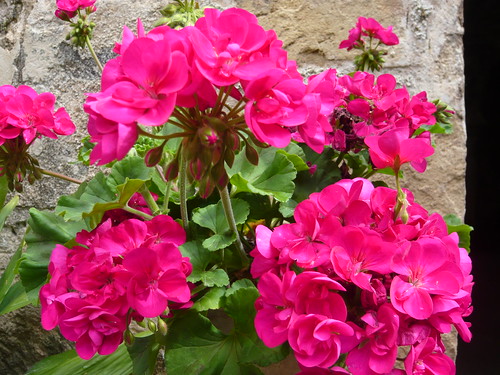
There are two great uses for Geraniums that make it worth growing these fine flowering plants. Outdoors they make fantastic border plants and the red varieties are very popular in formal bedding schemes. The second use is as a long flowering houseplant and if you deadhead and feed you plants you will get lots of geraniums from one windowsill plant.

Geranium Cultivation

Grow from seed, plug plants or cuttings. They root quite easily from spring cuttings.
Plant out when the danger of frost has gone.
Geraniums can go straight into a border/bed or be put in containers, troughs or baskets.
Pinch-out the growing tip in April to encourage bushy plants.
Feed in summer with a high potash fertilizer to encourage more blooms.
Geraniums can survive with little water so can be planted in dry conditions but they do appreciate a drink like the rest of us.

Tips and Ideas for Planting Geraniums

Use one variety or colour and plant together to get a bold swathe of colour.

Read More Read More

Commercial Compost Critique

Commercial Compost Critique

Commercial compost is a range of products sold in plastic wrapping in garden centres, DIY shops and sundry retailers. This is not to be confused with your own garden compost made from decomposed plant matter.
The contents of these types of commercial compost vary and can affect the growing result considerably. All have a base which has no or negligible nutritional value plus additives that make it useful for a specific purpose.
Typical Compost Constituents – Base
Peat base of small fibers of bog peat is excellent for many purposes but now seen as none ecofriendly due to the over extraction of peat and lack of replenishment of the resource which isn’t sustainable.
Coir as a peat substitute for the base. Coir is made from the hairs & fibers of coconuts and such compost are widely available. There are special organic compost products approved by the vegan society .
Wood pulp based composts and partially composted bark are other bases the industry is trying to develop into retail products but mixes and formulas keep changing
Steralised loam based composts, generically called John Innes after the guy who first formulated them, tend to be heavier.
Composted green waste is becoming popular if you can find a reliable supplier who uses undiseased raw materials
Typical Commercial Compost Constituents – Additives
Most composts are mixes of some of the base ingredients and possibly sand or vermiculite to open up the compost and improve drainage
Fertilisers are added that are appropriate to the end use. seed compost needs less fertiliser than a container planting compost where a plant has to live for at least a season
A wetting agent is often added as peat is very difficult to get wet and you need an even moisture in a pot or seed tray.
Water retaining gels may be added for hanging basket compost.
Typical Compost for Special Uses
Rooting and cutting compost is usually just a mix of sand loam and peat
Seed compost has crushed limestone and phosphates added to help drainage an promote root growth
John Innes No1, 2 & 3 has varying quantities of fertilisers; hoof and horn, superphosphate and potassium sulphate . No 1 Potting Compost is for pricking out young plants, No 2 Potting Compost is for potting on and No 3 Potting Compost is for established plants and shrubs.
Ericacious compost is for acid loving plants like Rhododendrons and lime hating plants like Mahonia and has flowers of sulphur added to the peat based mix.
Cactus compost, Bonsia compost, Orchid compost, Citrus plant compost even African Violet compost are all available from a range of suppliers. One brand with a range available in many outlets is Westland http://www.gardenhealth.com/latest-news.php
Bulb compost used to be called bulb fibre and has no fertiliser . It is used for bulbs like Hyacinths that have already got a store of energy to produce a flower.
Tips On Compost
As it is an organic product the quality can be variable but there will be a brand you like so try some out – currently I am using Arthur Bowers and B&Q own label.
Mix in a bit of grit, sand, vermiculite or water preserving gel depending on how you plan to use the compost
Try keep it uniformly moist.
Add a drop of liquid soap to the water to restrict the growth of moss on seed compost used for slow germinating seeds.
Grow bags contain compost and are a cheaper way of buying compost than small bags.
Compost deteriorates with age so buy fresh compost from a commercial supplier with a fast turnover.

Month by Month Gardening for Guru & Novice

Month by Month Gardening for Guru & Novice

Book Cover

The Royal Horticultural Society produce many books and this one, RHS Gardening Month by Month by Ian Spencer contains over 1,300 seasonal tasks. Covering tasks for every part of the garden, expert plant advice and lists of star plants from January to December it is a great confidence booster. When you have finished those tasks it will be time to start a new year!

Whether you are a green-fingered guru or are just starting out enjoy 12 months of successful gardening. With help on what to do when to ensure your plants are well cared for and your garden blooms all year round.
Easy-to-follow, this guide not only tells you what to do when, but shows you how to do it.
You only need to browse and not follow slavishly.

Read More Read More

In Praise of Rhododendrons

In Praise of Rhododendrons

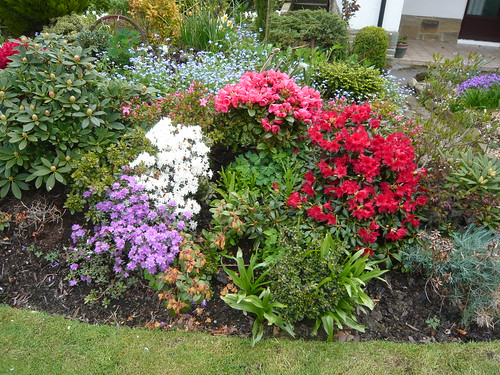
Rhododendron group

Rhododendrons have many praiseworthy characteristics.

Why Grow Rhododendrons

  • They are some of the most colourful spring and early summer flowering shrubs. Red, white and blues with yellows, pinks and shades to suit all tastes.
  • Rhododendrons are generally evergreen and provide structure through the year.
  • Modern hybrids are easy to maintain, slow to outgrow their allocated space and need little attention.
  • There are 1000 species to select and learn about. Prostrate and miniature rhododendrons suit a rock garden whilst some varieties can fill a woodland.
  • Scented Rhododendrons are shorter lived but have great aroma.

Where to See Rhododendrons

Book Cover

Book Cover

Further information

Early Rhododendrons

Housekeeping for small Rhododendrons

Rock Gardens in Miniature

Rock Gardens in Miniature

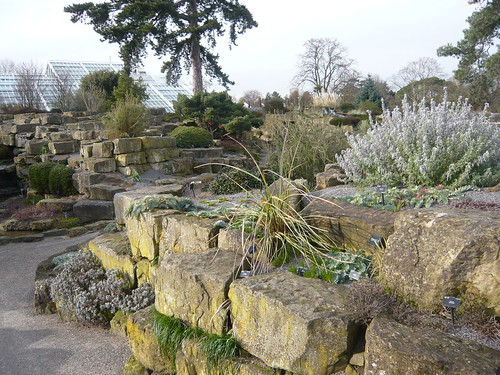
Kew 330

Your own rock garden does not have to be as large as that at Kew. You do not need to demonstrate every regional zone on the planet. Nor do you need specimen plants that grow in all the range of soil conditions and climates.
Better to concentrate on doing one or two things well.

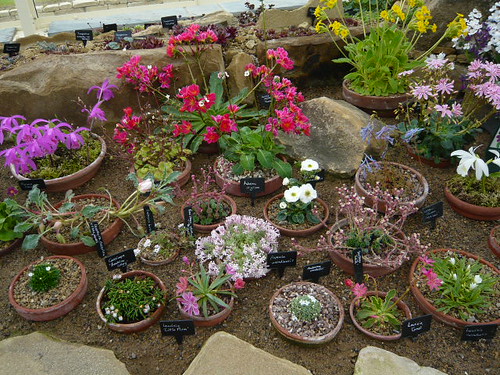
Alpine house

On the same theme growing small plants can be an absorbing hobby. As with Kew gardens you will be very fortunate if you can replicate the alpine house at Harlow Carr shown above. However these two national gardens can give you inspiration for your own feature Rock Garden.

As it says in ‘The Rock Garden Plant Primer: Easy, Small Plants for Containers, Patios, and the Open Garden’ by C Grey-Wilson

Read More Read More

Plunge Pot Grown Daffodils

Plunge Pot Grown Daffodils

This year I didn’t take my own advice and have pots of Daffs that are stunted and unlikely to excel. Take the plunge and bury your bulb pots to encourage strong root growth. Next year is the key- at least gardeners usually get another chance to fail!

daffodil

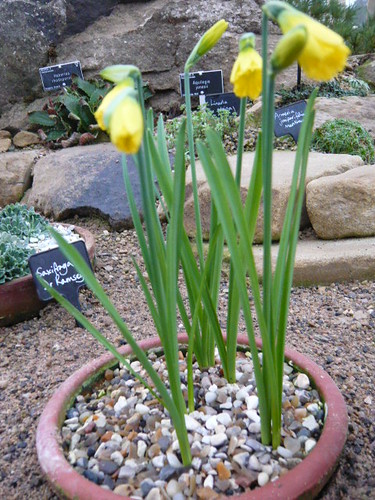
If you grow daffodils in pots you will get better results if you ‘Plunge Pots’ in soil or peat after potting.
Daffodil bulbs do not like to be frozen so you need to plunge or bury the pot at least 2 and preferably 4 inches deep.
Leave them covered for 16-18 weeks.
Feed with high potash feed every week during and after flowering to build up the bulbs for next season.
Do not cut the leaves but when they have died back gently pull them from the base.
gravel in the above photo is used to aid watering and the grit on top of the pot improves the appearance, prevents moss and lichen

Daffodil selection

Take the plunge and bury your bulb pots. This evens out the ground/compost temperature for the bulbs to grow good roots and develop in a natural manner.
Miniature daffodil bulbs like this treatment.
If you want to regrow the bulbs next year give them a bit more room and plenty of root depth.

Muscari A Blue Bulb for Spring

Muscari A Blue Bulb for Spring

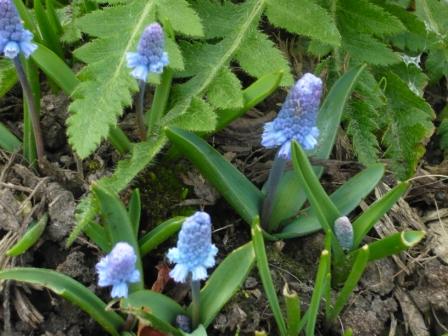
muscari

Muscari Species AKA Grape Hyacinth

Look out in other gardens for great bulbs to grow for next spring. This Grape Hyacinth called Muscari Azureum is a clear soft blue that is recommended for naturalising.
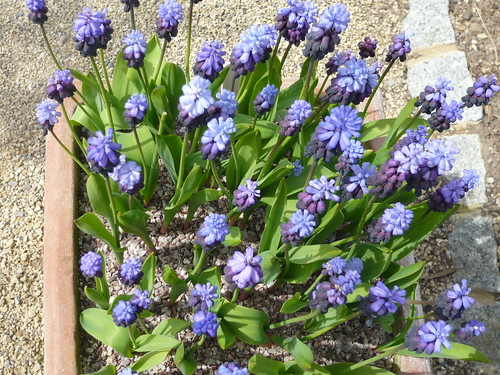
Muscari Valerie Finnis is also blue whilst most of the  other species and varieties flower in shades of purple.
Muscari grow well in pots where the foliage can look interesting.

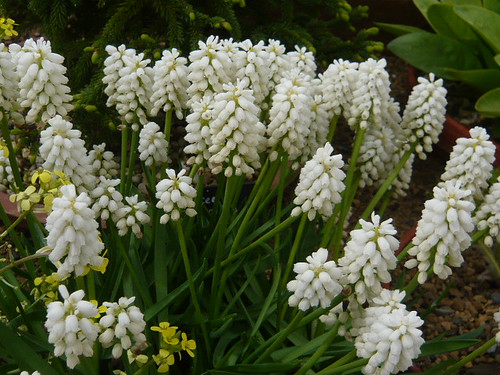
Muscari alba
I have not tried Album or Botryoides Album both white Grape or Feather Hyacinths, nor the new scented yellow Golden Fragrance.

Muscari

Read More Read More