Browsed by
Category: Flowers and Plants

Annual, perennial and interesting flowers with advice on culture, information, tips and recommended varieties

Perennials for Poor Soil
Perennials for Poor Soil

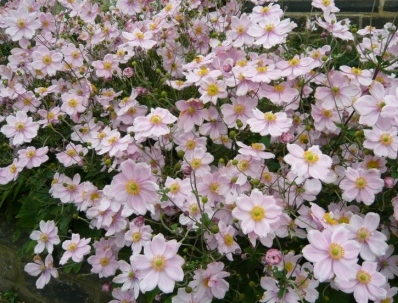
Anemone Japonica
Anemone Japonica

Many gardens have soil that is too poor to be worth improving particularly when some perennials would thrive there anyway. Here is a top 14 selection of perennial plants that are tolerant of poor conditions.

Spring Flowering

Alyssum – yellow flowering

Aquilegia – mixed colours likes light  shade

Digitalis – Foxgloves with purple or white spikes

Doronicum – early yellow flowers, die back quickly

Lamium – ground cover bicoloured leaves and purple flowered

Vinca – arching stems with a prostrate habit and blue flowers

Summer Flowering

Acanthus – bears breeches, spikey leaves with purple flowers

Geranium – species with low habit and pink, blue or white flowers ( not Pelargoniums)

Hemerocalis – Grass like foliage Day lilies

Hypericum – St Johns Worts shrubs with yellow flowers

Nepta – silvery foliage cat mints

Saxifrage – white and pink starry shaped flowers on a neat mound

Autumn Flowering

Anemone Japonica – Pink or white flowers clump forming

Solidago – Erect yellow flowers best in a limy soil
 

Cornwall 151

Simple Compost

Simple Compost

I promised a simple approach to thinking about your compost.  Compostable materials are either Green or Brown and you need a good mix of both. If you want the full scientific monte then you need a book.
Green Compostables include grass clippings, tea bags, old flowers, nettles, weeds, comfrey or rhubarb leaves, pond algae, spent bedding plants, rotting fruit and vegetable peelings – these provide the nitrogen and bacteria to generate heat.

Brown Compostables include twigs, prunings, leaves, straw, cardboard, straw, wool, feathers, shredded paper, wood ashes, vacum bag contents, pine needles and egg shells and provide substance in the form of carbon and mixed chemistry.

Good compost is made from a mixture of  some or all of these components with air, moisture, heat and bacteria. Too much green and it will be a smelly, slimy mess. Too much brown and it will remain uncomposted as twigs and ants. Mix up your heap with browns and greens, add some garden soil with worms to help bacteria if you wish. If the heap is dry, water the browns if it is soggy and green add some paper or cardboard.

Book Cover
A scientific approach to creating good compost with good photographs can be found in this book.

Or a simpler organic view in this book.
Book Cover

Animal Manure

Rotted manure from grass eating and vegetarian animals probably contains more fertiliser than compost. Dog and fox feces should not be spread on the garden or put in the compost bin.

Blue Poppies of the Himalayas

Blue Poppies of the Himalayas

Mecanopsis

Book Cover

Blue Heaven: Encounters with the Blue Poppy by Bill Terry from amazon
Bill Terry is a leading North American authority on Asiatic poppies relates his own encounters with the blue poppy and shows how, given a suitable climate, a patient and persistent gardener can raise this most alluring of perennial plants.
The origins of Meconopsis are expounded along with comments about those who first discovered and grew the plants. A personal account, fun to read and adds to the collective knowledge.

Mecanopsis Crewdson hybrid

Meconopsis the ‘hardy plant series’ is also still available via amazon

Read More Read More

Lime Tolerant Rhododendrons

Lime Tolerant Rhododendrons

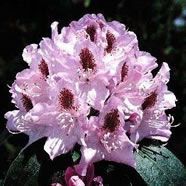
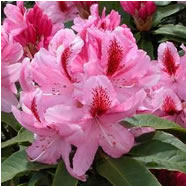
Inkarho Rhododendron


Whilst Rhododendrons have been regarded as ericaceous  plants unsuitable for alkaline or limey soils the newly bred Inkarho plants may be an exception.  It is also believed that some species and root stocks are tolerance of more alkaline conditions.

These German branded Rhododendrons have been developed to survive in soil which is less than perfect  for Rhododendrons. They are all grafted onto a stock that is lime tolerant like the old variety Cunningham’s White or R. hirsutum or R. ferrugineum. The root ball tends to be quite large and robust on these varieties and that may account in part for the ability to withstand alkaline soils. Not everyone is impressed with the results attributed to this breeding programme and particularly the reasons for lime intolerance see Non Conformist Rhododendrons by David Rankin  

His ‘suspicion is that there are in fact many more lime-tolerant species than we had been led to believe, or that at least there are tolerant strains. What we want to do next is to see whether these species growing on limestone are able to avoid absorption of calcium by their roots.’

I am happy to have the right soil for most Rhododendrons but here are a couple more pictures from Inkarho off spring.

Rhododendrons, which require a pH between 4.2 and 5.5but lime tolerant types  of root stock can thrive with a pH between 4.5 and 6.5. An added advantage of plants which have been bred on lime-tolerant root stock is that they are stronger on normal soils.


new-picture-22


RHS suggests other rhododendrons to try on alkaline soil:

R. augustinii (Electra Group) ‘Electra’ AGM
R. ciliatum
R. hippophaeoides
R.
‘Praecox’ AGM
R. triflorum


When & What Seeds To Sow

When & What Seeds To Sow

You can have success with successional sowing of seeds.

seeds

A wonderful variety of colour from a mixture of hardy annuals and hardy perennials.

Sowing seeds is great fun. The good news is that there are different types of seeds that can be grown at different periods of the year. Apart from October – December there is probably some seeds that you can be sown under protection of gentle heat. This could be a sample seed sowing season

January – February.

This is time for early season crops like lettuce and spinach. They will need heat and cloche protection to grow. But, vegetables like Spinach may do better in colder times because they are less likely to grow from seed. Later crops may bolt in the heat of summer. February is also a good time for slow growing annuals like Datura.

However, if you do sow in February, growth will invariably be slower because of the lower light levels. Seed grown early, will need more care and time, but, can reward the patient garden with early season flowers and vegetables.

March / April.

Read More Read More

Help with January Gardeners Jobs

Help with January Gardeners Jobs

The new year gets gardeners all enthused but it is also a time to show patience. The gnomes wont rush to help you anytime soon Hi-ho.

Helpful Tips

  • Beware experts – book learning may not translate into a better garden.Most experts make me worry.
  • Worry less about experience. Applied experience as a result of your own gardening is better than the secondhand variety.
  • Maslov’s hierarchy of needs applies to garden plants as much as gardeners. The basic needs of food, water then shelter in an appropriate home need to be taken care of first. No need to rush into being an exotic all knowing gardener.

Guardians of the Mint


Jobs left from Last Year

  • Clean pots, ornaments and seed trays, insulate outdoor taps and do those maintenance jobs you have avoided.
  • Build compost heaps, raised beds and hard landscaping when weather permits.
  • In dry weather treat wooden furniture and structures.

Plant Matters

  • Prune soft fruit bushes and apple/pear trees.
  • Force rhubarb by covering with a bucket filled loosely with straw.
  • Sow alpine seeds and plant winter flowering clematis cirrosa or napaulensis.
  • Check over wintering tubers, cold greenhouse plants and pinch out the tops of sweet peas to get bushy well rooted plants.
  • Prune grape vines before the sap rises to avoid bleeding.

Crops

  • Keep taking the green and look after the sprouts.
  • Bring hyacinth bulbs indoors for scent and flowering.
  • Gather leeks and root veg roughly clearing the ground.
Olympic Standard Brazilian Gardens

Olympic Standard Brazilian Gardens

Going to the Olympics in 2016 – then combine your visit with a few garden trips.

Book Cover

Competitive gardening may not be an Olympic sport but the standard of gardens in this facinating country has to be seen to be believed. Based more on design and architecture than planting there are some modern features in Rio, Copacabana and San Paulo

Simple Brazilian Gardens

Buy a book on the subject and browse while others compete for gold medals. New Brazilian Gardens presents over thirty gardens and landscapes located across Brazil.

Visit the nearest Brazillian garden like the one at Naples botanic garden Florida. This honours Burle Marx who is considered one of the most influential landscape architects of the 20th century. He drew inspiration from the beautiful plants and exuberant landscapes of Brazil. Through his passion for native plants, he introduced a wide range of native Brazilian plants to gardeners.

View your perfect garden selection on Gardenvisit.com

Amazon Rain Forest

  • There are reputed to be over 50,000 species of plant endemic to Brazil.
  • Coffee, rubber trees, Brazil nuts and numerous palm species are key crops.
  • Mahogany is now protected although this hardwood tree is still felled and sold in Brazil.

Floral Brazil

  • The national flower is the Orhid and there are many delicate species.
  • Flowere familiar to UK gardeners include -Papaver Rhoeas, Freesia, Camelia,  Begonia,
  •  Cyclamen persicum, Gloxinia,  Nymphaea odorota,
  •  Sclumbergera truncata, Billbergia distachya-Bromeliads,
  • Amarilis, Primula obconica, Hibicus, Mangolia, Cynara,
  • Quesnelia Testudo is endemic to eastern Brazil and contains 20 different species each with bright green leaves covered in unique scales.

Read More Read More

Japanese Garden a Gardeners Project

Japanese Garden a Gardeners Project

043

Despite my garden being full to overflowing after the spring rain I have decided to create a new area for a Japanese Garden. When starting a new project I was advised to have a name that may colour the end result. I opted for the grand title of ‘Japan Land’  This will be a long term project and I won’t rush it as I have on other projects in the past.

Action Plan for my Japanese Garden

  • Read up on the various forms and the nature of Japanese gardens.

Book Cover

  • Decide which area is going to be sacrificed to provide space for the Japanese garden.
  • Draw a rough plan  on a piece of paper and list the features to be incorporated.
  • Walk the patch and see if any plants need to be left in situ. I have a couple of Azaleas that I want to keep.
  • List the gardening problems I have caused in the past that I hope to avoid on this project.

Past Problems to Avoid

  • I generally leave too little space for paths and access.
  • Forgetting  to label or record the location of a particular plant  has meant I do not give any individual treatment until it is too late.
  • Many Japanese favourites are long lived such as Acer, Wisteria and Peonies so I must leave enough space for them to grow and develop.

    Read More Read More

Fruit Tree Feeding Tips

Fruit Tree Feeding Tips

pear cordon

Encourage a better fruit crop by feeding your edible and ornamental fruit trees. Fruit trees are heavy feeders and need extra food to crop well.

Nutrition Requirements

  • Nitrogen promotes foliage and vigorous growth.
  • Dessert apples need less than cooking apples and pears. Plums, gages and cherries appreciate more.
  • Phosphorus promotes healthy growth and fruit.
  • Potassium gives fruit good colour, flavour and bud development.
  • Magnesium can stop bitter pit – apply Epsom salts

Feeding Quantities

  • As a rule of thumb, feed apples and pear with Growmore 100g per square meter.
  • If foliage is yellow increase feeding by half and double the quantity for plums and cherries.
  • Organic gardeners can use blood fish and bone plus organic potassium material at 15gm p/sq./m
  • Apples and Pear appreciate a low nutrient mulch like garden compost whilst plums like manure. If possible avoid growing fruit trees in grass.
  • Mulching is very good for organic growing as it preserve natural nutrients and helps make them accessible.
  • Soil can be tested for deficiencies but good husbandry will help create good fruit crops

Other Tips

  • Quince will appreciate some tomato feed in spring.
  • Treat crab apples like pears.
  • Vigorous rootstocks are unlikely to need feeding once they are established.
  • Water is a form of food and a shortage will reduce the number of fruit and stop them swelling.
  • Feed the outer roots not particularly  those  close to the tree trunk.
  • A good cooking apple is a variety where the fruit ‘falls’ when cooked.
Help Growing Rhubarb

Help Growing Rhubarb

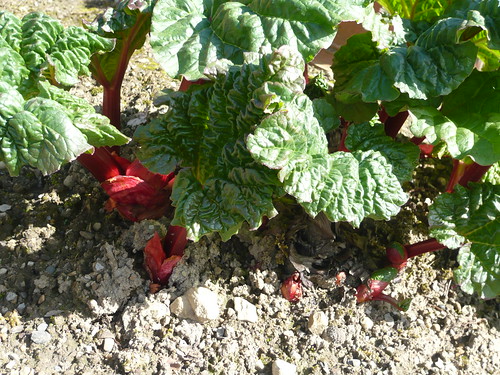
If you want to help your  Rhubarb water it even when it is raining!
Rhubarb

Rhubarb Summary Top Tips

  • Encourage strong leaf growth to encourage heavy crops with nitrogen compost and manure. Lime in winter.
  • Stop picking stems by the end of July to allow roots to boost strength for next season.
  • Plant 3 feet apart in friable but well trodden soil.
  • Give a thick mulch around clumps to preserve moisture.

Rhubarb Calendar

  • Plant out new roots with good eyes/buds in November or December.
  • Divide roots in October-December a large 3 year old root may produce 6 plants/offsets.
  • Allow all leaves to die down in autumn before clearing away.
  • Grow from fresh seed sown under cover in September or direct in March
  • Pick early, second early or Late maturing varieties from March to August.
  • Grow your own Rhubarb as it is easy to cultivate and gives a large crop of tender pink stalks.
  • Avoid picking stalks in the first year – let the crowns develop.

Varieties to choose

  • Victoria, with thin stalks of rosy red that turn pink and green towards the tip. It is a late season cropper.
  • Timperley Early AGM is the earliest to be harvested with long stems and a good flavour.
  • Raspberry Red is a mid-late season variety of deep red stalks.
  • Stocksbridge Arrow, is an old favourite in the West Riding of Yorkshire the home of there rhubarb triangle.
  • Champagne is also one of the best varieties but there are lots to choose from at your garden centre or cadge a crown from neighbours.

Read More Read More