Browsed by
Category: Flowers and Plants

Annual, perennial and interesting flowers with advice on culture, information, tips and recommended varieties

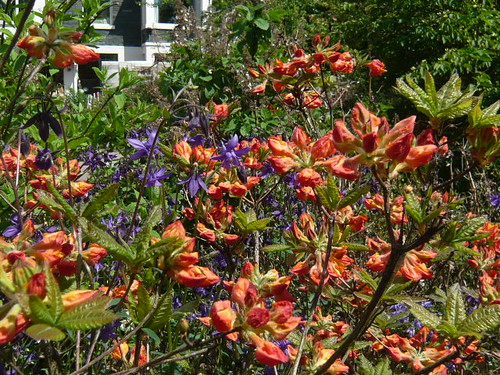
Blazing Deciduous Azaleas

Blazing Deciduous Azaleas

Autumn is the best time to plant Azaleas so you get a blaze of colour next spring. If you want to see the colour before you buy than aim for a pot grown plant in spring.

Azalea & Aquilegia

Deciduous Azaleas have trumpet shaped flowers in a range of bright often fiery colours. The flowers appear before or at the same time as the leaves.

Types of Deciduous Azalea

  • The Ghent hybrids are generally fragrant plants growing 4-6′ tall.
  • Knapp Hill hybrids, Exbury and Mollis Azaleas do not have much scent but are available in vivid colours.
  • Occidentale hybrids have fragrant pastle coloured flowers in May.

Read More Read More

Growing Aeonium Succulents

Growing Aeonium Succulents

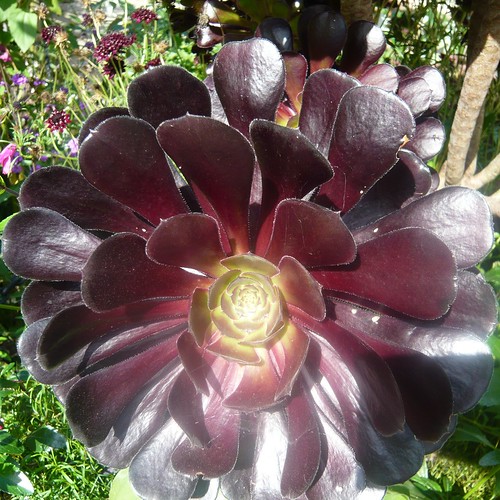
This fine specimen Aeonium arboreum is growing outside in an area sheltered from wind  rain and frost. The variety is Schwarzkopf in honour of the deep purple leaves that look almost black. Others varieties of ‘Tree Aeoniums’ include Atropurpureum a dark red and Variegatum a creamy white with green is an indoor plant nicknamed ‘Youth and Old Age’.

Aeonium arboreum is a bushy perennial with stems crowned by a rosette 6-8″ across. It bears golden flowers in spring on 3 year old stems that then die. It can be grown in a large pot and brought into a conservatory during a hard winter.  Aeonium arboreum need a mineral rich soil so a mix of clay and sand is often used. Keep the plants on the dry side during winter and away from frost. Propagate by removing small rosettes with a piece of stem and potting up in sandy soil. Keep shaded whilst rooting.

They are also sold as houseplants and need a bright airy window sill where they will form a neat compact plant. For the rock garden you may want to try Aeonium haworthii ‘Pinwheel’ which bears rosettes of blueish green with red tinged edges. This grows 2′ high and spreads 3′ with freely branching stems.


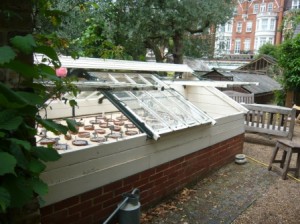
It is March and my Aeoniums have survived the winter so far but snow is forecast! I left them outside in a home made cold frame to protect from the wet but now I am panicing.

Growing Food for Fussy Kids

Growing Food for Fussy Kids

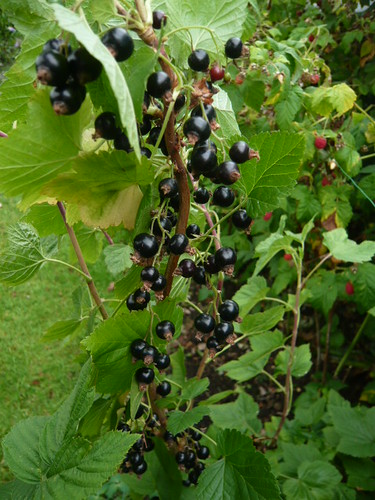
Lateral thinking can get fresh garden produce down the little darlings throats. The Ribena tree or apple juice tree can create drinks and breakfast cereal additions. Many veg can go in a blender or be added to favourite dishes in small quantities disguised as necessary.

002

How can you get children to eat their ‘Greens’?

If your kids are too fussy when it comes to  food from the ground rather than from an advertising packet the here are some tips and ideas for you.

Growing Kids Food

  • Involve children in the growing process. Give them a small plot and some big starters like onion sets, part grown seedlings or pea seeds.
  • Look for coloured varieties that are attractive to grow and tasty to eat, particularly important for brassicas such as purple sprouting.
  • Give fruit and veg interesting names like the Ribena tree above or the Harry Potter Potato.
  • Choose food they would eat if packed in a tin or freezer, such as Peas, Sweetcorn or even Carrots.
  • Cucumbers and courgettes are easy to grow and do not have strong tastes to put off the kids.
  • Kids can pick there own mange-tout or sugar snap peas and eat them pod and all.

Do Not Forget Fruit

  • Sweet and palatable this is easier stuff to get the kids eating away.
  • Soft fruit like Strawberries and Raspberries have juicy, attractive  red fruit that can also have a bit of sugar and cream added.
  • Rhubarb is the subject of several children’s jokes, it  is easy to grow and tastes great in cooked puddings.
  • Apples can be grown on small low growing rooting stock so the apples can be in reach of the children for picking. Try Ballerina types.
  • Grapes can be a good crop if tou have a sunny spot to get the natural sugars working.

5 a Day for Kids for Amazon

Book Cover

Lemon Scented Petunias

Lemon Scented Petunias

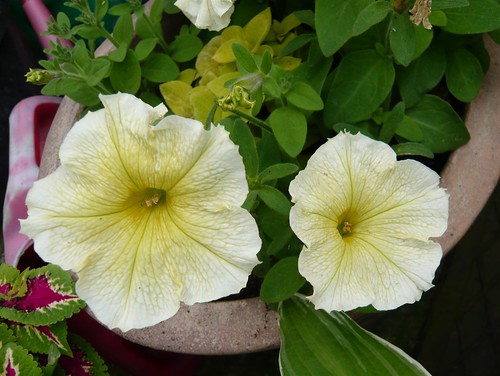
A good idea that failed in my garden this summer involved Petunias. Rather than plant the brash coloured Petunias I thought I would go for some scent and colour coordinated schemes. So I opted for these Lemon F1 plants I bought as seedlings. The idea was to grow Lemon Verbena and Geranium Lemon crispum alongside the petunias for the leaf scent. The weather was not kind to the petunias and they suffered badly in the ground. Those in pots fared better but still did not excel and had no scented plants with them. I like the idea and will try again next year probably with a different combination.

Self Colours

  • F1 varieties allow us to select single colour Petunias and a new series from Chilterns comes in Lady Purple, Lady  Blue, and Lady Cherry.
  • Thompson Morgan have Mirage Midnight a dark blue and Cascade Blue (double) which I think is purple.
  • Prism Sunshine F1 is another yellow grandiflora as are Baby Duck and Madness.
  • EasyWave™  is another series with self colours in Red, Blue and White
  • Single colour with white frills may be cheating but I like Pirouette Purple, Pirouette Red and Plum Crystal.

Petunia from Thompson & Morgan
Also read Help Growing Petunias

Starting Types of Petunias

  • I find the seeds too fine and hard to germinate consistently. Being a lazy gardener I like ‘kinder plants’ and plug plants to get me started.
  • Petunia ‘Citrus Spritzer’ is a Mini Petunia also called Calibrachoa. Withmasses of flower power producing in excess of 500 blooms per basket, mini Petunia ‘Citrus Spritzer Mixed’ are simply made for hanging baskets. Free flowering and easy to grow, these astonishing calibrachoas make a spectacular summer display. Height and spread is 30cm (12”).
  • Surfinia’ petunias are still the most loved and reliable petunias, producing hundreds of beautifully coloured, trumpet shaped flowers. Support Petunia ‘Surfinia’ on a climbing frame and it will rapidly climb up to 2m/6ft high to create a non-stop tower of colour. These petunia flower from June right through to the first frosts of winter.
  • Fill your patio containers with the wide, citrus yellow, bell shaped flowers of Petunia ‘Fanfare Yellow’ shown below
  • Petunia ‘Waves Mixed’ F1 were a version of the earliest petunias.
  • The ‘most weather resistant’ is claimed to be Petunia miniflora ‘Mini Bella Picotee Mixed with the appearance of stripped flowers.
  • Spreading petunias are only about six inches tall, but spread so rapidly that they cover a huge area in one growing season provided they’re watered and fertilized frequently.
  • If I am lucky enough to get a good crop of seedlings it is usually from a small selection and I miss out on the variety.


Flowers Attracting Insects

Flowers Attracting Insects

Images to get your thoughts and garden buzzing.

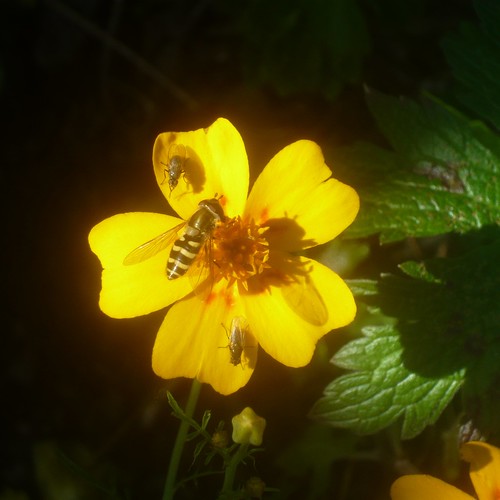
The wasp has the right colouring  to act as camouflage on this Tagetee.  For a small flower, little bigger than a 5p piece, the tagetee is punching above it’s weight for insect pulling power. Caught late in the day when the shadows are beginning to lengthen there is always something to spot in a well planted garden.

Tagetees are used in the green house to attract white fly away from Tomatoes or better still deter them in the first place.

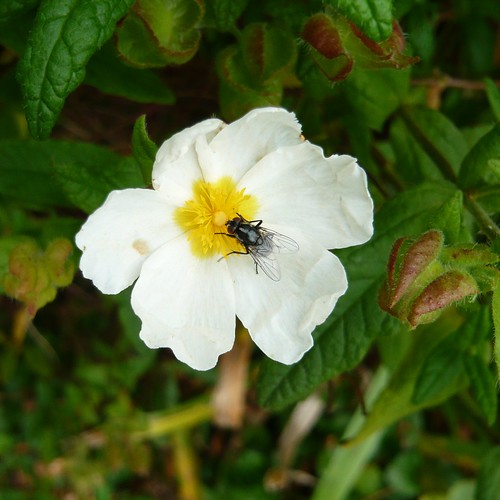
My old favourite the Cystus is flowering again after its earlier summer performance. Not as much blossom but all the more welcome for this second flush and a chance for insects to stock up on more nectar.

Read More Read More

Improved Clay Soil

Improved Clay Soil

Mulch mulch and more mulch is a must for getting humus into clay soil.

HC 057

Does your soil sticks to your shoes and garden tools like glue? Is your soil slow to warm up in the spring and hard to manage? If your soil is slow draining, forms big clods, crusts over and cracks in dry weather then you have clay or even heavy clay soil.
Clay soil is made up from very fine particles that make pure clay good for potters but not plant roots. One redeeming feature is that clay soil is generally rich in nutrients.

Improving Clay Soil

  • If gritty sandy soil is the opposite of clay soil it follows that mixing the two may get the best of both worlds. Add copious quantities of grit or gritty sand to your clay soil to open it up. Do not use builders sand as it is very alkaline or fine sand that will set like concrete.
  • Add even more copious quantities, 6 ” plus, of organic matter such as compost. I have tried wood chippings, spent mushroom compost, old feathers, composted bark and various other items to open up the texture. Dig it well in to the top 10″ as you not only incorporate the organic matter but you add air to the soil and help drainage.
  • Mulch with compost as often as possible and let worms drag it down into the soil.
  • Earthworms thrive on humus and breed rapidly if the conditions are right. You only need a handful or two to get things going so put a few on the soil when incorporating the compost.
  • Improving your clay soil will take time and patience.

Plants for Clay Soil.

  • Special seed mixes of wild flowers are available from Amazon

Read More Read More

Snapdragons aka Antirrhinum majus

Snapdragons aka Antirrhinum majus

Antirrhinum

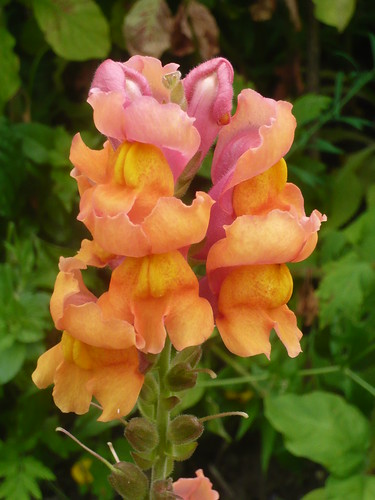
Snapdragons or better known as Antirrhinum are an easy flower to grow and they provide lots of colour with a distinctive scent. Good F1 plants can grow more than 2′ tall and if pinched out they bush out quite well.
Available in a wide range of colours I try and grow the same colours together to enhance the effect.

Where to Grow Snapdragons

These plants are good border flowers and can be planted in blocks, lines or singly.
Snapdragons do not need special soil conditions but flower best in sunshine.
Smaller varieties can be grown in containers.

How to Grow Snapdragons

I plant plug plants from the end of April to get quick flowers.
For raising Antirrhinums from seed read these tips
Pinch out the tallest growing shoot when it is about 3″ tall to encourage branching and thus more flowers.
Feed with a tomato fertilizer if you want extra blooms.
Water early in the day, plants should not be left wet overnight – distorted growth can result.

Snapdragons as Cut Flowers

Read More Read More

Spring Cleaning Your Garden

Spring Cleaning Your Garden

It may be boring but what better way to set off your garden than by getting everything neat, tidy, sorted,  spick and span. A tidy area will draw attention to the garden and plants not the bits that are out of place, dirty or untidy.  Here are my top ten tips.

London 7.10 057

Top Ten Tips to Spruce up Your Garden

  1. Clean your paths, pavings and slabs. Make them look bright and new with a pressure washer or scrub them with Swarfega Path and Patio cleaner or equivalent. If stepping stones have sunk below soil height raise them so soil isn’t easily washed on to them. Clean glass in cold frames and greenhouses.
  2. Remove any weeds growing in cracks and give all hard surfaces a good brush.
  3. Trim the edges of Lawns, it is one of the most effective face lifts for the green parts of your garden.
  4. Stain or repaint any wood decking, furniture of visible structures. You can go as far as spray painting support canes for your runner beans though hopefully they will grow and cover them very quickly.
  5. Keep empty or non-flowering pots and containers away from important areas until they are at there best. Then move them into position for the duration. Pots need to be clean to look good.

    Read More Read More

Carnations Explanation of Types

Carnations Explanation of Types

Carnation

When is a pink Carnation not a Carnation? When it is a Pink. Confused, well so was I and I am not sure this will clear it up.

All Pinks and Carnations are members of the Dianthus genus that encompasses 400 + species and cultivars ( including Sweet Williams).

Types of Carnation

  • Border Carnations have one central shoot with a number of side shoots. Side shoots can be pinched out but the plant should never be stopped or the seasons flower will be lost.
  • Dis-budding will encourage longer stems on the main shoot for exhibitions.
  • These Carnations need a winter rest and a little late frost to check growth.Border Carnations are also know as Florist Carnations and are use in buttonholes.

Perpetual flowering carnation

Annual Carnations

  • Also called marguerite or Chabaud carnations are half-hardy perennials but treated as annuals.
  • Blooming the same year as the seed is sown, the flowers are thought by many to be inferior to other Carnations.
  • Exhibition classifications are based on markings, Selfs, (one colour) Fancies (with a coloured ground)and Picotees (white ground with a colour band around the petal.
  • Many are grown in a cool greenhouse to control watering.
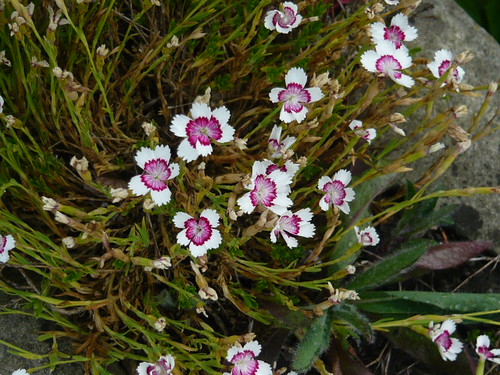
Dianthus

Types of Pinks

  • It is possible that Pinks, which have been so called for centuries, gave there name to the colour and not vice versus.
  • Older types, like border carnations, throw up a central stem which flowers. Side shoots will flower in following years
  • Modern Pinks derive from Dianthus plumarius and are scented.
  • Dianthus allwoodii will flower several times per season but not as well as a perpetual Carnation.
  • Single and double pinks are grown.
  • Indian Pinks are hardy hybrids flowering on 8″ high plants
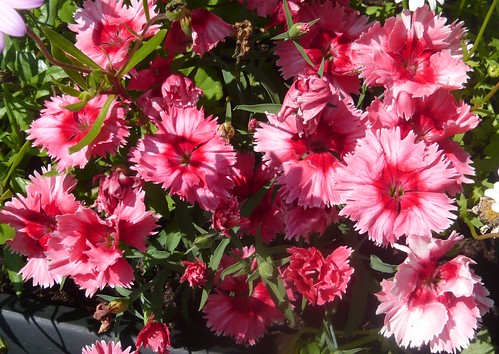
Indian Pink

For more information on:

Growing Pinks with links to the National Society read.

Perpetual Carnations from Cuttings read

Close relatives – Sweet Williams read

Pinks for Cottage Gardens read

Seeds and plants are available from Thompson Morgan

Pinks as perfect perennials on Gardeners tips