Browsed by
Category: Flowers and Plants

Annual, perennial and interesting flowers with advice on culture, information, tips and recommended varieties

‘How To Do The Flowers’

‘How To Do The Flowers’

Formal or informal, neat or exotic, there are so many ways to do justice to the flowers. Here are just a few tips to get you thinking.
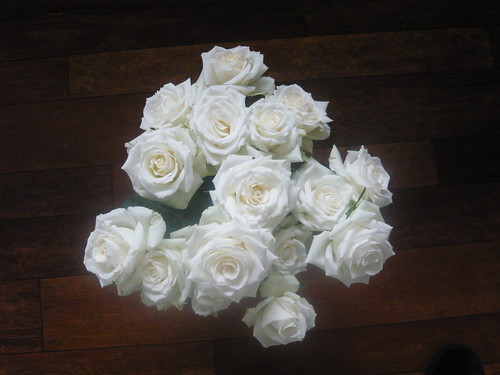
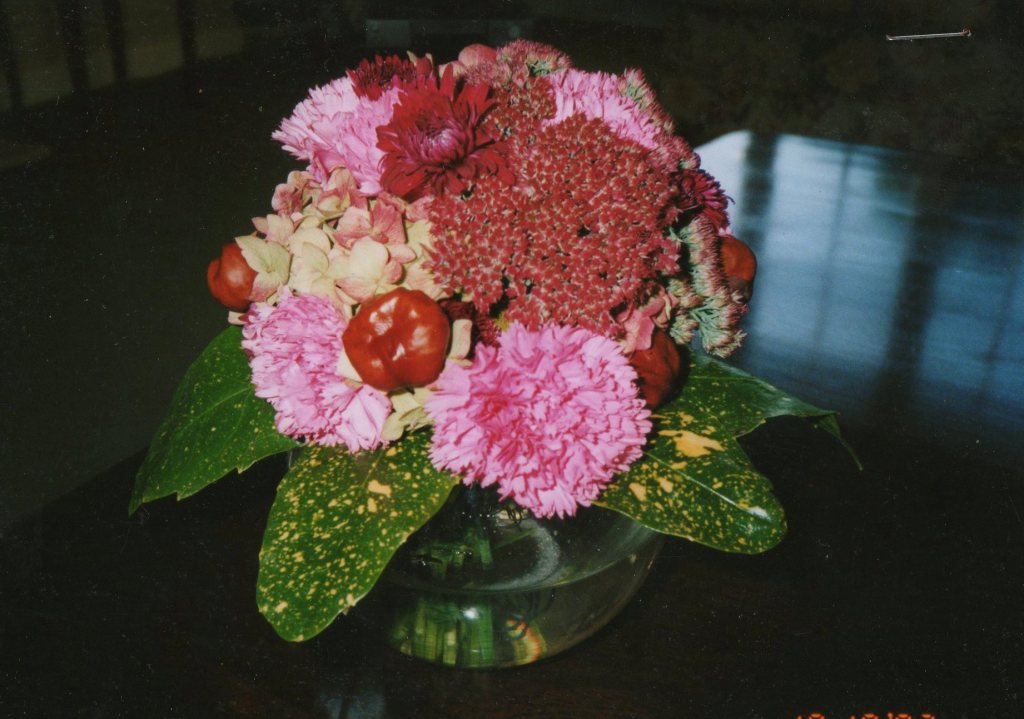
Vase of Roses

When you have spent time and effort growing some super blooms you may want to display them indoors. You may specialise in growing plants that will last well indoors like Chrysanthemums and Alstroemeria. You may be growing flowers for sale to florists or for special events, locations even church decorations.

Constancy Spry was a great one for’ doing the flowers’. She believed you needed to be aware of the mechanics of arrangement an the care and preparation of the material. Material includes more than just the flowers but holding them in place plus other plant items, display vessels and additional items. Secondly Constance also confronted the aesthetics of colour, shape , form texture and style. Work to your own pattern of ideas to develop taste and experience.

Gardeners Top Ten Tips For Cut Flowers

  • Plunge into water as soon as they are picked to condition the flowers.
  • Cut off an inch from the bottom of the stems when you are arranging them. When you change the water cut some more off the bottom. Do not cut poppies, hydrangeas or daffodils as they secrete a sap.
  • Put a small sterilizing tablet in the water. Milton or steradent will help flowers last longer and keep the water bacteria free.
  • Heat makes flowers bloom quicker and wilt so keep them cool to make them last.
  • Use individual bud vases if flowers are in scarce supply. Other small vases, shot glasses, jugs or old bottles will do just fine.
  • Strip leaves from the stems. Leaves rot quickly when submerged.
  • Spraying the underside of the leaves and petals with a minimal amount of hairspray could help keep cut flowers fresh.
  • Do not store fruit and flowers together. Fruit produces ethylene gas than speeds up decay.
  • Top up with luke warm water regularly.
  • Use plain, lukewarm water for most cut flowers, but use cold water for bulbs such as daffodils, hyacinths, and tulips.

    Read More Read More

Prolonging the Life of Cut Flowers

Prolonging the Life of Cut Flowers

Preparing Cut Flowers and Foliage

  • When harvesting take a container of water around the garden and plunge freshly cut flowers into it immediately.
  • Recut all stems at an angle with a sharp knife as you arrange them. This increases the area of stem that can take up water and also prevents a stem from sealing itself to the bottom of a vase and thus stopping water being taken up.
  • Allow flowers to draw in water in a cool dark place for several hours prior to arranging.
  • Remove any damaged or excess foliage and any that will be below the water line when arranged.
  • Lilac and Sunflowers benefit from having all the foliage removed.

Ten Tips for Prolonging Vase Life

  • Harvest early in the morning or just after sundown never in the heat of the day.
  • If using Oasis scrape of 1-3 inches of outer bark from woody stems.
  • Woody stems can be split vertically for 2-3 inches to help them drink. Do not hammer.
  • Change the water when it starts to cloud, recutting the stems.
  • Use a preservative in the water except for species where this causes problems like Campanulas, Bulb flowers, Orchids and naturally long lived tropical flowers.
  • Keep cool and out of direct sunlight.
  • Once in place avoid disturbing flowers which is apt to cause bruising.
  • Avoid draughts and dry air.
  • Certain flowers and blossoms carry a large amount of foliage in proportion to flower. Remove some foliage particulalry for Lilacs and Philadelphus.
  • Avoid a vase or vessel that warms the water.

Avoid Ethylene

Read More Read More

Rhododendron Sappho Labels

Rhododendron Sappho Labels

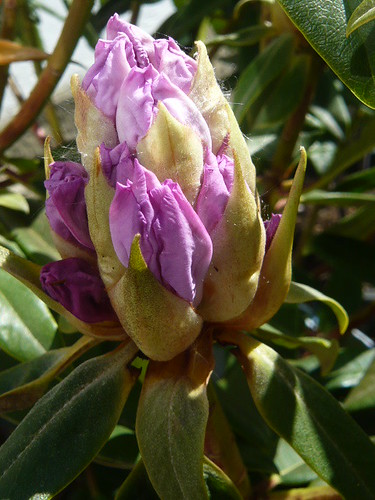
Rhododendron Sappho bud

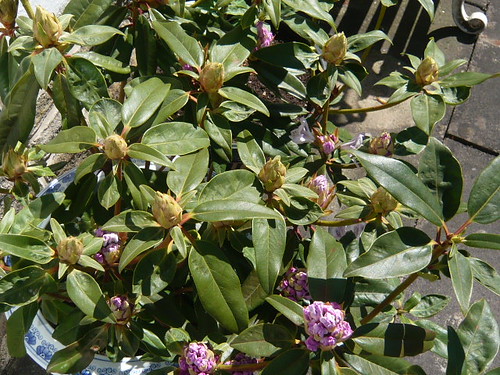
I just purchased a new containerised Rhododendron named ‘Sappho’. The picture on the label is of white flowers with spotted purple centres. There are lots of buds, about 20, and they are looking lilac.  I thought of taking it back as that was not the colour I wanted.

Now the buds are opening I think it will be worth keeping and should fit in with my planting scheme.

Four Language Label

  • The label has minimal information but what there is can be translated. A pictured sun and sun half blached out must mean suitable for sun or partial shade.
  • A flower symbol V-VI implies it flowers late in May or June. Good that was what I was after and that seems to be how it is performing.
  • A vertical arrow and 1.5m says it will grow 4-5 feet high and possibly wide.
  • A complex symbol with a cross through it may signify no pruning
  • Strangely it is named as an Azalea for decoration do not consume. Submerge pot in a bucket of water for 10 minutes then plant in the garden. Fair advice.
  • The symbolic language may be classed as a fifth language since Esperanto never took off.

Rhododendron Sappho

Research on Sappho

  • Mauve buds open to lovely white flowers with a conspicuous dark purple, almost black, blotch.

Read More Read More

Senetti, Cineraria or Senicio? No Pericallis

Senetti, Cineraria or Senicio? No Pericallis

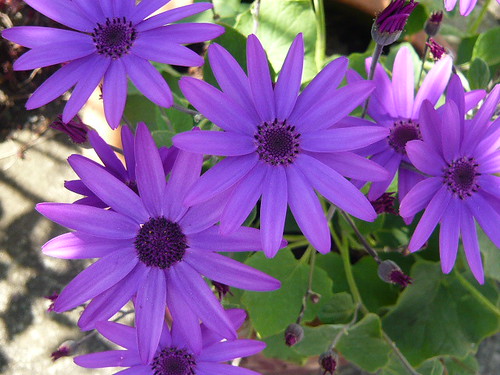
sennico

I received a pot plant as a gift and thought it was a Cineraria. The plant was in bud but the leaves looked like soft grey-green Cineraria or Senicio.

On reading the label, not something I always do, I discovered it was named Senetti Deep Blue. Since then Senetti seem to be everywhere, agh! the power of marketing and big money.

Further research showed that the botanic name is Pericallis x hybrida. It is thought to be a hybrid between Pericallis cruenta and Pericallis lanata.
The common name is Florist’s Cineraria so I wasn’t far wrong with my first thoughts. Have you ever seen one in a florists?
Some call it Senecio cruentus Senetti Series.
Senetti may be just a brand name registered by Suntory. If so lets drop the name for now and go by Pericallis.

Pericallis Cultivation

  • Pericallis are tender, cushion-forming or loosely branched perennials. Height 12″ spread 18″.
  • The single daisy-like flowers are in a variety of vibrant blues and purples. Some have white centres like the old Cineraria
  • Pericallis will flower early, providing a splash of colour before other bedding or container plants are ready
  • After flowering cut down to 4-5″ and feed then you should get a second flush of flower.
  • Pericallis are generally raised from seed but cuttings may be possible.
  • Grow in pots or open ground but water and feed well.

Pericallis (Senetti) Update

  • I got more flowers from my fathers day present than you could shake a stick at!
  • I got 3 massive flushes of flowers often over 100 blue daisies open at once!(there are about 40 on at the moment mid October)
  • Hopefully the seed I have saved will grow next year.
  • The host plant deserves to be protected over winter so the pot I have grown the Pericallis in will go into a cool greenhouse

For information on Plant Breeeders rights read ‘I name this plant and all who sail in her’.
Pictures of Pericallis

Pictures of Senetti

Pictures of Cineraria stellata

So now you can see the difference ( can’t you).


Jersey Plants Direct were selling Senetti plugs check out the web site. Super Ready or Jumbo sized just type in Senetti in the search box (free postage). I had to buy some because they were such ‘Good Doers’ last year. Jersey say they are able to cope with early frost which will suit my Yorkshire garden!


I have  received my plugs  and potted them on. They are on an east facing window sill and I have pinched out the early flower buds to get more leaf and roots.

Plants from Madeira

Plants from Madeira

Seductive plants from Madeira are best viewed on the island but it is tempting to bring some how as bulbs or plants. I avoid bringing plant material home as it may bring back pest and disease. As a Yorkshireman I don’t want  to loose my money and the plant markets are just tourist ‘come and buy me’ traps.

Madiera mch11 191

Monte Palace Tropical Garden

  • 3 Miles from Funchal at Monte there is a tropical garden dating back to the 18th century. You can access it by 21st century cable car and return on the toboggans.
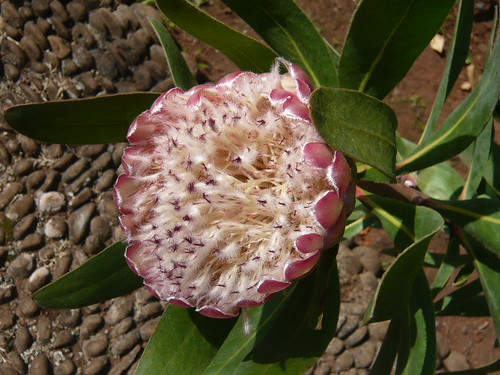
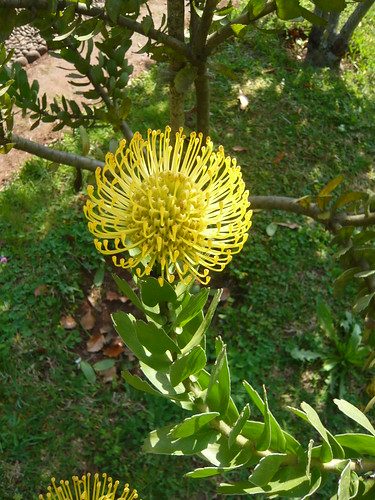
  • 70,000 square meters of garden include Proteas, Cycads, Acaias, Sequoias and Azaleas representing all the continents.
  • Close by is the wilder area of the Laurissilva Forest a Unesco world heritage site.

Madiera mch11 195

Quinta do Palheiro Ferreiro Gardens

  • The gardens, owned by the Blandy family since 1885, boasts some of the most valuable and rare exotic plants on the island.
  • The gardens specialise in splendid Camellia varieties which you will be able to admire to its full extent during the main flowering season between November and April.
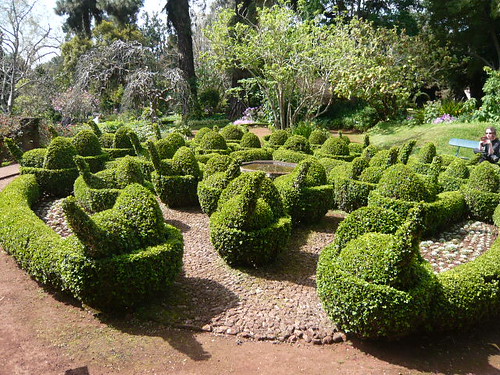
  • There is also topiary, great trees and views down into Funchal.

Madiera mch11 276
Botanical Gardens

  • Quinta do Bom Sucesso was a private Quinta belonging to the Reid’s family. This has been the Government owned botanic garden since 1960. – where the climatic conditions are much in favour of exuberant vegetation.
  • The Botanical Garden boasts more than 2000 different plants.
  • Throughout the gardens visitors can find the plants labeled with their scientific names, common name and origin.
  • There are five distinct areas to visit including, Indigenous and endemic, Tree Garden, Succulents, Tropical/Cultivated/Aromatic/Medicinal and The Loiro Park which has some of the most exotic and rare birds.

Madiera mch11 198


There are several other gardens to visit during a holiday on the Island. The walks in the country also provide ample opportunity to see a wide range of flowers, trees and plants in their natural habitats.

Growing Snake’s Head Fritillary

Growing Snake’s Head Fritillary

fritilliaria-2

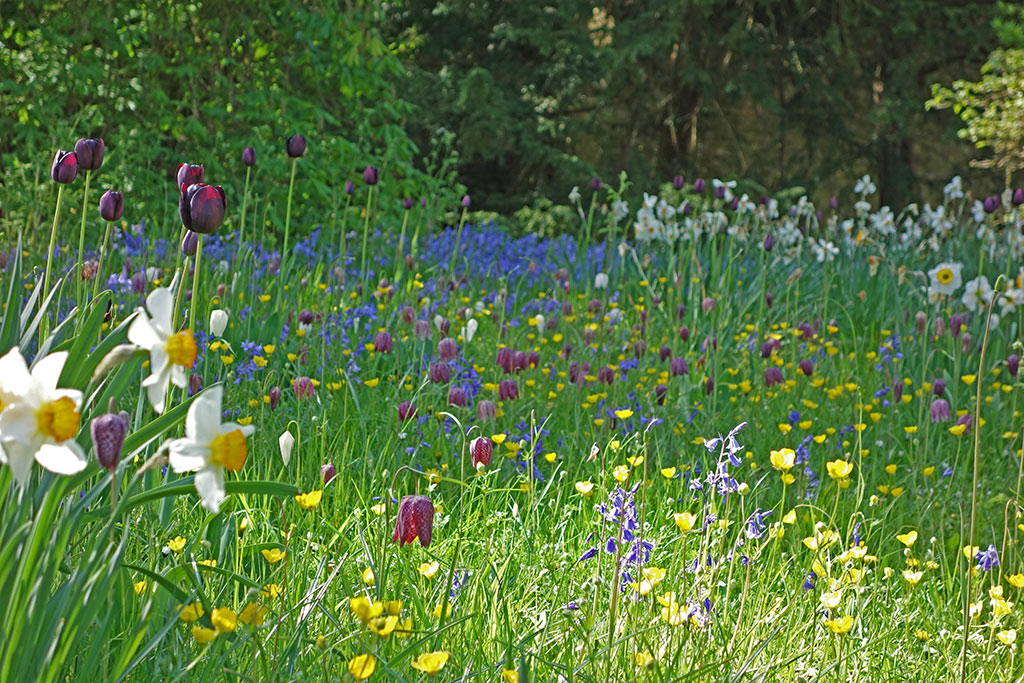
Fritillaria meleagris

This is a popular variety of Fritllaria grown in wet meadows. It is often found in Oxfordshire.

These Fritillarias also go by the common name ‘Snake skin’. Over the years, it has picked up several common names included chess flower, frog-cup, guinea-hen flower, guinea flower, leper lily and snake’s head fritillary.

Description

  • Fritillaria is a genus of the lily family.
  • Flowers – purple and white cheques
  • Leaves – delicate green thin leaves
  • Bulbs contain poisonous alkaloids.
  • Height: 30cm
  • Fritillarias form a nodding head from these early flowering spring bulbs that are so evocative of the British meadows and damp fields.

Growing Fritillaria

The most important thing about growing Fritillaria is they like to be in moist soil. They often grow well in meadows which get flooded.

  • Position:  Happy in full sun or partial shade
  • Soil: humus-rich, moisture-retentive soil. When planting try add well rotted compost or leaf mould.
  • Flowering period: April and May
  • Hardiness: fully hardy
  • Bulb depth: Plant bulbs four times the height of the bulb; plant on their side to avoid the base getting waterlogged and rotting. The bulbs are fragile so handle with care.

Read More Read More

Happy Gardening With Adam the Gardener

Happy Gardening With Adam the Gardener

Book Cover

A happy and pleasant surprise has just arrived through the post at home.

I commented some time ago about celebrity gardeners and Adam the Gardener in particular. Adam featured in a pictorial guide each week in the Daily Express from the 1940’s.  The tips and advice helped many experienced gardeners and those new to gardening.

The clever publishers at Chatto & Windus have reproduced the 1940’s classic in a revival of the old tips and advice and they kindly sent me a copy.

I recommended the book earlier and am pleased to do so again – it is available now from Amazon. At £10 it is a great price for a hardback containing so many words of gardening wisdom.

It would also make a good nostalgic fathers day present.

As they say a picture saves a thousand words. The  strip format  of Adam the Gardener allows time for more gardening than reading.

  • A tip from Adam if you have an accidentally allowed a pot plant to get frost damaged. ‘Soak the soil in the coldest water you can get. Sprinkle the foliage with the same cold water. Put the plant in a frost proof shed. It should revive in a couple of hours. Only when unmistakable recovery has been made move it into warmth. Don’t cut off withered parts until a week after this treatment.’
  • That way I hope you can recover from frosting accidents – I recon it will still be frosty at night for most of May the way our weather is right now.
Monarda or Bee Balm Cultivars

Monarda or Bee Balm Cultivars

Monarda enmass

Monardia Harlow Carr

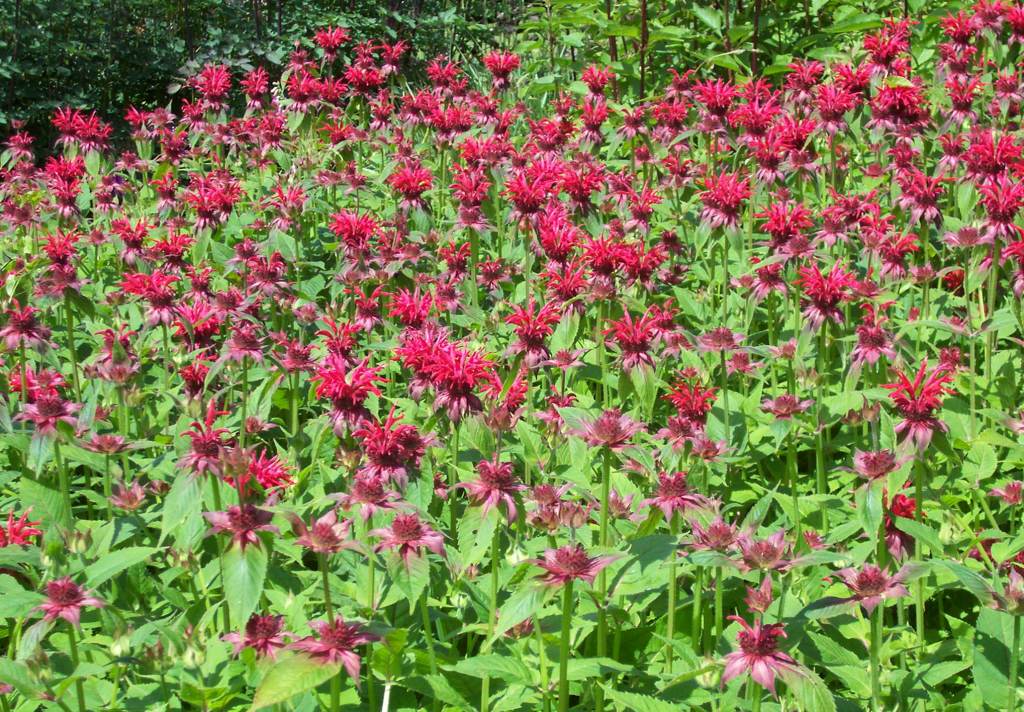
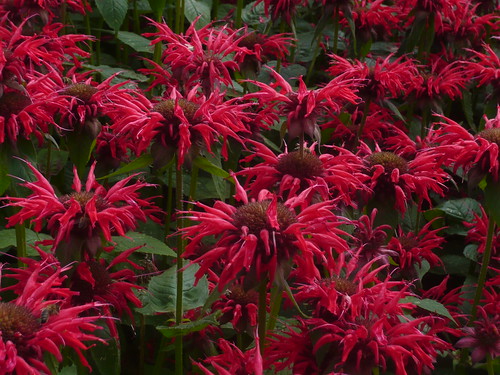
I have not grown Monarda or Bergamot as an annual or a perennial. This large bed of perennial Monarda hybrid ‘Gardenview Scarlet’ was very showy and looked exceptionally good in a sunny well mulched site.

Some plants attain a status of the must have plants or flowers of the moment, (do you remember when no one grew Verbena Bonariensis). If this Monarda isn’t already in great demand (and I have missed the boat) then it is destined to be in future. The tufty red tops on the flowers are a strong red colour and grew 2-3 foot tall.

As a suffix Ardia can mean ‘continuous quality’ (on its own it means ‘Sheep’ in Basque.) I guess the former definition is why Gallardia and Monardia are so named but then again….

Monarda Description

    • ‘Monarda astromontana Bees’ Favourite’ has masses of flower spikes bearing tiers of soft mauve flowers are produced by this quick and easy to grow border plant.
    • It flowers easily in its first season from an early sowing, producing a bold display of flowers over a long period.
    • Exceptional for its unusually shaped flowers on strong square stems and the rich minty fragrance, which is freely released when the plant is brushed.
    • Compact upright habit and makes a very neat and tidy plant which will add structure and shape to the border, particularly if planted in groups of three.
    • Excellent for cutting and beloved by bees.

Cultivation Requirements

      • One of the easiest perennials to cultivate.
      • Happy in sun or light shade and any ordinary garden soil, although they prefer a rich moisture retentive soil which doesn’t dry out in the summer.
      • The mat like roots soon form a large clump that needs dividing every couple of years.
      • In dry soils they don’t grow quite so tall.
      • deadhead for a second flush of flowers
      • Powdery mildew may be a problem, spray with fungicide when the plant is young

RHS  Selection

        • Monarda Beauty of Cobham AGM – arching pale pink blooms.
        • Monarda Garden View Scarlet as below also has an AGM
        • Monarda Schneewittchen white framed with a ruff of green bracts.
        • Other Monarda to mconsider; Jacob Cline deep red bracts and dark foliage, Croftway Pink taller variety 4′, Violet Queen with violet flowers and purple tinged foliage.

Monarda seeds as described above from Thompson and Morgan

Monarda Gardenview Scarlet

Yorkshire Rhubarb Good Enough to Eat

Yorkshire Rhubarb Good Enough to Eat

Why Yorkshire Rhubarb

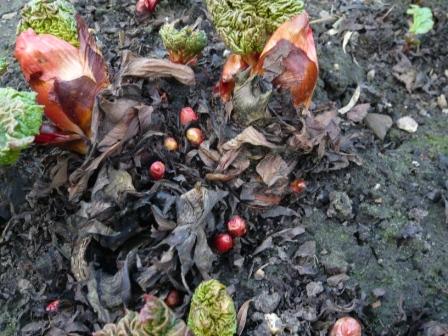
The best Rhubarb is grown in the ‘Rhubarb Triangle’ in West Riding of Yorkshire. There are low brick buildings visible from the M1 around Wakefield that are used as the forcing sheds. Forced Rhubarb is kept in the dark so the stems are long thin pink and early to crop

It is September and my Rhubarb is now well over and is succumbing to snails and rotting. Having divided the crowns a couple of years ago I have several vigourous plants that provided vegetables for many early summer pies. Rhubarb is easy for beginners to grow.

To force the plants to produce thin, pink, early stalks, Rhubarb needs a bit of frost to break the dormancy followed by a dark covering. In November I am going to try digging up a large root and leave it on top of the soil for a week of frost. Then I will replant it with an old black dustbin on top to draw out some stems. You can buy forcing terracotta pots for the purpose that add an authentic look.

Rhubarb can be cropped from May through July but keep half the leaves to help the crowns build up for the following year. Divide every 5-7 years when they are over grown or stalks become too thin.

Yorkshire excels because the damp climate justifies the old sore ‘water rhubarb even when it is raining.’

ruhbarb

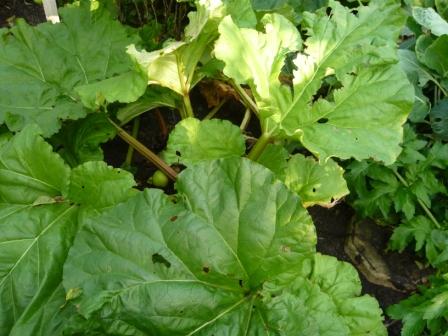
My last post alluded to the green shoots of economic recovery, well all I can now say is Rhubarb Rhubarb. This is a clump of my Rhubarb waiting to joins other stalks in a crumble or pie.

Growing Rhubarb to Eat

  • The stalks are the only part to be eaten, the leaves are full of poisonous Oxalic acid.
  • Rhubarb is a vegetable but despite or because of its tart flavour it is mainly eaten with sugar as a sweet.
  • Rhubarb like a bit of winter frost to encourage growth.
  • Forcing Rhubarb by covering to make dark warm conditions will produce early, thin, tender stalks. Only force the plant in alternate years to avoid weakening the crown.
  • Cropping between April to June when little else is available this is an undemanding and easy to cultivate plant
  • The flowers are borne on hollow stalks and a a greyish white. I pull them out to conserve the plants strength.

Links and Credits


Rheums are not just Rhubarb link
Rhubarb Growing Tips
Forced Rhubarb growing in Yorkshire
Buy Rhubarb from Thompson & Morgan
Yorkshire Rhubarb Good Enough to Eat
Planting and growing Rhubarb

Codiaeum Technicolour Plants

Codiaeum Technicolour Plants

Madiera mch11 360

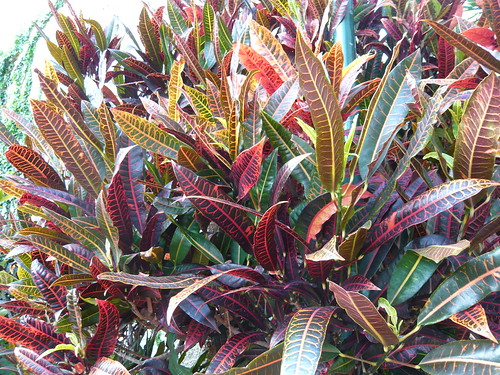
Codiaeum variegatum is a houseplant or tender shrub with multi-coloured leaves.

Growing and Cultivation Tips

  • The veins and patterns in the leathery leaves can be quite startling with reds, yellows and bright greens predominating.
  • Leaves may be oval, sword like or forked.
  • Flowers are white and small on long racemes.
  • As part of the Euphorbia family the sap is white and can cause itrriation.
  • Codiaeum variegatum is also known as the variegated Croton or the garden Croton.
  • All Crotons like plenty of water. Even in winter they need watering.
  • Do not spray the leaves or feed through the leaves.
  • Good light and plenty of sun encourages good colouring.
  • Warm moist conditions and a temperature above 60 degrees Fahrenheit suit them best.

Popular Cultivars of Codieaum