Browsed by
Category: Flowers and Plants

Annual, perennial and interesting flowers with advice on culture, information, tips and recommended varieties

Colourful Rudbeckia

Colourful Rudbeckia

rudbeckia

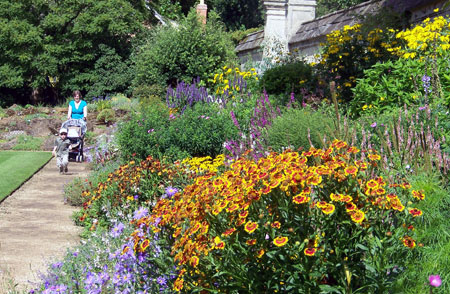
I am never all that confident about mixing such strong colours in my garden. Needless to say therefore this picture was taken in a public park on the Victoria Embankment Garden. I was chased off the grass before I could get a better picture.

The tropical leaves provide green relief from the purples, reds and hot yellows. Somehow I am not convinced that this colour scheme would fit in my Northern garden.

The Rubeckia hardy perennials do grow with other members of the Compositea clan in my garden. Although many varieties like the Rudbeckia hirtas are recommended as half hardy annuals.

The AGM goes to the Rudbeckia speciosa for its large yellow flowers with a black centre and Rudbeckia triloba Brown Eyed Susan.

John Tradescant the Elder and Younger

John Tradescant the Elder and Younger

Father 1570-1638 and son 1608-1662 both worked as gardener to the Royal family and are buried at St Marys Church Lambeth. At the Museum of Garden History in Lambeth there is a garden laid out using plants they introduced to the UK after trips to Russia, Africa and North America in the early 17th century.

As early traveling plant collectors both John Tradescants’ were responsible for many plant introductions and curios collected on their travels. Plants include Michaelmas daisy, Cistus, Acer,  Maple and Tradescantia

‘Musaeum Tradescantianum’ was the first museum catalogue published. Tradescant willed that the collection was to go to his widow on his death, but Elias Ashmole obtained the collection by deed of gift and established the Ashmolean Museum in Oxford. Some of these original items can still be seen in that museum and Ashmole is also buried at the Museum of Garden History. The tomb of the Tradescants stands beside the knot garden near that of Captain Bligh of the Bounty, and is covered in carvings representing their interests in life which showed them both to be ‘curious men’.

Ideas for a Shady Border

Ideas for a Shady Border

Cotinus

Plant selection

  • Plant tall flowering shrubs to bring a splash of colour to a dull corner or to make a shady border come to life. Hydrangea macrophylla or Rosa Rugosa will suit. More shrub ideas
  • Taller perennials and other to consider include Astible, Lilies, Ligularia or Foxglove.
  • Hostas and Hebes both do well in shade and if it is dry Eupohorbia polychroma and Iris foetidissima would work.
  • Try something a bit architectural such as Bears Breeches Acanthus mollis with tall flower spikes in summer and famous shaped leaves. Echinops globe thistles would be an alternative and Crocosmia has sword shaped leaves.
  • A smoke bush tree Cotinus coggyria is a good purple leaved shrub with airy pink/white

Planting Tips

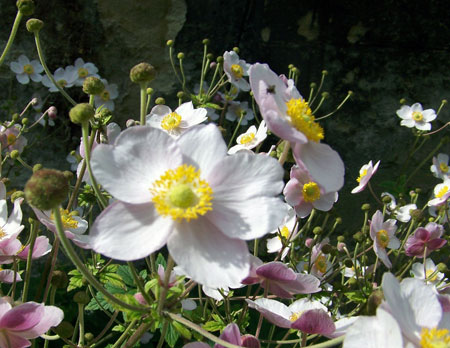
  • Avoid planting too close to large trees as the roots take all the water. Anemone hybrids survive the dry but may not reach their full 3′ height.
  • Remove weeds and incorporate compost or manure to retain what moisture it can.
  • Plant shrubs in Autumn to give the roots chance to become established.

    Read More Read More

Crocodile Garden Design

Crocodile Garden Design

London basement garden

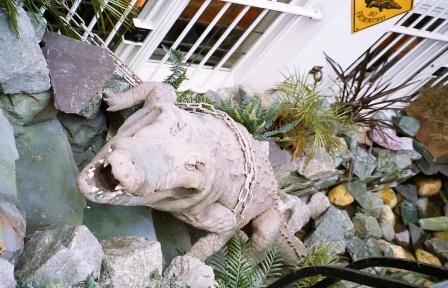
Any space bigger than a bottle can be used to create a garden. This London tennament had a basement flat twelve feet below the pavement and about 5 feet wide. Despite those limitations there was an exotic rock pool, obligatory ferns and phormiums and the London Lizard, the Camden Croc, or the Admiralty Arch Alligator.

Designing with Humour

  • Are the bars on these windows to keep the residents in or the London wild life out
  • A light touch when adding whimsy to a garden can add many a smile to the passer by
  • New materials can be introduced like this fibre glass sculpture
  • Painted pottery Gnomes are not to everyones taste but Gnomes need homes
  • Bruce Lawton’s Zen garden design tool is a bit of a spoof
Growing and Recognising Arisaema sikokianum

Growing and Recognising Arisaema sikokianum

Arisaema sikokianum

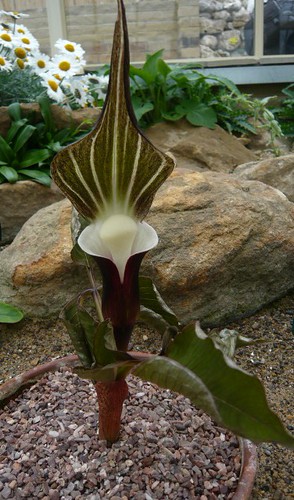
Arisaema sikokianum is a herbaceous perennial plant with vertically patterned  flowers.

Characteristics

  • In an alpine house or garden it flowers in springtime upto 18″ tall.
  • It can be planted with shade-loving hostas and Bleeding hearts.
  • They need neutral to acid soil in a moist, well-draining, protected location in dappled shade to flourish.
  • Seeds have a low rate of germination, and take a very long while to get going. Harvested in December & store at room temperature for one month, then planted in shady situations.

Other names for Arisaema sikokianum include Shikoku cobra lily, Gaudy Jack or Japanese Jack-in-the-Pulpit.
Arisaema sikokianum is one of 150 species and an unusual woodland plant noted for its unmistakable smoky-purple base, white cup and large hood with purple, green and white stripes.

There is a specialist international society for Aroids or Arum family plants with Arisaema links.

Hardy and Indoor Cyclamen Post Christmas

Hardy and Indoor Cyclamen Post Christmas

Cyclamen Coum

The low growing ivy leaved cyclamen has marbled foliage and Spring or Autumn flowering. It grows from corms that are planted in  shade under trees or in rockeries with some cover.

The Autumn flowering C.Neapolitan (Hederifolium) varieties come in shades of pink to the album white

The pictured C.Coum variety is more hardy and flowers in spring.

In hard weather areas it may be necessary to grow in pots and lift them in severe conditions but if conditions suit they will form ground covering clumps.

The indoor varieties

  • Florist varieties are not hardy but it is important to keep it cool and provide some air movement. If it is too warm the leaves will yellow.
  • Don’t over or under wateror the leaves will go yellow wait until the soil feels dry
  • Do not let the plant remain wilted
  • Water with a good soaking from the bottom to stop the corm rotting
  • Give the plant good light in winter
  • A monthly feed in the growing season will help
  • Dead flowers should be tugged free
  • Leave for a rest period in summer and they will flower again the following Autumn


Hostas make a Vista Baby

Hostas make a Vista Baby

Old Hosta

It is the end of this years Hostas but I was lucky to keep most slugs off most Hostas until the autumn ravages start. It is no longer worth protecting the leaves which are due to die back into the Hostas roots to await next spring.

Hosta flower slugged

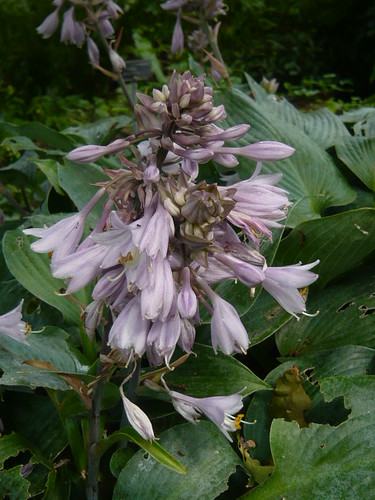
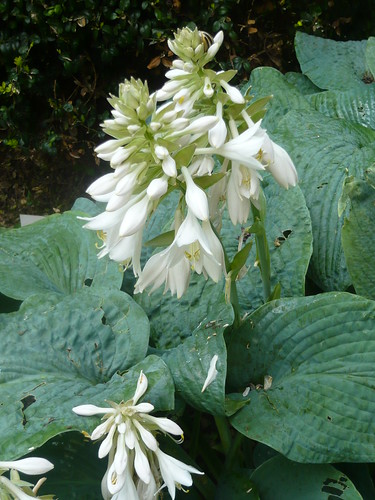
2010 has been a good year for Hosta flowers and I have been keen to see white and purple spikes on my plants.

Hosta big and small

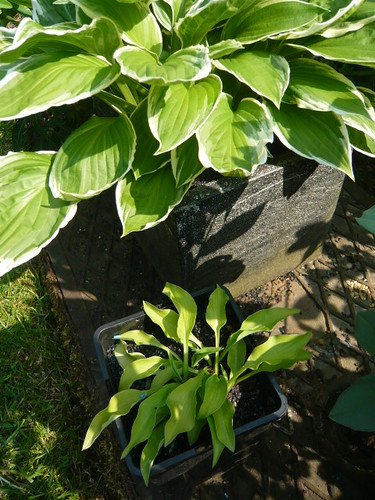
This is a photo of the baby hosta or Dwarf alongside a normal plant. Mini hostas have the less impact when placed directly next to large hostas.

  • Mini, baby or dwarf hostas have similar characteristics to larger Hostas.  Their tiny size makes them versatile and interesting close up!
  • Mini Hostas can be grown in pots, alpine beds or in groups
  • Baby mini Hostas should   be placed in front of larger Hostas if you are growing them together in a garden.
  • Use mini Hostas in rows or pots by a garden bench or patio so you can see them up close.

For more on Hostas read

Hostas in Pots / Containers

Hostas in Pots / Containers

hostas

The colour of green.

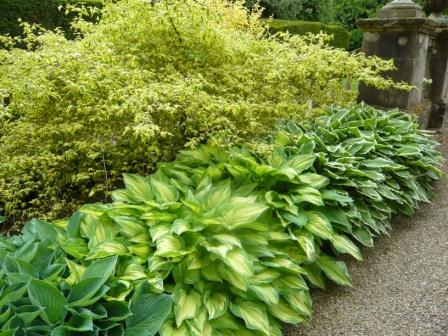
These hostas show how much colour you can have from different shades of green. They do a great job in brightening up this shady spot.

Hostas are an excellent low maintenance plant which are admired for their range of leaf colour. The fundamental problem of hostas is the old enemy the slug. The advantage of growing in pots is that it is much easier to protect them from slugs which for some reason take a particular liking to hostas.

hostas

A lovely gateway into Lady Margaret hall gardens, Oxford

Tips for Growing Hostas in Pots

Hostas do best in shady / woodland environment. In full sun, they may struggle. Though they do like a few hours of sun each day. They also like a moist soil. In pots, you will need to be careful they don’t dry out.
If they are in the shade, they are less likely to dry out, but, it may still be worth adding a few water retaining capsules.

Hostas in Full Sun

Hostas don’t thrive in full sun. You are better off choosing different plants for a hot sunny position. If you really want hostas, generally yellow / golden varieties will do better. Try varieties like ‘sun power’ August Moon, Gold Regal, Golden Sculpture Rising Sun, and Squash Casserole.

Read More Read More

Ideas Growing Hostas

Ideas Growing Hostas

hosta

Facts about Hostas

  • Hostas are attractive foliage plants that prosper in the shade from spring to the first frost.
  • Hosta varieties vary in height from the Blue Angel at 4 feet to  Thumb Nail at 4 inches.
  • Blue green and yellow leaved hosts all like water and the yellow & gold leaved varieties will stand more sunshine like Sun Power .
  • Varied textures are available from smooth, crinkled, puckered and leathery all  to tempt you.
  • Hostas do not seem to die of old age and require minimum maintenance.
  • Read More Read More