Browsed by
Category: Flowers and Plants

Annual, perennial and interesting flowers with advice on culture, information, tips and recommended varieties

Best Ten Vegetables To Grow
Best Ten Vegetables To Grow

veg

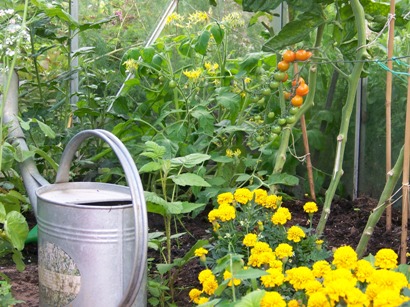
Here are ten of the best vegetables for the home gardener to try growing.

1. Tomatoes

Tomatoes are labour intensive but rewarding. They are also one of the most prolific crop, offering a season of upto three months. There is never a problem in sharing a bumper grop of home grown tomatoes. Tomatoes need careful watering, feeding and pinching out. But, there is great satisfaction from training the tomatoes and providing neat rows of plants. They can be grow in small spaces and so are ideal for the small garden. See tips for growing tomatoes

2. Runner Beans.

Runner Beans are a great crop for a number of reasons. Firstly, they are easy to grow. You can sow direct outside in May / June. They are very fast growing and can soon reach a height of over 6 feet (where they will need pinching out to encourage more vegetables. Also, they are remarkably pest and disease resistant. Apart from slug damage when very young, Runner Beans will thrive without needing to tackle the usual pests like aphids. They also look very attractive with green leaves and red flowers, they can be grown in an ornamental garden with no shame. See: Tips for Growing Runner Beans
Read More Read More

Orchids to Write Home About

Orchids to Write Home About

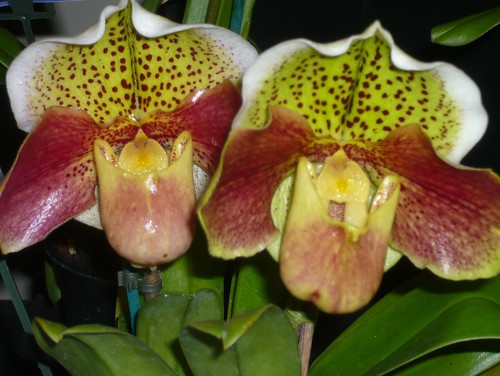
Paphiopedium

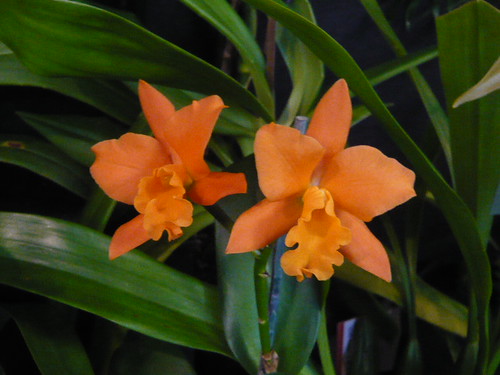
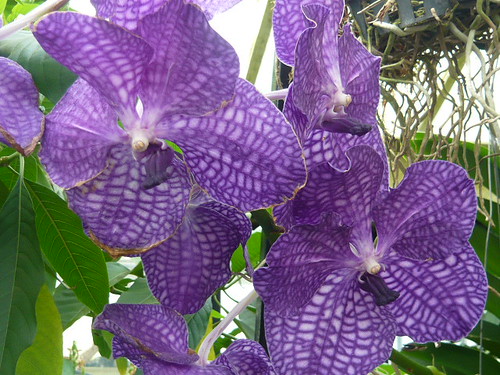
Orchids come in all shapes, sizes and colours and these pictures are just a couple worth writing home about.
In a well illustrated book by Harold Koopowitz packed with more than 300 color photos and paintings the slipper orchids are given pride of place.

Book Cover

Orchids cover a wide range of 25,000 species and 100,000 cultivars and hybrids. So it may be sensible to specialise and that is what HK’s book sets out to do.

My lack of excellence when growing Orchids is nothing to write home about so I will save it for the experts.

Orchids

Kew 180

Read about Orchid Compost on Gardeners Products

Growing Yellow Iceland Poppies from Seed

Growing Yellow Iceland Poppies from Seed

poppy

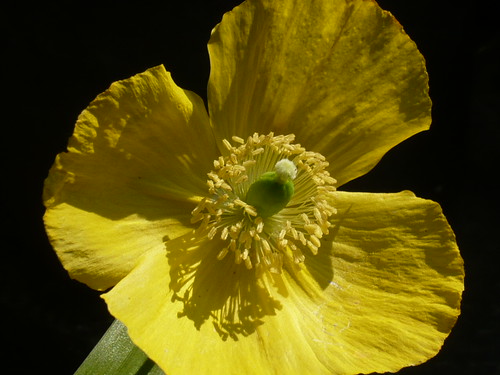
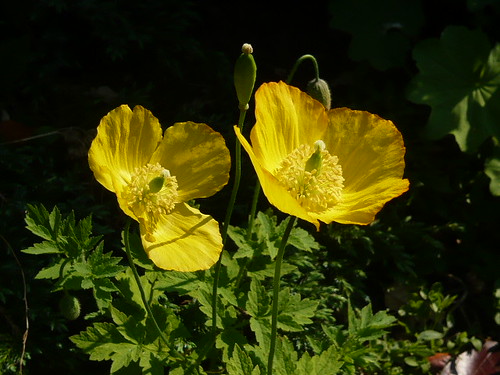
The Iceland Poppy ‘Papaver nudicaule’ is  also known as the Arctic Poppy. They produce single petaled flowers with strong clear colouring. Despite the names they like normal climates but can dry up in a very hot sun.

Description of Papaver nudicaule

  • Iceland poppies are hardy, short-lived perennials generally grown as biennials.
  • The papery, bowl-shaped, lightly fragrant flowers are supported by hairy, stems among feathery blue-green foliage.
  • Iceland poppies grow about 12″ tall and produce a series of 3″ wide flowers from early summer.
  • The wild species bloom in white or yellow but a colour range is available.
  • All parts of this poppy are likely to be poisonous.

poppy

Tips for Growing Papaver nudicaule

  • Iceland poppies create exceedingly minute seeds and long taproots that resent disturbance.
  • Sow seeds outdoors in autumn or early spring in a reasonably well-drained soil.
  • The strongest plants are autumn-sown.
  • Iceland poppies can live 2-3 seasons and self sow prolifically.
  • Iceland poppies last several days in the vase if they are cut just before the buds open and the stem-ends are seared.

Read More Read More

Growing Cucumbers

Growing Cucumbers

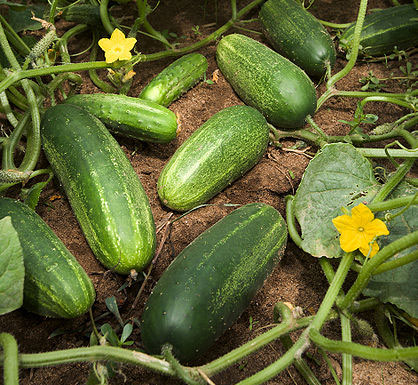
Cucumbers growing on soil. Training them up canes protects fruit from slugs

Cucumbers are a rewarding vegetable. Picked fresh from a home grown plant they taste great and add to any summer salad.

Cucumbers will grow best in a greenhouse or polytunnel. They need between 100 to 140 frost free days from sowing to harvest, so they can be grown outdoors in the UK, if the spot is sheltered. If growing outside try hardy varieties such as ‘Long Green Maraicher’ and Boothby’s Blond’.

Sowing Cucumber Seed

Sow in pots and keep in a warm place. Once, sprouted the seedlings like a warm and moist environment.

Growing Tips

  • When 2 inch tall, remove weaker seedlings. When planting out, give 90cm
  • Cucumbers are hungry feeders. They thrive on a rich, moist soil. They like more water and feed than tomatoes (tomatoes do well by keeping relatively dry until the fruit sets).
  • When fruit sets, feed with a high Potash (tomato) feed to encourage bigger fruits.
  • Cucumbers can be trained up cane poles. But, with several large cucumbers the weight can become too much. However, like many veg, it is best to pick often as this will keep the plant producing more.
  • Pinching Out. An important aspect of growing cucumbers is to pinch out the male flowers. They are identified by the flowers without an embryonic cucumber behind the base. If male flowers are left on, they tend to pollinate the female flowers and the resulting fruit is bitter.
  • Pinch out Growing tips 2 leaves after a fruit has formed

Pests and Diseases.

Cucumbers, like many plants grown in greenhouses, can be subject to powdery mildew, and Red Spider Mite. The best cure here is prevention. It involves avoiding a very hot dry environment (which Red Spider Mite loves) and providing good ventilation. Ensure good hygiene and cut away and dispose of any affected leaves as soon as you see evidence of fungal growth.

The succulent leaves of cucumbers also make a popular target with slugs and snails. Use the usual methods of preventing slug and snail damage.

Cucumber Mosaic Virus.

A disease not confined to cucumbers. Symptoms include yellowing leaves, leaves turning up and reduction in yields and distorted fruit. The best way to deal with cucumber mosaic virus is prevention. Chemical control is difficult. It can be transmitted through aphids or even affected tools. If you experience any disease, burn plant and disinfect area and tools involved.

Related

Tips for Growing Meconopsis the Blue Poppy

Tips for Growing Meconopsis the Blue Poppy

Mecanopsis Crewdson hybrid

The blue poppy is one of the truly stunning blue flowers to grace any garden. I predict a growth in interest in Meconopsis over the next few years as nurserymen increase saleable stock following some intensive nation wide trials.

Cultivation and Propagation of Meconopsis

  • The family contains perennials and monocarpic plants that die after flowering.
  • Soil should be neutral to acidic with plenty of humus.
  • I find they need plenty of moisture and are often grown alongside streams.
  • Meconopsis, are hardy but often short lived, preferring shade and a cool position to full sun.
  • Grow from fresh seed. Clump forming Meconopsis sheldonii should be divided every 3 years

Mecanopsis

Species and Varieties

  • Meconopsis grandis can grow 3-5′ tall with stout stems bearing nodding cup-shaped blue flowers.
  • Mecanopsis cambrica, quintuplinervia and cultivars can be propagated by division.

    Read More Read More

What Flower is This? Unusual Tulips!

What Flower is This? Unusual Tulips!

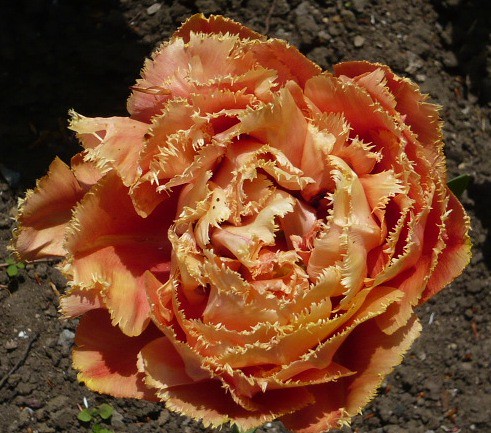
No prizes but this is a Tulip called ‘Sensual Touch’. It is amazing what breeders are able to create with modern technologies.

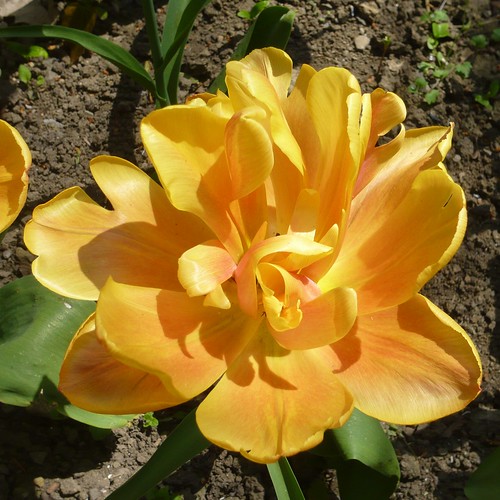
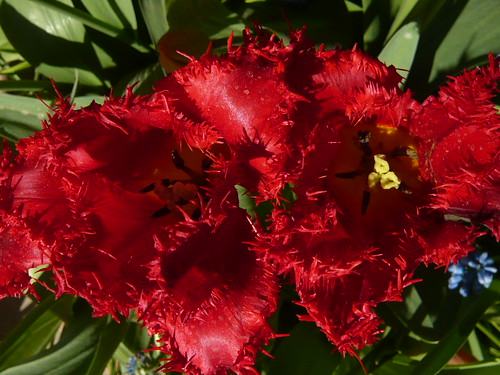
As this is Tulip season I have included a few more less common pictures of Tulips that I have found on my travels this spring.


Blousy flower


Fringed Tulips

Read More Read More

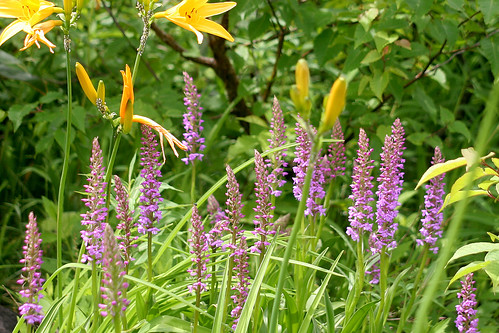
Veronicastrum Height & Vertical Form in Gardens

Veronicastrum Height & Vertical Form in Gardens

Veronicastrum grows and flowers 3-6 feet tall and adds height to many gardens.

Tips for Growing Veronicastrum

  • Native to American woodlands and prairies, Veronicastrum likes rich moist soil.
  • With full sun or light shade they grow towards the light and may need staking in windy locations but grow well with other back of the border perennials.
  • Flowering is in late summer in whites, purples and pink, they are Bee friendly.
  • Leave the spikes to add winter interest and for seeding.
  • Use as cut flowers either fresh or dried.


Hardy Varieties to Grow

  1. Veronicastrum virginicum ‘Album’ has an airy white spire of tightly packed flowers.
  2. Veronicastrum virginicum ‘Facination’ grows on stiff stems but the mauve flowering spikes droop slightly whilst still adding height to the back of borders.
  3. Veronicastrum roseum ‘Pink Glow’ is the colour it claims to be and mixes well with other late blooming perennials.
  4. Veronicastrum sibiricum (above)  is lower growing at 3-4 feet
Apple Blossom in Pictures and Notes

Apple Blossom in Pictures and Notes

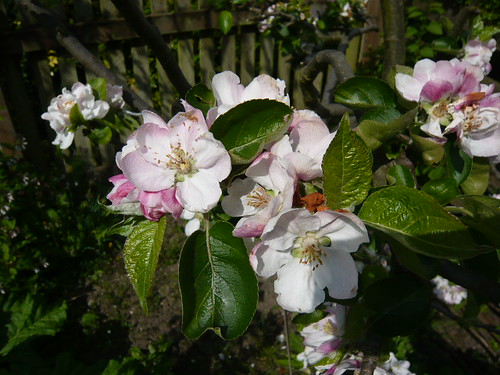
Apple blossom

2010 seems set to be a great year for Apple Blossom. All around there seems to be vast quantities of blossom on each tree – let us hope there are enough Bees to go around when it comes to pollination.

I was surprised when I looked more closely at the size and colour on the blossom of different trees and have reproduced some varieties here. As you may remember there was a lot of frost damage on a row of cordons but, touch wood, my main trees remain unaffected.

The late arrival of warm weather is playing into the hands of pollination as most varieties seem to have opened at the same time. This will bring the insects out and help cross pollination to produce a good crop of Apples.

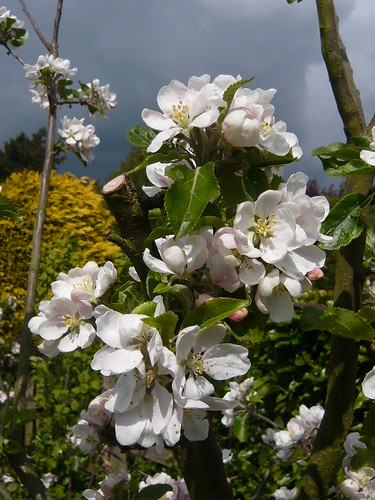
Apple blossom

Glowering skies loom over this tree but showers of rain are an occupational hazard for Apple blossom. As long as the rain drains from the tree and is not trapped in pockets to cause wood rot there is no problem.

I have to admit to a spray regime after blossom fall to protect my fruit to deter insects

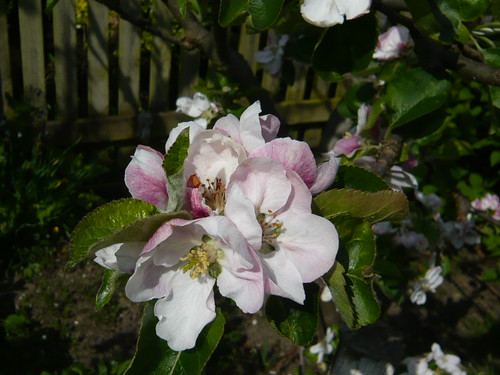
Apple blossom

This eating apple has dark red skin and I will have to look in my old note book to remind me of the variety. Still I am not surprised to see that it has pinker blossom than the James Grieve.

Each blossom was larger than the old half-crown and made a wonderful sight.

Read More Read More

Growing Centaurea

Growing Centaurea

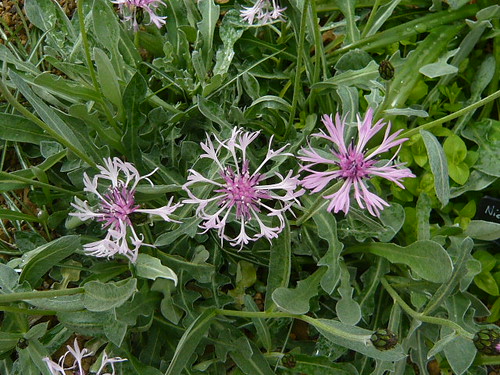
Centaurea Achtarovii

Centaurea are a group of plants, the Knapweeds, related to cornflowers and similar in appearance to thistles they look far better than either in a cottage garden environment.

The National collection of Centaurea is held at Bide-a wee Cottage garden in Morpeth Northumberland.

Centaurea Growing

  • Centaurea grow best in a moisture retentive soil   and are equally at home in sun or partial shade. Otherwise it is not fussy about soil conditions.
  • The common feature of the Knapweed family is the flower’s scaly brown base with tightly gather multiple petals.
  • Robust in constitution they are a survivor in many a neglected garden.
  • Respond well to being cut back after flowering it is also suitable for naturalising in meadows.

Some Varieties to Grow

  • Two perennial species are British natives Centaurea nigra and Centaurea scabiosa. Centaurea nigra grows in  wet pasture, moor and along stream banks.
  • Centaurea range in size from the ground hugging Centaurea mollis, with prostrate foliage and lavender blue flowers to the giant Centaurea macrocephala, growing up to 4ft with large yellow flower heads.
  • Centaurea Achtarovii shown above is a smaller growing variety.
  • The first to flower is the Centaurea montana the perennial cornflower. In late May flowers are seen in a variety of pastel shades and deep blue.

For more information on growing larger Centaurea read ‘garden gem or invasive weed’.

Plants and seeds are available from Thompson Morgan

How To Make Most of Garden

How To Make Most of Garden

garden

How To Enjoy the Garden.

We often write about how to kill pests, how to grow vegetables, how to keep on top of the weeds. But, what about how to enjoy the garden? We all know gardens are for enjoyment, but, if we’re not careful, they can become a beast of burden rather than a paradisical area for our relaxation and enjoyment.

Do a Job 100%.

It is tempting to be in the half mood of gardening, we wander out in our slippers and start half heartedly pulling up some couch grass with our bare hands. We don’t really get the job, (we don’t even want to get our slippers on hands dirty). When we are weeding, we want to go at it ruthlessly, will all the right equipment to eradicate an area or particular weed. It is more efficient to get a job done, than leave it at  50% done.

garden

Perfection Should be A Natural Perfection

Do you wander round famous gardens and get jealous of the immaculate lawns the absence of any weed e.t.c? The great natural garden can happily incorporate the odd weed without losing its beauty and naturalness. If we are only happy when there are no weeds and no pests and neat rows, and immaculate petunias… we will never be able to enjoy the garden.

It’s just a matter of looking on weeds with a different perspective. Look at the bigger picture and enjoy the different shades of green…

Feel the Living Energy.

A garden is more than a beautiful picture to look at. It is enjoyable to sometimes just sit back and listen to the hum of insects and feel the life that is going on in the garden.

Do Manageable Tasks.

Have you ever started with a little light pruning and before you know it you’re trying to tackle and giant conifer involving innumerable visits to local recycling place. Before, start gardening have a manageable task. It is better to grow six tomato plants well, than try and grow 50 tomato plants badly. You will never be able to eat all tomatoes anyway. Keep the scale to fit your schedule. If you have little time, look for time saving techniques. If a bush grows so quickly you are always having to prune it, why not take it out and put something in lower maintenance.

Related