Browsed by
Category: Articles

Gardening articles that may not include tips

Yellow is a Garden Colour

Yellow is a Garden Colour

Yellow is a Yowser Colour

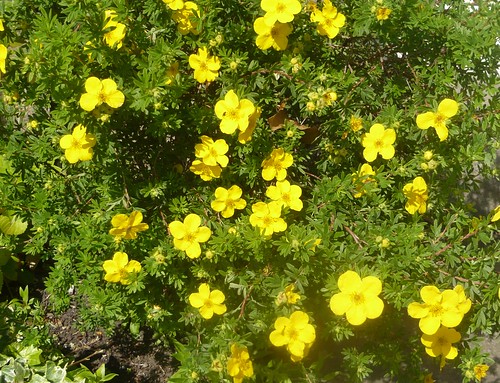
Yellow can be a difficult colour in the garden and I know of one keen gardener that tries to avoid all Yellow flowers. However this Potentilla or cinqufoil grabbed my attention hence the yowser headline. No wonder the Potentilla is also known as the Buttercup shrub as the strong yellow is reminiscent of the field buttercup.

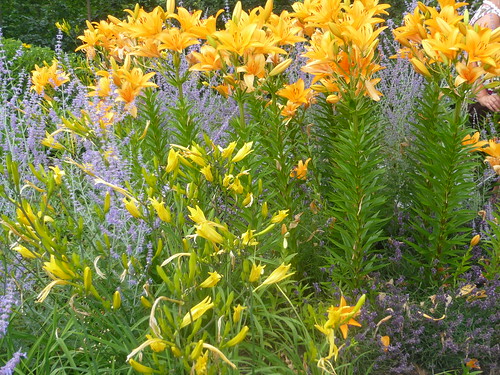
From a pale cream through to a vibrant sulphur yellow there are numerous plants and trees that offer yellow delights. That excludes all the leaves, pollen, pistil and stamen.

No wonder Yellow is the chosen colour for the The Yellow Book, NGS Gardens to Visit 2016 now surprisingly renamed ‘NGS Gardens to Visit 2016’  – Yellow book from Amazon

Read More Read More

Floral Vistas Plan Before Planting

Floral Vistas Plan Before Planting

floral vista

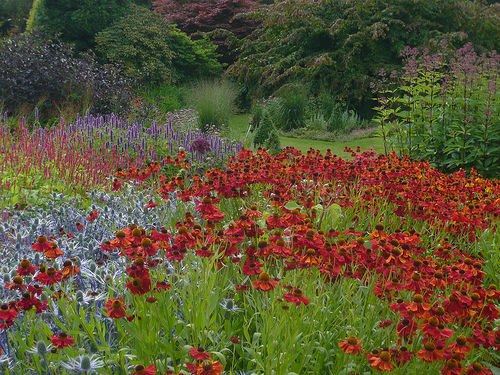
Greenery is all very well but I like to see swathes of colourful flowers.
I try to envisage how mixed planting will shape up in terms of colour but generally my minds eye falls short when it comes to the imagination department.
The best tip is to keep it simple with only a very limited number of varieties chosen because they are due to flower around the same time.

By contrast my wife, on the other hand, is wedded to green leafed houseplants, green conservatory plants and even green outdoors. (She is also wedded to me and I am not as green as I am cabbage looking so at least I get some colour into the garden)
Perhaps she should grow Gloxinia
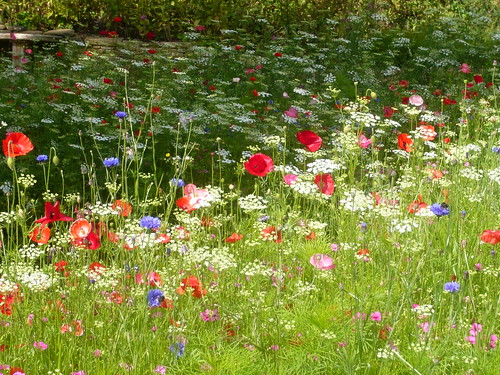
Meadow

I do not mind seeing my colour in wild meadows or just as yellow in a field of buttercups. This photo looks like a pointillist painting rather than a snap shot but it was planned by RHS gardeners to look something like this when the ground was laid out.

A friend at our village gardeners club insists she only grows flowers that avoid yellow – I guess she thinks it too garish and she misses out on some grand flowers.

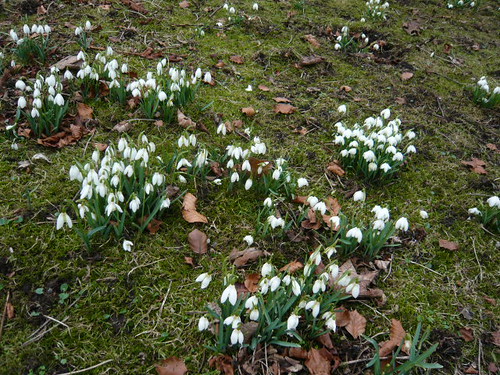
Snowdrop park

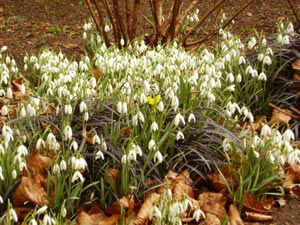
Woodland walks in Spring would not be the same if it wasn’t for the Snowdrops, Aconites and Narcissus.
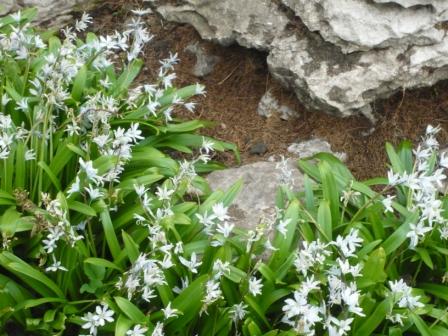
Even wild garlic is better when you can see the white flower.
Is white really a colour some folk ask – to me a resounding yes, just consider a rainbow.

Making A Rock Garden or Rockery

Making A Rock Garden or Rockery

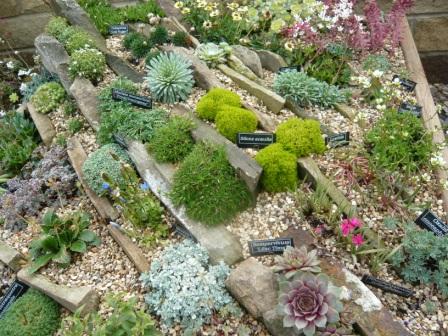
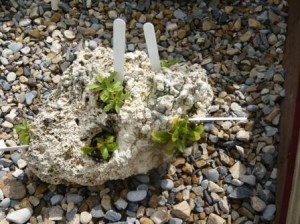
A rock garden is a grand place to display your alpine plants. You can shade them with rocks, provide deep root runs and provide rain cover with perspex roofs
rockery

In Alpine conditions plants can shelter behind rocks that give them protection from wind and rain and help with drainage. Try to give your plants similar conditions to there original habitat and they will repay you for your attention to detail.

Tips for Making a Rock Garden

  • A rock garden should be open and unshaded by over hanging trees
  • There should be a slope either natural or built up. This allows plants on the North facing slope to receive 25% of the sun (and heat) of those on the South slope so those delicate plants don’t fry.
  • Study the prevailing wind so you know where most rain will fall and plant the rain shadow area with plants that need to stay dry.
  • If in doubt about drainage improve it by adding grit. If the soil is clay, a pile of brick rubble 15 inches below the surface will aid drainage no-end.
  • The soil can be average soil but will not need extra nutrients or fertilizer except for special situations. Pack all crevices tightly with soil to prevent unwanted pests like mice.
  • Plan your rock positions and lay the grain or style of rock all in the same direction. Do not mix rock types or the harmonious effect can be lost.
  • Do not plant higgledy piggeldy but select plants that fit into a simple plan. Keep slow growing plants needing similar conditions together. Consider haveing zones in the rockery for different plant requirements.
  • Mulch new plants with pea gravel

Read More Read More

Alpine Growers Club AGS

Alpine Growers Club AGS


This is an update from my last report on the AGS in September 2009. After 7 years of happy membership I am letting it lapse and saving the money to spend in the garden. The local branch society never lived up to my aspirations as a club despite some great speakers, I never felt part of the in crowd. The national society provided an excellent magazine and a seed distribution service which I will miss until I decide to rejoin.

alpine-s

For my birthday I received membership to the Alpine Garden Society ‘The Big Society for Small Plants’. The package supplied with my membership is very impressive, in addition to my national membership card I received a membership voucher for 1 years local group membership and a list of 53 regional venues. As a special offer my first years membership will run from August to the end of next year and at £25 for 16 months, it seems great value.

Alpine Package

Competitions and shows are a large part of the society’s activities . A full programme (72 pages) for 2009 with rules and specifications was sent with my pack. This years remaining events include, 26th September 2009 Gillingham Autumn show, October 3rd Loughborough show and October 10th Newcastle.  A 2010 programme  is promised shortly. Whilst I am not likely to enter competitions it was interesting to see what plant varieties were consistant winners.

The Alpine Gardener Bulletin volume 77 no.2 is a superbly produced 140+ page book with stunning pictures. Whilst this is the 80th anniversary edition I hope the other quarterly books are to the same standard. ‘Alpine news’ lists books and holidays for sale and it is a good idea keeping these adverts on a separate leaflet, away from the main publication.

Seed distribution is also one of the services the society offer and you get more seeds if you collect and donate your own seeds.

So far so good the Society seems to be a great advocate for Alpine gardening and have a good membership package. As with all societies I guess the more you put in the more you get out so it looks like I will have to polish my Alpine gardening skills.

Membership details available here.

alpine 076

The Scottish Rock Garden Club links with The RHS and Alpine Garden Society on the joiny Rock Garden Plant Committee.

Tips for Growing Bamboo in UK

Tips for Growing Bamboo in UK

bamboo

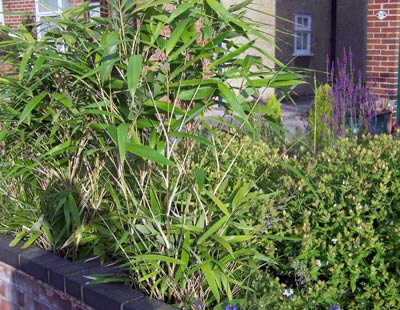
Bamboo is an intriguing plant, which contains over 1,200 species ranging from specimens 6 inches tall, to varieties which can grow upto a foot a day and reach over 130 feet. With the 1,200 species there are varieties which deserve a reputation for being an invasive plant. In the above picture, you can see how the bamboo is spreading away from the wall and is popping up in the middle of the front garden. This particular variety is not too bad, and digging up the rogue runners once a year is sufficient to keep it in check.

Growing tips for Bamboo

  • Bamboo like well drained aerated soil
  • They don’t need feeding. You can prune them and digg up clumps to keep them in shape.
  • Bamboo are excellent for giving height in a garden
  • They also add a resting rustle in the wind.
  • For species with invasive roots, plant in a container with the bottom cut out. This will help contain the roots within the area that you want.
  • When photographing bamboo do not let your shadow intrude.

Read More Read More

Growing Kerria in a Cottage Garden

Growing Kerria in a Cottage Garden

kerria

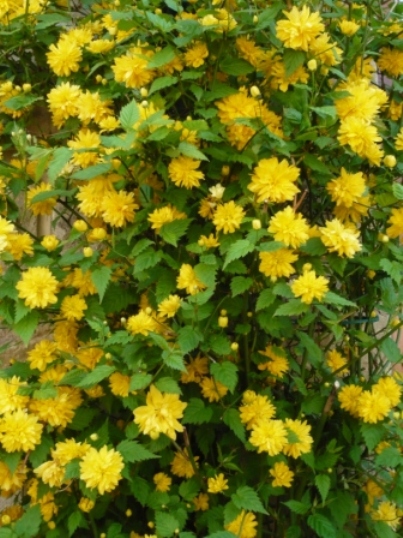
Also known as the Japanese rose, Kerria Japonica it is a cottage-garden regular that grows dependably almost anywhere. The flowers are a distinctive single or double yellow flowers in April and May. The arching stems are thin and the leaves serrated.

Varieties

  • The modern AGM plant, Kerria japonica ‘Golden Guinea’, has very large, single flowers up to 2.5in across and bright green, attractively veined leaves.
  • Gardeners who are not sure about yellow may actually prefer the single form, Kerria ‘Simplex’, AGM.
  • A silver variegated form Kerria japonica ‘Picta’ has single flowers 1.25 – 2in across and it grows 5ft in height with creamy white margins on grey-green leaves. This is a low, spreading cultivar
  • Kerria japonica ‘Pleniflora’  syn. ‘Flore Plena’ is a vigorous, upright form with double flowers. It grows to 10ft in height and has an AGM.

Book Cover

Read More Read More

Help with February Gardening Jobs

Help with February Gardening Jobs

snowdrops

There are numerous jobs to start in February and most gardeners will be very busy. Perhaps too busy to read this article. Still Gardeners Tips tries to help new and experienced gardeners with a series of tips and job lists that should save time in the long run.

Jobs for New Gardeners In February

  • Do not rush, the season hasn’t started and there is a lot of time to catch up.
  • Complete any hard landscaping and design changes that you do not want to be doing when the growing season starts in earnest.
  • Plot and plan, February is a great time to be sorting out your thoughts and getting all your ‘ducks in a row’ ( do not mix ducks with an ornamental garden they eat and fertilize the wrong things.)
  • Read what the experts will be doing – plants want to grow for beginners and experts alike.

Jobs for Expert Gardeners In February

  • Sow seeds of Broad Beans and Sweet Peas in a cold greenhouse or outdoors with some protection.
  • Sow hardy annual seeds in trays
  • February is the time to dig in any green manure that has over wintered.

Fruit

  • Prune outdoor vines, blackcurrants and gooseberries using off cuts as cuttings
  • If you are troubled with moss on tree trunks use lime wash to remove it.
  • Spray peaches against leaf curl

Vegetables

  • Order any seeds and sow early carrots, parsnips or parsley
  • Draw up soil around spring cabbages
  • Plant out autumn sown lettuce and broad beans

Flowers and Shrubs

Flowering Climbers Look Great

Flowering Climbers Look Great

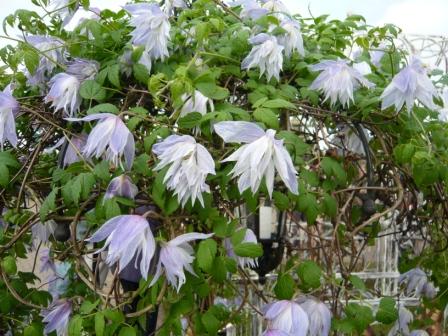
clematis

Climbers can look really great if you do some preparation. Select an appropriate wall to train your Climbers against or use a free standing structure like this metal frame for the blue Clematis.

Structures For Climbers

  • Affix trellises to your wall or selected fence before you start planting.
  • Screw in vine eyes to your wall if you are going to string a wire framework for your climbers.
  • If you are using a pergola, arch or other structure make sure it is strong enough to support the weight of leaf and blossom even when there is a strong wind blowing.
  • Some plants and trees can provide the climbing support you need for less robust climbers.
  • Annuals can be grown up canes and pea netting but make sure the end canes are firm and well supported as even sweetpeas can get top heavy later in the year.
  • Even self-clinging plants like Ivy will need some support to get the climbing to start.
  • Prepare the soil deeply, particularly with moisture retention in mind as walls tend to get very dry.

Tips for Climbing Plants

Read More Read More

Best Gardens In China for a Visit

Best Gardens In China for a Visit

lingering-garden

China is one of the great destinations for visiting gardens. The influence over garden design and the vast array of plants and flowers is secondary to the investment in time and dedication demonstrated in so many great locations. This is just a selection of those you may consider visiting if you can make the journey..

The Garden of Contentment has an evocative name that for many sums up the essence of gardening. This feeling of tranquility will be found in many of the gardens we are considering visiting but this Shanghai location is an exceptional place to start our virtual garden tour.
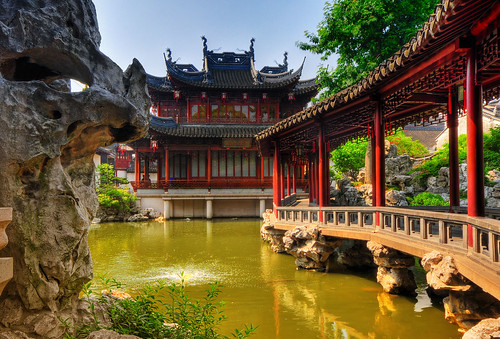
YuYuan Garden

Whilst in Shanghai it is worth a visit to the local Botanic Garden with its collection of old bonsai and many acid loving plants.

For a strange, modern, garden in Beijing the Grand View Garden was built in 1984 to represent a fictional garden replicating one described in a classic Chinese tale ‘ A Dream of Red Mansions’ available in English

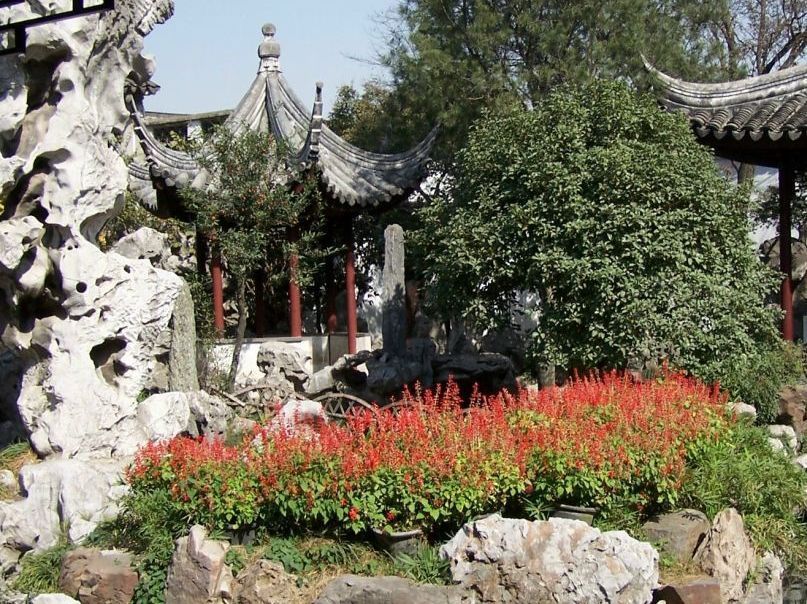
For keen gardeners the best location must be the ‘Silk City’ of Suzhou where you have a choice of choice gardens to visit.  The name Lingering Garden makes me want to invent a name for my own patch, perhaps that should be the patchwork garden. The image is of the Lingering garden from Wonderlust and Lipstick inspiring women travellers.

Humble Administrator's Garden
The Canglingting or Dark blue wave garden is deceptive in its use of pools and local scenery whilst the Humble Administrators Garden is anything but humble as the largest garden in the city. The Circular Grace  Mountain Villa blends with the rocky out crops making traditional use of the landscape evocative of Chinese painting.

The star amongst so may great  cultural heritage sites is the The Master of the Nets Garden a household garden and one of the smallest but highly recommended. It is about one thousand years old and is inspirational particularly in the design and linking with the living accommodation.
Imperial Garden in the Forbidden City

See more information courtesy of Travel Guide China
The Master of the Nets Garden

‘Even more than the architectural achievement is the mood of tranquillity and harmony that this humble garden embodies.
This exquisite garden was first designed during the Song Dynasty (960 – 1279) as part of a residence that was used until the Taiping Rebellion in the 1860’s. It was later restored and became the residence of a government official from whom the garden got its name.
The garden is divided into three sections: a residential section, the central main garden and an inner garden. The main garden has a large pond that is surrounded by pathways and a variety of buildings such as the Ribbon Washing Pavilion, and the Pavilion for the advent of the Moon and Wind. There are many more buildings that are situated so that there is never a sense of crowding, but always of spaciousness. As is common in Suzhou gardens, the pond has a small pavilion in it. Here the pavilion is accessible by a bridge that is less than one foot wide.
As you walk about the gardens and along the walkways, there are often views through windows onto beautiful flowers or plants framing them from a distance and drawing you to a single sight, a moment of peaceful natural beauty. As you walk through the buildings, it is easy to imagine the life that the original residents lived in a feudal society where these gardens were solely for their pleasure and the pleasure of their guests. The various buildings are constructed so that you can always access the main garden from any room.’

Guo Zhuang Botanical Garden and traditional private gardens are often on the tour circuit on trips to Eastern China. Other Botanic gardens to consider include Sun Yat-sen Botanical Garden in Nanjing , South China Botanical Garden, Xishuangbanna Tropical Botanical Garden
Kunming Botanical Garden, Wuhan Botanical Garden Lushan Botanical Garden, Hangzhou Botanical Garden and Guilin Botanical Garden.

Book Cover

Great book on Great Gardens in China by Peter Valder
From amazon ‘Valder’s illuminating compilation of more than 200 gardens promises to provide the ultimate resource for future travelers before mbarking on a trip they can study and savor images and information on diverse horticultural realms located throughout China… A lavish record of famed Imperial gardens as well as fascinating examples of lesser-known temples, parks, and botanical arboreta… Encompassing a treasury of plant portraits, stunning architectural details, and awe-inspiring vistas, Valder’s chosen topic is rendered in such depth as to rouse armchair dreamers and act as a call to action for avid garden trekkers.


Credits
YuYuan Garden by Wolfgang Staudt CC BY-NC 2.0 ‘Yuyuan Garden, first established in 1559, is located in the center of the Old City next to the Chenghuangmiao in Shanghai.
Humble Administrator’s Garden by Jan Langhaug CC BY-NC 2.0
Imperial Garden in the Forbidden City by ajft CC BY-NC-ND 2.0
Yuyuan Garden by ksbuehler CC BY-NC-SA 2.0

Yuyuan Garden

Gozo Flower Photos in March

Gozo Flower Photos in March

Malta, Gozo and Comino are Mediterranean island hot spots for early coastal flowers if these photos are anything to go by. Not a plant hunters paradise but a photographers opportunity to get some good shots.

Plants of  Gozo
Agave and Aloe varieties seem to cope with the climate and the salt ladened air.
Plants of Malta  march

Read More Read More