Browsed by
Category: Articles

Gardening articles that may not include tips

Lemon Scented Petunias

Lemon Scented Petunias

A good idea that failed in my garden this summer involved Petunias. Rather than plant the brash coloured Petunias I thought I would go for some scent and colour coordinated schemes. So I opted for these Lemon F1 plants I bought as seedlings. The idea was to grow Lemon Verbena and Geranium Lemon crispum alongside the petunias for the leaf scent. The weather was not kind to the petunias and they suffered badly in the ground. Those in pots fared better but still did not excel and had no scented plants with them. I like the idea and will try again next year probably with a different combination.

Self Colours

  • F1 varieties allow us to select single colour Petunias and a new series from Chilterns comes in Lady Purple, Lady  Blue, and Lady Cherry.
  • Thompson Morgan have Mirage Midnight a dark blue and Cascade Blue (double) which I think is purple.
  • Prism Sunshine F1 is another yellow grandiflora as are Baby Duck and Madness.
  • EasyWave™  is another series with self colours in Red, Blue and White
  • Single colour with white frills may be cheating but I like Pirouette Purple, Pirouette Red and Plum Crystal.

Petunia from Thompson & Morgan
Also read Help Growing Petunias

Starting Types of Petunias

  • I find the seeds too fine and hard to germinate consistently. Being a lazy gardener I like ‘kinder plants’ and plug plants to get me started.
  • Petunia ‘Citrus Spritzer’ is a Mini Petunia also called Calibrachoa. Withmasses of flower power producing in excess of 500 blooms per basket, mini Petunia ‘Citrus Spritzer Mixed’ are simply made for hanging baskets. Free flowering and easy to grow, these astonishing calibrachoas make a spectacular summer display. Height and spread is 30cm (12”).
  • Surfinia’ petunias are still the most loved and reliable petunias, producing hundreds of beautifully coloured, trumpet shaped flowers. Support Petunia ‘Surfinia’ on a climbing frame and it will rapidly climb up to 2m/6ft high to create a non-stop tower of colour. These petunia flower from June right through to the first frosts of winter.
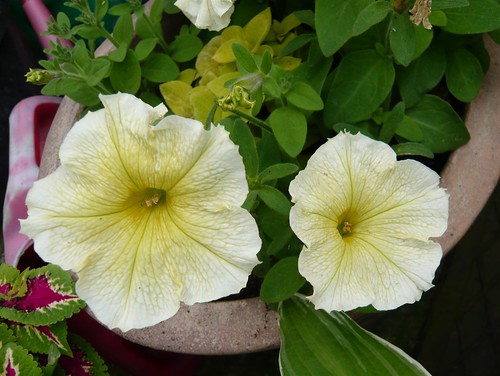
  • Fill your patio containers with the wide, citrus yellow, bell shaped flowers of Petunia ‘Fanfare Yellow’ shown below
  • Petunia ‘Waves Mixed’ F1 were a version of the earliest petunias.
  • The ‘most weather resistant’ is claimed to be Petunia miniflora ‘Mini Bella Picotee Mixed with the appearance of stripped flowers.
  • Spreading petunias are only about six inches tall, but spread so rapidly that they cover a huge area in one growing season provided they’re watered and fertilized frequently.
  • If I am lucky enough to get a good crop of seedlings it is usually from a small selection and I miss out on the variety.


Old Lupin Photograph for Cottage Gardens

Old Lupin Photograph for Cottage Gardens

An old cottage garden favourite

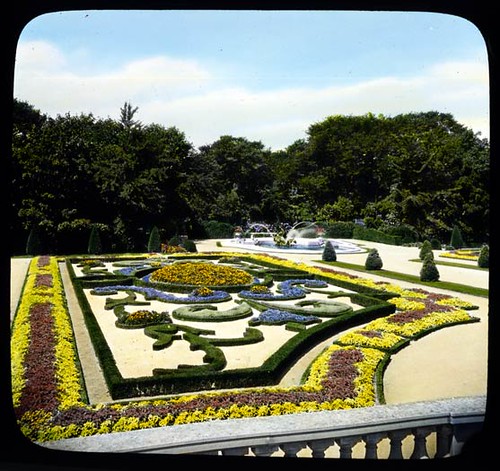
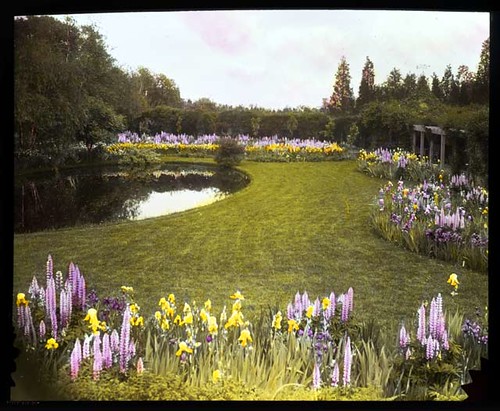
Old hand coloured glass plate photographs from the USA National Archive which have no current copyright restrictions. The colours are brash but the Lupins and Iris stand out.

The Landscape Architect of these Parterres, Flower beds and Walkways was Horace Trumbauer, in 1930. The Box, Annuals and Ageratums are formally displayed with the fountains as a backdrop.

Both these photographs may look a bit out dated now but it is part of our gardening history. We can see how the yellows and blues work well together and notably how tidy everything seems to be.

Read More Read More

Tulip Tree – Root and Branch Review

Tulip Tree – Root and Branch Review

Liriodendron tulipifera or Tulip tree is a tall striking tree related to the magnolia with similar Tulip shaped flowers. It has been planted in Britain since 1688 as an ornamental parks and gardens tree.

On my Tulip Tree_4-30-08

Key Features of the Tulip Tree

  • Latin name – Liriodendron tulipifera – other common names Tulip poplar or yellow poplar
  • Height – 90-100 feet
  • Type of tree – decidious
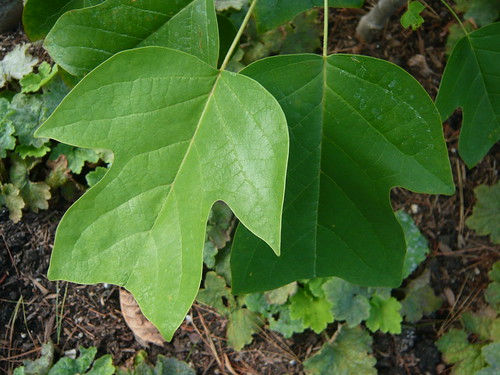
  • Leaves – Deeply lobed green turning yellow-gold in autumn
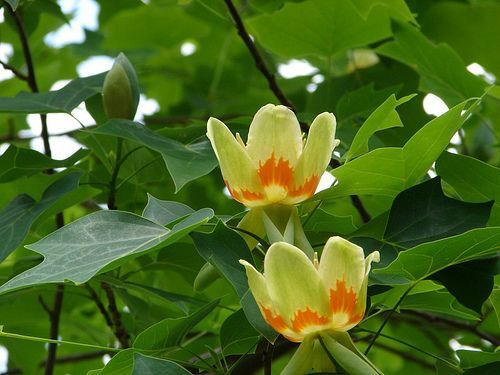
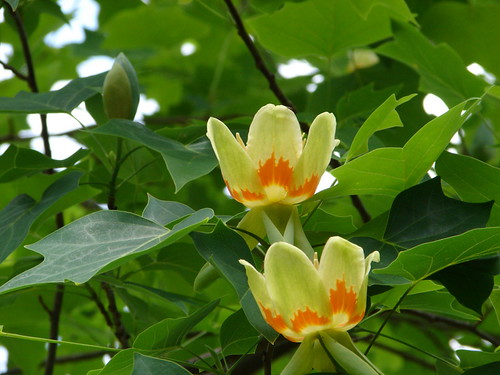
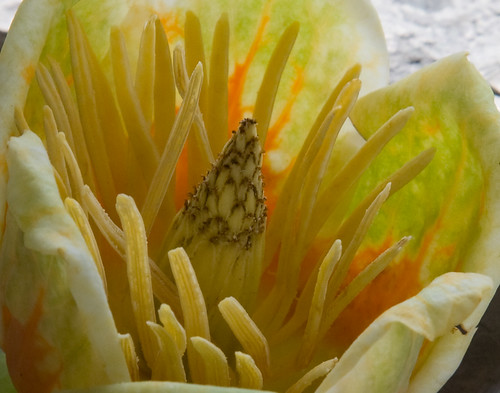
  • Flowers – Six petals pale green at the edges and orance corollas at the centre
  • Fruit – Cone like woody unseeded fruit with one wing.
  • Bark – Pale grey-green with white furrows
  • Family – Magnoliacaea

Origins and Distribution of the Tulip Tree

  • Eastern seaboard of North America.
  • Now more widely spread as a specimen tree in UK and elsewhere.

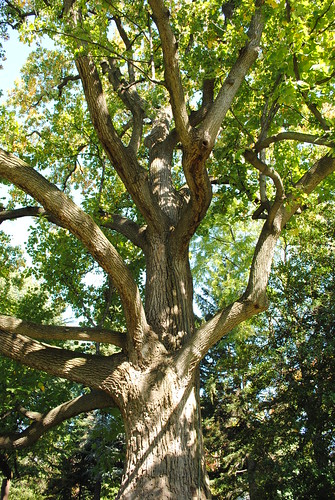
Interior of Sprawling Tulip Tree, Tudor Place

Uses and Attributes of the Tulip Tree

  • The fine grained soft wood is used for plywood and pulp.
  • Ornamental due to the flowers and leaf colouring.

Gardeners Tips for the Tulip Tree

  • Flowers are not produced on young trees. Flowering can take over 8 years from seed sowing.
  • Fastigiatum is a slender columnar tree suitable for more constrained spaces.
  • Flowers are generally high up in the tree and thus less visible.

Tulip tree shovel shaped leaves

Other types of Tulip Tree

  • Until the 20 century it was thought tulipifera was monotypic. Then a plant was discovered in China with leaves more glaucus and smaller in flower and stature Liriodendron chinense.
  • Liriodendron tulipifera Aureomarginatum have edged leaves and Liriodendron tulipifera Integrifolium has leaves without lobes.

Tulip tree, Liriodendron tulipifera, Flower

Credits
On my Tulip Tree_4-30-08 by jimbrickett CC BY ND 2.0 ‘These are the blooms on my Tulip Tree in my yard today (there are a hundred of them). Most too high to see well.’
Interior of Sprawling Tulip Tree, Tudor Place by ok-oyot CC BY-NC-ND 2.0
Tulip tree, Liriodendron tulipifera, Flower by nipplerings72 CC BY-NC-ND 2.0
“Tulip Tree Flower 7236 by pjriccio2006 CC BY-NC-SA 2.0 ‘The Tulip tree is a large, deciduous tree, which easily reaches 70′ to 90′ tall, and large trees to 150′ or more are common. The flowers are 2″ to 3” long, tulip-shaped, upright blossoms, borne singly at branch ends, and blooms late may through mid-June. The petals are yellow-green, and the inside of the corolla base is orange. Unfortunately, most flowers are borne in the higher reaches of the plant and are not easily observed. These flowers were collected on a series of cool windy days.’

Tulip Tree Flower 7236

Beech Tree – Root and Branch Review

Beech Tree – Root and Branch Review

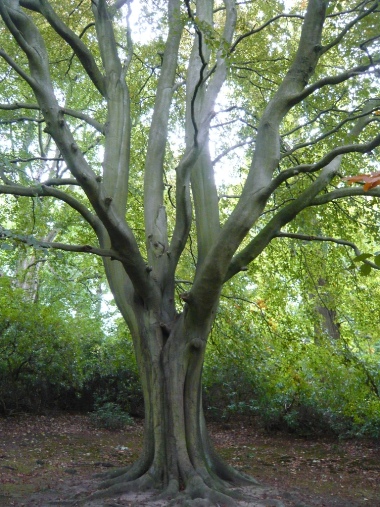
barrow 096

I used to think Beech trees grew on the beach but now I know a little better but not much. This is one of the UK’s most useful trees and deserves to be grown where ever space permits.

Key Features of the Beech

  • Latin name Fagus sylvatica other common names include ‘Lady of the Woods’ or European Beech
  • Height up to 45m 150 feet trunk can be 10 feet in diametre
  • Type of tree Deciduous, broadleaved, dictoyledon tree
  • Leaves – Light green turning deeper in summer are ovate shaped with wavy edges. Decorative in autumn with copper and russet foliage.
  • Flowers Male are in yellow pendulous clusters whilst female flowers are inconspicuous in leaf axils on the same tree.
  • Fruit Beech nuts are 3 sided brown nuts contained in pairs or singly inside prickly green/brown husks
  • Bark is silver gray thin and smooth
  • Family Fagus

Origins and Distribution of the Beech

  • Grows widely throughout Europe and likes chalky and limestone areas.
  • Native to England it may have been introduced by stone age man for the food property of the nuts.

Beech Trees

Uses and Commercial Attributes of the Beech

  • Beech nuts or ‘mast’ are still used to feed pigs and parkland deer.
  • Wood from the beech is tough and used for flooring and furniture.
  • Wooden implements like bowls, spoons and tool handles are traditionally made from beech
  • Beech woodlands often act as home for mushrooms.
  • Beech hedges are popular as the young plants are easy to train and retain their leaves through winter
  • Beech fruit are edible and have a nutty flavour but should not be consumed in great quantity as they can be toxic.
  • Beeches can live for 300 years and are used as wind breaks and field markers as well as part of mixed hedges particularly when young.
  • Wood from the beech is used as a fuel.

Gardeners Tips for the Beech

  • Leaves remain on the tree until the spring making beech popular as a hedge.
  • Wood is easy to turn and work for carpentry particularly if soaked first to make it pliable.
  • Limited topiary is possible with a beech tree.
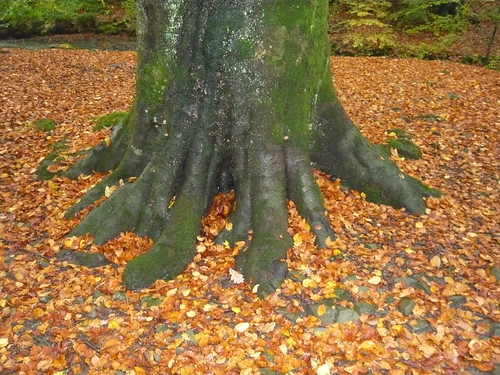
  • Older trees have buttresses to improve stability.
  • Read Copper Beech Hedges

Root and beech beach

Other types of Beech and Species

  • Copper Beech or Purple Beech Fagus sylvatica Purpurea atropunicea has purple leaves some turning deep green by mid-summer.
  • Weeping Beech or Fagus sylvatica Pendula has branches that hang down as the name suggests
  • Fagus sylvatica ‘Rivers Purple’ also known as ‘Riversii Major’ has been awarded an Award of Garden Merit
  • A narrow cultivar of beech Fagus sylvatica ‘Dawyck’ develops into a striking cone shape.

Beech Comments from Elsewhere

  • ‘A coppard is an ancient tree that was coppiced hundreds of years ago and then later pollarded. This prolongs their life and this beech tree could be anything up to 1,000 years old and was first cut by Anglo-Saxon woodmen’ Jacks Hill Epping
Credits
Beech Trees by Joost J. Bakker IJmuiden CC BY 2.0
Lake Wood, Uckfield – Beech Nuts by Dominic CC BY 2.0 below

Part of a Slideshow / Set forming a virtual tour around the lake at Lake Wood, on the outskirts of Uckfield, East Sussex, England, UK. [Map]

The artificially expanded lake and woodland is adjacent to, and to the north of, West Park Local Nature Reserve. The two areas are separated by Rocks Road (the B2012 Uckfield / Piltdown road). Both areas formed part of the Rocks Estate, owned for 200 years – and landscaped in the style of Capability Brown – by the Streatfield family. A tunnel beneath the dividing road (now bricked off) enabled carriage access to the lake from Rock House.

The area has numerous Ardlingly Sandstone outcrops. Where these obstruct the path around the lake, a tunnel – and also steps leading down to an underground boat house cave – were excavated.

Lake Wood is managed and protected by The Woodland Trust
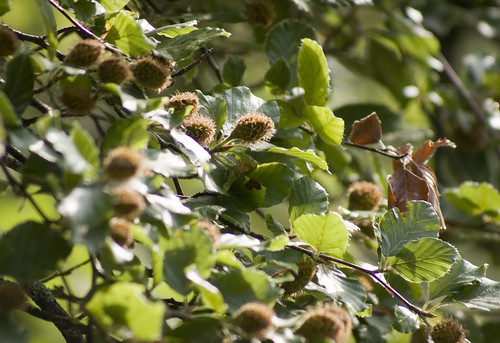
Lake Wood, Uckfield - Beech Nuts

Read about our series on British tree reviews with a bakers dozen fact sheets
Baobab – Root and Branch Review

Baobab – Root and Branch Review

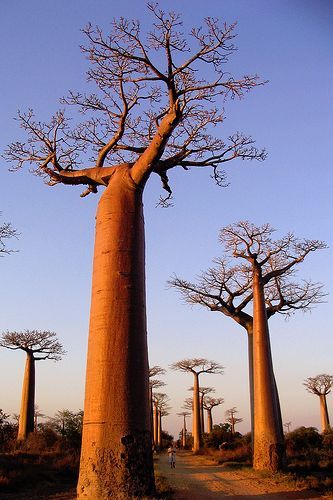
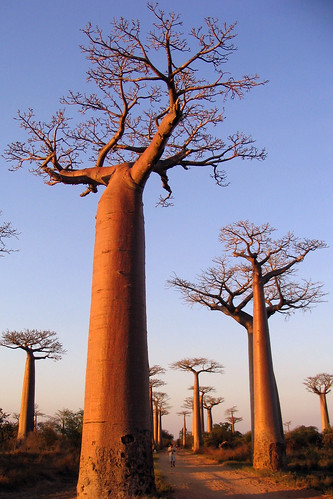
baobabs

Baobab is a remarkable tree with striking appearance identified by it’s swollen trunk which stores water. Slow growing the tree is believed to live for centuries but has no aging rings in the trunk.

Key Features of the Baobab

  • Latin name – Adansonia digitata Common names – Upside down tree, boab, dead-rat-tree, boaboa or bottle tree
  • Height – 30-70 feet
  • Type of tree – Deciduous
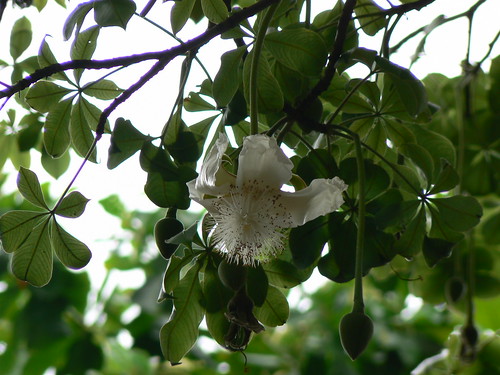
  • Leaves – dark green glossy hand like leaves with 5-7 fingers
  • Flowers – Solitary large scented white to cream
  • Fruit – ovoid, brown, hairy capsules of black seeds
  • Bark – Grey-brown and fibrous. No annual growth rings of trunk.
  • Family – Malvaceae

Origins and Distribution of the Baobab

  • Native to Madagascar and central Africa.
  • The tree is adapted to arid conditions and is also found in India.

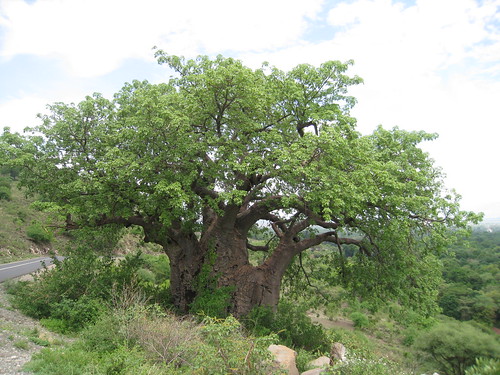
Baobab

Uses and Attributes of the Baobab

  • Fruit and leaves are edible. The seeds are used to thicken soup.
  • Water is collected in the clefts of branches.
  • The fibrous bark is used to make mats and fishing nets

Gardeners Tips for the Baobab

  • The tree is able to survive bark ringing.
  • The large white strongly scented flowers attract pollinating bats – alas not in my garden.
  • Seeds are available to grow bonsai trees.

Baobab Africain

Other types of Baobab and key species

  • There are 7-8 key species of Adansonia.
  • Adansonia digitata L. – African Baobab, Adansonia grandidieri Grandidier’s Baobab, Adansonia gregorii Boab or Australian Baobab Adansonia madagascariensis– Madagascar Baobab Adansonia perrieri – Perrier’s Baobab Adansonia suarezensis Adansonia Za. – Za Baobab .

Baobab comments from elsewhere

    • ‘The Baobab is called the Tree of Life with good reason. It is capable of providing shelter, food and water for the animal and human inhabitants of the African savannah regions.
      The cork-like bark is fire resistant and is used for cloth and rope. The leaves are used for condiments and medicines. The fruit, called “monkey bread”, is rich in vitamin C and is eaten. The tree is capable of storing hundreds of litres of water, which is tapped in dry periods.
      Mature trees are frequently hollow, providing living space for numerous animals and humans alike.There are also numerous superstitions amongst native African people regarding the powers of the tree. Anyone who dares to pick a flower, for instance, will be eaten by a lion. On the other hand, of you drank water in which the seeds have been soaked, you’d be safe from a crocodile attack.’ From Baobab solutions for more information

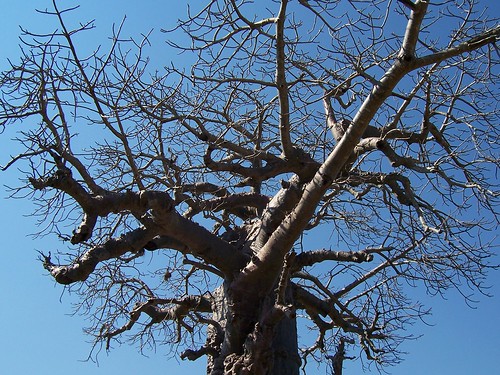
Baobab Tree

Credits
baobabs by asfd01 CC BY-NC 2.0
“Baobab by sociate CC BY-SA 2.0
Baobab Africain by dinesh_valke CC BY-NC-ND 2.0 ‘The Baobab has long provided people with material for cloth, rope, soap, dye, glue, fodder, and medicine. In West Africa, the young nutritious leaves are cooked and eaten like spinach.’
Baobab Tree by K W Reinsch CC BY-NC 2.0

Maidenhair Tree (Ginkgo) Root and Branch Review

Maidenhair Tree (Ginkgo) Root and Branch Review

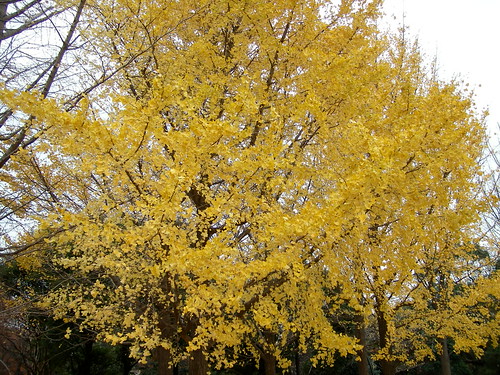
ginkgo

Fascinating leaves are grown on this unique tree that has been around for over 200 million years. Last one of a kind the Ginkgo has no close relatives. Now famous for its extracts and herbal remedies it is also a revered tree in the Buddhist religion.

Key Features of the Maidenhair Tree

  • Latin name Ginkgo biloba other common names Pin Yin, Kew tree or Japanese silver apricot
  • Height Up to 100 feet very long lived.
  • Type of tree – Deciduous the only surviving species of its kind from 200 million years ago
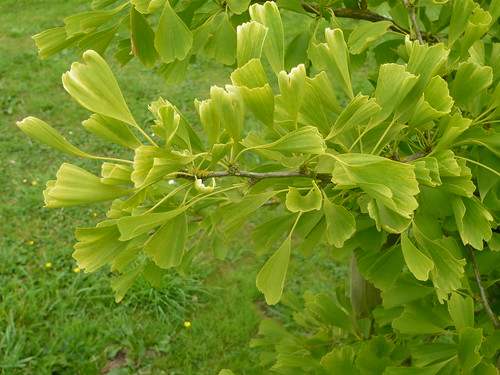
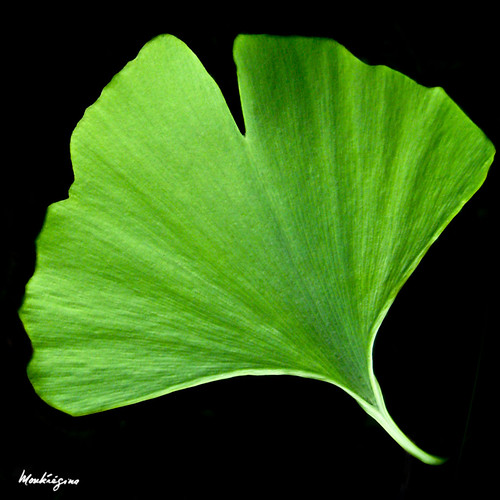
  • Leaves – Fan shaped green leaves aging to yellow
  • Flowers – Male catkins are yellow in bunches. Female on another tree are green on stalks
  • Fruit – Greenish-yellow plum like fruit with a fleshy coating and edible kernel.
  • Bark – Grey Brown
  • Family Ginkgo a one off

Origins and Distribution of the Maidenhair Tree

  • Origins over 200 million years ago but now grow wild in China, Japan and Indonesia.
  • Widely planted in Buddhist temples and now grown as a specimen tree around the world..

Young Ginkgo

Uses and Attributes of the Ginkgo

  • Seen as a symbol of longevity, hope and unity.
  • The finely grained wood is used for carving.
  • Extract from the leaves and fruit are used herbally.

Gardeners Tips for the Ginkgo

  • During autumn the leaves turn a bright yellow and quickly fall.
  • Sunny well-watered and well-drained sites are needed to grow a Ginkgo in your garden.
  • With stands an amount of pollution.

Other types of Ginkgo

  • There are no living relatives Ginkgo are often referred to as living fossils.

Ginkgo leaf

Ginkgo comments from elsewhere

  • The old popular name “Maidenhair tree” is because the leaves resemble some of the pinnae of the maidenhair fern.
  • Ginkgos are dioecious, with separate sexes, some trees being female and others being male. Male plants produce small pollen cones (Wikipedia).
  • The Ginkgo Pages is a dedicated website for the tree

Credits
ginkgo by ivva CC BY-SA 2.0
Ginkgo leaf by monteregina CC BY-NC-SA 2.0

Moreton Bay Fig – Root & Branch Review

Moreton Bay Fig – Root & Branch Review

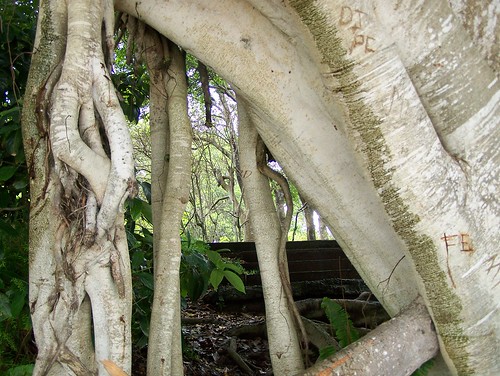
FICUS WATKINSIANA-MORETON BAY FIG

Ficus macrophylla, commonly known as the Moreton Bay Fig, is a large evergreen banyan tree of the Moraceae family. It shares the characteristics of most Fig trees.

Key Features of the Moreton Bay Fig

  • Latin name – Ficus macrophylla other common names Strangler tree
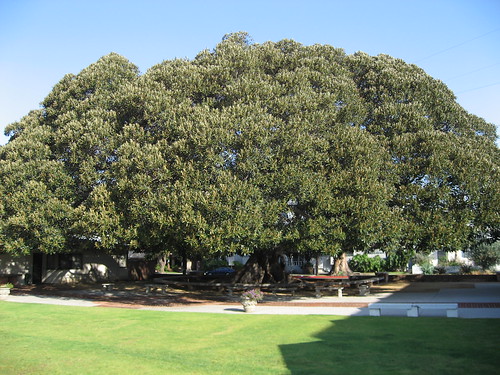
  • Height – a tall tree up to 150 feet high and often wider than high.
  • Type of tree – Evergreen
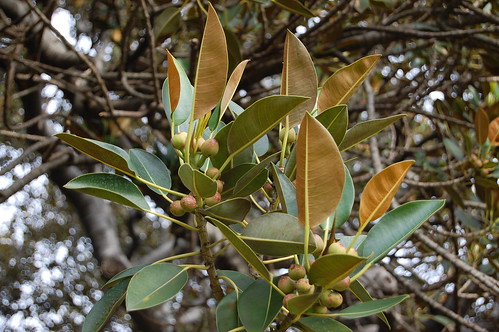
  • Leaves – Large, elliptical and leathery with dark green upper and rusty brown beneath.
  • Flowers – Tiny flowers enclosed in a fig receptical
  • Fruit – Fig ripening from green to purple
  • Bark – Smooth grey-brown
  • Family – Moraceae or Banyan

Origins and Distribution of the Moreton Bay Fig

  • Native to Eastern Australia.
  • It grows best in rainforest conditions.
  • This fig is cultivated in Hawaii where the pollinating wasp was deliberatly introduced and in northern New Zealand.

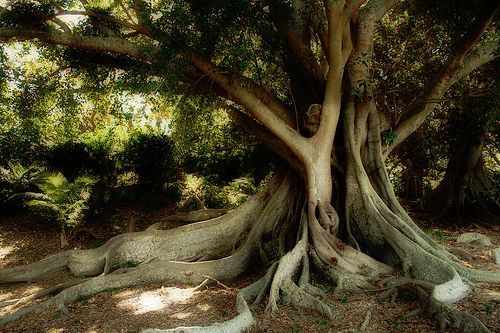
Moreton Bay Fig Tree

Uses and Attributes of the Moreton Bay Fig

  • A distinctive tree that has been cultivated to grow in parks and to grace avenues..
  • The soft light timber is used for cases.
  • Aborigines traditionally used the fibres for fishing nets.

Gardeners Root Tips for the Moreton Bay Fig

  • The tree germinates at the top of a host tree and drops aerial roots down to the ground.
  • It eventually kills the host tree by strangulation .
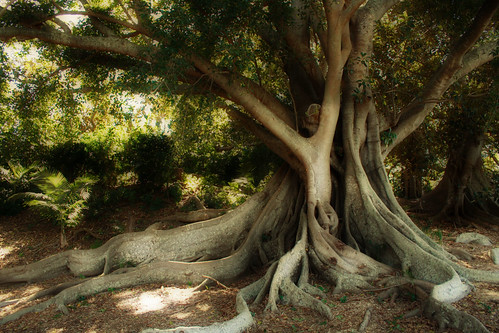
  • The tree grows a magnificent crown that is supported by a butress of roots which spread around the tree matching the crown.
  • The roots are surface feeding and water-hungry. When young it grows as an epiphyte
  • As with other figs it is pollinated by a specific species of wasp

19 Moreton Bay Fig Tree

Moreton Bay Fig comments from elsewhere

  • Named after Moreton bay in Queensland.
  • They are very thirsty trees and can be very invasive of domestic drainage systems. Not to be recommended on a suburban quarter acre block! lane reality Australia

Moreton Bay Fig Tree, Santa Barbara

Credits
FICUS WATKINSIANA-MORETON BAY FIG by YAZMDG CC BY-NC-ND 2.0
19 Moreton Bay Fig Tree by The City Project CC BY-NC-SA 2.0
Moreton Bay Fig Tree, Santa Barbara by FarOutFlora CC BY-NC-ND 2.0
Moreton Bay Fig Tree by ~PrescottCC BY-NC 2.0


Crab Apple – Root and Branch Review

Crab Apple – Root and Branch Review

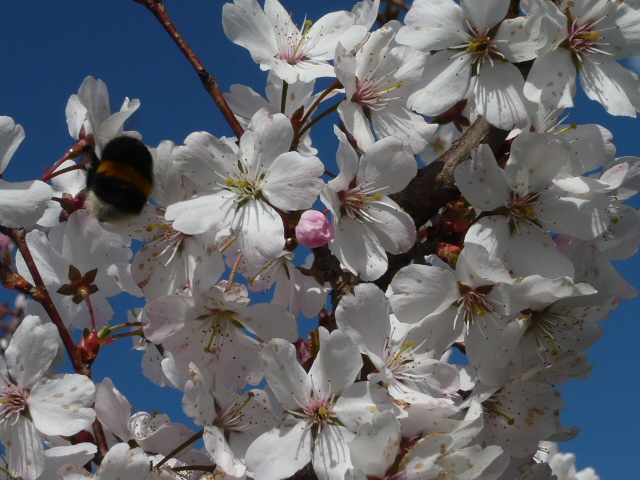
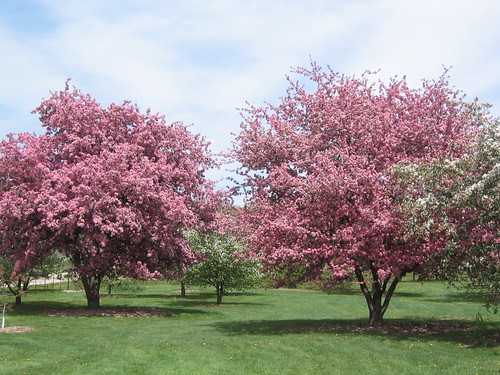
Pink Crab Apple Blossoms
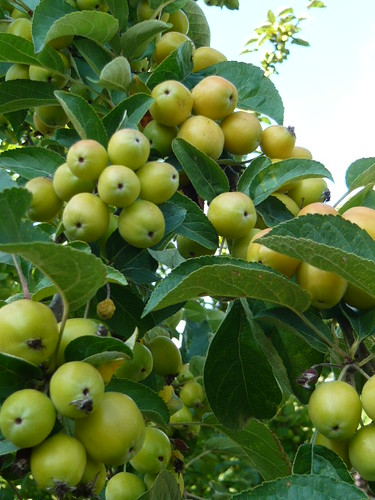
The common crab apple grows wild in hedgerows and woodlands of western Europe. It is also cultivated for the blossom and small crabapples.

Key Features of the Crab Apple

  • Latin name – Malus sylvestris other common names include Wild apples, verjuice
  • Height – 25-45 feet
  • Type of tree – Deciduous –
  • Leaves – Alternate, elliptical, toothed, dark glossy green.
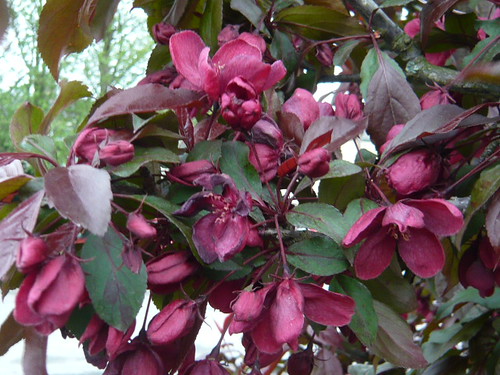
  • Flowers – Borne in clusters on short shoots. White tinged pink to deep red
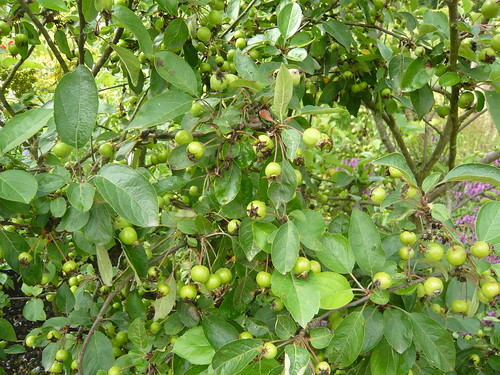
  • Fruit – Spherical green – yellowish- red pome or crabs up to 2 inch across. Crabapples are sour.
  • Bark – Pale brown to grey when young, peeling flakes of grey brown as the tree matures
  • Family – Rosaceae

Origins and Distribution of the Crab Apple

  • Native to Europe.
  • Used as an ornamental tree in temperate zones.

Crab apple

Uses and Attributes of the Crab Apple

  • The hard, heavy, close grained wood was used to make clubs, handles and wedges.
  • Crabapples are high in pectin and are used to make crabapple jelly.
  • Traditionally the small yellow fruit were used to make ‘verjuice’ an acidic condiment.
  • Crab Apple are used as root stock for grafting commercial apples.
  • Crab apple trees make good pollinators for other apples in orchards.
  • Apple wood is used in some smoking and burns with a sweet scent.

Gardeners Tips for the Crab Apple

  • These ornamental trees are grown for their beautiful flowers and fruit.
  • There are numerous cultivars most of which are good pollinators for apples and are known for their resistance to disease.
  • Smaller crab apples like Evereste can be trained as cordons to make a multi-purpose wind break

crab apple evereste

Other types of Crab Apple and key species

  • There are 30-40 species of Crab Apple in the genus.
  • There are a large number of varieties and hybrids. Generally they have pinker flowers and larger fruit and have been selected for these reasons.
  • ‘John Downie’ produce fruit that is large and tasty enough to eat fresh off the tree
  • Malus sylvestris is the parent of orchard apple Malus domestica and several ornamental crabs.

Crab Apple comments from elsewhere

  • The crab apple is the ancestor of the cultivated apple, over 6,000 varieties having been bred over the ages.
  • For sheer flower power it’s hard to beat M. floribunda with red buds opening to pink then white blossom, followed by red and yellow fruit. A good choice where space is limited is Malus ‘Royal Beauty’, a weeping tree with reddish purple flowers, purple-bronze leaves and dark red fruit.
  • Birds will feed on the fruit, particularly robins, starlings, greenfinches and thrushes and the colourful flowers will attract bees in spring. Additionally the native crab apple can be home to over 90 insect species. RSPB

Crab apples

Read about our series on British tree reviews with a bakers dozen fact sheets

Credits
Pink Crab Apple Blossoms by beautifulcataya CC BY-NC-ND 2.0

Ash – Root and Branch Review

Ash – Root and Branch Review

frêne fraxinus
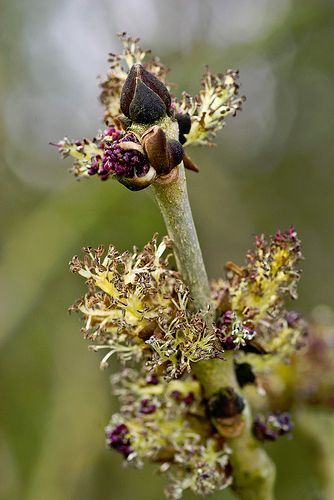
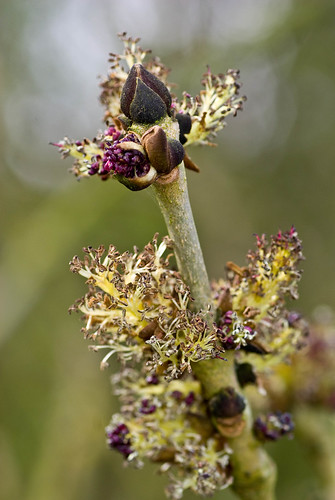
Common Ash trees row widely in the UK and other Ashes grow in Asia and America. Our Ash has dark almost black buds and some species have interesting flowers but it is as a tree the provided wood to make bows that the Ash is best known in Britain.

Key Features of the Ash

  • Latin name – Fraxinus excelsior – other names; Common Ash or European Ash
  • Height – up to 150 feet
  • Type of tree – Deciduous
  • Leaves – Green pinate with 7-15 ovate-oblong leaflets
  • Flowers – small purplish in short clusters
  • Fruit – winged keys in clusters of glossy green turning brown
  • Bark – grey-brown fissured when mature
  • Family – Oleaceae

Origins and Distribution of the Ash

  • Grows widely across Europe and there are many North American species.
  • Tolerant of wind swept and coastal areas.

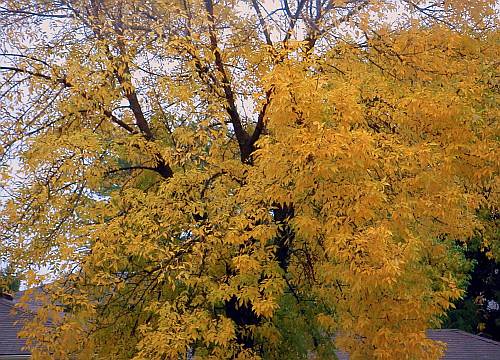
Common Ash Tree

Uses and Attributes of the Ash

  • Ash can make a noble shade tree quite quickly.
  • Use to make bows, hurling sticks, baseball bats and historically car and plane frames.
  • Strong, flexible and easy to turn the wood also burns well and is used in some smoking.

Gardeners Tips for the Ash

  • Select a smaller growing variety like the Manna Ash.
  • Dislikes sandy or acid soil.
  • Weeping Ash make a statement tree.

Ash Tree

Other types of Ash and key species

  • Members of the Sorbus family, Mountain Ashes or Rowans are unrelated.
  • Fraxinus is an extensive genus of hardy Ash trees including White Ash or Autumn Purple Ash, Black Ash, Blue Ash, Singleleaf Ash and Fragrant Ash.
  • The Ornus group of Ashes are attractive flowering trees also called Manna Ash.

Ash comments from elsewhere

  • In Norse mythology the first man was made from Ash.
  • Yggdrasil the ‘Tree of the World’ is thought to be an Ash

Read about our series on British tree reviews with a bakers dozen fact sheets
Credits
frêne fraxinus by Luberon (sb) CC BY-NC 2.0
Common Ash Tree by denovich CC BY-NC-SA 2.0
Ash Tree by Gemma Grace CC BY-NC 2.0

Sycamore – Root and Branch Review

Sycamore – Root and Branch Review

Sycamore Gap - Hadrian's Wall

The Sycamore is a picturesque tree the largest member of the European maples. It is one of the most common trees in the northern temperate zones enjoying exposed situations in most types of soil.

Key Features of the Sycamore

  • Latin name – Acer pseudoplantanus – other common names; False plane-tree, Scottish maple, or mock-plane.
  • Height – 120-140 feet
  • Type of tree – Deciduous
  • Leaves – Grey palmate leaves with 5 toothed lobes
  • Flowers – Borne in pendulous clusters, green insignificant
  • Fruit – Winged keys in pairs.
  • Bark – Grey-pink
  • Family – Aceracea

The Drumlanrig Sycamore

Origins and Distribution of the Sycamore

  • Western Europe and Northern temperate zones.
  • Colonises open ground with some success.

Uses and Attributes of the Sycamore

  • Strong creamy white timber is not durable outdoors.
  • Sycamore is used for flooring, furniture making and joinery.

Sycamore in Bud

Gardeners Tips for the Sycamore

  • The seeds are held in pairs with wings that allow the seed to spin and ‘helicopter’ down some distance from the aprent tree.
  • Leaves can attract a fungus that leaves the leaves with unsightly black or red spots .
  • The mature trees have a large canopy and are not suitable for small gardens.

Other types of Sycamore and key species

  • Sycamores are not to be confused with Plane trees the ‘American Sycamore’ Platanus occidentalis, Platanus racemosa or Platanus wrightii the Arizona sycamore nor with Ficus sycomorus a fig.
  • Atropurpureum has purple undersides to the leaf and ‘Brilliantissimum’ is a cultivar notable for the bright salmon-pink colour of the young foliage.

Sycamore Gap

Sycamore comments from elsewhere

  • Sycamore was the favoured wood for making ‘love spoons’ in Wales. These wedding gifts are linked with rings and were traditionally made from a single peice of wood.
  • The Drumlanrig Sycamore is reputed to be the UK’s tallest sycamore.It dates back to the 18th Century and is one of the largest girth and spread in Britain. It is one of Scotland’s top 100 Heritage Trees.

Read about our series on British tree reviews with a bakers dozen fact sheets
Credits
The Drumlanrig Sycamore by I like CC BY-NC-ND 2.0
Sycamore Gap – Hadrian’s Wall by El Villano CC BY-NC-SA 2.0
Sycamore in Bud by Durlston Country Park CC BY-NC-SA 2.0
Sycamore Gap by Jonathan_W CC BY-NC-ND 2.0 ‘Sycamore Gap is where they filmed on of the opening scenes in “Robin Hood Price of Thieves”