Browsed by
Author: hortoris

Odd tips for Easier Gardening

Odd tips for Easier Gardening

Make your own seed planting tape. Mix some flour and water or non-fungicidal wallpaper paste and squirt a line along a length of paper towel. Sprinkle fresh seed into the goo and place the tape in the seed bed covering to the required depth. The seeds can be seen and get a damp start. Some seeds like carrots can be germinated in the paste then squeezed out of a tubeing in a fine line.

Make a seed shaker for fine seeds like Livingstone Daisy by firstly mix the seed with dry sharp sand. Then put the mix into a kitchen shaker, salt cellar. perforated lidded tin or similar. When sowing the seed will go further and there will be less thinning out.

Buy germinated seedlings in kinder pots or small plug plants ready to prick out or pot on.

To make Willow water containing growth hormones collect new tender shoots, tips and leaves from willow trees. Cut into small pieces and steep until the liquid becomes tea coloured and strain. Use the fluid for soaking the end of cuttings prior to planting or for watering new plants.

A Spade cleaner and tool shiner couldn’t be easier. Fill a bucket with sharp sand mixed with some oil. Clear off the worst of the soil and plunge the spade trowel or fork repeatedly in the mix to clean and shine. Have a can of WD40 handy for spray oiling other tools.

Make your own planting device from a PVC pipe cut to a convenient length of say three foot six sharpen one end and use to draw furrows drop seeds down the tube and turn over to back fill. Other bodging tools can be made from kitchen implements even an old ironing board can become a portable potting bench.

Long Handled Shears. I’ll never forget the first time we bought my mother a pair of long handled shears, it makes the job of cutting edges so much easier and more satisfying.

Go for Low Maintenance areas with ground cover plants and shrubs with a moderate habit that do not need pruning.

Grow easy flowers  from the list selected here. Perennials last many seasons annuals bring the chore of tidying up and replanting.


Grow your Own Mesclun Salad

Grow your Own Mesclun Salad

Mesclun

What is Mesclun

  • Mesclun is a mixed salad of young green leaves.
  • The idea is to create a salad with a good balance of strong and mild flavoured greens.
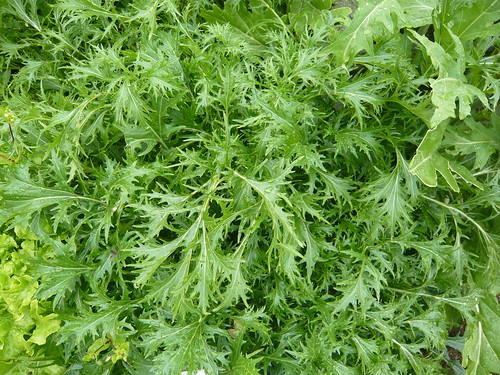
  • Often Mesclun contains a mixture of leaves from lettuce, endive, chicory, frisee, spinach, sorrel, swiss chard, mustard, arugula, radicchio and or chervil.
  • Mesclun is best when harvested as tender young leaves.
  • For extra flavor some people add herbs like thyme and oregano to the mix.
  • I think 4 different leaves are enough to make a good Mesclun with no one flavour or texture dominating the others.

How to Grow Mesclun

  • Grow from seed and cut the leaves as you need them. Many will work as cut and come again micro salad leaves.
  • Salad leaves are mostly water and so you need a soil that is open but water retentive. I have found miracle grow compost has worked well this year.
  • Water regularly but remember soggy leaves will not be appetising.
  • I grow in containers and grow bags to leave open ground for more robust crops.
  • Seeds are ready to crop from 30-40 days as sweet young leaves.
  • Sow at 2 weekly intervals for regular supplies. Germination is best in cool spring and autumn temperatures.

How to Harvest Mesclun

  • When leaves are at least 4” tall you can start cutting.
  • Collect mixed leaves in a basket or bowl and snip with a pair of scissors.
  • Gently hold a clump of leaves with one hand while cutting with the other. Leave 1”–2” of leafy crowns on the plants so they can regrow for another harvest.
  • You should get 2 or 3 crops from each plant.

Gardeners Tips and Comments

  • Aim for a mix of sweet and stronger leaves.
  • A mix with yellow and red leaves as well as green can look attractive and we eat with our eyes first.
  • Mesclun may have originated in France but good gardeners can improve on French attempts at a salad.

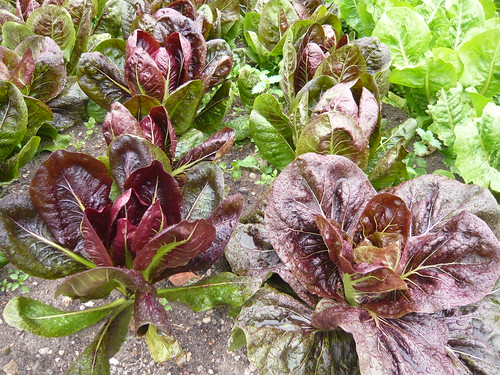
Chicory Rosa Detreviso

Autumn Compost Top Ten Tips

Autumn Compost Top Ten Tips

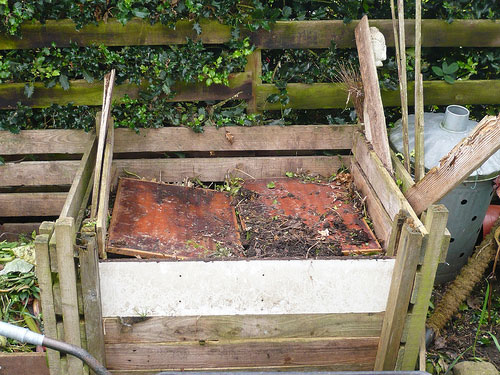
5 years ago our council  provided a brown bin for garden waste. Shortly after they introduced a charge to have the bin emptied.  Larger branches, gnarled roots and diseased wood  now goes in this bin.
Otherwise it is situation normal

Autumn is a time for collecting large quantities of compostable material from even a small garden. There are some features of Autumn compost making that need to be given special consideration.

Heat and Speed

  • As winter approaches it is harder to get and retain heat in your Autumn compost.
  • Put a cover on top of your compost bin and if necessary insulate the sides. Hot bins rot compost better and quicker than cold bins
  • Turn your compost to get air into the heap. The aerobic effect helps generate heat.
  • Heat helps kill seeds and pathogens
  • Urine soaked straw horse bedding can help the heating process if you have a local supply

Green and Brown Waste

  • Autumn produces much more brown waste in the form of stalks, twigs and drying stems.
  • To compensate for the lack of green waste consider adding a compost activator.
  • Shred and chop the waste into small bits so there are more access points for the rotting process.
  • Add water if the shredded waste is dry or if Autumn is on the dry side.
  • The worms and rotting organisms need air water and food in sensible proportion.

Compost 003

Autumn Tips

  • Avoid composting seeds they will come back to haunt you.
  • Do not add infected material like rose prunings with blackspot. I burn my problems in a special old dustbin available from amazon.
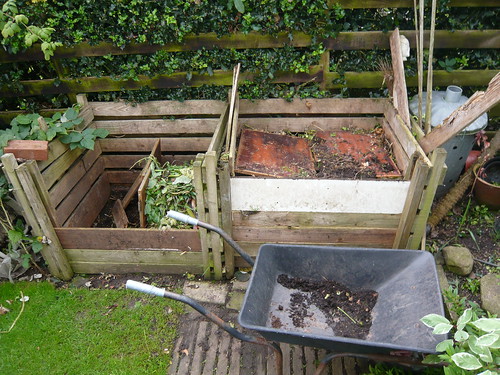
  • I have divided my large heap in to two compartments to get action in a more compact area.
  • Leaves from trees have negligible food value and rot very slowly. Other than minor quantities on the heap you are better rotting leaves down separately as leaf mould (use an aerated plastic bag).
  • Keep your compost area tidy (do as I say not as I do).
  • Grass clippings from chemically treated lawns will retain some residues so compost for twice as long or rot down separately.
  • Do not forget to mulch your perennials with well rotted compost from earlier compost heaps. My hardy Fuchsias and Roses get the best autumn compost.

Read about Compost Activators

Creepers From Boston and Virginia

Creepers From Boston and Virginia

Virginia Creeper

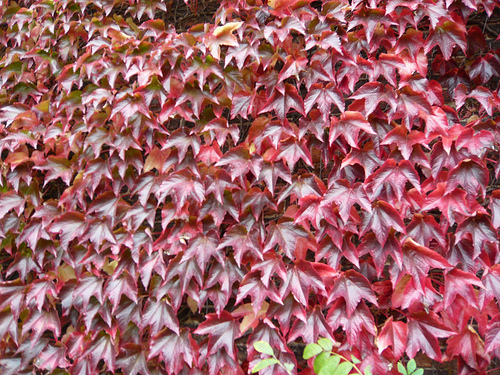
Do you want your walls to look like this in Autumn. If so then the Parthenocissus family are the plants for you.

Description of Virginia Creeper

  • Parthenocissus quinquefolia or Virginia creeper is a woody, climbing shrub that can reach great heights when supported by a building.
  • The flowers are small and greenish, produced in clusters in late spring, and mature in late summer or early fall into small, hard, toxic, purplish-black berries up to half inch long.
  • The large leaves are five fingered hence the quinquefolia name tag.
  • The plant clings by suckers and after the first few feet it will not need any support. The plant should not harm sound walls but to remove kill the plant first and let the suckers die back.
  • Creepers can kill other supporting plants by smothering and stopping light getting to them.

Virginia Creeper

Other Creepers

  • Boston Ivy Parthenocissus tricuspidata is not an Ivy but a Grape or Vitacaea, Very similar to Virginia Creeper the leaves are less palmate but colour well.
  • Chinese Creeper Parthenocissus henryana (AGM) is also referred to as the silver vein creeper and is renown for grand Autumn colour aswell as veined leaves. It is less rampant and more delicate than many other ornamental grape vines.
  • Parthenocissus inserta supports with tendrils more than suckers and scrambles over walls and hedges
  • Parthenocissus thomsonii has a slender habit and purple growths early in the year.

london 11.11 050

Creeper Growing and Problems

  • The fast growth has blocked out windows on this London creeper
  • Birds love the fruit but they are only produced in quantity during a hot dry summer
  • Insects will like the living accommodation provided
  • Grow from seed or cuttings
  • Be ready for regular trimming once established.
Unusual Fruit – A Taste of the Unexpected

Unusual Fruit – A Taste of the Unexpected

005

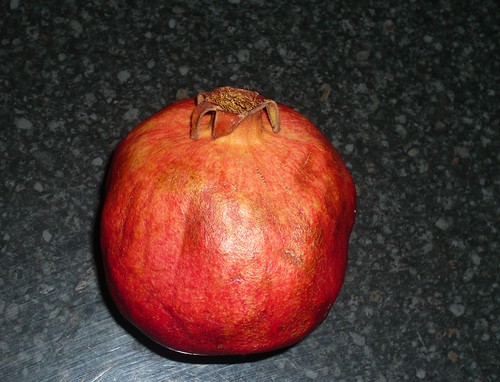
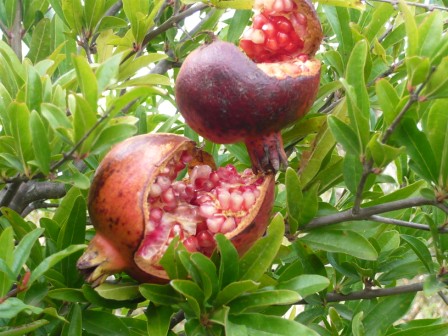
The pomegranate is a native of Iran and Pakistan. The shrub or small tree bears bright red flowers and juicy, if seedy fruit.
Even if placed in the sunniest, warmest part of the garden they will suffer in the UK but with global warming who knows.

pomegranite

Book Cover

Book Cover

A taste of the unexpected contains details about growing and cooking Chilean guava and Szechuan pepper amongst other unusual items.
Whilst the photograph below was taken in England these bananas were only grown in the Kew garden tropical hot house.

Banana hand

Eden Project
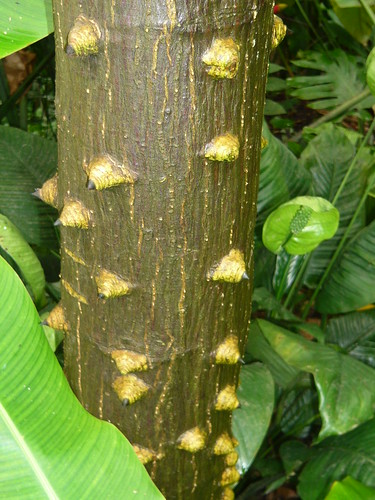
Are these warts, fruit or just part of the trunk? sadly Eden project did not have a name on this plant

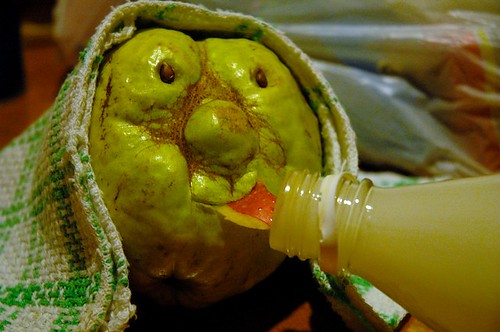
Guava Baby
Guava Baby by CeeKay’s Pix CC BY-NC 2.0 ‘Not sure if this is yummy but we stumbled upon this “face” on a guava fruit. It had eyes and a big round nose. To complete it, I stuck a piece of apple skin into his “mouth”. It was so adorable that we dressed it up too!’

Growing Parrot Tulips

Growing Parrot Tulips

Nearly time to order your tulips for next year.
parrot-3

Consider the full blown, in your face colours from this Parrot tulip planted last November. Tulips are one of my fascinations this year and the Parrot type are performing very well.Parrot Tulips are so named because they produce gaudy feathered petals that resemble exotic bird plumage. They like a well drained soil but will stand partial shade. Plant new Parrot Tulip bulbs each year and consign old bulbs to spare ground as they probably won’t perform as well in a second year. If you buy well, bulbs will cost less than a bunch of flowers and give so much pleasure.

Hints and Tips on Growing Parrot Tulips

  • Tulips are great for cutting and so easy to grow.

parrot-7

…

Read More Read More

Quick Tips For Lawns and Grass

Quick Tips For Lawns and Grass

Pointers for Greener Grass on new and established Lawns

If you want a nice new green sward or are content to allow flowers in a natural setting consider these quick tips to help you. Set your expectations and match your actions to the plan for best results.

  • For an economic new lawn use seed but put turf around the perimeter so you can cut a neat edge
  • Seed should be chosen for the type of lawn you want fine grass is no use for lots of family games
  • Keep paving or edging stone lower than the grass so you can mow up to the edge
  • A cheap lawn spreader or seeder can be made out of a jar or tin can with holes in the lid
  • Water with Epsom salts to get rid of toadstools and fairy rings
  • …

    Read More Read More

Easy to Grow Aloe Vera Plants

Easy to Grow Aloe Vera Plants

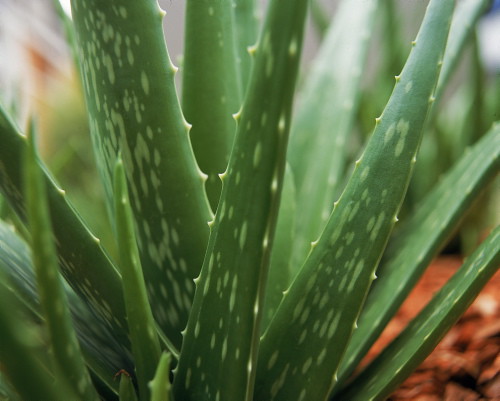
Aloe Vera
There are around 200 African and 300-400 other species in the genus of Aloe flowering succulent plants. The best known and easiest to grow is Aloe vera, or “true aloe”. In the UK it is not frost hardy and is most frequently grown indoors.

Easy Growing Tips

  • Aloe vera are succulent plants made up from 90% water and hold the water for long periods.
  • Aloe vera stores food, liquid and nutrients in its leaves to compensate for days when it does not have access to water.
  • The leaves are thick to protect Aloe vera from drying out.
  • Aloe vera plants have strong photosynthetic properties and will need more exposure to sunlight than regular plants.
  • In winter they do not need much water as they will grow much slower due to low light conditions.
  • Aloe grow small plantlets as offsets to increase your stock. Also a young spikey stem will root quite easily to grow more plants to pass on to others.

Aloe Vera Indoor Plants

  • There are several uses for the Aloe sap but do not crop a young plant too often.
  • Aloe variegata have a better leaf form with a triangular V section
  • Aloe brevifolia forms a large rosette of leaves in little colonies of small plants
  • Some aloe flower indoors but their shape and form is the main reason for their cultivation.
  • Over watering can cause the thin roots to rot.

Photo Credits

Aloe Vera by Powerhouse Museum CC BY-NC-ND 2.0
Aloë Vera by Rutger Middendorp CC BY-NC-ND 2.0

Aloë Vera

This Aloe vera plant has been grow in a mixed medium of gell to make a welcome novelty gift.

How to Attract Bees into your Garden

How to Attract Bees into your Garden

Bees are not as attractive as butterflies but they are an essential part of our ecosystem. Your garden and the environment will benefit from bees twice over as they provide a visual spectacle whilst helping with pollination.
A garden full of bee catching and eye catching flowers from spring to autumn can be achieved by selecting some of the following plants.

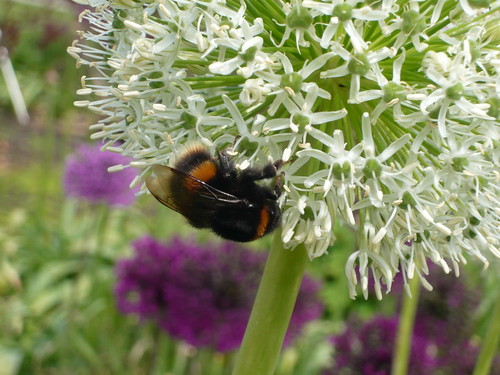
Bee in May

Bees feed on nectar and need this energy giving resource as they transport pollen from one flower to the next. They also need water from moist soil.

Flowers Attracting Bees

  • Sweet Violets – viola odorata
  • Shasta daisy and Coreopsis in summer
  • Buddleia the butterfly bush in white pink or lilac and Lilac also feed bees.
  • Foxgloves, Lilac, Michaelmas Daisy and plants like Globe Thistle
  • Delphinium, Aster and Day Lily
  • Phacelia tanacetifolia Benth, Echium vulgare and Borago officinalis are purple flowering bee loving plants. In addition to their honey-producing properties they also make an attractive addition to your border.

…

Read More Read More