Browsed by
Author: hortoris

Garden Problems Caused by Heavy Rain

Garden Problems Caused by Heavy Rain

Wet summer gardens are something the UK gardeners are having to contend with for the first time in a long time. For St Swithin’s Day I thought I would review the summer so far and provide some tips and ideas in case the wet weather continues.

Extreme garden flood

Garden Problems Caused by Heavy Rain

  • One off heavy rain runs off before the soil gets a chance to soak through. That is not the problem when rain is as continuous as this year.
  • Heavy rain can damage young growth with the force of the rain. If rain is accompanied by wind the driving rain can do even more damage.
  • Rain washes out some of the goodness from the soil and deprives plants of good fertiliser.
  • Waterlogging of your soil can drown the roots of plants.
  • Needless to say wet gardens attract snails and slugs. (The prize for the largest exhibit at many garden shows may be a big fat slug this year!)
  • Lush growth has been put on by hedges and plants that would normally stay quite small.

Garden flood 2

Tips and Ideas for Wet Gardens

  • My runner beans have grown tall but have very little leaf. I have pinched out the tops to encourage growth and flowers lower down.
  • I am adding some granular fertiliser for beans and plants that I would normally have given a liquid feed.
  • Use the lush conditions by planting more leaf crops whilst there is still time.
  • Put gravel around the neck of plants, such as succulents,that may rot if the soil is too wet.
  • Check potted plants and containers to see they are not waterlogged or stood in water. Raise them on bricks if needs be.

Encourage Flowering

  • If you garden for colour and flowers you may suffer most in heavy rain.
  • Deadhead asap and do not let buds get soggy and start to rot.
  • Feed with a high potash fertiliser
  • Prune excessive leaf growth or top out plants that are growing tall and wide at the expense of flowers.
  • Give plants access to as much sun as possible.

Flooded Garden (2)


Photo Credits

Extreme garden flood by johnpaulgoguen CC BY-NC 2.0
Garden flood 2 by Chris & Angela Pye CC BY-NC-SA 2.0
Flooded Garden (2) by Roger Lynn CC BY-NC-SA 2.0 ‘Happy April Fool’s Day! another Photoshop creation using the incredibly fun “Flood” plugin by Flaming Pear

Wild Plants for Butterflies by Height

Wild Plants for Butterflies by Height

This is a selection of wild flowers that have for generation helped provide food for butterflies. They are rich in nectar and even garden cultivated varieties should feature in your butterfly friendly garden. Even nettles feed butterfly larvae.
weedy dandelion
Low Growing plants up to 12 Inches Tall
Primrose and Cowslip.
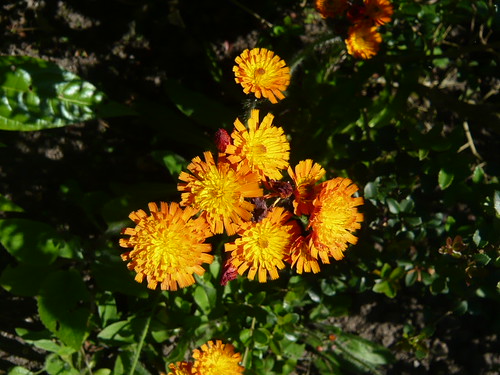
Orange Hawkweed
Daisy
Dandelion
Birds-foot -trefoil
Lesser Celandine
Sweet Violet and Pansy
Thrift
Wild Thyme
White Clover

Read More Read More

Growing Ixora in the UK

Growing Ixora in the UK

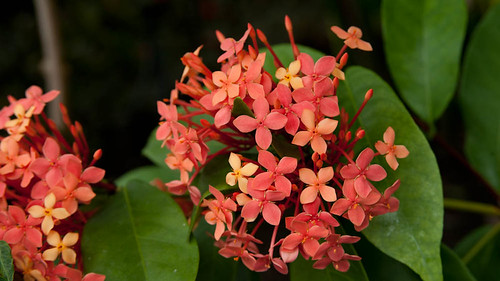
Ixora 'Peter Rapsey'

This updates my earlier post on Ixora with a new photograph from Kew Garden of the variety Peter Rapsey. CC BY-NC-SA 2.0

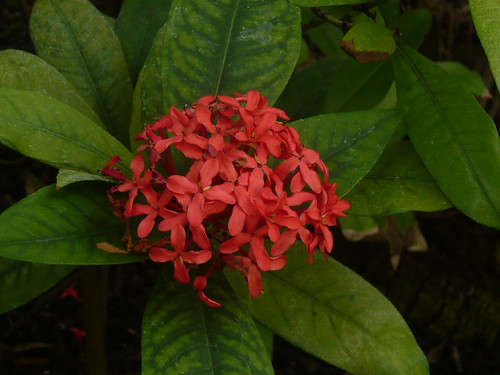
I liked the look of the Ixora ‘Super King’ (below) although I am unlikely to be able to grow a flowering specimen with my limited heat. That photo was taken at Kew Garden in March 2011.

What is Ixora

  • Ixora are tropical evergreen trees and shrubs. There are said to be around 500 species.
  • Ixora can flower in red, orange and white with 4 petals but are arranged in a profuse ball shape to make a fine display
  • Other names for Ixora coccinea include Flame of the Woods, Needle flower, Jungle Flame, Jungle Geranium.
  • Red ixora flowers are used in Hindu worship as well as in Indian folk medicine.
  • More Photos of Ixora from Google
  • The variety photographed above was Ixora Super King but there are 3 species with this name Ixora casei ‘Super King’, Ixora duffii ‘Super King’ and Ixora macrothyrsa ‘Super King’ or ‘Malay’ so I am still in a quandary.
  • Ixoras do best in full sun in a moist, organic, well drained acid soil .

Ixora 'Super King'

Uses of Ixora

  • Ixora in the wild are often used as hedging and can endure some salt spray on the wind.
  • Ixora are available to grow as bonsai and flower when quite short.
  • As sun lovers Ixora need plenty of light and protection all year round so they only make exotic conservatory plants in the UK.
Artificial Ideas for Roof Gardens

Artificial Ideas for Roof Gardens

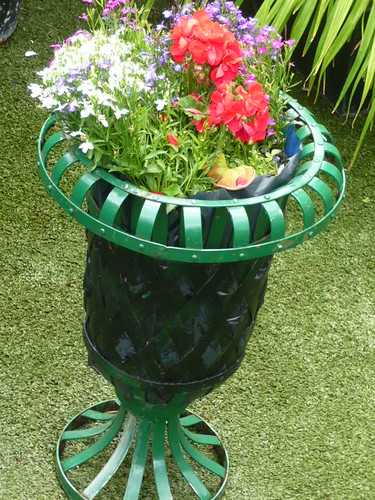
gloucester container

This week I had lunch in the roof garden of the 16th Century ‘Soup Kitchen’ in Stafford. The tables in the restaurant and outside on the pavement had very welcome fresh flowers.
The roof area was flat with a split level but overall it gave me a couple of ideas.

Roof Garden Ideas

  • Artificial grass is light, easy to clean and water resistant. It can look quite realistic if you select carefully.
  • Even heavily perforated containers can be brought into use by the adaptation of black plastic. A series of old braziers contained colourful flowers and herbs.
  • The space was divided by wooden partitions to make smaller ‘rooms’. This protected against the sun and provided some welcome shade.
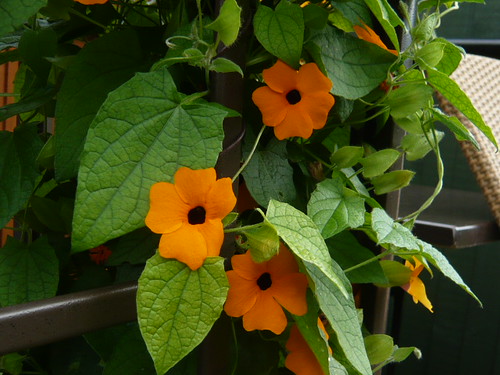
  • Walls and the partitions made places for climbers and scramblers like the Blackeyed Susan below.
  • Ensure you have adequate access for equipment and visitors

Read more about Artificial Grass on Gardening Products
Blackeyed Susan

Visit the Soup kitchen

More Horsetail or Mare’s Tail Weeds to Eliminate

More Horsetail or Mare’s Tail Weeds to Eliminate

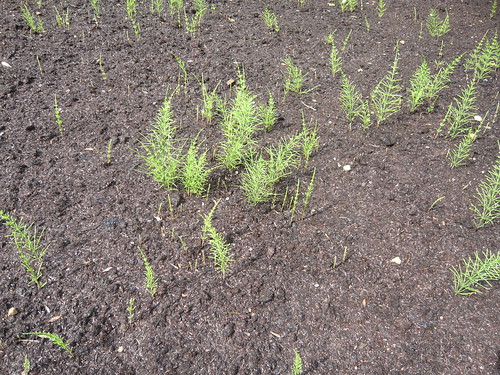
Mares tail

Mare’stail or Horsetail is a common garden weed that flourishes on damp soil. Even the RHS is prone to Horsetail as the picture taken at Harlow Carr Gardens demonstrates. I look forward to seeing how they cope!

Why it is a Problem

  • The plant reproduces by spores that are readily wind dispersed but most problems come from the rhizomes.
  • Rhizomes are extensive both horizontally and vertically and may reach over 5 feet deep depending on substrate.
  • Rhizomes break into small parts and reproduce quickly.
  • Tubers are then produced at the nodes of the rhizomes.
  • You can’t dig it out, although you may weaken the plants if you remove as much root as you can then hoe when you get above 1″ shoots.

Control and Eradication

Canterbury Bells not Cockleshells

Canterbury Bells not Cockleshells

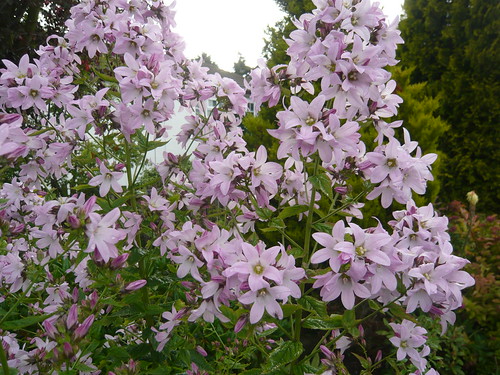
LBA 067
Campanula burghaltii is a showy Canterbury Bell or Campanula. The pale lavender flowers are borne on wiry stems that I find need no extra support. The leaves are leathery in texture and oval in shape.

LBA 062

Canterbury Bells are available in a range of sizes and colours. This Campanula lactiflora has been grown from seed and last year was even better as it made pyramids of flowers. Perhaps I should allow each plant a bit more space.

Bell Flower


This alpine version of the Canterbury Bell seems to be all flower and no leaf. It is performing well in  a moist plunge bed.
Book Cover
Dwarf Campanula by Graham Nichols
See also Campanula for the rockery here or Alpine campanulas.

canterbury bells

This Bell flower has self sown in my garden for many years. The stems need some support but they flower for a long period and I am loathed to pull them all up. I try help the white flowers as they seem less robust.

Read more about Growing Canterbury Bells

Read More Read More

British Apples Worth Growing

British Apples Worth Growing

With over 600 varieties of apple to grow in the UK, you need to refine your search for a good variety. (There may be as many as 2000 worldwide.)

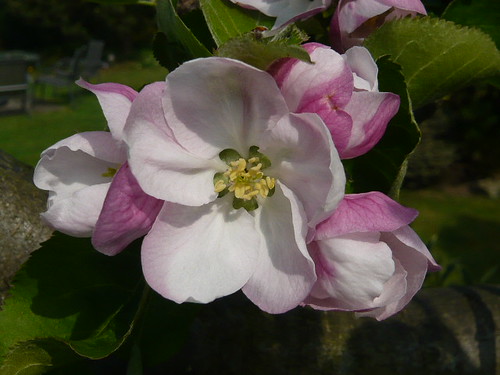
april apple blossom

Here are some British varieties

Ribston Pippin grown in Yorkshire since 1707
Egremont Russet tasty and nutty with white crumbly flesh
Claygate Pearman rich and scented and discovered in a hedgerow in 1820
Chelmsford Wonder a good cooker
Winter Wonder a recent breed which is crisp and juicy
Blenheim Orange, Beauty of Kent and Wyken Pippin may produce more taste than Breaburn, Gala and Pink Lady

Artistic view of Apples

‘Detailed watercolours depict the unrivalled range of form, colour and texture which characterize such varieties as Beauty of Bath, Peasgood Nonsuch, Cox’s Orange Pippin and Egremont Russet in this illustrious book by Rosie Sanders.

Book Cover

Also available from Amazon by clicking on the cover is the new book of Apples

Read More Read More

Top Ten Seeds for Children to Grow

Top Ten Seeds for Children to Grow

Sunflower -Valentine

Top Ten Flower & Veg Seeds for Children to Grow

  1. A Broad bean or runner bean grown in a jar with curled tube of blotting paper to hold the seed against the glass. The roots will start when the bean germinates and then a leaf will form. The bean can be planted or the shoots eaten.
  2. Mustard and or Cress sown on a wet cloth or flannel will germinate by growing a jelly coating and produce a fresh smell. In about 8 days there will be cress to eat.
  3. Sunflower seeds sown in the garden can make giant plants taller than the children. Put a cane in firmly as a stake to tie the growing plant too.
  4. Nasturtium seeds are big enough for even the smallest fingers. Plant in poor soil and they will trail and spread and the flowers leave new seed to collect for next year. The leaves and flowers can also be eaten so use this to teach children what can and can’t be eaten.
  5. Virginia stocks can be sown in a broadcast manner and produce sweetly smelling flowers quite quickly
  6. Forget-me-not can be sown in summer or autumn and will flower in spring when you haven’t forgotten them
  7. Cottage garden selections like Cornflower,
  8. Clarkia, are vquick to mature and flower in summer.
  9. Larkspur all provide a lot of colour for relatively low cost
  10. Calendula are hardy seedlings that do not require any effort other than broadcasting the sizable seed

Perhaps the best idea is to grow a mixture. You can buy seed mixtures aimed at different locations such as Cornfield mix and others from Thompson & Morgan

Five July Garden Flowers

Five July Garden Flowers

At the beginning of June gardeners tips showed five photographs of flowers from my garden. For July I have chosen five spherically shaped flowers (actually they were snapped 30th June but they are still around in July).
You may expect plants to only flower in the months recommended by retailers but nature is not like that. The Alliums should be flowering earlier and be over by July. The Hydrangea and Gazinia are still to give their best.

Allium
Allium Christophii look like a firework display and I am told make good cut flowers. (Mine will stay in the garden for the time being.)

Peony
Despite very poor ‘Peony weather’ my exemplars have survived and not suffered too much damage. It is the flowers I have brought indoors that have quickly shed their petals this year.

Hydrangea
It is a bit early for Hydrangeas to show full colour but I liked the theme of big round flowers on these photographs.
I have fed this Hydrangea with colourant last back-end and spring so am hoping the blue gets stronger as the flowers open more fully.

Rose
Where would an English garden be without it’s roses?

Gazinia
The orange Gazinia is included for the strength and variety of colour. It is a bit of a cheat as it is still under glass when the picture was taken as the rain could have damaged the petals.