Browsed by
Month: September 2019

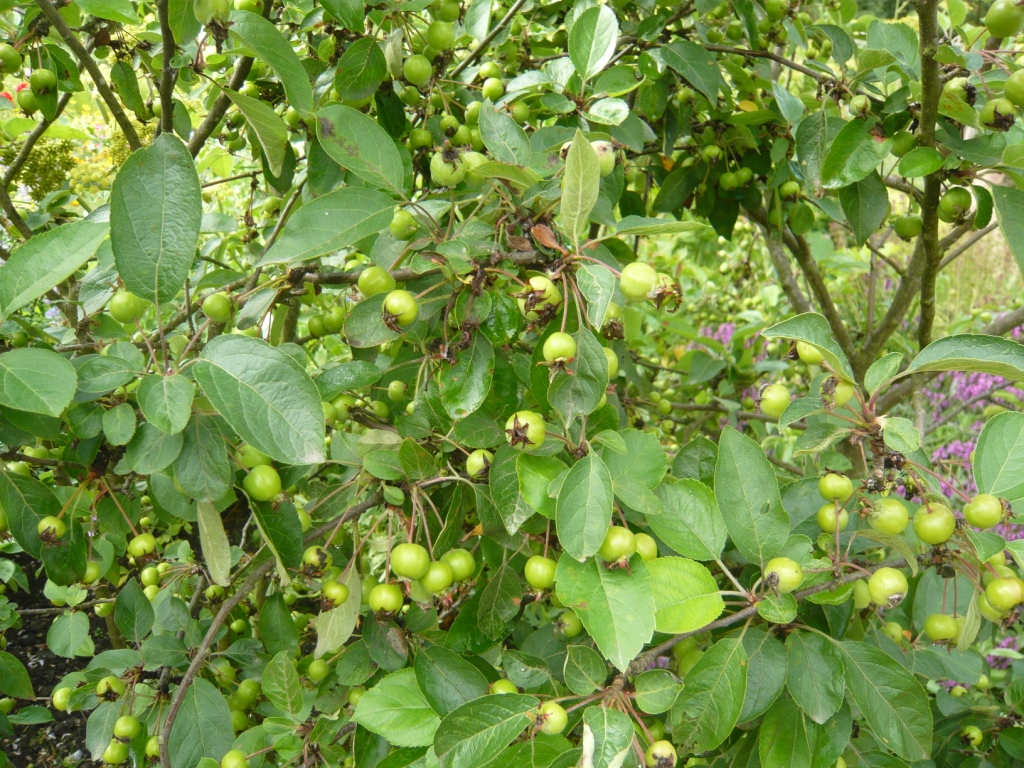
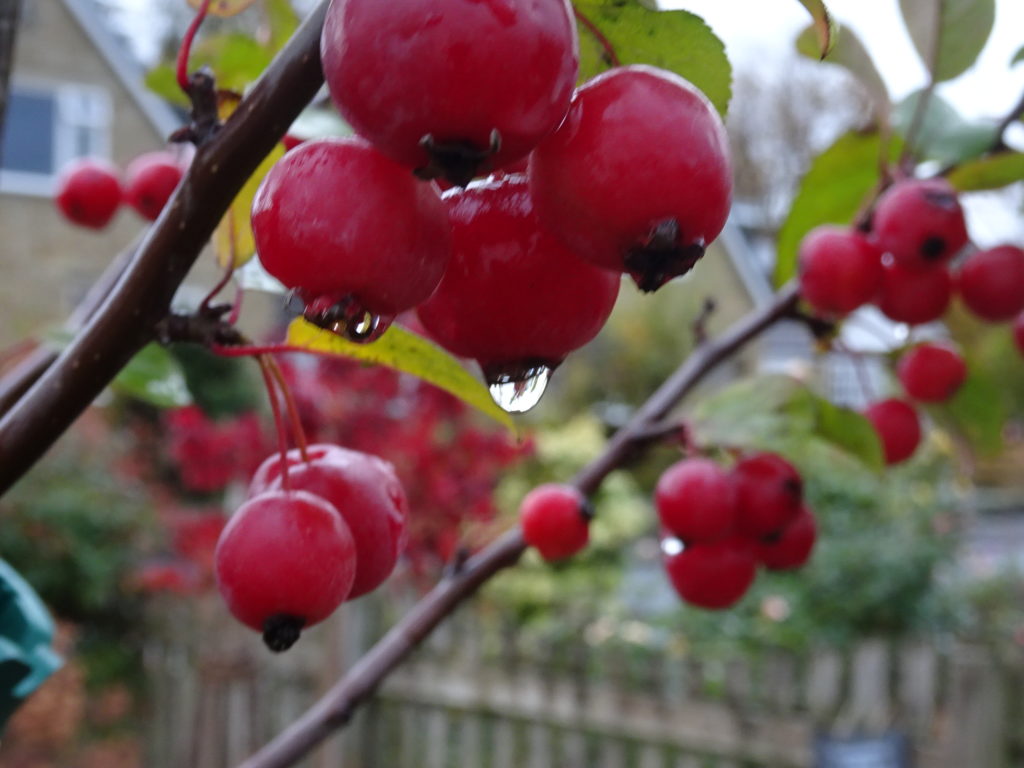
Crab Apples to make Your Knees Go To Jelly

Crab Apples to make Your Knees Go To Jelly

Feeling grouchy and ill-tempered then perhaps you should plant a crab apple and that way you won’t feel crabby much longer.

Key Facts about Crab Apples.

  • Common apples and crab apples are related. They are both members of the malus genus.
  • They are grown for their lavish display of spring blossom.
  • After the blossom a copious amount of small fruit are generally produced suitable for jelly or jam making.
  • The right variety can make an ideal specimen tree for a small or medium sized garden.
  • Original European crab apples have short spines and can be found growing wild in hedgerows.
  • Horticulturally they are often used in orchards inter-planted with apples to assist pollination. They themselves are self fertile.
  • Fruit may be red, green or yellow.
  • Plant new trees grafted on to semi-dwarfing stock during winter.

AGM Varieties

RHS Award of Garden Merit (AGM) are designed to helps you choose the best crab apples to grow and include Butterball producing butter coloured fruit. Jelly King has large fruit and guess what they can be used for. Laura is a registered variety that is naturally dwarf yet a good all rounder. Red Sentinel and Sun Rival have upright and weeping shapes respectively. Other awarded crabs include Evereste, Comtesse de Paris, Admiration, Cardinal,  Malus transitoria, Scarlett and the Japanese Crab Malus floribunda.

Other pictures from Google


Stepover Fruit to Save Space

Stepover Fruit to Save Space

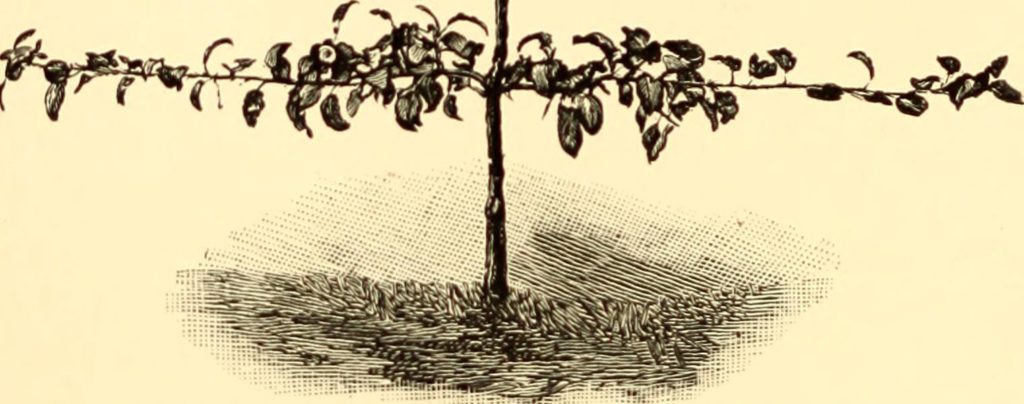
Take a new step in your garden this autumn by planting some step-over fruit trees.

Growing Stepover Fruit Trees

  • These fruit trees are effectively one tier espaliers
  • They are kept low enough to step over when necessary. 18-25″ will normally suit.
  • Starting with a Y shape with two main shoots train them horizontally in opposite directions. Aim for a spread of 10 feet. Prune out the vertical leader
  • Support with low wire on a ‘gripple system’.

Benefits of Stepover Fruit Trees

  • Ideal for planting in front of ornamental borders
  • Form a low edging for vegetable plots.
  • Increases the yield from small spaces particularly in smaller gardens. Larger fruit and often less numerous on stepovers.
  • There are a growing number of species now available from specialist suppliers particularly of apples and pears. Select spur-fruited varieties on dwarf stock.
  • They can become attractive conversation pieces.
Growing Curmudgeons

Growing Curmudgeons

To me a curmudgeon is not something to plant or see growing in your garden. That is because a curmudgeon is great, galumphing, gormless gardener a bit like me.

Other Definitions of Curmudgeon

  • Curmudgeons who garden with bitterness are a symptom rather than a disease and should be treated like weeds.
  • A cantankerous naysayers acting as self appointed gadflies to be insecticided.
  • A crusty, ill-tempered or difficult and often elderly gardener potentially from Yorkshire.
  • Lest we forget the many female versions of curmudgeonliness  would be battle axes with a few choice synonyms added.
  • ‘National Curmudgeons Day, celebrated on January 29, is growing in popularity. That particular date was selected to honor the ornery among us because it is the birthday of comedian, writer, and self-professed curmudgeon W.C. Fields’.


Fine Ferns and Damp Moss

Fine Ferns and Damp Moss

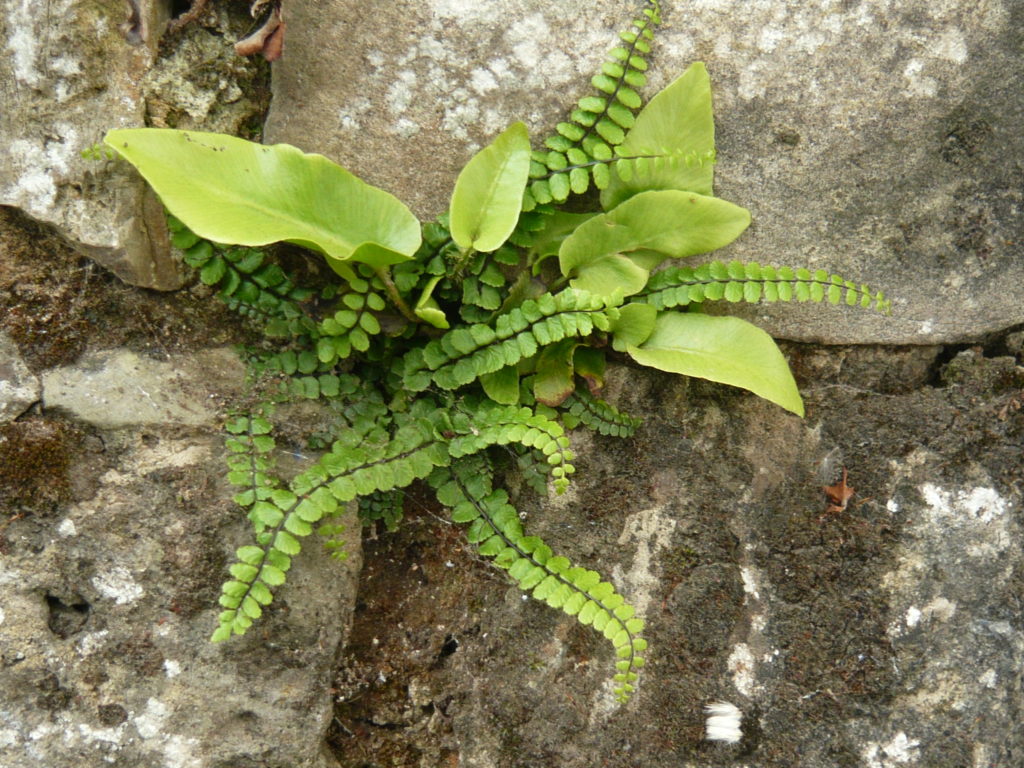
I am not a great fan of ferns as I live too near moorland that shares its bounty with gay abandon and I spend significant time removing uninvited guests. These are usually Bracken (Pteridium aquilinum) or  Buckler-fern (Dryopteris
dilatata) with fronds that are arranged like a shuttlecock. There are some exceptions such as the Hart’s tongue (Asplenium scolopendrium) and the  Maidenhair Spleenwort (Asplenium trichomanes) shown in this wall. The strap like fronds  and pinnate rectangular leaflet fronds make a simple  feature on this mossy wall.

Ferns Favourite Locations

  • Due to the microscopic airborne spores British species of ferns can grow in many unusual places such as rocky habitats.
  • Woodland ferns such as Dryopteris species are easy and accommodating in the garden.
  • The striking Osmunda regalis aka The Royal Fern prefers a wetland area.
  • There are several ferns suitable for ground cover and a selection can be found  on the native fern website


Mast Year 2019

Mast Year 2019

As I walked past a line of trees the beech nut husks crunched under foot. The pavement was strewn with copious quantities of this crunchy produce from the venerable trees. I was moved to include a few notes on nature’s masting process.

Mast Production

  • A mast year occurs when a bumper crop is produced. It has the effect of increasing the potential for reproduction but also feeds-up creatures in anticipation of a hard winter.
  • Mast seeding is also called masting and the produce is a mast
  • Mast years are so called due to the  production of many seeds by a plant every two years or so
  • Masts are often produced in in regional synchrony with other plants of the same species.
  • It is thought a mast year may be designed as a defense to assist reproduction of a species because seed predators become satiated before all the seeds have been consumed.
  • Many species ‘mast’ including oak, hickory, and beech with their acorns, hickory nuts, and as with beechnuts they produce a ‘hard mast’.
  • Fruit trees and other species may produce a soft mast but the volume of produce will still be much more fruit than normal


Picia Perhaps? – I need to Spruce up Identification

Picia Perhaps? – I need to Spruce up Identification

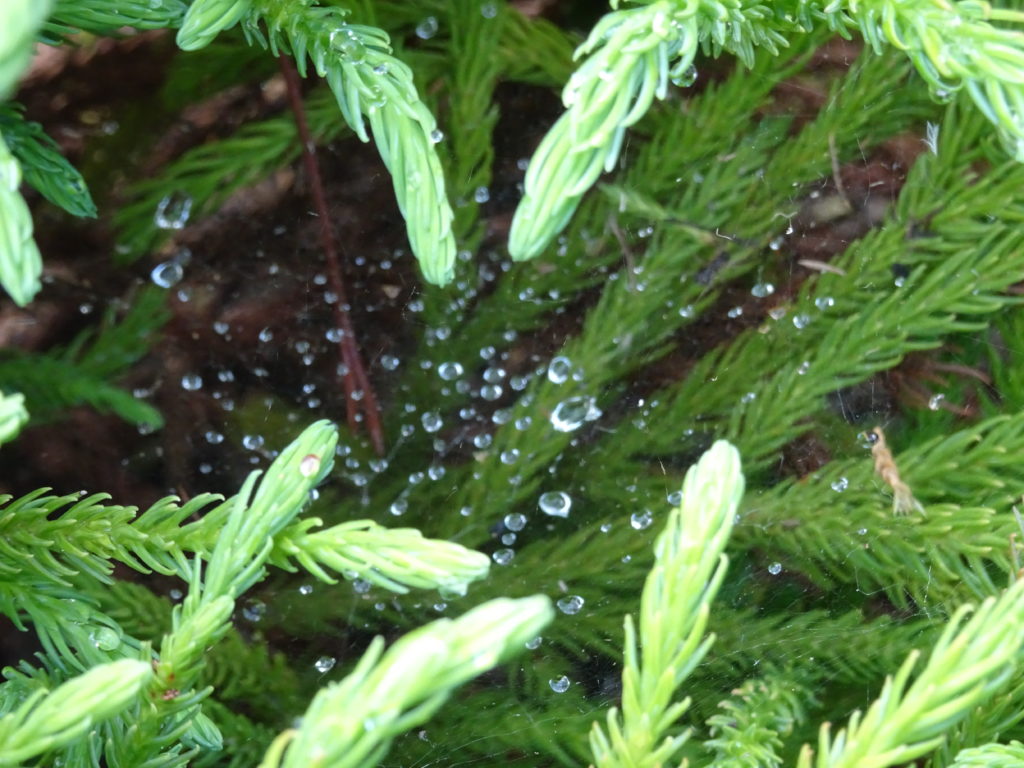
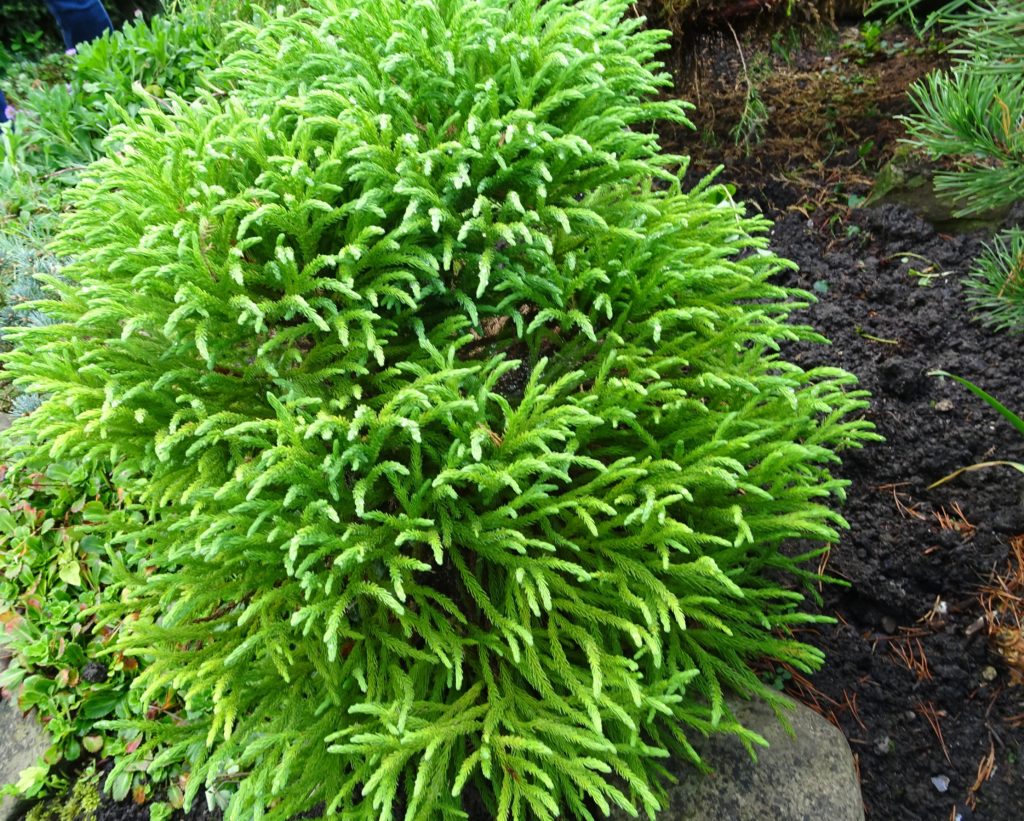
The dew on the spiders web doesn’t worry what the plant is called conifer, Picia or a more exotic variety (I have lost the label and there are many Picias to pick from). What the spider will be interested in is the type of insect attracted to the plant and thereby the web. Below is a picture of the 5 year old plant about 2′ high and a bit more in circumference. It is a well behaved plant and worth its place in the miniature conifery I am developing.
Key Features of Picea

  • Latin name – Spruce and various forms of Picia
  • Type of tree – Evergreen, Conifer
  • Leaves – grow in a series of spirals
  • Features New growth emerges as soft tassels of delicate light green
  • Family – Picea is a genus of about 35 species in the pine family
Rabbits Don’t Eat Cyclamen

Rabbits Don’t Eat Cyclamen

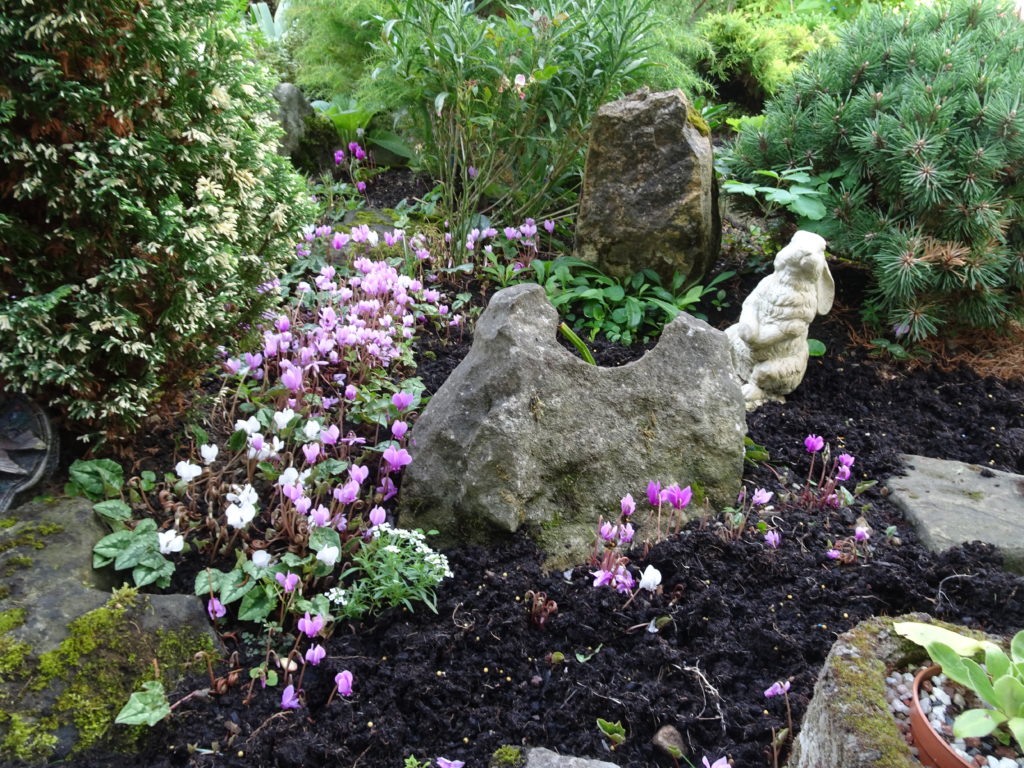
Rabbits do not eat Cyclamen at least not if they are stone replicas rabbits.

In front of the cyclamen I have just planted  100 Chionodoxa lucillia alba to provide spring sparkle and (rabbit food)!
The home made tufa pot has a plastic pot sunken in the center. I can replace this potted Auricula with another pot of the same size when necessary. The gravel improves drainage and the tufa looks natural now the moss has colonised the pot.

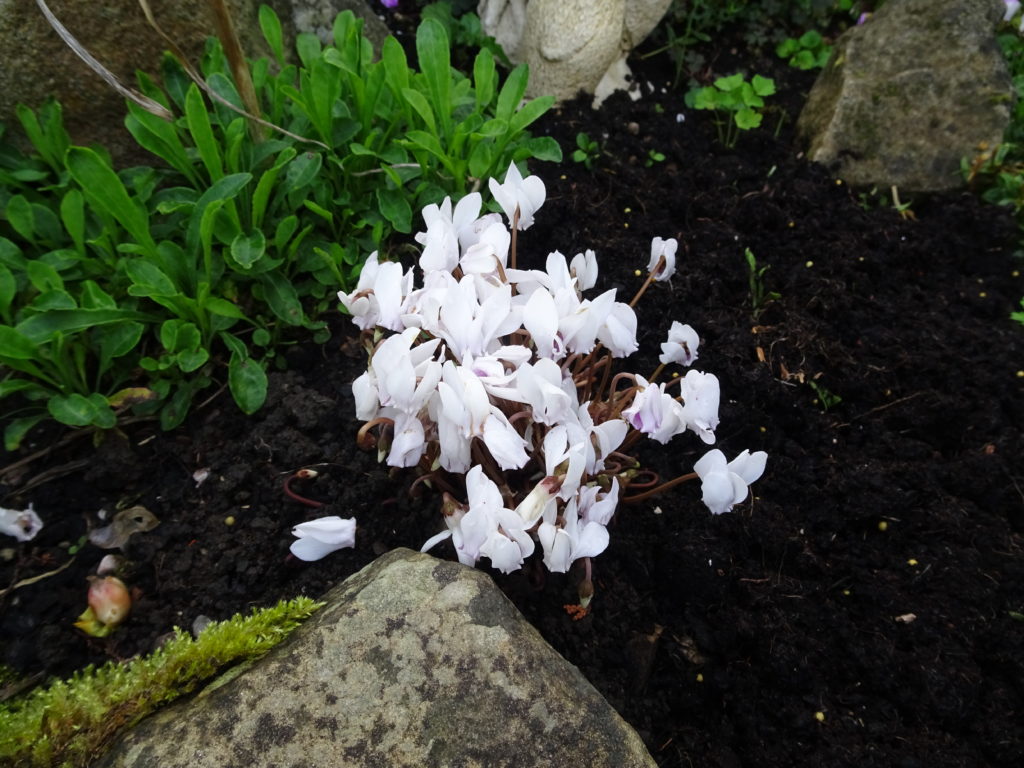
This form of cyclamen is one of my autumn favourites. The corm is now 4″ in diameter and you can see how many flowers one bulb can produce.

Hawaii Gardeners Delight

Hawaii Gardeners Delight

You are unlikely to be able to recreate the conditions and zones of Hawaii in your garden but you can still gaze at some of the exceptional plants and study their habitats. Isolated by thousands of miles of ocean for millions of years, the Hawaiian islands are home to many unique plants and flowers described with great photographs in this book

Book Cover

This book describes more than 130 indigenous (originating or occurring naturally) and endemic (native and restricted) species of many unique plants and flowers.

Interesting Facts to Delight Gardeners

  • The Hawaiian islands, isolated by thousands of miles of ocean. Prehistoric evolution may have resulted from seeds that have been dispersed by oceanic drift, air flotation but most probably by birds droppings and attachment.
  • There were an acknowledged prehistoric 26 plant species before Polynesian immigrants arrived and developed knowledge of medicinal and other uses of plants. They introduced breadfruit, mulberry, coconut, yam, sweet potato, banana, sugar cane and ginger among other useful species.
  • Species have adapted to colonise lava flows in vegetation called ‘kipuka’.
  • The diverse ecosystems found throughout Hawaii include coastal areas, rain forest, bogs, sub-alpine , mesic forest and dry shrub land.
  • Hawaiian islands’ native flora are fast-disappearing nature conservation
  • The state flower of the Aloha State  is the Yellow Hibiscus.


Book Cover

If you are lucky enought o visit one of the many volcanic islands of Hawaii get out and about to visit different ecoregions and botanical sanctuaries. If you stick to coastal and tourist areas you will miss a brilliant and unique horticultural journey. If you can’t visit you can still wonder at the photographs and reports of others that I have hinted at.

Tips for Growing Clematis all Year Around

Tips for Growing Clematis all Year Around

067

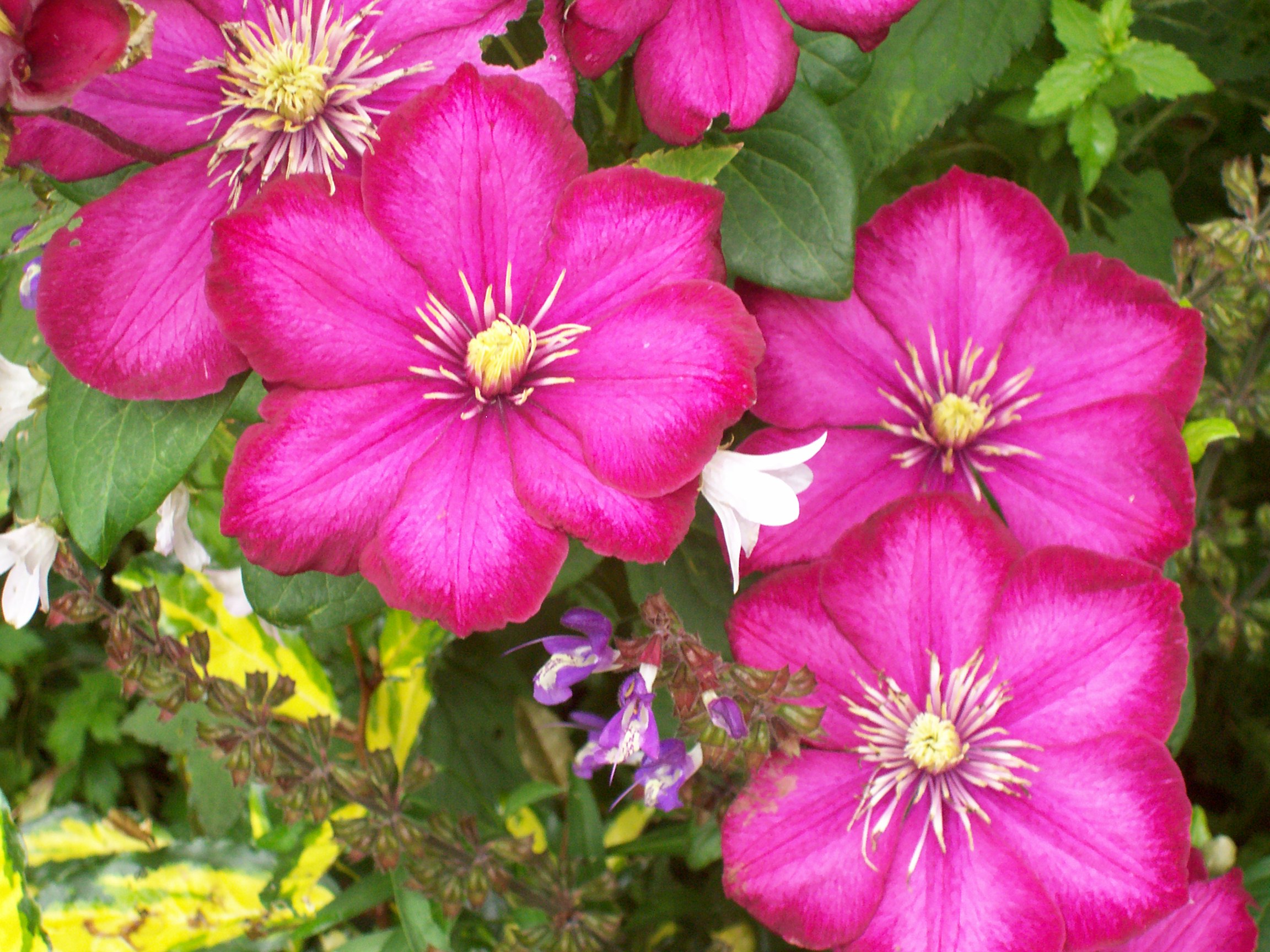
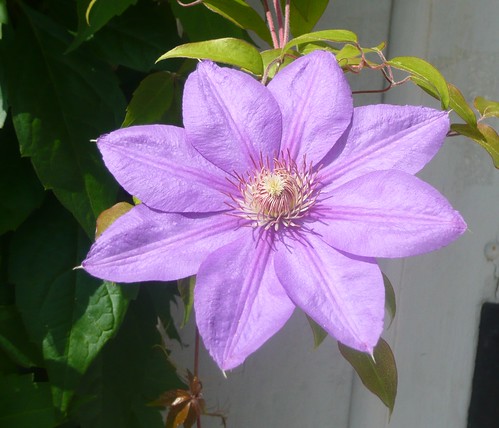
There is a clematis for every season, every aspect and every place. The flower size and colour range is also wider than you may imagine. Update I have just bought (2.9.19) another clematis Madame Le Coultre for flowering june to august.

Types of Clematis for growing all year around

Early Flowering Species like alpina or montana types.
Summer Flowering hybrids like patens and florida types
Late flowering Hybrids and species like jackmanii, tangutica and viticella types
Herbaceous clematis x jouiniana or Koreana lutea
Evergreen and tender species armandii, cirrhosa and tender plants from the southern hemisphere

Selected Varieties by Colour

White – Marie Boisselot, Montana sericea, Armandii or Clematis chrysocoma.
Red – Ville de Lyon, Madame Juklia Correvon or Ernest Markham.
Yellow – Clematis tangutica, Moonlight, Ligusticifolia or Otto Froebel.
Violet – Etoile Violette or Clematis alpina Francis Rivis.
Blue – Ascotiensis, Macro petal Blue Bird or Multi Blue.
Pink – Clematis montana Elizabeth, Bees Jubilee or Hagley Hybrid.
White and purple Clematis florida Sieboldii.

Soil and Growing Condition Tips

Soil for Clematis should not be too acidic but alkaline soil is fine. Impoverished soil near a wall or under a hedge should be improved with plenty of humus before planting. Sandy soil looses moisture quickly and also needs humus adding.
All clematis will grow better if the roots are kept cool. Plant a bit deeper than the soil level in the pot where they were grown and cover the roots area with a tile, rock or mulch.
Large flowered varieties will have stronger colours if the flowers grow in light shade.
Use a good Foliar feed every 7-10 days and a good root drenching weekly.

Types of Clematis Support

All clematis even the herbaceous varieties need some support. The easiest support is often other plants with matching characteristics – heather for small macropetala types or a tree for the more robust viticella varieties.
Walls are fine as long as the mortar and brickwork is sound for a network of wire. Clematis montana can cover a large wall quickly.
Trellis itself needs to be securely attached to battens but can be attractive when cloaked in Clematis or on it’s own in winter.
Archways, tripods and obelisks look great when covered with a climber such as clematis. Similarly pergolas can have both climbing roses and clematis co-existing.
Try a pillar made from a length of Oak or hardwood to train your clematis because you are bound to want to grow more once you start.

Varieties of Clematis from Thompson & Morgan

Clematis urophylla ‘Winter Beauty’ also known as Old Man’s Beard flowers is a superb evergreen clematis bears its delicately fragrant, waxy, bell-shaped flowers in the depths of winter.
The foliage is so lush, that you’ll think its summertime all year round!
Plant Clematis ‘Winter Beauty’ against a warm house wall so that you can appreciate its winter flowers from your window. This sought after variety will appreciate a sheltered site with some winter protection.
Height: 4m (13’). Spread: 1.2m (4’). Pruning Group: 1

Clematis ‘Bill MacKenzie’ really couldn’t be easier. Watch it scramble over fences, covering unsightly sheds with ease. From midsummer this versatile climber is covered in small canary yellow blooms, which give way to large fluffy seedheads for an attractive autumn display.

Clematis ‘Crystal Fountain’™ are quite extraordinary.A fountain of crystal-blue stamens radiate from the centres of the dazzling blue, 15cm (6”) wide blooms. Terrifically floriferous, this clematis continues to bloom throughout summer and into early autumn. It’s compact habit makes it ideal for containers and small gardens.

Clematis armandii flowers in spring with exquisitely fragrant, star-shaped white blooms literally smother this beautiful evergreen clematis in spring. The new foliage emerges bronze tinted, gradually maturing to glossy dark green that will quickly cover walls and fences within a few years. Best suited to a sheltered position, this vigorous clematis requires plenty of space to twine its long evergreen stems.

Companion plants for Clematis
Tips on Pruning Clematis

Cultivating Clematis All Year Around

  • Pot up small clematis plants and grow them on until large enough to plant in their final positions.
  • When planting clematis, choose a position in sun or semi-shade and plant the climber deeply in moist, fertile, well drained soil.
  • Position the top of the rootball at a depth of at least 3″ below soil level to encourage new shoots to form from the base of the plant and prevent wilt.
  • Clematis dislike soils that are particularly wet or dry. Soil can be improved by the addition of plenty of well rotted manure or garden compost.
  • Train clematis plants onto a suitable support such as trellis, wires or a freestanding climbing frame.

See also The Climbing Clematis Family