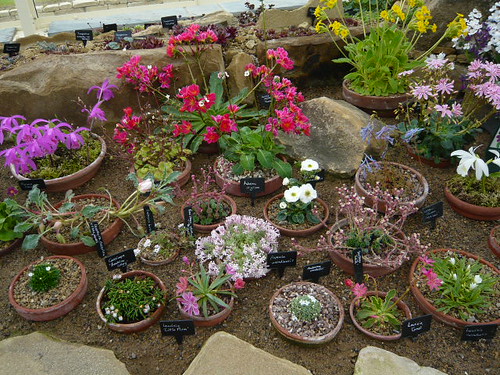
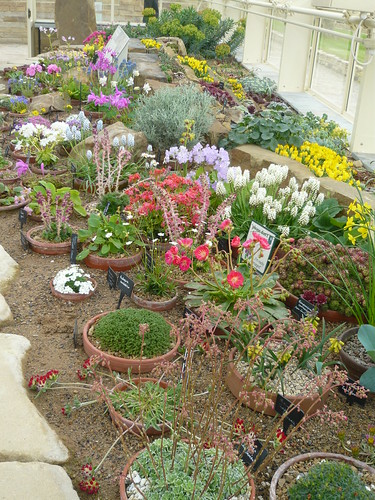
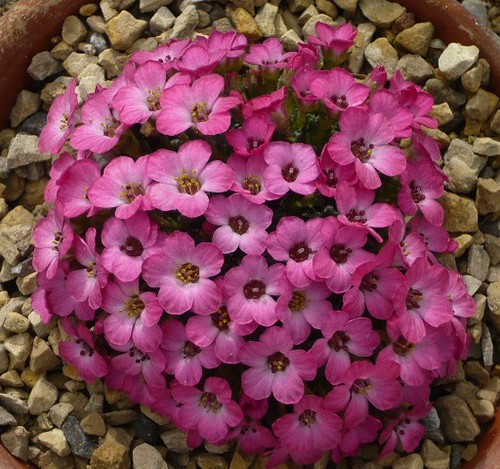
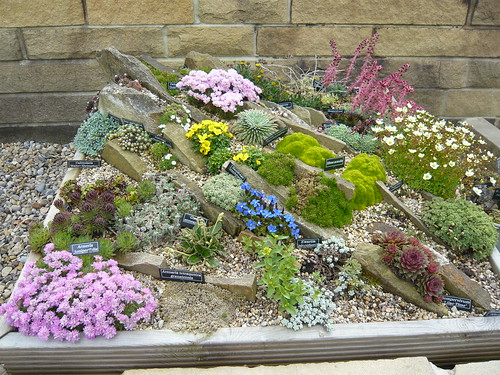
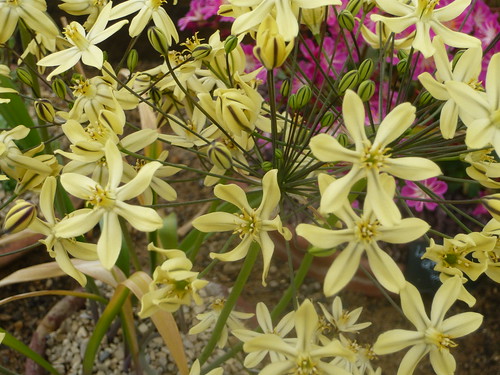
I have reported before about the Alpine house at RHS Harlow Carr. Now we can begin to see the fruits of all the labours both in growing and display.
There must be 100 different plants on display many of which were in flower this week. I know the pictures are small but how many varieties can you recognise?
Just by observing the plunge beds regularly, I am picking up tips that I hope to be able to use in my own cultivation.
Beginners instructions for building a plunge bed for growing Tete-a-tete narcissus from the Royal Caledonian Horticultural Society. ‘To construct a plunge-bed dig a pit in a well drained piece of ground that will not flood – near a tree or hedge will be fine. A wooden frame, sufficient to hold the pots, on top of the ground will do equally as well. Place the pots in the plunge-bed or frame and cover them with soil/compost/sand to a depth of about 5cm. They can now be forgotten until the spring. A strong cardboard box stored in a dry cold garage or shed will do equally as well. Cover the pots in the same way as above and don’t let them dry out.’
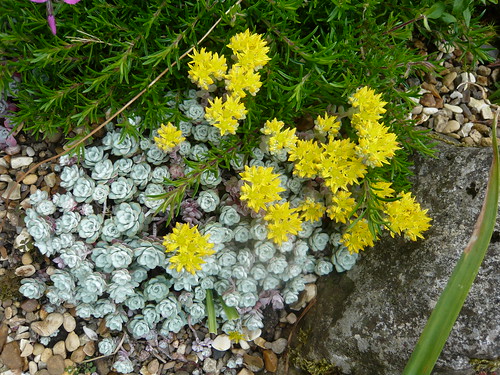
Sedum spathulifolium make dense mats of grey foliage. The cheerful yellow flowers can be up to 3″ across.
Originally from west and north America this hardy plant is now found in many rockery and alpine gardens. It can be grown successfully with Sempervivums or other Sedum.
Sedum spathulifolium varieties to Grow
Sedum spathulifolium purpureum has wine coloured leaves when young.
Sedum spathulifolium ‘Capablanca’ has virtually white leaves and is more delicate needing protection in an apline house.
Cape Blanco has tiny, fleshy rosettes of whitish-gray leaves. It spreads slowly to form low dense mats. Good in containers.
Although attractive in flower, Sedum spathulifolium are at their best in midwinter with their colourful evergreen foliage and attractive shapes.
‘Carnea’ has rounded, fleshy, silver-green leaves shaded with crimson and bright yellow summer flowers. see images.
How to Start Your Own Gardening Business An Insider Guide to Setting Yourself Up as a Professional Gardener is a useful tutorial if you want to set up a gardening business. I recommend you consider your aspirations and limitations carefully and either set up a ‘Life Style business’ or consider becoming a qualified, professional career gardener.
Life Style Gardener
There are many jobs from spring onward for jobbing gardeners. Lawyers hang out a shingle but for gardeners a post card in the post office usually suffices.
Labouring on hedges and lawns for the infirm or doing small construction and garden maintenance projects are within the grasp of most hobby gardeners.
If your work is good then word of mouth should get you lots of referals.
Hourly rates in the North of England vary from £6- £20 per hour depending on the level of horticultural skill, experience and quality of garden. Ask around amongst those already in business.
A call this a rock box as it is one way of displaying rockery plants above ground level.
The size of these interesting rock plants allows you to get many species in one small container. This tannalized wooden frame was custom made about 4 feet square and is on display outside the new Alpine house at RHS gardens Harlow Carr. I counted over 30 different species planted in this one container.
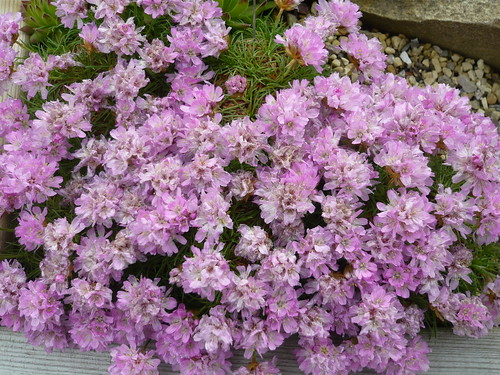
Below is a close-up of the Armeria junperfolia from the same display.
Crevice gardens are all the rage at the moment. The careful alignment of rocks can create some interesting locations for alpine and rockery plants. They are also very good for helping wild life to thrive.
See pictures of the Alpine Garden society rock supplier.
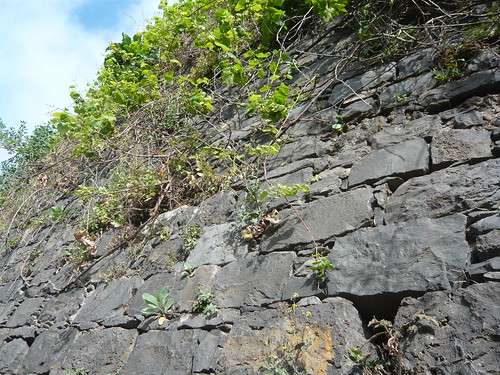
Other crevices can arise naturally or be created in the environment. These very high retaining walls are on a roadside but have been left like a dry stone wall. Rubble and soil are piled inside the stone which has been cut and faced. Between the stone a variety of plants are colonising the area.
You can create your own dry stone wall or crevice garden from a stone and a bank of soil.
Features of a Dry Stone Wall.
Water runs freely through the retaining wall and is not trapped on the leaves of plants that are susceptible to rot.
The soil is often poor in nutrients and is attractive to plants that thrive on those conditions.
Moss and lichen will colonise the damp shaded places but in the full sun other plant variety will grow.
Parts of the wall will be hot and dry so the plant selection should bear these conditions in mind.
Insects and birds can use dry stone wall for food and shelter. Leave some uncut grass at the foot of the wall
Height is not crucial but the wall needs to be at least a foot thick.
Local rocks are best and will dictate the ph of the conditions.
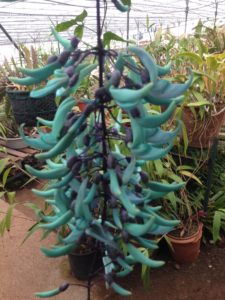
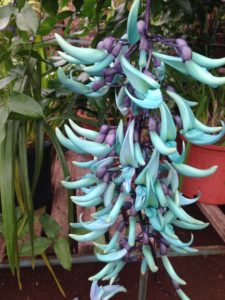
Also known in its native Philippines as the jade vine.
Shown here in an orchid house where it was 15 feet high and wider. Not one to try at home without the space and climate control. They appreciate a high humidity.
This spectacular vine has these interesting 2 feet long flower displays in emerald, turquoise or jade colour.
Pollination in the wild is by bats who hang to drink the nectar and distribute pollen. If fertile the plant produces fruit that grow to the size of melons.
Strongylodon macrobotrys is a legume or pea family and is perennial liana/climber
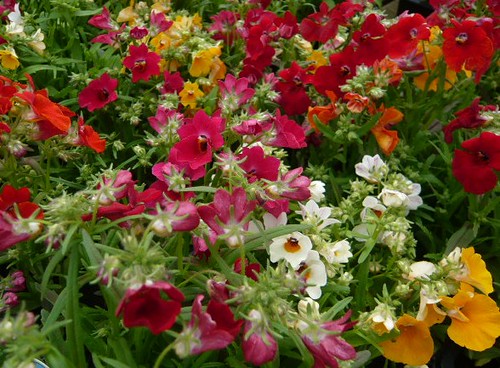
Nemesia are good flowers for rock gardens, containers or for use as a bedding and front of border plants. Surprisingly they also make a nice and useful cut flower.
Nemesia Culture
Nemesias grow from 1 to 2 feet tall, with sparsely branched plants. They grow erect, with the flowers carried in large clusters at the top.
Nemesia are available in a wide color range, including yellow, orange, brown, pink, red, and lavender-blue.
Nemesia are half hard annuals you can sow now or buy as mini-plugs in May.
Growing Nemesia from Seed
Sow seeds indoors 4 to 6 weeks before the last frost date.
Seeds germinate in 7 to 14 days at 55 to 70 º.
In areas with cool, dry summers, seeds can be sown outdoors as soon as the ground begins to warm
Nemesias like fertile, well-drained soil and prefer full sun for flowering but cool evenings.
Nemesia will tolerate partial shade.
Transplant seedlings 6 inches apart after the last frost date.
Pinching the tips of seedlings increases branching.
Nemesia are useful for edgings, in rock gardens, walls, and for borders.
They are splendid container plants and make good cut flowers.
Nemesia Varieties.
There are three main species Nemesia caerulea, Nemesia foetens, Nemesia fruticans
Nemesia Masquerade are extraordinary with coconut-scented blooms! An unusual variety with exotic-looking yellow-and-white blooms. Plants are easy to grow, ideal for beds or containers and will bloom 12″ tall right up to first frosts.
Nemesia denticula Confetti or Celebration are popular tender perennials distinct from their half-hardy annual relatives producing lots of attractive flowers throughout the summer. The plants prefer moist but loose sandy soil. Extra watering may be needed in a dry season. They look equally good planted in the border where they are good for planting at the front.
Fire King is a scarlet-flowered variety. St. George is white and deep red bicolor.
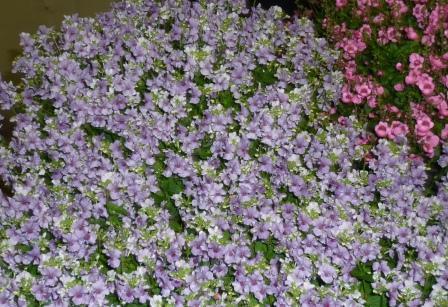
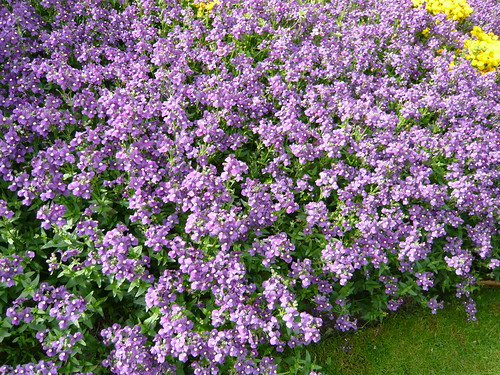
Nemesia versicolor is a similar, more compact species. It has a variety of colors including truer blues. Blue Gem is a very compact variety growing to 10 inches high with blue flowers. Nemesia caerulea (below) is available in true blue, lavender, and white.
I also like the Nemesia Tapestry or the blue and white KLM series from Thompson & Morgan
Nemesia Blue Button is one of the many series of low growing plants you can buy as plug plants right now. A delicately scented species of Nemesia caerulea with vivid bluey-mauve flowers standing out against its dark green foliage. A compact but spreading habit makes it ideal for bedding, rockeries and containers.
Frothy coloured annual Nemesia is available as plug plants now or seeds for winter sowing.
The range of vibrant colours is increasing all the time as a result of selection and breeding.
Nemesia can be used in beds, borders or to brighten up the garden in tubs, planters, on the patio or even as a windowsill pot plant.
My Nemesia Tips
Nemesia grows 10″ high on unassuming plants
The flowers start blooming in June and last through August. Try the self colour varieties.
Sow seeds late winter to mid spring at 55-60F in a good seed compost on the surface of compost and gently firm down.
Keep soil damp but not wet. Do not exclude light and do not let the soil temperature become too high
Germination usually takes 7-21 days.
Transplant seedlings in to 3″ pots as soon as they are large enough to handle.
Gradually acclimatise to outdoor conditions for 10-15 days before planting out in a sunny spot after all risk of frost has gone
Plant close together for a mass of colour
Different Nemesia
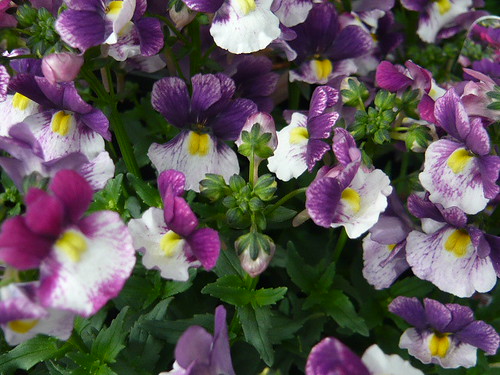
Nemesia strumosa ‘Carnival’ offers a wide range of colours whilst Mello is a red and white variety. Nemesia strumosa KLM is a blue and white flower shown below. Nemesia cheiranthus Shooting Stars has a bright yellow and white flower with a branching habit and coconut fragrance.