Browsed by
Month: March 2016

Lemon Scented Petunias
Lemon Scented Petunias

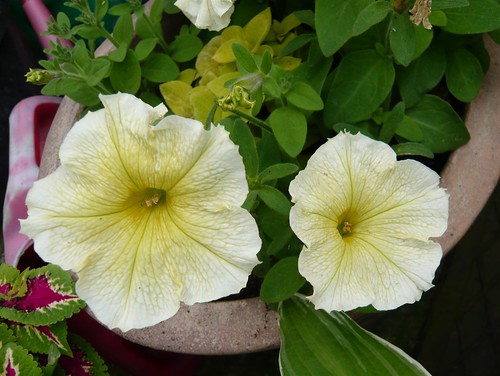
A good idea that failed in my garden this summer involved Petunias. Rather than plant the brash coloured Petunias I thought I would go for some scent and colour coordinated schemes. So I opted for these Lemon F1 plants I bought as seedlings. The idea was to grow Lemon Verbena and Geranium Lemon crispum alongside the petunias for the leaf scent. The weather was not kind to the petunias and they suffered badly in the ground. Those in pots fared better but still did not excel and had no scented plants with them. I like the idea and will try again next year probably with a different combination.

Self Colours

  • F1 varieties allow us to select single colour Petunias and a new series from Chilterns comes in Lady Purple, Lady  Blue, and Lady Cherry.
  • Thompson Morgan have Mirage Midnight a dark blue and Cascade Blue (double) which I think is purple.
  • Prism Sunshine F1 is another yellow grandiflora as are Baby Duck and Madness.
  • EasyWave™  is another series with self colours in Red, Blue and White
  • Single colour with white frills may be cheating but I like Pirouette Purple, Pirouette Red and Plum Crystal.

Petunia from Thompson & Morgan
Also read Help Growing Petunias

Starting Types of Petunias

  • I find the seeds too fine and hard to germinate consistently. Being a lazy gardener I like ‘kinder plants’ and plug plants to get me started.
  • Petunia ‘Citrus Spritzer’ is a Mini Petunia also called Calibrachoa. Withmasses of flower power producing in excess of 500 blooms per basket, mini Petunia ‘Citrus Spritzer Mixed’ are simply made for hanging baskets. Free flowering and easy to grow, these astonishing calibrachoas make a spectacular summer display. Height and spread is 30cm (12”).
  • Surfinia’ petunias are still the most loved and reliable petunias, producing hundreds of beautifully coloured, trumpet shaped flowers. Support Petunia ‘Surfinia’ on a climbing frame and it will rapidly climb up to 2m/6ft high to create a non-stop tower of colour. These petunia flower from June right through to the first frosts of winter.
  • Fill your patio containers with the wide, citrus yellow, bell shaped flowers of Petunia ‘Fanfare Yellow’ shown below
  • Petunia ‘Waves Mixed’ F1 were a version of the earliest petunias.
  • The ‘most weather resistant’ is claimed to be Petunia miniflora ‘Mini Bella Picotee Mixed with the appearance of stripped flowers.
  • Spreading petunias are only about six inches tall, but spread so rapidly that they cover a huge area in one growing season provided they’re watered and fertilized frequently.
  • If I am lucky enough to get a good crop of seedlings it is usually from a small selection and I miss out on the variety.
 

Flowers Attracting Insects

Flowers Attracting Insects

Images to get your thoughts and garden buzzing.

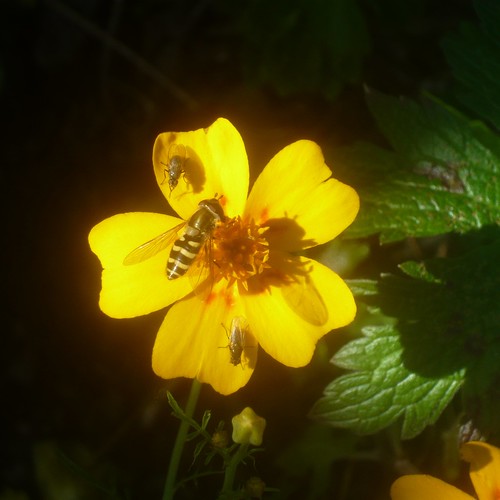
The wasp has the right colouring  to act as camouflage on this Tagetee.  For a small flower, little bigger than a 5p piece, the tagetee is punching above it’s weight for insect pulling power. Caught late in the day when the shadows are beginning to lengthen there is always something to spot in a well planted garden.

Tagetees are used in the green house to attract white fly away from Tomatoes or better still deter them in the first place.

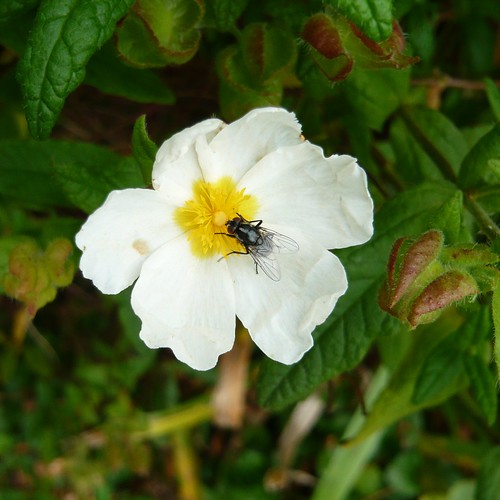
My old favourite the Cystus is flowering again after its earlier summer performance. Not as much blossom but all the more welcome for this second flush and a chance for insects to stock up on more nectar.

Read More Read More

Old Lupin Photograph for Cottage Gardens

Old Lupin Photograph for Cottage Gardens

An old cottage garden favourite

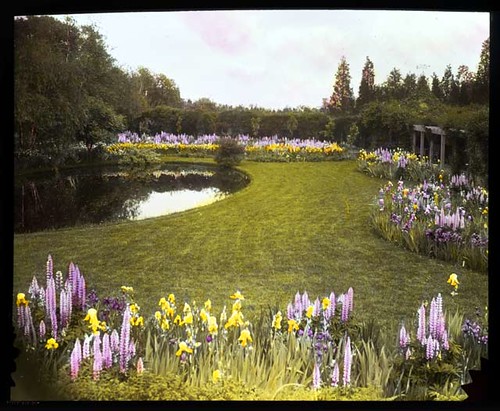
Old hand coloured glass plate photographs from the USA National Archive which have no current copyright restrictions. The colours are brash but the Lupins and Iris stand out.

The Landscape Architect of these Parterres, Flower beds and Walkways was Horace Trumbauer, in 1930. The Box, Annuals and Ageratums are formally displayed with the fountains as a backdrop.

Both these photographs may look a bit out dated now but it is part of our gardening history. We can see how the yellows and blues work well together and notably how tidy everything seems to be.

Read More Read More

Improved Clay Soil

Improved Clay Soil

Mulch mulch and more mulch is a must for getting humus into clay soil.

HC 057

Does your soil sticks to your shoes and garden tools like glue? Is your soil slow to warm up in the spring and hard to manage? If your soil is slow draining, forms big clods, crusts over and cracks in dry weather then you have clay or even heavy clay soil.
Clay soil is made up from very fine particles that make pure clay good for potters but not plant roots. One redeeming feature is that clay soil is generally rich in nutrients.

Improving Clay Soil

  • If gritty sandy soil is the opposite of clay soil it follows that mixing the two may get the best of both worlds. Add copious quantities of grit or gritty sand to your clay soil to open it up. Do not use builders sand as it is very alkaline or fine sand that will set like concrete.
  • Add even more copious quantities, 6 ” plus, of organic matter such as compost. I have tried wood chippings, spent mushroom compost, old feathers, composted bark and various other items to open up the texture. Dig it well in to the top 10″ as you not only incorporate the organic matter but you add air to the soil and help drainage.
  • Mulch with compost as often as possible and let worms drag it down into the soil.
  • Earthworms thrive on humus and breed rapidly if the conditions are right. You only need a handful or two to get things going so put a few on the soil when incorporating the compost.
  • Improving your clay soil will take time and patience.

Plants for Clay Soil.

  • Special seed mixes of wild flowers are available from Amazon

Read More Read More

Healing Plants and Treatments

Healing Plants and Treatments

Book Cover

 There are many plants and ways of using them to boost your health and help with healing. Herbalists since the 17th century like Nicholas Culpeper have recorded some of the best garden plants for healing.

Treatment Methods

  • Eating herbs and plants both raw and cooked is so natural we sometimes do not think about foods healing properties.
  • ‘Decoctions’ are created by boiling a plant whilst ‘Infusions’ or ‘Teas’ have water poured on them and brewed. A ‘Syrup’ is one of the former that has had sugar added and reduced to a syrup.
  • ‘Oils’ are produced when herbs are infused in vegetable oil and a small amount of vinegar.’ Tinctures’ are extracts preserved in alcohol.
  • ‘Cold Compresses’ are used externally and ‘Poultices’ are commonly applied warm or hot.
  • ‘Ointments’ are either mixed with petroleum jelly or the term can apply to the sap of plants used directly.

10 Top Treatments

  • Aloe Vera often called the first aid plant. Use the sap for minor cuts, bruises and burns applied  directly on to the wound.
  • Chew a Parsley leaf as a breath freshener.
  • Calendula or Pot Marigold flowers can be infused and used for dry skin or internally as a digestive aid
  • Lavender for scenting linen, making sleep pillows or just sprinkling in a bath.
  • Sempervivum sap can take the sting out of insect bites and Dock leaves from nettle stings.
  • Rosemary or Camomile teas are used as a hair rinse to make your hair shine
  • Thyme or Verbascum leaves infused as a tea becomes a treatment for sore throats
  • A handful of fresh herb leaves including Bay dropped into a bath can stimulate the senses. You can use the leaves to make bouquet garni for cooking.
  • Onion as a soup especially with sage is great for treating coughs and colds.

Book Cover
Book Cover

The Healing Garden Eden Project by Sue Minter

Grow Your Own Pharmacy by Linda Gray

Grow Your Own Drugs by James Wong

Tips to Increase Greenhouse Capacity

Tips to Increase Greenhouse Capacity

Grow with the flow and in early spring that flow is in the greenhouse

Greenhouse

Acclimatised to Global Warming?
Easter snow flurries and April frosts have hampered planting so far this year, but gardeners will be hoping that the May bank holiday weekend offers some respite from the unseasonable cold and rain. Gardens will catch up from the colder than average start to spring. In fact we have been getting ahead of ourselves in recent years with earlier and earlier starts to the year and warmer than average spells in May and June.

To coin or corrupt an old phrase ‘Ne’re plant out till May is out’. Or if in doubt protect young seedlings from cold and frosty weather. I am referring to the month of May not May blossom the flower of the Hawthorn (Crataegus Monogyna) which is often used to celebrate May Day.

Temporary Greenhouse Capacity

Greenhouses will be full to bursting before it is safe to plant out so consider other temporary protection. First though make sure you use staging and shelves to optimise your main greenhouse. Don’t forget to water plants left under staging. You can hang some plants from the roof of many greenhouses.

Read More Read More