Browsed by
Month: April 2013

Streptocarpus News and Views

Streptocarpus News and Views

Cape Primroses never looked so good. New varieties are being released as the houseplant market takes to these interesting plants.

With the advent of yellow and blue flowered Streptocarpus there is a wider range of these interesting plants to collect and grow.
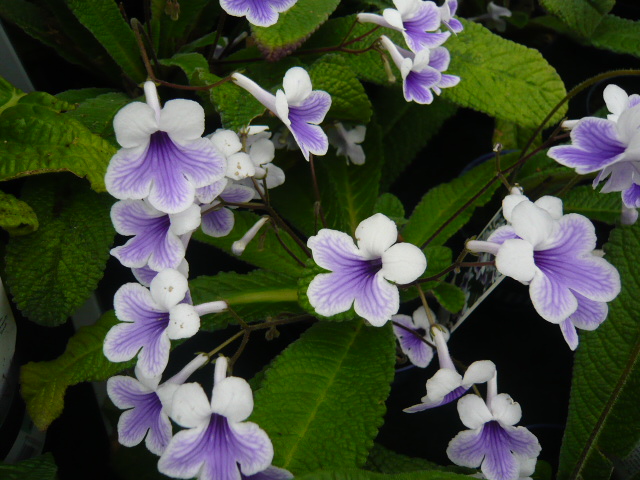
The flowers on Crystal Ice above are 1.5 inches across and have been bred to flower for long spells. Sarah on the other hand has flowers upto 3″ across.

Streptocarpus Care Tip

  • Too much sun burns the leaves and fades the flowers. Keep your plants in and east or west window.
  • Overwatering is as dangerous as underwatering causing wilting and death. Allow compostto totally dry out between watering.
  • Keep plants on the pot bound side – do not over pot.
  • Feed with a high potash feed to sustain a long flowering period.
  • In winter keep plants frost free, drier and do not feed.

For more tips read Care and Propagation
Streptocarpus seeds at Thompson & Morgan
Read More Read More

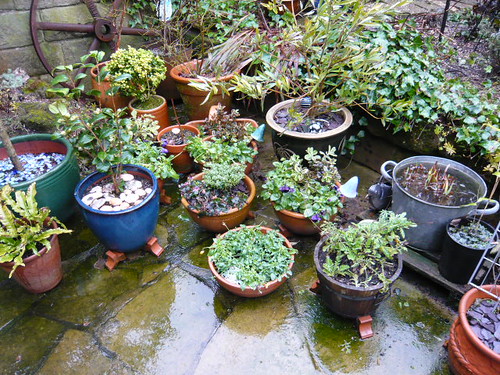
Tips for Planting Your Pots & Containers

Tips for Planting Your Pots & Containers

Long Toms

Selecting a Pot

  • Use as big a pot as you can find. Larger volumes of compost do not need watering as often and take longer to dry out.
  • Line a clay or terracotta pot with plastic to reduce evaporation through the sides.
  • Put plenty of crocks at the bottom of the pot to help drainage.
  • Use a loam based compost which holds water better than a peat based compost that tends to go dusty when dry and is hard to rewet.
  • Locate the pot in place before it is full and too heavy to move. You can get base boards on casters so the pot is mobile.
  • Black pots absorb heat, plastic is utilitarian and widely available, some ceramics will not be frost proof.
  • If you aim to grow tall subjects weight the bottom of the pot to reduce the risk of it blowing over.
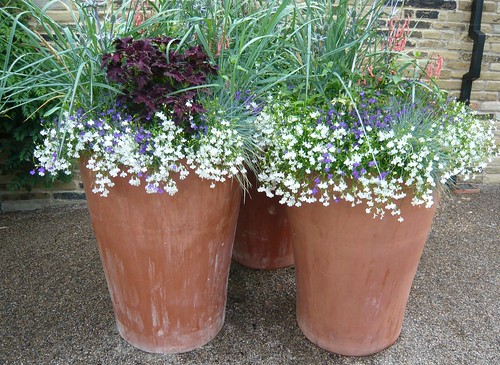
  • Cluster pots together to make a micro climate and watering will be easier.

Container garden

Planting Up

  • Firm your plants in well and backfill with more compost.
  • Ensure all roots are covered as they would dry out quickly.
  • Water the plants and if the surface sinks add more compost.
  • Leave about 1″ below the rim for watering.
  • Deadhead flowers regularly in summer.
  • Feed with a liquid fertilizer every week after the first month. Initially the compost should contain enough nourishment.
  • Select some edge plants to soften the appearance of the pot.
  • Aim for height that relates to the size of your pot.
  • If growing a specimen like a half standard I would mulch with a coloured gravel to finish off the overall appearance.

Wheel container
Container Equipment

  • I ofter use a saucer under pots to help watering.
  • In winter pots need to be raised off the ground on feet or bricks so they do not freeze to the soil and break.
  • If pots are not frost free then give them winter protection.
  • Experiment with different types and shapes of container
  • A layer of grit or gravel on the top will prevent moss growth and help leave room for watering.
What Do Plants Need to Grow?

What Do Plants Need to Grow?

sunflowers

Plants grow in an extreme variety of climates from Cacti in the desert to Pines in the Arctic circle. However, whatever kind of plant, they all share the same basic scientific criteria for growing.

The essential things a plants needs in order to grow is:

  • Water
  • Sunlight (energy)
  • Carbon dioxide
  • Food – Nitrogen, Potassium and Phosphorus and Trace Minerals
  • Warmth

1. Water (H2O) Water is indispensable for plants, and is nearly always taken through the roots. Main roots have many much smaller root hairs.

  • The water passes through the epidermis layer on the outside.
  • It then passes through the vascular rays until it reaches the centre of the root, the stele.
  • It is here in the centre of the root, that the veins or (xylem) carry the water up the plant to where it is needed.

Read More Read More

Colour from Plants not Flowers

Colour from Plants not Flowers

Spring flower show 090

‘All that glistens is not gold’ and all the colour in plants does not come from the flowers.
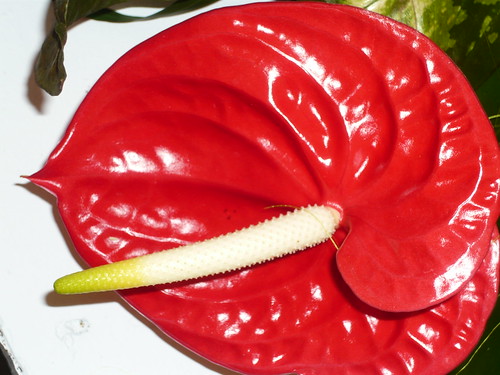
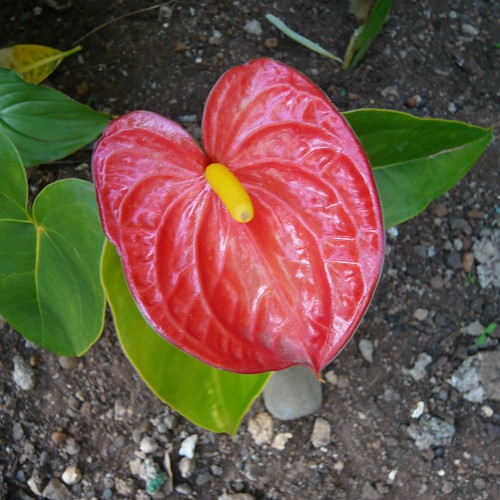
Anthuriums have coloured spathes in various shades but are particularly strong with red colours.

Spring flower show 200

Begonias are generally grown for their brashly coloured summer flowers but the ‘Rex’ varieties have a great deal of leaf colour with interesting patterns, textures and shapes. There are lots of other plants to see with interesting leaves.

Read More Read More

Meaning of Glauca for Gardeners

Meaning of Glauca for Gardeners

Abies procera glauca

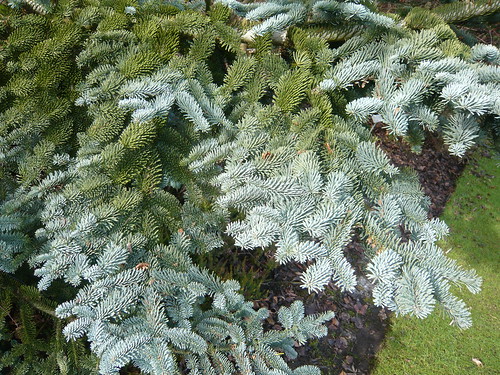
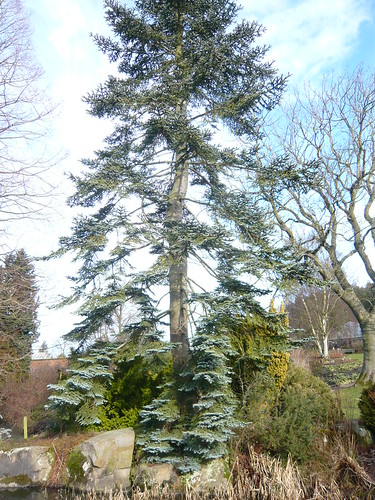
Glauca is a word that crops up in the naming of several plants. Like many Latin derived names it is descriptive as with the Noble Fir Tree  above ‘Abies procera glauca’. The leaves are glaucous, which is from the Latin word glauca, meaning bluish-grey. (Procera mean tall in Latin)

Glauca also refers to the fact that some plants have a powdery white coating on their leaves or stems. This coating, sometimes called a bloom or farina creates the grey colouring that can lead to the Glauca name.
Glaucous-leaved trees and plants contrast gently with the shades of green around them and combine well with almost any other color making them useful in landscaping and garden design.

Pica glauca out

Glaucous Plants

Nicotiana glauca Tree Tobacco is a much branched shrub or small tree often reaching 25 feet
Picea glauca (White Spruce) is a species of spruce native to the north of North America
Festuca glauca Elijah Blue the Blue Hair Grass
Rosa Glauca rubrifolia the flowers are not remarkable, being small, single and pink but the plum-grey foliage is unique.
Yucca and Canna both have a glaucous form
Plums and grapes often have a grey white bloom on the ripe fruit.

Consider using these grey-green combinations in your garden with Rue or Rudbeckia maxima as further examples.

Blackberry

Gardening in England

Gardening in England

vegetables

home grown vegetables

1. Growing Vegetables.

You don’t have to be Percy Thrower to grow a few tasty, homegrown organic vegetables. The Allotment or back garden is a great English tradition which enables you to not only grow vegetables, but, also escape from the turmoils of life (i.e. wife / husband – delete as appropriate)

A good vegetable plot gives great satisfaction. True, it is pretty hard work – there are innumerable pests and it is much easier just to buy from Tesco’s. But, when you grow your own vegetables and pick straight from the plot, you realise how much mass produced farming has reduced taste. Through growing your own vegetables, you realise that nature never intended vegetables to be uniformly the same size, shape and colour. It’s not just hyperbole to say homegrown veg and fruit tastes much better, it really is true.

Read More Read More

Divine Busy for the Impatient

Divine Busy for the Impatient

bizzie Lizzie

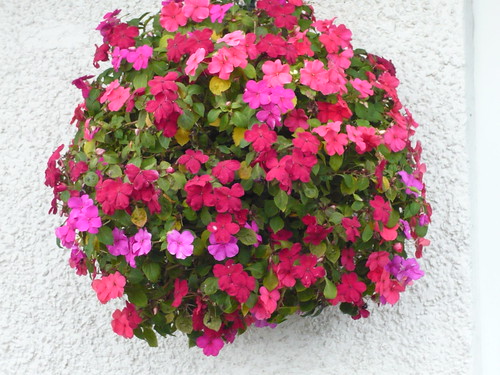
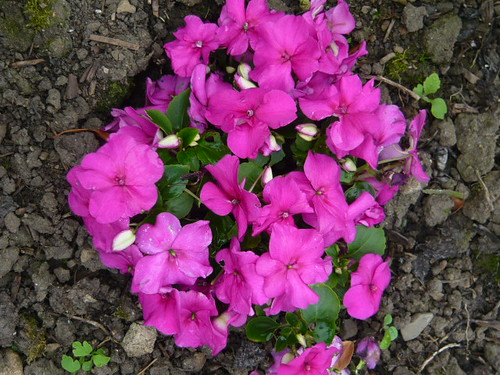
Busy Lizzies are correctly called and often sold as Impatiens. To combat disease they have been crossed with ‘hawkeri’ a variety from New Guinea.
The bigger the plants you buy the less impatient you need to be but beware of frost, a sure killer.
I have just received 72 plug plants that were little more than germinated seeds but I have followed the instructions repeated below:

Pot up plug plants and grow them on in bright, frost free conditions.
While the plants are still small but with more than 2 sets of leaves, pinch the growing tips out to produce a well branched, compact plant.
When all risk of frost has passed I will acclimatise the Busy Lizzie plants to outdoor conditions over 7 to 10 days, prior to planting in their final positions.

Growing Habit
This robust New Guinea Impatiens is strong growing and mildew resistant so you can rely on a fantastic display from Busy Lizzie ‘Divine’.
Its large flowers in a mix of red, orange, lavender, white and magenta are perfect for adding colour to patio pots and garden borders
Plants should withstanding wet, dry, cold or hot conditions throughout the summer. I can’t help but think they will like a regular drink and some humidity so I plan on a couple of plants in pots in the house and greenhouse.
Height: 30cm (12″). Spread: 35cm (14″)
Busy Lizzie ‘Divine’ flowers endlessly in a bright mix of colours from June to November.

Bizzie Lizzie

Anthurium as Houseplants

Anthurium as Houseplants

There is something exotic about the evergreen Anthurium that calls to mind hot tropical holidays. The long proboscis or spadix gives rise to the  nickname ‘Boy Flower’. The main issues for Anthuriums as houseplants are to keep the room temperature above 60°F and the air humid. 
There are 800-1000 species and new varieties regularly on the market so below is a small selection.

Selected Houseplant Varieties

Anthurium Crystallinum has large heart shaped leaves and grows about 18″ tall. Edges brown if too cold. Aerial roots need to be covered with moist compost so leave room at the top of the pot.

Anthurium Scherzerianum the ‘Flamingo Flower’ has waxy textured leaves and grows a bit smaller than other Anthuriums. A good plant to start with.

Anthurium Andreanum also called the ‘Wax Flower’ because of the texture of the red leaves. Appreciates some shade and humidity but not keen on dry central heating.

Tip The flowers will last for a long time as cut flowers.

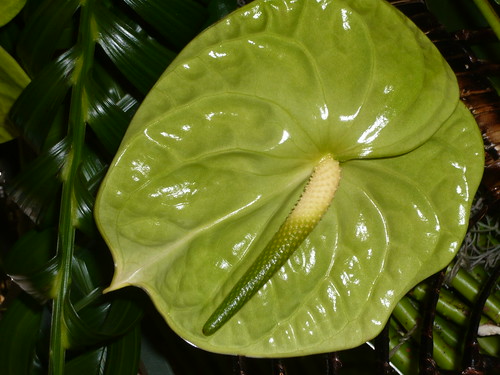
Green Anthurium one of the new colours now on the market.

Pruning Anthuriums

  • Leggy plants can be trimmed to keep them in shape.
  • Remove the dead and withered blossoms and overhanging leaves.
  • After pruning allow the plant to heal and new shoots should come from the cuts.
  • Mist and keep your pruned plant in bright indirect light.

Spring flower show 090

Some of the best Anthuriums are grown in tropical or Mediterranean climates. Madeira produced this flower and many cut flowers adorned the church in ‘Monte’ during a recent visit.

Anthurium

Acer platanoides Drummondii and Greenery

Acer platanoides Drummondii and Greenery

green-n-white

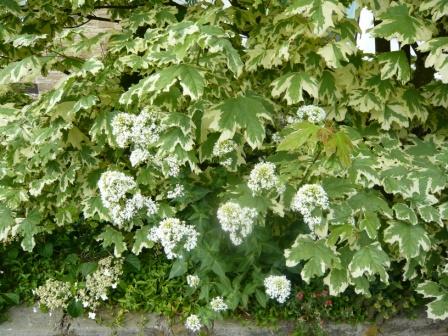
Green and white are very accommodating colours in the garden as they are both clean and fresh. This combination caught my eye  with the Climbing Hydrangea petiolaris just flowing over the top of a wall in which was growing Valerian alba.  Against the wall was an Acer platanoides Drummondii and all the colours seemed to blend so well.

Read More Read More