Browsed by
Month: October 2011

Intensely Coloured Nasturtiums
Intensely Coloured Nasturtiums

Nasturtium

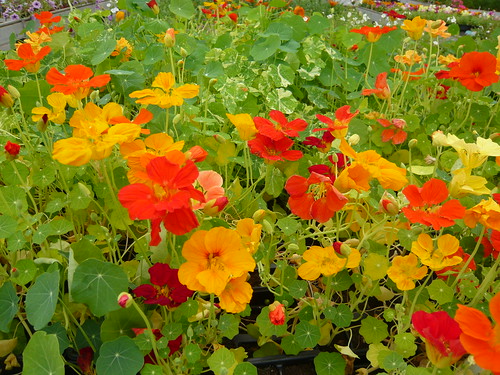
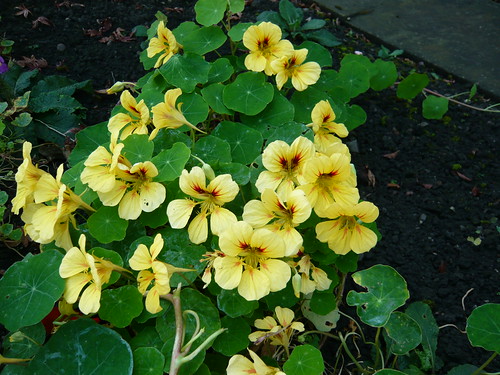
Can lemon be an intense colour? In the right light these nasturtium flowers were an intense joy to behold.
I like the idea of self colour or just one variety grouped together. The strong colours that you find in a mixture of Nasturtium seeds can create plants that detract from one-another.
Nasturtium

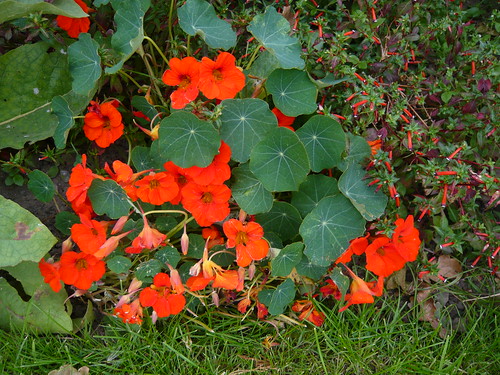
Time of day and temperature of the light may affect how we see colour but this red Nasturtium was a head turner and day of the week.
Nasturtium

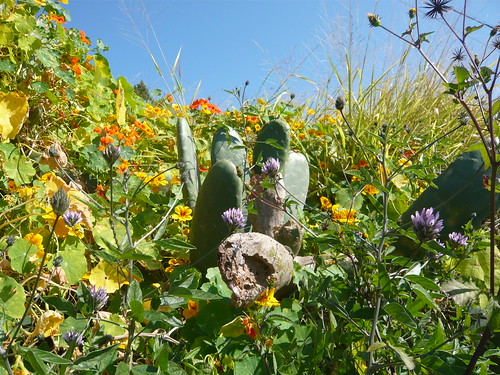
Looking decidedly rougher was this large array of wild Nasturtiums growing on rocky scree in Madiera. Ideal conditions of sun and low nitrogen soil provided this ideal habitat. The leaves were going over but the flower pattern would be repeated over several months starting in January!
Not so early in the UK I am afraid, Nasturtiums show off to best advantage much later in our summers.
Nasturtium

Grow Up or Down a Wall

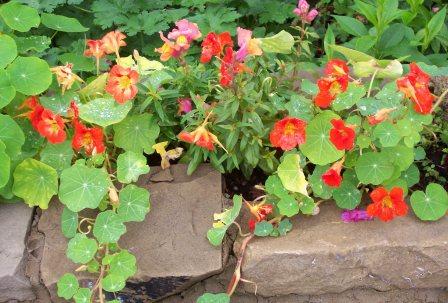
I grow mixed nasturtiums in the top of a wall. They trail down but can be encouraged to grow up twiggy supports to cover unsightly areas although they tend to trail even if planted on the flat.
Thompson Morgan Buying seed is the easiest way to start Nasturtiums. I like the dark leaved varieties such as Cobra, Strawberry Ice and Princess of India.
A variety you can plant in a hanging basket is called Jewel Mixed which adds fragrance to the dwarf trailing habit.

Gardeners Tips for Nasturtiums (Tropaeolium) more

  • Plant in poor soil for more flowers than leaf. Nasturtiums will put on a lot of leaf if the soil is too rich
  • The leaves, buds, flowers and seed can be eaten. The peppery taste adds good flavour to a salad.
  • If left Nasturtium seed profusely and return year after year. Allegedly perennials I prefer the self sown and new seed each year.
  • Seeds are large and can be planted individually by children.
  • The dwarf nasturtiums are better behaved and will flower well without any fertilizer.
  • Handle the stems with care as they are brittle and easily snapped.
  • Nasturtiums are no use as cut flowers but you can pick and eat flowers and leaves.
  • Collect the fallen seed for next year. You get 3 big seeds per flower.
  • Plants are loved by black fly that may colonise the underside of leaves. Wash off with soapy water or use an insecticide if you are not going to eat them.
  • Try Indian chief with dark leaves or the newer double Tropaeolum majus.
  • You can often obtain seeds or plants from our mail order company of choice Thompson & Morgan
  • Read Help Growing Nasturtiums

    Nasturtium

Help Growing Globe Artichokes

Help Growing Globe Artichokes

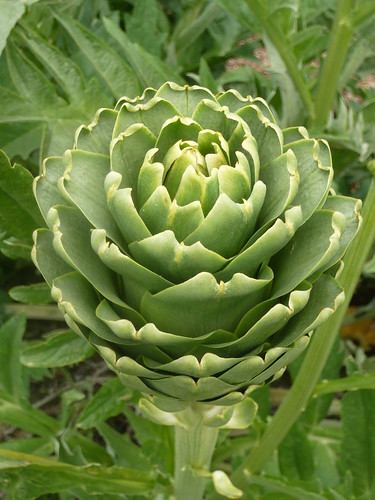
Globe Artichoke or Cynara cardunculus is a perennial thistle with an edible flower head. If you need help growing Globe Artichokes remember the plants grow 6-10 feet tall with arching, deeply cut, silvery green leaves.
Do not confuse Globe with Jerusalem Artichokes the later are root vegetables related to Sunflowers not Thistles.

Globe artichoke

Globe Artichoke Growing and Cultivation Tips

  • The globe artichoke requires a rich sandy well manured soil. It prefers a warm sunny site.
  • Seeds should be started off inside and transferred outside once the soil is warm. Alternatively sow seeds outdoors in free draining soil in mid spring when the soil has warmed up.
  • The globe should be planted in rows three feet apart with two feet between each plant.
  • After harvesting the main head, secondary heads will appear and these too can be used.
  • In cold areas, cover the plant with a mulch of straw, compost or bracken to protect it through the winter.
  • It crops in the second year after sowing.

‘Green Globe Artichoke, Concerto F! hybrid and other seeds are available from Thompson & Morgan
Globe Artichokes grown from seed can take a long time to mature and it is easier to buy ready-rooted suckers to plant in the spring.

Globe Artichokes
are architectural plants growing 5 feet tall and make big clumps of arching, jagged silvery leaves that are at home in the border or veg patch.

Artichoke
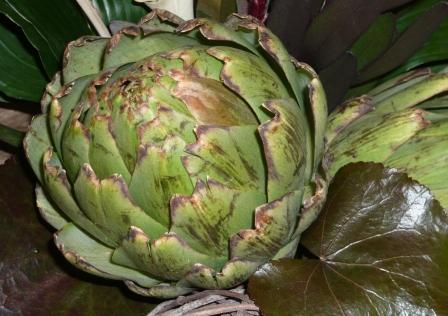
Cynara scolymus blown open

BBC Tips on Growing Globe Artichokes include
‘In the first year, plants need to put all their energy into making growth.
Remove any flowerheads as they form.
In the second year, allow the edible heads to develop for harvesting in summer.
Pick the bud at the top first, when it’s large and swollen, but before the scales have started to open. ‘

globe-artichoke

Globe Artichokes, are related to Cardoons. The thistle like plants, 2-5 feet tall, are grown for their edible flower buds. Normally raised from rooted suckers taken in spring or sown in April and transplant the following spring at least a foot apart. The delicious traditional green heads can be eaten cooked or raw.
The flowers develop in a large head from an edible bud about 3-6 inches diameter with numerous triangular scales. The individual florets are green-purple. The edible portion of the flower buds consists primarily of the fleshy lower portions of the bracts and the base, known as the “heart”. The immature flowers in the center of the bud is called the “choke”.

Though technically perennials which normally produce the edible flower only during the second and subsequent years, certain varieties of artichoke can be grown from seed as annuals. Some varieties produce a limited harvest at the end of the first growing season even in regions where the plants are not normally winter hardy. This means that home gardeners can attempt to produce a crop without the need to overwinter plants. The recently introduced seed cultivars ‘Imperial Star’, ‘Northern Star’ and ‘Green Globe’ or ‘Purple Globe’ are organic varieties.

The plants have enough character to be grown in an ornamental garden if space is limited.

Mountain Plants and Flowers

Mountain Plants and Flowers

alpbach 207

Knowing where your plants grow naturally can give you many clues to growing in your garden. Woodland plants are likely to do best in shade, streamside plants will like moist soil and mountain plants are likely to be deep rooted and hardy.

On the dry south side of a mountain you may find plants that can live in poor soil with very little water. They may be evergreen, with leathery leaves and very deep roots or have sharp thorns. This photo has regular mist to irrigate the very short rhododendrons that grow like weeds.

Some mountain plants only seem to live in these conditions because stronger plants eliminate them from elsewhere. Some mountain plants are relatively frost-sensitive and can only survive where snow builds up in winter to insulate them from the hardest frosts.

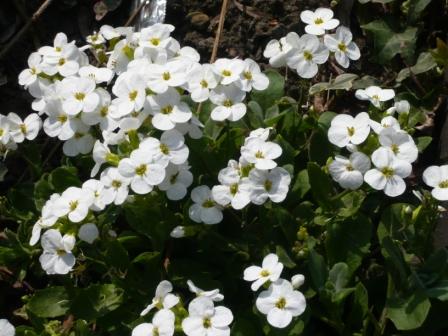
Moss, grass, heath and heather can often thrive above the tree line on mountain slopes. Many small but beautiful alpines grow on the mountains as the name implies.

Alpines in February

Colorado State University has a list of mountain plants to grow above 8,000 feet – Mmmm a bit higher than my garden then. It is interesting that so many of our successful garden plants come from high altitudes such as the Himalayas and the Alps.

Photos of English Front Gardens

Photos of English Front Gardens

A great front garden full of colour. This is taken in Coniston Cold on A65

Flowers
Inspiration of Yorkshire and Switzerland. Certainly cheers up motorists on the cross pennine slog from Skipton to Settle.

front

Lovely climbing rose gives that cottage garden effect.

colour

more colour provided by Dahlias and others

zen
A more zen like approach.

Yorkshire Autumn

pack em in
Related

Top 10 Small Gardens

Michaelmas Daisies and Asters From Seed

Michaelmas Daisies and Asters From Seed

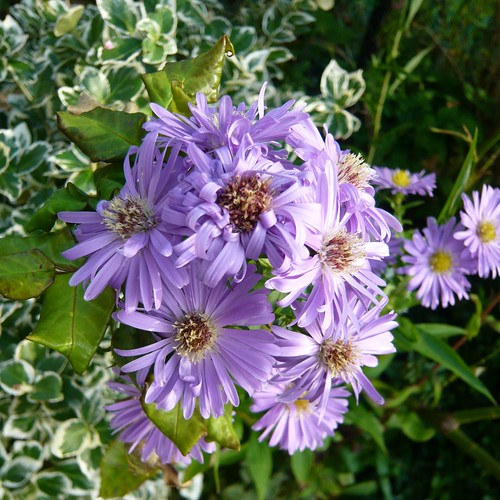
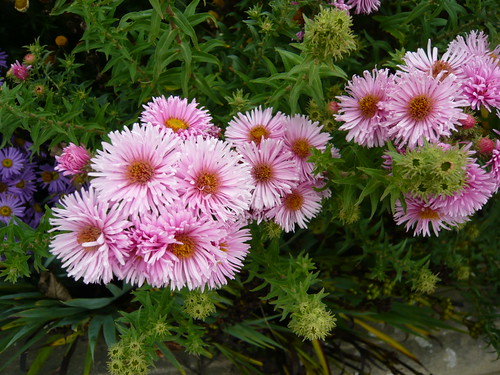
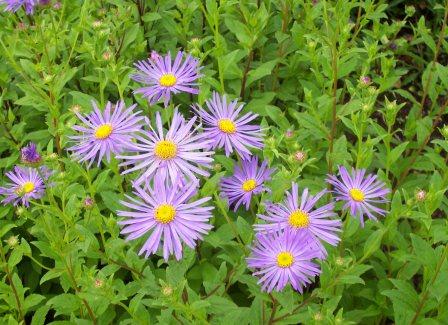
October Aster
Aster ‘Composition’

Michaelmas Daisies are hardy perennials flowering late in the summer in a range of bright colours. Aster novi-belgi and Aster novae-angliae are both called Michaelmas Daisies and mixed together make a contrasting rich colour range of long stemmed autumnal flowers suitable for cutting.

Growing Instructions

  • Germinate seeds between February and July at 68-86F on the surface of a good free draining, damp seed compost.
  • Do not cover seed. Do not exclude light at any stage, as this helps germination.
  • Place in a propagator or seal container inside a polythene bag until after germination which usually takes 21-100 days.
  • Transplant seedlings when large enough to handle into trays or 3in pots. Grow on in cooler, well lit conditions before planting out 12″ apart after all risk of frost has gone.
  • Clumps of Michaelmas Daisies will develop over the years and can be split to increase the best plants.

Aster

Other sources
Michaelmas Asters 29th September
Michaelmas Daisies and Plants from Childhood
Seeds from Thompson & Morgan

The name Aster comes from the Ancient Greek word meaning “star” referring to the daisy like shape of the flower head. They are in the family Asteraceae part of the Daisy clan. There are 500+ species of Aster and many variety of hybrids that are popular as garden plants because of their attractive and colourful flowers.

Aster frikartii
Todays Top Ten Tips on Bulbs

Todays Top Ten Tips on Bulbs

3rd October 2011

Todays Top Ten Bulb Planting Tips

  1. Plant with the nose up!  (The bulbs nose not yours) The bottom of the bulb is where there is a bit of dried root.
  2. Put a marker in the ground to show where you have planted the bulb. I sometimes use some light coloured grit.
  3. Most bulbs already contain the ungrown flower inside the bulb so a bigger bulb should perform better. Choose firm healthy looking stock not dried out damaged bulbs.
  4. Plant your bulbs twice as deep as the bulb is large.  i.e.5cm bulb 10cm deep
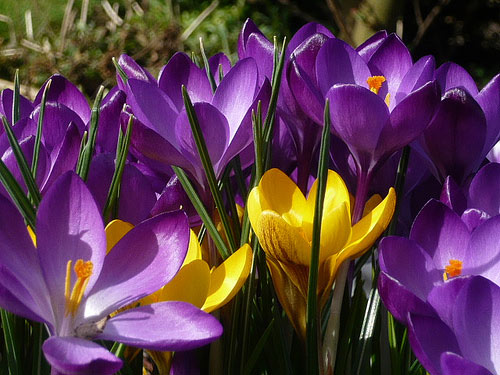
  5. Pick a colour scheme and build a theme around that. Pinks and purples of crocus, tulips and hyacinths may work together.
  6. Alliums or ornamental onions can be planted in November or if frost free in December.
  7. Daffodils need longer in the soil to develop their root systems so get them in now.
  8. Plant bulbs in containers with good drainage holes and crocks in the bottom.
  9. Snowdrops, aconites, grape Hyacinths and crocus should naturalise well in your garden flowering year after year.
  10. After the bulbs have flowered deadhead then to channel energy into the bulb not into seed production. Leave the leaves to die back naturally.


Olympic Torch Floral Arrangement

Olympic Torch Floral Arrangement

Olympic Torch

I have been asked for ideas to create a floral arrangement that fits the description Olympic Torch.
I am not even a gold medal winning gardener, although I do aspire. Nor am I much of a flower arranger!

The spirit of this site is to encourage others to go above and beyond our horizons so I will give it a go with these tips!

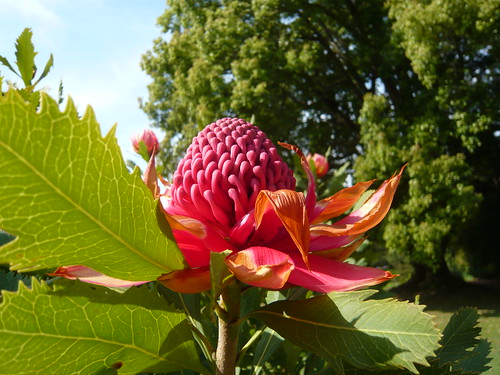
Protea family
Protea

Design Criteria

  • The winter Olympics flame pictured above would be hard to replicate in a floral tribute so I am banking on the summer Olympics as being the reason for the display.
  • Flowers, foliage, greenery, wood and organic matter seem appropriate materials. The Olympics is inclusive of country, sport and to an extent ability.
  • Size may be important but I will settle for making a statement in a home setting.
  • Metaphors like a Burning Bush or Torch Lily are to be avoided.
  • Warm colours should be in vogue despite the crystal blue above.

Baby Myrtle
Baby Myrtle Bottle Brush

Plant Recommendations

  • Spikes and sword shapes will for the basis of a long thin arrangement.
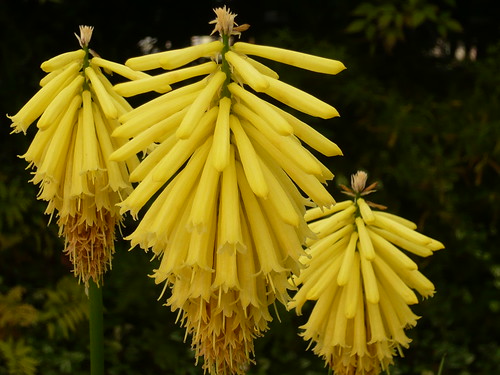
  • Red Hot Pokers are available in a range of colours including the yellow above and the traditional red and yellow two tone.
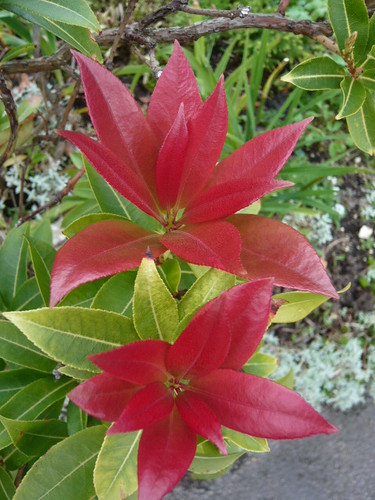
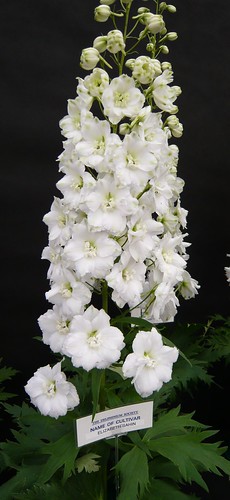
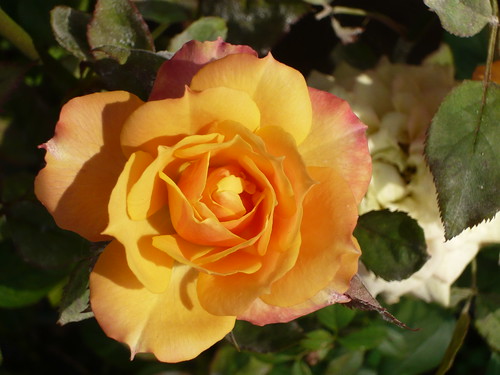
  • Representing each continent may be a theme worth pursuing and Bottle Brush from Australasia, Proteas from Africa, Alstromeria from South America, a yellow rose from Texas may be too metaphorical, a white Delphinium spikes from Europe and Pieris japonica from Asia for texture and fire red leaves.

Pieris japonica
Pieris japonica leaves.
As n alternative to red-green leaves you could opt for smokey grey such as Eucalyptus (but they are full of flammable oils and you may end up with a real torch!)
Knipfolia Lemon
Kniphofia Bees Lemon

See other Kniphofia Photos

White Delphinium
White Delphinium
Growing Delphiniums
Just Joey
Just Joey Orange Yellow Rose

Olympic Torch Relay

See Olympic flowers and plants

Olympic torch relay by Teligence, on Flickr and Winter Olympic Torch by Michael D W under creative commons license.

Pansy Pictures and Photographs

Pansy Pictures and Photographs

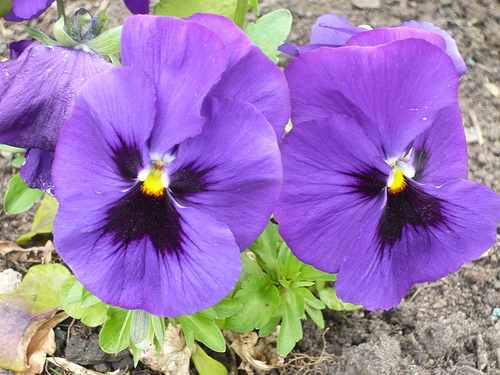
purple pansy

The Pansy face that launched a thousand pot plants.

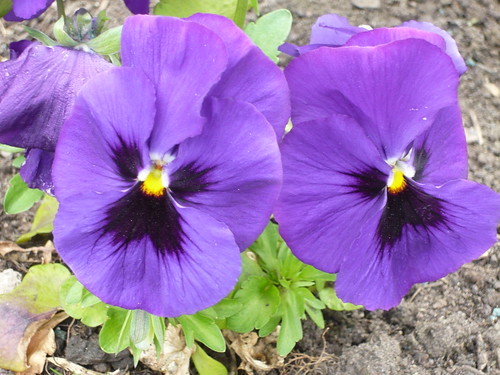
Pair of Pansies

Pansy partners pair up on this plants.

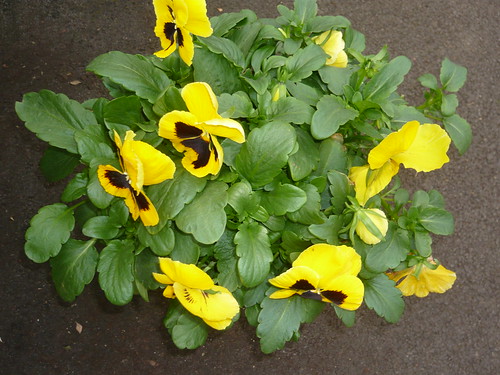
pansy

It is the face on a pansy that gives it a differentiation from a viola (and Pansies can’t make music like some violas).

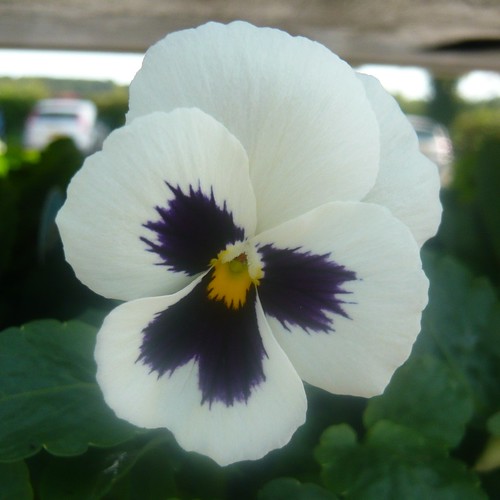
Pansy

‘Squaring up for a fight’. Is this Pansy one of your favourites? If so vote on the comments section below.

Viola 045

Whiskers rather than a full face put this more in the Viola class but I am a bit of a Joker and so is this flower.

More Sources

Pictures from the Viola Group on Flickr called Violetta Amore Mio ‘Violet my love’
Grow Your Own Cheap Violas from GTips
Growing Pansy All Year Around GTips
Google Pansy images
Seeds and plants from Thompson & Morgan
Violas on the first image courtesy of Toshio