Browsed by
Month: June 2009

Container Ship

Container Ship

container-ship1
Any port in a storm or any container in a garden!
If you have shipped a load of plants into your garden recently you may want a new vessel to hold them in. It can be a Titanic struggle to make your car-go to the local nursery but if you let a Fittonia Pink Star board your car until you get back to the car port you will stop me dredging up any more terrible puns.

Maritime Plants

  • A Hosta named Titanic – goes well with Iceberg roses or Lettuce – just a tip.
  • Sea Holly useful for Christmas at sea and Docks useful all the time if the Captain is nettled
  • A Rose named Seagull a white rambler seems appropriate, whilst others are called Sea Foam, Sea Pearl, Seashell and Seaspray even sea-ling Wax.
  • Dragon boat flower ‘Ixora’
  • The earliest boat plant hybrid I could find was the ‘Pink’  or Dianthus ‘Joan of Arc’.
Simple Garden Design Ideas

Simple Garden Design Ideas

border

Two Colour Contast

This planting creates a great impression; it gives the old fashioned cottage garden look. It is lovely combination of white and red (with just a hint of blue in the background). Two colours that contrast very well. Note a third colour would be unlikely to improve this picture. Sometimes two colours can be very effective

White Garden

If it’s good enough for Vita Sackville-West, it’s good enough for us – White Garden’s

Read More Read More

Make it a Good Year

Make it a Good Year

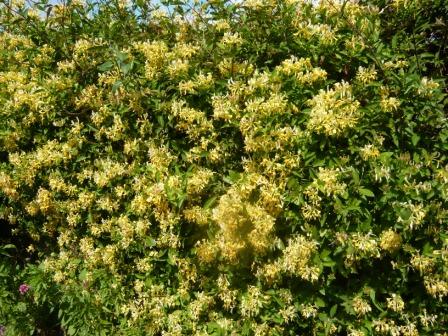
lemon-honeysuckle

Some years are better than others for certain plants and crops. This year seems to be an excellent year for Honeysuckle and wherever I go I see and smell the wonderful blossom. Do not assume the same plants will perform the same next year. Apple trees some times crop every other year as though they have expended more energy than they intended (see below).

Unfortunately every year seems to be a good year for weeds and Dandilion Bitter Cress and Water Avens seems to love my garden. That could be down to my husbandry so I have looked at some tips that might help for next year.

A Good Year 2010

  • Work done this year will help create a great year in 2010.
  • Buds and framework stems on fruit trees and shrubs are growing and developing ‘as we speak’ . Treated well most plants will contribute to making next year a success.

    Read More Read More

Tips for Annuals

Tips for Annuals

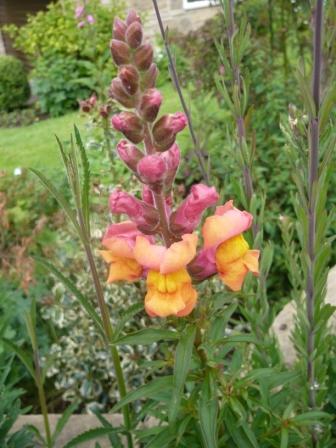
anti

Whatever annuals you choose to grow there are several ways to get the best from them in your garden.

Control Annual Seeding

  • Annual plants raison d’êtra (reason for being) is to procreate and help the species survive. Use this to your advantage by stopping your annuals setting seed. If annuals set seed it is a sign the job is done and flowering will stop.
  • Pick flowers for indoors, Sweet Peas can be picked every day to encourage new flowers and prevent early demise of the plant. Alternatively trim, deadhead or shear off old flowers as they go over but prior to setting seed to get a new flush of flowers.
  • If you wish to collect seed for next year wait until late August when plants will begin to stop producing new flowers anyway as the days get shorter.
  • Water and space are probably more important than feed. Some plants like poor soil to encourage flowering, Nasturtiums for example will produce a lot of leaf if the soil is too rich and fewer flowers.
  • Cut off flower heads of annuals you do not want to crop up everywhere. Teasels, Honesty, Welsh Poppies and  Bellis Daisies seem to get everywhere in my garden.
  • Pull out old plants and compost them when you have finished with them. Replace with some biennials for a quick show next spring or plant up some late flowering Asters or Chrysanthemums.

Remember some plants may be half-hardy perennials, like the Antirrhinum  but are best treated as Annuals and should be grown for one flowering year only. Annuals make good cut flowers and have a fast range of colours from which to choose.

Other Resources

Royal Horticultural Society RHS ‘Gardening for All’
National Council for Conservation of Plants and Gardens ‘Conservation through Cultivation.’
Garden Organic National Charity for Organic Gardening.
BBC Gardening
Buy Daisies and other annuals as seeds and plants at Thompson & Morgan

Companion Planting

Companion Planting

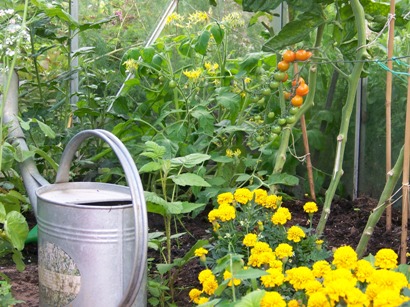
greenhouse-companion

‘Good Companions’ by J B Priestley is not a gardening book but it might well have been as it is a tightly observed text on relationships and how one supports the other. Three main reasons for companion planting are mutual feeding, aesthetic considerations and technical or horticultural reasons. Many people will grow Marigolds or Tagetes in close proximity to Tomato plants to distract white fly.

Good Companions

  • Good companions also act as living mulches suppressing weeds and  keeping the roots nice and cool.
  • Form and texture combinations can work well such as spiky Phormiums with the glaucus leaves of Sedum.
  • I like to vary the height with companion planting using annuals like Alyssum or ground cover under taller shrubs and trees.
  • Colour combinations are a whole subject too themselves. Complementary colours or contrasting colours it is your choice but a bit of thought and some serendipity will help.

Companions for Roses.

  • Garlic bulbs are said to ward off aphids and other members of the onion family such as chives, ornamental alliums are rumored to increase the perfume of roses and prevent black spot.
  • The purple and blue-gray  Nepeta Catmint or the lime green Alchemilla works well with any pale pink roses and the wispy spires gracefully camouflage any blemishes that may occur on the rose’s foliage.
  • Herbs and other aromatic plants make wonderful rose companions.  Lavender, scented Geraniums, Feverfew, Parsley and Thyme may suit.
  • Tomatoes allegedly prevent black spot but not many people will be inclined to combine roses and tomatoes.

Bad Companions

  • Not all combinations work;  Beans and Onions do not coexist very well.
  • Strawberries and Tomato will not do as well with brassicassuch as  Cabbage.
  • Cucumbers are tempremental when planted near Potatoes or strong herbs.
  • Watch out in your garden and see what ornamental plants make Bad Companions and let us know what you discover.

Other Resources

Royal Horticultural Society RHS ‘Gardening for All’
National Council for Conservation of Plants and Gardens ‘Conservation through Cultivation.’
Garden Organic National Charity for Organic Gardening.
BBC Gardening

Tips for Growing Seeds

Tips for Growing Seeds

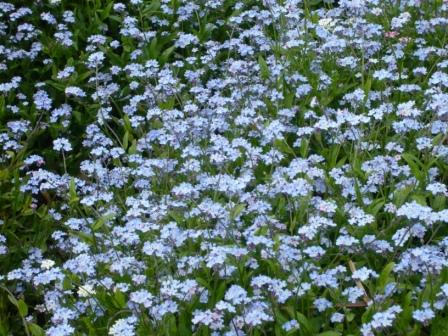
forget-me-not

June is a good month for sowing seeds to get the plants you want for next year. I have sown some biennials today and will sow other seeds after the ‘hot’ summer.

Growing from Seed General Tips

  • Do not sow in winter or in waterlogged ground or the seed will rot. ‘Sow dry and plant wet’.
  • Annuals will flower 12 weeks after sowing but perennials may take up to 12 months or more.
  • Do not cover seeds with 6 inches of soil they will never see the light of day. Generally a light covering will suffice.
  • Seed in foil packets may stay fresh for 2 years as advertised on the packet but you want good germination rates so use good fresh seed.
  • Read and follow the instructions on the packet but don’t be afraid to try collected seed.

Biennial Seeds Sown Today

  • Sweet William Early Summer Scented are a mixture of Dianthus barbatus to flower from next April. I filled a seed tray with moist seed compost (peat and peat substitute tends to dry out then be hard to re-wet) then took a pinch of seed and sprinkled them evenly.
  • Wallflower Blood Red is another fragrant spring flower sown in shallow rows outside. (Rows help show where the wallflowers grow compared to weeds which will come up at random).
  • Campanula Pyramidalis’s very fine seed has been sown in modules and also direct into cultivated soil raked to a fine tilth. (Tilth is very fine top soil with lumps broken down in which to sow your seeds). I haven’t tried these before so they got a bit more TLC.
  • I could have sown other biennials including Foxgloves and Honesty or winter flowering Pansy but there is still time for me to buy them.

Seeds to Sow this Year for Next Year

  • Perennials like Aquilegia McKana Giant mixed will be sown on the surface of compost as they need light to germinate in September or October.
  • Marigolds (Calendula not French) and Cornflower sown in September will survive the winter and should get off to a quick start next year.
  • Sweet Peas can be sown in October to over winter. They need a deep root run and can be sown in long tubes.

Seeds from T&M

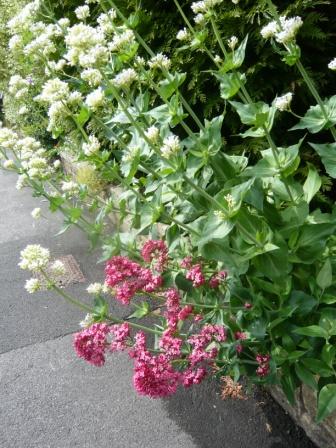
Valerian Weed or Flower

Valerian Weed or Flower

valerian

A garden weed is a plant that grows in the ‘wrong  place’.

From self sown seeds I have Valerian growing in walls and cracks in pavements that despite the colour at this time of year are weeds. I must get them out before they seed and invade the few remaining gardens in our road that have not already received free plants from the overgrown Vicarage garden.

Facts about Valerian

  • When you hear it is called Jupiter’s beard and that it has fragrant, scarlet to red or white flowers growing in dense clusters on 3-foot stems you may start to like the plant.
  • They begin blooming in spring and continue over a long period if old flowering stems are removed but do not grow well if the soil is too rich.
  • If flowering stops due to hot summer weather cut plants back by about a half to promote another round of bloom in late summer.
  • This plant is best when massed and is often naturalized along old walls and rocky outcrops.
  • Valerian (Centranthus) makes a long-lasting cut flower and is a good plant to supply butterflies with nectar.
  • Centranthus rubervalerian alba has white flowers, coccineus has deep red flowers and roseus bears rose-colored flowers (no surprise with the names then).
Top Ten Annual Climbers

Top Ten Annual Climbers

sweetpea

What is your favourite annual climber? Most of these  climbers grow 6-10 feet in one season.

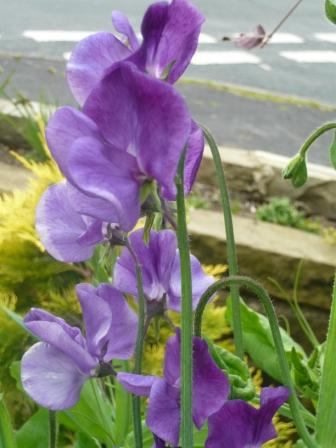
  1. Sweet Pea lathyrus odoratus must rank near the very top of any list of favourite annual flowers. they will grow 6-10 feet tall and if the flowers are picked regularly they will give endless scent and pleasure.
  2. Morning Glory Ipomea purpurea or convolvulus major has purple funnel-shaped flowers from summer until the frosts. Or tricolour ‘Heavenly Blue’ is a great variety
  3. Cathedral Bells Cobaea scandens may be half hardy perennial but it is best grown an an annual each spring for the purple veklvety bell shaped flowers.
  4. Caiophora lateritia Frothy has 2″ wide flowers that turn from coppery orange to white and grows 4′ tall.
  5. Black-eyed Susan Thunbergia alata has yellow or white flowers with the charecteristic dark brown eye.
  6. Nasturtium Tropaeolum majus grows in poor soil and flowers in a variety of colours. The seeds leaves and flowers can be eaten as a bonus.
  7. Canary Creeper is also from Tropaeolum family Peregrinum and as the name implies it blooms with irregular yellow flowers.
  8. Climbing Snapdragons Asarina antirrhiniflora is tender but has purple or white snapdragon like flowers and grow 4-5′ tall.
  9. Lophospermum scandens also looks like a snapdragon with nlarger more colourful flowers.
  10. Golden Hops are grown from rhizomes and are not strictly an annual but I think the format fits well with this list. Growing Hops Yourself  website is full of useful information
Tzigane Best HT Rose

Tzigane Best HT Rose

tsigane

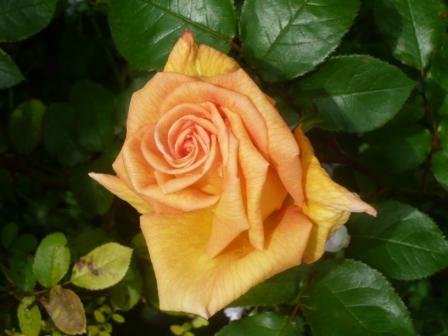
I have always assumed this Rose that I bought as Tzigane (Tsigane) was in fact that variety. When I recently compared it to pictures by other gardeners I found 4 totally different offerings under that name. I am happy with my rose, that it is a regular flowering rose of fair scent and pleasant disposition (no bugs or diseases  of note) and it is 10+ years old. Perhaps the inner petal shade should be pinker but the bicolour effect is still noticeable.

Tips on Plant Varieties

  • Even under the same name plants will vary. Parentage, growing situation, general cultivation and environmental factors will all influence a plant which may also vary of it’s own accord from one year to the next.
  • Plants can get mis-named by nurseries by accident, carelessness or even commercial imperative. If it is important buy from a specialist nursery and select your plant when it is in flower too check it is to your specification.
  • Do not be afraid to take a wayward specimen back to the retailer.
  • Even if the plant is not exactly what you want, by the time you find out it will have made a new home in your garden and it may be worth a compromise (a bit one sided as the plant can’t do much compromising)
Best Flowering Shrubs

Best Flowering Shrubs

cytisus
cytisus


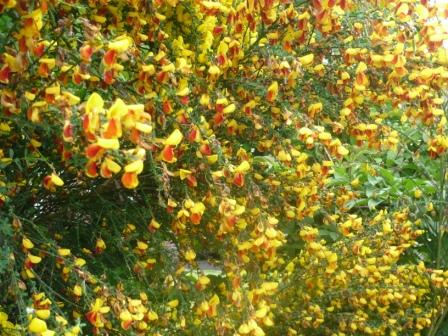
Broom or Cytisus scoparius
is an old favourite shrub for the pea shaped flowers in June. The traditional yellow is now supplemented by many cultivars in red and bi colours. They are short lived shrubs and need to be pruned to stop energy going into seed production. They flower on wood produced in the previous year. In the wild they can be perceived as weeds and seed prolifically in the right conditions. Broom is sometimes confused with Genista or Spanish Broom which is similar in flower and habit.

abutilon

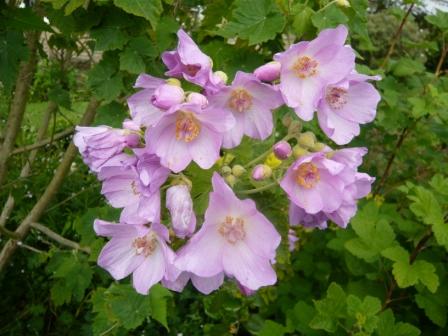
I have included this Abutilon vitafolium for its height (20′) and its colourful blossom. They can be grown from the little hard, black seeds similar to lupin’s. The flowers are 1-2″ across and come in good bunches. The shrub retains most of its grey-green leaves through winter.

forest-flame

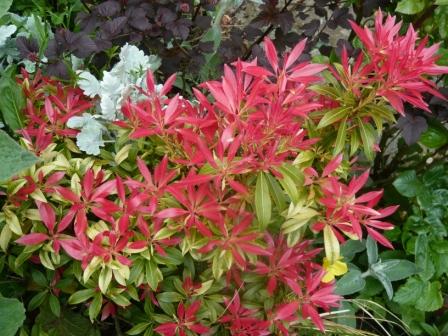
A good workhorse in my garden is the Pieris ‘Forest Flame’ or Lily of the Valley bush. It flowers a bit earlier than June with a host of small delicate white bell shaped flowers in large panicles. The leaves that follow the flowering are glossy, strong bright red or pink and give the shrub great character. After 5 years the evergreen plants will grown to about 3-5 foot and are well behaved easily controlled shrubs.