Archive for June, 2009

Purple Flowers that Attract Bees

b-cistus

Cistus only seem to flower for one day then the petals drop. Resting in the sun this Bee seems content with life.

069

Foxgloves have long tubular flowers so the Bee has to crawl right in to get the nectar. This moves pollen from flower to flower and Foxgloves then produce thousands of small powdery seeds.

Read the rest of this entry »

Comments

Thrive in the Garden with Disability

newby-hall-009

Thrive is a national charity that helps people with a disability to start or continue gardening. They have specific assistance for wheelchair users, those recuperating from heart disease or strokes and many other tips and assistance. I am indebted to them for these tips and ideas that we can all learn from.

Tips on Garden Design for all Disabled Gardeners

  • Garden layout can make a real difference to how you enjoy gardening. Depending on your disability, it might be easier to focus more on container growing. Make sure any ground level areas are low maintenance to keep the digging and weeding needed to a minimum. Plan plenty of seats around the garden to save your energy and have some shady areas where you can sit to garden on hot days.
  • Avoid large lawns and lawns with sharply curved edges as they will be more time consuming to maintain. Consider having a semi-wild lawn with mown paths to save time and effort. Lawns are difficult to manage so consider replacing some or all of the lawn with a hard surface.
  • Borders will be more manageable if you can reach across them easily. So make your flower borders no more than 2 foot wide if you have access from one side, or 4 foot wide if you can reach from all sides.
  • Containers and raised beds can look attractive and are ideal if you want to start gardening on a small scale. A raised bed can be raised just a few inches, or could be at a comfortable height for you to sit or even stand.
  • Ponds can be a delightful garden feature but be aware that maintaining a pond can involve heavy jobs like clearing weed, and open water can be a danger. A small raised pond might be safer and easier to maintain and it will be easier to enjoy sitting down than a ground level pond. Why not look at installing a low maintenance water feature instead of a pond so you can still enjoy the sound and visual interest of flowing water.
  • You’ll feel safer and will be able to get things done faster if all your paths are even, with a surface that gives good grip. A 3 feet wide path is recommended as a minimum. Changes in level are a common hazard in gardens so consider installing ramps.
  • Consider having a table outside for gardening jobs like seed sowing and potting up. A recess in the table will make it easier to reach things. Plan in water butts or stand pipes around the garden to save time and effort when watering.
  • Take time to choose any paving – it should be non-slip and non-glare.
  • Always choose safe power sources for any power tools or mower that you might want to use. All electrical equipment should be fitted with a residual circuit breaker.
  • Plan how you are going to move things around the garden. Twin-wheeled lightweight barrows, barrows to use one-handed, trolleys or flexible buckets are options that can save energy and strain. Choose a composting system that suits you – there are many different models and bins can be positioned at different heights to save bending.
  • Get rid of or avoid plants that cause you problems – rampant growers, plants that take up too much space, plants that are hazardous to you, or that cast too much shade.

Other Links

Royal Horticultural Society RHS ‘Gardening for All’
National Council for Conservation of Plants and Gardens ‘Conservation through Cultivation.’
Garden Organic National Charity for Organic Gardening.
BBC Gardening

Comments (1)

Soil Testing Kits and Service

Book Cover

Test your soil (from each area of your garden) for acidity or alkalinity so you know what plants will thrive.

Chemical Tests
Mix a sample of soil with water. Add the test solution or capsule of test chemicals and watch the colour develop. Read off the colour of the liquid against the chart supplied that gauges alkalinity, neutral, acid and very acidic levels on a scale a bit more refined than the old litmus test from school.
The above kit is available from Amazon and is more detailed and comprehensive in that it also tests nutrient levels of NPK potassium/potash, phosphorus and nitrogen.

Probe Tester
These devices are supplied by Draper and others for checking soil pH levels, moisture content and light intensity. The tester comprises two 210mm long probes, three way selector switch (moisture/light/pH) and easy-to-read dial gauge. Uses solar power, so no batteries required.

RHS Service
The RHS provides a Soil testing service for a fee details can be found on the Soil Analysis Service web page.

Comments (1)

Grow Red Hot Pokers (Kniphofia)

over-red-hot-poker

Gardens look better for some variety in the height in the planting and I try to grow a variety of perennials like Red Hot Pokers to give some tall plants chance to shine. Red Hot Poker (Kniphofia) have flowered well this year and they throw up their well known spire of blossom in shades from deep red, orange, yellow and white even to a new greenish form (Kniphofia Green Jade).

Growing Red Hot Pokers

  • Red Hot Pokers have long sword like narrow leaves and the flowers can last in a vase for up to two weeks.
  • The Kniphofia (Red Hot Poker or Torch Lily) needs abundant moisture during its growing period so good draining  soil rich in organic matter, is ideal.
  • Red Hot Pokers need full sun to flower upto 4 feet tall in mid summer. Prune the spikes  after blooming.
  • To propagate remove young plants from the edge of a clump  in spring or they can be grown from mixed seeds sown in September.
  • Provide adequate spacing to encourage clumping up as they may spread up to three feet.
  • Although Red Hot Pokers are drought tolerant they will do better if they are given plenty of water during hot weather.

Other Resources

Royal Horticultural Society RHS ‘Gardening for All’
National Council for Conservation of Plants and Gardens ‘Conservation through Cultivation.’
Garden Organic National Charity for Organic Gardening.
BBC Gardening

Comments (1)

Walled Gardens


If you are lucky enough to have a walled garden you will know what a boon they can be specially for growing vegetables and fruit. This 5 acre garden is in Helmsley North Yorkshire and has outstanding fruit and vegetables despite the climate. There is information on fruit grown within this garden on Gods Own County. For further information about walled gardens there is a Walled Kitchen Gardens network meeting at Hampton Court on 16 October 2009.

Tips from a Walled Garden

  • Think about the different micro climates in your garden. A walled garden accentuates and creates micro climates that you can use to your gardening advantage but you have many already..
  • Build your first wall to protect from the prevailing wind usually the west. That way you get protection and early morning sun.
  • You can ‘fan train’ Peaches, Gages and Apples against a wall and also grow Clematis
  • Under a dry wall in the rain shadow you can plant a dry or Mediterranean garden with Herbs, Santolinas and plants that like hot dry conditions.

Statues and Sculptures.

Walled gardens do not normally have the space for much in the way of statuary but this water feature took my attention. I would be interested in any other interesting statues or special features on a similar theme.

Similarly space prevents the use of ornamental trees except fruit trees. There are many heritage varieties on display at Helmsley.

Comments (1)

Bindweed Control

Bindweed after being sprayed – note the stick it is growing up making it easier to spray”

My first garden in Oxford had been neglected for 10 or 20 years. Bindweed had run rampant throughout the garden, there was no alternative but to spend many hours and many years before I was able to bring it under control.

This is the strategy I used for bringing a bindweed garden under control.

Bringing Bindweed under Control

1. Dig up Roots. If bindweed is well established, it will have developed an extensive system of roots which will make it resistant to the odd spray. I suggest starting by having a thorough dig taking a section of the garden one at a time. Don’t try to dig the whole garden as you will be depressed at the scale of the job. Start with a manageable section and dig deep to get as much of the white root as possible.

If the soil is dry it is easier to separate the roots from the soil. It actually becomes quite satisfying job, seeing how much of the white roots you can dig up. You will want to go at least as deep as a full spade blade. Lift up the soil and shake of the soil surrounding the roots. Be relatively gentle as the roots are quite brittle. When the ground is dug over, you can start planting as you won’t have to dig it again.

Read the rest of this entry »

Comments (3)

Clematis Pruning

c1

Easy Clematis Pruning Tips

  • Prune all Clematis in Spring, early Spring for late flowering Clematis that flower on new wood and late Spring after flowering for Clematis that flower on old wood.
  • The later in the year it flowers the harder you should prune it.
  • Treat your Clematis as a flowering shrub.

Read the rest of this entry »

Comments (1)

Close Up Flower Pictures

flower

Verbascum

flower

Gazania

flower

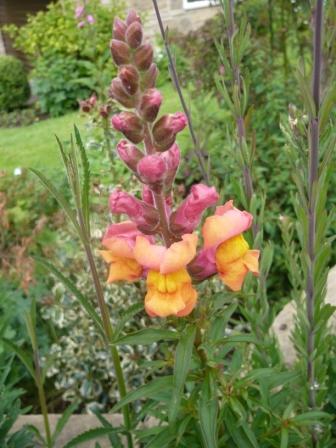
Not sure, looks a little like Antirhinnum

Read the rest of this entry »

Comments

Flowering Ground Cover

hay-093

Ground cover plants ‘beat weeds’ and many of the plants recommended below will flower year after year. Plant healthy young plants from pots or modules about 12 inches apart and the fast growing ground cover will produce a dense carpet of colour for many years.

Ground Cover Selection

    Helianthemum grows strongly in my garden with bright orange flowers. Reds and whites are available.
    Read the rest of this entry »

Comments

Geraniums Plugs and Plants

Geranium Splish Splash

Geranium 'Splish Splash'

Geraniums are one of the easiest and most versatile low growing plants. They are not fussy, but given a reasonable level of care they will reward the gardener with ground cover and 1 or 2 extended flowering periods.

Care for Geraniums

  • After flowering cut back geraniums to their base. Feed and water and you will get a second flush of leaves and flowers later in the year.
  • Geraniums are easy to divide. It is best done after the growing season is over in October. Just use a spade and divide their crown into two or three. If cut back, Geraniums can be divided at any time of they year but they will need more attention with watering.
  • Geraniums grow best in full sun or partial shade, but, they are versatile and in our experience not that fussy.
  • The great thing about Geraniums is that the mature plants seem relatively resistant to the most common pests – slugs and aphids. However, plug plants will need the usual protection from slugs and snails.

Read the rest of this entry »

Comments (1)

Next Page »