Watering or Drowning Indoor Azalea

Watering or Drowning Indoor Azalea

More plants drown than die of thirst but Azalea houseplants do need damp soil.
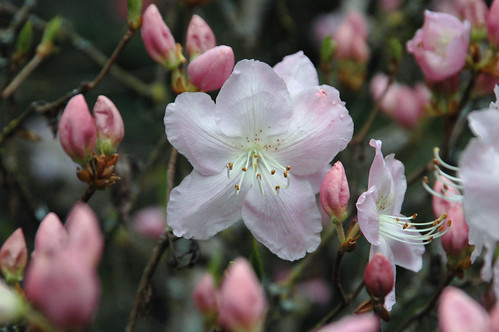
Azalea

Keeping Azaleas indoors can be simple and straight forward and the often large volume of blossom last longer than when struggling outside against the elements. Most indoor Azaleas are of the evergreen type so unlike some garden azaleas they do not loose there leaves.

Watering Tips

  • Azaleas do not like to dry out preferring a constantly moist soil and humid atmosphere.
  • Water daily if necessary, clay pots dry faster than plastic ones

Read More Read More

Ragwort – Good or Evil

Ragwort – Good or Evil

Common Ragwort  Senecio jacobaea or Jacobea vulgaris is a specified weed as it can kill animals that graze on it. Even when  cut with hay and wilted it is toxic to horses and cattle. It is not a significant problem in gardens and some claim its toxicity with horses is overstated


Ragwort appreciation society wants to look at the myths and facts

Senecio jacobaea is part of our biodiversity and provides nectar and pollen for many insects. Cinnabar moths can be an effective biocontrol limiting growth and seed production. Eggs are laid in May -June and catterpillars feed on leaves in July- August. Thay can strip a plant down to its stalks

UK Deciduous Azaleas

UK Deciduous Azaleas

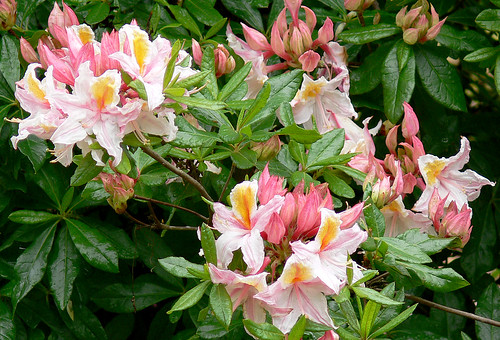
Deciduous azalea

Description & Growing Deciduous Azalea

  • All Azalea are Rhododendron but not all Rhododendron are Azaleas. Now we have that as clear as a muddy pond what is an Azalea?
  • An Azalea can be an evergreen or deciduous flowering shrub with pale or startling coloured blooms.
  • Some Azaleas are scented whilst others are without scent. Whatever you think about deciduous Azaleas, ‘muddy and boring’ they are not.
  • Azalea are some of the most gay and brilliant flowering shrubs yet grown.
  • For the technically minded Azaleas are in the genus Rhododendron, with evergreen azaleas in the subgenus Tsutsusi and deciduous azaleas in the subgenus Pentanthera.
  • Most deciduous azaleas are hardy but asiatic species need more protection when young


Rhododendron occidentale #4


Varieties & Hybrids of Deciduous Azalea for Growing

  • The species have been much crossed and bred but the scented Rhododendron luteum and Rhododendron japonica are available as species.
  • Knapp Hill hybrids are amongst the most colourful deciduous Azaleas.
  • The Ghent hybrids have sweetly scented, honeysuckle-shaped flowers with long stamen emarging from the tube.
  • The Rhododendron Mollis Azaleas are crossed between Rhododendron mollis and Rhododendron japonicum
  • Rustica hybrids have fragrant double flowers and Occidentale hybrids flower in late May
  • The Exbury range were bred by Lionel de Rothschild who loved deciduous azaleas and carried out much breeding work to enhance colours and scent. The Solent Range was started by George Hyde a private grower in Dorset but bought for Exbury (Images).
  • For specimen plants Azalea Coccinea Speciosa or R obtusum are recommended

Read More Read More

Cucumber Pests and Problems

Cucumber Pests and Problems

Pests on Cucumbers

  • Red spider mite can be a problem in a greenhouse.
  • Avoid hot dry conditions when they will thrive.
  • Treatments include spraying with fatty acid, oils and soaps as an insecticide.
  • White fly and red spider mite may need a biological control of parasitic wasps or predatory mites respectively.

Powdery Mildew

  • Powdery Mildew is the worst cucumber problem under glass badly affecting leaves
  • Causes include Stressed plants by dry root conditions or high humidity.
  • Excessive temperatures can create mildew.
  • Use sulphur or fish oil fungicides and good husbandry.

Other Problems

  • Water well and often but beware of rot on the roots. Soil should never be soggy
  • All female varieties can be bitter and bloated if cross pollinated
  • Do not grow Gherkins with cucumbers to Avoid cross pollination.
  • Remove all male flowers without embryonic fruit at the base.
  • Avoid splashing the fruit when you water
  • Do not let cucumbers rest on the ground. Put on a tile or flat stone for them to rest on to avoid damage and rot


For vine weevil I am willing to use chemical treatment like Amazon’s Pbi Provado Vine Weevil treatment, if the squashing of the grubs is not good enough.


Pea Weevil and Pests

Pea Weevil and Pests

Pea Moth.

Sugar snap and mangetout can escape pea moth caterpillars when they are eaten small. White maggots feed inside the pods so damage is  only spotted at harvest. Pea moths Cydia nigricana attack legumes including  garden peas, sweet peas and vetch.

Pea and bean weevil

Pea weevil Sitona lineatus eat the edges of leaves and cause havoc with seedlings. If necessary a bug spray may be effective

Pigeons can destroy a crop and if they are a problem netting is the answer.

Leek and Onion – Allium Problems

Leek and Onion – Allium Problems

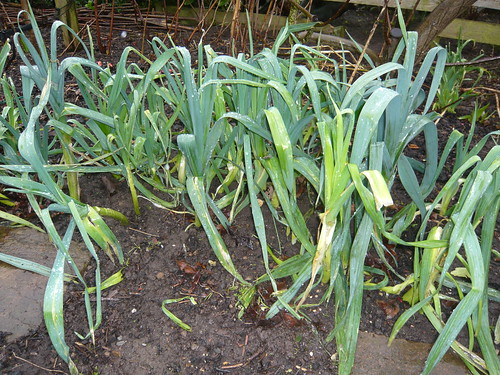
Leeks

Leek Moth

  • Will not affect ornamental alliums
  • White or brown patches develop where leaves ahve been eaten by caterpillars.
  • Larvae bore into bulbs or stems causing secondary rots.
  • More prevalent near the coast where two generations in May and October can cause problems
  • No effective insecticide for home gardeners
  • Keep plants well watered in summer for strong growth
  • In severe cases grow under fleece

Onion White Rot

  • Affects onions garlic shallots but less severe on leeks.
  • Symptoms include yellow and wilting leaves
  • Roots rot and leave mould and black sclerotia in the soil which can survive to cause problems for 8 years
  • Plants become loose in the soil and start to go soft.
  • Most severe in cool wet summers
  • Transmitted by contaminated soil not airborne
  • Control by destroying affected plants before sclerotia form. There is no chemical control.
  • Avoid spreading contaminated soil on boots.
Chose Your Berberis Variety

Chose Your Berberis Variety

A prickly subject is our Berberis unless you pick with care.

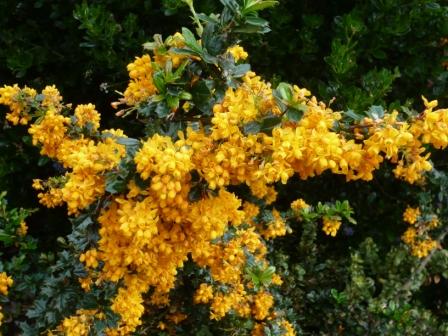
berberis-orange


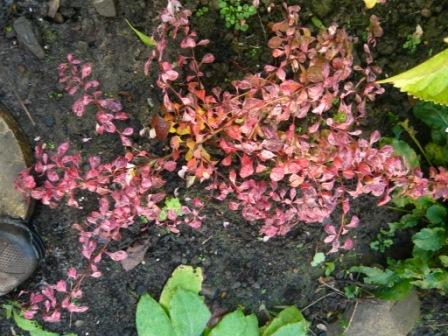
Berberis Julianea is a colourful low maintenance foliage plant with flowers, berries and prickles! Good Berberis are  prickly flowering shrubs often with fragrant flowers ranging in colours from pale primrose to pumpkin orange, light pink to darker red.

Read More Read More

Fancy Pelargoniums Called Geraniums

Fancy Pelargoniums Called Geraniums

Pelargonium regal

I have a strong liking for Pelargoniums (which I will call Geraniums from now on). They are still producing lots of colour and variety late into October. Because we suffer strong winds and early frosts up on the Pennines of Yorkshire I am in the process of protecting the varieties I am keen to keep through winter.

How to Keep Geraniums Over Winter

  • Geraniums originate from South Africa and are tender in our UK climate.
  • Geraniums do not like damp humid conditions coupled with low light levels in winter.
  • Select the best varieties of Geranium plants that you wish to preserve over winter. Zonal Geraniums are going to be cheap and plentiful next year so if space is limited they may be the ones to sacrifice.
  • I am taking late cuttings of my chosen Regal and scented Geraniums in case the stock plant fails. I also took some earlier cuttings in August. Do not use hormone rooting powder as this tends to attract black rot.
  • Keep the cuttings in a light frost free spot. For small cuttings I put 3 or 5 to a pot of well drained compost.
  • The host plants need to be tidied up with any brown or nibbled leaves removed. I have pruned long stems to restrict the plants and provide cutting material.
  • Keep the plants frost free and on the dry side over winter. If they are kept in a centrally heated house they will need some water and may repay with a supply of flowers.
  • Strong light is not essential but they will prefer some natural light.
  • In spring a weak feed and more light will revive the slumbering plants. New growth can provide stock for many more cuttings.
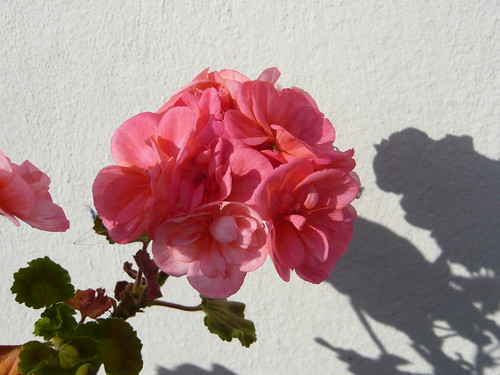
Pelargonium

Some Types of Geranium

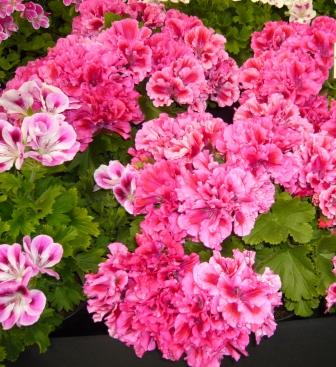
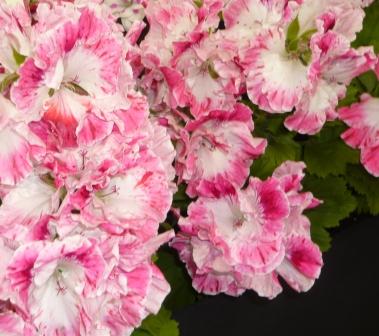
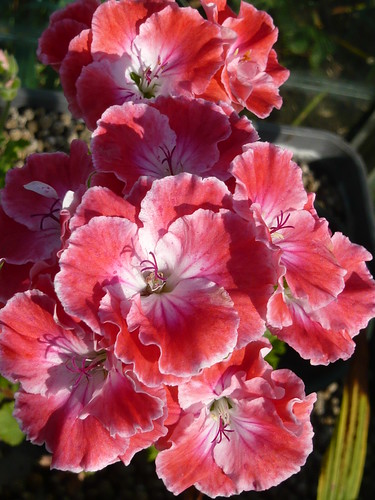
Regal Geraniums once called Pelargonium domesticum, P. Cucullatum or P. grandiflorum are showy flowering plants at their best between April and June. Named varieties to look out for include Black Knight, Bridesmaid, Caribrooke, Marylyn (above)Wooton and Lord Bute.The velvety textured petals can combine to make large flowerheads and look stunning in a pot or container. The growing habit is looser than Zonal geraniums.

Ivy-leaved geraniums are trailing plants best known in hanging baskets and from the balconies of Swiss Chalets. The colour range is not as wide as that for Regals but the volume of flower over a long summer make them desirable plants.

Fancy Leaved Geraniums are sometimes called ‘show-off’ Geraniums and as you would expect have a variety of leaf colour that make them attractive in the house or as an edging plant. There are also many scented leaf geraniums with a variety of like citrus scents.

Pelargonium Endlicherianum or the Turkish Pelargonium is more hardy than other Geraniums. They produce large bright pink flowers in early summer. They have succulent roots and need very well drained, rocky soil in a protected spot in full sun. The round, greyish-green leaves and pretty flowers make them an excellent plant for the rock garden.

Dwarf and Miniature Geraniums are fascinating plants that have all the features of normal geraniums but on a smaller scale. The plant below is now flowering with pink petals on the typically geranium like inflorescence.
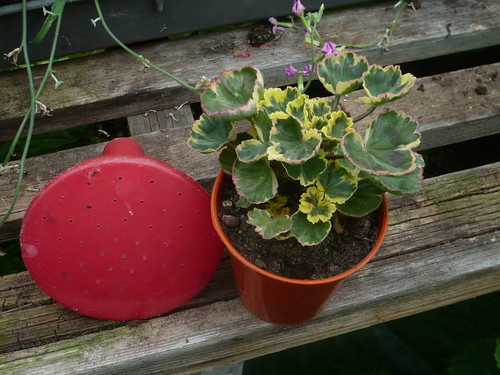
Miniature Geranium

Other links and information on Pelargoniums

Top 10 Scented leaved Pelargoniums
Pelargonium Grandiflorum and other ‘Geraniums’
Stellar Pelargonium – Bird Dancer Geranium
Photogenic Pelargonium
The Secret of Geranium (Pelargonium) Cuttings
Growing Regal Geranium Pelargonium
Miniature Pelargonium
Dwarf Pelargonium aka Geranium
Tips for Growing Geraniums (Pelargonium)
Growing Regal Geranium Pelargonium

Growing Regal Geranium Pelargonium

reba-regal

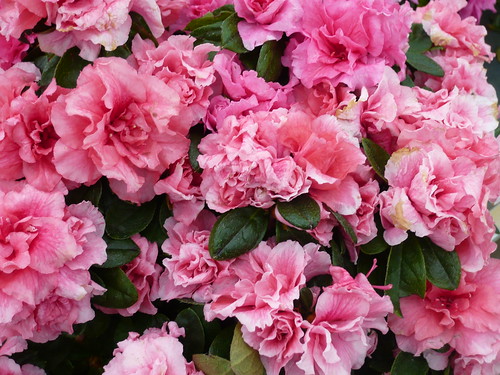
Regal Pelargoniums or exotic Geraniums are getting more fancy and colourful. This pink frilled flower is called Reba Regal. I grow Regal pelargoniums for in house but they can go outside after the last frost although some flowers are a bit susceptible to rain damage.

Tips on Growing Regal Pelargoniums.

  • Pinch out the growing tips to get a bushy plant although most varieties are branching types.
  • Water Regals more  than standard pelargoniums and feed with potash feed as they near flowering.
  • Those with large blooms and ruffled petals need a sheltered spot such as in a porch where they won’t be spoilt by the wind or rain.

    Read More Read More

Saxifrages in Alpine Gardens

Saxifrages in Alpine Gardens

There are a host of different Saxifraga or singular Saxifrage. They make for an interesting group to grow and collect both in the garden and in troughs or pots depending on the variety. Saxifrage kolenatiana has rosettes that throw up spikes of flower in summer similar to its better known Saxifrage relative ‘London Pride’.

Groups of Saxifrages

These are just some of the groupings of Saxifrage each contain many variants, varieties and species for which you need a more detailed document. See links below.

  • Saxifraga x arendsii or Mossy Saxifrage is useful for walls, troughs and shady rockeries.
  • Saxifraga stolonifera  groundcover under flowering shrubs or small trees OK in shade or Saxifraga x urbium London Pride
  • Saxifraga cotyledon or Pyramidal Saxifrage for troughs and pots
  • Saxifraga paniculata: Encrusted Saxifrage, group 4 for walls, edger; sun to part shade
  • Saxifraga primuloides: a miniature variety for shaded rockeries


Links and Further Information

The Saxifrage Society

Saxifraga World

BBC

RHS  Silver Saxifrage Trials

Book Cover

Click on book to buy from Amazon.