Taking Delphinium Cuttings
Taking Delphinium Cuttings

delphiniums-skipton-richard-sara

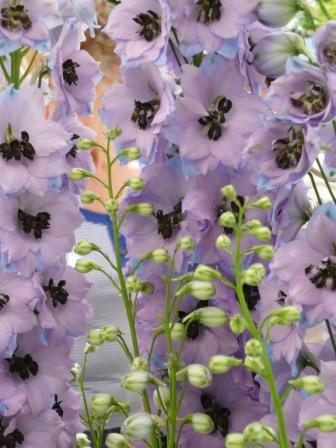
The towering spires or spikes of Delphinium are to be admired from near and far. How much better if you can increase your stock of a favourite plant by ‘Vegetative Propagation Methods’.

Method 1
April is a good time to take a cutting from the base of the plant below soil level. Cut out a sturdy 3-4 inch shoot that is about pencil thickness. Too thin and the shoot wont make a sturdy plant and to thick and it will be hard to root. Make sure you get low down taking a shaving of the old root with the cutting. Failing to do this will encourage a rapid but spindly growth that wont last the summer. A bit of hormone rooting powder can be used but the cutting should root quite easily. Pot on or plant out when healthy and strong growth is showing.
Read More Read More

Fringed Tulips a Crispa Flower

Fringed Tulips a Crispa Flower

fringed-1
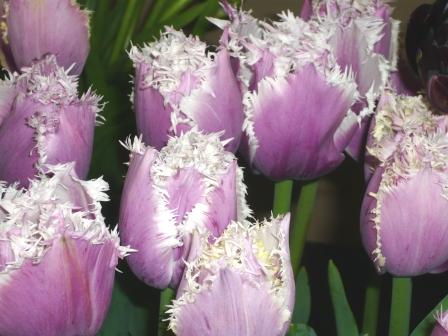
Tulip Crispa or the fringed Tulips looked really good at our Spring show so I have planned to grow some next year. These photos were taken on the bench demonstrating what good cut flowers Tulips can be. The fringed or lacerated petals are unusual yet elegant and add to the attraction of these strongly coloured flowers.

Tips on Fringed Tulips

Read More Read More

Garden with a Bird Bath

Garden with a Bird Bath

bird-bathsource

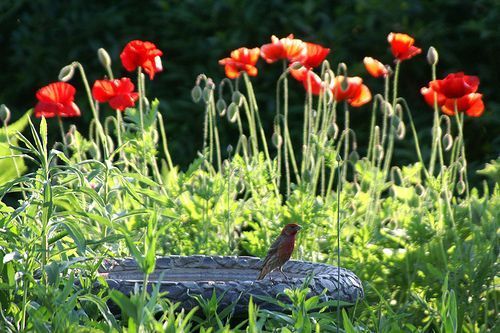
A bird bath can be popular with our feathered friends and be a focal point in the garden. If creating a new bed, for plantings, that will have a bird bath as a centre piece locate the bath just off centre. Work into the soil suitable compost  about 4 inches of garden compost will give the bed a good start.

Plant suggestions

  • Use plants of varied heights and colours and bear in mind you are trying to attract native bird species.
  • For the back of the bed try a Persian lilac growing upto 10 feet. Syringia Persica has fragrant mauve flowers.
  • If there is a wall or sturdy fence try Virginia creeper Parthenocissus tricuspidata with it’s red autumn leaves and hiding place for the birds.
  • Read More Read More

Tips for Growing Acer – Japanese Maples

Tips for Growing Acer – Japanese Maples

acer

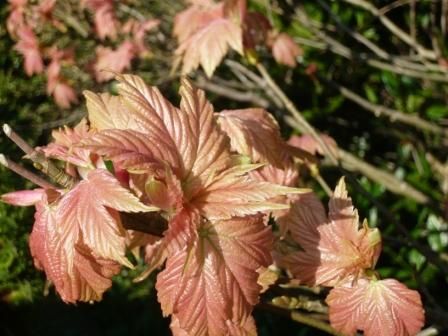
Acer trees and shrubs can be spectacular from Spring through Autumn due to the leaf colours and patterns.  This Acer Palmatum Taylor’s leaves with pink foliage will last through summer turning into rich Autumn colours at the backend. It will grow to about 10 feet in 10 years and is suitable for even a small garden.

Top Low Growing Acers

  • The cut leaf  maple Acer Palmatum Dissectum is an umberella shaped shrub with unusually shaped fresh green leaves. The leaves develop a red stripe in the Autumn. The name gives away a description of the shrub – Palmatum refers to the 5 segments of the leaf like the palm of your hand. Disscetum indicates that the leaves are disected into thin often feathery shapes.
  • Acer Pamatum Orange Dream is a slow growing Japanese maple with vivid orange spray foliage which turns golden yellow in Autumn.
  • Acer Palmatum Atropurpureum is a slow growing purple leaved variety grown for both the colour and the attractive shape of the tree. There is a Dissectum variety Garnet which combines the leaf colour with the feathery foliage.
  • Beni Maiko is a dwarf Acer Palmatum growing to  2-3 feet in 10 years and can be kept in a large pot or used in even a small garden. The scarlet leaves progressively turn dark red and green.

Top Tips for Acers

Read More Read More

Plum Blossom

Plum Blossom

plum-blossom-2

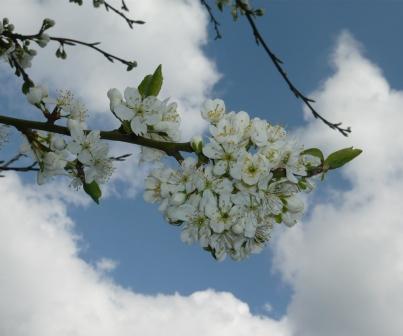
Spring is well underway but I must take care of my blossom on the Victoria plum. It looks fantastic at the moment and speaks of a good crop this summer but a nip of frost just now would be a real let down. Plums are prone to frost damage and as I am prone to eat Plum jam I will try protect this tree and its blossom.

As the tree has grown above a safe picking height I will trim the upper branches later in summer when the danger of silver leaf disease is much lower.

To augment my plum crop I planted a Czar plum (see below) at the beginning of 2008 and it is showing a very upright habit. This I will encourage into a bowl like shape to get air and light into the centre of the tree for future years. At the moment the rhubarb is a bit too rampant under the plum so I think it will have to come out .

Read More Read More

Topical Gardening Tips – Mid-Spring

Topical Gardening Tips – Mid-Spring

file-1-250
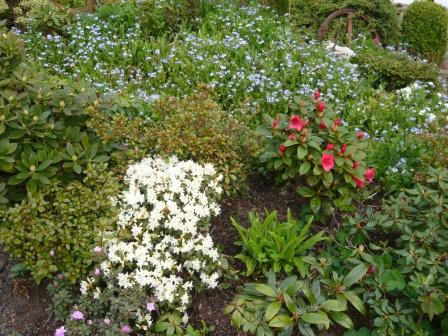
Mid Spring Garden

Garden waste composts best and quickest in a hot heap. Cover the heap and insulate the sides if practical. Mix hard and soft waste if you have mainly grass clippings tear up some cardboard or newspaper to avoid a soggy mess.

Keep sowing summer bedding indoors. Half hardy annuals can be sown out doors in May. Prick out seedlings as soon as they are large enough to handle.

Start a weed suppression routine. Hoe out any weeds or hand remove any pernicious perennials. Mulch to suppress and avoid weeds.Spot spray weed killer on hard to get at weeds in paving and wall cracks. Treat patios and paths with algicide or moss killer to remove slippy green paths.

Read More Read More

Fuchsia from Cutting to Show

Fuchsia from Cutting to Show

micro-greenhouse

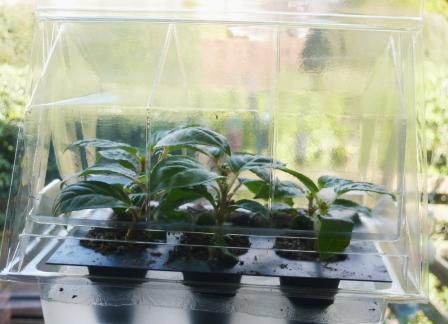
My Fuchsias didn’t over winter very well so I wanted some new ‘cheap’ stock. My first attempt was to buy strong looking plants from a nursery but foolishly left them to get frosted in a very cold greenhouse. These cuttings were on sale in there own nifty mini greenhouse with the roots in a water-gel to sustain then through the retail lifecycle.

I got 12 plants for less than £3 and I have potted them on on a window ledge and 4 days later the largest is already for ‘stopping’. I will pinch it and then others out at the growing tip to encourage branching.  If you are wanting a ‘standard’  shape ie a single bare stem topped with a globe of flowers, then do not pinch out the top but remove all the side shoots and main leaves on the stem until the stem is 12 inches tall and the head has been formed.

Training Fuchsias

  • Standards have already been discussed and they follow the training of a bush fuchsia. The bush fuchsia will be trained to have a stem of about 1.5 inches without branches and all growth then eminated from a selected number of laterals.
  • A shrub has multiple growths from below soil level. training starts ater 2 or 3 pairs of leaves have formed by pinching out the growing tip. this process is repeated until the plant is the size and shape required.
  • After every stop give the plants a nitrogenous feed to promote new branches. Plants flower 6-8 weeks after the last stop and in that time the feed can be changed to a 1:1:2 ratio with more potassium to encourage flowering.

Read More Read More

Wallflower Bowles Mauve

Wallflower Bowles Mauve

everlasting-wallflowers

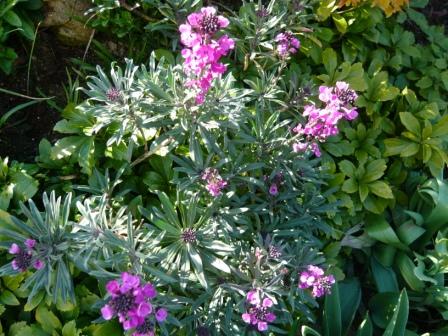
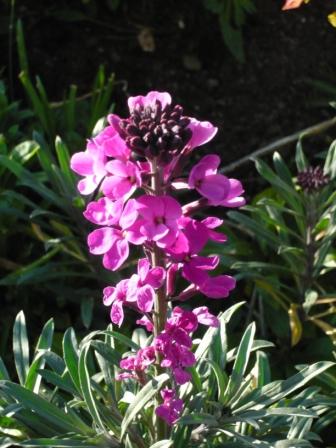
Bowles Mauve is a wallflower Erysimum linifolium that performs for several years unlike its strongly scented cousins. It is a short lived evergreen perennial that gets a bit leggy if not kept in check. The plant flowers all summer long and it seems as though it is flowering itself to death.

  • Take regular cuttings which are easy to root and grow on.
  • It grows 2 feet high and wide in most types of soil preferring alkaline to acid
  • Also try  other Perennial Wallflowers, Bowles Yellow or the shorter ‘Little Lilac Kiss’ from seed
  • Erysimum perofskianum Gold Shot as its name suggests has golden yellow flowers
  • Butterflies are attracted to this plant of the brassica family
  • As a member of the Cruciferae family the flowers grow from stems originating in the centre of the grey leaves and have 4 petals each in the shape of a cross.

everlasting-wallflower


Read also Everlasting Wallflowers

Colour of Spring

Colour of Spring

colour

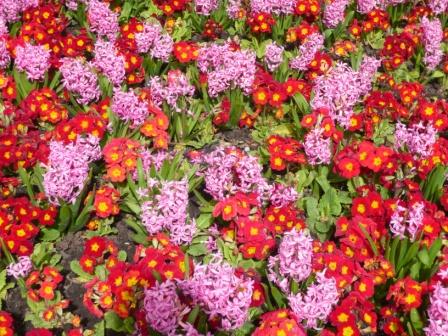
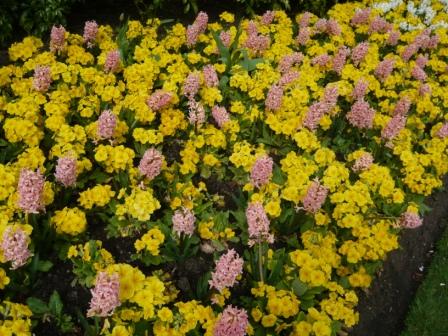
What is your favourite colour combination? 
Cerise, Shocking Pink scarlet and yellow seems a bit off colour to me.

colour-2

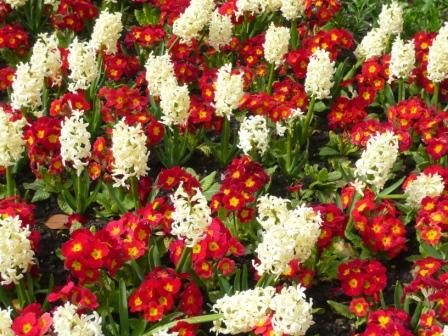
Your second choice includes a white Hyacinth perhaps Carnegie or Aiolos
A bit better at keeping the colour temperature in check.

colour-3

Which Parks Gardener thought up this combination?
My kids would call it yucky and I think that is polite.
Think about colour schemes when putting plant close to one another.
The stripped greens of newly mown grass have a lot to commend them.

Read More Read More

Dandelion a Martians Favourite

Dandelion a Martians Favourite

dandelion

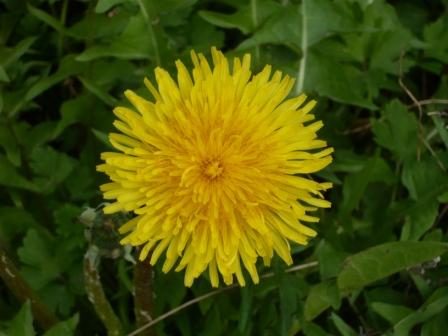
What is wrong with the humble Dandelion and why do we take against it so? The flowers are prolific, uniform with good and vibrant colour. The seed heads look light and airy before the Dandelion Clock strikes and blows all the seeds to germinate where they will. The leaves are lance-shaped, so deeply toothed, they gave the plant its name in Old French – Dent-de-lion means lion’s tooth. So is it the profligate flowering, the ability to seed so freely the French Connection or some other prejudice.

Dandelion Wine

Read More Read More