What Flower is This? Unusual Tulips!

What Flower is This? Unusual Tulips!

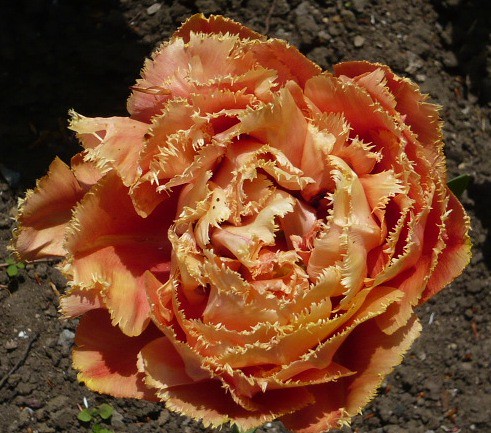
No prizes but this is a Tulip called ‘Sensual Touch’. It is amazing what breeders are able to create with modern technologies.

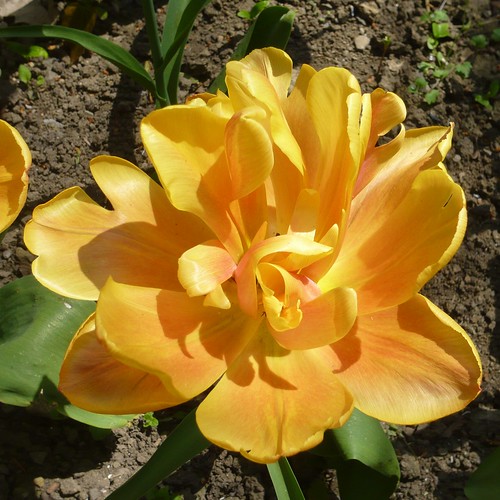
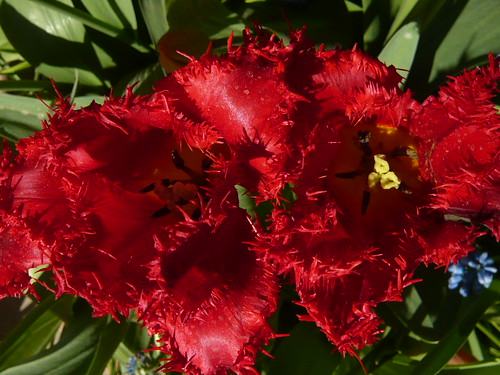
As this is Tulip season I have included a few more less common pictures of Tulips that I have found on my travels this spring.


Blousy flower


Fringed Tulips

Read More Read More

Pricking Out Guide

Pricking Out Guide

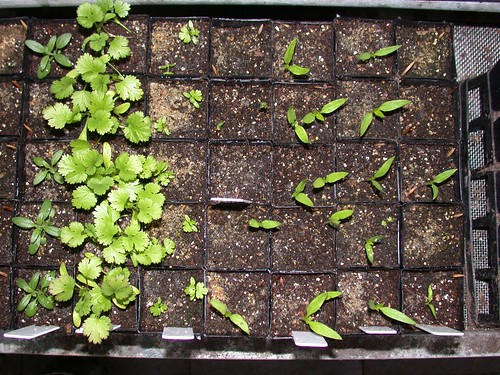
Plants grown from seed need to be given space to grow by ‘Pricking Out’ or thinning.
This process gives young plants space and nutrient necessary for healthy growth.

Guide for Pricking Out

  • For seeds grown in seed trays, ‘prick out’ the seedlings as soon as they are large enough to handle.
  • Use a small tool or dibber to loosen the seed compost and lift out the seedling.
  • Hold by the first green leaves not the roots.
  • Plant in rows in a new tray of multi purpose compost using a dibber to make holes. Firm the compost around the plant.
  • Space the seedlings 1-2 ” apart depending on the vigour/size of the plant you are growing.
  • Water using a watering can with a fine rose.
  • Shade from direct sunlight for a couple of days.

Other Pricking out Activities

  • Prick out into modules to save time and further root disturbance when planting out.
  • Bigger plants like Tomatoes, Cucumbers, Dahlias etc can be pricked out into individual pots.
  • I put Mesembryanthemums direct into the garden after hardening them off.
  • Seedlings grown in Jiffy pots are best potted into there own plant pot.
  • When starting off sow in modules or cells. Seeds can be sown individually or in small number where the weaker seedlings can be sacrificed to allow the strongest to grow. (Thinning out).

Seeds sown direct into their final position in the garden may need to be spaced. Pinch or pull out seedlings that are cramped, to leave a space between your selected plants for growing on. Carrots and plants that don’t tolerate root disturbance are treated this way.

Seeds sown in a garden seed bed can be pricked out if required but I sow them thinly enough to be able to just move them once into the final growing position.
Some flower mixtures are best just broadcast and left to grow where they germinate.

Tip
If you are growing a seed mixture transplant a range of seedlings not just the largest. Often different coloured flowers grow differently at the seedling stage.

Movement in Your Garden

Movement in Your Garden

095

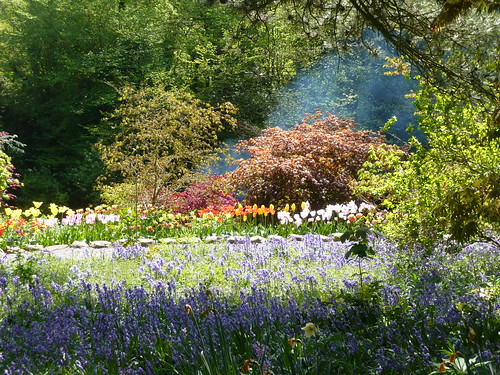
The day was still and the only movement was the lazy (none PC) smoke drifting from a brushwood fire but it made me think of movement in my garden.


Natural Movement.

  • Grasses have grown in popularity with prairie planting creating drifts of fine plumes of seed heads wafting in the breeze.
  • Fine leaves, particularly the well coloured Acers, are one of my favourites.
  • The fast running and gurgling stream provides stimulation to several senses at the same time.
  • Tall thin plants like bamboo are grown for their ability to move in a breeze. Verbena bonariensis and tall back of the border plants are also useful
  • Visiting birds and insects are great for movement. Make sure your garden attracts them.

074

Man-made Movement

Read More Read More

Veronicastrum Height & Vertical Form in Gardens

Veronicastrum Height & Vertical Form in Gardens

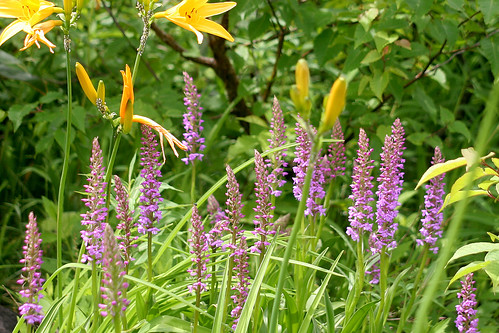
Veronicastrum grows and flowers 3-6 feet tall and adds height to many gardens.

Tips for Growing Veronicastrum

  • Native to American woodlands and prairies, Veronicastrum likes rich moist soil.
  • With full sun or light shade they grow towards the light and may need staking in windy locations but grow well with other back of the border perennials.
  • Flowering is in late summer in whites, purples and pink, they are Bee friendly.
  • Leave the spikes to add winter interest and for seeding.
  • Use as cut flowers either fresh or dried.


Hardy Varieties to Grow

  1. Veronicastrum virginicum ‘Album’ has an airy white spire of tightly packed flowers.
  2. Veronicastrum virginicum ‘Facination’ grows on stiff stems but the mauve flowering spikes droop slightly whilst still adding height to the back of borders.
  3. Veronicastrum roseum ‘Pink Glow’ is the colour it claims to be and mixes well with other late blooming perennials.
  4. Veronicastrum sibiricum (above)  is lower growing at 3-4 feet
Apple Blossom in Pictures and Notes

Apple Blossom in Pictures and Notes

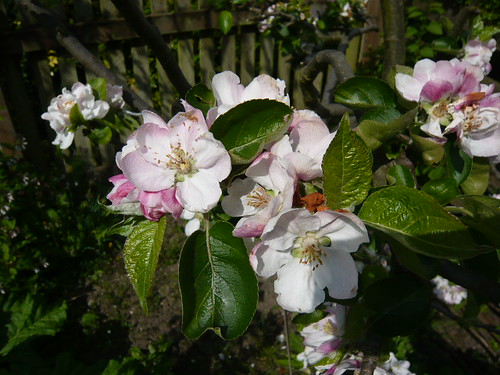
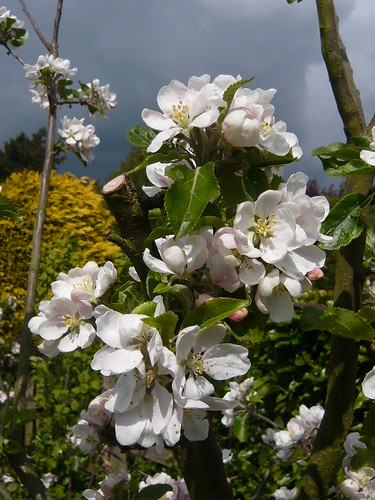
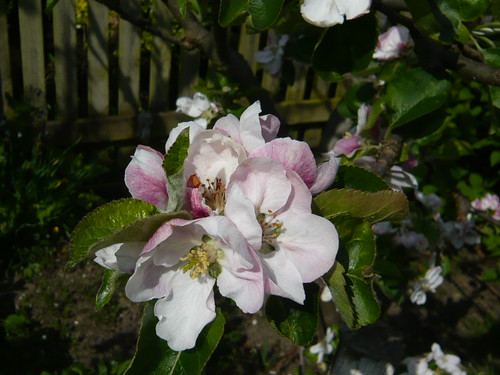
Apple blossom

2010 seems set to be a great year for Apple Blossom. All around there seems to be vast quantities of blossom on each tree – let us hope there are enough Bees to go around when it comes to pollination.

I was surprised when I looked more closely at the size and colour on the blossom of different trees and have reproduced some varieties here. As you may remember there was a lot of frost damage on a row of cordons but, touch wood, my main trees remain unaffected.

The late arrival of warm weather is playing into the hands of pollination as most varieties seem to have opened at the same time. This will bring the insects out and help cross pollination to produce a good crop of Apples.

Apple blossom

Glowering skies loom over this tree but showers of rain are an occupational hazard for Apple blossom. As long as the rain drains from the tree and is not trapped in pockets to cause wood rot there is no problem.

I have to admit to a spray regime after blossom fall to protect my fruit to deter insects

Apple blossom

This eating apple has dark red skin and I will have to look in my old note book to remind me of the variety. Still I am not surprised to see that it has pinker blossom than the James Grieve.

Each blossom was larger than the old half-crown and made a wonderful sight.

Read More Read More

Growing Small Daisies – Erigeron or Fleabane

Growing Small Daisies – Erigeron or Fleabane

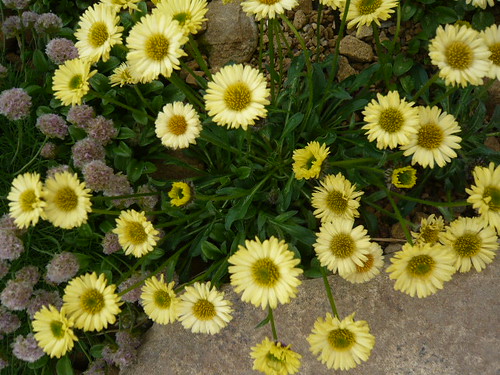
Erigeron
There are many species of daisy like Erigeron in annual, perennial and biennial varieties. Flowers may be small but you get lots of them

Erigeron karvinskianus

  • Daisy-like flowers with buds opening a dark pink turning white.
  • The petals are finer and more delicate than the common daisy and the whole flower-head slightly smaller.
  • The leaves are small, plants form mats, and each plant can spread over quite a large area.
  • Good drainage and plenty of sunshine are essential for plants to survive cold damp winters.
  • Sun also keeps the plant small and compact.
  • Plants are easily raised from seed.
  • The Royal Horticultural Society has given it an Award of Garden Merit (AGM).

Erigeron

Erigeron aureus – The Alpine Yellow Fleabane is shown above
Erigeron ‘Dunkelste Aller’ has a dark purple flower
Erigeron Alpinus grows 6″-8″ high with mauve florets and a yellow disc.
Erigeron glaucus the Seaside Daisy
for other species see selected taxa

Suggested Locations for Erigeron

  • Coastal locations enjoying sandy soil.
  • Informal cottage gardens are where I remember seeing this plant as edging,
  • Erigeron is low maintenance and small enough to look good in a Rock garden.
Growing Centaurea

Growing Centaurea

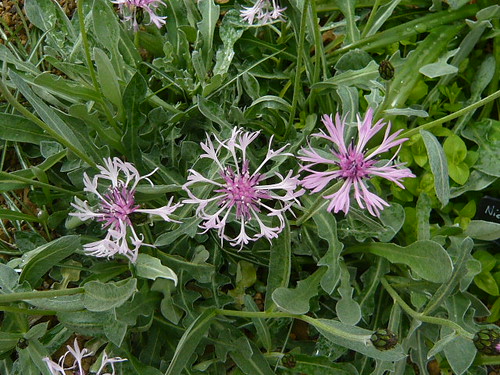
Centaurea Achtarovii

Centaurea are a group of plants, the Knapweeds, related to cornflowers and similar in appearance to thistles they look far better than either in a cottage garden environment.

The National collection of Centaurea is held at Bide-a wee Cottage garden in Morpeth Northumberland.

Centaurea Growing

  • Centaurea grow best in a moisture retentive soil   and are equally at home in sun or partial shade. Otherwise it is not fussy about soil conditions.
  • The common feature of the Knapweed family is the flower’s scaly brown base with tightly gather multiple petals.
  • Robust in constitution they are a survivor in many a neglected garden.
  • Respond well to being cut back after flowering it is also suitable for naturalising in meadows.

Some Varieties to Grow

  • Two perennial species are British natives Centaurea nigra and Centaurea scabiosa. Centaurea nigra grows in  wet pasture, moor and along stream banks.
  • Centaurea range in size from the ground hugging Centaurea mollis, with prostrate foliage and lavender blue flowers to the giant Centaurea macrocephala, growing up to 4ft with large yellow flower heads.
  • Centaurea Achtarovii shown above is a smaller growing variety.
  • The first to flower is the Centaurea montana the perennial cornflower. In late May flowers are seen in a variety of pastel shades and deep blue.

For more information on growing larger Centaurea read ‘garden gem or invasive weed’.

Plants and seeds are available from Thompson Morgan

Allotment Gardening your First Steps

Allotment Gardening your First Steps

History of Allotments
Allotments were first introduced in 1845 as field gardens for the landless poor. Originally intended to grow food Victorians thought it would ‘keep them from the evils of drink’. (A cool beer or glass of wine at the end of a session on the allotment is just the job now-a-days.)
In 1908 the Small Holding and Allotment Act made it a duty of Local Authorities to provide allotments where there was a demand.
During both World Wars allotments were a vital source of food & the number of allotments peaked in 1943 at 1.4 million. There is less than a quarter of that number now.

First Steps

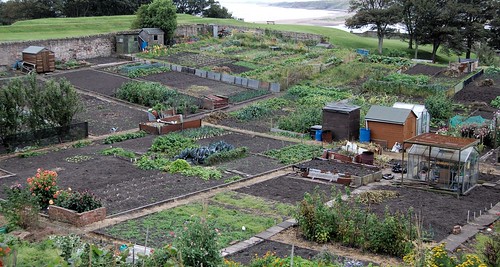
  • Time spent preparing a new plot is seldom wasted time. Remove weeds.
  • Put in permanent structures like good paths, a compost bin, water butt and a shed.
  • If the land slopes use raised beds or make a terrace.
  • Arrange the beds so you can rotate crops (see below).
  • Check the site and association rules.

Planting your Crops

  • Grow what your family like to consume or use.
  • Easy vegetables to start with include Potato, Leek and Runner Beans.
  • Courgettes, Tomatoes and salad crops are only slightly more difficult.
  • I would have an area for cutting flowers but that is my personal preference.
  • Sow seed sparsely, thin out to avoid over crowding and do not sow too soon in the season.
  • Give herbs there own area in the sun.

Crop Rotation
Different plant groups do different things to the soil. Using 4 beds, rotate the following crops around so that after 4 years each bed has been used by each group.

  1. Potatoes
  2. Legumes; Peas, Broadbeans, Other beans, mangetout etc
  3. Brassicas; Cauliflower, Cabbage, Sprouts, Broccoli etc
  4. Onions and roots

Lettuce, Courgettes are neutral and can go anywhere. Soft fruit and rhubarb may go around the edges or in there own space.

Daffodil and Narcissus Tips for May

Daffodil and Narcissus Tips for May

Deadheading

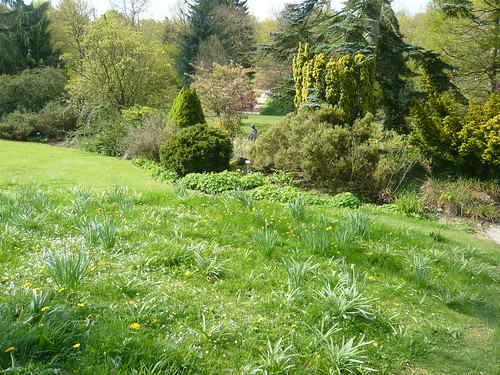
These Daffodils growing in grass have naturalised successfully and don’t get deadheaded but in your garden deadheading is a good idea.

May Activity for Daffodils.

  1. Pinch or cut off the seedhead before they swell to channel energy into bulbs.
  2. The leaves are busy converting sunlight and nutrients into sugars and stronger bulbs for next year.
  3. Do not cut off the leaves of Daffodills until they die back
  4. Apply a dilute liquid feed via the leaves with a good spray of fertilizer.
  5. As the leaves yellow at the end of the month you can split large clumps of bulbs. Replant 5-6″ apart in new soil or revitalise existing soil.
  6. When replanting do not bury the old foliage.
  7. Mark where your best Daffodils are so you do not dig them up by mistake.
  8. Plan  where  and what Narcissus you are growing next year.

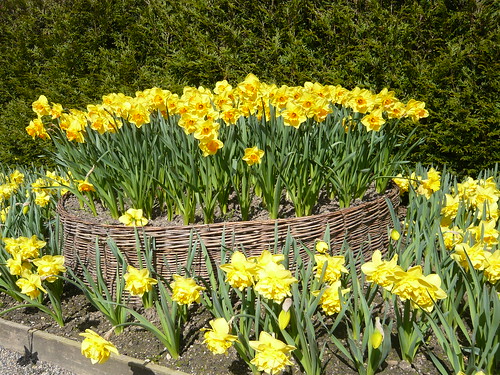
daffodil in willow display

How To Make Most of Garden

How To Make Most of Garden

garden

How To Enjoy the Garden.

We often write about how to kill pests, how to grow vegetables, how to keep on top of the weeds. But, what about how to enjoy the garden? We all know gardens are for enjoyment, but, if we’re not careful, they can become a beast of burden rather than a paradisical area for our relaxation and enjoyment.

Do a Job 100%.

It is tempting to be in the half mood of gardening, we wander out in our slippers and start half heartedly pulling up some couch grass with our bare hands. We don’t really get the job, (we don’t even want to get our slippers on hands dirty). When we are weeding, we want to go at it ruthlessly, will all the right equipment to eradicate an area or particular weed. It is more efficient to get a job done, than leave it at  50% done.

garden

Perfection Should be A Natural Perfection

Do you wander round famous gardens and get jealous of the immaculate lawns the absence of any weed e.t.c? The great natural garden can happily incorporate the odd weed without losing its beauty and naturalness. If we are only happy when there are no weeds and no pests and neat rows, and immaculate petunias… we will never be able to enjoy the garden.

It’s just a matter of looking on weeds with a different perspective. Look at the bigger picture and enjoy the different shades of green…

Feel the Living Energy.

A garden is more than a beautiful picture to look at. It is enjoyable to sometimes just sit back and listen to the hum of insects and feel the life that is going on in the garden.

Do Manageable Tasks.

Have you ever started with a little light pruning and before you know it you’re trying to tackle and giant conifer involving innumerable visits to local recycling place. Before, start gardening have a manageable task. It is better to grow six tomato plants well, than try and grow 50 tomato plants badly. You will never be able to eat all tomatoes anyway. Keep the scale to fit your schedule. If you have little time, look for time saving techniques. If a bush grows so quickly you are always having to prune it, why not take it out and put something in lower maintenance.

Related