Plants for Walls

Plants for Walls

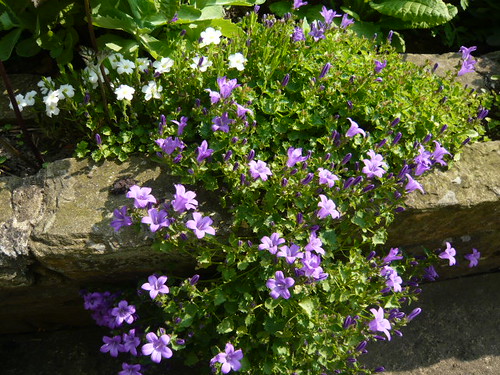
Campanula

I am fortunate to have a boundary wall that has two skins of stone filled with soil. This makes an habitat for plants that I can use to grow something a bit different.

The Pros & Cons of a Filled Wall.
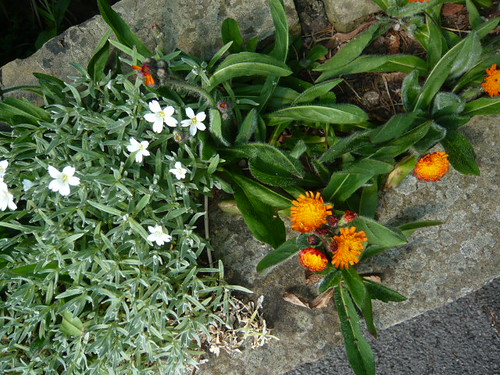
  • The wall raises the working height and brings plants nearer to eye level.
  • The soil is of poor quality as goodness is leached away. This suits some alpines and nasturtiums.
  • Due to holes somewhere the soil washes out in some spots and I am always looking to refill or stop the leak.
  • The wall is dry and gets hot in the sun although the stone provides some cooler protection for roots.
  • Slugs do not like to climb the wall (just send gardeners up it)
  • wall plants

    Suitable Plant Types for Walls

    • Dry condition lovers and sun seekers like Thyme
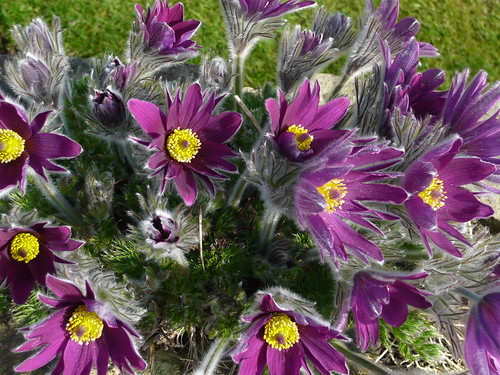
    • Plants that like a baking like Pulsatilla
    • Plants that hold there own water store like Sedums and Houseleeks.
    • Alpines and similar plants with long roots.
    • Trailing plants and poor soil plants.

    Pasque Flower

    Some Plants recommended by Cambridge University Gardening services site
    Crassula sarcocaulis
    Helichrysum ‘Sulphur Light’
    Sedum acre
    Sempervivum ciliosum
    Saxifraga species

    Read More Read More

    Yellow and Sickly Leaves caused by Chlorosis

    Yellow and Sickly Leaves caused by Chlorosis

    Acid deficiency

    Yellow sickly leaves on acid loving plants is called ‘chlorosis’. It is a nutrition problem as the plant is inhibited from getting the nutrients from the soil. It is easiest to think of it as an Iron or acid deficiency.

    Plants affected by Yellowing Leaves

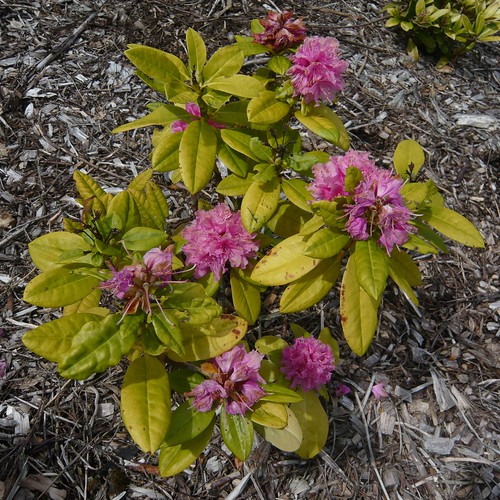
    • Rhododendrons often suffer if the soil is not sufficiently acidic as the picture shows. Eventually the leaves then the shrub dies.
    • Chlorosis in fruit trees is a gradual yellowing of the tissue between the veins of younger leaves will occur while the veins themselves stay green.
    • Azalea, Laurel, Maples, Oaks and other ericaceous plants can show symptoms of chlorosis.
    • Tomato chlorosis crinivrus is a yellowing of leaves but is cause by a virus introduced by white fly. Control the insects and feed the plants.
    • Yellowing leaves on houseplants can be due to overwatering. If your plant has been sitting in water it’s time to let it dry out.

    Cures for Chlorosis

    • Water with a liquid feed of ‘Sequestrene’ which is designed for such plants.
    • Fertilizers that contain chelated iron, manganese and magnesium will help improve the colour and health of leaves and plants available from Thompson Morgan
    • ‘Sequestrene’ Granular Iron Tonic is for acid-loving ericaceous plants. It provides iron in a chelated form which can easily be taken up in any soil.
    • Foliar Sprays may be effective as a temporary measure, spray when the symptoms are first noticed with a ferrous sulphate solution.
    • Peat, ericaceaous compost or applications of acid fertilizers, such as ammonium sulphate may help mild cases of iron chlorosis.
    • Do not lime the soil.
    • Treatment the soil directly with flowers of sulphur to lower the pH to 5.5

    Buy Chempack for acid lovers

    Growing Hesperis matronalis Alba

    Growing Hesperis matronalis Alba

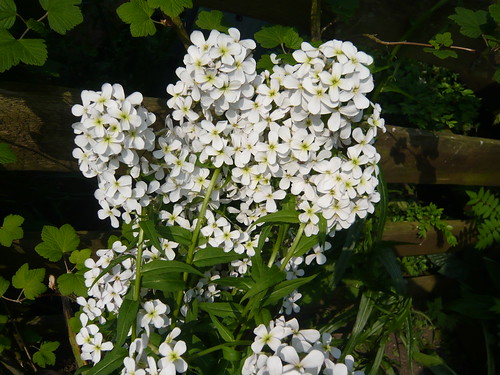
    Hesperis matronalis Alba

    Hesperis is a hardy biennial that flowers in blue, purple or white. It is easy to grow from seed and flowers through summer.

    • The main charm is the scent that you get in an evening from the masses of 18″-36″ high plants.
    • Ideal for the middle of borders, Cottage Gardens, Wild Gardens or a Wildlife Garden.
    • Charming large spikes of single flowers attract hoverflies and insects.

    Sowing and Growing Instructions

    • Optimum Germination Temperature: 60-65F (15-18C).
    • Sowing Depth: 1/8 Inch (3 mm).
    • Sow in late spring/early summer  thin out or  plant out in their flowering positions in early autumn.
    • Space the plants 30cm (12in) apart in full sun or part shade.
    • Plants self-sow freely in good soil.

    Seeds are available to plant now from Thompson Morgan

    How To Water Plants

    How To Water Plants

    water

    Sprinklers important for new grass seed, but, not always most efficient.

    Correct watering is essential to a healthy garden, but, even seasoned gardeners can make mistakes in how and when they water.

    Tips for Optimal Watering

    • Don’t wait until everything is starting to wilt. Plants may never fully recover from a period of draught – others are more tolerant.
    • Don’t water little and often. Many people get into the habit of turning the hosepipe / sprinkler on every day during dry spells, but, this isn’t necessary or even helpful.
    • It is better to give one really good soaking once a week. To regain soil moisture, you will need about 2 inches of rainfall (or equivalent watering). A heavy soaking enables the water to get down to the roots. If you keep watering by small amounts , the water will only fall to near the surface. This encourages shallow roots and ironically plants become more liable to draught. If you water heavily, it will encourage deep rooted plants more tolerant of dry conditions.
    • After watering, get a trowel and dig down to the depth of the trowel, If the soil is still dry and that depth, it is a sign that you haven’t done it enough.

    A well watered garden (mind you it’s easier living in Yorkshire)

    Read More Read More

    Watering a Hanging Basket.

    Watering a Hanging Basket.

    hanging baskets

    photo credit Wheelo28 flickr

    • A densely planted hanging basket in full sun, will need regular watering throughout the summer. On hot days, it may be necessary to water twice a day.
    • Make use of water retaining capsules which help to reduce amount of watering needed.
    • Leave a gap at top of hanging basket between liner and level of compost, this makes it easier for water to seep into compost rather than drain straight off basket onto floor.
    • After watering, test the compost with your finger, make sure the water has drained into the bottom of the basket, sometimes, it can drain away without making it wet. After a while you will get a feel for how much you need to water.
    • As the flowering season progresses added a liquid feed or time release capsules which will provide necessary food for plants.

    Read More Read More

    Tips for Growing Phlox paniculata

    Tips for Growing Phlox paniculata

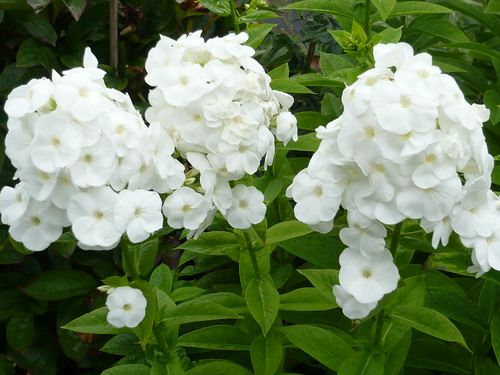
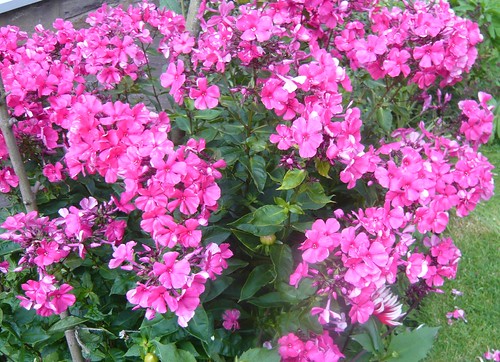
    Phlox paniculata

    Phlox is a perfect perennial plant, perpetually pleasing people. It is easy to improve your Phlox performance.

    Tips for getting good Phlox flowers.

    • On mature clumps of Phlox thin out any  congested, woody stems.
    • Thinning out improves subsequent flowers and increases air flow.
    • After a good rain, mulch around your Phlox to conserve moisture.
    • Phlox responds to the Chelsea chop – cut some of your Phlox back by a half at the end of May. You will then get lush growth and later flowers.
    • I feed with a slow release fertilizer like Growmore in early spring.

    Mildew Problems

    • Phlox are prone to mildew but it won’t kill the plant – Phlox will come back next year.
    • Water stress is a main cause of Phlox mildew so water the roots, avoid splashing the leaves and mulch as above.
    • Lack of air circulation is another cause of mildew.
    • In Autumn tidy up all fallen leaves.
    • Mildew attacks young sappy growth so do not over fertilize with nitrogen.

    Phlox paniculata

    For more Perennial Favourites
    Read more about how to grow Annual Phlox
    To achieve the pinnacle of success for Phlox see more

    Lilac Blossom Time

    Lilac Blossom Time

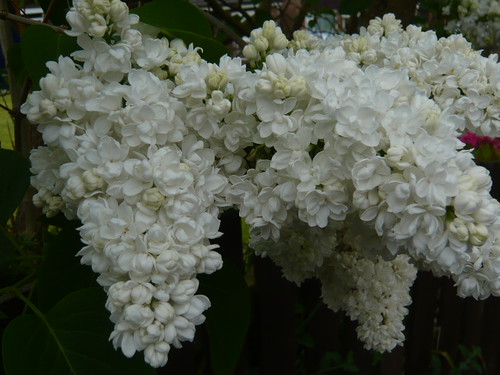
    White Lilac

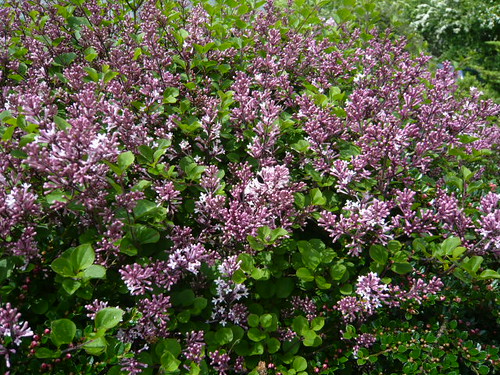
    I think lilac trees are boring for 11 months of the year but for a powerful scent they are hard to beat in late May.

    The White Lilac is every bit as scented as the ‘lilac’ Lilac.

    For tips growing Lilac see this post

    For cut flowers

    • Pick stems early in the morning when full of sap.
    • Put immediately into warm water,
    • Split the stem for 1″ with a sharp knife do not crush.
    • In this way they should last more than 4 days but otherwise Lilac will disappoint.

    Lilac

    Read More Read More

    Growing Wild Garlic for Cooking

    Growing Wild Garlic for Cooking

    Wild Garlic

    Wild garlic or Allium ursinum is also called Buckram, Bear’s Garlic, Ramsons or Broad-leaved wood garlic. It is a pungent herb normally found growing in profusion in woodland areas.

    • Wild Garlic flowers from the end of May with white flowers on 8″ stems.
    • Wild Garlic can be grown in the garden and is championed for the lush tasty leaves.
    • Foraging for Wild Garlic in woodland is fairly straight forward and it will be found in semi-shaded, moist conditions.
    • Wild garlic has a very similar taste to domestic garlic but is slightly milder.
    • The leaves are delicious raw or cooked and work well in salads and soups.
    • It is easy to grow from seed or bulbs (please do not take them from the wild).

    Wild garlic