Aphids and Greenfly Pest Control

Aphids and Greenfly Pest Control

Aphids
All greenfly are Aphids but not all Aphids are greenfly.

What are Aphids

  • Aphids are sap sucking insects,
  • They damage  plants and introduce disease  makinge them enemies of farmers and gardeners alike.
  • There are around 4,400 species and that many flies on some of my plants.
  • The little black Aphids that trouble Broadbeans or Greenfly on Roses are from the Aphid family.
  • Aphids are often specific to one plant species.
  • Aphids breed several time in a season if left untreated.
  • One female hatched in spring may produce billions of descendants from 40 generations in one year

Read Gardening Products Killing Aphids

Pest control including Aphids

Aphids

Patriotic Perennials in Red, White and Blue

Patriotic Perennials in Red, White and Blue

sedbergh

This selection of perennials are easy to grow and produce summer colours in a range of patriotic blues, reds and whites.

Centaurea shown above has many varieties in different shades and is a good cottage garden plant. It grows2-3 feet tall and needs some support. It’s red colour is much more pink but the blue is strong and long lasting.

Geranium  Rozane Gerwat

Hardy Geraniums are attractive and easy to grow. The colour range includes the purple to blue or pink and Splish-Splash below which is a white with occassional blue patch. My black geranium has very poor flowers and rampant foliage.

lupins

Lupins flowering above are another easy perennial. In addition to red, white and blue there are bi-coloured Lupins with a white eye that can be very attractive. This pink looks a bit wishy washy in the photo but in real life it was a stunner.

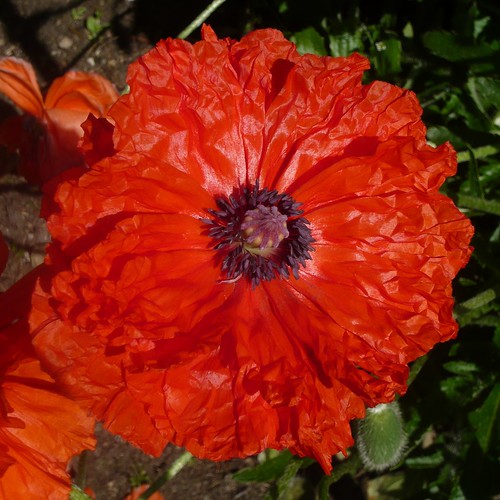
Poppy

Oriental Poppies are strongly coloured perennials but I have yet to see a blue one which is not a Meconopsis. There are many other poppy varieties to consider growing

Geranium

Tips for Growing Astrantia

Tips for Growing Astrantia

golden acre gardens leeds

Astrantia are unassuming garden perennials now coming into flower from June .

Tips for Cultivating Astrantia

  • Astrantias are superb perennials for the stream edge or a moist border.
  • They may tolerate drier soils as long as the plants are mulched
  • ‘Claret’ is a beautiful variety with deep red pincushion flowers.
  • After flowering, plants can be rejuvenated by cutting them back close to the ground – fresh new foliage and a late crop of flowers start appearing shortly after.
  • Plants do not make big clumps or spread but they can be split in early spring.
  • Grow from fresh seed or buy as plants. Thompson Morgan

Astrantia Varieties and Features

  • Astrantia have star-like flower heads in reds, pinks and pastel shades.
  • The variegated form has an AGM Astrantia major ‘Sunningdale Variegated’
  • Read More Read More

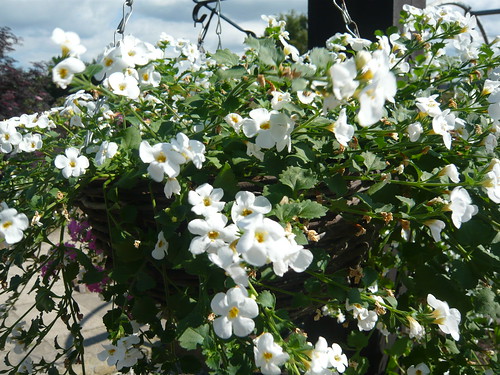
Tips for Looking After Hanging Baskets

Tips for Looking After Hanging Baskets

golden acre gardens leeds

These tips may seem commonsense but they are always worth repeating.

Tips For Good Hanging Baskets.

  • Water early in the day ‘and or’ in the evening. Give plants a good drink regularly.
  • After 4 weeks in the same compost the nutrients will be reduced and you should add liquid feed. I use half strength fertilizer with every watering.
  • Many hanging basket plants will self deadhead but if you have zonal geraniums in the basket they will benefit from nipping the deadheads off.
  • Turn the basket round, if one side near a wall for example, is growing less well.
  • Look out for aphids on the soft lush growth.
  • If you get unexpected gaps in leaf or bloom you can still  put in new plants.

Hanging Basket Holidays

  • If you go on holiday you need to think about care of your baskets whilst away, even just for a weekend.

    Read More Read More

Common Garden Flowers

Common Garden Flowers

common garden flowers

Roses.

Beauty, dignity, fragrance and style. The rose is perhaps the Queen of flowers. A very rewarding plant to grow. Some of the modern cultivars have lost the beautiful old fragrance, but, the good news is that they are more disease tolerant. See: Tips on Growing roses

common garden flowers

Sunflower

Simple, pure and fun. The sunflowers is a great flower for anyone to grow. It is hard to look at a sunflower and not be cheered a little. It is as if the sunflower is smiling at you. Tips on growing sunflowers here

lupin

Lupins. See: Growing Lupins

common garden flowers

Sweet Peas:

Sweet peas come in many colours and offer a long flowering season, making a lovely cut flower. The fragrance helps the sweet pea to be one our most popular garden flowers.

See: Growing sweet peas

common garden flowers

Pansy

Low growing, colourful pansies are one of the most common garden flowers because they can give such a long flowering season. One of the few annuals to flower even in the depths of winter. Great value, no wonder they are so popular!

Read More Read More

Growing Begonias From Tubers

Growing Begonias From Tubers

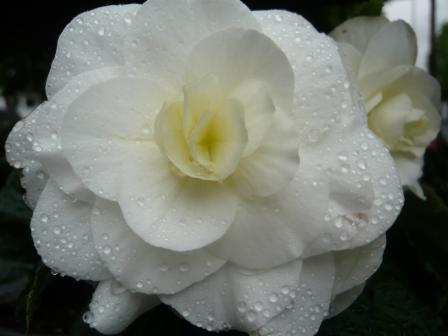
begonias

Begonias from tubers are a very rewarding plant. If protected from frost, they are a relative easy plant to grow. They can remain relatively pest free and provide a long flowering season.

You can start plants as early in February in a heated greenhouse or indoors on windowsill. The best temperature is 18-22 degrees. They will start growing at lower temperatures but their growth will be slower.

Keep moist, but, not standing in water or overly damp as this can lead to rot and mildew problems.

Plant the top of the tuber just below the soil surface, hollow side upward.

Which is the top of a Tuber?

You should be able to see where last year’s growth has been cut off. It is the concaved side (dish shaped). You may also see the first buds for new shoots.

When the first shoots appear, make sure the plant gets plenty of light and is rotated if on a windowsill to get a well rounded plant.

The begonias can grow quickly and so might outgrow their first 3 inch pot. Pot on to five or seven inch pots, before they are ready to be hardened off and planted outside.

Read More Read More

Good Soil and How to Get Better Soil

Good Soil and How to Get Better Soil

Book Cover

Soil that is fit for purpose will help your plants grow, thrive and even excel.
Some plants need special soils or composts but good general principles are discussed below and this book will provide detailed information.

Purpose of Garden Soil

  • Soil provides the base to anchor plants through their roots.
  • Good soil holds moisture and air necessary for the health of plant roots.
  • Soil feeds plants with nutrients (NPK) and makes other trace elements available.
  • Soil recycles dead matter and hosts a variety of life forms.


Features of Good Soil

  • Soil consists of “the living, the recently dead and the very dead.”
  • Soil should be able to hold moisture but not become water logged.
  • Excess water should drain away and not puddle under the plant. To prevent puddling the sub-soil, or lower layer of soil below cultivation depth, should be broken up and not compacted.

    Read More Read More

Lettuce Cultivation

Lettuce Cultivation

lettuce

Fresh lettuce from the garden is well worth cultivating. It can be a quick crop, ideal for a small garden. Planted in neat rows, it can also be an attractive veg, especially if you try growing different leaf coloured varieties.

Sowing Lettuce Seed.

Lettuce can be sown from late Feb to June. Though obviously, in Feb will need careful protection. Germination takes 7-12 days. It needs a moist warm environment. However, beware that if the temperature is too hot (over 21 degrees) germination may be patchy.

Sow relatively thinly, lettuce seedlings dislike being transplanted so when thinning out, just discard the excess plants.

For growing full lettuce, sow 30cm apart. However, for salad ‘cut and come’ varieties, you can sow closer and keep cutting leaves to get a second crop.

Important Tips for Growing Lettuce

  • Lettuce need to be kept well watered.
  • They dislike hot dry sunny weather. In these conditions, like many vegetables they will bolt and run to seed.
  • For best crops, ensure the soil is fertile with plenty of organic matter. Lettuce is better when it can grow quickly.
  • For longest cropping season, sow at two week intervals. This ensures a steady supply of lettuce.
  • During hot season, try growing in the shadier part of your vegetable garden.
  • If you have a small garden, lettuce will do well in growing bags, as long as they are sufficiently watered.
  • For early plants, sow under glass and harden off before planting outside.
  • When sowing indoors and planting outside, take care to give as little disturbance to roots as possible. This can act as a check on growth. Try using disposable pots which can be planted straight outside.
  • Using a horticultural fleece can keep away aphids and reduce the direct rays of the sun.
  • Keep weeds at bay, but avoid damaging plant with hoe.

Read More Read More

Common Garden Problems

Common Garden Problems

weed
Beautiful, but a hundred potential weeds.

Weeds

There are two types of weeds. – The weed which can easily be controlled through hoeing (e.g. annuals like plantains and the persistent perennial weeds – horsetail, bindweed and japanese knotweed. These latter group of weeds need a persistent and determined strategy to rid your garden of them. It takes a combination of deep digging their roots, and then spraying or hoeing off new growth until they are finally defeated.

In the case of weeds like horsetail, it can really test your patience as it can be years of weeding before you clear the garden of it.

Other weeds still require regular maintenance to keep down. If possible follow the good old advice of hoeing before they set seeding or as the saying goes – one years weeding = seven years weeding

Neglect

Here is a common garden problem – not enough time to do what we need to do. – Weeds allowed to grow, grass too long and weedy, plants not deadheaded and a general feeling of neglect. Don’t feel too bad, nature doesn’t have a gardener, and nature doesn’t do too bad. Try to enjoy the natural aspect of the garden, even the weeds can be quite nice, if we don’t worry too much. But, if you can find a bit more time for regular maintenance you will get much more joy from the garden.

Though another less well addressed common garden problem is that of the stressed gardener. Don’t try to do everything and be perfect. There is more to the garden than immaculate edges and 100% weed free soil…

Read More Read More

Rose Replant Sickness Causes & Cures

Rose Replant Sickness Causes & Cures

Peace Rose

Old Parks Gardeners have known for many years that to replace a bed of Roses in the same place is asking for problems. New plants become sickly before they get a chance to become established and you can loose a lot of time and money trying to put new roses in the place of old.

How is Rose Sickness Caused

  • No one seems certain why roses get sick if they are planted where old roses used to be. One possible cause is nematodes that the old roses have learnt to tolerate.
  • I believe it is more likely to be fungal growth around the roots.
  • Root exudates contain allelochemicals and when concentration becomes very high, after the roses have been in the soil for several years, they adversely effect new plants.
  • Roses are gross feeders and soil which becomes impoverished will highlight other plant weaknesses.


Common Cures and Treatments for Rose Sickness

  • If you are replanting roses exchange the soil with fresh soil that hasn’t grown roses before. An area 2′ square and deep will be needed so it might be easier to relocate the bed for new plants.
  • It may help to grow and dig-in a crop of Tagettes or french marigolds if the soil is generally in good health. I would also add lots of manure and   humus for roses.
  • Another method for small numbers of Roses is to sink an old carboard box filled with fresh soil and plant in that. By the time the cardboard degrades, the rose sickness should have gone or the Rose be strong enough to resist problems.
  • The only product against rose sickness is Rootgrow, a beneficial mycorrhizae, fungus which adheres to the new Rose roots. It should allow the plant access to moisture and nutrients from a wider area of soil thereby increasing the early vigour.

Try Just Joey when planting new roses