Growing Calathea ‘Wavestar’

Growing Calathea ‘Wavestar’

Calatheas are a group of plants native to the tropical Americas. They are popular as pot plants for the house or conservatory due to their decorative leaves that often react to touch or light.

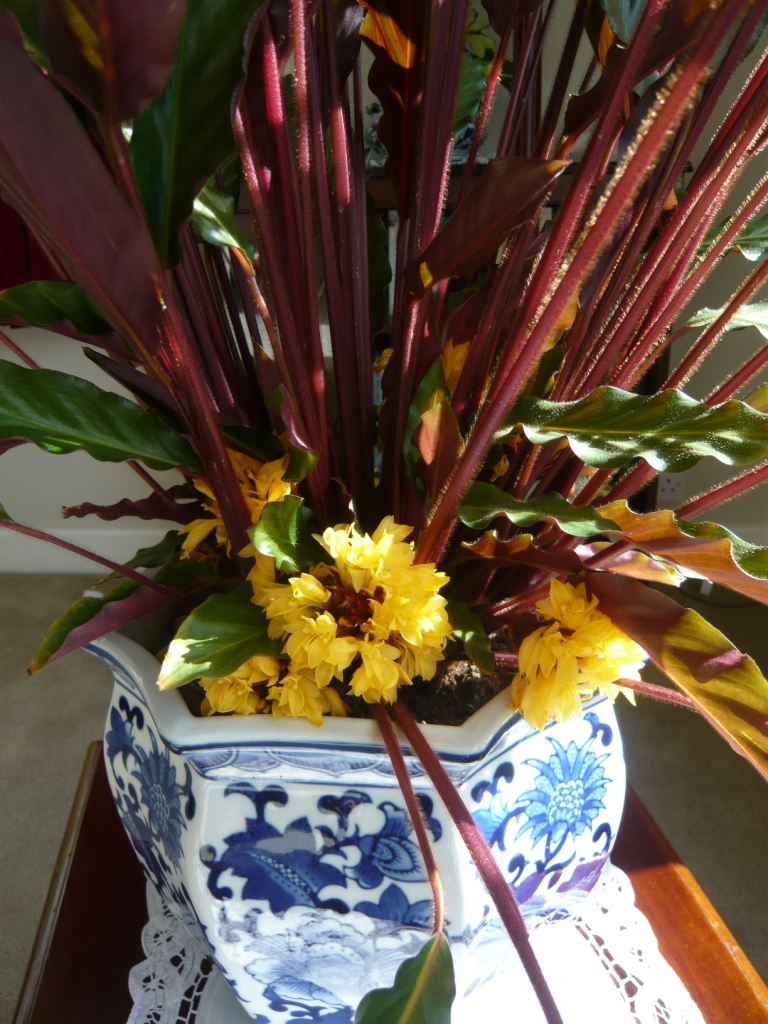
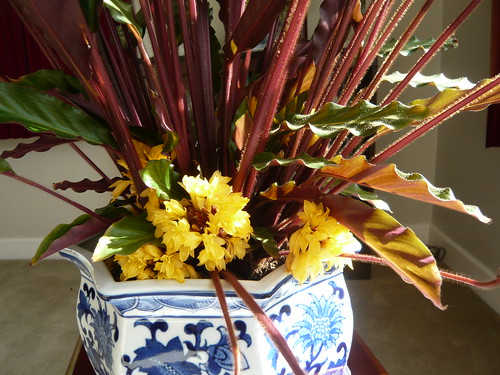
Calathea 'Wavestar'

Calathea Wavestar

  • Calatheas are now being cross bred amongst their 50 or so species and Wavestar is one of the results.
  • The leaves are soft,ridged, purple underneath and green when open in full light. The leaves close up in the evening.
  • I was surprised to see the yellow flowers at the soil level last time I watered this plant see above.
  • This variety is said to originate from Bahia in Brazil but if so why has it been granted PBR status?
  • The plant breeders rights are owned by Decorum a Dutch company

Korbmaranthe, Calathea bachemiana

Decorum Plants Calathea Wavestar

  • ‘Decorum Plants’ are a brand name that claims to be a leading specialist in the trade sector for more than 10 years.
  • Decorum Plants represents a selection of 1200 decorative and flowering potted plants under the well-known (to some)‘Decorum flag’.
  • Supplies to the trade via a web link may provide more information

Calathea majestica 'Albolineata'

Growing Calathea

  • Calathea need good light but avoid direct sun as it will scorch or fade the leaf
  • Keep soil moist and humid throughout spring and summer with less watering in winter.
  • Keep your Calathea warm preferably 15-23ºC.
  • Feed with a dilute fertiliser weekly during summer.
  • Soil should be light and free draining.
  • Repot annually and propagate at that time by division. Repoting tips

Calathea makoyana

Calathea varieties for Growing Indoors

  • Calathea makoyana the Peacock plant, features purplish coloring on the undersides of leaves, with white and green on top. Known as the peacock plant.
  • Calathea zebrina the zebra plant, has green markings on the leaf top and purple leaf undersides.
  • Calathea insignis also called Rattlesnake plant, is a bushy species with narrow, tapering erect foliage.
  • Calathea crocata has plain leaves but displays of upright orange-red flowers.
  • Calathea ornata. Reddish marking on leaf tops with purple undersides.
  • Calathea louisae has leaves broadly ovate, dark green with light green splotches along the midrib.

Other Facts about Calathea

  • Calatheas are closely related to Maranta, and often confused with their species Ctenanthe and Stromanthe.
  • Calathea can thrive in bottle gardens and terrariums due to their liking of high humidity.
  • Calatheas are propagated by divisions or tip cuttings, with nodes to form the roots.
  • Mist and reduced light are important during the early stages of propagation.

Calathea zebrina (Sims) Lindl

Calathea Photo Credits
Korbmaranthe, Calathea bachemiana by Dandelion And Burdock, CC BY-NC-SA 2.0
Calathea majestica ‘Albolineata’ by tuis CC BY-NC-ND 2.0
Calathea makoyana by Bárbol,CC BY-NC-SA 2.0
Calathea zebrina (Sims) Lindl by adaduitokla CC BY-NC-SA 2.0 ‘Calathea zebrina (Sims) Lindl. Marantaceae. CN: Zebraplant. Native of southeastern Brazil. Ornamental. Low rosette herb with striped pattern on leaves; leaf texture velvety. Growth habit clumping up to 90 cm tall.’

Vegetable Families their Importance and Types

Vegetable Families their Importance and Types

The importance of rotating vegetable crops to keep soil in good heart and avoids disease build up has been know for millennia. Gardeners should rotate families of similar vegetable using the lists below, not just switching for cabbages to cauliflowers.
Vegetables from the same family often need similar culture or treatment and suffer from similar pests. Fresh soil helps.

Families of like vegetables need similar nutrient levels and attach importance to different fertilizers.

Aubegine

Cucurbitacea – the marrow family

Leguminosae – Fabacea

Compositae – Daisy Family

  • Chicory – Endive
  • Jerusalem Artichoke
  • Lettuce
  • Salsify and scorzonera

Read More Read More

Benefits of a Compost Heap

Benefits of a Compost Heap

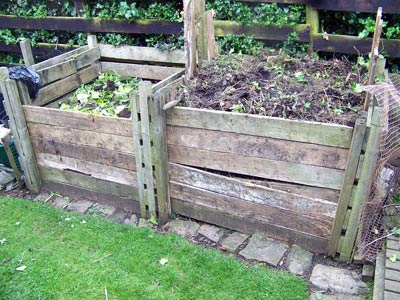
compost

A well made compost heap has various benefits for both the environment and your own garden. Compost heaps are relatively easy to make and a well made heap gives a personal sense of satisfaction.

Main benefits of a compost heap.

Saves Taking Garden and Kitchen Refuse to Landfill. This will save you time, but also help the environment by reducing strain on landfill sites. You also save petrol and time of taking garden rubbish to local tip.

Provides Excellent Organic Soil Improver
. Garden composts is high in trace elements and so helps fertilizes the soil. It is also an excellent soil improver adding much valued humus to the soil. Well rotted garden compost will help any soil, but especially if you have a sandy or clay soil.

Natural Cycle. Composting dead material to put back into the soil, is a natural process of Mother Earth. By composting material, we make our garden more of a living organic entity and can rely less on artificial fertilisers.

Attractive soil conditioner. Some people feel a compost heap is to be kept well hidden, but a well made compost heap needn’t be a source of embarrassment, plus the rotted compost has an attractive and sweet smell to it.

Healthy outdoor exercise is provided when you spread your eco-friendly compost

Provides a home for numerous insects, worms and creatures involved in the environmental cycle.

Get More Benefits from Your Heap of Compost

Greedy boards can be used in summer to increase the height of your compost heap. Leafy matter reduces in volume quickly and the extra space can be useful.

Adding a sprinkling of garden soil will improve the rotting process by adding bacteria, worms and trace elements. I do this when there is a lot of green matter and not much brown to compost.

Shred and chop your waste into smaller parts. The rot sets in to all the damaged and cut areas quicker than undamaged stems and stalks. A chipper or shredder may be used for branches and trees.

A compost heap provides a place to collect all rotting plant matter and helps to keep the garden tidy

Potential Problems of Compost Heaps.

Rats and other vermin – attracted by cooked food. – Don’t put meat or cooked food on a compost heap, but do put vegetable peelings and other uncooked organic waste.

Odour. A badly made compost heap made start to smell of methane. But, this tends to be compost heaps that become sodden and waterlogged. Solution – put a mix of green material with more woody stems. Provide aeration and cover in excessive rain.

Doesn’t Rot Down. This occurs if the compost heap is badly made. – too wet or too dry, or not enough sources of nitrogen such as grass clippings.

Disease. Don’t compost plants if they are infected with disease as these could be recycled, better to burn or dispose of diseased plants.

See:

compost heap

Parrot Flower or Bird of Paradise Flower Photos

Parrot Flower or Bird of Paradise Flower Photos

I was convinced my latest photos were of Strelitzia or Bird of Paradise flowers – that was until the horticulturalists at Kew Gardens made me rethink.
I had never come across the Parrot flower until I saw the Kew photo below and now I realise how ornithologically challenged I am.

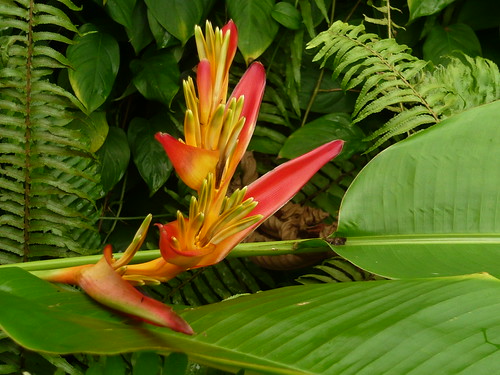
Parrot’s flower in the Palm House
I love going to the Palm house at Kew where this photo was taken by their staff.
The variety of plant life hints at what you could discover in better weather conditions than we experience in the UK.

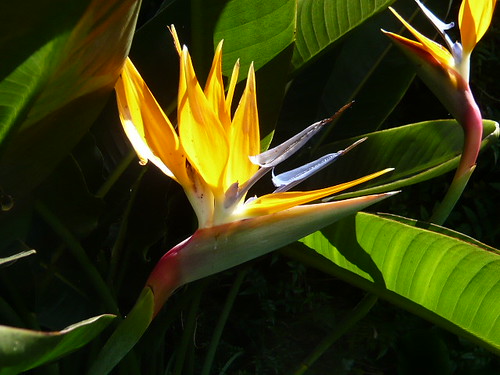
Eden Project Strelitzia

These Cornish flowers were also under glass in the tropical dome at the Eden project.

Eden Project Strelitzia

Strelitzia – Bird of Paradise Species

Strelitzia alba White bird of paradise
Strelitzia caudata Mountain Strelitzia
Strelitzia nicolai White or Giant bird of paradise;
Wild banana or Blue and white Strelitzia
Strelitzia reginae Bird of paradise, or Crane lily
Strelitzia juncea African desert banana
S. × kewensis hybrid between S. reginae and S. augusta (alba)

Strelitzia
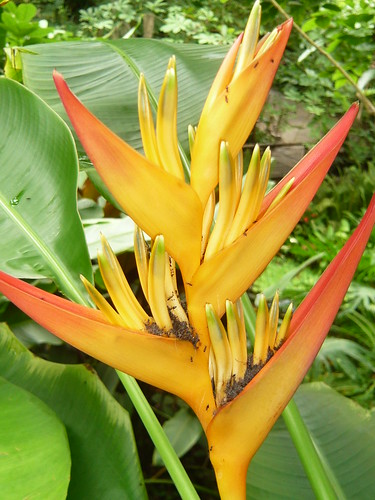
Checking my old holiday photos I found this Strelitzia which threw my identification skills into question.

Eden Project Strelitzia
These leaves look like banana leaves but the flowers fall short of Paradise.

Eden Project Strelitzia
Insects are having a good lunch on this flower photo.

Photo Credits.
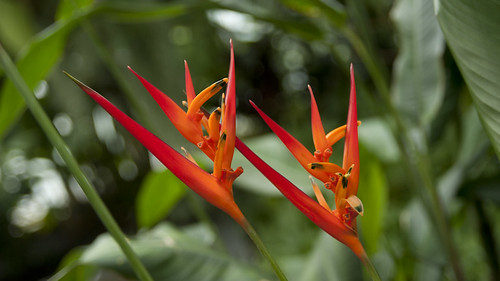
Parrot’s flower in the Palm House by Kew on Flickr CC BY-NC-SA 2.0 ‘This parrot’s flower, Heliconia psittacorum, was collected in Brazil in 1974. Find its striking orange flowers in the Palm House.’
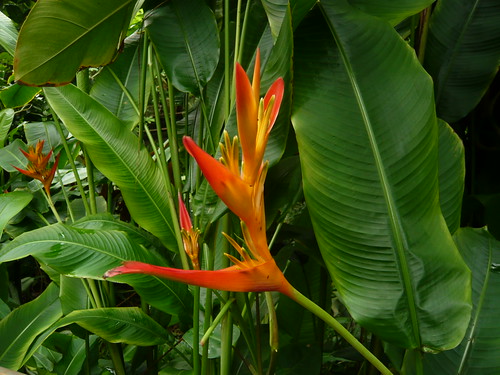
Heliconia platystachys (multiple flowers) CC BY-NC-SA 2.0
Our photos from the Eden Project Cornwall

Heliconia platystachys (multiple flowers)
When you start looking there are Parrots everywhere!
There are over 100 species of Heliconia found in rainforests or tropical wet forests where they are sometimes referred too as False Bird of Paradise flowers.

Bare Rooted Raspberry Canes or Plants

Bare Rooted Raspberry Canes or Plants

Spring raspberry canes

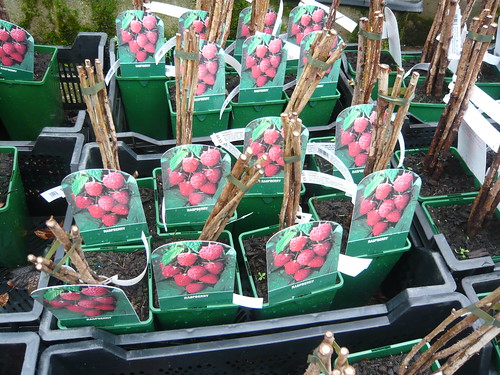
These raspberry canes were available from my local garden centre March 20th. They look container grown but are bare rooted canes plonked into pots. Container grown plants look like a bunch of healthy canes growing from the same root stock.
If you can’t get to Swincar Nursery in Guiseley and who can, then you can buy the following varieties mail order from Thompson & Morgan

Raspberry ‘Glen Moy’ (Early season summer fruiting) – produces an abundance of firm, medium sized fruits from June to July on virtually spine-free canes, which make harvesting a pleasure.

Raspberry ‘Glen Ample’ (Mid season summer fruiting) – Exceptional high-yielding mid season variety, producing a heavy crop of large, deep red, succulent berries, with superb flavour.

Raspberry ‘Polka’ (Late season autumn fruiting) – This superb Polish bred primocane variety produces up to double the yield of its parent, Raspberry ‘Autumn Bliss’, and crops at least 2 weeks earlier.

Raspberry ‘Autumn Bliss’ ‘is one of the best and most reliable autumn fruiting varieties, producing a heavy crop of large, attractive red berries from late August until mid October. The delicious fruits have an excellent flavour and firm texture making them ideal for eating fresh from the plant or freezing for another day. The short, sturdy canes of Raspberry ‘Autumn Bliss’ makes them perfect for growing in smaller gardens and containers as they don’t require supports for their stems. An excellent British bred variety, with good resistance to raspberry root rot disease. Height: 59”. Spread:20”.’

See also
Coloured and species Raspberries
Growing and maintaining raspberries
Raspberries Spring Summer and Autumn

Bare-root or Pot-Grown Plants

Bare-root plants are only delivered in the winter season for planting from November to March when the ground is not frosty.
Pot grown plants can be delivered all year round but take care as this photo shows barerooted plants have been stuck in a pot for retail purposes!
Bare-root plants cost less for the same size plants and you can carry and plant them easily.

Pot Grown plants can be delivered & planted all year round.
Plants in pots can be kept for months if there is a delay in planting.
If you can’t wait to get planting then buy pot grown plants, otherwise order bare roots.

First Cuckoo or Bulb Catalogue of Spring

First Cuckoo or Bulb Catalogue of Spring

It is only 28th June but I have just received my first catalogue for Spring bulbs, is that cuckoo or what?
Still 164 pages of glossy photos in J Parker’s Wholesale catalogue is always welcome and a useful reference up to and past spring.
Daffodils

Why Order Bulbs Early

  • The early bird gets the fat worm or the best of breed and that can be true of bulbs.
  • Choice bulbs sell first.
  • You will not be tempted to buy bargain basement bulbs that will probably be unsuitable.
  • Some bulbs like Narcissus appreciate a long period in the ground to develop good roots

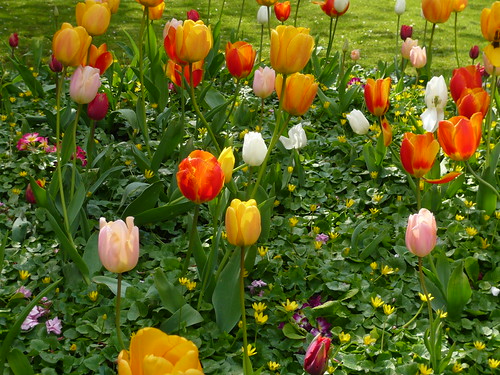
Tulip

Why Order Bulbs Later

  • If you can’t store spring flowering bulbs correctly they will deteriorate.
  • You need to plant them to suit your garden conditions and when you have the space prepared.
  • Vendors are after your money – if you order now you will get more catalogues and offers – just watch this space.
  • You should be in the garden not reading glossy spring bulb catalogues.

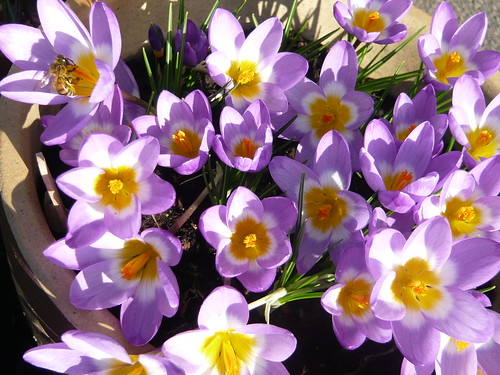
Crocus 2012

Why Wholesale Bulbs

  • J Parker’s Wholesale catalogue is not only for retailers and professional gardeners.
  • Bulbs are sold in quantity generally of 100, and 1,000 but you can buy 25 of one variety at the rate for a 100 or 250 at the 1,000 price.
  • This volume buying works out good value and encourages you to select your varieties with care and get a good showing or massed grouping (I find buying in 10’s get a dot effect.)
  • Beware the Parker’s prices are quoted before VAT and there is a £4 small order surcharge.
  • More info and catalogue request at www.Dutchbulbs.co.uk

Gardeners Tips
J Parker also produce an Autumn wholesale catalogue and a variety of other vat inclusive catalogues during the year.
The paper is too glossy to go on my compost heap so I recycle old catalogues with our paper collection

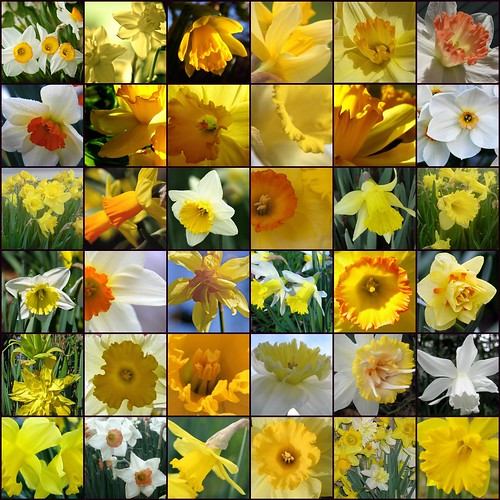
Daffodils
Daffodils by robynejay CC BY-SA 2.0

New Mini Dahlia

New Mini Dahlia

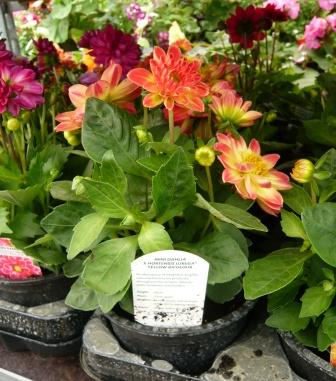
Mini Dahlia X Hortensis Lubega® is the latest addition to my plants acquired due to aggressive marketing. As readers will know I like to test new plants but do not what too much marketing.
In the garden centre it was on a tray marked £1.50 but was really £2.99 when I got to check out. This is another serious whinge of mine, duff pricing and or naff quality at garden centres.

Dahlia X Hortensis Lubega

Small Plan for Mini Dahlia

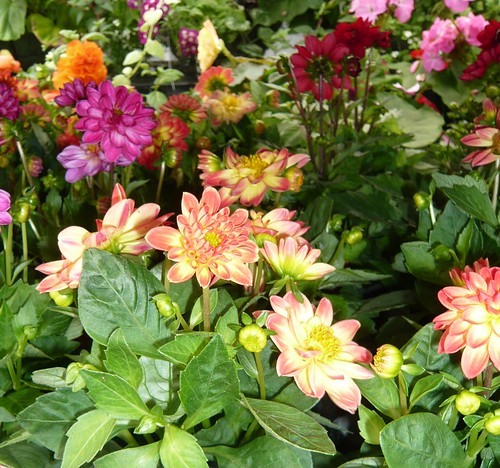
Despite my reservations I couldn’t resist this ‘mini dahlia’ in yellow and orange. It had over a dozen visible buds of which 5 showed the beginnings of colour. (One other similar plant had fully open flowers that showed a semi double effect).
My plan is to see how many flowers one plant will produce in one summer (assuming we get a summer).
It was in a 4″ pot and I have repotted into a 7″ pot. The recommended distance apart is 10″ which small for a dahlia that generally like their own space.
Current height is 6″ that suits me and the mini stature but I am worried as the label says in will grow to 16″ which is more than mini in my book. I must wait and see and will report back.
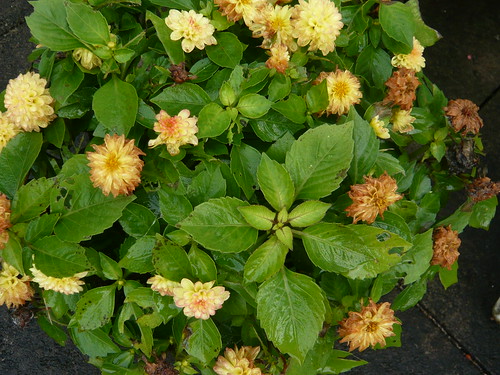
Report back after 10 weeks – bitter disappointment at poor volume of flowers. Plant leaved up but remained 12″ high but negligible new buds. Will September redeem the plant? I have my doubts!

Mini Dahlia Growing Instructions

  • Mini Dahlias are a half hardy perennial that is grown as a half hardy annual.
  • Garden centres are told ‘High light intensity and day lengths from 13 to 15 hours will promote an advanced florescence and a good plant structure’.
  • The label tells gardeners position in fertile, moist, well drained soil in sun or partial shade. (Oh that is so unusual).
  • Water well in dry weather and feed weekly when in flower.
  • Mini Dahlia Yellow Bicolour should ‘produce an abundance of delightful, brightly coloured blooms throughout summer.’
    Ideal for patio containers and borders.

Definition of Mini Dahlia

  • A Mini dahlia is a low growing dahlia normally between 10 and 18 inches tall.
  • Flowers dictate the definition ‘mini’ ranging from 1.5 to 3 inches in diameter.
  • Dahlias with flowers larger than 4 inches are no longer considered minis.

November mini dahlia
5 months Later

What about the Growers of Mini Dahlias

This is a German product by trade supplier Volmary GmbH Munster
Mini Dahlia X Hortensis Lubega® is one of a series or range of varieties that includes:
Dahliettaâ„¢
Dahliettaâ„¢ Surprise
Figaro Mix
Gallery®
Happy Day
Lubega®
Lubega® Mini with a Compact and well-branched habit of the mulitflora type
Lubega® Power
Melody
Mr Fothergill sells seeds of Dahlia Dwarf Double Mixed (Dahlia x hortensis)

Some Other Dahlia Species

Dahlia coccinea, Dahlia variabilis
Dahlia imperialis, Dahlia laciniata
Dahlia rosea’ Dahlia x hortensis

Mandevilla or Sundaville Conservatory & Houseplants

Mandevilla or Sundaville Conservatory & Houseplants

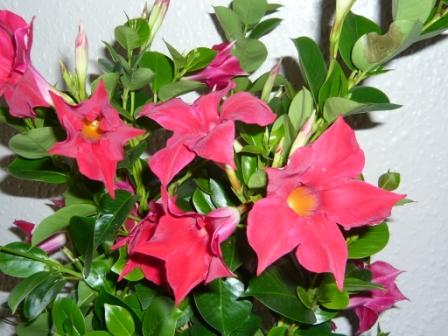
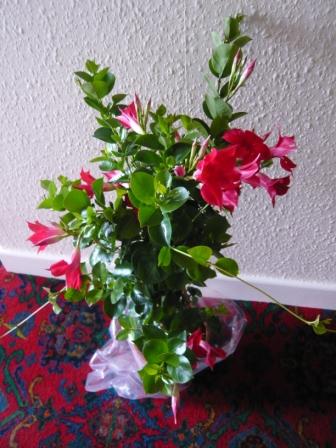
Mandevilla is marketed as a tender conservatory climbing plant.
They flower red or pink in summer on the current year’s growth. Prune in winter and keep at a temperature of at least 60ºF which may help the plant to stay evergreen. Mist in summer and water gently in winter.
Grow in good light in warm humid conditions and feed monthly.

What is in a Name Mandevilla or Sundaville

  • The Mandevilla is a genus of plants from the tropics including Sanderi, Boliviensis and Amoena. They are woody climbing or trailing plants that will not survive frost.
  • Sundaville is the Suntory trade mark for a new collection of red Mandevilla/ Dipladenia hybrids.
  • Australian hybridisers have launched a new Mandevilla series called the Aloha range

2009-10-08 14-40-24 Mandevilla Aloha Red - IMG_3276

RHS Recommended Varieties

  • Mandevilla × amoena ‘Alice du Pont’ AGM (Syn: Mandevilla × amabilis): is a popular conservatory climber with large numbers of pink flowers in late summer. It reaches a height of up to 7m (22ft) and can tolerate temperatures of 10-15°C (50-59°F).
  • M. laxa AGM (M. suaveolens, M. tweediana; Chilean jasmine): The selling point of this mandevilla is its strongly scented flowers of white or creamy-white. It can reach a height of 3-5m (10-15ft). It can survive short periods of temperatures down to 5°C (41°F).
  • M. boliviensis AGM: At 3-4m (10-13ft), this is the least vigorous of those mentioned here and has white flowers with yellow eyes. Another one for the heated conservatory with minimum temperatures of 10-15°C (50-59°F).
  • Mandevilla laxa – is hardy down to around 5°C

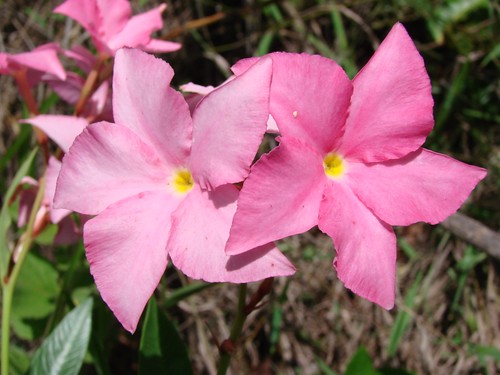
Mandevilla novocapitalis

Photo and RHS Credits

Mandevilla (Dipladenia) by blumenbiene CC BY 2.0
Mandevilla novocapitalis by João de Deus Medeiros CC BY 2.0
Mandevilla Aloha Red – IMG_3276 by Degilbo CC BY-NC-ND 2.0 ‘Mandevilla (formerly Dipladenea) is a genus of climbing plants from Central and South America from subtropical regions. Interspecific breeding by Australian breeding duo Graham Brown and Mal Morgan has created an outstanding new Mandevilla series called the Aloha range which features continuous flowering between spring and autumn. ….’

Mandevilla (Dipladenia)
Last Tips
Provide a trellis to support its vigorous, vine like climbing stems and tie loosely.
Trim or prune very weak stems.

Fresh Winter Herbs and Preserving Herbs

Fresh Winter Herbs and Preserving Herbs

Herbs for winter flavour in your food can be kept fresh or preserved direct from your garden. Most herbs can be dries and Mint can even be pickled so have a go at herb preservation.

Parsley

Prolong your Fresh Herbs

Many herbs die down in open ground during winter. It is worthwhile digging up and potting up a clump of herbs for the cool greenhouse or kitchen windowsill. Chives, Parsley, Mint, Marjoram, Basil and Thyme are suitable subjects. Winter herbs need plenty of light, cool conditions, occasional ventilation and regular watering. Remove dead and dying leaves and flowers immediately.
Basil -  Ocimum basilicum
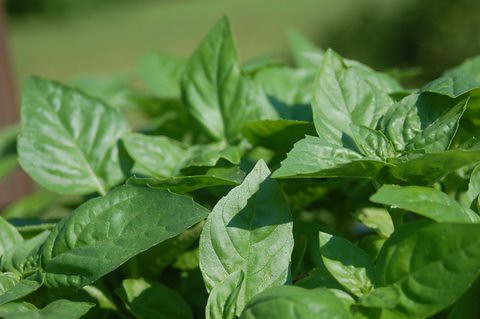
Basil is treated as an annual but leaves can be dried.

Cuttings taken in summer can be used indoors for fresh herbs.

Supermarket herb pots are now a convenient way to enjoy fresh herbs. Look after them as suggested above. Do not subject them to a chill as they will have been grown very tender.

Drying and Preserving Herbs

Sprigs of herbs are easiest to handle when it comes to drying over trays, frames or on paper. Leaves need turning several times in the first couple of days. Microwave ovens are problematic as they can cook rather than dry your herbs (use short settings and test for brittleness as you go). Drying trays can now be bought from good garden centers. For large quantities, artificial heat in a temperature and humidity controlled drying room may be worth the investment.

Stems can be tied and bunches left to hang in a warm airy atmosphere but control is hard and end results are more difficult to predict.

Chamomile can be dried in the plate warming part of your oven (let the moisture escape). Laid sparingly over newspaper, seed heads such as Fennel and Dill can be dried (but fennel itself will flop rather than dry). When dry keep mthe leaves and stems such as Marjoram can be thrown away.

Rubbing down to get the dry leaves should be done with gloves and a smog mask if large quatities are involved. Normally only enough herbs for winter are required so large quantities are not involved. Storing in dark, air-tight containers such as glass jars is best. Dried herbs deteriorate if exposed to light and can easily reabsorb moisture.

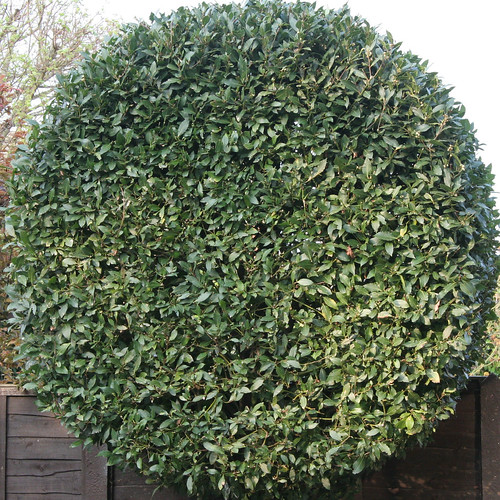
Our trimmed bay tree
Bay is an evergreen plant. The leaves can be used all year round to flavour soups and meat.

Mint can be pickled in vinegar which becomes a popular way to eat the herb.

Photo Credits
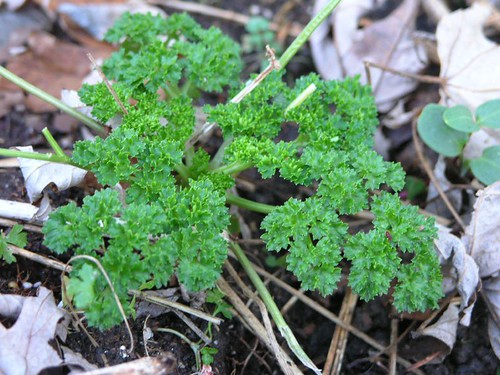
Parsley by -Mandie- CC BY-NC-ND 2.0 ‘I picked and dried some of my Parsley this week. This is part of what I’ve left in the front yard, which might make it, considering it’s close to the house, on the south side…..’
Basil – Ocimum basilicum by Jasmine&Roses CC BY-ND 2.0
Our trimmed bay tree by exfordy CC BY 2.0

Successful Staking for Perennials

Successful Staking for Perennials

There is an art and a science to successfully staking your perennials and young plants. It can make a significant difference in a herbaceous border. Dahlias like space to themselves and can then produce a large individual plant, you may think these stakes are a bit optimistic.
Dahlia stakes

How to Stake Perennials

  • Staking should be done when the plant is about two-thirds of its final size. This is often late April or May.
  • You need to judge how wide the plant will grow as well as how high.
  • Surround the plant with a ring of stakes about every 8-12 inches
  • If using Hazel stakes, weave the tops together to form a cage that the plant stems can grow through. Bought wire mesh can achieve the same effect and will be hidden when the plant completes its growth.
  • Cut the bottom of the stake at a sharp angle so it goes into the ground more easily.
  • The life of organic stakes can be increased if you shave off the bark and pith on the part of the stake that will be pushed into the ground.

Newby Hall gardens plant support

Types of Stakes for Perennials

  • Birch, Willow and Hazel all make good stakes because they are pliable and twiggy.
  • Bamboo canes are popular and can last 2-3 seasons.
  • Plastic coated link stakes are designed to fix together. As long as the ground is even they work quickly
  • Do not forget garden twine to support the plant. I like to tie string across as well as round but that depends on the weight of plant material and flowers.
  • Tieing a stem to a single stake make a figure of eight loop around both to avoid cutting into the stem.

Newby Hall gardens 2012 116
This picture above is of a large arching cage built to support a climbing flowering plant like a clematis support. There are no hard and fast rules for staking but try to make the end result unobtrusive.

Below is an angled stake for use where the wind is high and you want the tree or shrub to be able to sway around to build up strength.
tree stake