Google Killed my Seeds

Google Killed my Seeds

My garden tips web site is being killed by Pandas and Penguins. These alien species have been imported by Google and are destroying the search rankings.

The search rankings were the main way to access the circa 2,000 pages of tips, hints and photographs on this web blog. Thousands of amateur gardeners read one or more pages every day until Google changed the rules. This new garden pest is called an algorithm and they breed at the expense of smaller web sites. 80% of the traffic has disappeared even though we try to comply with all the Google rules.

If you want most of your searches to take you to the BBC, Wiki, RHS or big businesses selling you a product then Google is the tool for you!

I can’t claim to be growing seeds of wisdom nor germinating the next great garden writings but Google used to give me and other bloggers an opportunity to share and shine.

For the Future

If you like idiosyncratic observations from a practicing gardener, with a warts and all approach, then sign up for our RSS feed. (I do not understand what sort of fertiliser this feed is but my son recommends it.)
The 5,500 photographs of gardens, plants and flowers, many or which feature on one or more pages, are still available to view on Flickr.

Euphorbia atropupurea

Why chose to illustrate the article with a Euphorbia? Well the sap is irritating but it won’t kill you.
Despite Google I will keep planting blogs and hope they grow in popularity.

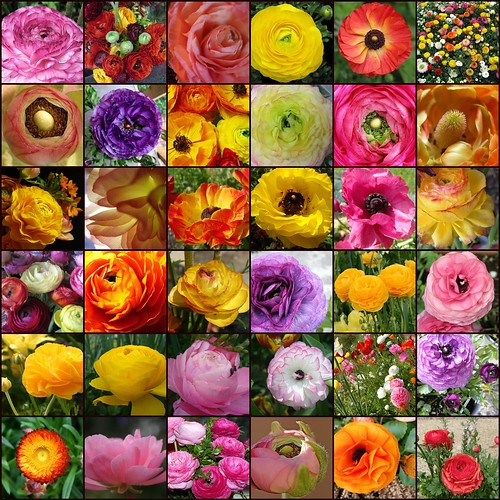
Ranunculus Calandrinioides and Other Buttercups

Ranunculus Calandrinioides and Other Buttercups

There are as many varieties of Ranunculus as there are buttercups in a meadow. Not surprising as a buttercup is a member of the Ranunculus family as is this Ranunculus calandrinioides.

What is Ranunculus Calandrinioides

  • This perennial plant is happy grown in containers or an alpine house.
  • Growing 8 inches tall and 6 inches wide.
  • In suitable climates some of the 200+ species can be useful as ground cover outdoors.
  • The roots are fleshy and thick and different species may be tubers or fiberous rooted.
  • The lance shaped leaves are bluish-green and upto 3 inches in length.
  • Flowers are cup shaped white or pink 2 inches wide.

Ranunculus

Growing Ranunculus Calandrinioides

  • Ranunculus Calandrinioides need full sunlight to reach their full potential with good flowering.
  • Moist soil that receives regular watering to a depth of 18 inch deep is favoured by most Ranunculus.
  • Soil should not be allowed to dry out.
  • Grown outdoors on the southern and western sides of buildings are favoured areas as they are usually are the sunniest.
  • Ranunculus calandrinioides should be easy to grow under cold glass in good soil or compost.
  • Winter growth may be lax due to low light levels that cause the plant to be drawn up.
  • Kept bone dry until mid winter it will stand freezing conditions
  • Watered in early autumn, after a summer rest it will grow well before Christmas.

Germination guide
Various Ranunculus from Thompson & Morgan
B&T Seeds say Ranunculus calandrinioides seeds will usually germinate in 30-90 days, even under good conditions germination may be erratic. Sow seeds about 2mm deep in a Well drained seed sowing mix at about 10°C.

Seeds will mostly germinate as the weather warms up in Spring, some may germinate during the Summer or Autumn but are more likely to stay dormant until the following Spring.

Photo credit
Grateful thanks to Robynejay for using CC BY-NC 2.0

Ranunculus by robynejay
Various Ranunculus from

Thompson & Morgan

Colour Can Con Gardeners

Colour Can Con Gardeners

Colour is a complex science and not a subject for the colourblind to take lightly.

Kew Gardens September 2010
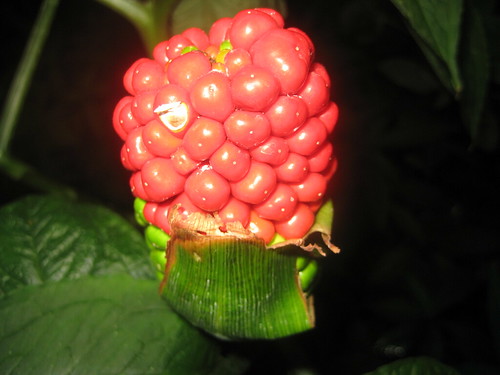
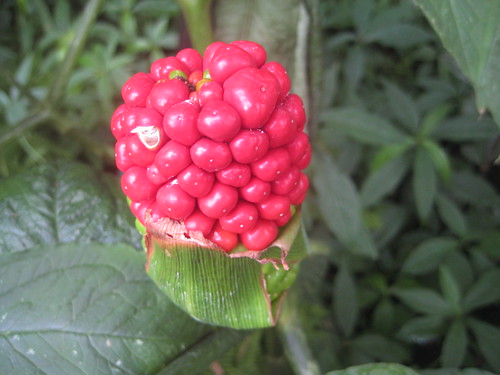
Both of these images were taken virtually at the same time and of the same plant. Is it red or orange seed capsules that are right. If the plant is Arum maculatum a Lords and Ladies plant then orange would be the favoured colour.

Kew Gardens September 2010

Light has a temperature and like a ‘white hot’ metal it can look dark red through orange to a burnt out white.
See the ‘Fearless Colour Gardens: The Creative Gardener’s Guide to Jumping Off the Colour Wheel

Harewood 052
It comes as less of a surprise when sun and shade affect colour perception as in this pairing.
Harewood 081

Acer palmatum disectum

Colour saturation can vary with the tone of pigment but is more likely to be a function of the camera and photographic settings.

Acer palmatum disectum

Frost 005
Reproduction is the last variable we are considering in this set. Electronic screens ipads, phones, Tv’s etc vary more than printed matter. Even print can often look quite different as plates and blankets wear.
Frost 006

For more on colour visit the The Society of Dyers and Colourists Colour Museum in Bradford

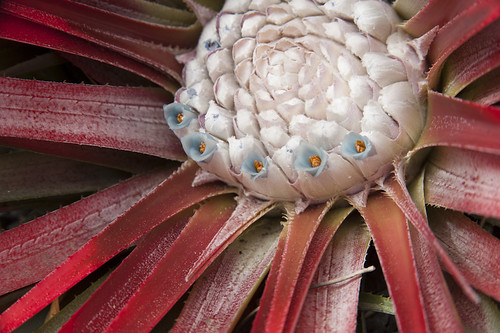
Bromeliad Fascicularia bicolour

Bromeliad Fascicularia bicolour

Blooming fascicularia

Kew publish some photographs for public consumption and use under a creative commons license BY-NC-SA 2.0 including this image of Blooming fascicularia More pics on google

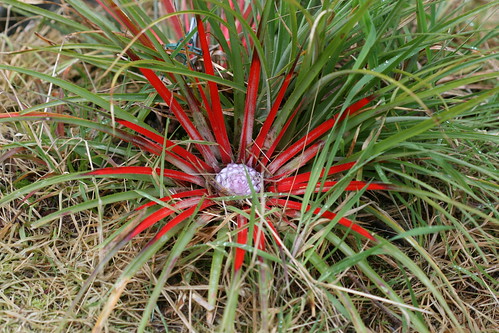
Fascicularia bicolor #1
This photo of Fascicularia bicolor #1 by J.G. in S.F. is under CC BY-NC-ND 2.0

Gardeners Comments
Fascicularia bicolor is native to Chile as is the longer leaved Fascicularia pitcairnifolia.
Fascicularia bicolor has long thin leaves to about 24″ and when mature turns a brilliant red.
The blooms are formed by large tight clusters of blue flowers in the center.
Do not give too much fertiliser if you want them to flower. They may flower better when pot bound.
It offsets to form large clusters.

Fascicularia pitcairnifolia var. bicolor

Fascicularia pitcairnifolia var. bicolor by Silversyrpher, CC BY 2.0 Taken Benmore Botanic Gardens, Argyle, Scotland. Sept.09


A less flamboyant Bromeliad
Bromeliads are members of the Pineapple family and grow in the tropical and sub-tropical forests of the Americas…. read more

Funky Growing

Funky Growing

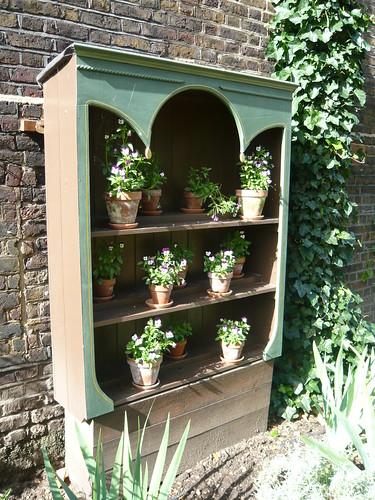
Going to the theater used to mean a trip out to see actors performing. Then someone built a stage to show off Auriculas and they called this an Auricula theatre.
Victorians and Edwardians grew some fine plants shown off in these neat custom built arenas like the one at the Geffrye Museum in London.

London liverpool st 132

So what has this to do with funky veg or the Hot Chilli & Sweet Pepper Kit by Plant Theatre – 6 Different Varieties to Grow?. Well I have given it away as these are products sold by Plant Theatre and available as gifts via Amazon.

More About Funky Veg

The kit is promoted as a really novel gift and would work for gardeners or cooks with just a window box.
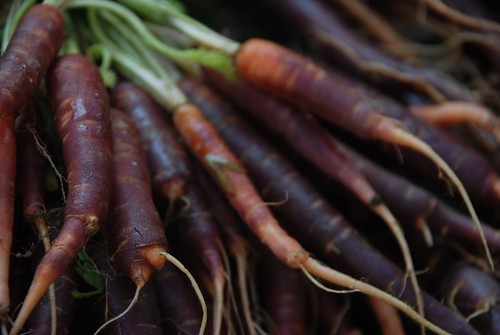
The kit contains 5 distinctive and unusual vegetables including the following varieties: Purple Carrot seeds, Yellow Courgettes seeds, Stripy Tomatoes seeds, Red Brussels Sprouts seeds and Multi Coloured Brightlights Swiss Chard seeds
Also included in the box are: 5 starter growing pots made from peat 5 peat blocks which expand when watered 5 plant markers and Sowing & Growing Tips.
All the seeds are of UK origin.
I would be a bit worried about the extent of the companies disclaimer of responsibility which says ‘The germination and growing results are the purchasers responsibility and depend on many factors such as planting time, seed depth, watering, light and weather conditions. These factors are out of Plant Theatres control and Plant Theatre or any company selling this product can not be held responsible for non germinating seeds. This kit is deemed as a novelty gift and is sold as such.’
A cynical gardener may think they doth cover their muddy footprints too much.

cosmic purple carrots
Cosmic (and funky) purple carrots by kthread CC BY-NC-SA 2.0

Hosta Flower Photographs

Hosta Flower Photographs

Hosta flowers
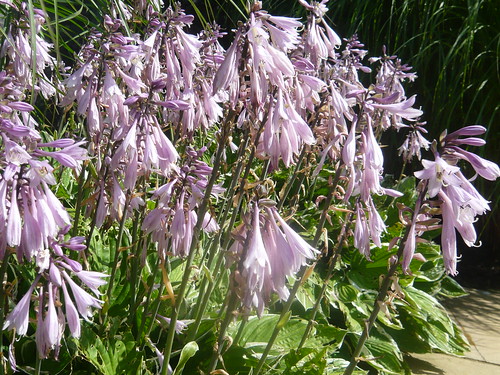
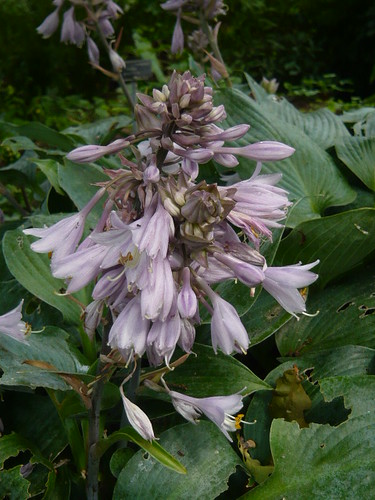
A mass of purple flowers show that Hosta can produce the goods. They are also good for flower arranging.

Hosta slug fest

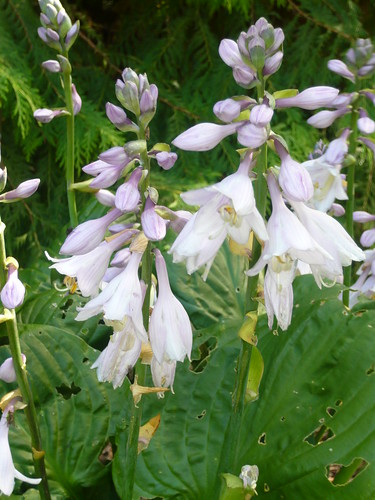
These flowers stand proud of the leaves which are just beginning to suffer slug damage. Flowers from June to October with funnel or bell shapes.

Hosta flower slugged

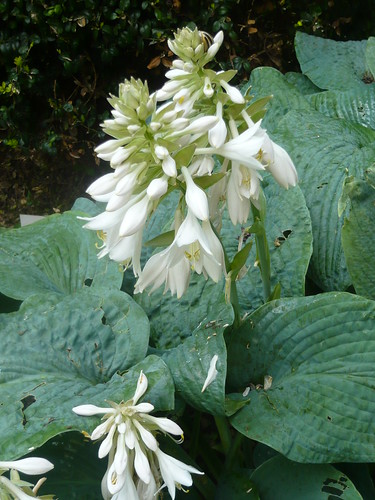
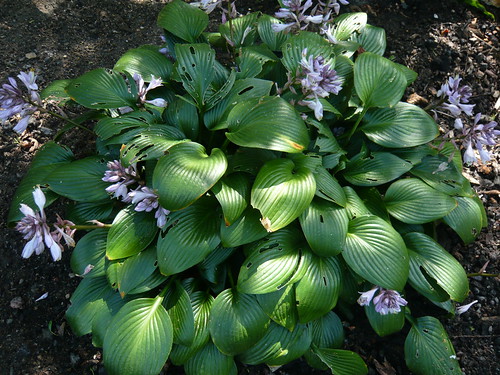
White flowers on this larger leafed Hosta are shown off by the blue-green leaves.

Jedburgh hosta

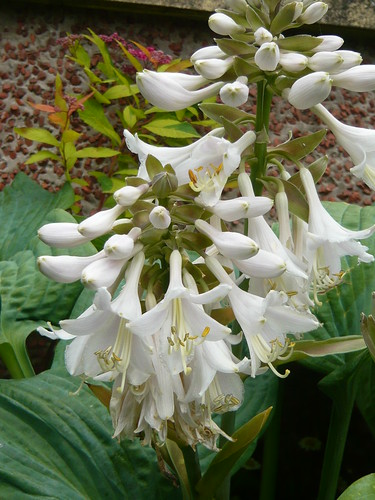
Another clear white flower – I am thinking I should consider Hostas for flowers not just the shape, form and colouring of the leaves. White flowering Hosta  plantaginea is strongly scented.
Old Hosta

Flowers are not as succulent as the leaves and snails and slugs go for the easy meal. Hosta flowers  are   members of the lily family and some folk say they are edible (but I will leave them for the slugs).

Hosta slug fest

Not as floriferous as many varieties the stems are shorter and few in number.
Hostas can be worth growing for the flowers alone – look at these flowers and see if the leaves are just useful extra features.

Mix of Favourite Seeds and Saving Tips

Mix of Favourite Seeds and Saving Tips

Mixed bunch

This collection of 27 different packets of seeds for sowing from the start of February contains a fine mix of varieties. The cost is below £40 and that is good value when you realise 10 of the packets are F1 hybrids which are generally quite expensive and nearly worth the entrance price alone.

Customer favourite seeds at Thompson & Morgan

Flowers in the Mix

Amberboa muricata
Begonia x tuberhybrida illumination Apricot Shades F1 Hybrid
Californian Poppy Fruit Crush
Marigold patula x erecta Zenith Mixed F1 Hybrid
Papaver oriental Coral Reef
Digitalis purpurea Candy Mountain
Echinacea purpurea Pink Parasol
Nasturtium minus Princess of India
Petunia x hybrida Purple Velvet F1 Hybrid
Petunia x hybrida Salmon Velvet F1 Hybrid
Papaver paeoniflorum Ooh La La
Sweet Pea Sugar ‘n’ Spiceâ„¢
Sweet Pea Flying the Flag
Sweet Pea Fragrantissima
Scabiosa atropurpurea Beaujolais Bonnets
Silene laciniata Jack Flash

Courgette and Egg plant

Vegetable Seeds in the Mix

Beetroot Wodan F1 Hybrid (Globe)
Runner Bean White Lady
Tomato Sungold F1
Tomato Suncherry Premium F1 Hybrid
Lettuce Chartwell (Romaine)
Lettuce Ultimate Mixed
Pea Oregon Sugar Pod (Mangetout)
Carrot Flyaway F1 Hybrid
Brussels Sprout Trafalgar F1
Climbing Bean Cobra
Courgette Defender F1 Hybrid

Gardeners Tips for a Mix of Favourite Seeds

  • If you like to grow your own from scratch or are looking for some new inspiration try this wide ranging collection. Sorry if you were misled in to thinking you could grow fuchsias from this seed collection – blame T&M.
  • Why not share the packets and growing with friends and neighbors or your local allotmenteers. There should be plenty to go around.
  • Flowering and cropping period for this mix vary from May to September. Sowing Months are from February to June or July
  • Leucanthemum

    Storing Unused Seed for Future Years

  • Most seed will remain viable for several years in unopened packets.
  • A bit of care can help keep opened seeds for several seasons.
  • Seed deteriorates if badly stored particularly in hot and fluctuating temperatures.
  • Seed is ‘done for’ if it gets moist and can rot or germinate so store it in dry conditions. I use a Tupperware box and have some desiccant crystals I got free with some bought goods.
  • I fold over the edge of foil wrappers so air and moisture can’t get into packets when I am saving some of the seed for other seasons or later sowing.
  • Seeds that I have collected from my garden are kept in paper bags or envelopes and try to avoid excessive drying out.
  • Germination rates vary from plant to plant and will deteriorate over time but if in doubt save your seed and hope for the best. Beware Parsnips and some varieties of seed have a very short shelf life. Other seed is best sown as soon as it is collected.
  • Some gardeners recommend storing seed in a container in a refrigerator but I have never bothered.
  • What is Acid Soil for Gardeners

    What is Acid Soil for Gardeners

    Many plants grow best in what is termed ‘acid soil’ but what acid and how strong. How can we gardeners find answers to these questions so we give our plants the most appropriate soil conditions.

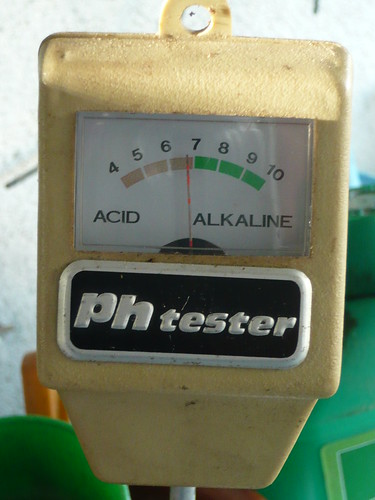
    Ph tester

    Measuring Soil Acidity

    • Acidity in soil or solutions is measured in terms of the pH level. pH is the abbreviation for potential hydrogen the measure of its hydrogen-ion concentration.
    • pH for soil varies on a numeric scale where, between 1 and 7 is very acidic to neutral and between 7 and 14 is neutral to alkaline basic or limey
    • UK soils are normally the pH range of between pH 4.0 and 8.5. (4.0 is quite acidic and 8.5 very basic or alkaline).
    • I aim for soil between 6.0 and 7.5 an this suits most of my plants

    This scale shows pH in relation to common household liquids. 7.0 is pure distilled water.

    What is the Impact of pH on Plants

    • pH levels influence which plants will grow.
    • pH levels determine if a plant can take up and use normal nutrients.
    • An acid-loving plant in alkaline soil is likely to suffer and die.
    • Below 5.5pH the availability of manganese and aluminum could become toxic to plants.
    • In alkaline soils you may experience bacterial diseases eg in potatoes.

    Field Poppies

    What Affects Soil Acidity

    • Soil is not homogenous and you need to test soil from several areas. There are kits and measuring devices to help.
    • The original underlying parent material will determine your soil pH.
    • Rainfall and leaching can take soluble chemicals from the soil making it more acidic
    • The application of fertilisers and organic matter can influence the pH level.
    • High and regular crop harvesting can change the soil.

    Changing Soils pH Acidity

    • To make soil less acidic for vegetables, saxifrages and annuals for example you can add lime or pulverised chalk.
    • Bone meal is a good source of calcium and with wood ash it can help raise your soil’s pH over time. It is used for soils that are only slightly acidic.
    • Ericaceous plants such as most rhododendrons, heathers, camellias, acers and blueberries need acid soil.
    • Peat is naturally acidic and a mulch of pine needles, peat moss, or shredded bark that will organically reduce pH levels. Otherwise ericaceous compounds are sold
    • For container plants water several times with a solution of 2 tablespoons vinegar to a gallon of water

    June garden 069  Rhododendron

    Footnote
    The term Ericaceous is used for acidic soil or acid loving plants. Another way of looking at it is that Ericaceous plants are known as lime-hating or calcifuge plants. The term comes from Ericas which are generally peat loving moorland plants.

    Stokesia Laevis Aster Like Flowers

    Stokesia Laevis Aster Like Flowers

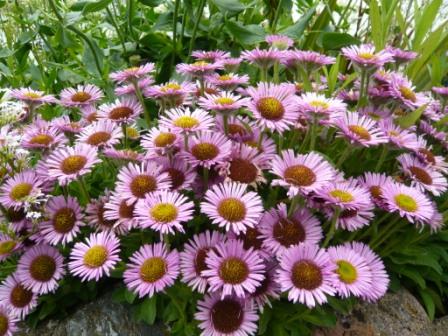
    Stokes’ aster is an unusual plant with large cornflower-like blooms on low growing plants, with rosettes of narrowly lance-shaped, dark-green leaves. It has a long flowering season, from mid-summer until the first severe frost in mid-autumn. The flowers are very good for cutting.
    Stokes' Aster

    Growing Conditions

    • An evergreen, Stokesia Laevis preferring acid soil, a sunny spot, and very good drainage. The roots may rot if plants are too wet in winter.
    • The long lasting flower heads are produced on plants 12-18 inches high with a similar spread.
    • The summer flowers are generally purplish/blue in a starry pattern and are ideal for cutting or attracting butterflies.
    • Stokesia laevis like good drainage, particularly in the winter, so a raised bed or rock garden may be worth trying.
    • Stokes’ Aster is a North American native wildflower with a double Shasta Daisy in effect.
    • Plants form a low mound of leathery green leaves, remaining evergreen in mild winter areas.


    Selected Varieties

    Stokesia Laevis Purple Parasols
    Stokesia Laevis alba
    Stokesia laevis ‘Blue Danube’ with 4 inch wide lavender flowerheads
    Stokesia laevis ‘Wyoming’ has the darkest blue flowerheads of all
    Stokesia laevis ‘Omega Skyrocket’ is a vigorous variety growing 3-4 ft tall and has long-stems of white to pale blue flower.

    STOKESIA

    Photo credits
    Stokes’ Aster by BlueRidgeKitties CC BY-NC-SA 2.0 ‘These pretty flowers were planted at the Daniel Boone Native Gardens in Boone. They are native to North Carolina, but more at home in the coastal plains than in the mountains. They are commonly cultivated for garden use. If you have them in your yard, cutting the dying flowers before they set seeds will make the plants produce more flowers throughout the entire summer. ‘
    STOKESIA by Swami Stream, CC BY 2.0
    Stokes Aster by cmcgough CC BY-NC-ND 2.0

    Stokes Aster

    Good Root Growth with Root Stimulators

    Good Root Growth with Root Stimulators

    Root and beech beach

    Rootgrow is an organic treatment that was originally launched to improve the vigour of roses via the roots when incorporated at planting. Rootgrow helps to improve the uptake of water and nutrients from the soil and is now more widely used. It encourages the roots to grow more quickly and also helps to prevent rose replant sickness. It is especially beneficial in poor soil but do not use with bonemeal as that inhibits growth of the fungi.
    Rootgrow can be bought in most good garden centres or via amazon

    Plants use hormones to influence and promote the development of their cells. Root stimulators, like rootgrow usually come packed with bacteria that can actually produce phytohormones directly into your plant. The hormones encourage much faster growth which results in bigger yields and faster harvests. Mycorrhizal fungi can now be added when planting as there is a symbiotic relationship that encourages healthy root growth.

    According to some, quality rooting stimulators come with certain strains of bacteria, most notably paenibacillus, designed to enhance the Nitrogen your plant receives so it can help maximize root and plant health. This bacteria provides your roots with a steady stream of reduced nitrogen by converting N2 gas in the air into a form of nitrogen that can help your roots grow to their potential. ‘The volume of soil space controlled by tree roots is directly related to tree health’ Dr Kim Coder 2000

    Hydroponics growers have had to deal with the encroachment of harmful fungi, usually when their conditions becomes too humid but there are certain strains of fungi that can actually benefit root development. When these fungi are introduced to your hydroponic system, they can break down debris and turn any undissolved nutrients into materials that your plant can actually absorb by increasing nutrient uptake, releasing Growth Hormones and promoting Beneficial Fungi, with Nitrogen, Phosphorous and Potassium.

    A mixture of 5% nitrogen, 12% phosphoric acid, 3% soluable potash is highly effective as a plant starter. It stimulates early strong root formation and reduces transplant shock.

    Tree Roots

    Good Roots and Bad Roots

    • This shrub has evolved a root system that fits the landscape literally.
    • Good large roots should be oriented both laterally and vertically to provide better root systems.
    • Many plants need large roots for anchorage and fine feeder roots for water and sustenance.
    • Higher quality root systems have several large main roots emerging from just below the soil surface.

    Roots get low recognition by many gardeners but the science of root growth and root development is about to change all that. No longer is it good enough to dig a £5 hole for a £1 plant. More care and thought needs to go into the roots and their needs and aspirations.