Purple Flowers Attract Insects
Purple Flowers Attract Insects

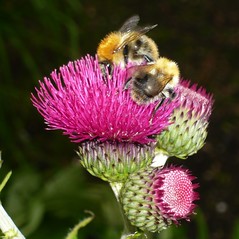
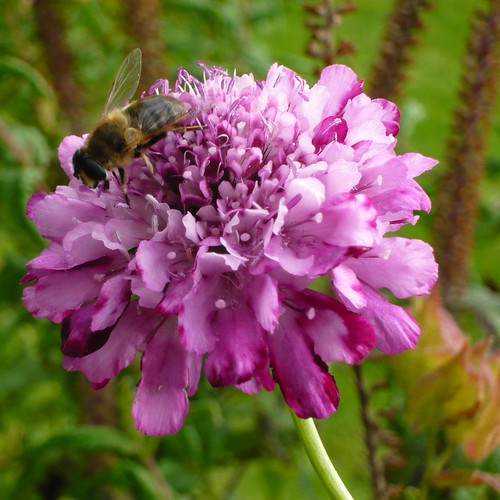
Are insects attracted to colours or do some purple flowers have more nectar and pollen to attract insects in the first place?
Anne Bebbington quoted in Science and Plants for schools says ‘You need to take into account that different sorts of insects see colour differently. Most insects except for some butterflies do not see red well. Flowers may have colour which we can’t see but insects can e.g. ultraviolet markings.
Colour is not the only thing that attracts insects, scent e.g. is often important. Again it it is very likely that there are scents that we can not detect.’
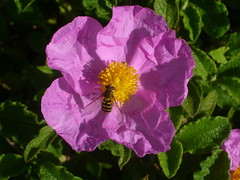
According to my Lithuanian friends ‘If you keep bees, or if you would like to attract more of them into your garden, consider sowing lacy phacelia (Phacelia tanacetifolia Benth.), viper’s bugloss (Echium vulgare L.) and borage (Borago officinalis L.). In addition to their honey-producing properties, they also make an attractive addition to your border. Some attention should be given to caterpillars of butterflies. Plants in the pea family (clover, sweet clover), as well as the cruciferous plants (field penny-cress, shepherd’s purse, bitter cress, brassicas) are most appealing to caterpillars of beneficial insects.’ see more on mygarden.

Fpor more varieties of Purple flowers read or Purple patch
Blackthorn and Sloes

Blackthorn and Sloes

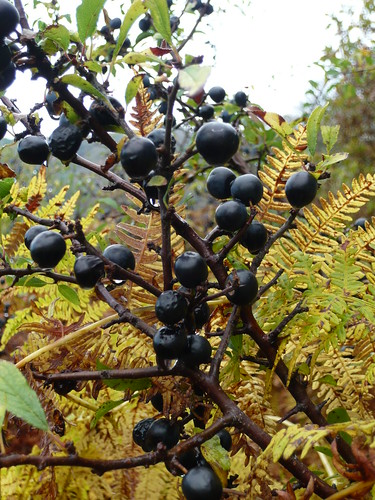
Blackthorn is a multi branched, deciduous tree or bush that can grow up to 20 feet tall (the Blackthorn in this photo was 7 feet tall as were the ferns!).
The stem is dark to black and the small branches create thorns hence the name Blackthorn but in Latin Prunus Spinosa.
Like its relative the Cherry plum, Blackthorn produces small fruit we know as Sloes.
The thorns can be very sharp and the bush can be a bit ragged unless kept in check.

Blackthorn is often used for and found in hedgerows or on the edges of woodland and is easy to grow as part of your mixed hedge. In early Spring it is covered in small white blossom before the leaves come into bud. Blackthorn is good for attracting butterfly caterpillars but is best known for the small, spherical, blue-black fruit that are available in late Autumn.

Read More Read More

Quick Gardeners Tips

Quick Gardeners Tips

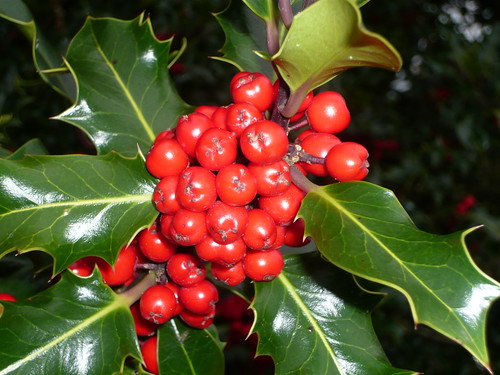
Holly in the Wild

A tip of the month from last years gardening calendar with selected additions from Gardeners tips.

  1. Recycle your Christmas Tree by shredding it for mulching Rhododendrons
  2. Put out fresh food and water for the birds through winter
  3. Protect emerging shoots from Slugs from March
  4. Plant strongly scented plants next to edible ones to deter pests
  5. Read More Read More

When is a Lily Not a Lily

When is a Lily Not a Lily

Water Lilies

The answer to the question ‘When is a Lily Not a Lily’ must be, when it does not belong to the Lilium genus of the Liliaceae family.
Despite the common names listed below bearing lily in the name they are not botanically Lilies.

Plants Masquerading as Lilies
Corn Lily
African ‘Aagapanthus’ lily
Arum lily
Belladonna lily
Bugle lily
Daylily ‘Hemorocallis’
Day Lily  - Hemorocallis

Read More Read More

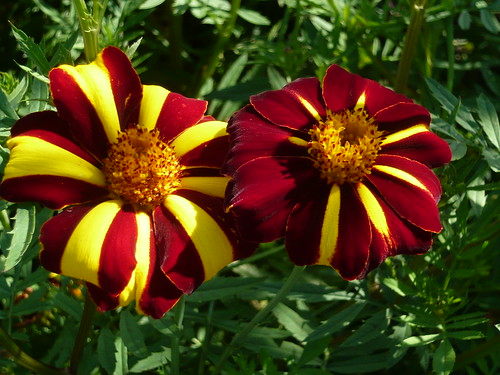
French Marigold ‘Striped Marvel’

French Marigold ‘Striped Marvel’

As gardeners recover from the time spent watching the Olympics spare a thought for the French. OK long enough!
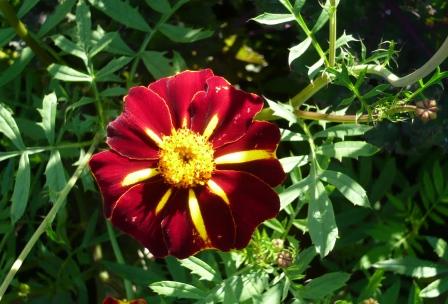
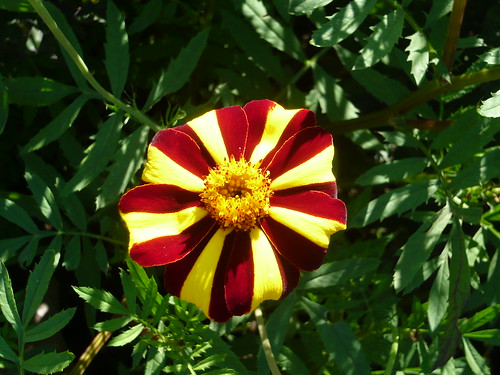
On the other hand spare a thought for French Marigolds available in mixed combinations of Yellow, Red and Orange and even the stripe marvels shown in our photos.

Golden Acre french marigold

French Marigold ‘Striped Marvel’

Marigold ‘Striped Marvel’ aka Tagetes patula or French Marigold
Each petal is evenly divided by a red and yellow stripe and this produces a thoroughly eye-catching effect.
The bushy, uniform plants produce masses of flowers, excellent for bedding and particularly good for cutting, lasting well in water.
Occasional all yellow blooms are produced through climate stress and collected seed may not come true next year.

Thompson & Morgan

Golden Acre french marigold

Many varieties of Frwench Marigold, including Striped Marvel, are available from Thompson & Morgan.

Growing French Marigolds

  • Sow during March-April in trays, pots, etc of good seed compost in a propagator or warm place to maintain an optimum temperature of 70-75F (20-25C).
  • Sowing 1/8 inch deep. Germination usually takes 7-21 days.
  • Transplant seedlings when large enough to handle. Harden off and plant out when all risk of frost has passed 12in apart in full sun.
  • Beware of slugs they love the aromatic leaves of these Marigolds.
  • French Marigold ‘Striped Marvel’ grow to a height of 24-30in. and flower from mid summer until September.
Growing Butternut Squash

Growing Butternut Squash

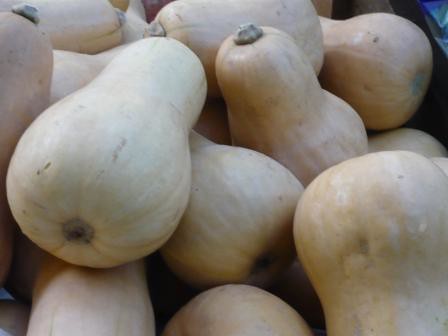
Butternut Squash

Butternut squash are delicious, prolific and easy to grow. They like to ramble and scramble, pinch out when the lead shoot is 3 feet long to encourage fruiting. Each plant can produce 4-8 fruit each weighing over 2 pounds. Butternut Squash has a sweet, nutty taste that is similar to pumpkin. It has yellow skin and orange fleshy pulp. When ripe, it turns increasingly deep orange, and becomes sweeter and richer.
I am going to try again this year as I have never been successful with this crop. I will content my self with 2-3 fruit per plant and will pollinate by hand.

  • Grow from seed when the risk of frost has gone and plant out 3 foot apart.
  • During the growing season it is vital to ensure that the plant never dries out to stop fruit being shed.
  • Deep beds with a mulch of rotted horse manure and a weekly feed with Miracle-gro or Phostrogen will help crop size.
  • Keep stalks/stems dry to avoid rotting.

Harvesting and Storing

When the fruit is ripe the texture of the skin becomes firm, golden in colour and will easily resist the pressure of your thumb nail. Like a melon, it “rings” when given a good rap.
Storage as for all vegetables of this type is in a clean, cool, dry place. I have seen them stored in a loft space on top of fiber glass insulation.
If picked in late September they can last until April the following year.

Winter Barbara Butternut F1  Seeds by Thompson Morgan

Waltham Dutchy Originals  Seeds by Thompson Morgan

More Cultivation Instructions

Read More Read More

Titanic Garden Icebergs

Titanic Garden Icebergs

Your autumn garden may still contain Ice Plants but how many Icebergs have you grown. Before global warming addles everyone’s brains why not grow roses and lettuce that even the kids will think are cool.

Rose Iceberg
Rosa Iceberg

Global warming has not made my Iceberg Rose melt or disappear. On the contrary it is doing very well despite the rain.

Amongst the top picks for many rose enthusiast this is one shrub that can look after itself. Any floribunda rose should have lots of buds and blossom and Iceberg doesn’t disappoint. These buds are slightly pink, opening regularly through summer and autumn to display classic white roses.

Compared to other roses this plant is disease resistant, feeds some aphids and has sharp thorns but all is forgiven in lieu of its great display.

Tips

  • Icebergs bloom on new wood so prune before Easter to get good growth.
  • Encourage your Iceberg to grow tall (4 foot) in a ‘White Garden’ – you can also get Iceberg as a climber sport

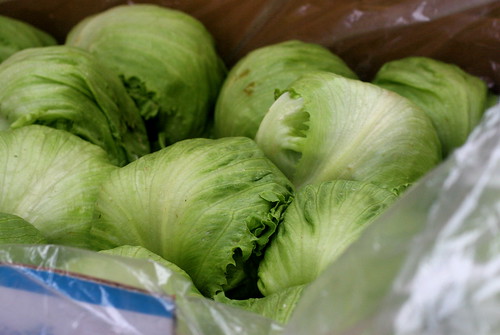
miniature iceberg lettuce

Iceberg Two
Vegetable gardeners will think of the Iceberg lettuce before roses.
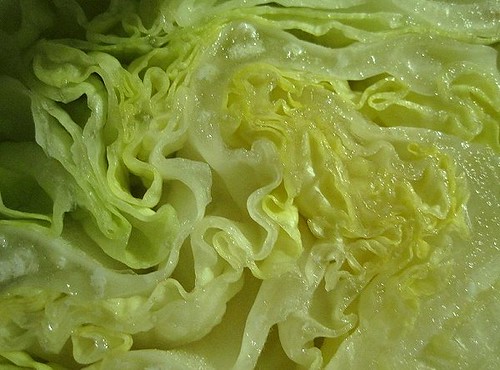
To me they are not big on taste but great on texture. Crisp and juiciest of the many Lettuce varieties the Iceberg is a household favourite.
Due to the high water content Iceberg lettuce are not much good once the frost arrives.

iceberg lettuce 2

Photo credits

miniature iceberg lettuce by MuffetCC BY 2.0
iceberg lettuce 2 by wintersoul 1 CC BY-NC-ND 2.0

Growing Gazania ‘cos they goes in here

Growing Gazania ‘cos they goes in here

Gazinia

These flowers goes-in-‘ere

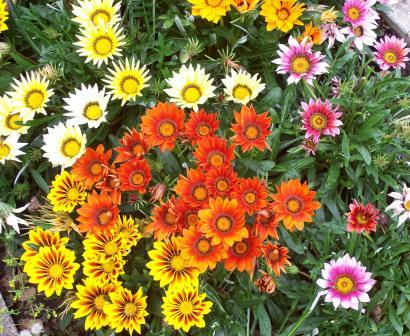
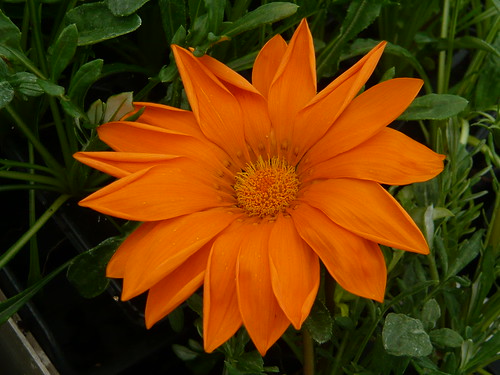
Gazania are one of the most colourful of garden flowers. The star shaped daisy like flowers can be up to 3 inches across and are available in a range of colours as this photo shows.
The flowers of most varieties are stripped and zoned. As in this photo they display their vibrant colours even in cloudy conditions but prefer the hot sun.

Gazinia

Read More Read More

Ornithogalum Genus

Ornithogalum Genus

Ornithogalum AKA Star of Bethlehem

I have no photographs of my own for this bulb but will try some of these small flowers in my rockery for next year.
They should grow in shady postions so you will find a spot for them in most gardens.
Larger variety Magnum grows over 2 feet tall and flowers white with a green stripe.
Most Ornithogalums fail to grow above 12 inches tall including the orange Dubium (Sun Star) and the dwarf Umbellatum.

Ornithogalum-kochii_3
Ornithogalum kochii supplied by amadej2008 on flickr CC BY-NC-SA 2.0
Kochi’s Star-of-Bethlehem
Slo.: Kochovo ptičje mleko
Dat.: May 11. 2010 Lat.: 46.30550 Long.: 13.48375

Habitat: Poorly cultivated grassland, under an old fruit tree, flat terrain, shallow soil, probably limestone bedrock, half dry and sunny place, exposed to direct precipitations, average precipitations ~ 3.000 mm/year, average temperature 8-10 deg C, elevations 330 m (1,100 feet), alpine phytogeographical region.

Ornithogalum
Ornithogalum by geekygirlnyc CC BY-NC-ND 2.0

Other Tips on Ornithogalum
A member of the same family as Asparagus
Interesting genus of bulbous plants from southern Africa and Europe.
Easy to germinate from fresh seed – mine were obtained from the Alpine garden society.
See Pacific Bulb society for 44 species