Divine Busy for the Impatient

Divine Busy for the Impatient

bizzie Lizzie

Busy Lizzies are correctly called and often sold as Impatiens. To combat disease they have been crossed with ‘hawkeri’ a variety from New Guinea.
The bigger the plants you buy the less impatient you need to be but beware of frost, a sure killer.
I have just received 72 plug plants that were little more than germinated seeds but I have followed the instructions repeated below:

Pot up plug plants and grow them on in bright, frost free conditions.
While the plants are still small but with more than 2 sets of leaves, pinch the growing tips out to produce a well branched, compact plant.
When all risk of frost has passed I will acclimatise the Busy Lizzie plants to outdoor conditions over 7 to 10 days, prior to planting in their final positions.

Growing Habit
This robust New Guinea Impatiens is strong growing and mildew resistant so you can rely on a fantastic display from Busy Lizzie ‘Divine’.
Its large flowers in a mix of red, orange, lavender, white and magenta are perfect for adding colour to patio pots and garden borders
Plants should withstanding wet, dry, cold or hot conditions throughout the summer. I can’t help but think they will like a regular drink and some humidity so I plan on a couple of plants in pots in the house and greenhouse.
Height: 30cm (12″). Spread: 35cm (14″)
Busy Lizzie ‘Divine’ flowers endlessly in a bright mix of colours from June to November.

Bizzie Lizzie

Anthurium as Houseplants

Anthurium as Houseplants

There is something exotic about the evergreen Anthurium that calls to mind hot tropical holidays. The long proboscis or spadix gives rise to the  nickname ‘Boy Flower’. The main issues for Anthuriums as houseplants are to keep the room temperature above 60°F and the air humid. 
There are 800-1000 species and new varieties regularly on the market so below is a small selection.

Selected Houseplant Varieties

Anthurium Crystallinum has large heart shaped leaves and grows about 18″ tall. Edges brown if too cold. Aerial roots need to be covered with moist compost so leave room at the top of the pot.

Anthurium Scherzerianum the ‘Flamingo Flower’ has waxy textured leaves and grows a bit smaller than other Anthuriums. A good plant to start with.

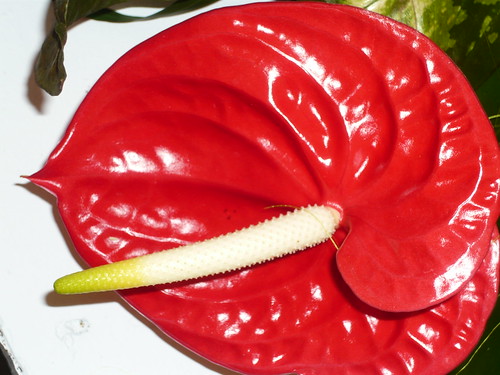
Anthurium Andreanum also called the ‘Wax Flower’ because of the texture of the red leaves. Appreciates some shade and humidity but not keen on dry central heating.

Tip The flowers will last for a long time as cut flowers.

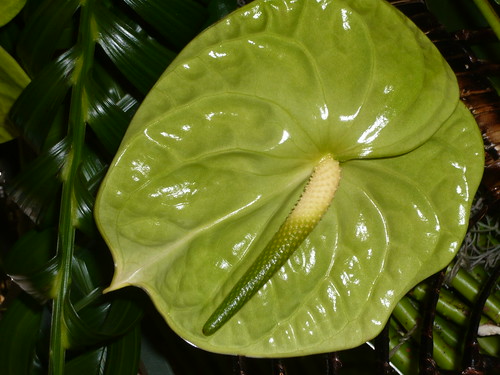
Green Anthurium one of the new colours now on the market.

Pruning Anthuriums

  • Leggy plants can be trimmed to keep them in shape.
  • Remove the dead and withered blossoms and overhanging leaves.
  • After pruning allow the plant to heal and new shoots should come from the cuts.
  • Mist and keep your pruned plant in bright indirect light.

Spring flower show 090

Some of the best Anthuriums are grown in tropical or Mediterranean climates. Madeira produced this flower and many cut flowers adorned the church in ‘Monte’ during a recent visit.

Anthurium

Acer platanoides Drummondii and Greenery

Acer platanoides Drummondii and Greenery

green-n-white

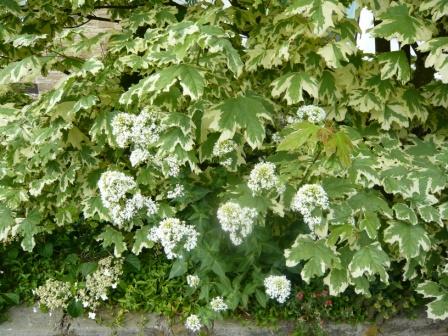
Green and white are very accommodating colours in the garden as they are both clean and fresh. This combination caught my eye  with the Climbing Hydrangea petiolaris just flowing over the top of a wall in which was growing Valerian alba.  Against the wall was an Acer platanoides Drummondii and all the colours seemed to blend so well.

Read More Read More

Organic Methods for Dealing with Greenfly

Organic Methods for Dealing with Greenfly

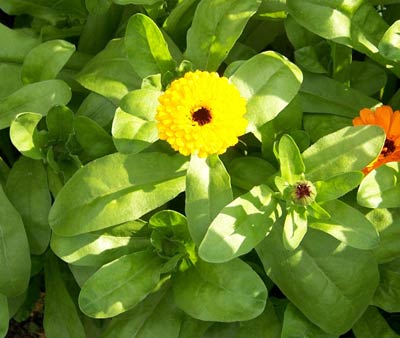
Pot Marigolds may help attract hoverfly

1. Encourage Ladybirds.

You can encourage ladybirds by providing suitable places for them to hibernated. You can buy ladybird boxes from specialist retailers.

2. Encourage Hoverflies.

Hoverflies are voracious eaters of greenflies. You will hopefully attract hoverfly without any effort. But, you can increase the hoverfly population by providing boxes to overwinter them. Geoff Hamilton used to encourage hoverfly and used to even harden off the hoverfly boxes like you would young saplings. It is also said that having a bunch of nettles encourages hoverfly because nettles provide an early season supply of aphids which encourage hoverfly populations for later greenfly infestations.
You can also encourage hoverfly through companion planting. E.g. Marigolds are said to attract hoverfly.

3. Hose off Aphids

Read More Read More

Top Rockery Plants for Growin In UK

Top Rockery Plants for Growin In UK

alpine21

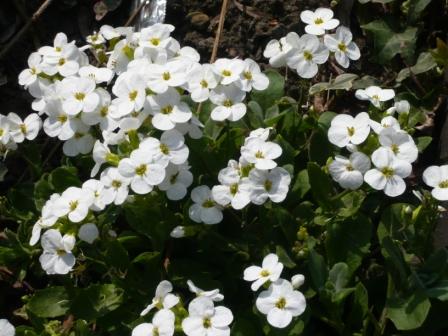
Rockery plants look very good in spring as they trail over rocks and edges in the garden. The rockery mimics natural conditions for these alpine dwellers often with limestone rocks or fast draining poor soil.

Top Rockery Plants for Beginners

  • Arabis shown above is also known as snow-in-summer and has showers of white flowers. The plant is robust and useful for covering rough stoney ground. Some species need a bit more care but are useful in the rockery including Arabis rosa a pink form and arabis bryoides that forms a small mat of hairl leaved rosetts.

Read More Read More

Pictures of Magnolia in Bloom

Pictures of Magnolia in Bloom

magnolia

Magnolia in Full Bloom Outside the Radcliffe Camera, Oxford University.

Magnolia’s make an excellent garden plant, flowering in March – May. Early flowering varieties may be susceptible to frost. This can be avoided by protecting flowers with fleece on late spring frosts. With global warming,  late frosts may reduce in severity but do not hold your breath.

Read More Read More

Wild Cowslip aka Primula veris

Wild Cowslip aka Primula veris

cowslip

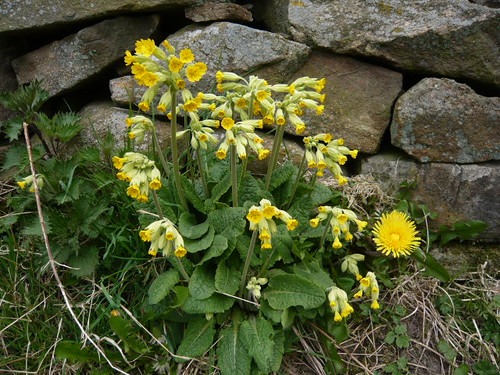
Primula veris is more commonly known as the Cowslip but also resides under the alternative names of Palsieworts, Paigles, Cowslop or Petty Mulleins.
The range of local names hints at the uses and affection for this cheerful plant.
Cowslips are still used in herbal remedies for nervous complaints and paralysis. Perhaps that is where the old name, Palsieworts comes from. Cowslop is not as fragrant.
Traditional Cowslip wine probably needs too many flowering heads to sustain the wild population of plants.
Other names that relate to their similarity to a bunch of keys include ‘key flower’ and ‘key of heaven’ whilst ‘fairy cups’ and ‘tittypines’ are a bit more avaunt-guard.

Locations for Growing Cowslips.
Cowslip field
I liked this field of wild flowers that included a large number of Cowslips. Obviously from the common name of primula veris you would expect them to be at home in a meadow.
Caught in a corner of a field the shelter provided by the wall shows off the top Cowslip to advantage.
When grown in clumps in a border or raised bed they combine well with other spring and early summer flowering plants.
I like them for the freshness in a small rock garden.
With the loss to agriculture of much meadow land it is now also worth seeking out the wild flowers on cliff tops and undisturbed land at the seaside.

Propagating Cowslips

Read More Read More

Best Tips For Growing Edible Crops

Best Tips For Growing Edible Crops

Prime space and time are precious commodities for every one growing crops from the biggest corporate farmer to the smallest window box gardener.
41lbs Onions

Planning Tips
Know why you are growing each crop. Is it for flavour, feeding the family, aiming for show quality or just to enjoy the process.
Only grow crops that you or your family will want to eat. Do not grow just for the compost heap.
Sow in succession to avoid gluts.
Consider ‘catch’ crops to use the available space more intensively.
Plants perform better with adequate space.

Apples

Tips to Help Plants Excel

Read More Read More

Ornamental Grass Growing Tips

Ornamental Grass Growing Tips

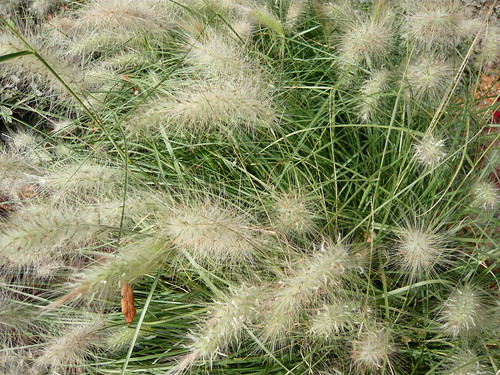
Growing Ornamental Grass can be easy and it will create a natural effect in your own garden. Aim for a mixture of textures, shapes and colours using leaves, flowers and seed heads.
In an open setting, with a low sun shining through, many grass plants can produce stunning effects.

Growing Tips

  • Remove dry seed heads to prevent self seeding
  • Tie tops together to aid cutting back in late winter with shears or a strimmer.
  • Select perennial, clump forming varieties rather than annuals or spreading grasses that can take over a small bed. (I avoid Phalaris for that reason).
  • Read More Read More

New to Gardens

New to Gardens

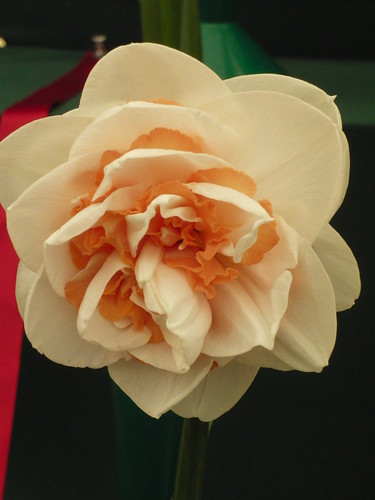
Daffodil selection

Black tulips, blue Daffodils, and red Delphiniums are all plants that have been discovered or launched on the unsuspecting public in the past. However in these cases not is all as expected.

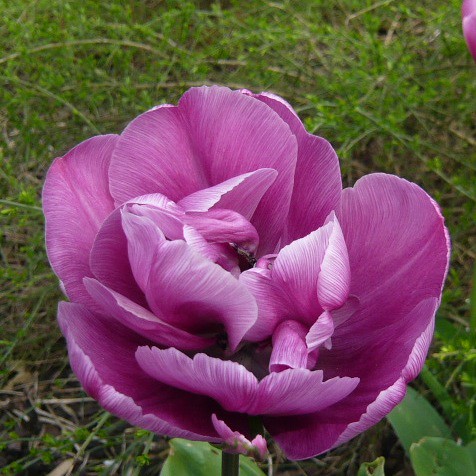
Tulip

Now comes a revolutionary grass that needs no lawn mower to keep it in check.
It is also moss proof and a major boon after this wet soggy winter.
Unfortunately you can’t smoke it (or if you did it wouldn’t give you much of a high.)

artificial grass

Artificial grass