Everlasting Wallflower Erysimum

Everlasting Wallflower Erysimum

The perennial wallflower ‘Bowles Mauve’ is just showing its first purple flowers of the year. I expect a show from now until October and as the flowers drop off the bottom of the stem but continue to open further up I will snip them off as there will be more stems thrown up. The plant is related to the biennial wallflower but has this constant performance rather than one quick hit. It isn’t as scented as other wallflowers.


Yellow ‘Dwarf Erysimum’.

Tips

  • It is vigorous making a 3′ mound in the first year but becoming leggy & woody in future years.
  • Fortunately it is easy to propagate from from cuttings
  • It is worth putting a few in a pot or in a spare patch in case the parents don’t survive a hard winter
  • It will thrive in poor soil and flower well after deadheading.
  • It can suffer from club root so don’t compost infected plants and don’t replant in the same spot
  • Try other Erysimum such as ‘Moonlight’ or ‘Gold Shot ‘  yellow flowers
  • Bowles Mauve is 30″ tall, evergreen with blue grey leaves and can flower in every month of the year in a mild winter
  • It can be grown from seed as well as cuttings T&M


Other Erysimum

  • Erysimum Constance Cheer has dusky orange flowers that fade to smoky purple. It grows 14″ tall and is less woody than Bowles Mauve.
  • Erysimum Parish’s has almost black buds that open deep red then fading. It grows taller at 2 feet high.
  • Erysimum chieri Sunset Series are soft coloured biennials
  • Erysimum Citrona have a long flowering period of clear yellow flowers.


Grow perennial and biennial wallflowers. Grow in containers, walls or with bedding.
Greenhouse Shading

Greenhouse Shading

cool-greenhouse

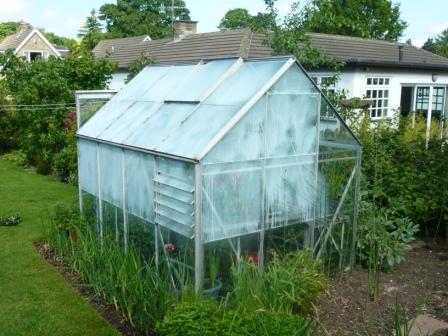
Two or three hot days and I am glad I had already shaded my greenhouse from the sun.

It bis easier to remove in Autumn if you apply the cool-shade on the inside. For years I have struggled to clean the high apex from the outside!

Why Shade Your Greenhouse

  • Direct sun can bleach the chlorophyll out of plant leaves and leave them scorched.
  • Burnt and dehydrated plants will be distresses and will fail or perform badly.
  • Greenhouse trap heat and you can have too much of a good thing.
  • Keep the heat down but allow the maximum amount of light.

How to Shade your Greenhouse

  • The cheapest method I have found is to use Coolglass a powder you mix into a suspension and paint or spray on.
  • Old fashioned whitewash with a bit of size to make it stick is an old gardeners tip.
  • The aim is to keep down the heat whilst still getting the light so a thin covering is best.
  • You can use shade netting and there are many varieties available. Horticultural fleece may provide enough shade.
  • Roller blinds or wooden slatted blinds can be adjusted to suit the conditions each day.
  • Automatic blinds can be installed to suit many purses (that are reasonably full to start with).

Other Related Tips

  • Keep up the humidity in your greenhouse. In the morning and during very hot days I pour water on the floor.
  • Water plants at night so they can take up a drink for half the day and are turgid in the morning.
  • Avoid splashing the plants if watering during the heat of the day.
  • Remove the shading later in the year (end August) to help the last tomatoes ripen.
  • I only paint the South East and West faces of the greenhouse as you can see in the photo.
Geraniums Pips and Florets

Geraniums Pips and Florets

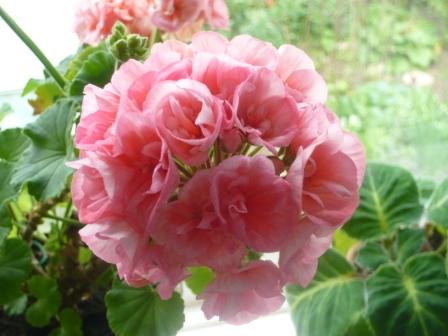
rosebud-geranium1

If you grow Zonal Geraniums for their flowers you will want to get a good number of Pips (Florets) or flower buds on each head of flower. After a week in a small vase I have just counted 81 florets on one bloom.

When a geranium flower first appears it will be like a walking stick with the flower head hanging down. As the stem grows above the foliage it will progressively straighten the neck until the first floret points upward. At this stage the petals will start to break through the protective stipule and show colour opening directly upwards. Each day brings more florets open until a well formed flower head and a complete ball of flower is displayed.

If pips are damaged or finished early they can be removed with tweezers. In fact for exhibitions and shows you can remove all partially opened florets 10 days before the show (to avoid them going over) and get a full open flower head at the right time.

With care you can have a Geranium flowering every week of the year and far from ‘giving me the Pip’ they are versatile interesting and easy flowers to grow.

Quick Tips

  • I have just read two books on Geraniums and both authors said they did not bother ‘Crocking’ pots (putting broken pot at the bottom to aid drainage).
  • Since most of the English speaking world call Pelargoniums ‘Geraniums’  join the club and only differentiate when it really matters.
  • Most Geraniums can be cross pollinated but Diploid varieties will not cross with Triploids and some varieties are harder than others. ( Diploids tend to have smoother glossier leaves whilst Triploids have the furry feel and appearance to the leaves.
Silverbells and Snowdrop Trees The Halesia

Silverbells and Snowdrop Trees The Halesia

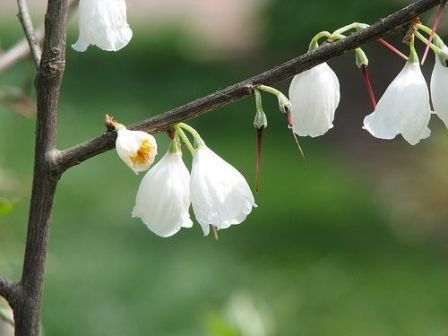
snowdrop-tree

Attractive trees from the  Halesia species are commonly called Carolina Silverbell, Snowdrop trees or two winged Silverbells. They have a magnificent spring display and are attractive choices for gardens of all sizes. The foliage turns golden yellow in Autumn and the fruit are are bright green maturing too red-brown through Winter. Except as noted below trees seldom exceed 30 feet tall.

Halesia Cultivation.

  • All varieties are decidious trees or shrubs that flower in spring prior to leafing. The winged fruit are attractive reasons for growing Halesia.
  • Halesia flower more profusely and grow more vigorously if subject to high summer temperatures.
  • Halesia may be hard to transplant but small specimens re-establish themselves if planted in late winter or early spring.
  • In a natural habitat with broken soil and a cold winter the seeds germinate well.
  • Individual stems of H. tetraptera are naturally replaced from new shoots at the base.
  • IHalesia prefer an acid soil and like most plants from the Appalachians prefer a moist, well-drained humus rich soil.
  • This is a perfect tree for shady corners or set off against a dark background as a specimen tree.

Halesia Species

  • Halesia carolina from eastern North America also called H. parviflora Little Silverbell or H. tetraptera the Carolina Silverbell. This is the most freely available in the UK whilst H. parviflora is less known.
  • Halesia tetraptera Meehanii is a 10feet high shrub with small but profuse white spring flowers. For larger flowers try Wedding Bells
  • H. diptera is thedistinguished from the other Halesia by its two-winged fruit, the other taxa all have four-winged fruit. The variety magniflora has more significantly dramatic blooms prior to leaf formation. If I was choosing just one varoiety this would be my choice.
  • Halesia monticola or Mountain Silverbell has specimens up to 100 feet tall known in the Great Smoky Mountains National Park and is the tallest species. The crollas can be 12 inches long and the tree can be used in large landscapes. A pink flowered variety exists Arnold Pink and others are sold as Rosea or Vestita.
  • The second-largest is H. macgregorii, reaching 75 feet in Chinese mountains. The others Halesias rarely exceed 10 m tall.

Acknowledgments  R Darke and Plantsman RHS. and H G Hillier

Growing Lavenders in Pots

Growing Lavenders in Pots

The secret of good lavender is to keep them neat and tidy by clipping and trimming.

lavender

Lavenders make an excellent choice for growing in a pot. Being draught resistance they can cope better than many plants if a pot dries out. They will thrive in a warm and sunny position on the patio. They offer a refined choice and also give a delightful aroma and help to attract bees.

lavender

They will still need watering in dry spells, but, do not need the volume or frequency of watering that other plants may require.

Make sure you place crocks / stones at the bottom of the pot to ensure good drainage and waterlogging in the winter months. Choose a well draining compost and if necessary add some sand or grit.

In winter, lavenders will survive frost, but, don’t like being waterlogged.

Sunny South African Flowers

Sunny South African Flowers

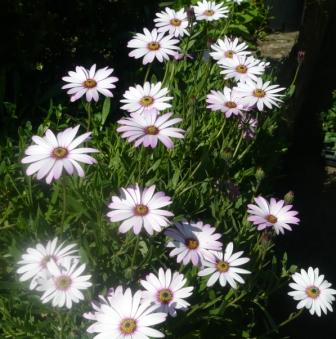
osteospurnum

Many flowers only come out when the Sun is shinning like these Osteospurnum. As the day gets later or if it is cloudy and dark the petals close up again. Often these flowers attracted by the Sun are the most colourful and bright plants like Livingstone Daisies also called Mesembryanthemum (what a mouthful).

Helianthemum are called the ‘Sun Rose’ because they flower with brilliant colours during the height of the sun. Traditional Sunflowers with big yellow heads of flower and a dark centre do not close up at night but the head follows the sun moving during the day from facing East in the morning to facing West in the evening.

Gazinia

These strippy flowers from Africa are called Gazinia and flower through summer. Also called The Treasure Flower they have silvery-white leaves which makes the plant a pleasure to see, even out of flower. The bright blooms open in the sun and flower in a range of colours from creams and yellows, to oranges, reds and mauves.

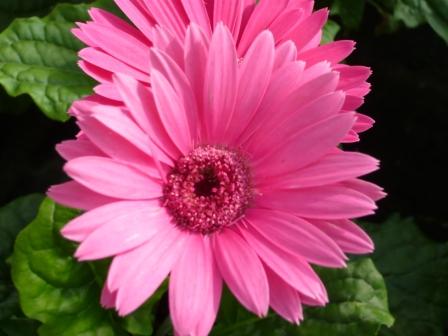
too-gerbera
This is another daisy like flower called Gerbera that, like the Sunflower, will stay open but likes a lot of Sun to flower well.

Other Resources

Royal Horticultural Society RHS ‘Gardening for All’
National Council for Conservation of Plants and Gardens ‘Conservation through Cultivation.’
Garden Organic National Charity for Organic Gardening.
BBC Gardening

Soil Testing Kits and Patio Stuff

Soil Testing Kits and Patio Stuff

Book Cover

Test your soil (from each area of your garden) for acidity or alkalinity so you know what plants will thrive.

Chemical Tests
Mix a sample of soil with water. Add the test solution or capsule of test chemicals and watch the colour develop. Read off the colour of the liquid against the chart supplied that gauges alkalinity, neutral, acid and very acidic levels on a scale a bit more refined than the old litmus test from school.
The above kit is available from Amazon and is more detailed and comprehensive in that it also tests nutrient levels of NPK potassium/potash, phosphorus and nitrogen.

Probe Tester
These devices are supplied by Draper and others for checking soil pH levels, moisture content and light intensity. The tester comprises two 210mm long probes, three way selector switch (moisture/light/pH) and easy-to-read dial gauge. Uses solar power, so no batteries required.

Pation Improvers

Patio
Patio

Unfortunately, my patio doesn’t have an underlay to stop weeds coming through, so it is necessary to get the old hoe out and skim off the weeds. Actually it is quite a relaxing job. Also I use the hoe to scrap off some of the moss which starts to grow on the patio.

If you really want to get your patio clean and return it to its original bright condition, you will want to invest in a proper patio cleaner. This Karcher 300 effectively cleans the patio without spraying dirt up onto the walls and your trousers. If there is a heavy build up of moss, you might want to scrap this away first. It is relatively easy to use and at £33, relatively good value for providing one of the easiest ways to clean your patio. It’s easy to forget the original colour of your patio and also how much brighter the original colour can be.

Book Cover Patio Cleaner at Amazon.co.uk

Patio Cleaning Chemicals

Patio Cleaner Liquid at Amazon.co.uk

Patio Cleaning at Amazon
RHS Service
The RHS provides a Soil testing service for a fee details can be found on the Soil Analysis Service web page.

Purple Flowers that Attract Bees

Purple Flowers that Attract Bees

Is it the nectar, pollen or colour that attracts bees to flowers. May be it is all three!
Just watch bees swarm over Thyme when in flower.

b-cistus

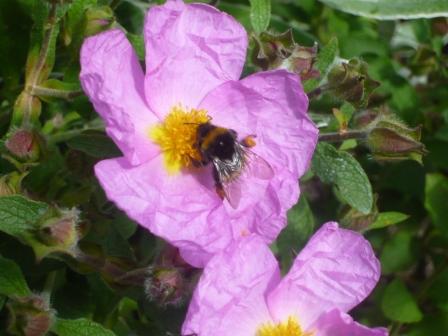
Cistus only seem to flower for one day then the petals drop. Resting in the sun this Bee seems content with life.

069

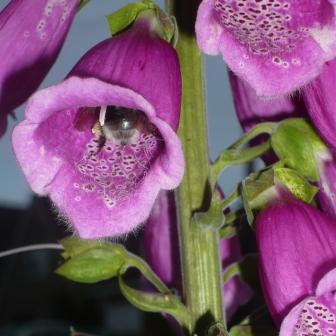
Foxgloves have long tubular flowers so the Bee has to crawl right in to get the nectar. This moves pollen from flower to flower and Foxgloves then produce thousands of small powdery seeds.

Read More Read More

Shade Tolerant Plants

Shade Tolerant Plants

Shade Border at Oxford Botanic Gardens

Any garden will have a shady corner, there are still many plants we can grow. So rather than reach for the tree pruners try some of these plants.

  • Foxgloves (digitalis). Foxgloves are a tall imposing plant offering a long flowering season of attractive bell shaped flowers. They are biennuals which flower in their second year.
  • Cyclamen (Cyclamen hederifolium). Cyclamen are delicate low growing plants which flower in winter or autumn, giving a range of flowers. They die back in summer, so don’t forget where they were planted.
  • Siberian Squill (Scilla Siberica) This is a bright blue, bulbous perennial which has dazzling nodding flowers in spring.
  • Cranesbill Geranium ‘Johnson Blue’ grows in low growing dense clumps which makes it difficult for weeds to grow through.
  • Epimediums have pretty, heart-shaped leaves and delicate flowers.
  • Lamium (dead nettle) will grow in most shady areas
  • Ivy will grow in shady areas, if you just want green ground cover
  • Helleborus. One of my favourite plants, great leaves and flowers in the middle of winter

Read More Read More