Browsed by
Category: Pests, Problems and Health

Pests, infections, disease, cultivation and growing problems

Aphids and Greenfly Pest Control

Aphids and Greenfly Pest Control

Aphids
All greenfly are Aphids but not all Aphids are greenfly.

What are Aphids

  • Aphids are sap sucking insects,
  • They damage  plants and introduce disease  makinge them enemies of farmers and gardeners alike.
  • There are around 4,400 species and that many flies on some of my plants.
  • The little black Aphids that trouble Broadbeans or Greenfly on Roses are from the Aphid family.
  • Aphids are often specific to one plant species.
  • Aphids breed several time in a season if left untreated.
  • One female hatched in spring may produce billions of descendants from 40 generations in one year

Read Gardening Products Killing Aphids

Pest control including Aphids

Aphids

Good Soil and How to Get Better Soil

Good Soil and How to Get Better Soil

Book Cover

Soil that is fit for purpose will help your plants grow, thrive and even excel.
Some plants need special soils or composts but good general principles are discussed below and this book will provide detailed information.

Purpose of Garden Soil

  • Soil provides the base to anchor plants through their roots.
  • Good soil holds moisture and air necessary for the health of plant roots.
  • Soil feeds plants with nutrients (NPK) and makes other trace elements available.
  • Soil recycles dead matter and hosts a variety of life forms.


Features of Good Soil

  • Soil consists of “the living, the recently dead and the very dead.”
  • Soil should be able to hold moisture but not become water logged.
  • Excess water should drain away and not puddle under the plant. To prevent puddling the sub-soil, or lower layer of soil below cultivation depth, should be broken up and not compacted.

    Read More Read More

Rose Replant Sickness Causes & Cures

Rose Replant Sickness Causes & Cures

Peace Rose

Old Parks Gardeners have known for many years that to replace a bed of Roses in the same place is asking for problems. New plants become sickly before they get a chance to become established and you can loose a lot of time and money trying to put new roses in the place of old.

How is Rose Sickness Caused

  • No one seems certain why roses get sick if they are planted where old roses used to be. One possible cause is nematodes that the old roses have learnt to tolerate.
  • I believe it is more likely to be fungal growth around the roots.
  • Root exudates contain allelochemicals and when concentration becomes very high, after the roses have been in the soil for several years, they adversely effect new plants.
  • Roses are gross feeders and soil which becomes impoverished will highlight other plant weaknesses.


Common Cures and Treatments for Rose Sickness

  • If you are replanting roses exchange the soil with fresh soil that hasn’t grown roses before. An area 2′ square and deep will be needed so it might be easier to relocate the bed for new plants.
  • It may help to grow and dig-in a crop of Tagettes or french marigolds if the soil is generally in good health. I would also add lots of manure and   humus for roses.
  • Another method for small numbers of Roses is to sink an old carboard box filled with fresh soil and plant in that. By the time the cardboard degrades, the rose sickness should have gone or the Rose be strong enough to resist problems.
  • The only product against rose sickness is Rootgrow, a beneficial mycorrhizae, fungus which adheres to the new Rose roots. It should allow the plant access to moisture and nutrients from a wider area of soil thereby increasing the early vigour.

Try Just Joey when planting new roses

Yellow and Sickly Leaves caused by Chlorosis

Yellow and Sickly Leaves caused by Chlorosis

Acid deficiency

Yellow sickly leaves on acid loving plants is called ‘chlorosis’. It is a nutrition problem as the plant is inhibited from getting the nutrients from the soil. It is easiest to think of it as an Iron or acid deficiency.

Plants affected by Yellowing Leaves

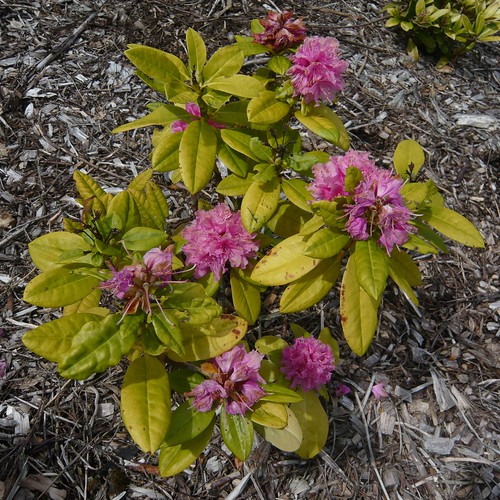
  • Rhododendrons often suffer if the soil is not sufficiently acidic as the picture shows. Eventually the leaves then the shrub dies.
  • Chlorosis in fruit trees is a gradual yellowing of the tissue between the veins of younger leaves will occur while the veins themselves stay green.
  • Azalea, Laurel, Maples, Oaks and other ericaceous plants can show symptoms of chlorosis.
  • Tomato chlorosis crinivrus is a yellowing of leaves but is cause by a virus introduced by white fly. Control the insects and feed the plants.
  • Yellowing leaves on houseplants can be due to overwatering. If your plant has been sitting in water it’s time to let it dry out.

Cures for Chlorosis

  • Water with a liquid feed of ‘Sequestrene’ which is designed for such plants.
  • Fertilizers that contain chelated iron, manganese and magnesium will help improve the colour and health of leaves and plants available from Thompson Morgan
  • ‘Sequestrene’ Granular Iron Tonic is for acid-loving ericaceous plants. It provides iron in a chelated form which can easily be taken up in any soil.
  • Foliar Sprays may be effective as a temporary measure, spray when the symptoms are first noticed with a ferrous sulphate solution.
  • Peat, ericaceaous compost or applications of acid fertilizers, such as ammonium sulphate may help mild cases of iron chlorosis.
  • Do not lime the soil.
  • Treatment the soil directly with flowers of sulphur to lower the pH to 5.5

Buy Chempack for acid lovers

Tips for Growing Phlox paniculata

Tips for Growing Phlox paniculata

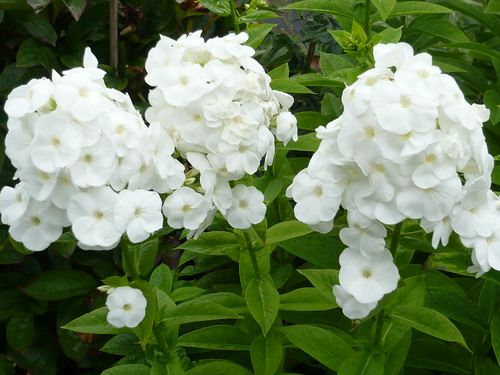
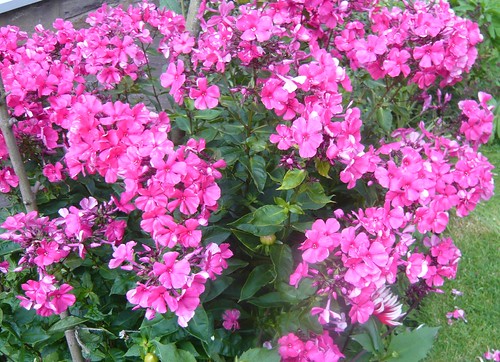
Phlox paniculata

Phlox is a perfect perennial plant, perpetually pleasing people. It is easy to improve your Phlox performance.

Tips for getting good Phlox flowers.

  • On mature clumps of Phlox thin out any  congested, woody stems.
  • Thinning out improves subsequent flowers and increases air flow.
  • After a good rain, mulch around your Phlox to conserve moisture.
  • Phlox responds to the Chelsea chop – cut some of your Phlox back by a half at the end of May. You will then get lush growth and later flowers.
  • I feed with a slow release fertilizer like Growmore in early spring.

Mildew Problems

  • Phlox are prone to mildew but it won’t kill the plant – Phlox will come back next year.
  • Water stress is a main cause of Phlox mildew so water the roots, avoid splashing the leaves and mulch as above.
  • Lack of air circulation is another cause of mildew.
  • In Autumn tidy up all fallen leaves.
  • Mildew attacks young sappy growth so do not over fertilize with nitrogen.

Phlox paniculata

For more Perennial Favourites
Read more about how to grow Annual Phlox
To achieve the pinnacle of success for Phlox see more

Rabbits a Pest in the Garden

Rabbits a Pest in the Garden

Book Cover

Hungry Rabbits seem to eat virtually anything and I am not keen to satisfy their appetite. Not only that but they can cause other damage to plants and young trees. So in general I am disapproving of rabbits.

Symptoms of Rabbit Damage

  • Rabbits feed on a wide range of vegetables and ornamental plants grazing them close to the ground. My Muscari bulb shoots provided a tasty spring snack.
  • All they leave are short sprouts that may or may not grow back (to provide the rabbits with a second helping)
  • Even rose shoots have been gnawed away on my neighbours prize shrubs.
  • The bark of young trees is often gnawed to sharpen the teeth of the pesky rabbits.

Control of Rabbits

  • Erect a Rabbit proof fence all around the garden of 1″ wire mesh. It needs to be 4 feet high and 12″ buried below ground to stop Colditz style break ins over or under.
  • Use an animal repellent like Renadine or Wild Animal repellent
  • Get a Jack Russel or other suitable dog.
  • Move home

Some Rabbit Resistant Plants

  • Alchemilla mollis or Aquilegia
  • Bergenia or Foxglove
  • Clematis or Euphorbia
  • Dahlia and Peaony
  • Primula and some Hemerocallis
Wisteria Hysteria due to Scale Bugs

Wisteria Hysteria due to Scale Bugs

Wisteria

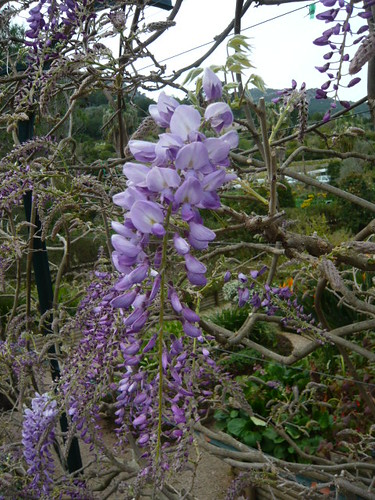
Spring flowering Wisteria are starting to clothe the walls with festoons of flowers.
It may be an excuse for newspapers to show pictures of Wisteria in full bloom but they are running a story about Asian insects wiping out our Wisterias.

The Problem

  • RHS entomologists are reputed to be very concerned about Wisteria scale insects  that are 10mm in diameter.
  • These insects deposit 1000’s of eggs to later feed on the plant’s sap.
  • Branches and whole plants will succumb over time.
  • Infections are worse around London and the south.
  • Stems can become heavily encrusted with scales.

The Future

  • Experts fear the bug may spread to other trees and fruit bushes.
  • Treat with a systemic insecticide – it is no time to worry about organic insecticides.
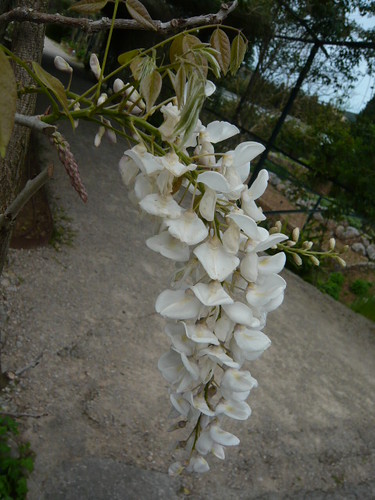
  • It also gives me a chance to show a white flowering Wisteria

White Wisteria

Home Made Plant Protection

Home Made Plant Protection

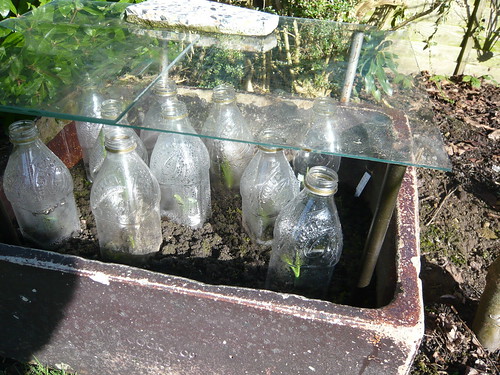
Bottle Glass House

This ‘double glazing for plants’ is getting these early onions off to a good start at the beginning of March.

Each plant has its own baseless pop bottle for individual cover. Then there is the glass sheet that will keep off the snow and the sink sides to keep out some frost. Intensive care for plants that can be treated as individuals may be worth the effort when our local vegetable show comes around (no wonder I have lost to this neighbour before.)

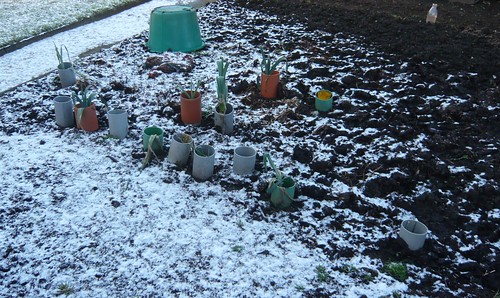
Winter Protection

This is another of the local money free protection schemes where the Leeks are grown in lengths of drain pipe. I guess this helps with blanching  but more importantly extends the cropping season. Talking of Leeks, yesterday I bought some seed of Swiss Giant Zermatt to pick from July as baby leeks and some Blue Green Autumn Neptune for resistance to Leek rust disease.

Killing Greenfly

Killing Greenfly

greenfly

This daisy is covered with blackfly a close relation of the greenfly. Greenfly can do damage to a plant by weakening it and helping to spread disease.

The importance of getting rid of greenfly depends upon the plant. For example, a daisy like this doesn’t seem to be that affected by infestations and it is often fine to leave it to nature’s control.

greenfly

This hoverfly is an excellent predator of greenfly and blackfly, it can munch through a large quantity of greenfly.

However, if you have prize roses or want to grow cut flowers then you will want to get rid of the greenfly.

Insecticide’s from Amazon

Organic Method of Killing Greenfly

This greenfly killer is based on a fatty acid solution which kills greenfly on contact. The important thing is the spray needs to come into contact with the greenfly. But, it can provide an excellent alternative to chemical pesticides.

Related

Wet and Soggy Summer

Wet and Soggy Summer

Did you buy an extra water butt or irrigation system expecting a hot summer?                    Have you planted a Mediterranean garden of hot dry-condition loving flowers? Well this summer in England we have had ‘Global Watering’ not global warming.

A bog garden would have been more appropriate. Moisture lovers have thrived and that means numerous weeds. Shrubs and hedges have put on more growth than normal and need pruning back but the ground is too soggy to work on.

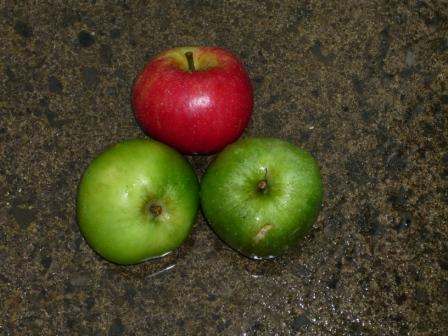
The good news is the Apples and Runner Beans are producing great crops at the moment.