Browsed by
Category: Gardening

General gardening tips and hints

Chinese Gardening in Beijing

Chinese Gardening in Beijing

Chinese gardens rely on a poetic approach to rocks, water and plants and use fewer flowers than Western gardeners. Peonies are one of the few flowers used but the key plants are bamboos and shapely Pines. In contrast to our gardens, that are designed to lead to focal points, Chinese gardens often rely on unexpected views and a gradual reveal of the garden. Screens and hedges and strange diagonals may help you achieve this feel.
The use of text in a Chinese garden is a trait that is becoming more prevalent in the UK. Lines from literature, poetry or quotations can be effectively woven into your design.

Gardens in Beijing have evocative and often descriptive names. I like this idea but ‘Piles of Pretty Plants’ or ‘Compost Compound and Comfrey’ do not sound as evocative.

Garden of the Preservation of Harmony
Yi He Yaun has lush green planting and exquisite bridges in the grounds of the former Summer Palace.
Garden of Perfect Brightness Yuan Ming Yuan is said too be like the ruins of Versailles.
The Imperial Palace Garden Yu Hua Yuan is quite small but contains plants dating back to the 15th Century.
Mountain Resort for Avoiding Heat Bi Shu Shan Zhuang is set in dramatic hills with large lakes and valleys to give you the felling of fresh cool air.

If you are planning a holiday in China see Top 10 Gardens in China

Growing Sweet Bell Peppers

Growing Sweet Bell Peppers

Pepper

Sweet Peppers or Bell peppers can be grown from seed in a range of colours. Ideal for a greenhouse or conservatory they may also thrive in a hot summer.

Seed Selection

Sweet Jumbo F1 Seeds  produce Peppers that are green turning red. Often fruit are more than 6in long and 3½-4in across, ‘Jumbo Sweet’ can ‘weigh up to 200g (½lb) and we are sure much bigger, and dare we say – world records may be shattered with this super new hybrid. It is vigorous, early and a prolific cropper. It is very crisp and sweet eaten fresh and because it has a small central core it is ideal for stuffing. Best crops will be achieved in a greenhouse or conservatory but it is worth trying a few outdoor plants if the summer is hot.

With a flavour so juicy, crisp and clean you’ll eat them right ofl the plant! Sweet Pepper Big Banana produces fruits up to 25cm (10in) long and 5cm (2in) wide mature to a deep shiny scarlet. Amazing yield – up to 50 full-sized fruits per plant.

  • Capsicums Chinese are some of the hottest Chilli Peppers around. Seeds from 10 Habanero vaieties and Scotch Bonnet are able to compete with C. annuum ‘Tepin’ and C. frutescens ‘Zimbabwe Bird Pepper’ for the hottest seeds around.  Available from Thompson Morgan a seed, Chilli and vegetable specialist.


Sweet Pepper Sweet Chocolate is a delicious sweet pepper with a ‘come and eat me’ appeal once the fruits have ripened from green to a rich chocolate colour on the outside and brick red on the inside with thick, sweet flesh. Sweet Pepper Sweet Chocolate plants are very productive throughout the summer.

Orange bell   Very productive plants producing typical ‘blocky’, thick walled fruits with delicious sweetness. Sweet Pepper Orange Bell is very productive, with fruits that start green, ripening to a gorgeous orange.
Sowing Instructions

Sow seeds March to April. Place seeds on the surface of a free draining compost and cover with a fine sprinkling of compost or vermiculite. Place in a propagator at 18-21C (65-70F) until after germination, which takes 7-10 days. Do not exclude light as this helps germination.
Growing Instructions

Transplant seedlings when large enough to handle into 7.5cm (3 in) pots. Plant in final situation when 10cm (4in) high, 45cm (18in) apart. For indoor crops, plant into growbags or pots. For outdoor crops, acclimatise plants to outdoor conditions for a few days before planting in sunny, fertile, moist, well drained soil , after all risk of frost has passed.
Aftercare

For a heavier crop, feed all peppers once the flowers have started to set fruit with a high potash fertiliser each week .

Read Gardeners tips
Book Cover
The Complete Chilli Pepper Book: A Gardener’s Guide to Choosing, Growing, Preserving, and Cooking

Beginners Seed Tips

Beginners Seed Tips

Easy Annuals ‘Fairy Mixed‘    by Thompson Morgan

Beginners and novices can grow some colourful annuals quickly and cheaply. If the packet instructions says ‘can be sown direct outdoors then do so when the soil warms up.  If you want to get a quick start use a tray on a warm window ledge.

Starting  with Seeds

  • Always read the instructions on the packet of seeds.
  • Use a good quality seed or potting compost with a level surface.
  • Water with a fine spray and leave to drain.
  • Scatter seed evenly or place individual seeds in each cell and use a clear lid to maintain humidity.
  • Maintain an even temperature, generally 20º C will suit most seeds but again read the instructions.
  • Allow air to circulate once leaves start to appear.

Read More Read More

Gardening Jargon Busting

Gardening Jargon Busting

Mulch
A product put around the roots and base of a plant to retain moisture and stop soil erosion. Inert material like gravel or glass beads may be appropriate for some circumstance whilst bark chippings, peat substitute or compost is often used.
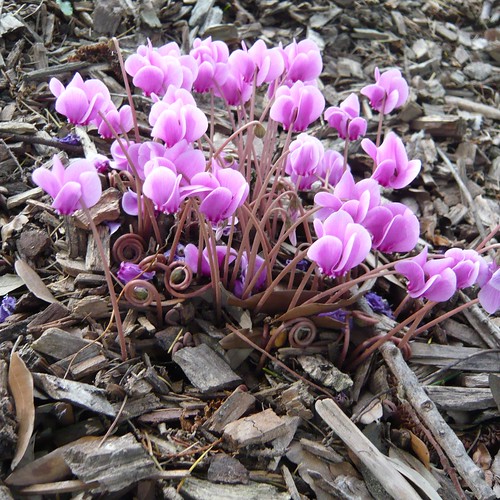
Bark Mulch Cyclamen

Compost
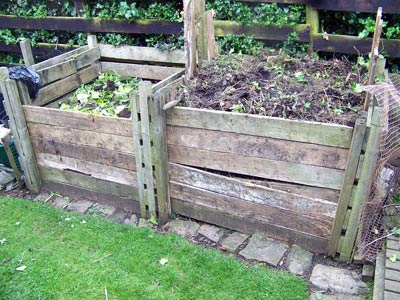
This term confusingly covers two items. Firstly compost made from rotted down green and brown garden waste that contains natural nutrients and humus to retain moisture. Secondly purchased compost is a manufactured product sold in plastic bags as a growing medium. Thus there are seed composts, potting composts, general purpose composts and specialist composts for individual genus like Orchids, Cacti, Alpines etc.

Tilth
digging your soil to produce a fine crumbly top to the soil for planting seeds.

Interplanting
Crops grown together to utilise space, light and water more efficiently like lettuce between peas early in the season or garlic between roses.

Catch crops
Filling seasonal gaps particularly in the kitchen garden with fast growing crops like radishes or lettuce.

Lettuce -  Bijou & Freckles

Companion Planting
Use of one plant to help another like marigolds in a greenhouse to suppress white fly or planting onions with carrots to deter root fly.

Perennial
A plant that is meant to live for more than 2 years given the right treatment. It may be hardy and thus frost tolerant, herbaceous by dieing down into a root stock, or tender where it needs some winter protection.
 Perennial Heuchera

Annual & Biannual
Annuals last only one year (or part) from seed sowing, growing, flowering and setting new seed such as Antirrhinum, Alyssum and Lobelia. A biannial is sown one year to flower the next but then expire like Wallflowers or Sweet Williams
Antirrhinum

How to Prune Rambling Roses.

How to Prune Rambling Roses.

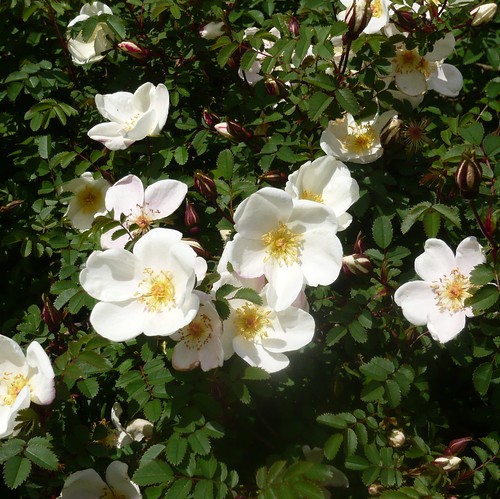
Rambling Rose

Rambling roses tend to flower only once a year (not once a season as I once heard). Therefore it pays to optimise the flowering for next summer by judicious pruning and training.

Gardeners Tips for Pruning Rambling Roses

  • Prune from November to February, ramblers are pruned earlier than most other roses.
  • Choose a still day or the branches will lash into you and the thorns can hurt. This is a job where protective clothing including a face mask may be worthwhile.
  • Use sharp secateurs and a pruning saw for thick stems.
  • Remove dead, dying or diseased wood and any stems that cut across one another. This improves air flow and reduces the chance of disease.
  • With ramblers you are aiming to replace upto 3 older stems from the base and to encourage new growth that replaces them. Best blooms flower on this new growth.
  • The newer olive-green stems should be supple enough to bend and they should be tied in or coiled around upright supports. This bending restricts sap flow and encourages more flowers so it is worth spending some time on.
  • Ramblers are vigorous so reduce the laterals if you need too.
  • Clean up all the debris after pruning.
February Tips for Gardeners

February Tips for Gardeners

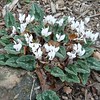
Hederefolium

Beginners Tips

  • In the UK it is still too cold to start most seeds and plants. Leave those tempting seedlings in the garden centres and wait until at least the end of the month to sow broad beans, early peas, leeks and sweetpeas.
  • On a fine February morning you can improve your garden with a spring clean. Cut down old annuals that you left in place for the seed heads, edge the lawn if it looks forlorn, and tidy up loose leaves.
  • Treat paths that have moss and algae built up and repair any raised or misplace paving stones.
  • Spread well rotted manure or compost on the top of your vegetable patch and around hungry shrubs like roses.
  • Review seed and plant catalogues and decide what you want to grow and where. If you are going to give each plant enough space you do not need as many plants as you expect so buy fewer good quality seeds and stock.
  • Keep feeding the birds, they will soon have young to feed

Advanced Tips

  • If you left your soil turned over in large clumps for the frost to break them down too a fine tilth, then wait a bit longer as February can have some terrific frosts.
  • With a heated propagator you can start fuchsia cuttings with a bit of bottom heat.
  • Remember all the early plants you start now will need space and protection from frost for quite a while yet. I always grow more than I can protect.
  • Look after your quality tools. Give them a clean and sharpen before they are pressed into really active service. Prepare an oily sand plunge pit so you can quickly oil and clean them in busy period.
  • Prune and reshape fruit trees but not stone fruit which need to wait until summer.
  • Check over and do any preventative maintenance jobs now so you can concentrate your efforts on growing show stopping plants later on.
Growing Anemones

Growing Anemones

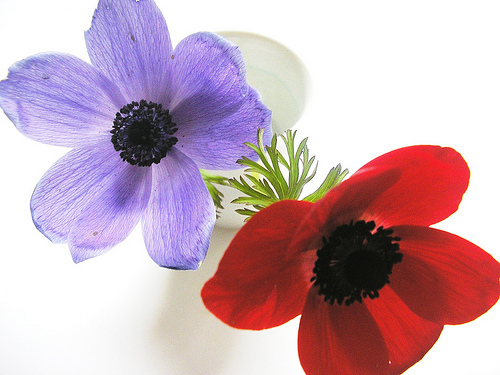
phot by Lynne Pettinger

Anemone has over 100 species with several interesting varieties that produce colour and a light form. I have picked out 3 contrasting sorts that are worth seeking out.

Wood Anemones, Wind Flower and Anemone Blanda

  • Daisy-like flowers in white and purple to form a carpet of dazzling colour.
  • These low-growing Anemones are extremely free-flowering and produce an eye catching mass
  • With lush, fern-like foliage, they’re great for planting beneath Daffodils and Tulips, shrubs and trees.

Japanese Anemone

  • Named varieties to look our for Prinz heinrich a semi-double with purple flowers. Queen Charlotte semi-doule pink, September Charm pink, Whirlwind semi-double white and Honorine Joberet the popular white with golden stamens
  • Unlike the spring varieties they flower in Autumn on long stems up to 5′ tall
  • The white Honorine Jubert is a striking plant and flowers in a shady position
  • Propagate economically by root cuttings from established plants

Blousey Florists Anemones

  • Anemone De Caen ‘Hollandia’ a scarlet flower on 10″ stems and St Brigid The Governor have performed exceptionally well this year. I have grown them in peat and peat with some grit to keep the compost open and they have remained reasonably moist.
  • In pots the flowers are less robust than those in the garden.
  • You can grow them from dark wrinkled tubers bought later in summer.
  • Soak overnight in rain water before planting will speed up germination.

Anemone de Caen at T&M

Blue and white wind flowers

Anemone blanda

Top Ten Snowdrop Gardens

Top Ten Snowdrop Gardens

Kew Snowdrops

  1. Waterperry Gardens Oxfordshire
  2. Chelsea Physic Garden London   Snowdrops have always provided one of the great delights of these openings 6th, 7th, 13th & 14th February 2010, 10am-4pm.
  3. RHS Wisley Surrey
  4. Hopton Hall Derbyshire
  5. Weeping Ash Garden Cheshire
  6. East Lambrook Garden Somerset
  7. Sherborne Garden Somerset Local gardens open for the National gardens Scheme
  8. Brandy Mount House Garden Hampshire National collection of snowdrops
  9. Easton Walled Garden & Little Ponton Hall Lincolnshire
  10. Bennington Lordship Hertfordshire

This is our selection unless you know better – if so let us know.
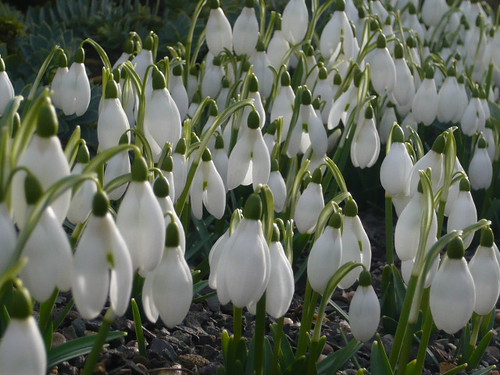
Snowdrop soldiers8

Check for open days in February and March for a day out to enjoy. You may also find snowdrops in unexpected locations. I snapped these pictures in Haworth church Bronte land.

Haworth snowdrops

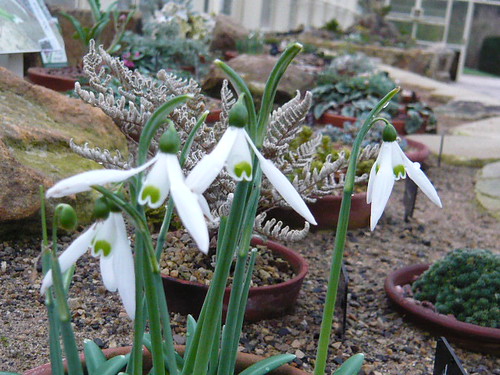
Snowdrops in an alpine house at Harlow Carr.

Snowdrop

Galanthophiles see beauty many varieties.
snowdrop

Yellow Snow and Yellow Plants

Yellow Snow and Yellow Plants

Snow theme

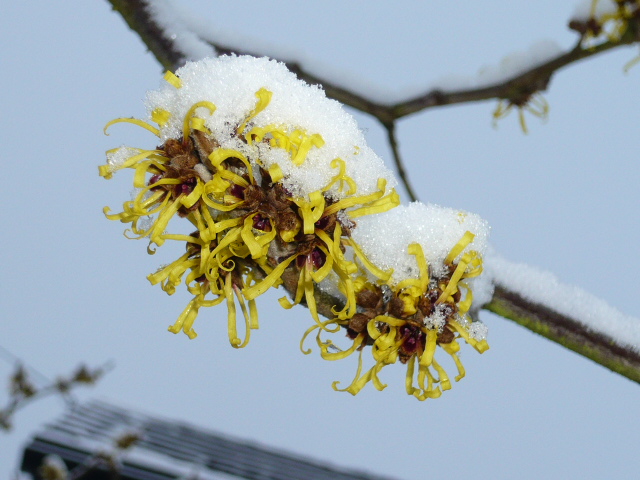
I was always taught ‘not to eat yellow snow’ but the yellow in our snowy garden caught my attention. This Witch Hazel was positively glowing and offered a bright spark on an otherwise dull day. The tree has seldom been pruned and is now over 10 feet tall with a very lax and open habit. This means I can see large quantities of blossom on the branches in January and get the scent on a still day.

Read More Read More

Best Lawn Edge Trimmers

Best Lawn Edge Trimmers

Garden edgesKeep Off The Grass Not on My Pavement

Neat, well trimmed edges make your lawn and garden look tidy and cared for. World class gardens take care of neat edges especially on formal lawns. In most cases you need to avoid obstructions that prevent achieving a well trimmed edge as these painted rocks do. Grass growing at the base of these rocks is hard to trim to the same length as the rest of your grass even if you use a strimmer.

  • Plants growing close to the edge will get in the way of a lawn mower or over-hang the lawn and weaken the grass.
  • A path in the lawn made from stepping stones should be sunk below the sward so that a lawn mower passes over the path edge and cuts right up to it. If the path is proud of the grass you may damage the mower and leave an untidy edge.
  • Where ever practical leave a gully or channel at the edge of the grass before the planting starts.

 Best Tools for Cutting Edges

Lawn edgers allow you to cut back the edge by removing a sliver of soil. Useful if you have walked near the edge and it has crumbled or spread out.

Strimmers are useful on rough grass and hard to reach spots.
Book CoverBlack & Decker Strimmer

Lawn shears have a blade at 45° to the handles and are my favourite way of trimming lawn edges.
Book CoverBahco Lawn Shears

For many jobs you can’t beat a traditional spade. If you are trimming an edge use a line or string to keep you honest.
If part of an edge is in poor condition you can cut out a square foot as a turf and turn it around by 180° to make the inner cut as the new edge and the ragged part a foot inside the lawn. Fill any gaps with sand or top dressing.