Browsed by
Category: Gardening

General gardening tips and hints

Tips Growing Decorative Alliums

Tips Growing Decorative Alliums

There was a sparkling show of long stemmed Alliums at our church flower festival this weekend.
Allium
This Allium christophii must be one of the most attractive flowers for garden or cutting. the leaves are a disappointment and I recommend growing some annuals as cover as they die back in an unsightly manner.
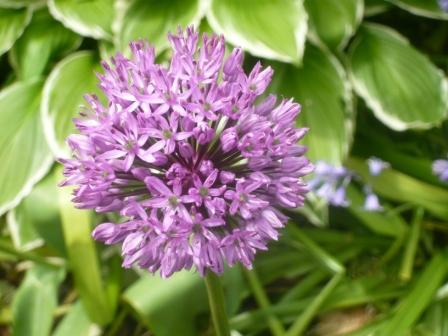
allium

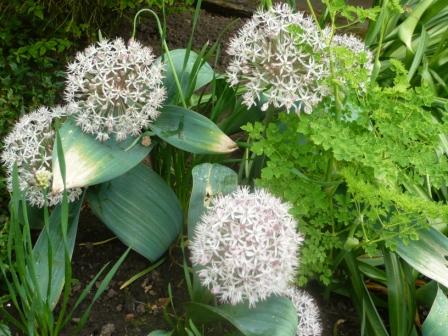
Lolly pop like Alliums  look exceptional when in flower in May until you look at the leaves which tend towards the scruffy. The seedheads are also eye catching and worth leaving although seed production may drain strength. The leaves are the way a plant builds up strength for next year as they help sunlight convert nutrients into food. Fortunately they do not cause any problem and can be taken over by other plant leaves soon after flowering. Mulch to provide food and encourage leaf growth or your Alliums will be shorter lived.

Gardeners Tips for Alliums

  • Generally Alliums need a sunny position and good drainage. Given both they will reappear year after year but may deteriorate if the leaves do not get a chance to do there job.
  • Plant bulbs in the autumn at twice the depth of the bulb and top up your stock of Alliums for those lost or not performing well.
  • Congested clumps can be lifted and divided  straight after flowering.
  • Dead-head before the seeds disperse to preserve strength or if you want to avoid unwanted seedlings.
allium-4

Read More Read More

Sympathy Planting and Vegetable Pollination

Sympathy Planting and Vegetable Pollination

To set fruit curcurbit vegetables need help with pollination and you can do help to do this with sympathy and a fine brush or natures way.
Coloured veg plot

Interspersing flowers that attract bees and hoverflies amongst marrows, cucumbers and courgettes will help transfer pollen from male to female flowers. No more hand pollination required.

The organic gardens at Balmoral castle leave areas of natural grass and undisturbed land to help generate more insect and pollination life.

Courgette and Egg plant

Other Vegetable Pollination Tips

Read More Read More

Mail Order Plants Feed Back

Mail Order Plants Feed Back

I buy various seeds and plants direct or via the internet and am a sucker for mail order, promotions and mind numbing mail shots – yes they do work on me at least!
Begonia Rex
Experiences 2013
Van Meuwen
I start with a bad experience with Van Meuwen. The first purchase of plug plants was OK and although the plugs were very, very small with almost no soil, they did grow away.
I was then emailed to buy a special limited offer of plants for £4.99 but I was charged on my credit card £13.99 the full price. A good job I looked and checked. Umpteen emails and technical problems at their end eventually elicited a promise of a refund.
Many weeks later and the next credit card statement had no refund so back to the email.
A cheque arrived today with no apology but that is as much as I expected.

Vita Sementi is a sister brand of Van Meuwen as is Vernons Geraniums which I have had several good plants from in the past. All these businesses are owned as divisions of Branded Garden Products Ltd by Thompson & Morgan one of our key sponsors. I hope they sort out the Ipswich business for next year.

Wallis Seeds
I buy from Wallis because you can get bigger quantities and the plain seed packets are saving the cost of photography and colour printing.
Last year I included one packet that was out of stock and they held back the whole order until I spoke to the team. The owner called me back to apologise and ask what I would prefer him to do. Great service.
This years supply arrived promptly and in good time for my new sowing. A company with good service that I am pleased to use again.

New Guinea Impatiens Failure

New Guinea Impatiens Failure

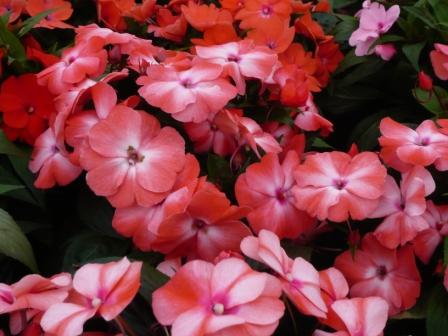
Back in 2009 I reported on my failure with impatiens. now I am tempted to try again. So far so good no of them have died but nor are they a run away success.
ng-imp

I had a disaster with New Guinea Impatiens 4 years ago. Rather than grow from seed I bought a pack of half a dozen plants to grow on. The only trouble is they haven’t grown on but got sickly and hardly survived.

Errors and correct treatment

  • I used a peat based compost to pot them into. I should have used a faster draining soil based John Innes No 2.
  • The leaves have gone brown and limp because they were on a windowsill getting too much hot sun before they were strong enough. I should have given them less direct sun whilst young.
  • Once or twice I must have let the soil dry out. New Guinea Impatiens must have moist soil at all times and I regret not standing them on some gravel to help humidity.
  • I have not fertilized the plants but as they have barely grown in 6 weeks it is due to other health problems. Feed when growing.
  • I have not got red spider mite – at least I have saved them from that problem.

I gave some of the lilac flowered plants away so  am interested to see if they have done any better. I also put some of my sickly plants in a plastic zip up greenhouse outside so I am now off to see how they have done.

New Treatments
I corrected the above issues but watering still gives me nightmares.
I potted the plug plants on into 3″ pots and they are more robust.
I like the plants when well grown as a summer houseplant.

Bud Blast Rot and Botrytis on Roses

Bud Blast Rot and Botrytis on Roses

171

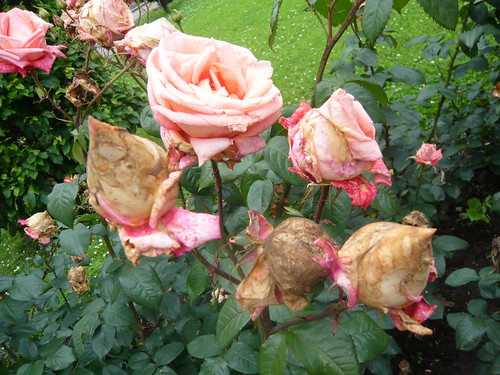
Roses are very susceptible to fungal diseases. Whilst you can cope with a bit of  mildew a bud that fails to open is somehow more annoying. These buds had been hit by a lot of rain and a long period of humidity and nothing was going to help them.

  • Try to water roses in the early morning so that any excess water on the leaves and blooms will evaporate quickly.
  • Water the roots not the buds and leaves, it takes less water to do more good that way.
  • Your roses will be happiest if you remember to mulch! mulch, mulch, mulch!

Read More Read More

Aroid or Alcea Family

Aroid or Alcea Family

You may be wondering what is an Aroid? According to my Gardeners Encyclopedia it is any plant belonging to the family Aracea such as Arum Lilies, Anthuriums, Philodendron or Monstera. They are characterised by the cylindrical Spadix densely packed with tiny flowers, with the male on top of the female and having a single Bract known as a Spathe.
Aroids are grown primarily for the Spathe which is the most showy part of the plant. It may be flat as with the Anthurium below or rolled around the Spathe as with Calla Lilies or Lords and Ladies.

Read More Read More

G. T.’ S Top Ten Waterside Flowering Plants

G. T.’ S Top Ten Waterside Flowering Plants

If you need a stream of ideas of plants for your waterside look no further.

For bog gardens or the streamside there are many plants that will be happy with damp roots. This is our selection of the flowering plants that will grow well in a waterside position.

Flowering Waterside Plants a Top Ten

  1. Iris is one of the most popular waterside plants with several varieties suitable for this position including, Iris ensata Gracieuse’, Iris pseudacorus and Iris sibirica ‘Silver Edge’ .
  2. Snowflake or ‘Leucojum vernum’ is much larger than its relation the snowdrop. The flowers are held on long stems that droop gracefully. It is easy to grow  and multiplies freely in most gardens provided the soil is moist enough. Plants have been known to withstand flooding and standing water so it is an ideal choice for bog gardens
  3. Ligularia The Rocket has yellow flower heads held well clear of the foliage. Very architectural with its sturdy, upright habit giving good reflection in the water.
  4. Astilbe ‘Rheinland’ or Astilbe x arendsii ‘Spinell have wonderful plumes of flowers and love the damp conditions.
  5. Lysichiton camschatcensis The Giant white arum has beautiful white, arum-like flowers which are slightly later than yellow Lysichiton americanus. With smaller leaves it is a better plant for a small pond or bog garden. Slow to establish but very hardy.
  6. Read More Read More

Brash Gardening

Brash Gardening

Shock and awe your gardening friends with these brash ideas.

Petunia

Brash Gardening.

  • Put some colour in your cheeks!    Garden naked.
  • Use brash colour schemes that are ‘rash, cheeky, saucy, or vulgarly self- assertive’
  • ‘Loose hedge refuse,  clippings etc’ will be composted – wont they!
  • Do not succumb to Summer Vomiting Virus -  ‘ Brash eruption of fluid from the stomach’.
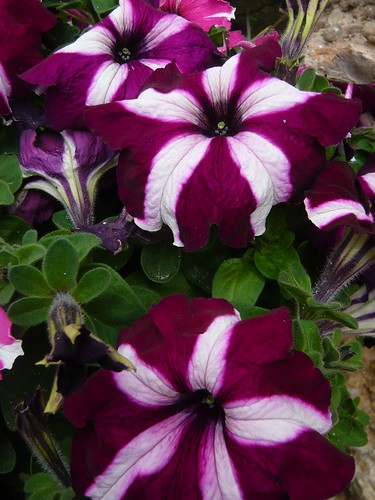
  • Put a Petunia in your Onion Patch.
  • Dare to be different
  • Garden whilst listening to Brash radio

Ninja Radio #5 (PhotoG / Brash Lion)
‘Quotes are from the OED

Gardening Links

Gardening Links

Google now make it hard to find a good gardening blog and discourage links. Still here are some you may find useful or amusing.

red

BBC Gardeners World – Gardening site of BBC

Royal Horticultural Society – gardening online

Unwins – Seeds online

Debby’s Garden Links – Directory of categorised links to UK gardening related websites.

Nicky’s Seeds Flower seeds herb seed vegetable seeds garden sundries. Purveyor of quality seeds worldwide of all your favourite, rare and unusual seeds, Garden Sundries and Garden Games

Lets go Gardening – The one stop gardening site for all your needs including Gardening & Wildlife News, Shopping, Information, Forum, Gallery & much more.

Horticultural -  Author of Allotment Keepers Handbook

Sundry Links to other Garden Blogs

Comfrey for Free Fertiliser

Comfrey for Free Fertiliser

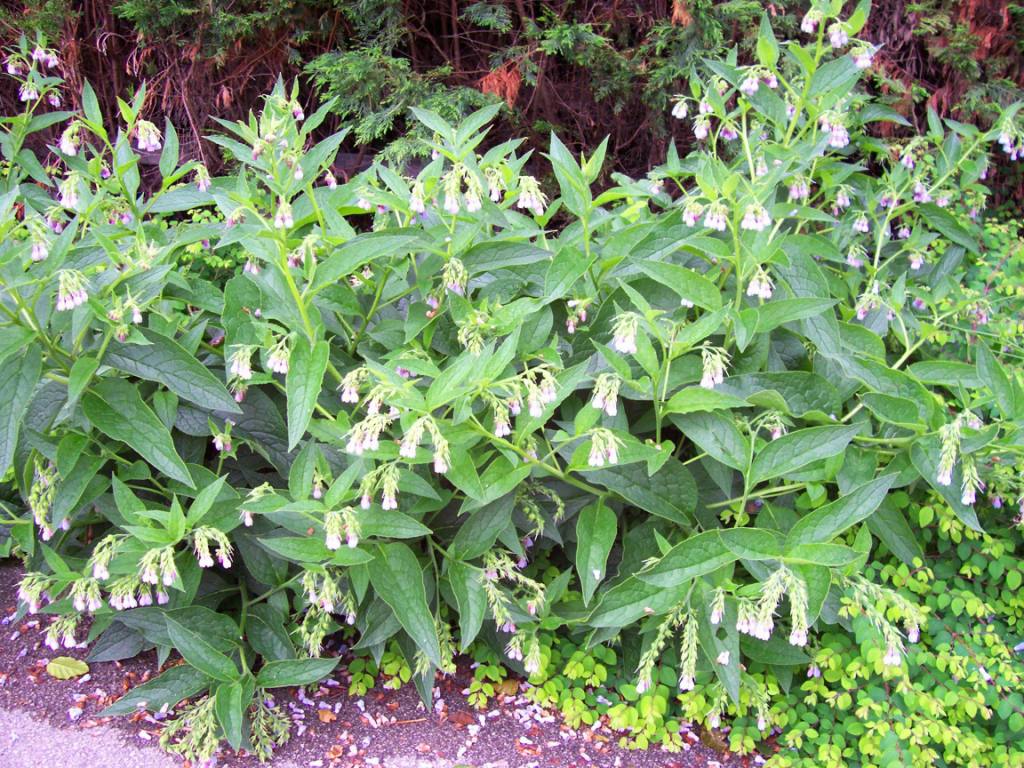
Comfrey leaves can make good balanced organic fertiliser for free.

comfrey

Since the 19th century Comfrey has been used as a fertiliser but the Henry Doubleday Institute in the 1960’s found it contained comparable amounts of fertiliser to commercial products. Comfrey contains high levels of Nitrogen for leaf growth, Phosphorous for roots and germination and Potassium for fruit and flowers.

Tips on Using Comfrey

  • I put a large handful of Comfrey leaves in my water butt and 3-4 weeks later the resulting ‘Tea’ is great for Tomatoes, Beans and general purposes. I mix them with a lot of water but if you make a concentrated tea it can be diluted prior to use.
  • Spare Comfrey leaves can go on the compost heap to provide vital nutrients and help heat up the pile to speed decomposition.
  • If you crop the Comfrey you should be able to get three cuttings in a season.
  • The first cutting of Comfrey in spring can go at the bottom of the furrow into which you are planting Potatoes.
  • You can also chop the Comfrey leaves and use them as a mulch before your potatoes get too much foliage.

Read More Read More