Browsed by
Category: Fruit, Vegetables & Herbs

Tips on growing good Fruit, Vegetables and Herbs

Best Ten Vegetables To Grow

Best Ten Vegetables To Grow

veg

Here are ten of the best vegetables for the home gardener to try growing.

1. Tomatoes

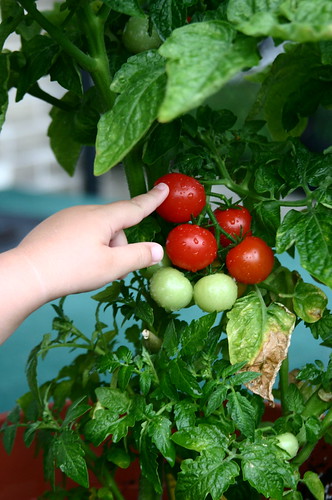
Tomatoes are labour intensive but rewarding. They are also one of the most prolific crop, offering a season of upto three months. There is never a problem in sharing a bumper grop of home grown tomatoes. Tomatoes need careful watering, feeding and pinching out. But, there is great satisfaction from training the tomatoes and providing neat rows of plants. They can be grow in small spaces and so are ideal for the small garden. See tips for growing tomatoes

2. Runner Beans.

Runner Beans are a great crop for a number of reasons. Firstly, they are easy to grow. You can sow direct outside in May / June. They are very fast growing and can soon reach a height of over 6 feet (where they will need pinching out to encourage more vegetables. Also, they are remarkably pest and disease resistant. Apart from slug damage when very young, Runner Beans will thrive without needing to tackle the usual pests like aphids. They also look very attractive with green leaves and red flowers, they can be grown in an ornamental garden with no shame. See: Tips for Growing Runner Beans

Read More Read More

Growing Cucumbers

Growing Cucumbers

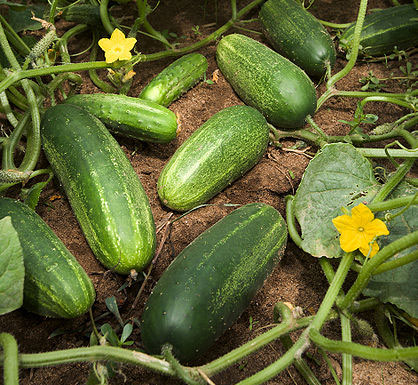
Cucumbers growing on soil. Training them up canes protects fruit from slugs

Cucumbers are a rewarding vegetable. Picked fresh from a home grown plant they taste great and add to any summer salad.

Cucumbers will grow best in a greenhouse or polytunnel. They need between 100 to 140 frost free days from sowing to harvest, so they can be grown outdoors in the UK, if the spot is sheltered. If growing outside try hardy varieties such as ‘Long Green Maraicher’ and Boothby’s Blond’.

Sowing Cucumber Seed

Sow in pots and keep in a warm place. Once, sprouted the seedlings like a warm and moist environment.

Growing Tips

  • When 2 inch tall, remove weaker seedlings. When planting out, give 90cm
  • Cucumbers are hungry feeders. They thrive on a rich, moist soil. They like more water and feed than tomatoes (tomatoes do well by keeping relatively dry until the fruit sets).
  • When fruit sets, feed with a high Potash (tomato) feed to encourage bigger fruits.
  • Cucumbers can be trained up cane poles. But, with several large cucumbers the weight can become too much. However, like many veg, it is best to pick often as this will keep the plant producing more.
  • Pinching Out. An important aspect of growing cucumbers is to pinch out the male flowers. They are identified by the flowers without an embryonic cucumber behind the base. If male flowers are left on, they tend to pollinate the female flowers and the resulting fruit is bitter.
  • Pinch out Growing tips 2 leaves after a fruit has formed

Pests and Diseases.

Cucumbers, like many plants grown in greenhouses, can be subject to powdery mildew, and Red Spider Mite. The best cure here is prevention. It involves avoiding a very hot dry environment (which Red Spider Mite loves) and providing good ventilation. Ensure good hygiene and cut away and dispose of any affected leaves as soon as you see evidence of fungal growth.

The succulent leaves of cucumbers also make a popular target with slugs and snails. Use the usual methods of preventing slug and snail damage.

Cucumber Mosaic Virus.

A disease not confined to cucumbers. Symptoms include yellowing leaves, leaves turning up and reduction in yields and distorted fruit. The best way to deal with cucumber mosaic virus is prevention. Chemical control is difficult. It can be transmitted through aphids or even affected tools. If you experience any disease, burn plant and disinfect area and tools involved.

Related
Apple Blossom in Pictures and Notes

Apple Blossom in Pictures and Notes

Apple blossom

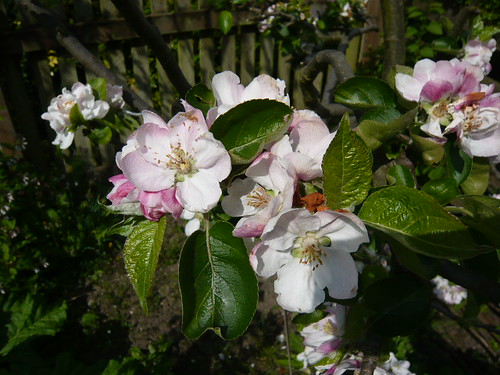
2010 seems set to be a great year for Apple Blossom. All around there seems to be vast quantities of blossom on each tree – let us hope there are enough Bees to go around when it comes to pollination.

I was surprised when I looked more closely at the size and colour on the blossom of different trees and have reproduced some varieties here. As you may remember there was a lot of frost damage on a row of cordons but, touch wood, my main trees remain unaffected.

The late arrival of warm weather is playing into the hands of pollination as most varieties seem to have opened at the same time. This will bring the insects out and help cross pollination to produce a good crop of Apples.

Apple blossom

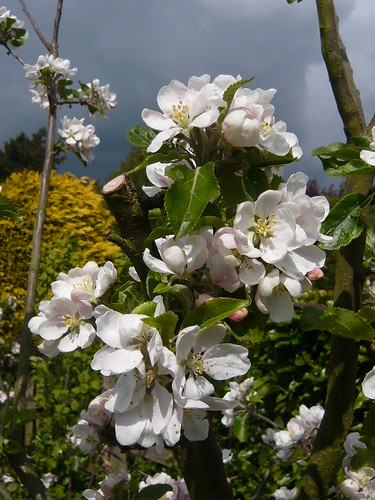
Glowering skies loom over this tree but showers of rain are an occupational hazard for Apple blossom. As long as the rain drains from the tree and is not trapped in pockets to cause wood rot there is no problem.

I have to admit to a spray regime after blossom fall to protect my fruit to deter insects

Apple blossom

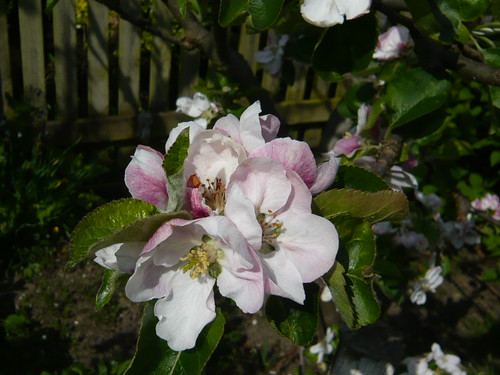
This eating apple has dark red skin and I will have to look in my old note book to remind me of the variety. Still I am not surprised to see that it has pinker blossom than the James Grieve.

Each blossom was larger than the old half-crown and made a wonderful sight.

Read More Read More

Tips for Growing Broccoli

Tips for Growing Broccoli

Broccoli is often referred to as a wonder foods – with a great range of minerals and vitamins. Whether it is a wonder food or not, freshly cut broccoli from the garden makes for a very tasty vegetable accompaniment.

  • To grow broccoli, sow in pots 7-9 weeks before the last frost. To protect roots during transplant, plant in 3 inch pots or decomposable cardboard. After hardening off, plant outside.
  • Broccoli like full sun, though in hot climates, full sun may encourage them to go to seed. Therefore, they can still do well in partial shade.
  • Like many other Brasicas, they like a steady growing environment. If possible shield from extremes of temperature. After planting be ready with some fleece to protect from prolonged period of cold nights.
  • When the soil warms up, try adding a layer of mulch to keep soil moist and overheating.
  • For best results, offer your broccoli a steady feeding and watering regime. Broccoli like 3-4cm of watering per week. For feeding try blood and bone meal or seaweed feed on a fortnightly basis.

Broccoli are fairly pest resistant, though you will need to keep an eye open for usual suspects such as slugs, pigeons and caterpillars. Diseases are rarely a problem, but, make sure there is a good crop rotation programme in order.

Broccoli Seeds at T&M

Growing Basil a Sweetherb

Growing Basil a Sweetherb

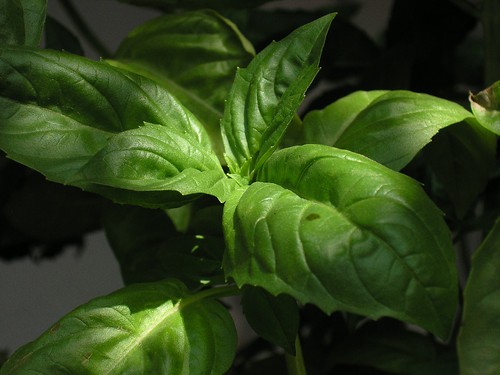
Fragrant and sweet tasting Basil is an easy to grow, popular herb. Aka Sweet Basil, with many other basil types including Sweet Genovese, Thai basil, Lemon basil and Mexican spice basil there is a good range to grow.

Sow From Seed
In May or June fill small pots with moist multi-purpose compost. I use 3″ plastic pots.
Sprinkle seeds thinly on the surface. About 10-12 seeds per pot.
Cover lightly with fine compost or vermiculite.
Keep on a warm windowsill and seedlings will appear in about 2 weeks.

Growing Onward
After 4-6 weeks the seedlings can be planted into individual pots.
Then leave on the windowsill or harden off for outdoor planting
Treat the Basil as an annual.

Outdoor Basil
Plant out in June or July in a sunny sheltered spot.
They make good fragrant container plants.
Feed with a general purpose liquid feed and water little and often.
Pinch out the growing tip to get a bushy plant.

Using Basil
Leave the stems on pick and come again plants taking a few leaves each time.
Grow several plants if you need large quantities for Pesto or other culinary uses.
The seeds can be used to flavour a drink.

Credits
Basil has medicinal and calming properties.
Photo by Marmot on flickr
Seed suppliers

New Places for Growing Cress

New Places for Growing Cress

HC & York 115

Egg and Cress sandwiches from your own home grown cress – marvelous and so easy.

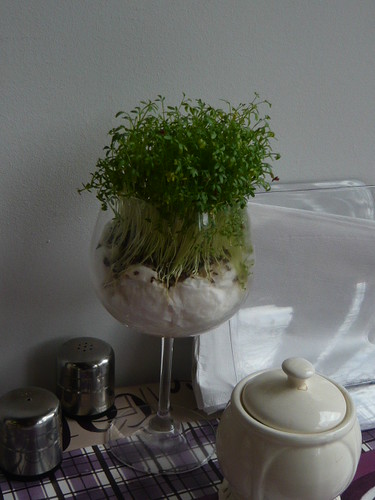
I liked the Cress growing in this large wine glass at a local cafe so I thought I would grow some as I did as a child.

  • Fill your glass with an absorbent paper towel or blotting paper.
  • Dampen the paper and if necessary add more paper so the Cress will grow above the rim of the glass. This is a bit low to get at the sprouted cress.
  • Sow seeds evenly onto the damp paper.
  • To get good germination, make sure the freshly sown seed is kept in the dark.
  • These will take from ten to fourteen days to mature.
  • Mustard grows 3 days quicker than cress so if growing both sow Mustard later.
  • As there is no drainage do not flood with water keep just damp.
  • Harvest whilst still young and crisp.

Proper cress as in “Mustard and Cress” is Lepidium sativum and the Mustard is Brassica hirta. Beware many supermarkets sell oilseed rape seedlings (Brassica napus) as Cress with little or no flavour.

Beware if you grow on soil the seed husks drag up the soil as the plant grows and can create a gritty feel to your harvest. I like the scent of growing Cress but it may not be to everyones taste.

Other places or receptacles for growing your crop of Cress could include a smart plant pot, broken or chipped china but not grannies best antiques. I put a pot on top of the TV and the water leaked and broke it!

Cress seeds and other ‘sprouters’ from Thompson Morgan

Tips for Growing Cherry Tomatoes

Tips for Growing Cherry Tomatoes

Chris Winters

Bush tucker trials could refer to Tomatoes grown on bush varieties because they make great ‘tucker’. I love the sweet sharp taste of some of the new Cherry Tomato varieties.

Quick Tips for Growing Cherry Tomatoes

Buy a variety like Sweet Million or Gardeners Delight.
Garden Pearl has been specially bred by Unwins for growing in containers.
Baby Plum Tomatoes are now available in a variety called Sweet Olive.
The Tumblin’ series can be grown in hanging baskets or containers.

Cultivation of Tomatoes

The surface roots take up the fertilizer and nourishment. Encourage them by building soil around the stem.
The tap roots go deep in search of water. Help by making sure you water well into the soil by sinking a pipe or pot near the plant to fill up & make sure the water gets deep down.
Do not be too greedy with each plant. Stop them growing when you have 5-8 trusses of fruit by pinching out the growing tips. This channels the energy into your fruit.
Feed and water on a regular consistent basis.
I still support my Cherry tomato plants with a cane and string.

Plants and seeds available from Thompson Morgan

More Tomato growing tips

Grow Edible Flowers For a Salad

Grow Edible Flowers For a Salad

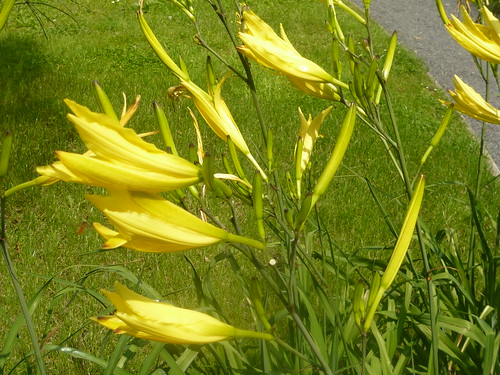
Day Lily

Do you like flavour and fragrance in your salad or would you like some more colour? If the answer is ‘Yes’ then I suggest you grow edible flowers in your own garden.

Harvesting Edible Flowers

It is normally the petals that are eaten but small flowers may be eaten whole.
Gather the flowers early in the day when the dew has just evaporated.
Cut with a small pair of scissors
Handle them gently and carry them in a basket to avoid bruising .
Leave them aside so any insects and beetles can escape. Only wash them if necessary then pat dry with a paper towel.
Keep in a closed plastic bag in the refrigerator until required and refresh with cold water before use.
Scatter over a salad in modest proportions.

Popular Salad Flowers

Pot Marigold or Calendula petals have a vibrant range of colours and can be used fresh or dried. They add seasoning as well as colour.
Nasturtium are popular as they are easy to grow and have been eaten for centuries. Buds flowers and seeds are all peppery to taste.
Pansy and Viola have little flavour but the colour can be made available virtually all year round with winter flowering varieties.
Primroses used to be collected from the wild but it is more PC to grow your own mild flavoured flowers.
Old fashioned Roses add colour and scent but test the variety first as the base of some petals can leave an after taste.
Dianthus such as Pinks and Sweet Williams can be strongly flavoured and scented.
The flowers of herbs;  Lavender, Sweet Bergamot, Sage, and Borage are suitable to eat in moderation.

Gardeners Tips

  • Pick young, small flowers and use with subtlety to enhance a salad not over power it.
  • Check the plants are identified correctly to avoid toxic flowers.
  • Add dressing to a salad before sprinkling with flowers to avoid discolouration.
  • Experiment with a wider range of flowers, there are lots to choose from. See Whats Cooking  America ‘Edible Flowers in salads’
Home Made Plant Protection

Home Made Plant Protection

Bottle Glass House

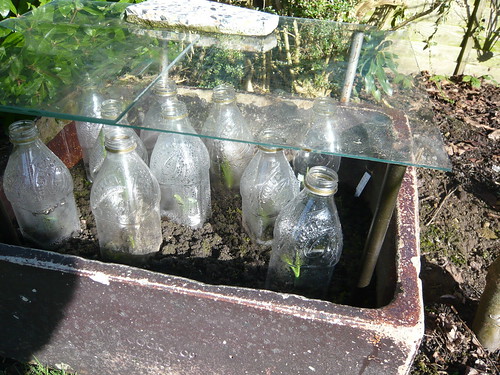
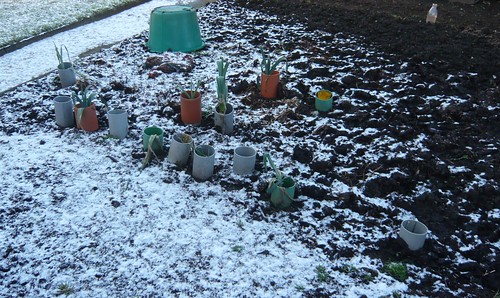
This ‘double glazing for plants’ is getting these early onions off to a good start at the beginning of March.

Each plant has its own baseless pop bottle for individual cover. Then there is the glass sheet that will keep off the snow and the sink sides to keep out some frost. Intensive care for plants that can be treated as individuals may be worth the effort when our local vegetable show comes around (no wonder I have lost to this neighbour before.)

Winter Protection

This is another of the local money free protection schemes where the Leeks are grown in lengths of drain pipe. I guess this helps with blanching  but more importantly extends the cropping season. Talking of Leeks, yesterday I bought some seed of Swiss Giant Zermatt to pick from July as baby leeks and some Blue Green Autumn Neptune for resistance to Leek rust disease.

Banana Growing in England (no seriously)

Banana Growing in England (no seriously)

Kew 276
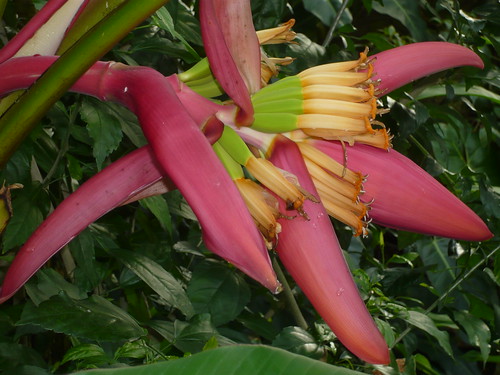
The cultivated banana comes from the genus Musa. Musa acuminata is the dessert banana and Musa balbisiana is the plantain that generally needs to be cooked. There are about 300 varieties, many of the edible varieties of which, do not produce seeds. Bananas are vegetatively propagated by means of ‘suckers’ which develop from buds on the underground rhizome.

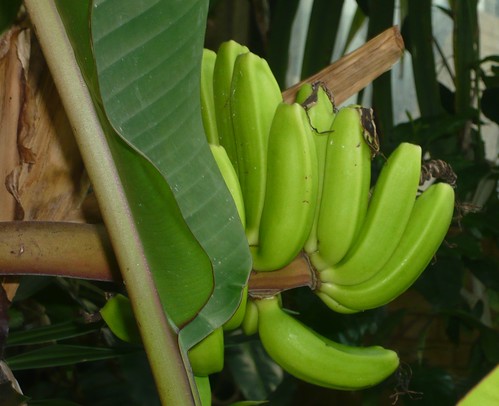
Banana hand

Cultivation Under Glass.

  • Good drainage is crucial since saturated roots will kill and bananas will not tolerate water-logging.
  • The banana plant is a very heavy feeder. Soil should be nutrient rich, slightly acidic, and loamy enough to retain moisture and keep nutrients from leaching below the shallow roots of the plant.
  • Good organic compost and seaweed will help maintain the banana plant’s high mineral requirements.
  • A fairly well-drained soil with a high organic matter content is ideal, and plenty of water should be provided throughout the growing season.
  • Banana plants grown under glass in this country will bear fruit, particularly under warm humid conditions. Fruit should be left on the plant until fully developed and then removed for ripening.
  • Cutting the plant back to soil level after fruiting will encourage suckering.
  • Bananas can also be grown successfully as foliage pot plants if the temperature and humidity are high enough.
  • Dry air in houses is one of the main causes of leaf getting brown tips and edges.

Kew 272
Edible bananas, such as the cultivar ‘Dwarf Cavendish’ can be grown under glass although they require a large area and plenty of height. High atmospheric humidity is essential and temperatures of at least 18°C during winter nights and 24°C during summer days are required. The plants also need full sun, possibly with some shading in the summer to maintain the requisite high levels of humidity.
Musa Williams Hybrid is a banana plant grown for the large banana heads with sweet, delicious bananas from a plant only growing 6-8 feet tall.

If growing for foliage it is   important to shelter the banana plant from heavy winds that can tatter the foliage.

Read More Read More