Browsed by
Category: Fruit, Vegetables & Herbs

Tips on growing good Fruit, Vegetables and Herbs

Growing and Sprouting Seeds

Growing and Sprouting Seeds

Germinated seeds of edible crops can be very tasty and full of healthy properties. Crops are ready from 4 days onward depending on the variety. Below are several lists of seeds and nuts for growing and sprouting at home.

Choice of Seeds for Sprouting

Red Cabbage Brassica oleracea
Attractive, pinkish tinge to stems adds colour to salads. Red Cabbage is easy to sprout in a warm dark place if white sprouts are required, or in the kitchen, out of direct sunlight, for green sprouts. This will give two slightly different tastes and textures. Sow all year round; fast growing, ready to eat in 2-4 days.

Spicy Fenugreek  Trigonella foenum-graecum
Fenugreek Sprouting Seeds have a strong spicy curry flavour. High in Vitamins A and C. Easy to sprout in a warm place. An airing cupboard is ideal if white sprouts are required, or in the kitchen, out of direct sunlight, for green sprouts. This will give two slightly different tastes and textures. Sow all year round; fast growing, ready to eat in 2-4 days.
Use raw to add flavour and texture to a salad and sandwiches. Blanch in hot water and add to stews soups, casseroles and curries or put in stir fries

Lentils   Lens culinaris
Lentil Sprouting Seeds have a slightly nutty/peppery flavour. High in iron and Vitamins A and C. Easy to sprout in a warm place. An airing cupboard is ideal if white sprouts are required, or in the kitchen, out of direct sunlight, for green sprouts. This will give two slightly different tastes and textures. Sow all year round – fast growing, ready to eat in 2-4 days.Sprout in a warm place for nutritious sprouting seeds.

Sprouting Seed Method

  • For growing indoors put 1 tablespoon of seed in a jam jar or seed sprouter.
  • Cover seeds with about 250ml of water and cover the jar with a piece of muslin and secure with a rubber band.
  • Soak seeds overnight and they will swell considerably.

    Read More Read More

Spores for Ferns and Mushrooms

Spores for Ferns and Mushrooms

http://gardenerstips.co.uk/blog/

We all know about seeds many of which make good eating as well as perpetuating a species. Peas, beans, pumkin, carraway, lentils and sunflower seeds are all useful in the kitchen. Spores are less edible.

What is a Spore

  • A spore is a small reproductive cell produced by certain fungi, moss and ferns.
  • The main difference between spores and seeds is that spores have little food storage compared with seeds. Hence they are not generally eaten by animals.
  • Spores are produced in large numbers to increase the chance of a spore surviving.
  • Spores are often distributed in the wind.
  • Spores can last for many years before producing offspring.
  • Mushrooms are grown from spores called spawn.

Read More Read More

Growing Blueberry – Vaccinium

Growing Blueberry – Vaccinium

2014 was another year of poor cropping for me. Time to put my blueberries in the sun and keep picking wild bilberries just in case!

Blueberry is part of the family of acid loving berry fruit that includes Cranberry, Bilberry, Whortleberry, Lingonberry and Huckleberry. Given the right conditions you can grow a succulent sweet crop of Blueberries in your garden.

Blueberry Varieties

  • Blueberry Bluecrop pictured above as fruit start to develop. This is a reliable and readily available variety that produce fruit in mid-summer. Plants are upright and can grow to 6′ tall and 4′ wide.  It has excellent orange and copper leaves in autumn.
  • Blueberry Duke AGM has long lasting fruit and a good yield. Flowering later than other varieties it seldom suffers from late frosts.
  • Blueberry Bluegold is a smaller plant that can also be grown as an ornamental shrub or in pots and produces very tasty berries in August. The fruit has a longer life than most varieties.
  • Other varieties include ‘Earliblue’ an early ripening variety with medium, light blue berries, excellent sweet flavour and impressive autumn colour. ‘Bluetta’ is a compact variety, with a spreading habit, producing a medium-sized, light blue berry. ‘Patriot’ is a high-yielding, vigorous, hardy variety. ‘Coville’ is the latest cropper with large fruit that can be left on the bush for a long time before dropping.

Blueberry Growing and Cultivation Tips

Read More Read More

Top Tomato Tips

Top Tomato Tips

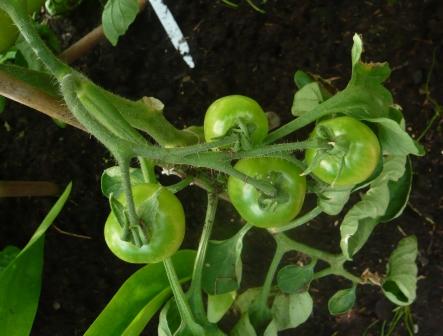
A good crop of tomatoes is not just an accident. A bit of ‘TLC’ will be repaid

035

Watering is key to growing a successful Tomato. If a Tomato dries out the skin quickly thickens. If you water inconsistently the skin splits. Irregular watering can stop the uptake of Calcium which causes Blossom-end rot making the bottom of the fruit brown and inedible.

Feeding Tomatoes will increase the yield. All that rapid growth and fruiting takes a lot of nourishment. If you are growing in pots, grow bags or containers all the nourishment is provided by you. Provide a high potash feed weekly, increasing the frequency the larger the plant gets in July and August. If the leaves start to look pale, discoloured or yellow it hints at feeding deficiency.
To encourage more roots plant part of the stem as roots will spring from the buried stem.

Training your Tomato up a cane or string with regular ties to support the weight of fruit. 

Read More Read More

Grow your Own Mesclun Salad

Grow your Own Mesclun Salad

Mesclun

What is Mesclun

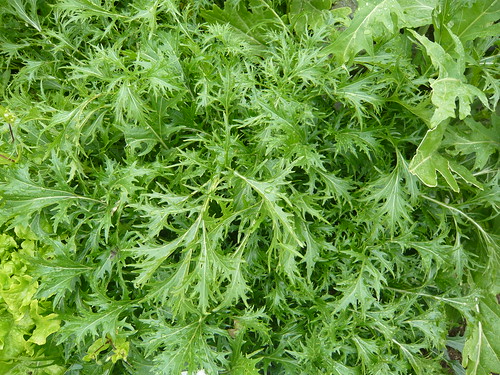
  • Mesclun is a mixed salad of young green leaves.
  • The idea is to create a salad with a good balance of strong and mild flavoured greens.
  • Often Mesclun contains a mixture of leaves from lettuce, endive, chicory, frisee, spinach, sorrel, swiss chard, mustard, arugula, radicchio and or chervil.
  • Mesclun is best when harvested as tender young leaves.
  • For extra flavor some people add herbs like thyme and oregano to the mix.
  • I think 4 different leaves are enough to make a good Mesclun with no one flavour or texture dominating the others.

How to Grow Mesclun

  • Grow from seed and cut the leaves as you need them. Many will work as cut and come again micro salad leaves.
  • Salad leaves are mostly water and so you need a soil that is open but water retentive. I have found miracle grow compost has worked well this year.
  • Water regularly but remember soggy leaves will not be appetising.
  • I grow in containers and grow bags to leave open ground for more robust crops.
  • Seeds are ready to crop from 30-40 days as sweet young leaves.
  • Sow at 2 weekly intervals for regular supplies. Germination is best in cool spring and autumn temperatures.

How to Harvest Mesclun

  • When leaves are at least 4” tall you can start cutting.
  • Collect mixed leaves in a basket or bowl and snip with a pair of scissors.
  • Gently hold a clump of leaves with one hand while cutting with the other. Leave 1”–2” of leafy crowns on the plants so they can regrow for another harvest.
  • You should get 2 or 3 crops from each plant.

Gardeners Tips and Comments

  • Aim for a mix of sweet and stronger leaves.
  • A mix with yellow and red leaves as well as green can look attractive and we eat with our eyes first.
  • Mesclun may have originated in France but good gardeners can improve on French attempts at a salad.

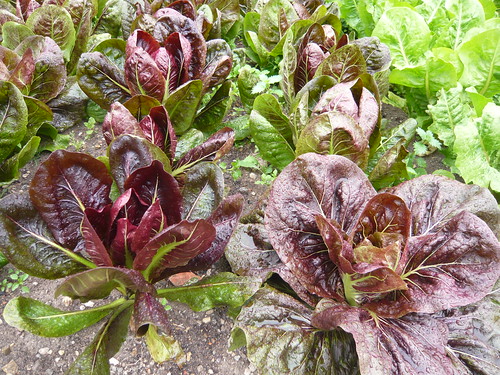
Chicory Rosa Detreviso

Unusual Fruit – A Taste of the Unexpected

Unusual Fruit – A Taste of the Unexpected

005

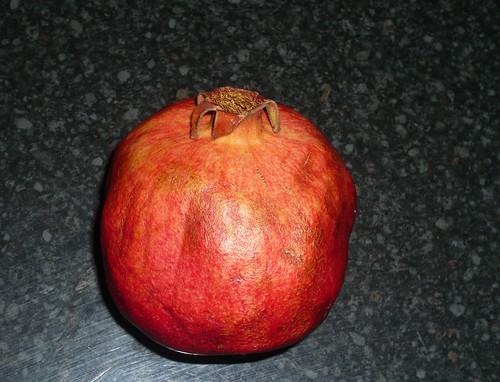
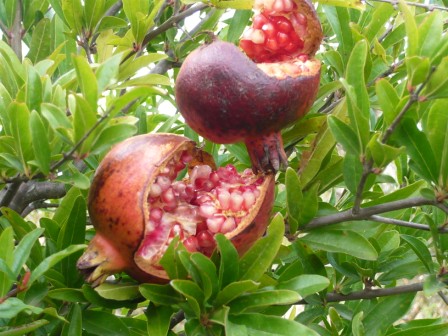
The pomegranate is a native of Iran and Pakistan. The shrub or small tree bears bright red flowers and juicy, if seedy fruit.
Even if placed in the sunniest, warmest part of the garden they will suffer in the UK but with global warming who knows.

pomegranite

Book Cover

Book Cover

A taste of the unexpected contains details about growing and cooking Chilean guava and Szechuan pepper amongst other unusual items.
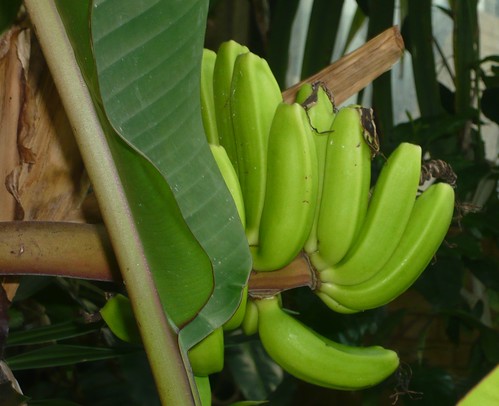
Whilst the photograph below was taken in England these bananas were only grown in the Kew garden tropical hot house.

Banana hand

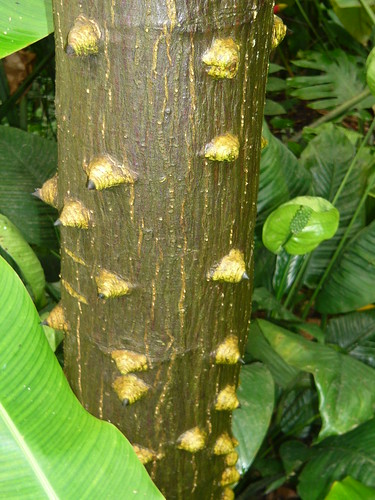
Eden Project
Are these warts, fruit or just part of the trunk? sadly Eden project did not have a name on this plant

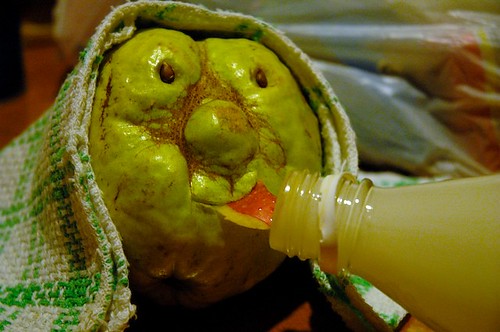
Guava Baby
Guava Baby by CeeKay’s Pix CC BY-NC 2.0 ‘Not sure if this is yummy but we stumbled upon this “face” on a guava fruit. It had eyes and a big round nose. To complete it, I stuck a piece of apple skin into his “mouth”. It was so adorable that we dressed it up too!’

How To Grow Asparagus

How To Grow Asparagus

Asparagus
Asparagus

In the days of year round vegetables the allure of home grown vegetables has been somewhat diminished. But, if you have ever eaten homegrown asparagus freshly cut from the garden you will know it is a delicacy well worth enjoying. I even recommend avoiding asparagus out of season and only eat home grown, freshly cut asparagus. You can’t beat the real thing.

Important Tips for Asparagus

Growing asparagus needs a certain amount of patience. In the first year you can take very little from the plant. However, if properly prepared, asparagus beds can provide a long running output of delicious asparagus stems for the kitchen.

How To Grow Asparagus

  • Choose a well Drained patch of soil. Asparagus hates to have its roots sitting in damp and boggy ground.
  • The best time to plant roots is in March.
  • If you have heavy soil work in some grit to improve the drainage of the soil.
  • Measure out beds 1m (3ft) apart
  • Make 2 ridges about 1 feet apart running down length of bed
  • Drape the crowns over the ridges so that the roots hang down the slope
  • Shovel the topsoil back over them, making a raised bed as you do so.

Read More Read More

Control of Pests on Apples & Pears

Control of Pests on Apples & Pears

‘Understand the pest and you are part way to controlling the problem.’

Brown Rot
This rot is often associated with storage when a fungus permeates the fruit. Fruit on the tree can be mummified and this prolongs the life of the fungus. There are no effective organic sprays so rely on good cultural management. Take care picking and storing fruit.

The rot starts through wounds caused by birds, wasps and scab. At blossom time the fungus causes wilt and shoots to shrivel. Remove all rotting fruit and bury rather than compost. Prune and burn branches killed by wilt.


Aphids
Of the many species the green or rosy apple aphids and the woolly aphids plus the pear-bedstraw aphid can be very troublesome. Aphids mate in Autumn leaving eggs to over winter on spurs crevices and tips. Heavily infested shoot tips and flower cluster should be cut out and destroyed. Encourage beneficial insects like earwigs and ladybirds.

Read More Read More

Causes & Cures for Bitter Pit on Apples

Causes & Cures for Bitter Pit on Apples

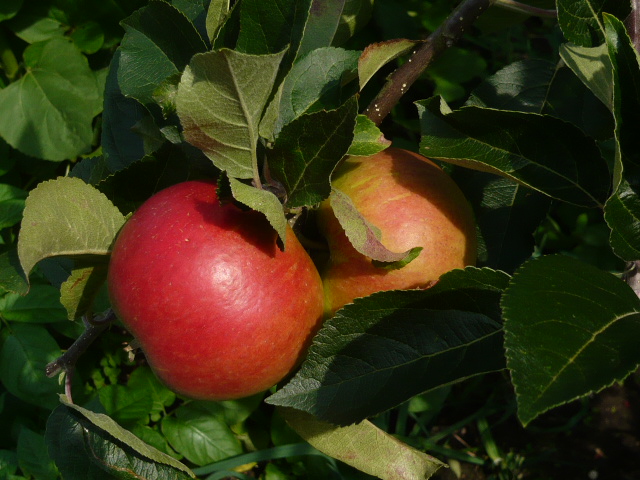
DSC_0125.jpg  Gascoigne's Scarlet.

Brown spots in the flesh of your apples is a sure sign of Bitter Pit. Along with dark depressions in the skin, brown sports dotted throughout the flesh is typical of bitter pit on your apple trees.
Bitter pit is a disorder not an infection or infestation.
Unfortunately the flesh of badly affected apple trees will also taste rather bitter

What Cause Bitter Pit on Apples

  • The disorder is usually brought about by a calcium deficiency.
  • Another potential cause is a susceptibility of the variety.
  • An erratic supply of water will also encourage the disorder.
  • Young trees that are putting on a lot of growth are also rather susceptible.
  • Early picking can cause bitter pit to develop during storage.
  • Dry conditions can reduce the calcium uptake even if it is present
  • Vigorous trees with copious leaf area need more calcium. Bramley’s Seedling and Newton Wonder are large fruiting cookers that are prone to the problem.
  • Trees without adequate Calcium will rob fruit of the calcium to sustain other parts of the tree.

How do you Cure Bitter Pit on Apples

    • Spray the developing fruit with Chempak Calcium mulit-action
    • Foliar sprays of calcium nitrate or Calcium chloride solution can be applied from mid-June to mid-September
    • Make sure your trees are mulched and well watered.
    • Some varieties such as Bramley Seedling and Gascoigne’s Scarlet are more prone than others. Check what grows well in your area and try plant those varieties, Gala is said to be free of the problem.
    • Prevention is the best cure using good cultivation practices.
    • Install irrigation to give tree roots access to moisture and natural calcium.
    • Add lime or chalk to the ground then rake and water in.
    • Do not store apples showing signs of bitter pit. Rather eat or cook with them asap.

Has your Granny Smith got black spots or is your Golden Delicious not totally golden then you may have bitter pit. This is not a fungal or insect borne disease but a chemical imbalance. Bitter Pit is a problem with the fruit on Apple trees caused by a shortage of Calcium. The fruit have dark, sunken spots on the surface, browning flesh and a slightly bitter taste. The problem can continue or start developing after harvest so inspect stored apples. Cork spot and Jonathan spot are similar to Bitter pit in that damage to tissue occurs mostly on the surface and just below. Although apples affected with these disorders are still edible they are unattractive in appearance.

Read about other Apple problems and control


Credits
DSC_0125.jpg Gascoigne’s Scarlet. by northdevonfarmer CC BY-NC-ND 2.0 ‘Gascoign’s Scarlet. These apples always seem to be affected by bitter pit here.’

Fruit Tree Training and Styles

Fruit Tree Training and Styles

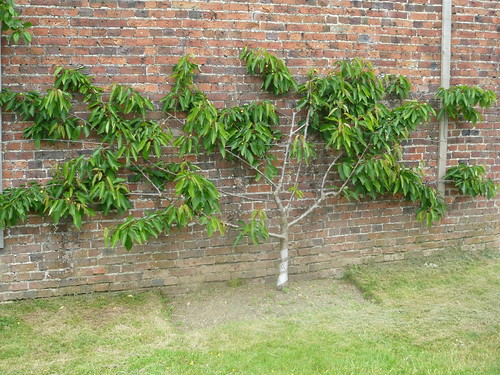
Wall trained
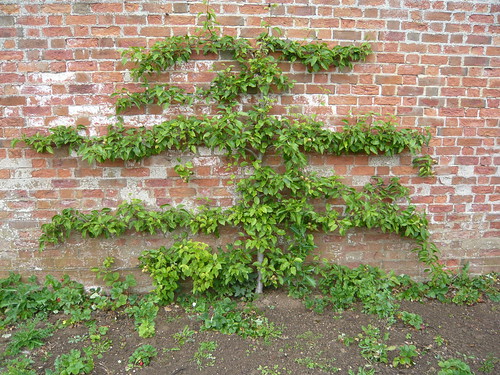
Espalier trained fruit trees can make the best of a south facing wall. In this style of training peaches, nectarines and apricots can be grown.
Large areas can be covered by just one plant.The branches are tied in the horizontal position and pruned to stay in formation.

Space is saved in comparison to a round tree with a central leader by having only a narrow width away from the wall.

Cordon trained

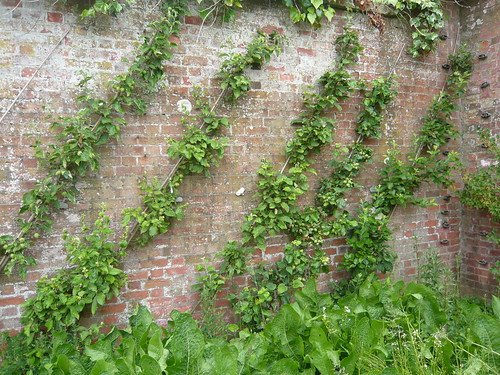
Training against a wall or on strong wires using cordons is often a good method for growing Apples.

Chose your variety and root stock with cordons in mind.

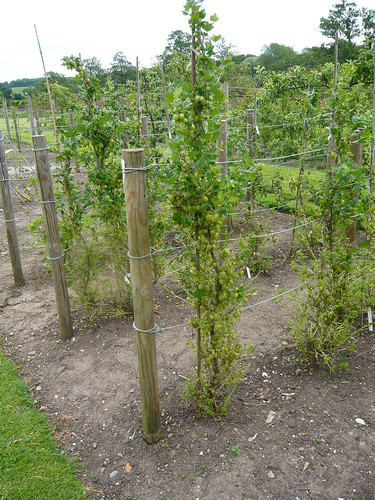
Cordon gooseberry

This Gooseberry is trained as an upright.  This is often called a leg and is used to make picking easier. You can also get more plants into a smaller area. The style and method is the similar to that used for growing a standard.

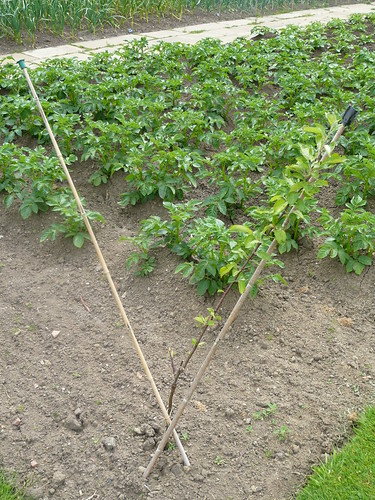
Cordon training

I wonder how this V shaped cordon is growing on 2 seasons later. You can just see the second branch starting to grow on the left.

Fan train

Read More Read More