Browsed by
Category: Flowers and Plants

Annual, perennial and interesting flowers with advice on culture, information, tips and recommended varieties

November’s Backend Bonanza

November’s Backend Bonanza

Americans call it ‘Fall’ and the Brits call it ‘Autumn’ but November’s ‘Backend’ can produce a garden Bonanza.
These flowers are still showing their true colours despite all that our English weather has been able to throw at them.

November Cyclamen

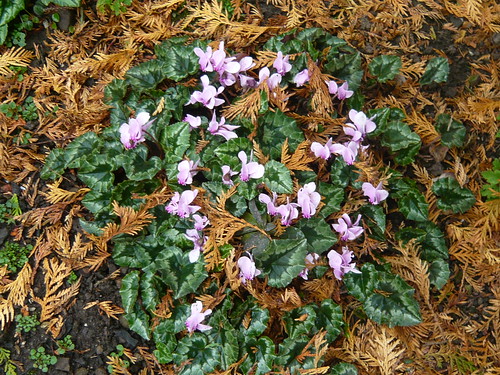
You can tell the leaves know it is fall and the Cyclamen hederifolium know it is autumn and time to flower.

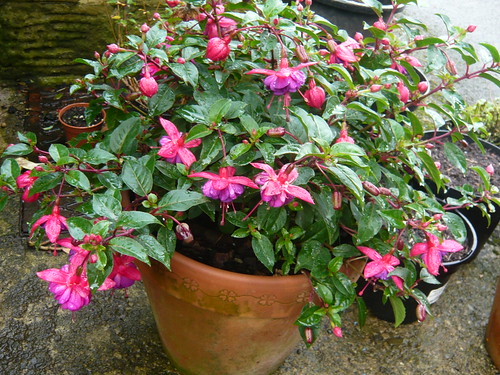
November Fucshia

Dollar Princess was a group of Fucshias I received as cuttings. It took awhile for the flowers to arrive but the late profusion is very welcome.

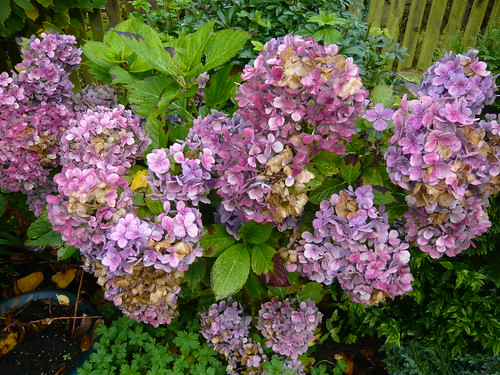
November Hydrangea

A bit over blown and beginning to loose their colour the Hydrangeas have enjoyed our wet season this year. The reward is going to be a winter windfall of flower.

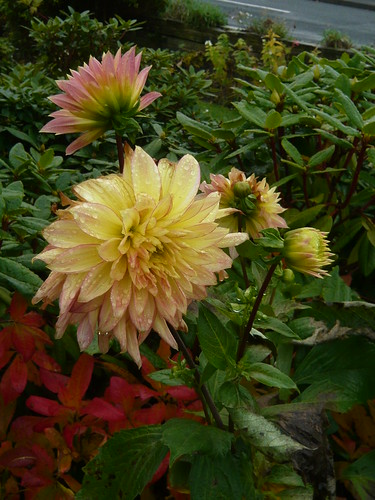
November Dahlia

The Dahlias have also been a stroke of luck, lasting very well without as much deadheading as they should have received.

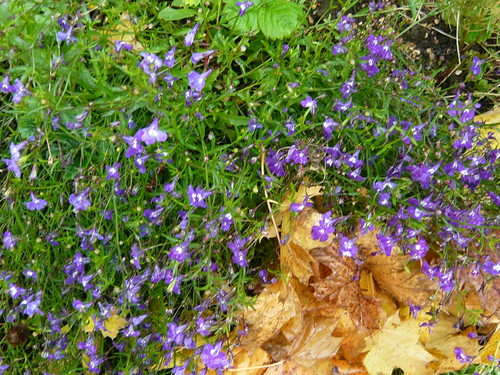
November Lobelia

The annual Lobelia has surprised my with its deep blue colouring that has lasted all through summer. It may be the autumn light but the intensified colouring seems to have strengthened as the seasons moved on.

For next year I will try some more Lobelia seeds from Thompson & Morgan

Growing Varieties of Eggplant -Solanum melongena

Growing Varieties of Eggplant -Solanum melongena

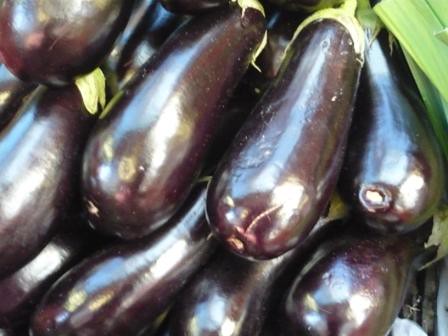
Aubegine

The Solanum family includes peppers, potato, tomato and even deadly nightshade as well as our aubergine (Eggplant). The small flowers all look similar but the resulting fruit are quite different.

Aubergines Varieties to try

  • Aubergine ‘Antar’ fruit can be dark purple and are a satisfying 9” long
  • Aubergine ‘Moneymaker’ produces good, early crops whether it is grown in the greenhouse, in patio containers or outdoors. The Height and spread is upto 24”. The purple fruit are long and slender with an excellent flavour.
  • Dwarf Baby Belle F1 should have lots of 2” fruit on a 20” plant
  • Red Ruffled also more prolific fruit but bitter and used for Asian cookery
  • ‘Florida High Bush’ Aubergine has an upright branching habit and carries its fruit well off of the ground. The white flesh is delicious grilled, baked or fried.
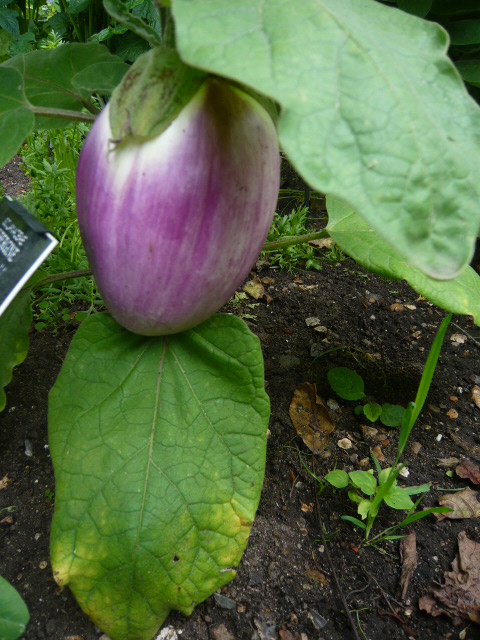
  • Aubergine ‘Listada de Gandia’ produces a large and early crop of stunning, white streaked, purple skinned, oval fruits up to 6” in length.
  • There are 15-20 different varieties of eggplant mainly of Asian origin.

Other Eggplants
Thai long green is one of the modern thin skinned varieties that should grow well in the south of the UK.
Diamond Eggplant is mild with no bitterness and coming from Russia it should thrive in the UK
Aubergine ‘Black Beauty’ is an heirloom variety worth considering.
Aubergine ‘Prosperosa’ produces spherical, ribbed, pale purple fruits with firm, flavoursome flesh. This Sicilian heritage variety has a mild flavour and no bitter after taste

Aubergines from Thompson Morgan
Read tips for growing Aubergines

Aubergine

Tips for Growing Michaelmas Daisy

Tips for Growing Michaelmas Daisy

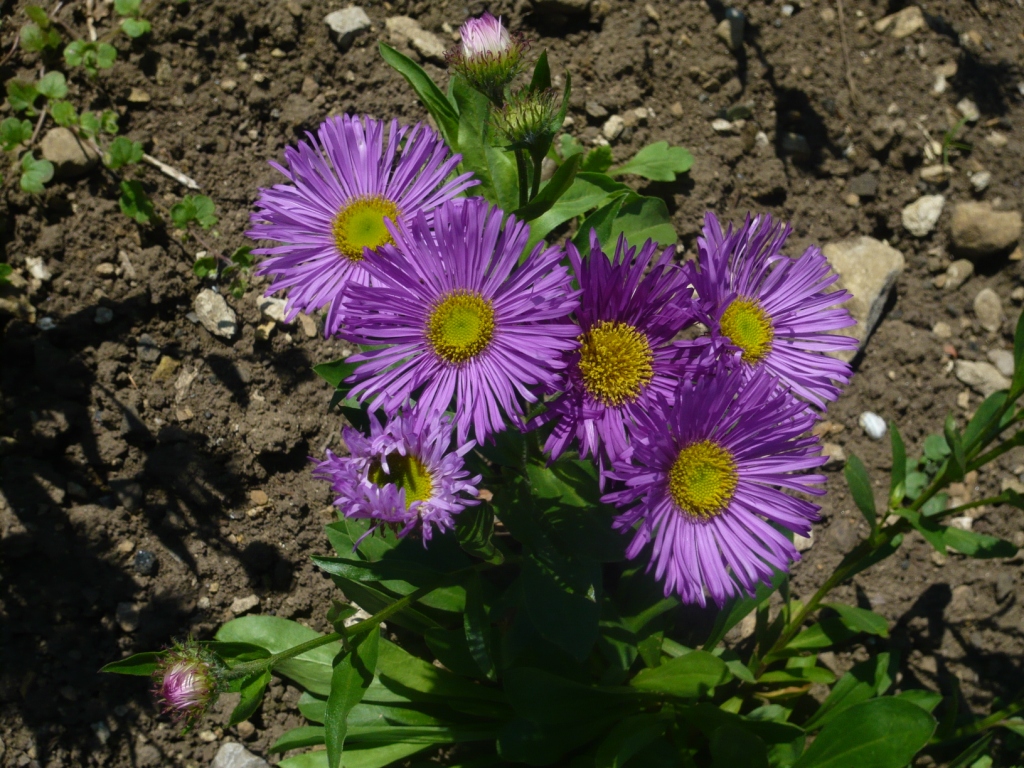
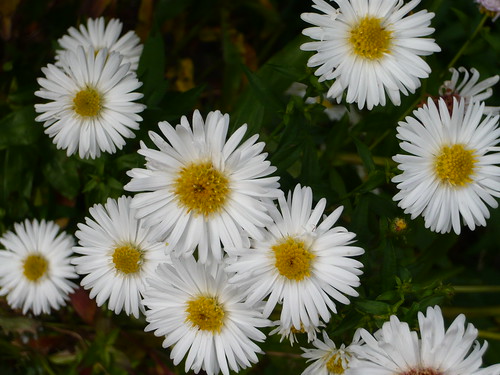
November Aster

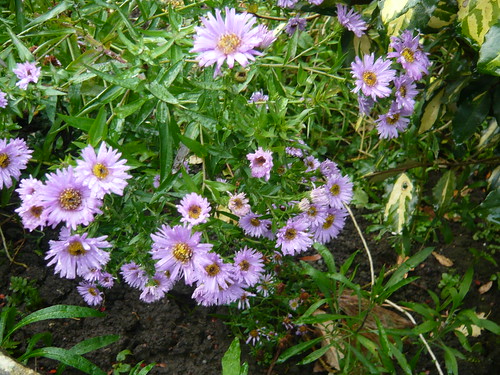
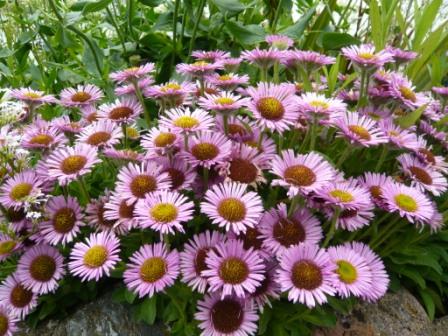
Michaelmas Daisy can be fun to grow with lots of small daisy shaped flowers. Given reasonable conditions they can grow quickly and provide excellent height and flower in late autumn.

Asters of which Michaelmas Daisy is one species are considered easy to grow and are often considered to be a good plant for children. However, to get the best out of most plants requires a few careful points.

Choose the right variety. If you want to grow a tall sunflower try a specific variety such as

  • Aster novi-belgii ‘Royal Ruby’ is a red flowering varieties, bursting into bloom in late summer when many other plants are beginning to fade. A superb clump forming perennial for the front of borders, and an excellent cut flower.
  • Michaelmas Daisies or Aster novae-angliae are available in a contrasting rich colour range of long stemmed autumnal flowers for cutting.
  • Aster novae-angliae ‘Harrington’s Pink’ grows 5 feet tall and is one of the easiest plants to take cuttings from.

Grow as Bunch or clump. Michaelmas Daisy can make an excellent impromptu screen for late summer. The height of taller varieties can divide a garden creating a natural sense of rooms – something top garden designers often go for.

Proper Staking. Preventing tall Michaelmas Daisy from falling over is one of the great challenges of growing them. Stake with bamboo canes or brushwood in early spring. If you grow them in blocks it will be easier to provide staking for the group; they will give each other support as they grow. Shorter varieties need no staking.

Feeding. Michaelmas Daisy enjoy a rich, moist well fed soil. If going for height, use a nitrogen based fertiliser, switching to potash (tomato food) as the buds begin to appear.

Watering.Michaelmas Daisy don’t like drying out and they can soon start to get mildew. Make sure they are well watered; each watering should aim to reach its roots, rather than just touching the surface.

Best Location. Michaelmas Daisy like a sunny position and preferably not too windy.

Michaelmas Daisy alba

Acer Season 2012

Acer Season 2012

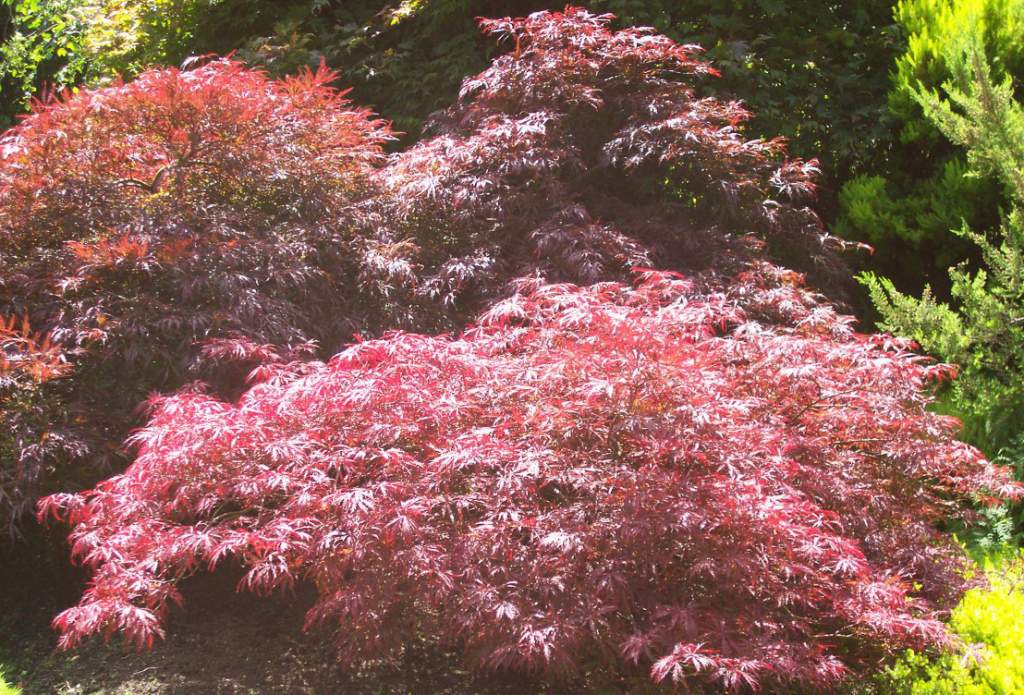
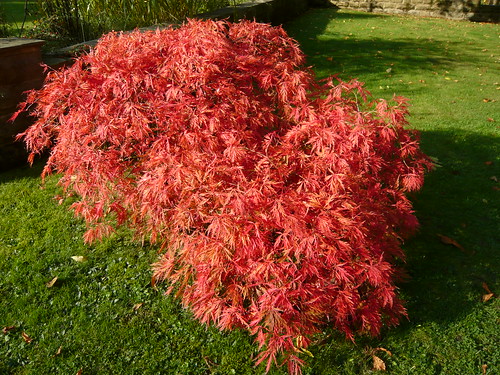
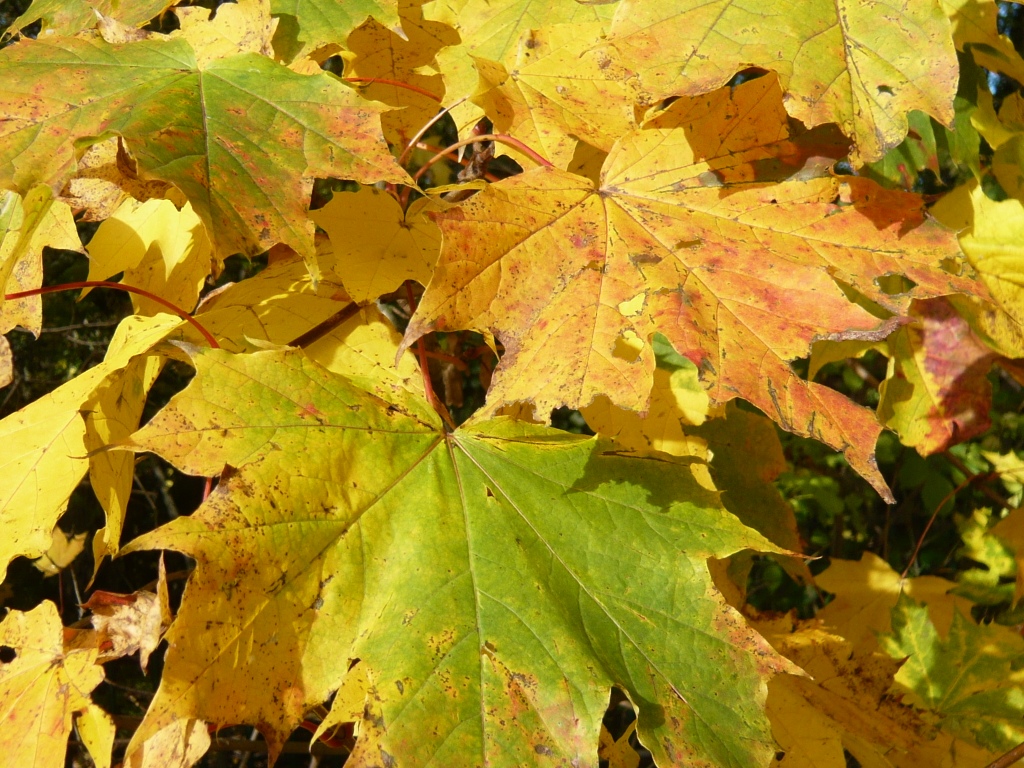
Maple trees or Acers have exceptional colour in autumn which is why tourists flock to New England and the eastern seaboard to see the flaming colours. Cold nights and warm days are the conditions that help turn green leaves to vibrant colours.

With the falling temperatures, the lush green colours of summer have been replaced with vivid reds, golden yellows and browns.

Leaves Autumn Amber

Why do Some Leaves Turn Red
Leaves naturally turn yellow as the chlorophyll breaks down and the green disappears but yellow can attracts sap-sucking aphids.
Some species of tree produce a bright red pigment into the leaves to confuse these insects.
Some trees are naturally red pigmented from the outset.

Gardeners Tips Favourite Links

Leaves Autumn 065

Gardeners Top Tip
Plant Acer palmatum ‘Matsukaze’, which opens bright bronze-red turns olive green, flushed with purple but then scarlet in autumn colour, where sun can shine through the coloured leaves to enhance the autumn effect.

Choice of White Daffodils

Choice of White Daffodils

I have just bought and planted some white Daffodils for cutting next spring. I buy them from a nursery that allows you to pick your own bulbs from large wicker baskets and prices them by weight.

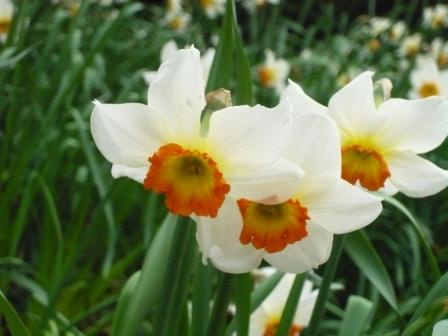
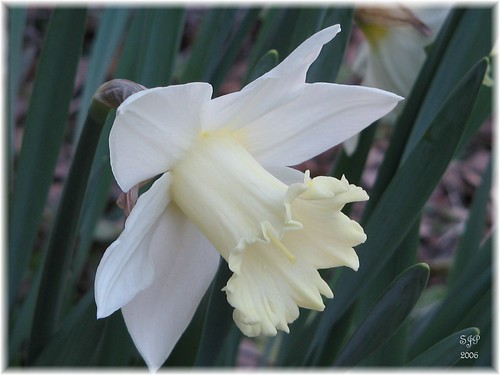
The main variety I chose was Mount Hood (div 1C) which has a white perianth that stands at right angles to a large white trumpet. Any hint of cream as the flower opens is soon relegated to a pure white.

white daffodil

Mount Hood dates back to the 1930s but remains the best known and most widely grown of the all-white trumpet daffodils. The flowers open creamy yellow and mature an even creamy white. They make a bright splash in early spring. Cream coloured Daffodils get whiter as the flowers age

White Daffodil

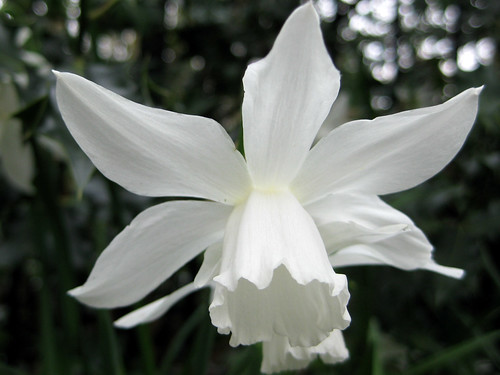
Another favorite is Thalia, a Div 5 Triandus narcissi with pure white flowers and a distinctive petals.

White daffodils

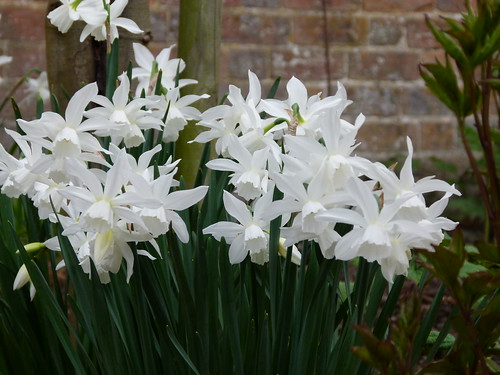
In the same division is Ice Wings and Silver Chimes which has a slight yellowing to the cup but both are best white daffodils.

daffodils / jonquils

The Jonquilla family are well scented but I am unsure of the variety above as the red stamen are putting me off.  Pueblo and golden Echo are thought to be the best virtual white.

white daffodil

I like this shot of another unnamed Daffodil. Look out for a new Poeticus called ‘Cutless’

Erlicheer daffodil in the morning

This Erlicheer is excellent for indoors with 15-20 double florets per s6tem. It may be flecked with some yellow but is essentially a white variety well known in Israel.

Photo Credits
white daffodil by steve p2008 CC BY 2.0
White Daffodil by ptc24 CC BY 2.0
White daffodils by ramson, CC BY-NC-SA 2.0
daffodils / jonquils by cskk CC BY-NC-ND 2.0
white daffodil by puddytat30141 CC BY-NC-SA 2.0
Erlicheer daffodil in the morning by knoxilla CC BY-NC-SA 2.0
“Paper Whites”, Narcissus cv CC BY-NC-ND 2.0

"Paper Whites", Narcissus cv.

Other Daffodil Links
Tips for Growing Daffodils
Top Ten Miniature Daffodils and Narcissus
Daffodil society top tips
The society
The international Daffodil register
Bulbs from Thompson Morgan  including Narcissus ‘White Diamonds Mixture’  an elegant departure from the traditional yellow daffodil. It adds a dazzling white sophistication to spring borders and containers. This superb mix combines some of the best forms, including some rarities, to give a wonderful range of shapes and sizes. Plant them in bold drifts for a beautiful, naturalistic display. Height: 35cm (14”). Spread: 15cm (6”).
The American Daffodil Society

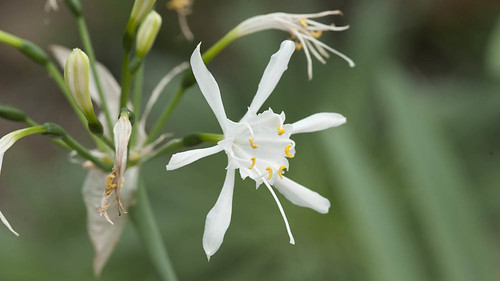
Canary sea daffodil
‘The Canary sea daffodil, Pancratium canariense, is endemic to the Canary Islands – meaning it is native only to that region. Catch the last of its flower in the Princess of Wales Conservatory during September’ Kew CC BY-NC-SA 2.0

Blight in Blighty from Sky News

Blight in Blighty from Sky News

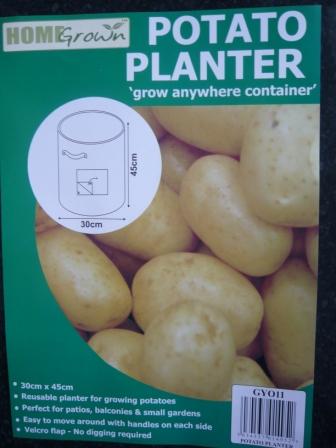
Veg growing gardeners get it in the neck for growing potatoes. Emma Birchley the East of England Correspondent for Sky News’ has got a new blight story, it is either feast or famine when it comes to the potato.

Late blight of potato

‘Allotment holders who fail to deal with blight-ridden potato plants have been blamed for spreading the fungal infection to farmers’ fields.

If it is not detected, blight can destroy crops and the spores can quickly spread 30 miles or more in the wind.
Tackle it the right way and it can be controlled, but the Potato Council says some home and allotment growers are failing to spot the signs in time.

“If someone on an allotment has a blighted plant, a single leaf on that plant can produce 120,000 spores,” said the organisation’s director Rob Clayton.

“They can blow around in the wind and in warm, wet conditions they can infect neighbouring plants, neighbouring allotments and the whole neighbourhood.”

The muggy, damp conditions of this summer have been the perfect breeding ground for the fungal infection.

Susanna Colaco has had an allotment in Cambridge since 1986. She has never known a year like it for blight. But she is angry that the finger is being pointed at growers like her.

“I think allotment holders are very responsible.
“On this site we purchase certified seed stock from our allotment trading hut and we are very careful that at the first sign of blight we inform all the members on site and ask them to remove foliage and to be vigilant.”

That foliage must then be burnt, deeply buried or binned. It can even go in the council’s compost bin as the contents are heated to a high temperature.

But infected leaves or rotten potatoes must never be put on the compost heap.

“If somebody throws a rotten potato on a compost heap at this time of year it can sprout … and it can kick off a whole cycle of infection from next year on,” said Mr Clayton.

Late blight, as it is known, or phytophthora infestans, is the type which destroyed vital potato crops in Ireland in the mid-19th century causing the Great Famine. A million people died.

Farmers expect to lose around 7% of their crop to blight, but this year the loss is predicted to be more like 10%.
And the usual £55m cost of coping with the fungal infection is likely to increase to around £80m.

Potatoes are already 11% more expensive than they were this time last year and the price is expected to rise significantly higher as the impact of the increased farming costs filter through to the shops and markets.’ Thanks Sky

Blighted potatoes

You can get blight buster potato tips and information for gardeners here….
Photo Credits
Blighted potatoes by Kai Hendry CC BY 2.0
Late blight of potato by Ben.Millett ‘This is a Dark Red Norland potato tuber that is infected with late blight (the disease that caused the Irish Potato Famine), caused by the pathogen Phytophthora infestans. If you start peeling a potato and see this, consider yourself lucky that the soft rot hasn’t set in yet. Although this disease looks bad (it is bad), what makes it particularly bad is that it allows other pathogens, such as the bacterium Erwinia carotovora, to get in and ‘ CC BY-NC-ND 2.0
Choosing Bold Colours in the Garden

Choosing Bold Colours in the Garden

One of the most interesting aspects of gardening is the combination of colours that can be achieved by accident or design.
Leaves and bark can play their part but it is the bold colours of some of our favourite flowers that take centre stage.

colour

Sometimes, we like the delicate, soothing pastel shades or the zen of a ‘White Garden‘ but, this doesn’t mean we always have to follow decorum and good taste. Sometimes its nice to just choose great impact colours which add life, zest and sparkle to the garden. The kind of colour combination that makes a passerby think – ‘hmm that’s interesting’

colour

Deep Purple Delphiniums and bright red poppies

Read More Read More

Purple Coloured Flowers and Plants

Purple Coloured Flowers and Plants

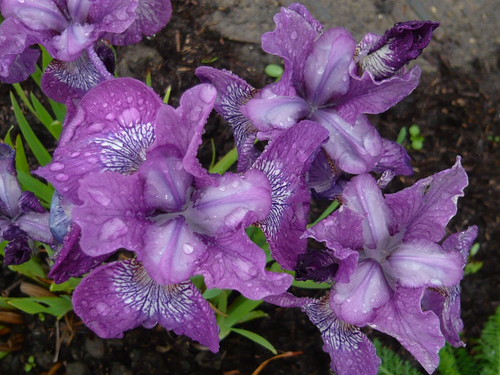
Interesting colours are often seen in plants after a rain storm. The clouds and the temperature of the light can create some eerie shades. With all the rain in Yorkshire this summer colour in the garden has needed all the help it can get.

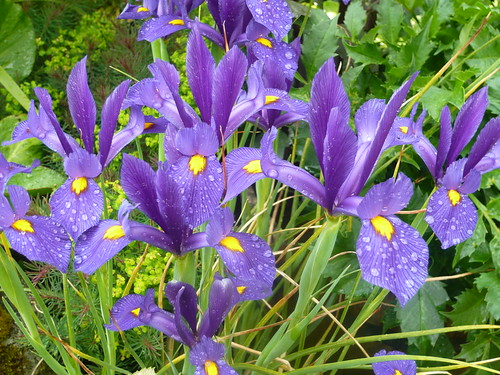
Iris

See Gardening Colour Wheel Hints and Tips


Purple Flower Selection

  • Pulasatilla vulgaris has a satiny rich, purple petals with a grey hairy underside. Also called the Pasque flower it is great for a spring purple if you want to avoid crocus.
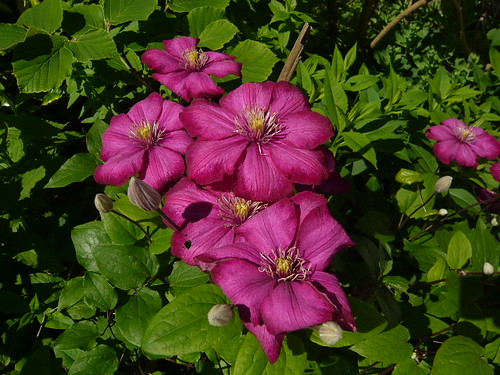
  • If you like your purples to err towards the red spectrum then Clematis Haku-Oakan or Gipsy Queen are the climbers for you.
  • Malva mauritiana is a top purple perennial but Iris are my favourite. Try Mandarin Iris mixed with lime green Euphorbia.
  • At the end of summer the best Michaelmas Daisies will bloom in purples of all hues

Clematis

Read More Read More

Photos of Phlox Species

Photos of Phlox Species

Phlox 'wagon wheels'
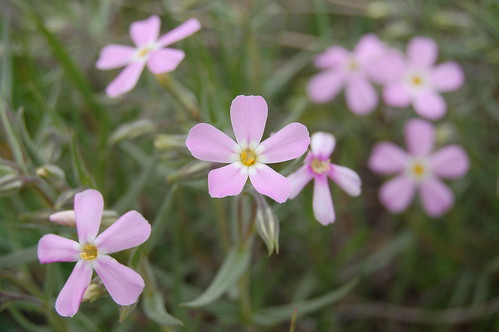
Phlox adsurgens a mat forming evergreen with a cheery springtime display of star-like flowers in pale pink.

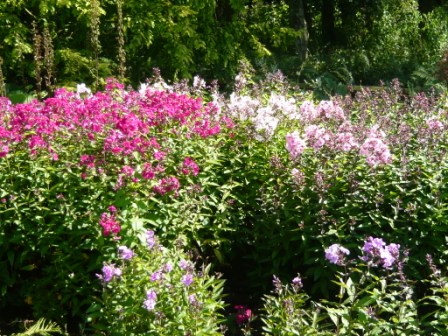
Phlox paniculata
Phlox paniculata

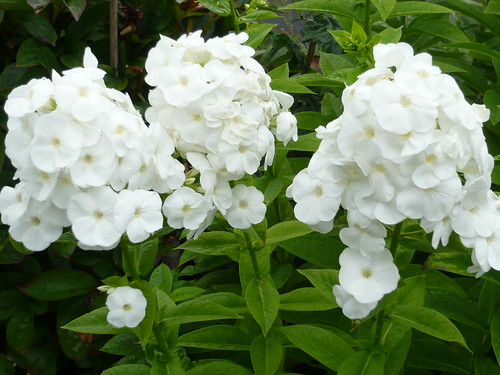
Phlox
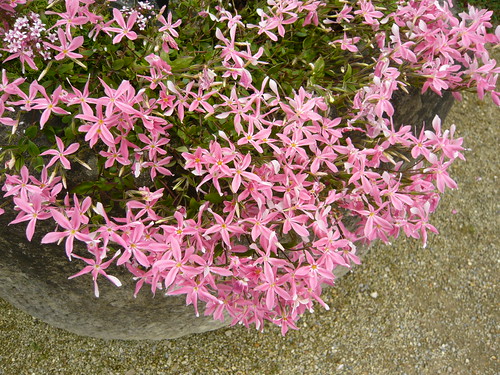
Phlox subulata a rockery favourite

Various Phlox are available from Thompson & Morgan Including:-
Phlox drummondii ‘Phlox of Sheep’ an annual
Phlox subulata,
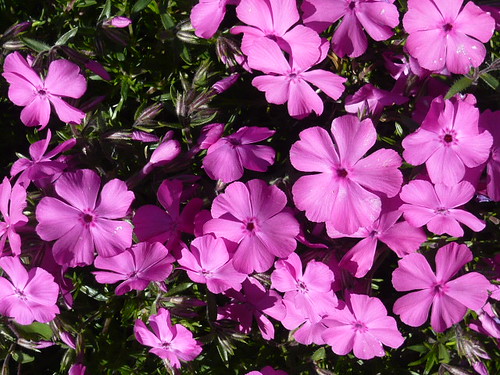
Phlox douglasii or Moss Phlox for fragrant ground cover.
Phlox divaricata ‘Clouds of Perfume’ also known as Wild Sweet William, Blue Phlox or Woodland Phlox
Phlox Hybrida Compacta ‘Peppermint Candy’
Zaluzianskya capensis Night Phlox with a honey fragrance in the late evening

Book Cover
Phlox: A Natural History and Gardener’s Guide by James H. Locklear

Downy phlox
Downy Phlox pilosa

Phlox hoodii var. canescens (Carpet phlox)
Phlox hoodii var. canescens aka Carpet phlox

Phlox stolonifera (Photo Credit: Dexter Hinckley)
Phlox stolonifera at UDA National Museum of Natural History’s Butterfly Garden.

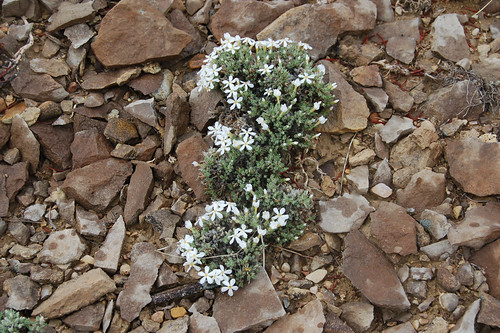
Phlox longifolia closeup DSC_0320
Phlox longifolia

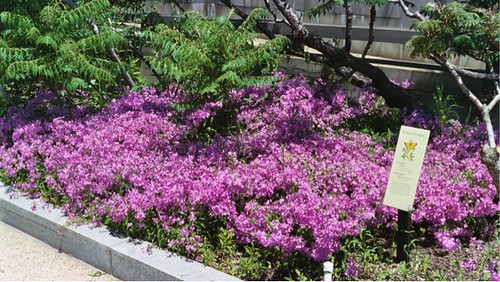
Opal phlox in the Alpine House
Phlox opalensis flowering in the Davies Alpine House and in the wild in Wyoming and Utah.

Photo and other Credits

Downy phlox by eleanord43 CC BY-NC 2.0
Phlox hoodii var. canescens (Carpet phlox) by Tony Frates CC BY-NC-SA 2.0
Phlox stolonifera (Photo Credit: Dexter Hinckley) by samantha.schipani CC BY-NC 2.0
Phlox longifolia closeup DSC_0320 by Tony Frates CC BY-NC-SA 2.0
Opal phlox in the Alpine House by Kew on Flick CC BY-NC-SA 2.0
moss phlox シバザクラ by microwalrus CC BY-NC 2.0

moss phlox シバザクラ
masses of Moss Phlox subulata

Collection of Thoughts on Small Wild Bulbs

Collection of Thoughts on Small Wild Bulbs

If you can’t visit these bulbs in their natural wild habitat read the wild stories from a Latvian bulb collector Janis Ruskans.
Small Iris bulbs should be replanted and thinned every 2-3 years to retain flower power.

Iris reticulata

If you like Iris reticulata and a good travel yarn then you could do a lot worse than read ‘Buried Treasures: Finding and Growing the World’s Choicest Bulbs’ by Janis Ruksans

Book Cover
I think of Janis as the wild ‘ iris bulb man’ for the work he performs on breeding the various varieties in his Latvian nursery.

Janis Ruksans has been growing bulbs since age twelve and from 1991 has operated his own bulb nursery in his native Latvia. Janis is an expert specializing in rare and unusual bulbs. This book includes stories of his travels on several expeditions searching for new bulbs throughout Europe and Central Asia. He has also written a respected work on ‘Crocuses A complete guide to the genus’.

June garden 038 Iris reticulata

Unusually late these Iris reticulata normally bloom in the wild as soon as the snow melts on the mountain side.
Normally in the wild they remain dry during summer.
The bulbs should be replanted and thinned every 2-3 years to retain flower power.

Other Links
Look Forward to Winter and Iris Reticulata
Iris Reticulata and Histroides Species
Growing Iris From Bulbs
Tips for Growing Spring Iris from Bulbs