Browsed by
Category: Flowers and Plants

Annual, perennial and interesting flowers with advice on culture, information, tips and recommended varieties

Help Growing Petunias
Help Growing Petunias

Petunia

Petunias do not need to be lonely and relegated to the onion patch. Petunias are generally a very forgiving species of half-hardy annuals that are easy to grow from seed. Some special varieties may be easier to grow from plug plants or cuttings although it is not worth the effort of over wintering the plants.

Description of Petunias

  • Petunias generally have masses of vibrant coloured flowers throughout summer.
  • Leaves are fleshy, unremarkable and grey-green. That is no problem as they are usually covered in lots of blooms
  • Plants grow 6-12″ high or trail in the case of Surfina varieties.
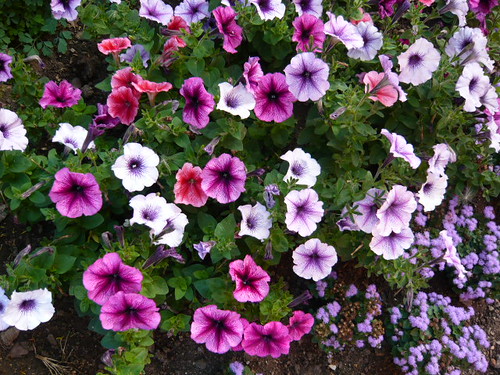
  • A wide range of colours are available as demonstrated in these photos.
  • Grandiflora flowers can be large, showy and 4″ across or Million Bells varieties have masses of 1″ flowers.

Cultivation Tips for Growing Petunias

  • Petunias spread during summer and do well if watered and fed.
  • Use Petunias in containers, borders or hanging baskets.
  • Seed is very fine and hard to collect for next year.
  • Sow seed in late winter – mid spring at 21-27C on the surface of a good seed compost.
  • Do not exclude light, keep compost damp but not wet and seal in a polythene bag after sowing.
  • Germination usually takes 10-21 days.
Read More Read More

Growing Strelitzia – Bird of Paradise Flower

Growing Strelitzia – Bird of Paradise Flower

Strelitzia

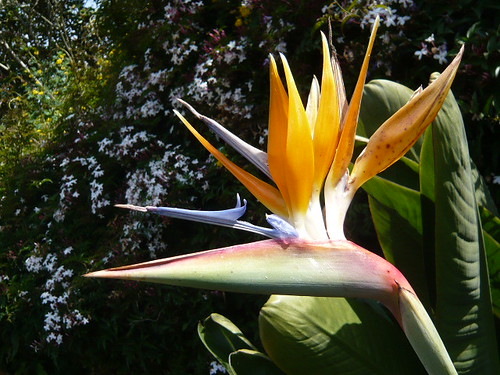
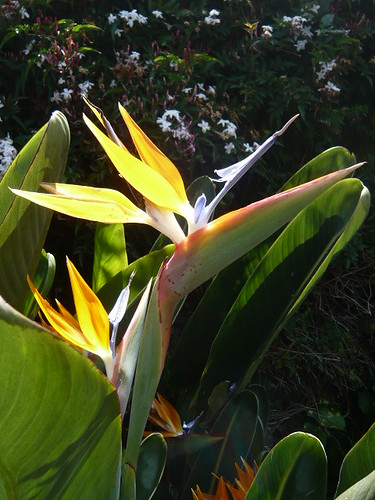
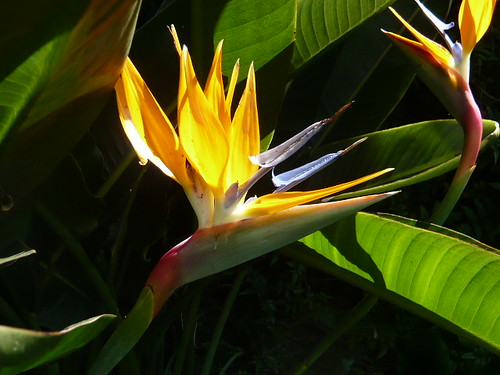
Strelitzia is a genus of five species of perennial plants, native to South Africa. The common name is the bird of paradise or crane flower, because of a supposed resemblance of its flowers to the bird of paradise.

Strelitzia

The leaves are similar to a banana leaf in appearance and can be upto 5 feet long.

To show the wonders of nature ‘The flowers are produced in a horizontal inflorescence emerging from a stout spathe. They are pollinated by Sunbirds, which use the spathe as a perch when visiting the flowers; the weight of the bird on the spathe opens it to release the pollen onto the bird’s feet, which is then deposited on the next flower it visits.’

Strelitzia

Resources

Growing Conservatory Flowers

Seeds available from Thompson & Morgan
Moonbells Allotment blog contains a diary of Strelitzia growing and provided these further links

http://www.plantzafrica.com/plantqrs/strelitregmandelagold.htmThe Mandela´s Gold form, yellow petals not orange. Previously known as Kirstenbosch Gold. Also tells you how to hand-pollinate.
http://www.plantzafrica.com/plantqrs/strelitziareginae.htm The main page for Strelitzia on PlantzAfrica
http://finebushpeople.co.za/farmstore/catalog/accessorystore.htmSmoke primer disks – which I´ve got two of, but have yet to try out! See next entry for seeds.
http://finebushpeople.co.za/cgi-bin/farmshop.pl?TP=Mandelas_Gold.html&ID=!ID!SEEDS!!!! Cheapest I´ve found so far… and legal to export to the EU.


Wikipedia
* Strelitzia alba (syn. S. augusta) – White bird of paradise;
* Strelitzia caudata – Mountain Strelitzia;
* Strelitzia nicolai – White or Giant bird of paradise; Wild banana; Blue-and-white Strelitzia[2]
* Strelitzia reginae (syn. S. parvifolia) – Strelitzia, Bird of paradise, or Crane lily;
* Strelitzia juncea (Ker Gawl.) – African desert banana. Cite.
* S. × kewensis (hybrid between S. reginae and S. augusta)

Growing Veg in The Greenhouse

Growing Veg in The Greenhouse

tomato

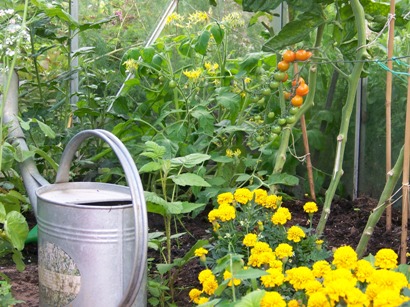
Tomatoes grown in greenhouse. Marigold to attract hoverfly – a prolific aphid eater.
The Greenhouse offers a much wider range of vegetables that you can grow. Because space will be limited make sure you make best use of the space to grow early / unusual vegetables you can’t grow outside.

Top Tips for Growing Veg in the Greenhouse.

1. Sow Early Vegetables.

There’s an added benefit from growing early vegetables which are not quite ready for the shops. By sowing indoors, and planting in a heated greenhouse, you can have an early crop of carrots, lettuce, and peas.

2. Soil Rotation.

If you are growing in the confines of a greenhouse, you need to make sure the soil is kept disease free. If you grow tomatoes directly in the soil it is worth digging out the soil and swapping with somewhere else in the garden which has had a different crop like legumes.

3. Cleanliness.

Read More Read More

Varieties of Tulips for Cut Flowers

Varieties of Tulips for Cut Flowers

Floral bunch

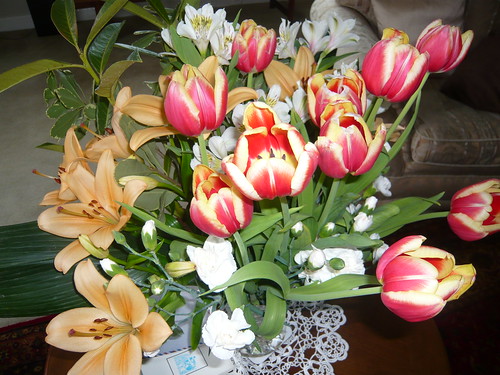
Certain Tulips last longer in a vase than others. Viridiflora, Fringed and Parrot tulips are especially long lasting often exceeding 10 days. Pick Tulips that are just turning from green for longest life.

Selection of Cut Flower Varieties

Estella Rijnveld with candy striped red and white flowers
Groenland a green stripped viridiflora with pink petals.
Union Jack with a large white cup touched with red.
Shirley appears cream but turns to white and matures with a hint of purple.
Queen of the Night is a late flowering dark flower almost like the infamous black tulip.
Arabian Mystery is a burgandy colour with white edged petals
There is a longer list on wholesalers web sites.

Read More Read More

Ten Summer Bulbs to Try

Ten Summer Bulbs to Try

000_0447

  1. Eucomis – The pineapple flower last for months and are very decorative.
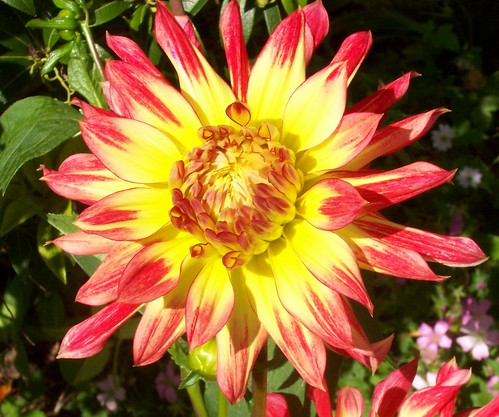
  2. Dahlia – A perennial favourite that is returning to fashionable gardens in need of late summer colour.
  3. Allium – Globemaster looks like it says in the name.
  4. Arum or Calla Lilies have distinctive spadix spikes of yellow through white petals.
  5. Canna – I like the dark leaved varieties with vibrant red flowers
  6. Stargazer Lilies – are very showy and fragrant.
  7. Galtionia – The summer Hyacinth worked very well in my garden last year and produced plenty of bloom.
  8. Gladioli – Always make a fine show plant, cut flower and vertical statement in your garden
  9. Agapanthus – The bulb of the last decade for my taste but still very popular in clumps or pots.
  10. Regal Lily – saved to the last on this list but one of my first choices. Can be planted through till June for flowering in 3 months.

Let us know in the comments which varieties and colours catch your attention. If you have another summer bulb you prefer let us know that as well and we will publish your views.

Read Growing Habranthus

Growing in Terracotta Pots

Growing in Terracotta Pots

There is nothing like a good terracotta pot. They encourage air flow to roots and the porous nature keeps the temperature reasonable. Old pots can attract moss or algae growth but the distressed look can be most attractive.

pots

Growing plants in pots is a great way to make use of limited space and offer colour all year round. Pots themselves can be an attractive feature for a patio. To make the most of growing in pots, bear in mind these points.

Careful Watering.

The difficult part of growing in pots is that they can easily dry out. To guard against this.

  • Choose draught tolerant plants e.g. silver leaved plants like lavender do very well.
  • Use water retention capsules. These absorb water and expand, this enables the pot to hold more water and reduce the frequency of watering.
  • Place pots on trays so that the trays can catch the water and the plant can gain water from bottom up. (Often when watering pots, water just flows straight out – especially if compost is dry)
  • Crocks. To protect against overwatering, make sure the pots have sufficient drainage and are not blocked with compost. Using broken bits of pots near the base to ensure good drainage. If necessary, put sand into the compost.
  • In the heat of summer move pots away from the scorching of the sun.

pots

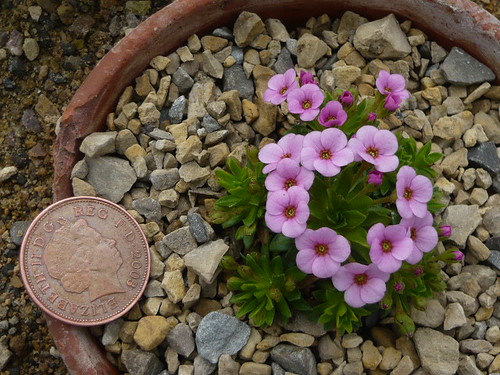
A delicate Alpine thrive in a well drained pot

Feeding.

Food in the compost will be exhausted after a few weeks or few months, depending on the growing season. Therefore, they will need plant food. It is better to feed little and often than overburdening them. You could also choose slow release food capsules which gradually release food over the course of a few weeks.

Cycle Plants.

The great thing about pots is that once something has finished flowering you can move them out and put something else in. E.g. once bulbs have finished flowering, you can dig them into some corner of the garden to die back in peace out of the way.

Experiment.

You will be surprised what you can grow in pots. Potatoes can do very well (and make it easy to harvest the crop). Sunflowers and tomatoes can do well in pots.

Related

Vireya Exotic Rhododendrons

Vireya Exotic Rhododendrons

Just when you have seen enough about Rhododendrons and Azaleas but this is the last Rhodo post for a while
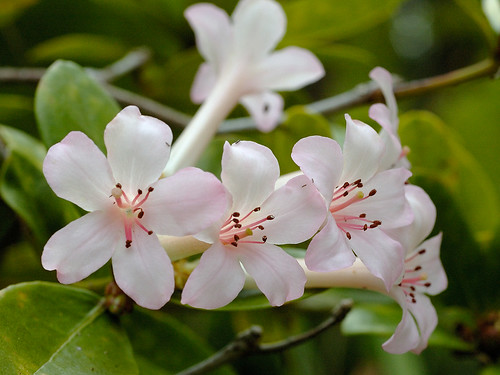
Pink Vireya

Are you interested in scented, colourful, winter flowering exotics? These Rhodoendrons are now seldom grown in the UK but it is easy to acquire the taste for this species that originate in South East Asia.
In Victorian times they were in vogue with over 500 hybrids from half a dozen species. Now there are over 300 recorded species in 7 sections on the wonderful Vireya web site.

Read More Read More

Grow Bright Azaleas

Grow Bright Azaleas

A lazier shrub with exciting blossom I have yet to find.
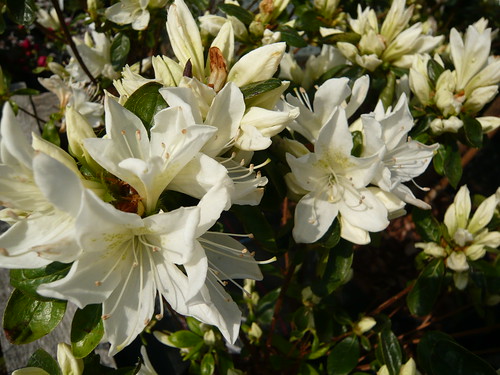
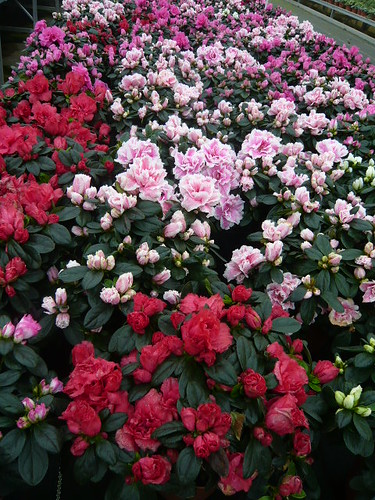
Azalea

How do you tell an Azalea from a Rhododendron? Most Azaleas have only 5 or 6 stamen while most rhododendrons have 10 stamen. Azalea leaves tend to be thinner, softer and more pointed than rhododendron leaves.
In a subjective way I think Azaleas produce more flower cover per plant.

Tips for Growing Azaleas

  • Azaleas are relatively pest-free  and easy to grow plants but may need a fungal spray if leaves are attacked in spring.
  • Azaleas like some shade  but deciduous varieties do well in full sun. Sun can produce more compact plants with more blooms but not as long lasting.

Read More Read More

Azaleas for your Home

Azaleas for your Home

A grand house plant that will last and last if you give it soft water.

Azaleas

Rhododendron simsii or indoor azaleas produce large funnel shaped flowers in a range of bright colours almost gaudy.

  • They dislike warm conditions and are more suited to a cool room or porch.
  • Buy in tight bud and they will open progressively indoors.
  • Plants need an acidic, loam compost and will benefit from misting with water on a daily basis until their buds start to show colour.
  • Keep plant roots just moist at all times and water with soft water to keep plants healthy.
  • During summer they can go outside but keep the moist.
  • Flowers are better when the plant is root bound in a pot.

Read More Read More

Growing Peony or Peonies

Growing Peony or Peonies

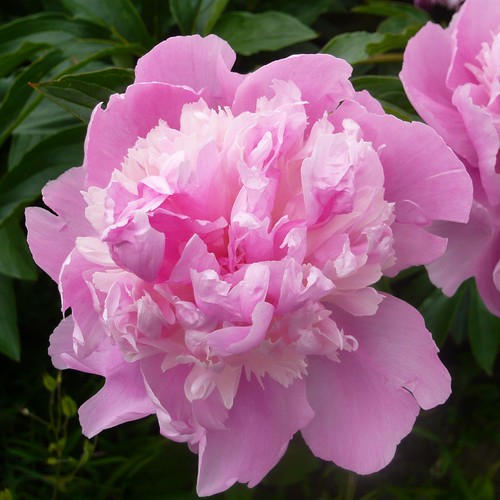
double peony

For centuries Peonies have been great favourites of the Chinese and are one of their national flowers. Peonies are easy to care for once established.

Peonies are shrubby herbaceous plants that will come back perennially (year after year). They can live 75 years and still produce a brilliant profusion of flowers. Herbaceous means the leaves and stems die back at the end of the season and new growth will start again in Spring.

Growing Peonies

  • Flowers are often strongly scented to attract bees and have double or single blooms.
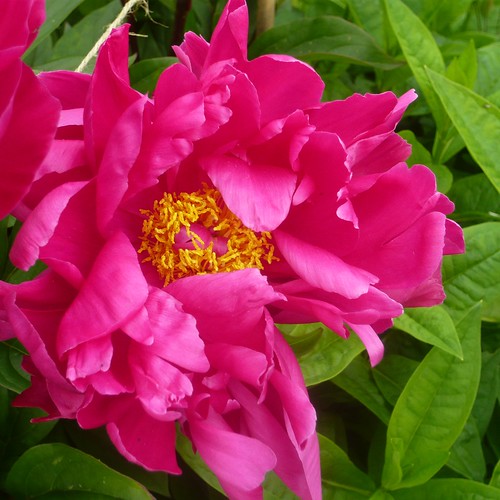
  • The colours are deep red through pink to white.
  • Peonies do not like to be disturbed or moved once they are planted.
  • Because they will live in the same spot for many years add some bone meal and good compost at the bottom of the planting hole.
  • Peonies are best grow from plants bought at a nursery
  • Plants are hardy but may make take some time to flower.
  • Only plant Peonies at the same depth as they were grown, never deeper.
  • Peonies and special fertilizer from Thompson & Morgan

Tree Peonies are harder to grow successfully and cost more to buy but can have show stopping displays of flowers once they mature.

peonie

Useful Links

Read More Read More