Browsed by
Category: Flowers and Plants

Annual, perennial and interesting flowers with advice on culture, information, tips and recommended varieties

Autumnal Compostables and Leaf Mold
Autumnal Compostables and Leaf Mold

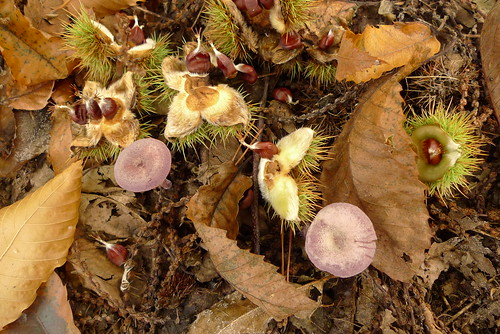
mushrooms, leaves and horse chestnuts

I am an avid composter but it is worth considering what is going into your compost this Autumn.

This photo contains several items that are not idea for my compost heap.

  • When I spread my compost I do not want lots of new saplings springing up in my garden. Some seeds and nuts are likely to survive composting as the heat will not be as great through winter.
  • Leaves particularly Oak,  Horse-chestnut and broadleaved trees will be slow to rot down.
  • Leaves do not provide much sustenance but are great conditioners if rotted down over a couple of years into leaf mold.
  • I have to admit to being uncertain about composting fugus. There seems to be little food value in these mushrooms and they may be spread via the composting process. On the other hand fungi are key parts of a soils organic activity and on balance I would compost these. I would not compost Honey-fungus or anything growing near my fruit trees.

Tips on Making Leaf Mold

  • Rake your leaves together into a pile. Bits of soil,  grass and a variety of leaves are not a problem but make the pile predominantly leaves.
  • Then there are a couple of options:
    • Put the leaves in a wire cage cover and leave to rot.
    • Put the leaves into a large plastic bag and puncture to allow air to enter.
  • Leaves should be damp and can be lightly watered but not left soggy. The rotting will not create heat like normal compost and decomposition will be slow.
  • It may take over a year for the leaves to breakdown and the volume will be a tenth of the leaf pile you started with.
  • Conifers and evergreen leaves will take   three years to compost and are best added in small quantities.
  • Shredding leaves or chopping with a lawnmower first  helps to speed up composting.
Mauve and Lilac Coloured Plants

Mauve and Lilac Coloured Plants

mauve & lilac

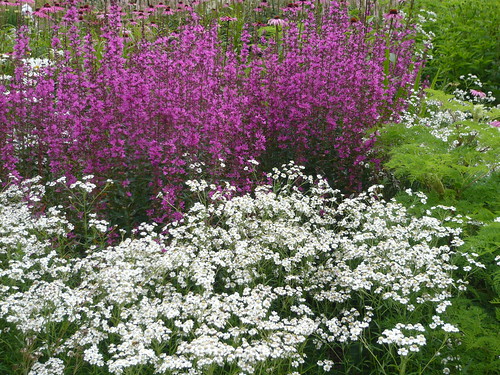
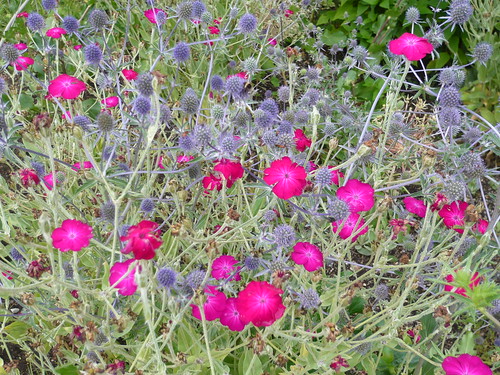
Lychnis coronaria also called Rose Campion and Eryngium ‘Superbum’ or Sea Holly blend well together in this late summer photo.The colour combination may be a bit too Barbara Cartland for some tastes.

Eryngium like Echinops have spiky leaves and bristly metallic blue flowers that make it a great architectural plant. The grey green unassuming leaves of Lychnis belie the strength of colour of their flowers.

pink & white

Read More Read More

Rhus typhina Sumach and Autumn Colour

Rhus typhina Sumach and Autumn Colour

Sumach
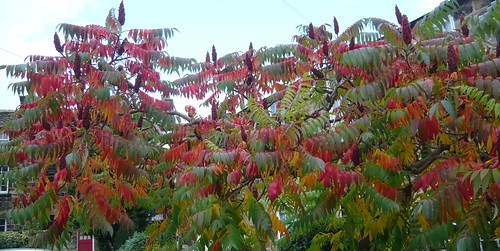
This autumn tinted, small tree, Sumac or Sumach is also called the ‘Stags Horn’ or botanically Rhus typhina.

Rhus Facts and Tips

  • Trees can grow up to 25 feet high, this specimen is only a third of that. Early pruning may have stunted the height and encouraged the large canopy.
  • Branches fork freely and are covered with thick velvety hair when young.
  • Leaves divide  into  narrow oval, toothed and softly hairy drooping leaflets. The leaves are bright orange and red   colours in autumn.
  • Male flowers are greenish  and female are red blooming on different trees
  • The cone-shaped, dull red, hairy heads  remain on the tree throughout winter.
  • Take care when touching the leaves and stems as the sap can be an irritant.

See picture of Sumach in spring

Tulip Festivals 2011

Tulip Festivals 2011

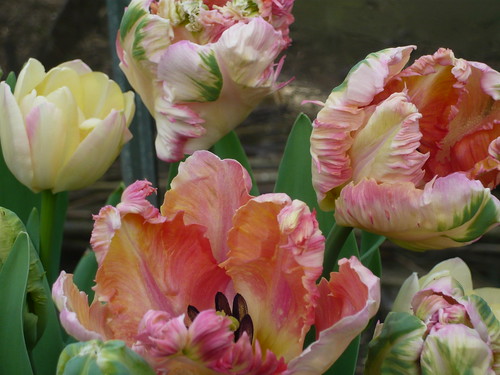
Parrot Tulips

‘When it’s Spring again I’ll bring again ………’
Tulip festivals spring up as often as the Tulip bulbs. Check out some festivals from the following or look out for your own local Tulip Festival.

UK Tulip Festivals 2010

  • The Alnwick Garden, Northumberland – Saturday 30th April   to Saturday 7th May;
  • Chatsworth, Derbyshire – Friday 6th May to Tuesday 10th May;
  • Constable Burton 1st – 3rd May 2010, plant over 6000 bulbs annually with special displays of cut blooms in the Hall.
  • Dyrham Park, Gloucestershire – Friday 1st to Saturday 15th May;
  • Powerscourt, Ireland – Friday 22nd April to Monday 2nd May;
  • Stourhead, Wiltshire – Monday 25th April – Sunday 8th May;
  • The Lost Gardens of Heligan, Cornwall – Saturday 23rd April to Monday 2nd May;
  • Waddesdon Manor, Buckinghamshire – Saturday 16th April to Monday 2nd May.

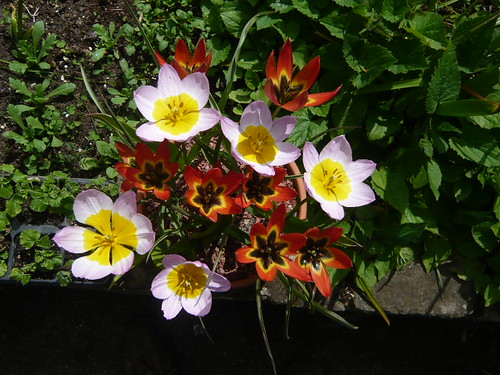
botanic tulips

Dutch Tulip Shows

‘If you are planning to travel to Europe or happened to be there in Spring 18 March-16 May 2010, you are so lucky. Why? You’ll be able to see millions of colourful tulips in the biggest tulips garden in the world! You have this opportunity of the year to witness the tulips blooming. Netherlands are always associated with Tulips and is the biggest flowers exporters in the world. Public can visit the Keukenhof Tulips Garden for tulips display during the tulips festival held between 18/3 until 16/5 every year. Soaking in the large tulips field would be an unique and refreshing experience to visitors.’

Blown Tulip

Other Festivals

Read More Read More

Growing Colchium as Alpine Pot Plants

Growing Colchium as Alpine Pot Plants

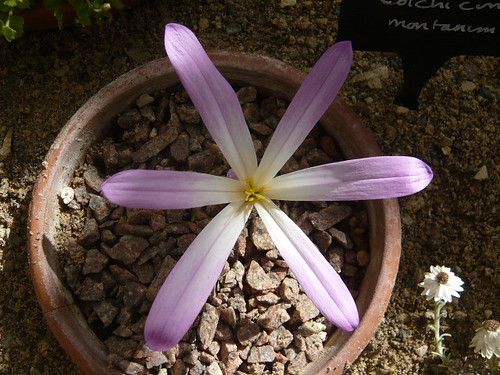
Colchium montanum

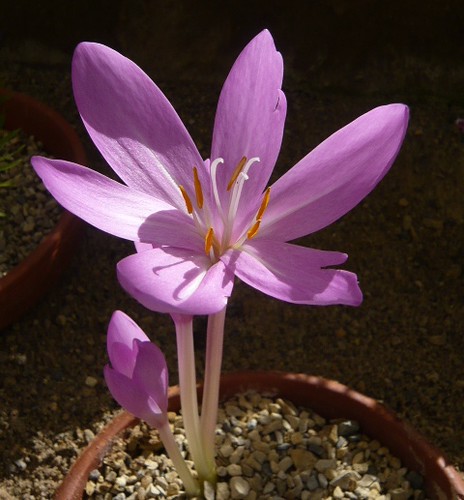
What is not to like about Colchium these autumn flowering crocus like bulbs always cheer me up.

Facts about Colchium

  • They have 6 stamens unlike crocus which have 3.
  • Colchium will flower without being planted, just leave them on a sunny window sill.
  • They are best artistically arranged in a shallow dish of pretty gravel and kept out of heavy rain.
  • Planted outside they will flower in autumn before the long, strappy, lanceolate leaves show through. They do best in a semi-woodland site.
  • Flowers are pink, lavender, rose or white.
  • Other species include Colchium agrippinum, Colchium speciosum, Colchium clicicum, Colchium autumnale and  Colchium alpinum.
  • There is also a spring flowering yellow variety Colchium luteum.
  • Colchiums are said to be poisonous to humans and most animals.

Colchium panonicum

Read More Read More

Acidanthera or Gladiolus callianthus Growing Tips

Acidanthera or Gladiolus callianthus Growing Tips

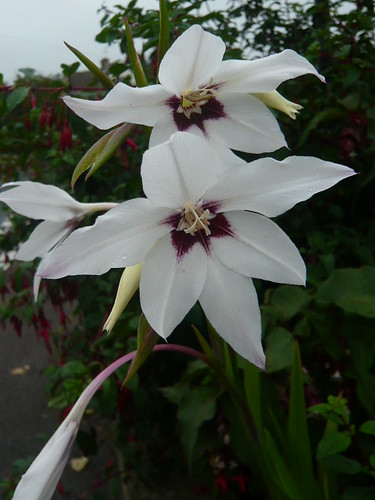
Acidanthera Gladiolus callianthus

Corms of Acidanthera or Gladiolus callianthus are sold as summer bulbs but they flower best in autumn. Less colourful than other members of the Gladioli family these white flowers have a dark purple eye and look stunning in late autumn sunshine.

Acideranthera Facts and Growing Tips

  • Acidanthera are scented with flowers arching from a long pollen tube with tall green pleated leaves.
  • Can flower up to 36-48″ high.
  • Not hardy enough to be left out in winter they dislike waterlogged soils.
  • Great in well drained sunny situations, these were planted in my garden wall.
  • Acideranhtera are also called the Peacock Flower
  • Water and fertilise when flowers begin to develop.
  • Plant 4 deep in clay soils or upto  6 deep in other soil.

Read more about Gladioli in 100 days from planting.

Growing Begonia from Seed

Growing Begonia from Seed

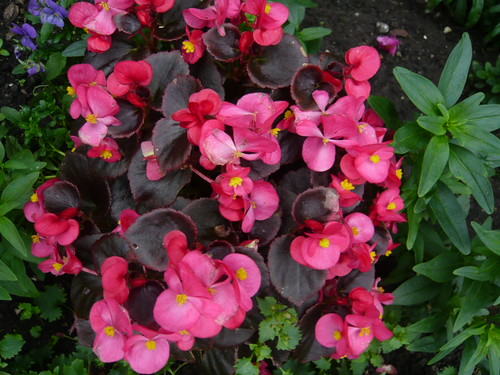
Begonia

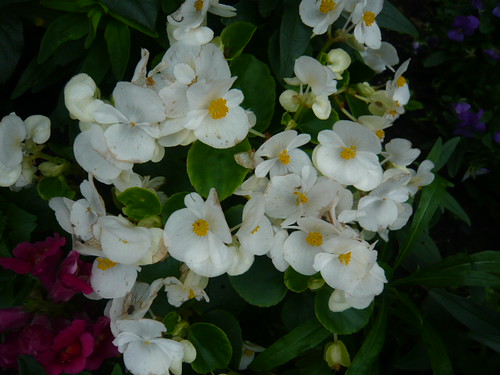
Begonias provide lots of colour per plant.

  • Begonia Semperflorens is probably the most widely grown begonia and is also called “wax type” because of the waxy look to the leaves. They are grown from seed mostly as bedding plants and annuals and last until frosted.
  • The larger flowering Begonia tubers are currently bringing summer to a colourful finish. The tubers can be dried and stored for next year
  • The indoor Begonia rex are demonstrating some strange and colourful leaf shapes. These are Rhizomatus types.
  • Cane or Angels wing Begonias are a bit out of favour but make a robust house plant.

Begonia

Growing Begonia as Annuals from Seed

  • Begonia seeds are very small, so it is best to mix the seeds with fine sand and sow onto the top of the moist compost.
  • Do not cover the seeds with more compost but cover the container with cling film.
  • Place the container in a shaded or dark position at 68 – 72F.
  • Check the seeds daily for emerging  seedlings, this normally takes about two weeks.
  • As soon as the seedlings appear remove the polythene and place the tray in a light position. Seedlings require a great deal of even bright light.
  • If the window sill is cold cover the container with a cardboard box at night.
  • When the seedlings are large enough to handle  prick them out from the seed tray and pot them on into 3 inch pots.

A useful none commercial resource is Brads Begonia guide.

Thompson & Morgan supply a wide range of seeds. The normal colours of red white and pink have now been extended by orange and yellow additions and at the last count there were 50 products to consider growing. Thompson & Morgan

Tips for Growing Garlic

Tips for Growing Garlic

Garlic is hardy and needs a spell of cold weather. Plant it with the first frost to trigger its splitting mechanism. This encourages good roots and helps the bulbs to form.

Keys to Success with Garlic

  1. Good quality Garlic sets
  2. Autumn Planting
  3. Good drainage
  4. Fertilise during growing season

Tips for Garlic Culture

  • Pick a well drained sunny spot and rake down to a fine tilth.
  • Split the garlic into individual cloves – you will get about 14 cloves from a good head.
  • Dibble the cloves in every 6″ covering lightly.
  • Leave the plants to slowly root and shoot over winter.
  • From March onward liquid feed every month.
  • For bigger cloves pinch out any flower heads.
  • Harvest and dry in July august as soon as the tops start to wither.
  • If planting late ie February or March then leave the tip of the clove above soil level and feed and pinch out regularly.

Today I have planted a row of Cristo a strong flavoured garlic and one of Solent Wight. For information on more varieties read Top 10 Garlic
For more read Tricks to get great garlic
To buy a selection of Garlic at Thompson & Morgan click here.

Nasturtium as a Vegetable

Nasturtium as a Vegetable

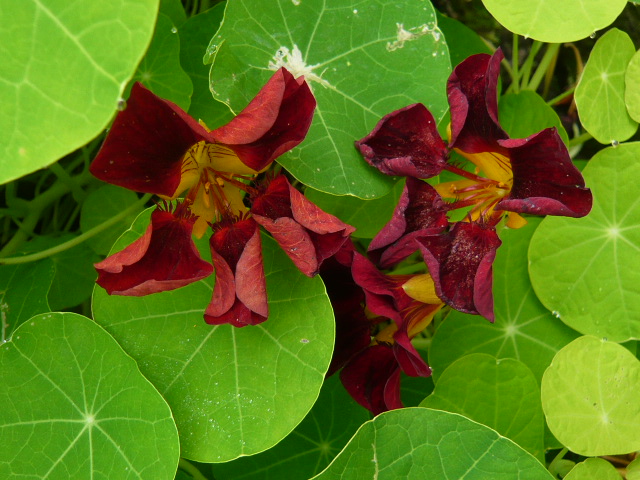
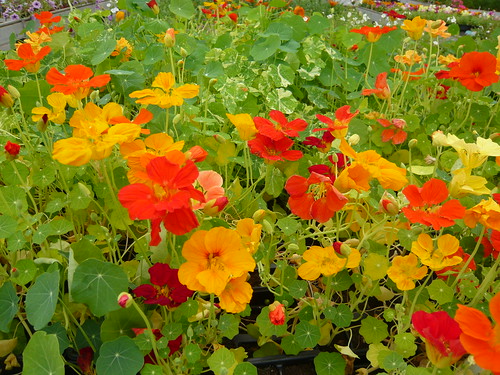
I have not got into the habit of eating Nasturtium and it may be too late for me to start at my age. However my vegetarian children take a different view.

Eating Nasturtium

  • The leaves of the nasturtium plant are edible, with a peppery flavour, that can  tossed into salads.
  • The flowers make a unique garnish to fresh foods and add a splash of colour.
  • The seed pods can be treated like Capers and pickled or used as a crunchy addition to salads.
  • For tastiest nasturtium leaves, keep the plants well watered, which helps to moderate the spiciness of the leaves and flowers.
  • According to Reneesgarden ..’I prefer to toss them among sweeter greens like butterhead or crunchy Batavian lettuce, rather than with other bitter greens. They add a refreshing bite to a classic potato salad with hard-boiled eggs and a mayonnaise dressing, and pair well with seafood. A handful of the bright colored flower petals are delicious chopped into a shrimp or crab salad sandwich filling, and the whole flowers and leaves make a great garnish for a platter of grilled salmon.’
  • You can buy Nasturtium seeds from Thompson & Morgan

Growing Watercress

  • Watercress is called Nasturtium Officinale or Nasturtium Microphyllum
  • It can be grown in gardens with chalk streams or a good supply of water as  a semi-aquatic plant
  • Buy watercress with roots on at your local supermarket
  • Watyercress from Thompson & Morgan
  • An ordinary bunch placed in a bowl of fresh clean water will develop roots. Discard any that turn yellow or do not root and plant the rest.
  • You can grow watercress in a container but keep it well watered.

Nasturtium