Browsed by
Category: Flowers and Plants

Annual, perennial and interesting flowers with advice on culture, information, tips and recommended varieties

Herbsville a Home for Herbs

Herbsville a Home for Herbs

I grow Herbs in a herb wheel and I call this home from home ‘Herbsville’. You can design your own herb home – it is a snip!
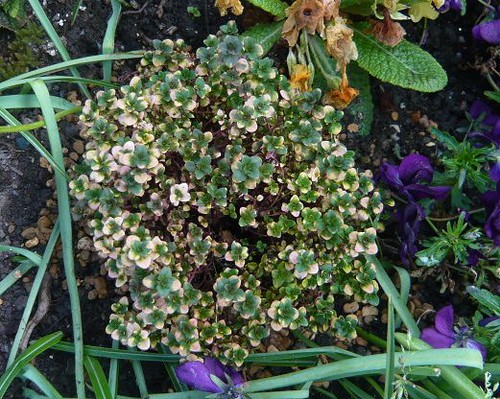
Golden thyme

Herbs can be grown in a wide variety of situations.

  • Windowsills with 3 ” pots are fine for quick growing herbs you want to snip for the kitchen.
  • I have an old cast iron wheel and the spokes separate out 6 herbs. The larger varieties tend to grow over onto the other sections but the appearance is fine. Rather than call this a herb wheel I have christened it ‘Herbsville’.
  • You can interplant your veg patch or rockery with a range of herbs.

Oil Based Herbs including Lavender, Thyme, Lovage, Rosemary, Sage and Bay are perennial plants

Water Orientated Herbs like Basil and Dill are best treated as annuals

Of the other herbs, Chives & the Onion family need renewing from bulb stock but will last several years.

Parsley gets leggy but can be kept over winter.

Cherville, tarragon, summer savory, oregano, cilantro, marjoram, chervil and  mint are all herbs that can be grown in your herb garden with a small amount of effort.

Spices such as cardamom, star anise, juniper, coriander seeds, nutmeg, cinnamon, cumin and  cloves are all native to hot and often tropical climates. They are not for the average garden in the UK.

See also Top 5 Herbs for Pots and Growing a Bouquet Garni
Know Your Onions they are Alliums

Know Your Onions they are Alliums

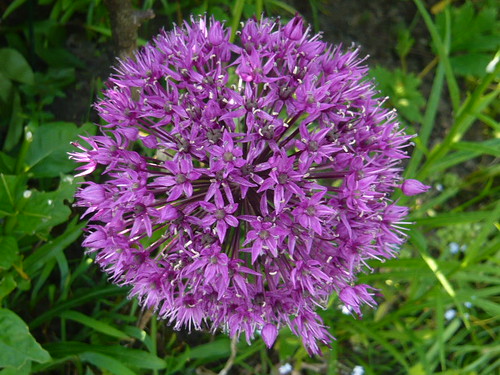
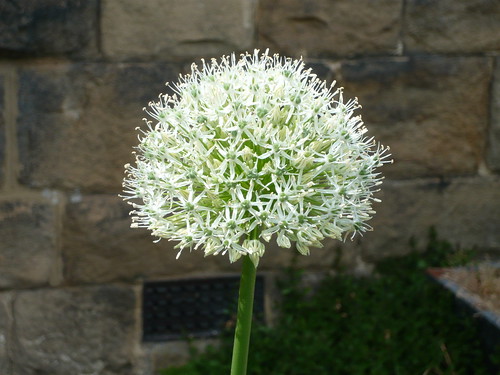
White Allium

Alliums are a significant species of bulbous, herbaceous perennials that usually have an onion odor and taste.

  • Indeed garlic, leeks, onions, chives and shallots are all Alliums.
  • Many alliums are grown as decorative flowers rather than as a food crop.
  • Plants have bulbs that reform annually from the base of the old bulb, or are produced on the ends of rhizomes or the ends of stolons.
  • The bulbs have outer coats that are commonly brown or grey, with a smooth texture, and are fibrous, or with cellular reticulation.
  • Many alliums have basal leaves that go white or wither away from the tips downward before or while the plant flowers.
  • Flowers are produced in groups forming a globe or umbels where the outside flowers bloom first and flowering progresses to the inside

Allium

Read More Read More

Bulbous Plants

Bulbous Plants

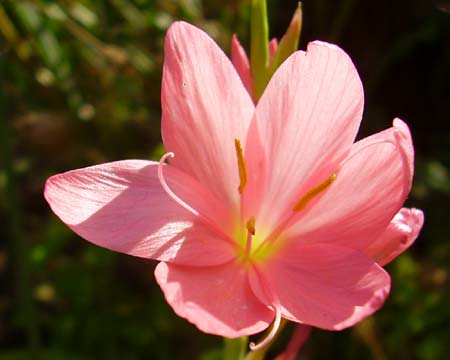
Habranthus


Habranthus along with Zephyranthes and Cooperia is one of several related genera commonly known as rainlilies.
All three have starry, funnelform flowers and are native to tropical and semi-tropical regions of the Americas.
You can get a fuller description from the Pacific bulb society or read Growing Rain Lilies

Babiana Kew Hybrids are star shaped in flower from bulbs growing about 10″ high. The sword like leaves display the pastel shades of the flowers and I am growing them for the first time this year in pots.

Habenaria radaria is also called the White Egret Orchid. White flowers last for 4 weeks and each stem can hold up to 4 flowers.

Gladiolus trichonemifolius commonly called Gladioli citrinis found on wet sandy flats in the winter rainfall areas. It blooms in late winter to early spring and is cream to yellow with brown lines on the lower tepals and a darker yellow center.

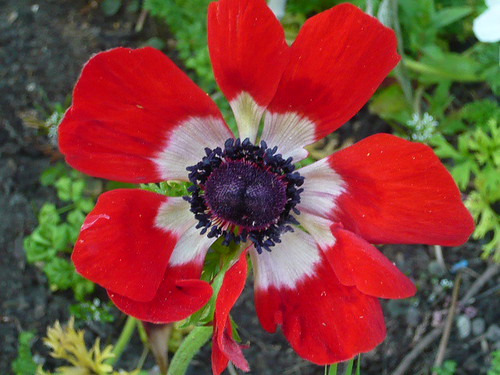
Anemone coronaria ‘Hollandia’ is a strong red with white eye and is known as a poppy anemone.

149

Gold Flowers and Golden Plants

Gold Flowers and Golden Plants

dutch 084

Golden flowers are generally Yellow Gold not Old Gold or burnished gold.

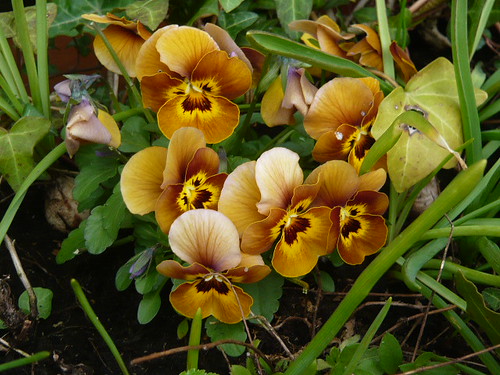
I liked these pansies in what I think of as Old Gold.

Many plants have Gold in there title including;

  • Lantana ‘New Gold’ and ‘Gold Mound’
  • Achillea ‘Gold Plate’ and Achilea ‘Coronation Gold’
  • Asclepias ‘Silky Gold’
  • Bidens ‘Goldmarie’ and Bidens ‘Gold Spark’
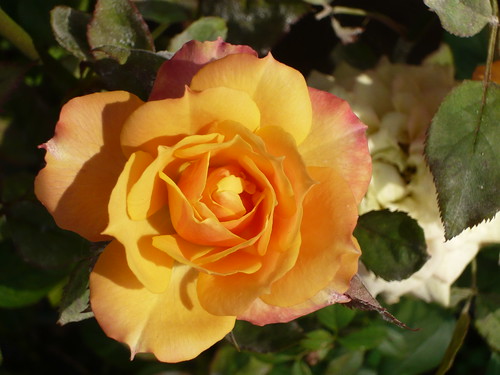
  • Roses Golden Wedding, Golden Years, Golden Wings, Gold Medal, Good as Gold and my favourite Goldbusch.

Just Joey

There are many other plants that have a gold tinge or colour to there leaves.

  • Lonicera Baggins Gold
  • Chamaecyparis obtusa ‘Golden Fern’ and Golden Pygmy
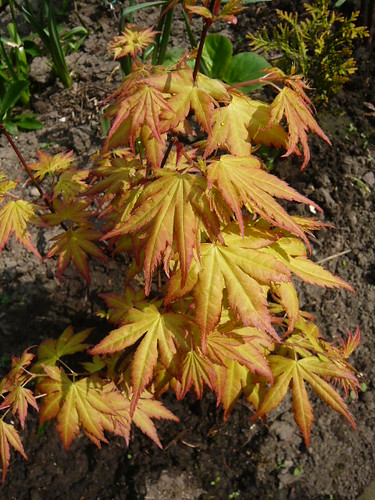
  • Acer japonica
  • Chamaecyparis Lawsoniana Broomhills Gold, Ellwood’s Gold and Burford Gold.
  • Golden Hop is probably as tall as many of the conifers.

Acer japonica


Go for Gold and you may win a medal at your horticultural Olympics. At worst you will have had the fun of growing a special golden plant.

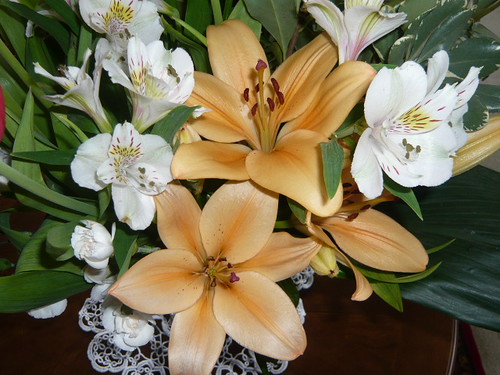
Lily & Alstromeria

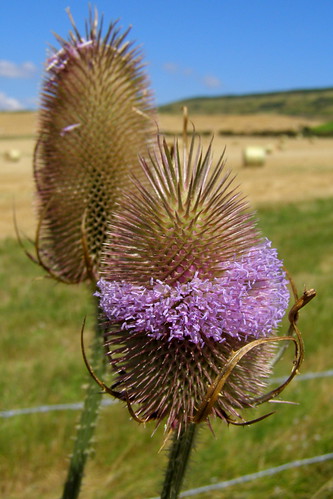
Teasels – Dipsacus fullonum

Teasels – Dipsacus fullonum

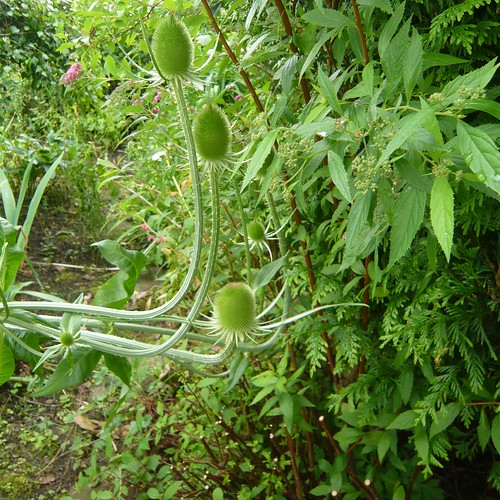
Teasel seedheads

What is a Teasel?

  • The Teasel grows as an errect biennial flowering plant up to 6 feet high.
  • They have sharp downward pointing prickles on their stem.
  • Flowers heads are a cluster of 2000 very small, blue-lilac flowers in a distinctive egg-shape
  • Several leaf-like bracts also branch out from the base of the flower and curve upward around the head.
  • Plants initially produce a basal rosette of leaves and then flowering stems are produced during the second year.
  • Butterflies like to sip the nectar and goldfinches like to eat the many seeds.

Names and Uses of Teasels

  • Teasels are also called ‘Johnny-prick-the-finger’ because of the sharp spikes.
  • Its scientific name ‘Dipsacus‘ derives from Greek and means ‘to thirst’. Potentially due to the way rainwater collects at the base of leaves where the leaf and the stem together form a little bowl.
  • Romans called it ‘Venus’s basin’ and early Christians in Ireland called it Mary’s basin’.
  • The second part of its botanical name ‘fullonum‘ is derived from the term ‘a fuller’. Fuller is the old name for someone who used teasel to comb out wool.
  • In some places teasel is also known by the name ‘brush and comb’. The Irish name Lus an Fhucadora translates as ‘Fuller’s Herb’.
  • Teasel is also named the herbal ‘fracture healer’ to denote its ability to help heal broken bones and sinews. Other medicinal properties include, ointment to cure warts plus kidney, liver and blood tonics

Teasels and Textiles

  • Teasels have long been cultivated for use in the textile industry. It has hooks on the ends of the spikes, and is used in the manufacture of cashmere, vicuna and velour fabrics.
  • The spikes help brush or ‘Full’ cloth. Typical products include tennis balls and billiard tables.
  • 40 yards of cloth would take 3000 teasel until fulling machines were invented.

Teasels

Sources
Photo by Jim Champion on flickr under creative commons license

Conservation Northern Ireland

God’s Own County

Ideal Homes Need Ideal Gardens

Ideal Homes Need Ideal Gardens

The Ideal Homes show at Earls Court runs until 27 March 2011 and Dermot Gavin is the ambassador for Ideal Gardens this year.

Show Gardens will be outside of Earls Court in their ‘natural’ habitat for the first time ever! Located just outside the main entrance to Earls Court, you won’t be able to miss the stunning garden displays when you arrive. The Show Gardens this year form a competition that has encouraged the very best horticultural students from around the country’.

Dermots Themes

  • Environment is a major and ongoing theme.
  • Water preservation despite our winter and wet spring to date.
  • Compost is a win win helping to improve the soil and putting waste to good use.
  • In small urban spaces do not for get to grow herbs that can enhance your cooking.
  • Lavender, Bay, Rosemary and Sage feature on Dermot’s list of plants.


Ideal Gardens brings together all the latest innovations for outdoor living to the Ideal Home Show.

Dermot Gavin is based in Dublin and has presented a number of BBC television programmes including Gardeners’ World; RHS Gardens Through Timeand the RTE TV show “I want a Garden”.

Lenten Roses and Other Hellebores

Lenten Roses and Other Hellebores

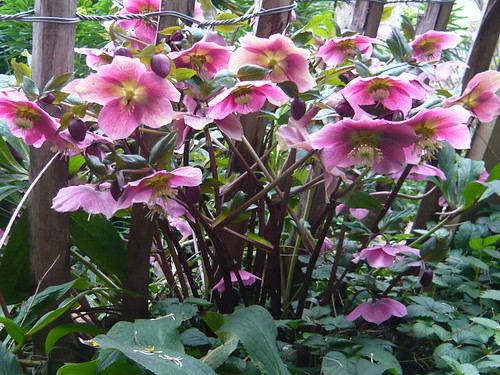
Heleborus

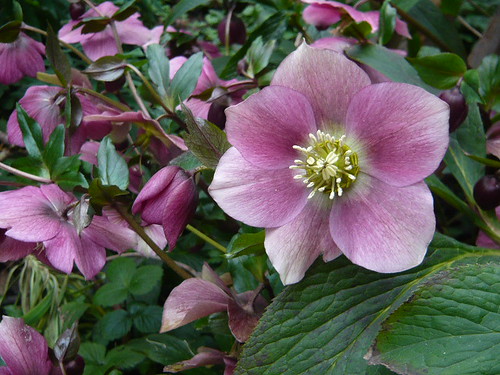
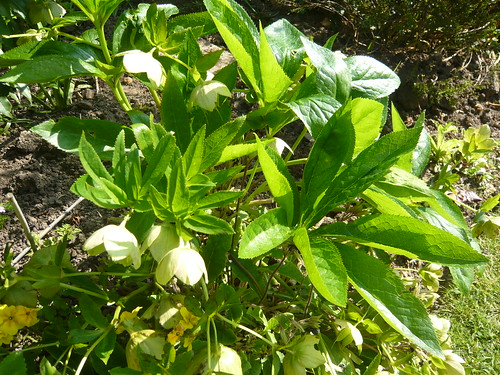
Hellebores are not just for Christmas as in Christmas Rose there are species that are also called Lenten Roses.
Generally they bloom between December and April depending on the type and conditions.

London Heleborus

Hellebore Facts

  • The majority of Hellebores are deep rooted, stout plants well-known for their thick, shiny green foliage.
  • The large leaves may survive through winter but not all plants are evergreen.
  • Once established, most Hellebores make drought resistant plants particularly if given some dappled shade in summer.
  • Happy in shade plants will perform their best if given some sun.
  • Wild species grow in open meadows with only short grass for shading the roots.
  • Hellebores are acaulescent which means they have leaves but flower without stems straight from the ground

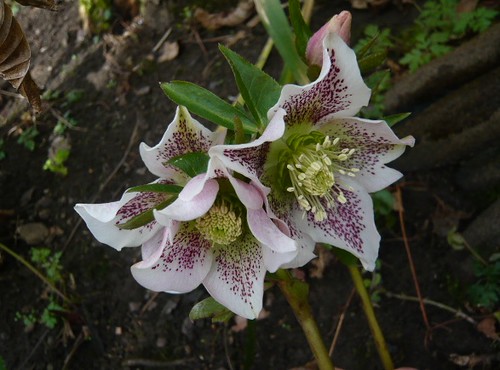
Helebore hybrid

Gardening with Hellebore
Hellebore heaven or hell

Helebore

VisitHellebore.org

RHS Spring Advice

RHS Spring Advice

feb harlow carr

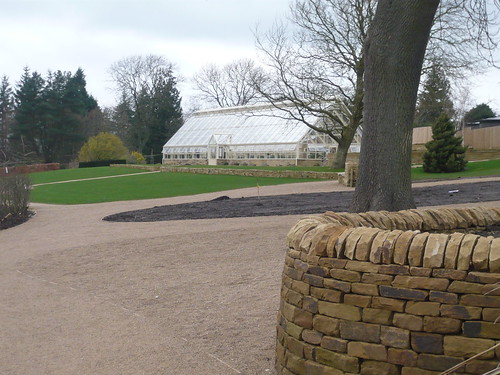
Curves at RHS Harlow Carr Garden


The Royal Horticultural Society offers free advice on there web site and to members. Other membership benefits include free entry to some gardens and a monthly magazine.

Jobs to do in March


Spring usually arrives by mid-March and the frequent sunny days provide the opportunity for an increasing range of gardening tasks.

  1. Plant shallots, onion sets and early potatoes
  2. Protect new spring shoots from slugs
  3. Weeds come back in to growth – deal with them before they get out of hand
  4. Start feeding fish and using the pond fountain; remove pond heaters
  5. Lift and divide overgrown clumps of perennials

Get more RHS expert advice

When you have done these jobs you can cut the grass, sow some seeds, dig the veg patch and a runner bean trench then in the afternoon prune the roses, spread the compost heap and have a cup of tea!