Browsed by
Category: Flowers and Plants

Annual, perennial and interesting flowers with advice on culture, information, tips and recommended varieties

White Verbascum and White Mulleins

White Verbascum and White Mulleins

verbascum-close
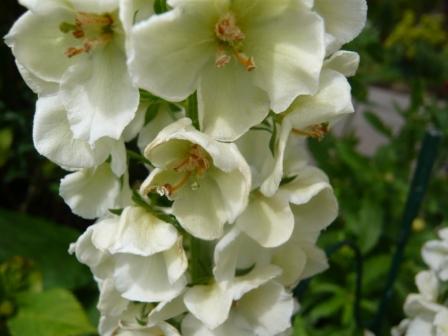
This close up photo shows a typical verbascum inflorescense with many flowers packed tightly round a flowering stalk.

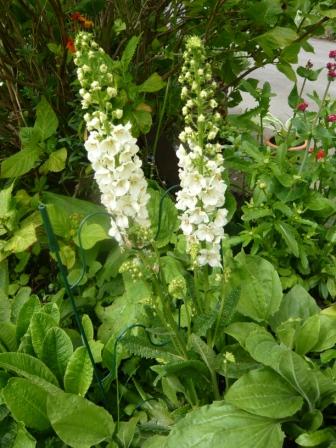
Verbascum Pixie series are a range of plants with shorter flowering spikes. Typically they grow to 18″. Verbascum Pixie White is a favourite with an award for garden merit agm. The flowers open from the bottom of the flowering stalk that makes a long lasting show.
Flowers can be picked for indoor display.
Removing spikes will encourage new flowers later in the season.

verbascum

White Verbascum Varieties

Verbascum chaixii Album is white with a red centre and is one of about 96 species of Verbascum according to a wikilist.
Verbascum ‘Flush of White’ is a prolific flowerer.
Verbascum chaixii ‘White Domino’ and White Blush are other Mulleins with white flowers and a coloured eye.
Verbascum phoeniceum ‘Temptress White’ and other white verbascum photos

Other Verbascum Tips

Verbascum are also known as Mulleins.
Verbascum do not need much moisture and can survive on dry alkaline soil. Rich soil makes Mulleins grow taller.
Plants of Verbascum can produce a great number of seeds.
Other colours available include Copper Rose and violet called Violetta.
Verbascum Banana Custard is a strong yellow flower.
Verbascum Pink Domino has dark eyed rose-pink flowers and can flower 4 feet tall
Verbascum Austriacum and Letitia are yellow flowering perennials.

Oxalis bulbs and Rhizomes

Oxalis bulbs and Rhizomes

Grown from bulbs, rhizomes or tubers the Wood Sorrel and many of it’s relative in the Oxalis family are easy to grow.
The shamrock shaped leaves of this low growing Oxalis flower in red, white, yellow, blue and pink. I bought 70 bulbs for £1 at Focus at the end of May and they have grown well already.

Cultivation Tips and Varieties to Grow

  • Many varieties have a dark purple centre to the leaves or a patterned purple cross as in O. Deppei.
  • O. trangularis has white flowers and dark purple leaves.
  • The lime green of the leaves O. Ironcross is a fresh bright green in spring and this can show off the edges of a border.
  • Most hardy varieties make excellent ground cover or rock plants and flower even in dry shade and poor soil.
  • Oxalis Adenophylla has pale lilac flowers and neat parasol like leaves
  • Better flowering may occur with a bit of high phosphate fertilizer
  • Flowers are sensitive to light levels and often close early in the day
  • Tender varieties need to be dug up and stored like begonia tubers
  • A new red and white funnel shaped flower is now available O Versicolour
  • Many varieties self sow and get into nooks and crannies needing to be weeded out when they become too rampant.

Oxalis cameaphylla rosea

Oxalis roots can be fibrous or woody and be either bulbs, tubers, or rhizomes.
For more information particularly about potted plants from South Africa and America visit the Oxalis web site

Oxalis speciosa
Oxalis speciosa

Botanical Tulipa praestans Gardeners Tips

Botanical Tulipa praestans Gardeners Tips

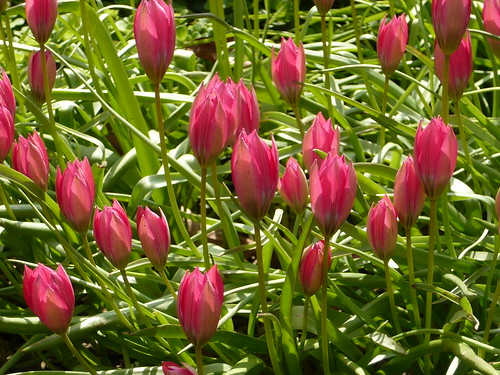
I have just bought some Tulipa praetans Van Tubergen’s variety of botanical tulip bulbs. They should be just right for the sunny side of my rockery.

Tulip

Gardeners Tips for Tulipa praestans

  • They can be planted in a rockery which is where I intend to grow them as they should not exceed 12″ high.
  • I intend to leave them in the ground for several years and not replant annually as I would with species tulips. Hopefully this will give them chance to multiply as they are recommended as perennial.
  • I will scatter them on open ground then plant 3″ deep where they fall, aiming to space them every 3″ or so! I do not want them in formal straight lines
  • These tulips will grow in most soils that are well drained.

Botanical Tulips

  • Botanical tulips are those that are true to their wild state and have not been bred or hybridised to change their characteristics. My bulbs have not been collected from the wild however.
  • Van Tubergen’s variety is a reliable species with clusters of bright red flowers in April.
  • There are several other Tulipa praestans including ‘Fusilier’ bright orange-red and ‘Unicum’ which flowers orange-red with striking white variegated leaves, ‘Shogun’ with warm yellow relatively large flowers.
  • Botanical tulips of which Tulipa praestans is one species are smaller in bulb size, height and flower size than your average Dutch tulips.

Tulip

Crocosmia Best Tips & Photos

Crocosmia Best Tips & Photos

Tip 1.
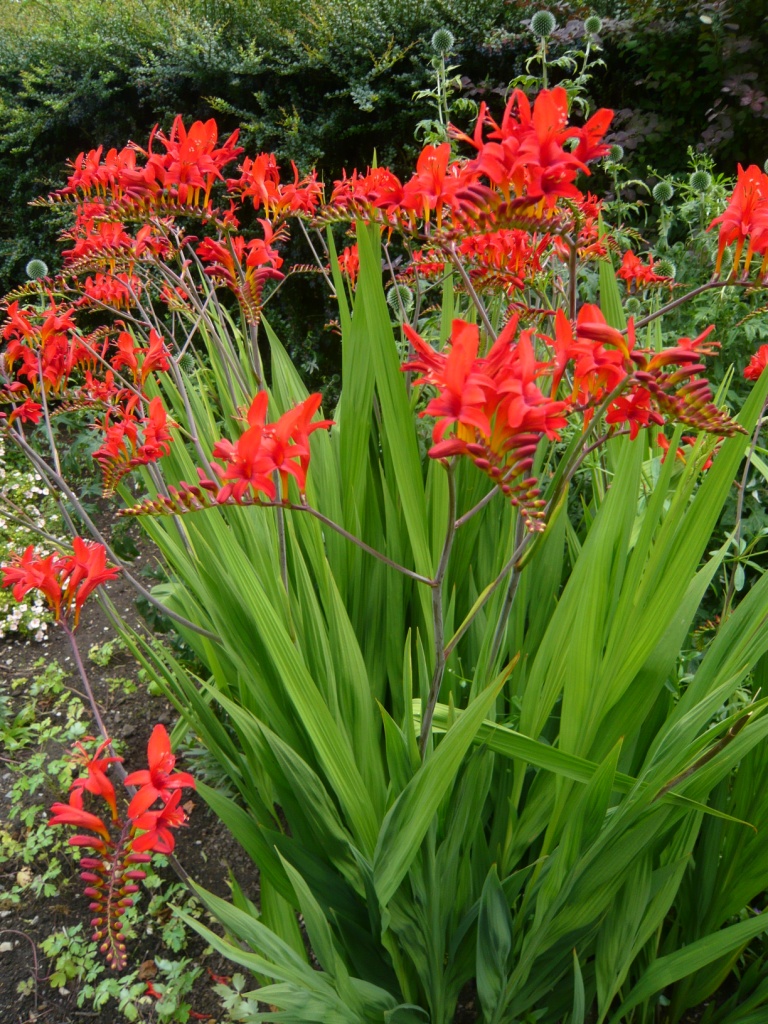
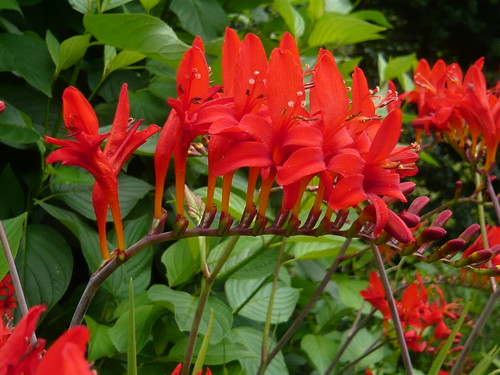
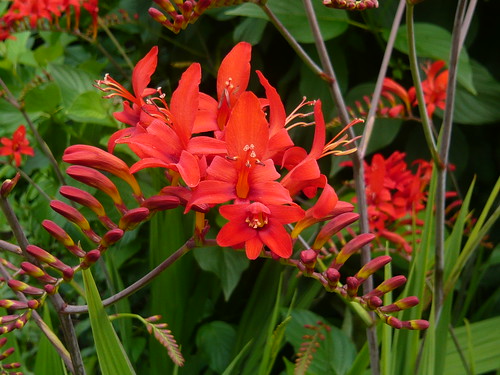
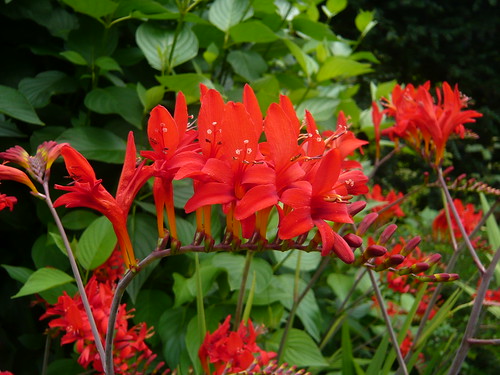
For a strong red Crocosmia the variety ‘Lucifer’ is as red as hell!
Crocosmia

Tip 2.
The corms like lots of water but stop short of water logging the soil.
Crocosmia

Tip 3.
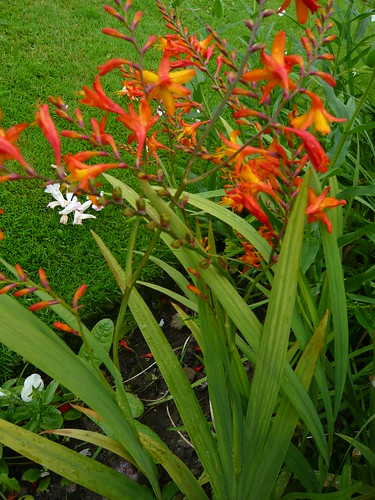
Stems and sword shaped leaves will grow and stand upright but if they are in the shade they will lean towards the light.
Crocosmia Lucifer

Tip 4.
Get new plants by dividing the clumps of corms in Autumn.
Crocosmia

Tip 5.
The strong red shows upwell against the green of the leaves and other green backgrounds in your garden.
Crocosmia

Tip 6.
Other types of Crocosmia include Ember Glow, masoniorum and montbretia varieties or new hybrids

The book ‘Crocosmia and Chasmanthe (Royal Horticultural Society Plant Collector Guide)’ by Peter Goldblatt, John Manning and Gary Dunlop plus a range of Crocosmia products are available from Amazon.

Other Crocosmia Pages

Grow Romantic Red Flowers
Good Companions Crocosmia and Euphorbia
Growing good Crocosmia
Crocosmia Lucifer and other Montbretia

Coloured and Species Raspberries

Coloured and Species Raspberries

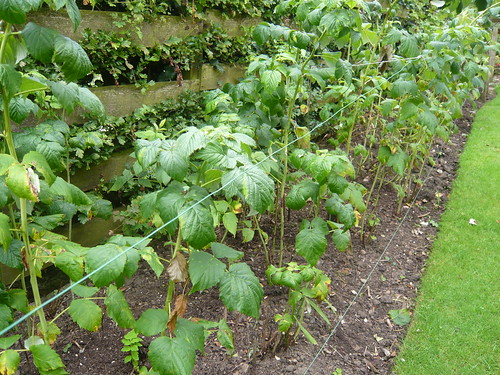
Raspberry row

Red Raspberries

A 20-foot row of raspberries (Rubus idaeus) will yield a good crop over several weeks. Enough for jam, puddings and eating fresh.
A traditional hedge-type planting will yield twice the fruit of single trained canes but takes at least twice the space.
Intensively trained berries are extremely productive on single stems against a wall or fence.
To get the most from red raspberries, plant at least two kinds, an early or main crop variety for heavy early summer harvests, and an autumn or continually-bearing type.

It’s a mistake to cut raspberry canes back in an effort to make the canes self-supporting. You get the best results by tying the canes to two wires at 2-1/2 and 5 feet off the ground. The most fruitful buds are those nearest the top of the canes.

Autumn raspberries fruit on new canes at the end of their first growing season and again the following summer. For heavier crops, prune the canes to the ground after the first harvest in autumn and forego the summer crop. Raspberry ‘Autumn Bliss’ is one of the best and most reliable primocane or autumn fruiting varieties. They produce a heavy crop of large, attractive red berries from late August until mid October.
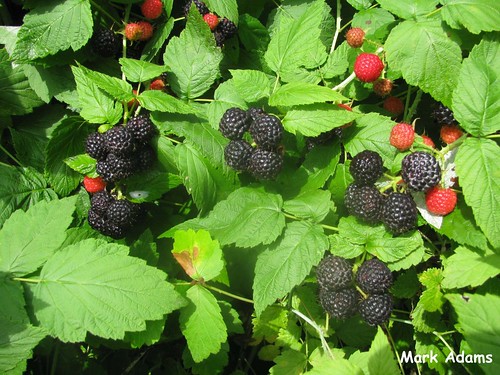
Wild Black Raspberries, SW MO

Black Raspberries

Rubus occidentalis commonly known as “blackcaps” are occasionally cultivated providing both fresh and frozen fruit with a distinctive, richer flavour and high fiber content.
Although closely related to the reds, black raspberries have a distinctive flavor, ripen a little later, and require slightly different training.
Black raspberries spread by bending the tips of their canes to the ground where they root. In an attempt to bend to the ground and root, the canes elongate and become thin and weak at the tips. Unless you want to start new plants, cut these canes back to 3 or 4 feet.
Cut the old canes out after harvest. Since black raspberries don’t throw root suckers, they take much less thinning than reds.

Purple raspberries have been produced by horticultural hybridization of red and black raspberries.

Raspberries

Yellow Raspberries

Raspberry ‘Allgold’ Rubus idaeus is an autumn fruiting yellow raspberry.
There is an orange raspberry also called golden raspberry. It is quite delicious and grows just like regular raspberries – ie on canes held high.
pale-yellow natural or horticultural variants of both the red and the black raspberry species have albino-like fruit resulting from recessive genes that impede production of anthocyanin pigments.

Raspberry Species

credit Wikipedia
Rubus crataegifolius (Korean raspberry)
Rubus gunnianus (Tasmanian alpine raspberry)
Rubus idaeus (European red raspberry)
Rubus leucodermis (Whitebark or Western raspberry, Blue raspberry, Black raspberry)
Rubus occidentalis (Black raspberry)
Rubus parvifolius (Australian native raspberry)
Rubus phoenicolasius (Wine raspberry or Wineberry)
Rubus rosifolius (West Indian raspberry)
Rubus strigosus (American red raspberry) (syn. R. idaeus var. strigosus)
Rubus ellipticus (Yellow Himalayan Raspberry)

You can buy several red raspberry varieties mail order from Thompson & Morgan

Several species of Rubus are also called raspberries that are classified in other subgenera, including:

Rubus arcticus (Arctic raspberry, subgenus Cyclactis)
Rubus deliciosus (Boulder raspberry, subgenus Anoplobatus)
Rubus nivalis (Snow raspberry, subgenus Chamaebatus)
Rubus odoratus (Flowering raspberry, subgenus Anoplobatus)
Rubus sieboldii (Molucca raspberry, subgenus Malachobatus)

Credits

Wild Black Raspberries, SW MO by MarkInspex CC BY-ND 2.0
Raspberries by MonkeyBoy69 CC BY-NC-SA 2.0
Good Value Alpine Garden Society

Good Value Alpine Garden Society

Euphorbia milii

Regular visitors will remember that I recently received a gift of membership too the AGS.

I continue to get good value for money via the magazines, free seeds and the local West Yorkshire Group meetings. A recent talk by Tony Gartwaite with photographs by Mike Ireland was called ‘show stoppers.’

This is an excuse to show some more of my pictures. Hover over pictures for info

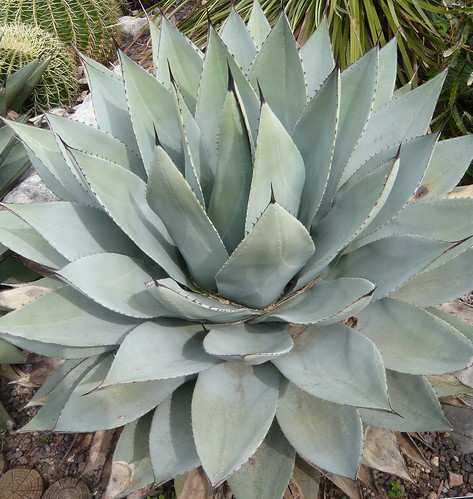
Agave paryi

From the alpine house at Kew.

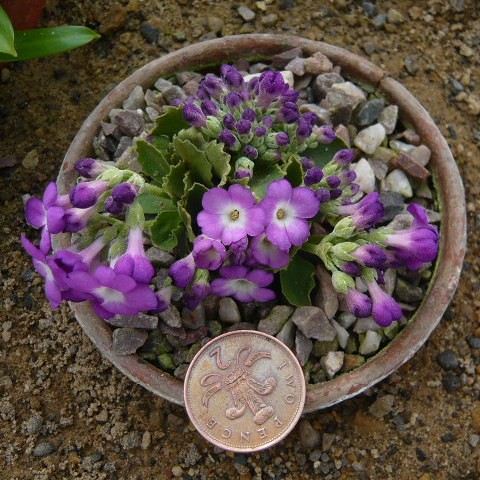
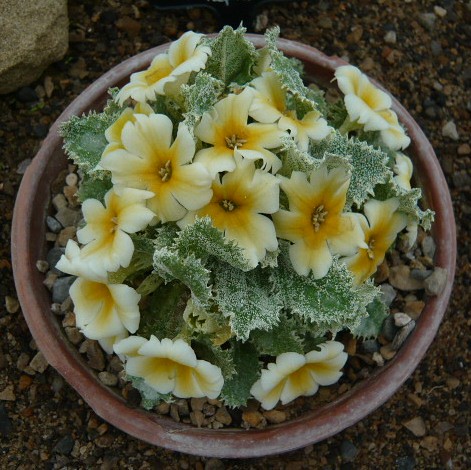
Primula allianii Joan Hughes

I have started a collection of various primulas after spotting this alpine variety Primula allianii Joan Hughes

Primula aureata nepal

Primula aureata nepal is a bit harder to grow in my greenhouse.

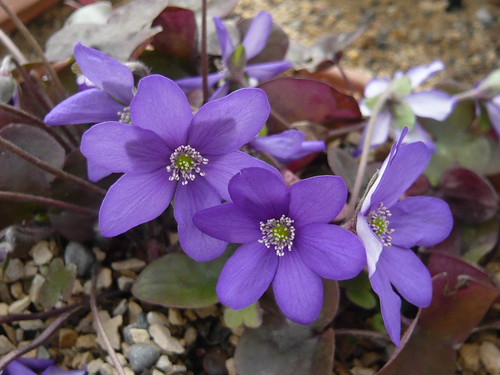
Hepatica nobilis Cobalt
See more about Hepaticas and how the Japanese grow these fascinating plants

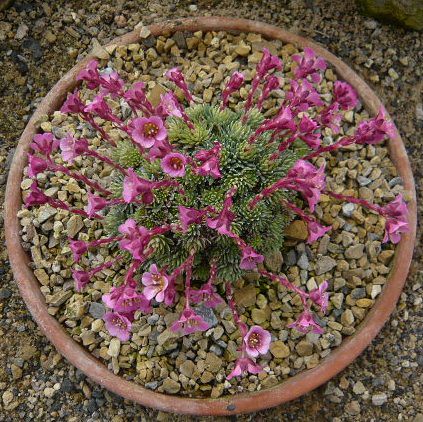
Saxifraga kellever suendermannii

Regular local alpine shows are a good way to pick up tips.
The national shows move around the country so keep your eyes open or check with the AGS
Specialist nurseries also turn out at these shows and it is a chance to get some new stock.

Getting Grapesvines to Grow Fruit in the UK

Getting Grapesvines to Grow Fruit in the UK

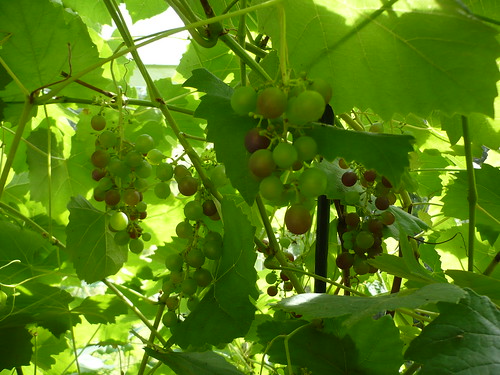
Grapes

Tips to Grow More Grapes

  • Grape vines produce fruit on “this year’s growth” coming from “last year’s side branches” (canes). Grapes produce the most fruit on shoots growing off of one-year-old canes. New growth coming from older branches does not produce fruit.
  • If you prune back your vines completely each year, then you get lots of new growth but few grapes
  • New grape vines can take 2 to 5 years to produce fruit
  • Insufficient drainage and too much water will cause very few grapes or no grapes at all
  • Stop watering grape vines in Autumn so that the vine will harden itself up for winter
  • Trim shoots to encourage energy to be channeled into fruit production.
  • Grapes like dry poor soil so if you over feed you will get tons of leaves and no grapes.
  • For older vines with thick stems apply Epsom Salts every other autumn but feed them March, May and July with balanced fertiliser. This provides them with food at bud-break, fruit set and mid-way of the fruit development.

Pruning to Get Grapes to Fruit

  • Prune the laterals to 2 or 3 buds, but do not remove the laterals that will shape your plant.
  • Prune the side branches, leaving two or three buds each.
  • Prune out any dead or unwanted growth and vines will produce fruit on one year old growth.
  • Pruning grapes in late November -January. Later pruning will encourage excessive bleeding from the cuts as the sap rises.
  • Prune all the way back to the main stems will cause new growth and many more flowers.
  • Training and pinching out of new shoots and thinning of fruits is carried out in spring and summer.

 Black Hamburg

Advice from RHS

‘The cordon or ‘rod and spur’ pruning system is usually used for indoor grapes in greenhouses or conservatories,

Young Vines
Let two of the side branches produce a bunch of grapes, then pinch back their tips to two leaves beyond the bunch of grapes
Pinch back side branches not bearing fruit to five leaves.
In December reduce the main stem by half, cutting to a bud on mature brown wood. Cut back side shoots to 2.5cm (1in) or to two strong buds.

Year three onwards

In January untie the main stem to one third of its length above ground.
Allow the top two thirds to bend down and almost touch the ground. This encourages side branches to break along the full length of the stem
In the growing season as soon as the buds on the spurs (knobbly bits where the main side branches were cut back to a single bud) begin to grow, tie the main stem back into position against its supports.
Pinch out the growing tips of flowering side branches two leaves beyond the flower cluster, allowing only one flower cluster to develop per side branch for dessert grapes. More clusters can be allowed for wine grapes
Tie in each flowering side branch to a wire
Pinch out non-flowering side branches to five leaves
Pinch out any side shoots growing from the side branches to one leaf
For wine grapes, allow all bunches of grapes to develop. For dessert grapes, allow only one bunch per side branch
Cut back the side branches to one or two plump buds from the main stem.’

More UK based grape growing advice from the RHS.

Quaffable Quotes

The wrath of grapes comes from a lack of fruit.
Have you heard any more on the grape vine?
Did the green grape tell the purple grape to Breathe!
Did the grape that got stepped on let out a little wine?
Vini Vidi Vino


Photo Credits
Grapes by dichohecho CC BY 2.0
Black Hamburg by keaw_yead_3 CC BY-NC 2.0
Grapes by freefotouk CC BY-NC 2.0

Grapes

Spring Onion Gardeners Tips

Spring Onion Gardeners Tips

Tips from Gardeners on Spring Onions  (Allium Cepa)

Do you like a crisp spring onion. White Lisbon is a variety grown from seed that will grow quickly and produce some nice strongly flavoured salad onions.
If you can find a variety White Spanish try that for a milder flavour.

  • Sow seed from early March if you can give them some protection.  ( Thompson & Morgan sell various varities of Spring Onion and other vegetable seeds)
  • Alternatively over winter an October sowing for onions from April.
  • Try sowing direct into a grow bag. Warm the bag in the house for a couple of days or in a heated greenhouse.
  • Pull young onions alternately to leave space for others to grow
  • All early onions pulled this way can be used as salad onions
  • Fertilise with a light sprinkling of sodium nitrate in wet weather to help them bulk up
  • Spring onions grown from seed are possible throughout the year  by sowing every 4 weeks from early spring to autumn.
  • Keep the ground free from weeds. All onions dislike the competition from weeds and other plants.

Know your onions

Bunching Onions are a trendy name for Spring onions. Varieties include Ciboule, Performer and Ishikura.

Spring onions (Allium Cepa) are part of the Allium family that includes:

Garlic

Chives

LeeksPot Leeks & Blanching Leeks

Shallots and Pickling Onions

Welsh onions and Japanese Onions

Ornamental Alliums

Growing Calathea ‘Wavestar’

Growing Calathea ‘Wavestar’

Calatheas are a group of plants native to the tropical Americas. They are popular as pot plants for the house or conservatory due to their decorative leaves that often react to touch or light.

Calathea 'Wavestar'

Calathea Wavestar

  • Calatheas are now being cross bred amongst their 50 or so species and Wavestar is one of the results.
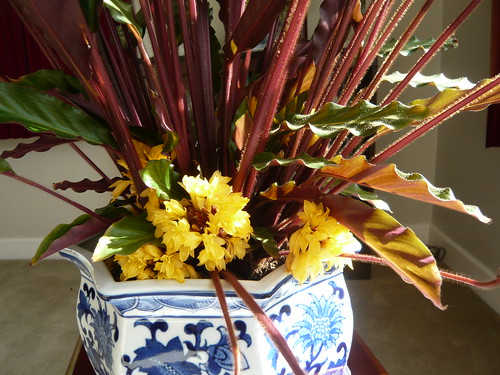
  • The leaves are soft,ridged, purple underneath and green when open in full light. The leaves close up in the evening.
  • I was surprised to see the yellow flowers at the soil level last time I watered this plant see above.
  • This variety is said to originate from Bahia in Brazil but if so why has it been granted PBR status?
  • The plant breeders rights are owned by Decorum a Dutch company

Korbmaranthe, Calathea bachemiana

Decorum Plants Calathea Wavestar

  • ‘Decorum Plants’ are a brand name that claims to be a leading specialist in the trade sector for more than 10 years.
  • Decorum Plants represents a selection of 1200 decorative and flowering potted plants under the well-known (to some)‘Decorum flag’.
  • Supplies to the trade via a web link may provide more information

Calathea majestica 'Albolineata'

Growing Calathea

  • Calathea need good light but avoid direct sun as it will scorch or fade the leaf
  • Keep soil moist and humid throughout spring and summer with less watering in winter.
  • Keep your Calathea warm preferably 15-23ºC.
  • Feed with a dilute fertiliser weekly during summer.
  • Soil should be light and free draining.
  • Repot annually and propagate at that time by division. Repoting tips

Calathea makoyana

Calathea varieties for Growing Indoors

  • Calathea makoyana the Peacock plant, features purplish coloring on the undersides of leaves, with white and green on top. Known as the peacock plant.
  • Calathea zebrina the zebra plant, has green markings on the leaf top and purple leaf undersides.
  • Calathea insignis also called Rattlesnake plant, is a bushy species with narrow, tapering erect foliage.
  • Calathea crocata has plain leaves but displays of upright orange-red flowers.
  • Calathea ornata. Reddish marking on leaf tops with purple undersides.
  • Calathea louisae has leaves broadly ovate, dark green with light green splotches along the midrib.

Other Facts about Calathea

  • Calatheas are closely related to Maranta, and often confused with their species Ctenanthe and Stromanthe.
  • Calathea can thrive in bottle gardens and terrariums due to their liking of high humidity.
  • Calatheas are propagated by divisions or tip cuttings, with nodes to form the roots.
  • Mist and reduced light are important during the early stages of propagation.

Calathea zebrina (Sims) Lindl

Calathea Photo Credits
Korbmaranthe, Calathea bachemiana by Dandelion And Burdock, CC BY-NC-SA 2.0
Calathea majestica ‘Albolineata’ by tuis CC BY-NC-ND 2.0
Calathea makoyana by Bárbol,CC BY-NC-SA 2.0
Calathea zebrina (Sims) Lindl by adaduitokla CC BY-NC-SA 2.0 ‘Calathea zebrina (Sims) Lindl. Marantaceae. CN: Zebraplant. Native of southeastern Brazil. Ornamental. Low rosette herb with striped pattern on leaves; leaf texture velvety. Growth habit clumping up to 90 cm tall.’

Vegetable Families their Importance and Types

Vegetable Families their Importance and Types

The importance of rotating vegetable crops to keep soil in good heart and avoids disease build up has been know for millennia. Gardeners should rotate families of similar vegetable using the lists below, not just switching for cabbages to cauliflowers.
Vegetables from the same family often need similar culture or treatment and suffer from similar pests. Fresh soil helps.

Families of like vegetables need similar nutrient levels and attach importance to different fertilizers.

Aubegine

Cucurbitacea – the marrow family

Leguminosae – Fabacea

Compositae – Daisy Family

  • Chicory – Endive
  • Jerusalem Artichoke
  • Lettuce
  • Salsify and scorzonera

Read More Read More