Browsed by
Category: Articles

Gardening articles that may not include tips

Soil Management for Drought Conditions

Soil Management for Drought Conditions

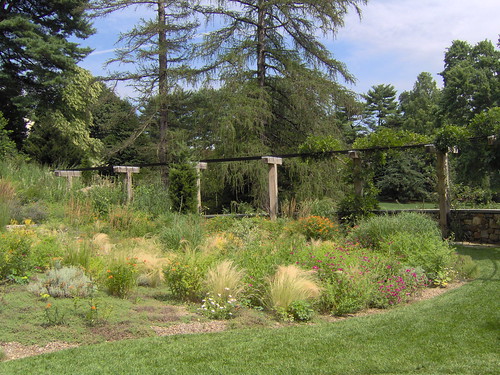
Dry garden with arbor

Much is said about collecting and conserving water during drought conditions. Careful management of your soil and garden structure can achieve many aims without recourse to extra water.
Increasing your soil’s water holding capacity and reducing the evaporation and consumption of water will make significant management improvements during drought conditions.

Soil Conditioning

  • Dig in organic matter which can dramatically increase the soils water holding capacity.
  • Mulch heavily – 3-4″ of composted bark or garden compost reduces evaporation and discourages weeds.
  • Do not walk on heavy wet soil in winter. This causes compaction damaging the structure and reducing the capacity of the soil to hold water.
  • Stop digging or cultivating soil by the end of March. Hoe only the weeds to reduce evaporation.
  • Erect barriers to stop valuable dry soil from blowing away

Management of Growing Conditions

  • Catch ‘run off’ on slopes by building up a soil damn to keep the water we do get.
  • Build a water retaining depression around plants to form a ‘water saucer.’
  • Remove weeds promptly as they suck water out of the soil.
  • Use fine compost in large pots and baskets with water storage granules

Soil & Crop Selection for Drought Conditions

  • Delay new tree and shrub planting until Autumn when more natural water should be available. If watering water at the base of the plant at cool times.
  • Choose drought tolerant plants like Mediterranean or arid region varieties.
  • Reduce ‘water greedy’ crops & bedding plants like begonia, fuchsia and lobelia to a minimum. Pelargoniums and Livingstone daisies need less water.
  • Lawns can be thirsty, keep the grass long to reduce evaporation and do not worry about brown patches.

Credits
Dry garden with arbor by ~My aim is true~ CC BY 2.0

Senicio Daisies of the Pericallis Genus

Senicio Daisies of the Pericallis Genus

Last year I looked at the naming for one of my good doers under the title ‘Senetti, Cineraria or Senicio? No Pericallis’. Pericallis is the small genus of Daisy like flowers and Senicio is the name I will use until I know better.
I updated the post with my growing and flowering experience.

Now I have some colourful photographs of related Daisy plants growing as indoor pot plants.

sennico 026

Daisies with salmon petals with white inner rings and yellow pollen are one of my favourites.

sennico 024

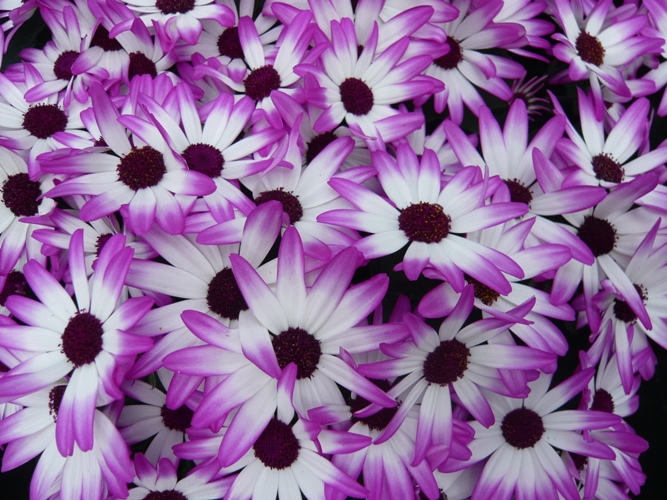
Senicio Daisies come in a variety of strong colours including deep pinks above, purples and electric blues.

sennico 021

Pericallis is not a common genus in horticultural use. These Daisy like plants have been bred of retail sale when in full flower so in those circumstances they need a trade name.

sennico 023

Whatever the name the inner disc displays the Compositae attributes of the daisy family.

sennico 018

Shocking Pink almost fluorescent pink on the plant below.

Senicio

Percy Thrower a Gardening Celebrity

Percy Thrower a Gardening Celebrity

Percy Thrower 1913-1988

One of the first iconic gardeners Percy was involved with most forms of media. Best remembered for his BBC appearances he was one of the first ‘personality gardeners’. He started on radio ‘Gardening Club’ in 1956 then TV’s ‘Gardening World’ through the 1970’s. As a regular contributor to the magazine ‘Amateur Gardening’ in the 1970’s and the Daily Mail he gave tips and information to a new generation of hobby gardeners. These gardeners were less interested in self sufficiency but had started to consider style colour and the aesthetics of gardening.

Percy started one of the first garden centres which was in Shrewsbury and is still open today. In addition to a range of plants he sold garden furniture, plastic pond liners and the like. At the time he said ‘You come in for a packet of seeds and something else catches your eye’. The centre was one of the first to develop container grown roses that could be sold out of season. Orthodox planting was November to March but growing roses in large tin cans enabled the roses to be offered through early summer for immediate planting and effect. His tips live on in his garden centre web site an example of which is given below

Garden Tips by Percy Thrower

‘If you fancy planting a magnolia, now is the time to do it. Choose its position with great care. Allow the plant plenty of space and prepare the soil well by digging in plenty of good quality ericaceous compost such as Miracle Gro Azalea, Camellia and Rhododendron compost or John Innes ericaceous compost. Water regularly over the coming months while the plant roots get established. Firm the soil, and support.’

Percy Throwers early training was at Leeds Parks and Gardens department before eventually moving to ‘The Magnolias’ in Shrewsbury. He was the gardening advisor to Blue Peter. The BBC dropped Thrower in 1975 when he agreed to a contract with ICI, for a series of commercials. He did this in the full knowledge of what the repercussions would be with the BBC. He had a good commercial sense and used his celebrity status to good effect.

He also wrote many books, which were published by Collingbridge and later Hamlyn including his memoirs ‘My Lifetime of Gardening’. Check them out on Amazon.

Tree Peonies like Dinner Plates

Tree Peonies like Dinner Plates

tree peony

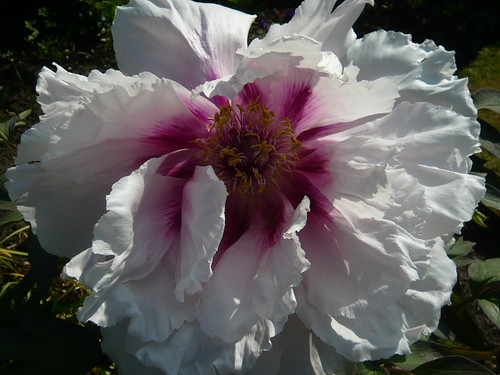
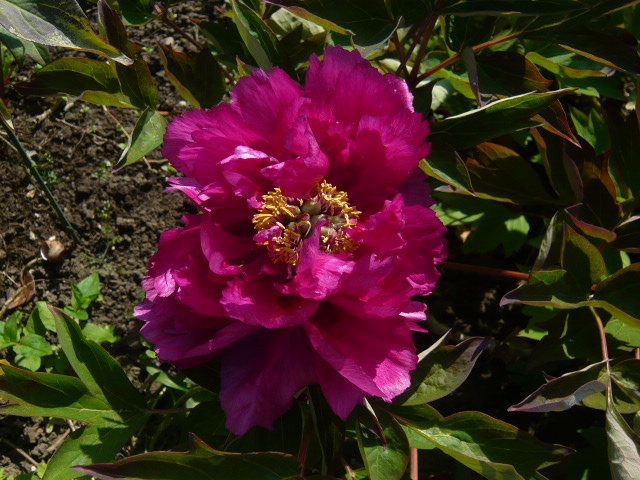
Fantastic, traffic stopping flowers at least 12 ” across are a wonderful feature of some Tree Peonies.

Tree Peonies

  • These slow growing shrubs reach around 4 foot high and wide.
  • They are drought tolerant but should not be made to compete with larger trees for water.
  • They are reasonably easy to grow in deep loamy soil.
  • In China they are mountain plants so survive our winters quite well.
  • Grafted shrubs are available in garden centres. They may send up suckers of herbaceous peonies that need cutting out (the leaves are greener and are not as finely cut as tree peony leaves).

Varieties of Tree Peony

  • I bought some varieties 2 years ago ‘Yu Lou Dian Cui’, above, looks white with pink overtones and ‘Shan Hu Tai’ is a strong pink really a red.
  • P Delavayi bears scented crimson flowers on 5′ stems whilst P lutea ludlowii has yellow flowers.
  • A good selection of Tree Peonies and Peony lactifolia are available from Peonies Thompson & Morgan

tree peony

Old Comments on Tree Peonies

Tree peonies These shrubs grow to about 4 foot square and are drought tolerant. Do not provide extra water or allow the roots to suffer from too much competition from other trees. P Delavayi bear crimson flowers on 5′ stems whils P lutea ludlowii has yellow flowers. They are reasonably easy to grow in deep loamy soil. In China they are mountain plants so survive our winters quite well. Grafted shrubs are now freely available in garden centres. I bought two varieties this weekend ‘Yu Lou Dian Cui’ what looks like a white with pink overtones and ‘Shan Hu Tai’ a strong pink. I have nipped out the flower buds that were showing and will wait until next year to see what colours I get.

Other Peony Comments
I am fond of the double peonies that flower so extravagantly in June. Over the years the plants give a great deal of pleasure lots of colour and a light and welcome spring perfume. That is not to say the single and specie Peonies are not also worth a place in the garden.

  • As plants mature they bulk up well and produce ever larger numbers of stalks and flowers.
  • Peonies dislike root disturbance and take a while to settle down
  • Provide a rich deeply dug soil well manured before planting and you will be rewarded for years
  • Water in dry summers and top dress in Autumn this well rotted compost
  • The single varieties include a yellow type Peony Mlokosewitchii
  • 6″ White flowers with yellow stamen P. Lactiflora varieties are readily available
  • The pink P. Sarah Bernhardt has an AGM award for the large scented blooms
  • The strong reds of the common Peony are very good for a cottage garden
  • Blooms make good cut flowers
  • Float one flower head in a bowl of water for an interesting table centre piece

Peonies and special fertilizer from Thompson & Morgan

Daffodils in Flower

Daffodils in Flower

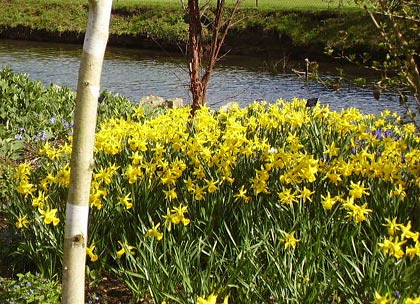
daffodils

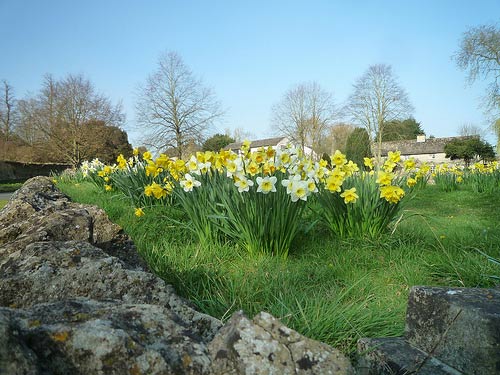
Daffodils in flower in Oxfordshire.

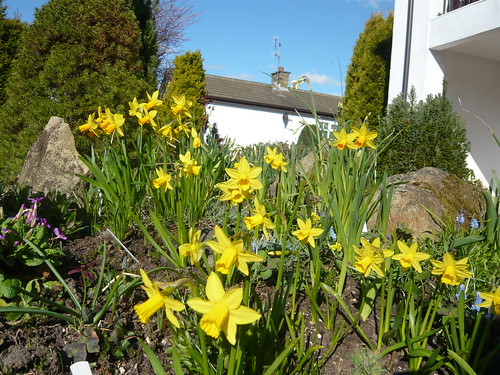
Helped by  good spring, daffodils have sprung into flower. These are some of our favourite daffodil pictures.

daffodils

Daffodils by ruins of Bolton Abbey

daffodils

Daffodils by River Cherwell, Oxford

daffodils

Daffodil mixture

daffodils

Daffodils in front garden

daffodils

Daffodils against backdrop of Yorkshire Dales

daffodils

A magical carpet of Daffodils

daffodils

Naturalised daffodils

daffodils

Daffodils close up

daffodils

daffodils

next to a see of bluebells.

Tips on Daffodils

How to Concrete in Your Fence Posts

How to Concrete in Your Fence Posts

These basic tips for setting your wooden fence posts into concrete are simple, quick and easy to follow.

Making the Post Firm
That is why you are using concrete.
The hole should be 2 feet deep and at least three times as deep as the post is wide.
Use a post with straight sides and a flat bottom to add strength.

Avoiding Early Rotting
Use pressure treated or tannalised wood.
Do not have the end of the post in a pool of water. Concrete under the post to protect the end grain.
Finish the concrete above ground level and make the top of the concrete convex so water runs away from the post.
Put a cap on the top of the post so the end grain is not open to the elements. It is easier to replace a cap than a whole post.

Keep Posts Firm and in Line
Align the posts with each other using a string or rope line.
Use a spirit level to ensure the posts are upright
Allow the concrete to harden before attaching the rails or panels.
Support the post until the concrete dries with couple of timber props at either side.

Golden & Yellow Conifers for Your Garden

Golden & Yellow Conifers for Your Garden

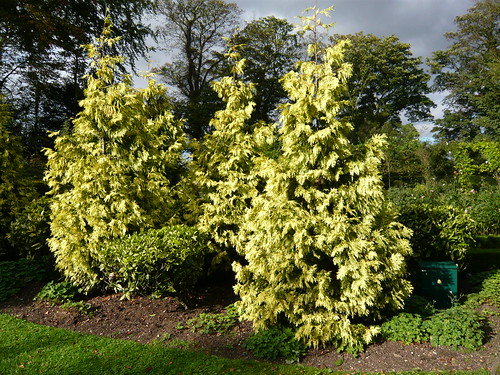
Gold and Yellow comes in various forms in plant names. Lutea is latin for yellow bodied, Aurea means `Golden` as would Aurel, Aurele, Aurelia and other derivatives. Obviously Gold or Argentea and other colours in the name will also tip you off.

Dwarf Yellow & Golden Conifers

Abies nordmanniana – Golden Spreader. A flat topped Caucasian fir with yellow leaves on top and white-yellow undersides. 8 high 48 inches spread.
Chamaecyparis lawsoniana ‘Aurea Densa’ (AGM) One of the best yellow conifers forming a compact conical bush, with closely packed foliage. 12 inches high in 10 years. Good for rock gardens.
Chamaecyparis obtusa Nana Aurea a slow growing conical form of the cypress with fan shaped sprays of foliage.
Chamaecyparis pisifers ‘Sungold’
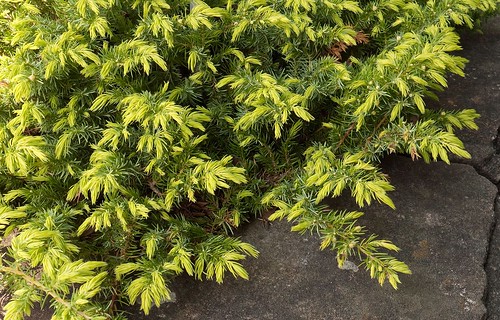
Juniperus conferta ‘All Gold’ shown below is bright yellow, developing slight bronze overtones in winter.
Juniperus conferta 'All Gold' 101010-0384

Low Growing Golden Conifers Under Six Feet

Taxus baccata ‘Standishii’ Yew will stand pruning and shaping to height.
Thuja plicata Stoneham Gold a dwarf, conical red cedar with leaves that darken with age. Grows up to 5 feet over 10 years.
Chamaecyparis lawsonii ‘Ellwoods Golden Pillar’ (AGM) Golden foliage compact, neat rounded pillar 2ft. high in 10 years

Larger Growing Golden & Yellow Conifers 30′ +

Cupressus macrocarpa Goldcrest or the Monberay Cypress is vigorous, colourful, columnar tree with dense foliage that dislikes pruning.
Golden Scots Pine Pinus syvestris Aurea turns golden in cold weather from winter through spring.
Thuja plicata Irish Gold or Aurea varieties
Cedrus deodara
Chamaecyparis Lutea

HL12383 Cupressocyparis X Leylandii Gold Rider or Leyland Cypress Conifer
Cupressocyparis X Leylandii Gold Rider

What Causes Golden & Yellow in Conifers

  • Mutations have often caused the colour to appear gold or yellow. Such trees were then propagated by cuttings.
  • Yellow and gold colouring often intensifies in cold and winter weather.
  • New growth often looks lighter and yellow with darker leaves nearer the trunk.
  • Plants are now bred and selected for the appealing gold and yellow colour.
  • Credits
    Golden Falsecypress by Mr.Mac2009 CC BY-NC 2.0
    Juniperus conferta ‘All Gold’ 101010-0384 by Tony Rodd CC BY-NC-SA 2.0
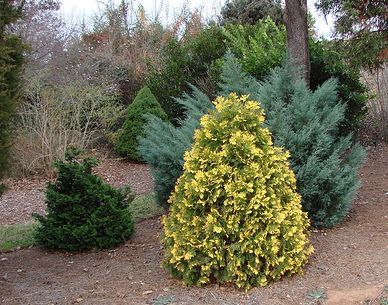
    HL12383 Cupressocyparis X Leylandii Gold Rider or Leyland Cypress Conifer by Mike_Freck CC BY-NC 2.0

    Conifer

    Read more about Gold flowers and plants

Tips for Planting in Groups and Drifts

Tips for Planting in Groups and Drifts

There is great power through planting in drifts. Sometimes as gardeners we are a bit tentative and plant in ones and twos and so our garden becomes a bit of a hotch potch. However, if we can be bold and plant in large groups and drifts, the effect can be very impressive.

Tips for Planting in Groups

  • Even in small gardens don’t be shy to plant in large groups.
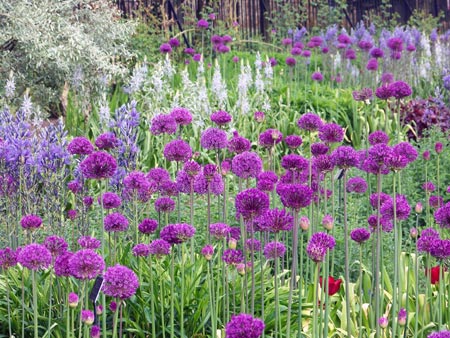
  • The above photo is taken from Oxford Botanic Gardens and shows some purple ornamental onions flowering in May. This is a herbaceous border which focuses on large drifts of plants. At any one time, there may only be 1 or 2 plants in flower; but the theme creates an impressive display.
  • Use groups of the same plant or of similar structure.
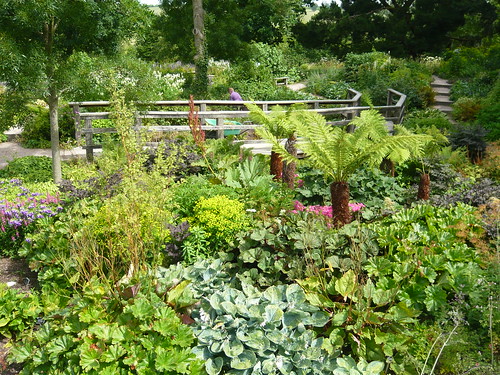
  • The leaves on the group below show how planting for shape and texture can be just as important as colour.

Hyde Hall

Tips for Planting in Drifts.

  • If you buy a large number of plants the average cost will be cheaper, you can benefit from economies of scale.
  • Don’t just plant in regimented blocks and straight lines, allow the groups to merge into each other and plant in S shapes. This helps create a more natural look.
  • Don’t just focus on the flowers but think of plants that provide all year round architectural interest.
  • The top photo shows a planting scheme carefully chosen to concentrate on a particular colour theme. This creates a calming effect. It is good to have some aspect of the garden with these conservative planting rather than always focusing on bright colour.
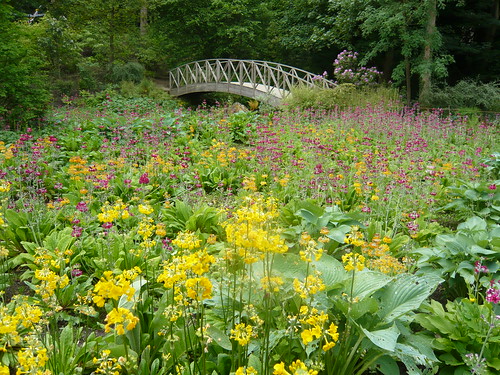
  • The photo below shows the use on one species, Primula candelabra, to provide the drifts unity and colour themes.

Harewood Himalayan Garden

Shape and Form in Your Garden

Shape and Form in Your Garden

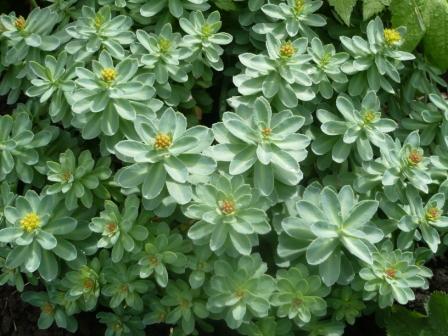
sedum

Sedum Rhodiola rosea

A garden needs visual variety and I hope we show some of that on Gardeners Tips. I know the senses we tend to focus on are sight, taste and smell but hearing and touching have their place.

Seeing Your Garden

  • Colour is often the most striking way our sight is stimulated but take time to consider and inspect the subtle variations you can achieve from leaves, barks and young shoots as well as flowers.
  • If you like topiary you will understand the impact of form and structure in your garden. Structural design can impart the essence of a gardens formality, informality or sense of fun by the features chosen and the way they are implemented.
  • The Form some plants take is also important and often the leaf or petal arrangements can be very attractive in their own right – Mother Nature knows what she is doing.
  • Texture can be seen and felt and soft grasses can complement furry leaves.

Read More Read More

Childhood Shrubs Privet and Golden Privet

Childhood Shrubs Privet and Golden Privet

Privet
Privet in flower

Privet ‘Lingustrum Vulgare’

Where has all the ‘Privet’ gone? In my youth it seemed as though every small garden was kept private by a neatly clipped Privet hedge. If it wasn’t clipped it went hay wire.

  • Privet is usually described as evergreen or semi-evergreen.
  • It loses some leaves in the winter, but not all of them and will grow almost anywhere
  • Green privet must be kept cut otherwise it becomes very open and loses its effect.
  • Particularly good in windy areas and by the sea.
  • Privet can withstand very hard pruning to get it back in shape
  • Privet is hard to remove as the roots are tenacious.

privet lives
Privet Hedge around tennis court.

The posh gardens near us had golden privet that was light green with a yellow stripe but most of us had a dark green hedge. There are Yellow-leaved varieties available which are smaller than the green-leaved type.

  • Yellow Ligustrum ovalifolium aureum has wonderfully scented if fairly ordinary looking white flowers in the spring.
  • Height and spread: 12ft x 12ft
  • Growth needs cutting twice a year but leaves can be bisected. Clipping may take away most of the flowers.
  • Propagation by cutting is very easy

Credits
Privet by jwinfred CC BY-NC-ND 2.0
privet lives by Yersinia CC BY-NC-SA 2.0