Browsed by
Category: Articles

Gardening articles that may not include tips

Flash Colchicum speciosum or Autumn Crocus

Flash Colchicum speciosum or Autumn Crocus

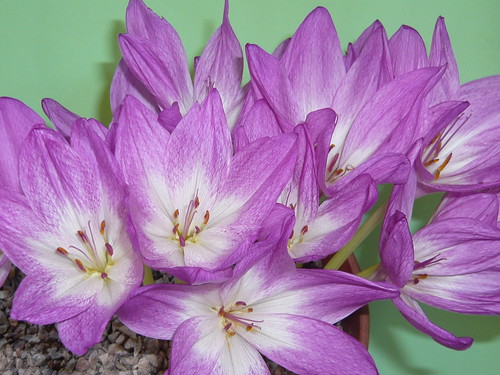
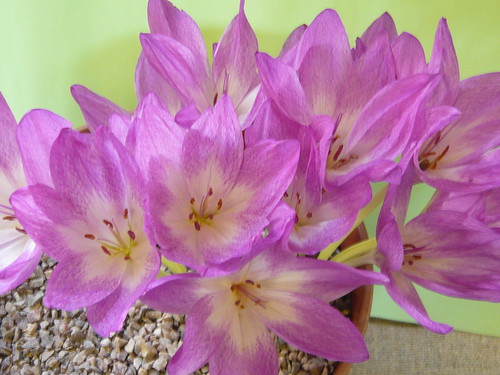
Colchicum speciosum produce autumn crocus flowers before any leaves. These plants were grown in a pot for display at alpine garden shows and competitions.

Autumn crocus

Photo Tips with Flash and Without

  • This photo was taken without a flash on the camera whilst the photo below had auto flash.
  • The colours appear more saturated if you can hold the camera still enough to avoid using a flash. Flash can burn out detail.
  • If information is available such as the variety name keep a record – I forgot
  • If the plant is in a competition or you know the name of the owner give them a credit. (West Yorkshire AGS group autumn show again I forgot the entrants name).
  • Use a plain back ground – I borrowed someones green card but I may carry a grey sheet for future.
  • Take care with framing, the plants are not going to move. My third mistake compounded by not cropping the resulting photo.

Autumn crocus

Colchicum speciosum is native to mountainous areas of northern Turkey. Do not collect wild specimens but acquire from cultivated stock or grow your own from specialist seed suppliers.
Other names for Colchicum speciosum include “Naked ladies” and “Meadow Saffron”.
Growing Colchium as Alpine Pot Plants – Colchium have 6 stamen crocus only 3.
True autumn crocus

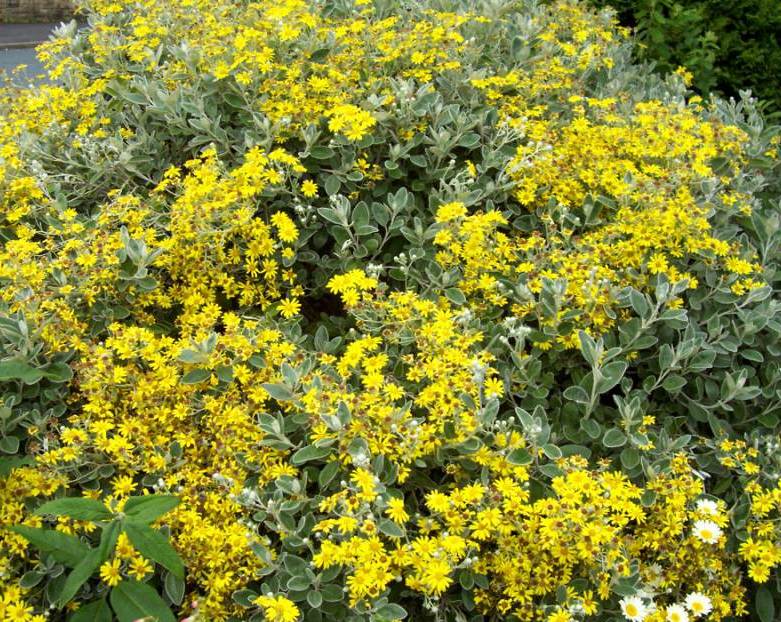
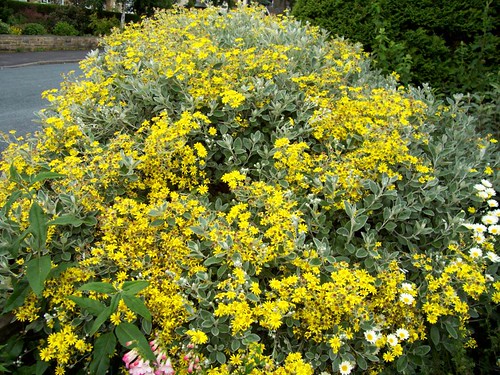
Senecio Silver Sunshine now named Brachyglottis

Senecio Silver Sunshine now named Brachyglottis

seneci

Senecio Silver Sunshine is an attractive shrub (now renamed Brachyglottis) with small silver leaves. It grows to about 3’6″ and flowers with masses of small yellow daisy like flowers through the summer.
This particular plant is quite vigorous and overdue for a trim when it has flowered.

Gardeners Tips on Brachyglottis

  • It is evergreen or ‘eversilver’ and can be grown as a foliage plant.
  • Prune aggressively in spring to stimulate foliage and keep tidy. It will go woody quite easily but will quickly reclothe the woody bits in May/June
  • Don’t bother collecting the seeds, propagate by semi-ripe or hardwood cuttings in summer or autumn
  • Buy small plants and avoid ones that have a woody base
  • Brachyglottis monroi AGM is also a variety worth growing sometimes called Monro’s ragwort

Where to Grow Brachyglottis

  • Grow this ‘Sunshine’ variety as an informal hedge. Space your planting every couple of feet for a dense shrubbery.
  • These plants grow well at the seaside as it stands up to strong winds and salt-laden air.
  • Brachyglottis with stand low levels of water
  • Grow with other Mediterranean plants or as groundcover for a sunny site.
  • Plant with other daisies like Anthemis in a courtyard or gravel gardens
Top Ten Tree Barks to Grow in UK

Top Ten Tree Barks to Grow in UK

Bark is the outer covering of main trunks, woody stems, branches and roots of trees and other woody plants, as distinguished from the cambium and inner wood. Many trees grown for bark look better as the tree matures and need to be grown in enough space to develop. Some of the following varieties are best in Parkland or woods.

Book Cover

Top Ten Trees for Bark

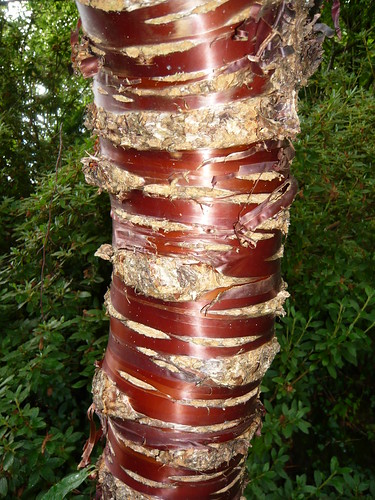
  1. The above Prunus ‘Bird Cherry’ bark looks very colourful in strong sunshine.
  2. Acers often have interesting bark try Acer rufinerve with distinctive green bark and patterns of greyish markings particularly good on old trunks.
  3. Betula Papyrifera or the Paper-bark birch has shining white bark, the large leaves turning pale gold early autumn. The native birch bark can be effective but some varieties are dirty grey in colour so take care when selecting plants.
  4. Parrottia Persica has grey bark flaking away in a pattern resembling the London Plane. It is early flowering and the leaves turn brilliant gold and crimsons in Autumn.
  5. Arbutus x Arachnoides strawberry tree has a distinctive trunk and branches that are a cinnamon red.
  6. Zelkova Sinica with smooth grey bark which peels away in scales to reveal a rusty-colored under bark.
  7. Eucalyptus has several species with interesting, peeling, grey bark and scented leaves when crushed.
  8. Juglans Nigra Or the black walnut with grey, deeply furrowed bark is quite striking.
  9. The Scots pine, Pinus sylvestris is too large for most gardens but smooth pink or red bark in the upper part of the tree is worth looking for.
  10. The well-named Redwood Sequoia never loses its astonishing red colour but again it is a large tree.

For more read Bark

The roots, knott holes and boles of trees can also have there attractions and are worth developing and cultivating if you have the space.

Tree Bark

.

Learn From Visiting Japanese Gardens

Learn From Visiting Japanese Gardens

There is always something new to learn from observing others garden and it is mental work not physical labour.
Some of my favourite Japanese gardens are featured below or on other pages.
An alternative or added opportunity to learn can come from one of any number of Amazons specialist books.

Japanese garden

Learn From Visiting These Top Japanese Gardens

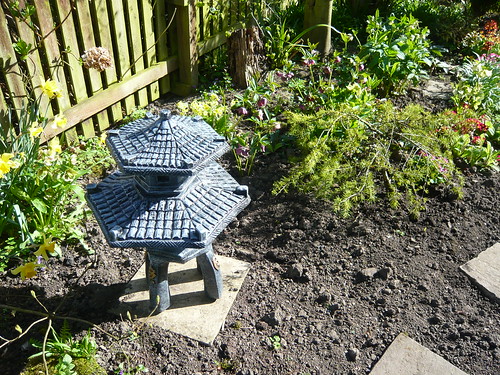
Compton Acres The Japanese Garden at Compton Acres Dorset is one of a collection of “gardens of the world”. It was originally designed and built in 1920 by Japanese architects and workmen. Such was the original owner’s passion for authenticity, every last stone and ornament was brought from Japan. They include stone lanterns, a pagoda, and various carvings.
There are four Japanese-style buildings within the garden – a thatched temple, summer house, sewing bower and imperial tea house. Visitors can follow either of two routes – stepping stones across the water features, or the normal path. The stepping stones lead through a red Torii (shrine gate) with a giant serpent coiled around one of its columns.

The Japanese Garden at Giggle Alley Eskdale looks tremendoud in the sunshine, a rare event in the Lake district.

Newstead Abbey is best known as Lord Byron’s ancestral home. The Japanese garden was laid out in 1907 with many of the original plants, trees and ornamental stonework imported from Japan. It is one of many themed gardens in the grounds of the Abbey, which are Grade 1 Listed in the English Heritage Register of Historical Parks and Gardens.

Rivington Country Park Bolton, Lancashire
Japanese water gardens were laid out by the industrialist Lord Leverhulme at the beginning of the 20th century.

Holland Park London has some interesting features and tips on Japanese gardens

Tatton Park, Cheshire The Japanese garden at Tatton Park is said to be one of the finest examples in Europe. Originally laid out in 1910-13, it was fully restored for Japan 2001, the year-long celebration of Japan-UK relations. It is in the style of a tea garden connected to an island upon which rests a shinto shrine. Every season brings it own beauty, although the spring and autumn are renowned for their colour.

The London School of Oriental and African Studies has an award winning Japanese-style roof garden and a bookshop specialising in Africa, Asia and the Middle East. The garden is dedicated to Forgiveness, which is the meaning of the Kanji character engraved on the garden’s granite water basin. The garden can be accessed from the first floor of the Gallery.

Scarborough in Peasholm Park on the North Bay has a lake and an ornamental Japanese garden.
Heale Garden Wiltshire has eight acres of gardens, including a water garden planted with magnolias and maples surrounding a Japanese tea house. This straddles a fast flowing stream and also includes the terraces and stone lily ponds.

Japanese Garden Elements

1 Water
2 Rocks and sand
3 Garden architecture
4 Garden bridges
5 Stone lanterns and water basins
6 Garden fences, gates, and devices
7 Trees and flowers
8 Fish

Other Things I Have Lernt About Japanese Gardens

Shakkei or borrowed views takes its name from using nature as a natural backdrop.
A tea garden is called a roji niwa.
Izumi ishi-gumi is a stone arrangement to represent a mountain spring.
A Kaiyushiki teien is a garden designed to walk around as opposed to a Kanshoniwa garden which is intended only for contemplation.
Ikebana is a form of Japanese flower arranging

Special and Extraordinary Leaves

Special and Extraordinary Leaves

Some plants are worth growing just for their special and extraordinary leaves. This is particularly true of houseplants and tropical species which we are less accustomed to seeing in our gardens.
Leaves can create a shock and awe feature in the garden or contribute to the overall peace and tranquility in a lush setting.

Book Cover
‘Leaves are everywhere, appearing in an astonishing variety of shapes, colors and textures. They are the unappreciated gifts of nature, worthy of far more extensive study by all’ according to Dennis Sharader author of Extraordinary Leaves.

Leaf radials

Special and Extraordinary Edible Leaves

  • Aromatic herbs and salad leaves vary from the small Thyme & Rosemary to the giant Banana leaves used to wrap food
  • Salad crops provide essential vitamins and tasty leaves.
  • Vine leaves are used in some Mediterranean cooking to wrap food and the Chinese send their leaves off to the wok

Leaves Autumn 065

Special and Extraordinary Seasonal Leaves

  • Some leaves can tell the time. Calathea open in the morning and close as it gets dark
  • Most leaves can tell the season and the colour produced in autumn by the Maple family can bring out the crowds in arboretum around the globe.
  • The first leaves of spring are often lime green and fresh but you also get the Pieris with red leaves that gradually turn green

Leaves

Special and Extraordinary Shaped Leaves

  • Spiked and spiny leaves even bamboo leaves can deter invaders in your garden
  • Dissected and crinkle cut leaves can provide architectural features in your garden
  • Tree Leaf Design, Shape and Function is discussed in more detail here

Lost Gardens of Heligan leaves

Special and Extraordinary Coloured Leaves

  • We have mentioned autumn colour but grey leaves combined with purple leaved plants can look spectacular.
  • Colueus and Begonia can produce Fancy Leaves for Colour, Shape and Texture in one plant. See pictures
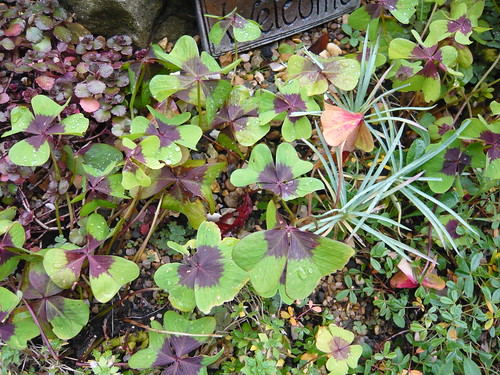
  • Four leaved clover is said to be lucky but do not rely on the two tone Oxalis leaves below

Oxalis

Alan J. Coombes is a Coordinator of Scientific Collections at the Herbarium and Botanic Garden of the University of Puebla, Mexico, and the author of many books about plants and trees. Zsolt Debreczy is Research Director of the International Dendrological Research Institute in Boston. They have combined to produce The Book of Leaves available now from Amazon. It is very strong on tree leaves.
Book Cover

Growing Calathea ‘Wavestar’

Growing Calathea ‘Wavestar’

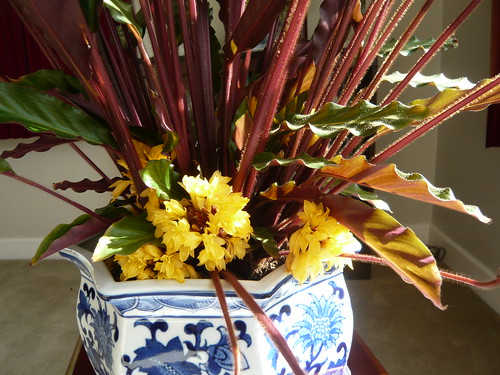
Calatheas are a group of plants native to the tropical Americas. They are popular as pot plants for the house or conservatory due to their decorative leaves that often react to touch or light.

Calathea 'Wavestar'

Calathea Wavestar

  • Calatheas are now being cross bred amongst their 50 or so species and Wavestar is one of the results.
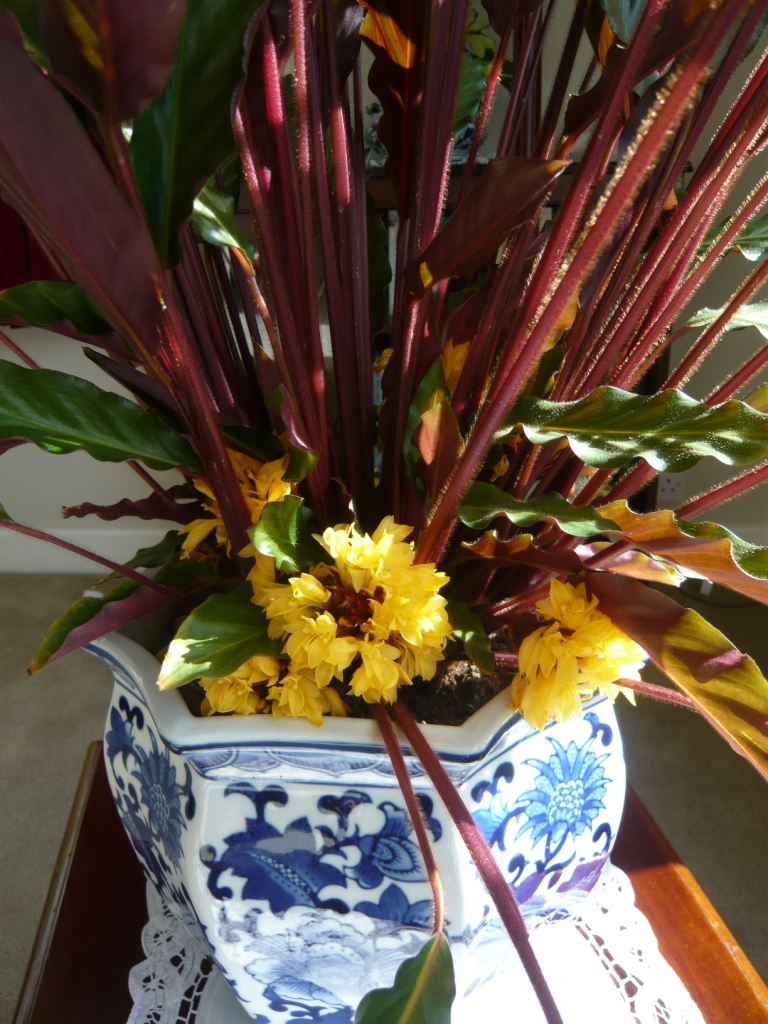
  • The leaves are soft,ridged, purple underneath and green when open in full light. The leaves close up in the evening.
  • I was surprised to see the yellow flowers at the soil level last time I watered this plant see above.
  • This variety is said to originate from Bahia in Brazil but if so why has it been granted PBR status?
  • The plant breeders rights are owned by Decorum a Dutch company

Korbmaranthe, Calathea bachemiana

Decorum Plants Calathea Wavestar

  • ‘Decorum Plants’ are a brand name that claims to be a leading specialist in the trade sector for more than 10 years.
  • Decorum Plants represents a selection of 1200 decorative and flowering potted plants under the well-known (to some)‘Decorum flag’.
  • Supplies to the trade via a web link may provide more information

Calathea majestica 'Albolineata'

Growing Calathea

  • Calathea need good light but avoid direct sun as it will scorch or fade the leaf
  • Keep soil moist and humid throughout spring and summer with less watering in winter.
  • Keep your Calathea warm preferably 15-23ºC.
  • Feed with a dilute fertiliser weekly during summer.
  • Soil should be light and free draining.
  • Repot annually and propagate at that time by division. Repoting tips

Calathea makoyana

Calathea varieties for Growing Indoors

  • Calathea makoyana the Peacock plant, features purplish coloring on the undersides of leaves, with white and green on top. Known as the peacock plant.
  • Calathea zebrina the zebra plant, has green markings on the leaf top and purple leaf undersides.
  • Calathea insignis also called Rattlesnake plant, is a bushy species with narrow, tapering erect foliage.
  • Calathea crocata has plain leaves but displays of upright orange-red flowers.
  • Calathea ornata. Reddish marking on leaf tops with purple undersides.
  • Calathea louisae has leaves broadly ovate, dark green with light green splotches along the midrib.

Other Facts about Calathea

  • Calatheas are closely related to Maranta, and often confused with their species Ctenanthe and Stromanthe.
  • Calathea can thrive in bottle gardens and terrariums due to their liking of high humidity.
  • Calatheas are propagated by divisions or tip cuttings, with nodes to form the roots.
  • Mist and reduced light are important during the early stages of propagation.

Calathea zebrina (Sims) Lindl

Calathea Photo Credits
Korbmaranthe, Calathea bachemiana by Dandelion And Burdock, CC BY-NC-SA 2.0
Calathea majestica ‘Albolineata’ by tuis CC BY-NC-ND 2.0
Calathea makoyana by Bárbol,CC BY-NC-SA 2.0
Calathea zebrina (Sims) Lindl by adaduitokla CC BY-NC-SA 2.0 ‘Calathea zebrina (Sims) Lindl. Marantaceae. CN: Zebraplant. Native of southeastern Brazil. Ornamental. Low rosette herb with striped pattern on leaves; leaf texture velvety. Growth habit clumping up to 90 cm tall.’

Benefits of a Compost Heap

Benefits of a Compost Heap

compost

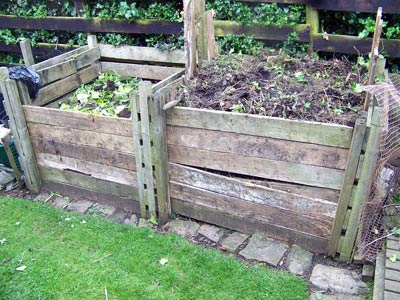
A well made compost heap has various benefits for both the environment and your own garden. Compost heaps are relatively easy to make and a well made heap gives a personal sense of satisfaction.

Main benefits of a compost heap.

Saves Taking Garden and Kitchen Refuse to Landfill. This will save you time, but also help the environment by reducing strain on landfill sites. You also save petrol and time of taking garden rubbish to local tip.

Provides Excellent Organic Soil Improver
. Garden composts is high in trace elements and so helps fertilizes the soil. It is also an excellent soil improver adding much valued humus to the soil. Well rotted garden compost will help any soil, but especially if you have a sandy or clay soil.

Natural Cycle. Composting dead material to put back into the soil, is a natural process of Mother Earth. By composting material, we make our garden more of a living organic entity and can rely less on artificial fertilisers.

Attractive soil conditioner. Some people feel a compost heap is to be kept well hidden, but a well made compost heap needn’t be a source of embarrassment, plus the rotted compost has an attractive and sweet smell to it.

Healthy outdoor exercise is provided when you spread your eco-friendly compost

Provides a home for numerous insects, worms and creatures involved in the environmental cycle.

Get More Benefits from Your Heap of Compost

Greedy boards can be used in summer to increase the height of your compost heap. Leafy matter reduces in volume quickly and the extra space can be useful.

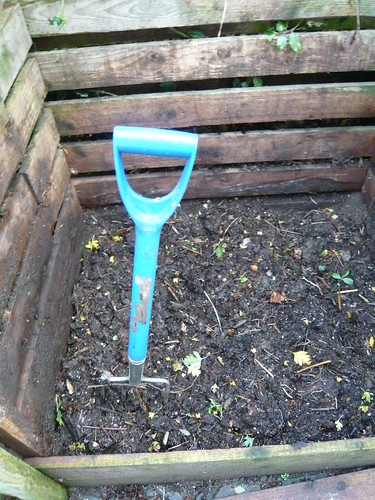
Adding a sprinkling of garden soil will improve the rotting process by adding bacteria, worms and trace elements. I do this when there is a lot of green matter and not much brown to compost.

Shred and chop your waste into smaller parts. The rot sets in to all the damaged and cut areas quicker than undamaged stems and stalks. A chipper or shredder may be used for branches and trees.

A compost heap provides a place to collect all rotting plant matter and helps to keep the garden tidy

Potential Problems of Compost Heaps.

Rats and other vermin – attracted by cooked food. – Don’t put meat or cooked food on a compost heap, but do put vegetable peelings and other uncooked organic waste.

Odour. A badly made compost heap made start to smell of methane. But, this tends to be compost heaps that become sodden and waterlogged. Solution – put a mix of green material with more woody stems. Provide aeration and cover in excessive rain.

Doesn’t Rot Down. This occurs if the compost heap is badly made. – too wet or too dry, or not enough sources of nitrogen such as grass clippings.

Disease. Don’t compost plants if they are infected with disease as these could be recycled, better to burn or dispose of diseased plants.
See:

compost heap

Parrot Flower or Bird of Paradise Flower Photos

Parrot Flower or Bird of Paradise Flower Photos

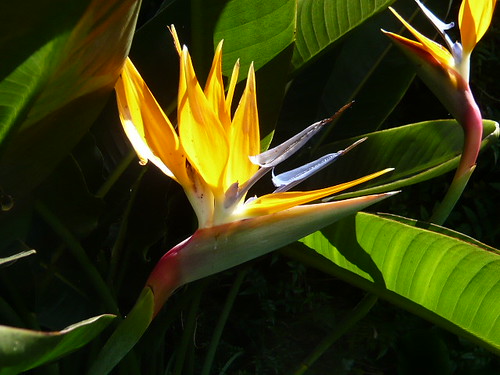
I was convinced my latest photos were of Strelitzia or Bird of Paradise flowers – that was until the horticulturalists at Kew Gardens made me rethink.
I had never come across the Parrot flower until I saw the Kew photo below and now I realise how ornithologically challenged I am.

Parrot’s flower in the Palm House
I love going to the Palm house at Kew where this photo was taken by their staff.
The variety of plant life hints at what you could discover in better weather conditions than we experience in the UK.

Eden Project Strelitzia

These Cornish flowers were also under glass in the tropical dome at the Eden project.

Eden Project Strelitzia

Strelitzia – Bird of Paradise Species

Strelitzia alba White bird of paradise
Strelitzia caudata Mountain Strelitzia
Strelitzia nicolai White or Giant bird of paradise;
Wild banana or Blue and white Strelitzia
Strelitzia reginae Bird of paradise, or Crane lily
Strelitzia juncea African desert banana
S. × kewensis hybrid between S. reginae and S. augusta (alba)

Strelitzia
Checking my old holiday photos I found this Strelitzia which threw my identification skills into question.

Eden Project Strelitzia
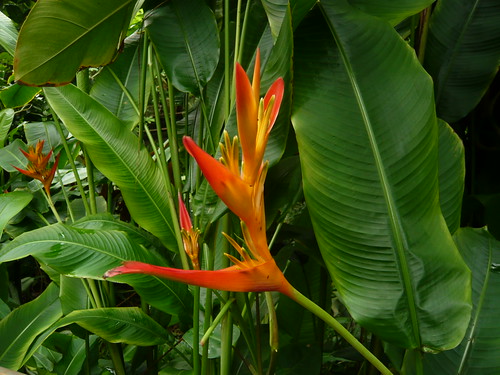
These leaves look like banana leaves but the flowers fall short of Paradise.

Eden Project Strelitzia
Insects are having a good lunch on this flower photo.

Photo Credits.
Parrot’s flower in the Palm House by Kew on Flickr CC BY-NC-SA 2.0 ‘This parrot’s flower, Heliconia psittacorum, was collected in Brazil in 1974. Find its striking orange flowers in the Palm House.’
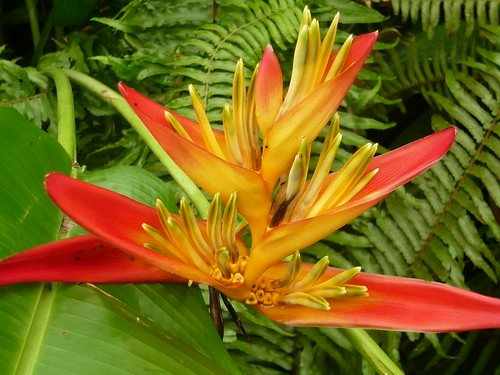
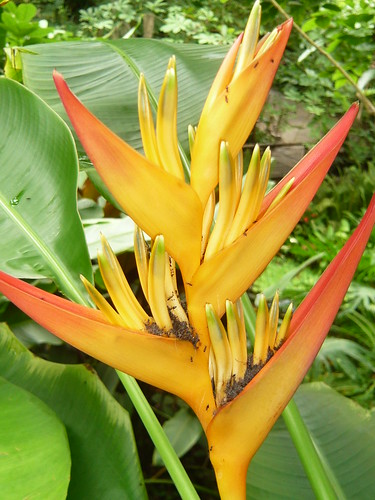
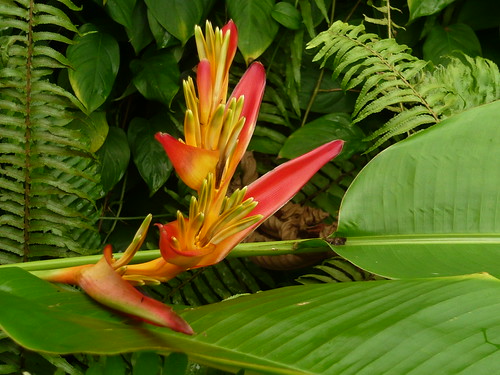
Heliconia platystachys (multiple flowers) CC BY-NC-SA 2.0
Our photos from the Eden Project Cornwall

Heliconia platystachys (multiple flowers)
When you start looking there are Parrots everywhere!
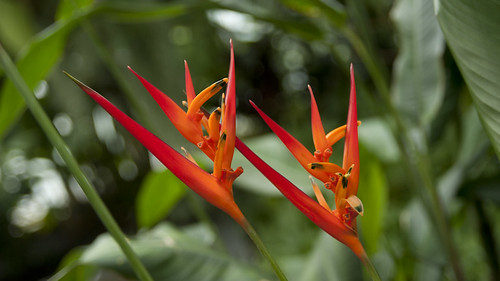
There are over 100 species of Heliconia found in rainforests or tropical wet forests where they are sometimes referred too as False Bird of Paradise flowers.

Three Coloured Shrubs with Photos

Three Coloured Shrubs with Photos

Shrubs

Sorry if you feel badly done too by the head line. The shrubs in question major on one colour but as there are three shrubs I called them three coloured shrubs. It seemed logical at the time but I recognise you could have been expecting tri-coloured shrubs.

The red leaves of the Photinia fraseri is often called Robinia which is really best reserved for the False Acacia or Robinia psuedoacacia ‘Frisia. In the spring the new waxy leaves are a vibrant and shiny red only slowly aging to light green. This plant copes well in the shade in a clay soil. I give it no special treatment and it forms a key part of my low maintenance area.

Behind the Photinia fraseri is another garden stalwart the Lilac. This small tree is just coming into flower and with a bit of sun each blossom will open a lighter colour and almost match the sky behind. As with the other shrubs here the Lilac likes the clay soil.

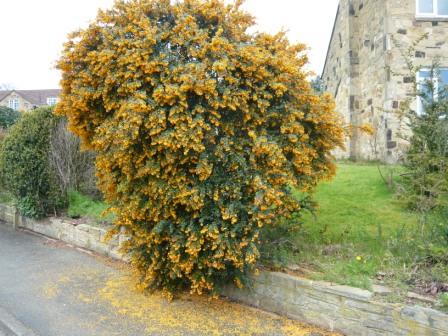
The Berberis Julianae has been very good this year which I put down to the sunny dry March and the cooler climate since then.

Shrubs

The angle of this photograph has changed and emphasis is placed on a white Hebe still to flower and the conical evergreen Picea.
The shrubs at the front cover the trunk of the Lilac that can be a bit uninteresting other than when the Lilac is in blossom.

Do not forget the evergreen shrubs like Osmanthus which has red or white young shoots often with colour variations to go with the leathery green leaves.

Tips for Growing Spirea Japonica

Tips for Growing Spirea Japonica

spirea-goldflame

I was lucky to get some old cast iron wheels for the garden and I planted a Spirea ‘Goldflame’ close by to get my ‘Wheels on Fire’. In Spring the foliage is the main attraction but when the shrub blossoms the bees will be an added attraction.
This plant grows to 3 foot but I then prune it down hard so it can’t get any larger.

Tips for Growing Spirea

  • Beginners tips on Spirea
  • Buy dormant plants in containers for planting between autumn and spring.
  • Avoid buying plants that are too large or pot bound.
  • Plant in full sun and water during dry periods for the best results.
  • Plant roots can be divided in late winter to increase your stock of plants.
  • Prune to 1″ for more flowers or halve the length of stems for a more dense bush.
  • Spirea as a genus of flowering shrubs has around 100 species and hybrids cultivated by gardeners.
  • Spirea is a hardy genus that will grow almost anywhere.
  • Plants will tolerate part sun or shade and even poor soil.
  • Pot bound plants do not transplant very well so buy them when dormant and check the container by tapping the plant out.
  • Spirea japonica are easy to care for, fast growing shrubs with a floral interest to add to the strong leaf colour in Spring and Autumn.

Spirea

Spirea Varieties and Colours

  • Spirea japonica flower for 2-3 months in pink and white clusters of very small florets.
  • ‘Anthoiny Waterer has young cream and pink leaves and red flowers.
  • Golden flame is the variety shown above.
  • Nana and little Princess are smaller varieies 1-2′ tall.
  • Bridal wreath Spirea Vanhouttei has masses of white blooms upto 6 feet high.


Images from Google

You may also hear plants in the spirea genus referred to as meadowsweet. These plants have small oval leaves which may be toothed to lobed, and they produce profusions of white or pink flowers in the spring and summer. A healthy spirea will bloom so profusely that it looks like an explosion of flowers in the garden, producing delicate clusters of small flowers. In the fall, spirea shrubs drop their leaves, returning with fresh green foliage in the spring. Read complete article on the Wise Greek

Spirea prunifolia, Bridal Wreath Spirea
Credit
Spirea by edgeplot CC BY-NC-SA 2.0
Spirea prunifolia, Bridal Wreath Spirea by KingsbraeGarden CC BY-NC-SA 2.0