Browsed by
Category: Articles

Gardening articles that may not include tips

Help Growing Euonymus

Help Growing Euonymus

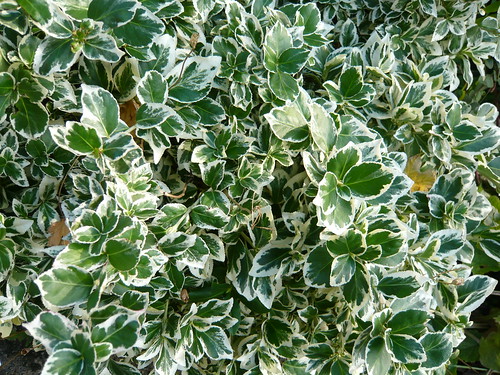
Euonymus need little help from gardeners to produce a fine show of leaves. The green, white and yellow combinations are great but dwarfed by the leaves that turn brilliant red in autumn on some varieties.
There are over a 100 species so there is a Euonymus for your garden.

Leaves

Growing Euonymus in the United Kingdom

  • The RHS have awarded an AGM to Euonymus Fortunei Emerald ‘n’ Gold’, ‘a dwarf evergreen shrub of spreading habit, with broadly yellow-margined leaves, tinged pink in winter; occasionally produces a few small, inconspicuous greenish flowers’. AGM is a recoginition that a plant will grow successfully in the UK.
  • Read More Read More

Tips for Planting Your Pots & Containers

Tips for Planting Your Pots & Containers

Long Toms

Selecting a Pot

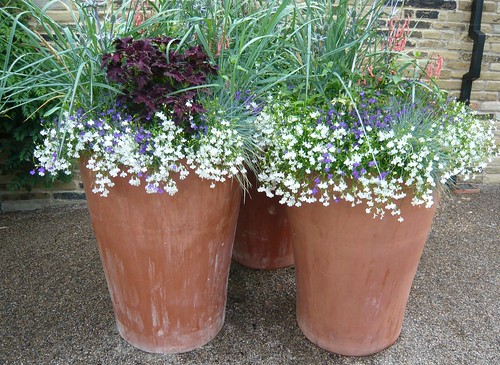
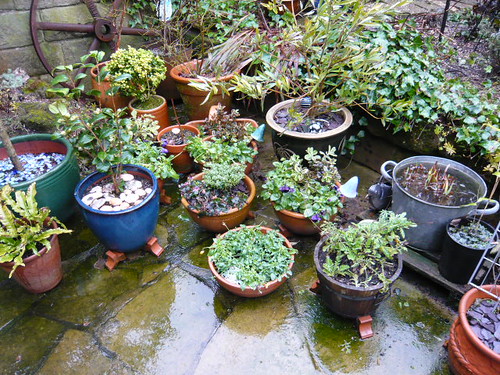
  • Use as big a pot as you can find. Larger volumes of compost do not need watering as often and take longer to dry out.
  • Line a clay or terracotta pot with plastic to reduce evaporation through the sides.
  • Put plenty of crocks at the bottom of the pot to help drainage.
  • Use a loam based compost which holds water better than a peat based compost that tends to go dusty when dry and is hard to rewet.
  • Locate the pot in place before it is full and too heavy to move. You can get base boards on casters so the pot is mobile.
  • Black pots absorb heat, plastic is utilitarian and widely available, some ceramics will not be frost proof.
  • If you aim to grow tall subjects weight the bottom of the pot to reduce the risk of it blowing over.
  • Cluster pots together to make a micro climate and watering will be easier.

Container garden

Planting Up

  • Firm your plants in well and backfill with more compost.
  • Ensure all roots are covered as they would dry out quickly.
  • Water the plants and if the surface sinks add more compost.
  • Leave about 1″ below the rim for watering.
  • Deadhead flowers regularly in summer.
  • Feed with a liquid fertilizer every week after the first month. Initially the compost should contain enough nourishment.
  • Select some edge plants to soften the appearance of the pot.
  • Aim for height that relates to the size of your pot.
  • If growing a specimen like a half standard I would mulch with a coloured gravel to finish off the overall appearance.

Wheel container
Container Equipment

  • I ofter use a saucer under pots to help watering.
  • In winter pots need to be raised off the ground on feet or bricks so they do not freeze to the soil and break.
  • If pots are not frost free then give them winter protection.
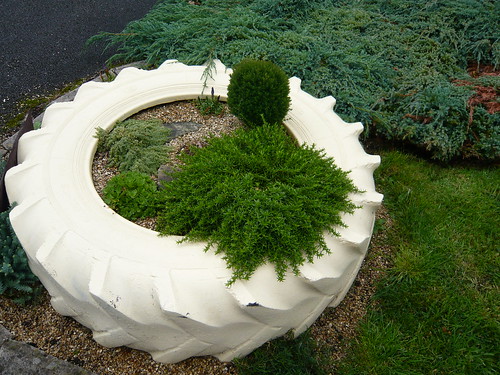
  • Experiment with different types and shapes of container
  • A layer of grit or gravel on the top will prevent moss growth and help leave room for watering.
Meaning of Glauca for Gardeners

Meaning of Glauca for Gardeners

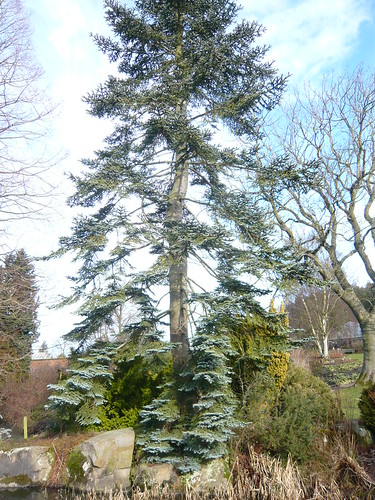
Abies procera glauca

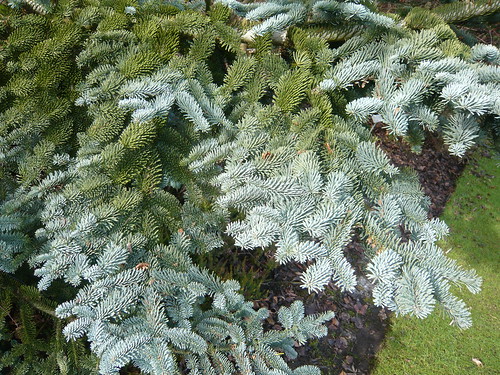
Glauca is a word that crops up in the naming of several plants. Like many Latin derived names it is descriptive as with the Noble Fir Tree  above ‘Abies procera glauca’. The leaves are glaucous, which is from the Latin word glauca, meaning bluish-grey. (Procera mean tall in Latin)

Glauca also refers to the fact that some plants have a powdery white coating on their leaves or stems. This coating, sometimes called a bloom or farina creates the grey colouring that can lead to the Glauca name.
Glaucous-leaved trees and plants contrast gently with the shades of green around them and combine well with almost any other color making them useful in landscaping and garden design.

Pica glauca out

Glaucous Plants

Nicotiana glauca Tree Tobacco is a much branched shrub or small tree often reaching 25 feet
Picea glauca (White Spruce) is a species of spruce native to the north of North America
Festuca glauca Elijah Blue the Blue Hair Grass
Rosa Glauca rubrifolia the flowers are not remarkable, being small, single and pink but the plum-grey foliage is unique.
Yucca and Canna both have a glaucous form
Plums and grapes often have a grey white bloom on the ripe fruit.

Consider using these grey-green combinations in your garden with Rue or Rudbeckia maxima as further examples.

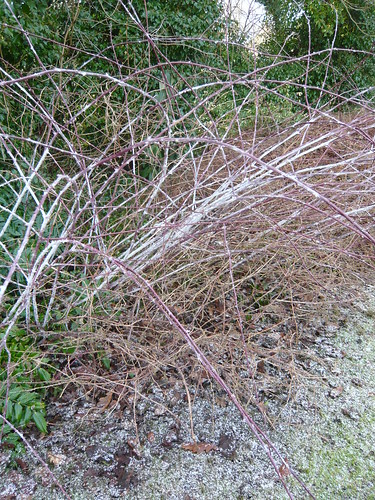
Blackberry

Gardening in England

Gardening in England

vegetables

home grown vegetables

1. Growing Vegetables.

You don’t have to be Percy Thrower to grow a few tasty, homegrown organic vegetables. The Allotment or back garden is a great English tradition which enables you to not only grow vegetables, but, also escape from the turmoils of life (i.e. wife / husband – delete as appropriate)

A good vegetable plot gives great satisfaction. True, it is pretty hard work – there are innumerable pests and it is much easier just to buy from Tesco’s. But, when you grow your own vegetables and pick straight from the plot, you realise how much mass produced farming has reduced taste. Through growing your own vegetables, you realise that nature never intended vegetables to be uniformly the same size, shape and colour. It’s not just hyperbole to say homegrown veg and fruit tastes much better, it really is true.

Read More Read More

Acer platanoides Drummondii and Greenery

Acer platanoides Drummondii and Greenery

green-n-white

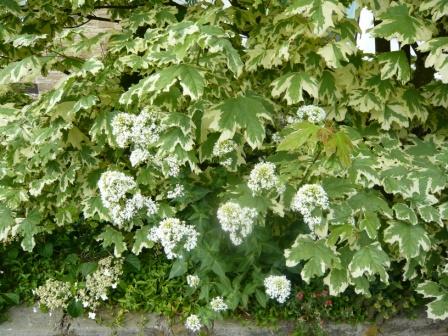
Green and white are very accommodating colours in the garden as they are both clean and fresh. This combination caught my eye  with the Climbing Hydrangea petiolaris just flowing over the top of a wall in which was growing Valerian alba.  Against the wall was an Acer platanoides Drummondii and all the colours seemed to blend so well.

Read More Read More

Top Rockery Plants for Growin In UK

Top Rockery Plants for Growin In UK

alpine21

Rockery plants look very good in spring as they trail over rocks and edges in the garden. The rockery mimics natural conditions for these alpine dwellers often with limestone rocks or fast draining poor soil.

Top Rockery Plants for Beginners

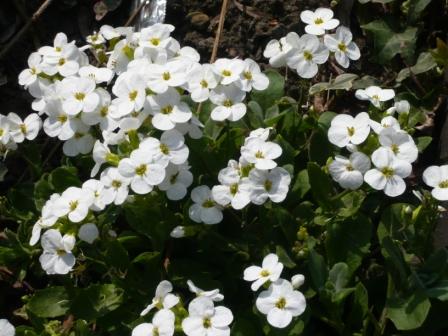
  • Arabis shown above is also known as snow-in-summer and has showers of white flowers. The plant is robust and useful for covering rough stoney ground. Some species need a bit more care but are useful in the rockery including Arabis rosa a pink form and arabis bryoides that forms a small mat of hairl leaved rosetts.

Read More Read More

Pictures of Magnolia in Bloom

Pictures of Magnolia in Bloom

magnolia

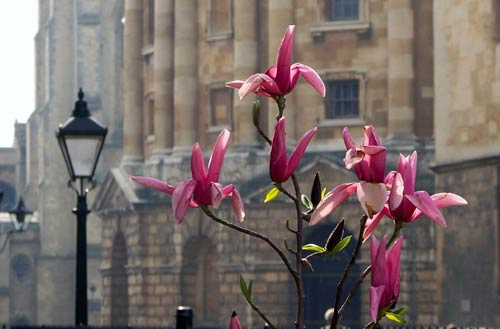
Magnolia in Full Bloom Outside the Radcliffe Camera, Oxford University.

Magnolia’s make an excellent garden plant, flowering in March – May. Early flowering varieties may be susceptible to frost. This can be avoided by protecting flowers with fleece on late spring frosts. With global warming,  late frosts may reduce in severity but do not hold your breath.

Read More Read More

Ornamental Grass Growing Tips

Ornamental Grass Growing Tips

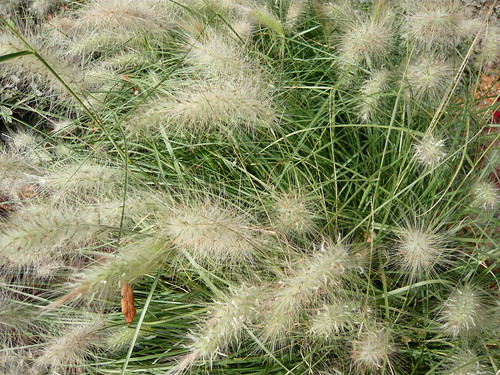
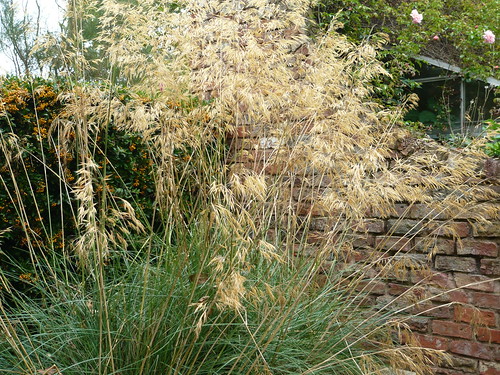
Growing Ornamental Grass can be easy and it will create a natural effect in your own garden. Aim for a mixture of textures, shapes and colours using leaves, flowers and seed heads.
In an open setting, with a low sun shining through, many grass plants can produce stunning effects.

Growing Tips

  • Remove dry seed heads to prevent self seeding
  • Tie tops together to aid cutting back in late winter with shears or a strimmer.
  • Select perennial, clump forming varieties rather than annuals or spreading grasses that can take over a small bed. (I avoid Phalaris for that reason).
  • Read More Read More

New to Gardens

New to Gardens

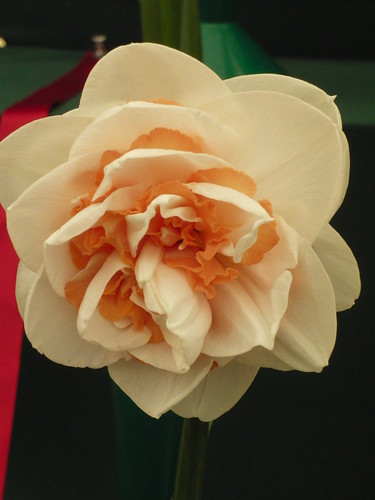
Daffodil selection

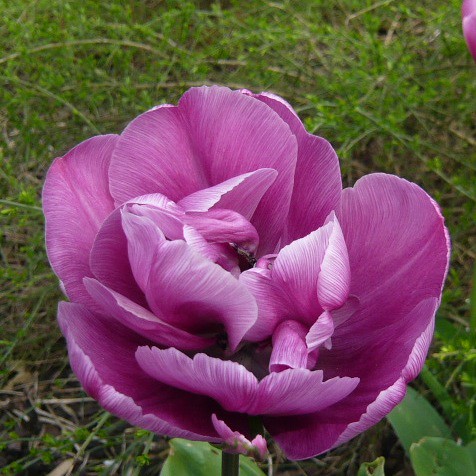
Black tulips, blue Daffodils, and red Delphiniums are all plants that have been discovered or launched on the unsuspecting public in the past. However in these cases not is all as expected.

Tulip

Now comes a revolutionary grass that needs no lawn mower to keep it in check.
It is also moss proof and a major boon after this wet soggy winter.
Unfortunately you can’t smoke it (or if you did it wouldn’t give you much of a high.)

artificial grass

Artificial grass

Blackthorn and Sloes

Blackthorn and Sloes

Blackthorn is a multi branched, deciduous tree or bush that can grow up to 20 feet tall (the Blackthorn in this photo was 7 feet tall as were the ferns!).
The stem is dark to black and the small branches create thorns hence the name Blackthorn but in Latin Prunus Spinosa.
Like its relative the Cherry plum, Blackthorn produces small fruit we know as Sloes.
The thorns can be very sharp and the bush can be a bit ragged unless kept in check.

Blackthorn is often used for and found in hedgerows or on the edges of woodland and is easy to grow as part of your mixed hedge. In early Spring it is covered in small white blossom before the leaves come into bud. Blackthorn is good for attracting butterfly caterpillars but is best known for the small, spherical, blue-black fruit that are available in late Autumn.

Read More Read More