Browsed by
Category: Articles

Gardening articles that may not include tips

Dogwood Colour Schemes

Dogwood Colour Schemes

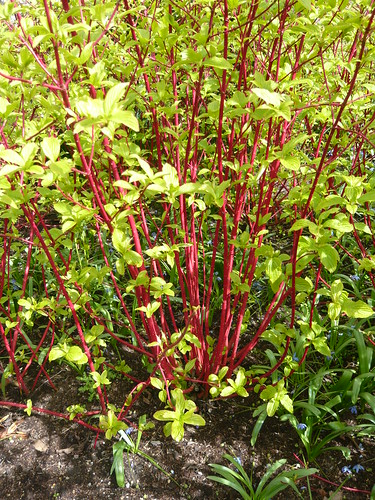
Cornus are great for your garden and the colourful dogwoods are easy on the eye.
Green shoots cornus dogwood

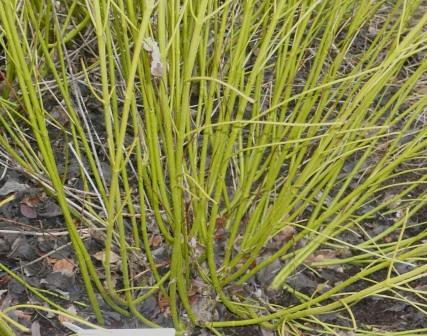
What is looking  good in your winter garden or locally at the moment? Look around now because you can start on next years garden to create a sight to behold. Locally I saw several dog woods that would make an interesting winter feature in my garden if I can find the space. I am less sure about the chicken wire on my picture above but I guess it gets covered in greenery by spring.
Dog Wood Cornus

Tips on Cornus – Dog Woods

  • Dog woods are an extensive family including trees up to 10 feet tall. Planted now they can thrive in wet or dry soil
  • Read More Read More

Favourite Camellias

Favourite Camellias

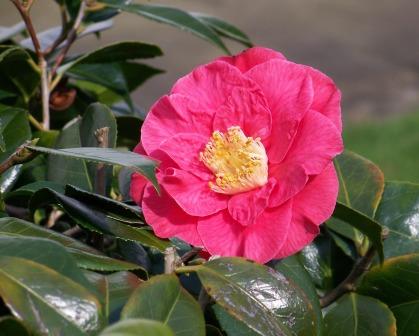
As in the depth of winters we know that bright colourfull Camellia shrubs and small trees will soon burst forth.

Camellias are by nature evergreen woodland shrubs or small trees. They prefer an acid, leafy soil and some shade and protection from early morning sun for the flower buds. The flowers are classed in various forms including single, semi double, Peony form, Anemone form, Rose form or Formal double. My own semi- double white camellia catches the early frost and turns brown but the profusion of buds still make a great show.

camellia-japonica

Waxy flowers of Camellia ‘Satans Robe’ and the even more waxy leaves of the camellias are one of the early joys in the spring garden. There is a range of camellias to suit most conditions and if you can’t find the lime free soil most varieties need they will grow in a pot of ericaceous compost.  Flowers vary in size up to 5 inches across in yellow, red, white and pink.

Some Camellia Species

  • Camellia Japonica, Sasanqua and Reticulata have special sections with some of the best varieties described or selected below

Read More Read More

Use Shrubs for Lower Maintenance

Use Shrubs for Lower Maintenance

It is no surprise that annuals need replacing every year. Shrubs are great for lowering the amount of maintenance needed in your garden. Big shrubs can cover larger areas and need very little care and maintenance.
Rhododendron
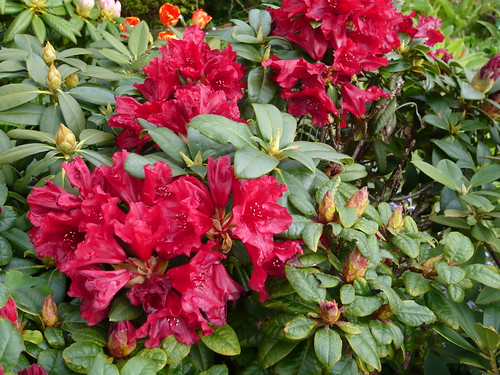
Rhododendrons can have a wide spreading habit over may yards or the smaller varieties will suppress other plants in a smaller bed.

Weigelia Varigata

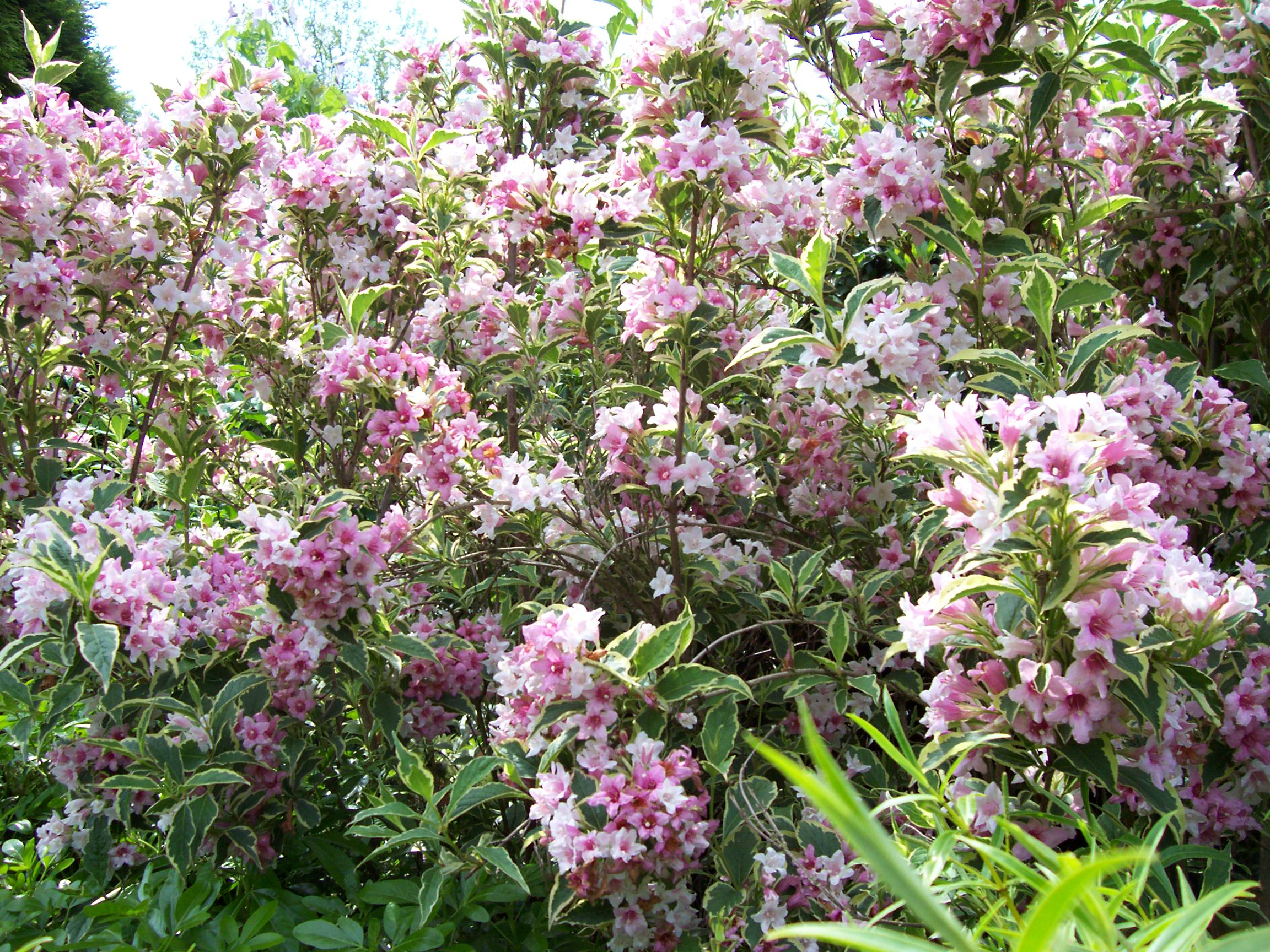
This shrub grows over six feet high and covers a four foot circumference. When in full flower it is very striking and the variegated leaves have interest through summer. It is easy to propagate from 12 inch long cuttings of semi ripe wood and it is a rapid grower reaching good proportions in two years. Other varieties like Bristol Ruby forsake variegated leaves for very strong coloured flowers in June and July with a late show if you cut off the old flowers but for low maintenance don’t bother.

Varigated Weigelia in the sun

Photinia Red Robin

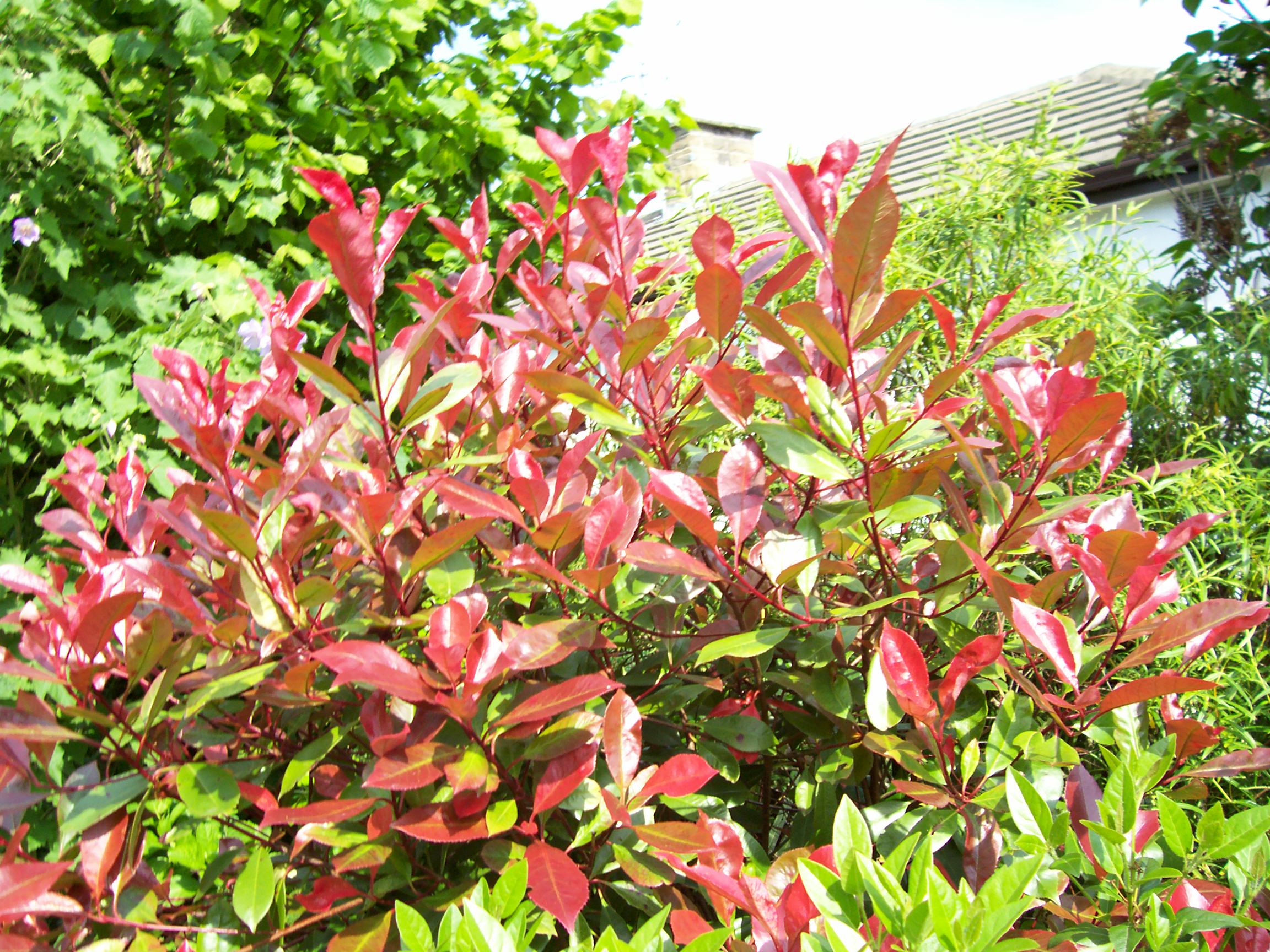
This is a shrub that can be left to develop or trained up a single stem. It is part of a family of Photinias that include small trees. For this variety of Photinia fraseri five feet is a reasonable size but it will continue to grow to a hight and spread to 10 feet. The shiny evergreen leaves are bright red in spring and apart from the danger of a bit of frost to the new leaves the shrubs are hardy. Again I don’t prune my photinia but when it gets to large i will cut it back which will encourage more red leaves at the expense of flowers

Two year old Photinia

Trees Exposed to Wind

Trees Exposed to Wind

Trees exposed to gales quickly become logs or kindling.

Snow Business

Gardeners have a lot to consider when confronted with the elements and vagaries of various plants. This picture encouraged me to consider trees exposed to wind in the form of a light breeze (a good thing), a strong blow and devastating hurricane force (a bad thing for English Trees in 1987).

Tips for Exposed Trees

Trees can act as a wind break but if too  exposed they may suffer. Think about the trade off and why you are planting a particular tree in a particular spot. (Trees are for life not just for decoration unless it is a Christmas tree).
Wind can make trees lean and so young saplings may need staking until they are well established. However the ability to sway in the breeze builds up the strength of a tree. Tie the tree low down otherwise the head can snap off in a gale.
If a tree is exposed then the growth will not be uniform and the side facing the prevailing wind will show less or shorter growth. Site your trees especially specimen trees in a wind shadow but not a rain shadow.
Too much wind damage will cause delamination of the roots & bark, cracking, rupture and buckling.
Strong winds cause trees to sway, pulling and stretching their roots and creating gaps in the soil that can stop water getting to roots.
Species vary in their response to wind. Most rhododendrons are sensitive to moderate wind and react by closing their stomates, reducing loss of water by transpiration. In contrast, trees such as larch and alder under the same wind conditions maintain open stomates and continue to photosynthesize and transpire.
Fruit tree growth increases as wind exposure decreases.
Trees can be partially supported with strong forked props.

Read More Read More

Plants for Carpet Bedding

Plants for Carpet Bedding

Don’t try this at home unless you have infinite patience.

Carpet Bedding needs a lot of Plants

Sedums make good carpet bedding plants including varieties like, Sedum spathulifolium ‘Cape Blanco’ and ‘Purpureum’, Sedum pachyphyllum roseum & album and the less hardy Sedum stahlii

Sempervivum are also most useful and can knoitt together with sedums to good effect. Try using Sempervivum tectorum, Sempervivum stansfieldii or Sempervivum arlanticum.

Echeverias are arguably the most attractive of all succulents, highly valued for their stunning leaf colour and variation. Echeveria pulvinata, elegans, setosa, agavoides, harmsii, secunda glauca and Echeveria subsessilis are worth seeking out.

Apart from succulents other popular plants include Alternathera, Ajuga reptans, Tanacetum parthenium ‘Golden Moss’ and Sagina pilifera.

Read More Read More

Lawns in Winter

Lawns in Winter

Don’t smoke your grass but cultivate it as a lawn.
January Lawn

You might get sent to the Tower of London if you damage your Lawn during winter. One gardener must be there as the picture of their lawn in January after the snow is shown above. You can start your own business with the book and tips below.

Winter Lawn Care

Do not walk on frozen grass the leaves and stems will snap and damaged patches will show when the frost has gone.
Do not walk on very soggy grass or when covered in snow as this will also damage turf and soil structure.
Do not be afraid to smarten up your lawn on a fine dry day. Trimming the edges and removing any dead leaves or debris always gives a lawn a lift.
If you want to cut the lawn set the blades on the mower at the highest level and give it a light trim not a short back and sides.

Preparation for a Summer Lawn

Read More Read More

10 Parks Around the UK

10 Parks Around the UK

Park yourself on a bench in one of Britains top parks.
Book Cover

Top 10 most beautiful parks compiled by Rae Spencer-Jones extracted from 1001 gardens for the Daily Telegraph. If you can cope with 1001 garden visits then good on you…. but read the book first.

  1. Royal Botanic Garden Kew has a tropical plant festival in the glasshouse until March 2010
  2. Virginia Water – Saville garden and Valley garden have a varied and exotic woodland, landscape and garden to visit.
  3. Hylands Park Essex has a wide variety of interesting flora, fauna. There is also a large variety of mature trees including oak, ash, hornbeam, and field maple, plus an additional 25,000 new trees.
  4. Clumber Country Park Nottinhamshire is ideal for long walks or cycling so you need to be fit.
  5. Talkin Tarn Cumbria nestles in a 165 acre site, containing a glacial tarn surrounded by mature woodland and gentle meadows
  6. Coed y Brenin Gwynedd is Forestry commission land with lots of bike tracks.
  7. Healey Dell Nature Reserve Lancashire sits in a picturesque part of the Spodden Valley on the outskirts of Rochdale. It is rich in wildlife, with a fascinating archaeological history
  8. Stanwick Lakes Northampton is a unique countryside attraction in the heart of the Nene Valley very good for wild life.
  9. Normanby Hall Museum and Country Park Lincolnshire with a walled garden, house and farming museum to complement the Park
  10. Vogrie Country Park Edinburgh has 250 acres of natural trails, a walled garden and ponds. The 19th-century landscape includes trees brought to Scotland by plant collector George Forrest. Great for walking.

Lister Park
Lister Park Bradford.

Conifers for Winter

Conifers for Winter

Conifers are not just for Christmas! For shape and colour a winter garden needs conifers.

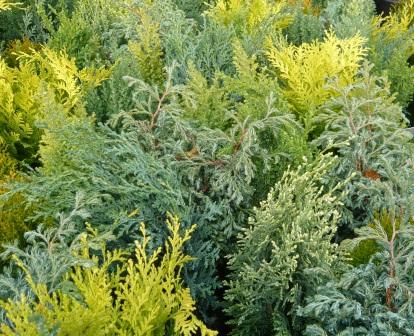
These conifers match our colour scheme and show up well in the winter garden.
If you buy small conifers in pots they will give you years of pleasure.
Be warned if they grow 10% a year they will double in size in 7 years and be 8 times the size in 20 years. From my experience many varieties grow at more than 10% per annum.
Special dwarf conifers, ofter from alpine nurseries have been selected from sports of larger conifers and can remain stunted without looking awkward

Read More Read More

Muscari my Grape Hyacinths

Muscari my Grape Hyacinths

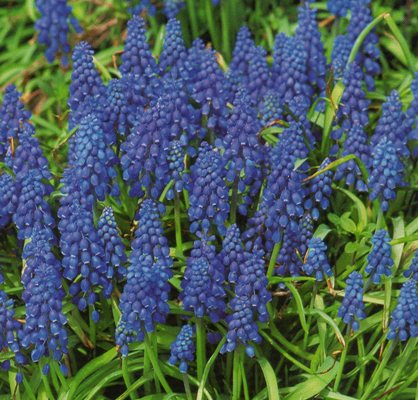
One of the earliest blue bulbs to show in my garden are the Muscari.

At the end of June I received ‘J Parkers’ Autumn wholesale catalogue. They claim to be ‘the greatest name in Dutch Bulbs’ and I have bought from them for my garden several times with good results. Last season I bought several varieties of Muscari. Whilst the wholesale catalogue is priced without vat the prices and rates for larger quantities make for a reasonably economic priced deal if you spend the minimum order value. They supply many of the local retailers but also have a retail catalogue.

Grape Hyacinth – Muscari Varieties

  • Other common names for Muscari include Starch Hyacinth or Feather Hyacinth.
  • M. Plumosum the feather hyacinth have grown well and the flower heads are fuller and fluffy
  • M. Azureum have soft blue flowers and I grew them in pots some of which made excellent gifts to friends and fellow gardeners.
  • The third variety I bought were the porcelain blue M. Valerie Finnis and they were OK without being special.
  • M Golden fragrance has yellow florets toped with purple before they are fully open. It is said to be very fragrant and I may try some this year.
  • Another musk scented variety is M. Muscarium with purple to olive flower heads. They are a bit later flowering in May
  • Ofter the name explains the flower shape or colour M Azureum album is pure white and M Mount Hood has a white top like a hood on the blue flowers whilst M lactifolium has a single broad leaf with a bi-coloured flower spike

Cultural tips for Grape Hyacinth

Read More Read More

Leycesteria Formosa Shrubs

Leycesteria Formosa Shrubs

Leycestria

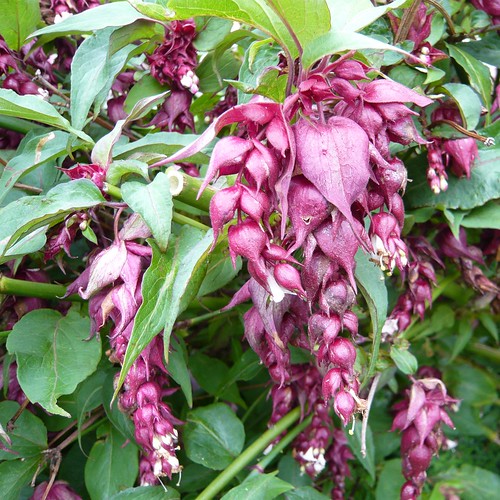
Leycesteria Formosa

Green winter stems on this attractive fast-growing shrub is described as ‘cut-and-come-again’ as it can be reduced to ground level in early spring to encourage rejuvenation. Although this plant has only been lightly pruned, it is a bit thick and congested now so I will cut it back after flowering and right back in spring.

Leycesteria has long, hanging, purple-red bracts in summer surmounting racemes of white flowers followed by purple fruits in late autumn. It has a light fragrance from the white flowers. Its foliage can be quite dense and its hollow, bright green stems, not dissimilar to those of bamboo, give a good winter display. It grows to 8 foot plus and flowers at the end of this years stems

Propagate and Cultivate

By cuttings of half-ripe wood, 3-4 inches with a heel in July/August or from larger cuttings of mature wood, 8-10’’ with a heel, planted in open ground in October/November. Or by seed and the birds may help with that job. When established it is quite robust

I have seen Leycesteria also named Flowering Nutmeg and Himalayan Honeysuckle from which family it belongs. The green leaved variety is most common but you may find a yellow leaved form.