Browsed by
Category: Articles

Gardening articles that may not include tips

Three Dimensional Garden

Three Dimensional Garden

Trapoleum

Make better use of your space by thinking in 3D.
Height is an obvious area for development of a more intensely 3D garden but depth can be developed by planting blues at the back as they make distances recede.
Root vegetables, roof gardens, living walls and other developments are pushing the boundaries (Oh yes pinching some garden from someone’s boundary is a new dimension). Stop this silliness Ed.

Vertical Dimension Ideas

  • Obelisks, pergolas, arbours, arches even simple wigwams can provide a structure for climbers and scramblers.
  • Cloth eyesores with some trellis or strong wires followed by plants.
  • Grow more cordons and standards for fruit, Roses even Fucshias.
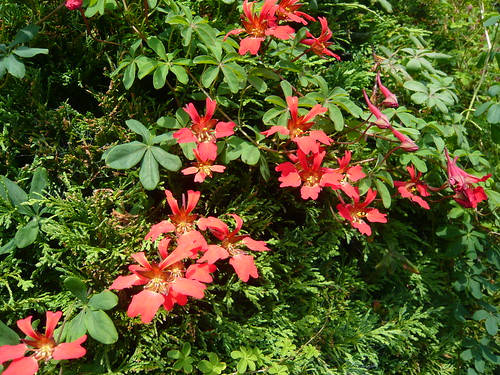
  • Use hedges for Trapoleum speciosum (shown above) with it’s showy, fiery red flowers and prominent spur. Even conifers can act as hosts.
  • Hang potted plants from tree branches

Dry Stone Wall Gardens
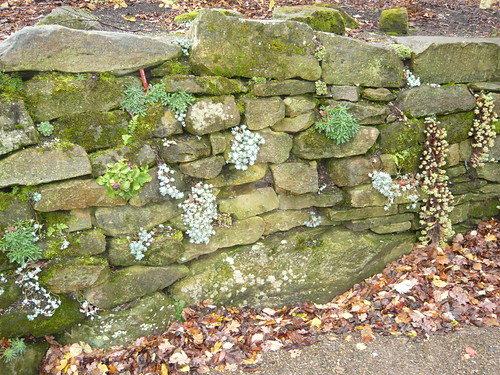
Drystone Wall Garden

Rock plants and alpines are quite at home in the crevices between rocks in a wall.

Roof Gardens
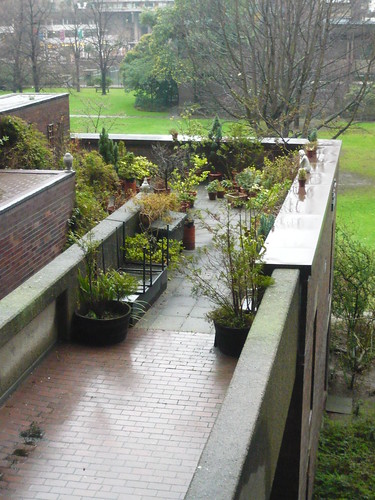
Roof Garden

Roof Gardens do not need to have been constructed with layers of soil on top of a membrane. A range of pots and containers will be lighter, effective and easier to water. Some trailing plants near the edge may be interesting to break the roof or sky line.

Read Flowering Climbers

Crammed Garden with too Many Plants

Crammed Garden with too Many Plants

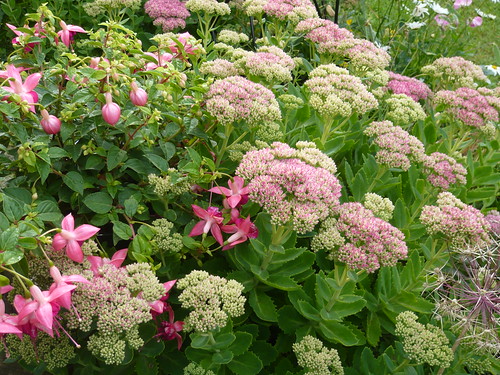
Sedum & Fucshia

My son complains that I cram in too many plants into my garden. I guess he is right but I garden for plants not hard landscapes, not sculpture and certainly not for bare soil.

Problems of Too many Plants

  • There is often no space for that great new plant but I cram it in anyway. I often put a plant in the only place available rather than the location that would best suit it. I regret it later because the colour schemes become totally random.
  • Weaker plants can be smothered and killed by the thugs in the garden.
  • Plants need space to reach their full potential and look their individual best.
  • Plants that are too close together can attract mildew and other diseases.
  • Water needs to get down to the roots and a canopy of leaves can create dry spots.

Morley 020

Garden Areas with Too Many Plants

  • I have started collecting and growing Alpines because I can get a lot more plants in a small space. Even so I find it hard to create gaps when everything is in full flow.
  • The border is intended to become ‘low maintenance’ to give me time to focus on other projects. For this area it is fine for the plants to be close together.
  • Vegetable gardens need allotted space as you do want good crops.
  • Natural gardens are fine with lots of wild flowers or local plants but too much grass can then smother smaller plants.

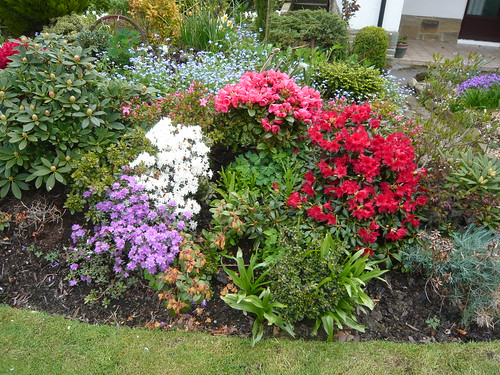
Rhododendron group

The Case for Too Many Plants

  • Life is too short not to aim for abundance. I love the free seeds from RHS and AGS seed distributions. This provides me with lots of plants of varieties I have not already got.
  • A riot of colour, shape and form can be therapeutic as can my informality.
  • You generally have something available to give away.
  • If you neglect a part of the garden for a while it can still seem naturalistic and in keeping with the rest of the garden.
  • You do not need to worry about ground cover, real selected plants can do that job.

Intensive Gardens

  • The term intensive gardening is usually reserved for a raised bed system. Deeper richer soil will support more and better plants or so the theory goes.
  • Interplanting is second nature in a crammed garden, in fact I interplant the interplants.


INTENSIVE SPACING GUIDE


Plant Inches Plant Inches
Asparagus 15 – 18 Chard, Swiss 6 – 9
Aubergines 18 – 24 Courgette 18-24
Beans, runner 6 – 12 Lettuce, head 10 – 12
Beans, bush 4 – 6 Onion 2 – 4
Beetroot 2 – 4 Peas 2 – 4
Broccoli 12 – 18 Peppers 12 – 15
Brussels sprouts 15 – 18 Potatoes 10 – 12
Cabbage 15 – 18 Sweet corn 15 – 18
Carrots 2 – 3 Tomatoes 18 – 24
Cauliflower 15 – 18 Turnip 4 – 6
Cucumber 12 – 18 Leeks 3 – 6

Sources

University of Arizona for the spacing guide

Twin Oaks or Two Oaks

Twin Oaks or Two Oaks

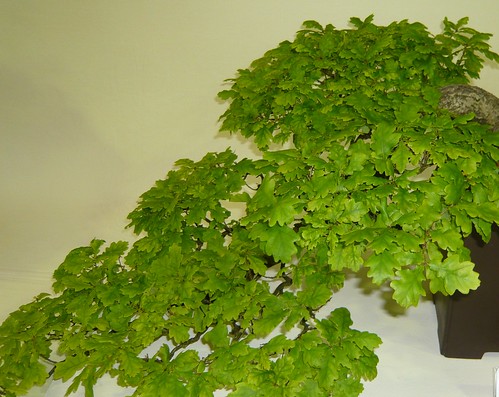
Quercus bonsai

It takes a long time, a lot of skill and patience to grow an Oak bonsai like the one above.
With the right care and attention a bonsai will last for decades and longer.

Given that observation it takes a lot longer to grow a mature Oak in a forest or woodland.

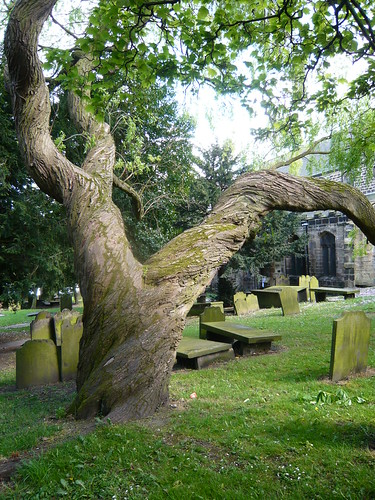
Left to their own devices trees can take on extraordinary shapes.

may12 002

I like the oil painting Two Oaks by Jan van Goyen from 1642 available to view on Wahoo

Fruit Tree Training and Styles

Fruit Tree Training and Styles

Wall trained
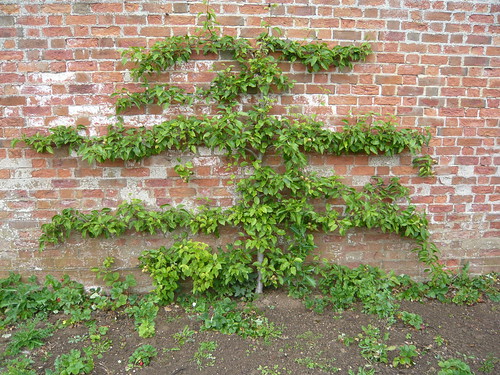
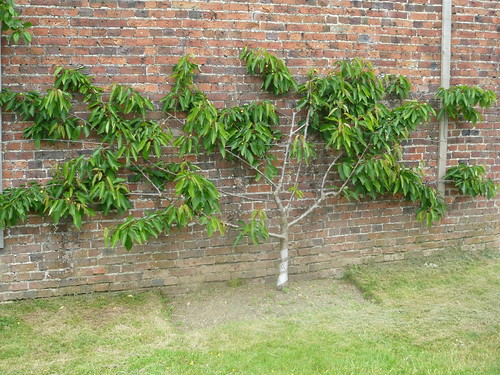
Espalier trained fruit trees can make the best of a south facing wall. In this style of training peaches, nectarines and apricots can be grown.
Large areas can be covered by just one plant.The branches are tied in the horizontal position and pruned to stay in formation.

Space is saved in comparison to a round tree with a central leader by having only a narrow width away from the wall.

Cordon trained

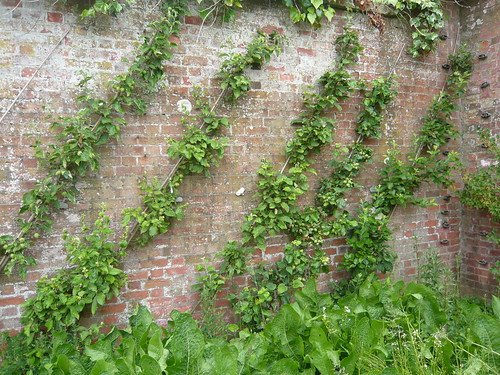
Training against a wall or on strong wires using cordons is often a good method for growing Apples.

Chose your variety and root stock with cordons in mind.

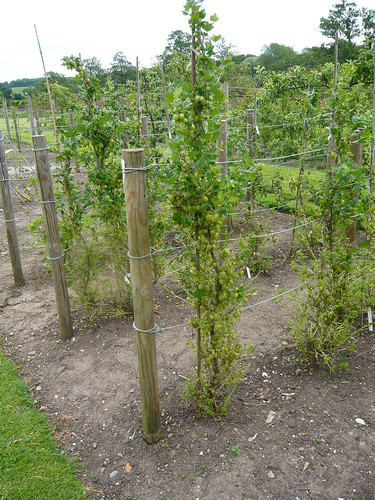
Cordon gooseberry

This Gooseberry is trained as an upright.  This is often called a leg and is used to make picking easier. You can also get more plants into a smaller area. The style and method is the similar to that used for growing a standard.

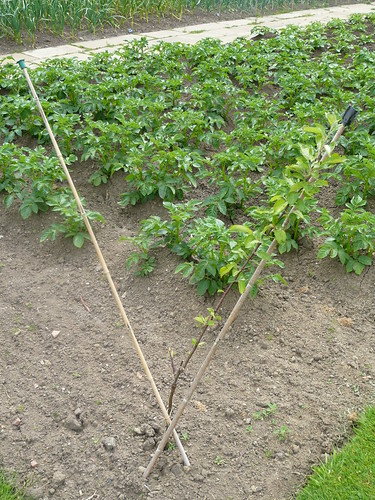
Cordon training

I wonder how this V shaped cordon is growing on 2 seasons later. You can just see the second branch starting to grow on the left.

Fan train

Read More Read More
Colour in a Garden Without Flowers

Colour in a Garden Without Flowers

Grasses


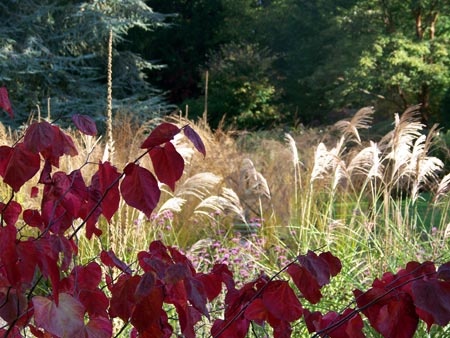
This is an interesting photo because it shows a diverse range of colour in the garden without any flowers. This is an excellent way to design a garden because it provides year round interest. Flowers are then icing on the cake.

The colours in this garden shot also depend on the time of the day, the sun really brings to life some of the leaves and grasses.

The tall grasses also provide interest because of their swaying in the wind and gentle rustling sound.

Heuchera

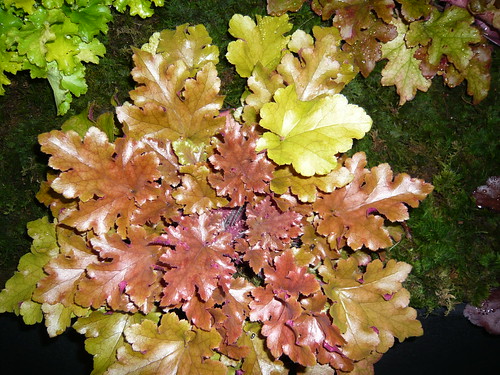
Leaves of this Heuchera are now being bred in a range of colours and the textures that add additional variety.

Lettuce -  Bijou & Freckles

Even in the vegetable garden you can grow some interesting colour schemes. These lettuce are just a couple of the varieties now available. I also like the ornamental cabbage giving colour throughout winter and the rows or savoy and purple cabbage can draw the eye.

Read More Read More
Tips on Making A Compost Heap.

Tips on Making A Compost Heap.

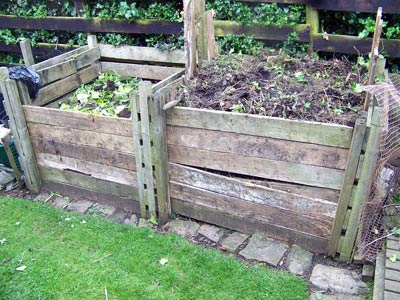
Compost heap

A compost heap is an excellent way of recycling dead plant material and generating the best possible soil fertiliser. A good compost heap also gives a feeling of satisfaction because it helps the gardener to become part of the natural cycle of growth, decay and regeneration. Using a compost heap will also save many unnecessary trips to the local tip. See also: Benefits of Composting

How To Make a Good Compost Heap

The Compost Bin A compost bin should be about 1 square metre. It is important to have a good size, but, it should also be compact because otherwise the generated heat will be dissipated. It is also best to have at least two bins. This enables one heap to rot down, whilst the other is added to. A compost heap should also be aerated and enable water to enter. If you have an enclosed plastic bin, make sure you water where necessary.

Positioning. A compost heap can be really be put anywhere; most people want to choose a spot that is not too prominent. However, if it receives direct sunlight the process of decomposition will be faster.

Base Layer.
At the bottom of a compost heap it is good to use some twiggy material to make sure there is good drainage; if you have a heavy clay soil, you might want to add some grit to provide good drainage. If a compost heap becomes waterlogged, the process of decomposition will slow down and it will become slimy.

Mixing Layers. The next important strategy is to provide a good mix of material when building up a compost heap. For example, grass is a high source of nitrogen and can break down quickly to generate heat. However, grass needs to be mixed with other more woody material, otherwise it will not rot down properly. Similarly on their own stems and twigs will take a long time to rot down unless they have an activator like grass or over very green material. When adding grass clippings spread them out to form a thin, equal layer; then add a layer of more twiggy material. If necessary store a potential layer for adding at the right time.

Breaking Up Twiggy Material. Thick stems will take a long time to break down. If you have a shredder, it will make the job of composting a lot more successful. It will break down the material and enable much faster composting. If you don’t have a shredder, you can just squash the stems or break them in a few places. A rather crude, but effective, tip is to get a spade and hit down on the top of the heap to break a few stems. Even this small step will help quite a lot; what you are doing is to increase the surface area, enabling faster decomposition.

Water. As mentioned before, water is important. It is important to water a compost heap a bit like watering a plant. If there is no water, the compost heap will dry out and will not decompose. If it is waterlogged it will stagnate. Most compost heaps suffer from being dry, so every now and then throw on some water to speed up the process of decomposition.

Cover. When the compost heap is finished with adequate amounts of water, it is good to cover with a plastic coating. This enable the heap to generate more heat, speeding up the process of decomposition; it also prevents excess water.

Aerate. In hot weather when a compost heap is generating a lot of heat it is a good idea to get a garden cane and poke the heap, every now and then. This allows air to enter and expedites the process of aerobic decomposition. A good heap will have steam coming from it when you aerate it.

Read More Read More
Growing Plants for Aromatherapy Oils

Growing Plants for Aromatherapy Oils

French lavender

Just a drop of aromatherapy oil can have a stimulating or calming influence just as the scent in a good garden can. It is no surprise then that many scents come from plants. Unfortunately for most gardeners the plants , trees and shrubs are native to hot and or damp climates and need special conditions to thrive.

Bergamot is one of the most popular oils coming from the Orange citrus family. Bergamot provides the flavouring in Earl Grey tea. Citrus aurantium ssp. bergamia The bergamot orange is unrelated to the herb of the same name, Monarda didyma.

Ancient oils provided medical remedies, Black Pepper for catarrh, Cedarwood for dandruff, Eucalyptus as an antiseptic. A couple of drops of Rosemary on clothing is said to get rid of sluggishness. Both Myrrh and Frankincense grow as small trees or shrubs; they are of the botanical family Burseraceae. Their natural growing range is limited, but this has been extended by cultivation in Arabia.

Oils for perfume include Patchouli extracted from the leaves of a variety of mint and Otto of Roses made from a Bulgarian rose damascena but needing 60,000 roses to produce one ounce of oil. Ylang Ylang oils name means the Flower of Flowers. Ylang-ylang blends well with most floral, fruit and wood smells.

Tea Tree oil has no link to the Tea plants of the Camellia oleifera. It is extracted from Melaleuca bark and used as an antiseptic.

Herbs that we grow can produce oils but large quantities and distillation equipment is probably required for Basil, Lavender, Peppermint, and Rosemary. Whilst it may be practical to grow many plants in the UK most on the list below need sun and a warm temperature. For small quantities a greenhouse or hot house may be the answer.

Plant Based Essential Oils

– Anise Star Essential Oil
– Basil, sweet Essential Oil
– Bay,  Essential Oil    – practical to grow in the UK
– Bergamot FCF Essential Oil
– White Birch Essential Oil
– Black Pepper Essential Oil
– Cardamon Essential Oil
– Carrot Seed Essential Oil
– Cedarwood Atlas Essential Oil
– Chamomile, German/Blue Essential Oil – practical to grow in the UK
– Clary Sage Essential Oil – practical to grow in the UK
– Clove Bud Essential Oil
– Coriander Essential Oil
– Cypress Essential Oil
– Dill Essential Oil – practical to grow in the UK
– Eucalyptus Globulus Essential Oil
– Fennel, sweet Essential Oil – practical to grow in the UK
– Geranium, Egyptian Essential Oil

Read More Read More
Organisations working to save gardens

Organisations working to save gardens

Are you interested in garden history. There is a great deal to be learnt from our horticultural and agricultural past and researchers have a fund of knowledge available via the internet.

You can also research the culture of sculpture and the homeless Knomes

Guardians of the Mint

In addition to the RHS here are some web links to organisations maintaining gardens or retaining documents relating to gardens include:

Garden History Society (www.gardenhistorysociety.org

Kew Gardens http://www.kew.org/library/

English Heritage http://www.english-heritage.org.uk/server/show/nav.2

Museum of Garden History

National Trust (www.nationaltrust.org.uk/main/

UK Database of Historic Parks and Gardens

Scottish Archive Network (SCAN) (www.scan.org.uk/

Association of Garden Trusts (www.gardenstrusts.co.uk  A national organization representing County Gardens Trusts that are actively engaged in conserving, researching, documenting and caring for the heritage of parks, gardens and designed landscapes.

If you think I have missed an important site or wish to contribute please let us know. Good luck with your researches.

National Council for the Conservation of Plants and Gardens or NCCPG is a charity that manages the system of National Plant Collections. Amongst other activities its member receive a biannual magazine Plant Heritage and information on conservation.

http://www.nccpg.com/page.aspx?Page=1

The web site is informative and can help you locate where and when you can visit a particular national collection and lists open days and events. You can also purchase the Plant Collections Directory for £5.

Five June Garden Photographs

Five June Garden Photographs

A big bright month for flowers following a lush spring in Yorkshire. Not all plants behave to the seasonal timetable buy the Poppies are still stunning.

Alpine Aster
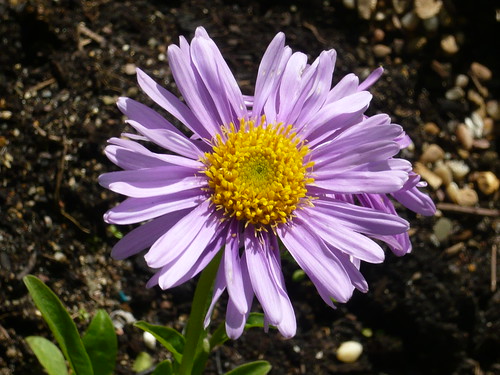
Aster alpinus the Alpine aster – bought from the nursery at Newby Hall in blue, white and purple varieties which are still to flower.

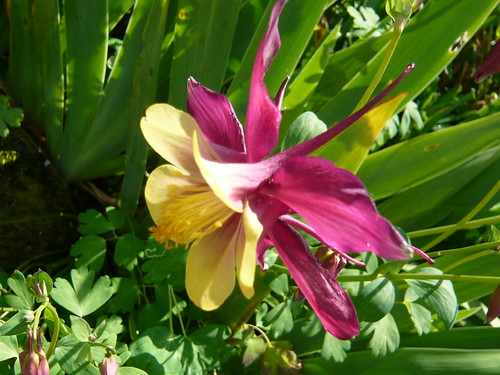
June garden Aquilegia
Selfsown Aquilegia or columbine, set off by broad Bearded Iris leaves.

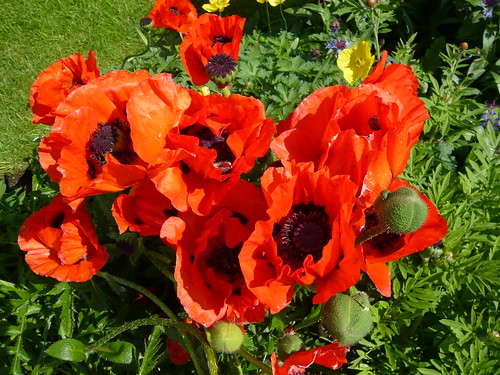
June garden Oriental Poppy
Oriental Poppy that looks blood red late in the day but was glowing in the early sunshine.

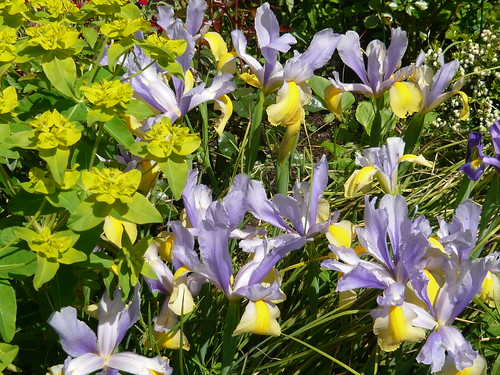
June garden 040 Iris reticulata
Iris reticulata with self sown Euphorbia

June garden Azalea
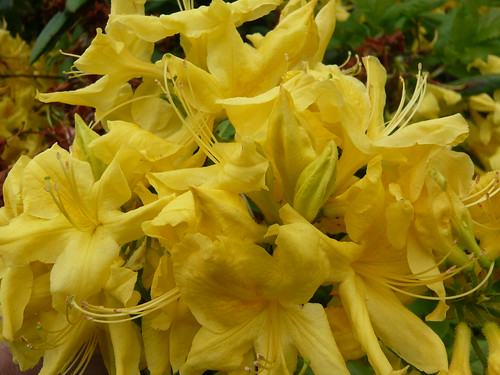
Deciduous Azalea in Late spring yellow. One of the Rhododendrons in the Pentanthera group

More Garden Mosaic Photos

More Garden Mosaic Photos


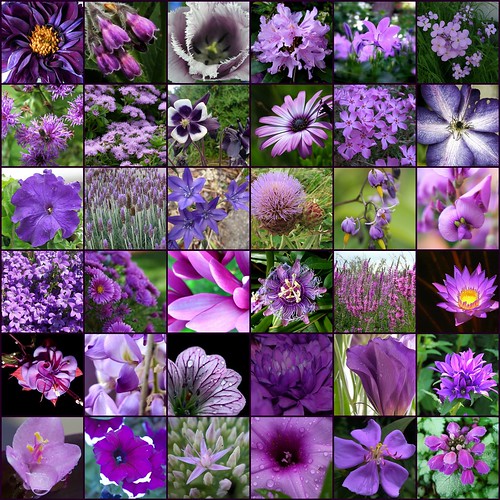
Robyne Jay scores again with more marvelous mosaics  made available under CC BY-NC-SA 2.0 license.

The Iris, part of the Iridaceae family, are my all-time favourites.  A shame they do not last long as cut flowers – all the more surprising all these photos were collected.

Irises

Purple flowers

Read More Read More