Browsed by
Category: Articles

Gardening articles that may not include tips

Growing ‘Just Joey’ Hybrid Tea Roses

Growing ‘Just Joey’ Hybrid Tea Roses

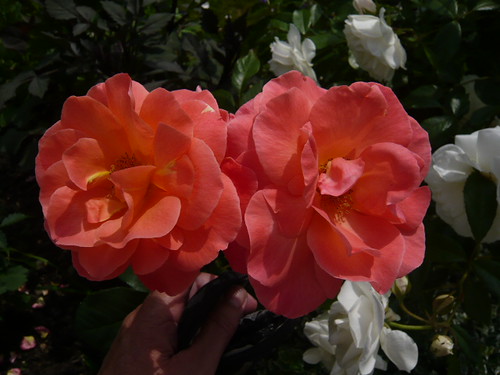
Just Joey

I love the formal Hybrid Tea Roses like ‘Just Joey‘.
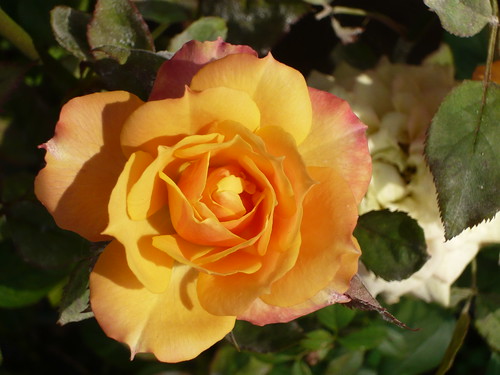
Just Joey is a hybrid, bred from Fragrant Cloud and Dr A J Verhage. These parents gave the rose glossy green leaves and very fragrant, orange blooms.
Blooms arrive in flushes throughout the season each having 30 petals so they have an open appearance.

Growing Tips

  • Remove old canes, dead or diseased wood and canes that cross, in spring.
  • Cut back the remaining stems by about one-third or a half.
  • As with all HT  roses give them a good feed in spring then every 6 weeks and mulch to keep in moisture.
  • When buying a bare rooted or container plant look for at least 3 strong stems.
  • Soak in water before planting.
  • Just Joey may  occasional repeat flower later in the season but is a slow starter in very cold spring weather.

Description of Just Joey

Top 500 Gardening Books at Gardeners Tips HQ

Top 500 Gardening Books at Gardeners Tips HQ

400 gardening Books

My Top 420 Gardening Books

I wish to pay tribute and offer thanks to all those who have contributed to the tips on this web site through their words and wisdom in numerous books and published works. It is the inspirational gardeners, plantsmen and horticulturalists that are celebrated by authors, publishers and photographers, that deserve the praise.

If I have failed to cite or reference a particular comment in the past I apologise. I have tried to give appropriate credits and increase sales of some books by offering a link to an appropriate page on Amazon. This should cover the other 80 or so titles that go to make up the top 500.

Gardening Books a pdf  file highlights over 420 gardening books that I dip into from time to time.

If you have a preferred book that I have missed, or if you have written a gardening book yourself let me know and I will add it to our list.

I am an acknowledged hoarder and collecting gardening books became a passion several years ago. Most of my 12 book cases are overflowing as you can see from the picture.

The internet has made information so ubiquitous and freely available that it is good to remeber the fun and tactile joy you can get from thumbing through a specialist book.

RHS Books and Libraries

  • Additionally I volunteered at RHS library at Harlow Carr and helped move the book collection from ‘the old potting shed’ to the superb new Bramall Learning Center.
  • The new library section at Harlow Carr stocks 8,000 books, DVDs, magazines and offers online facilities.
  • Members can borrow books from the RHS at any of the ‘Lindley Libraries’, Wisley, London, Rosemoor and Hyde Hall. I think this is one of the pleasures of RHS membership.
  • There is a web search facility available to members and non-member
  • Lindley Library in London was recently closed after a small fire but should now be reopen.

Notes on my Books file

  • I have tried to arrange titles in a way that highlights the subject matter.
  • The authors should be listed by surname followed by first names.
  • The year published, number of pages and publisher is self explanatory.
  • I have a personal scoring system to highlight how useful or pleased with the book I feel at the time of recording it on the data base.
  • I have suppressed several other columns that are of less interest.

Send us a comment with your favourite gardening book details.

Thank you to those who use our link to amazon when buying a book. The small commission we recive helps pay for the site maintenance.

With around 2000 web pages we have got as much content as many books.

Create a Stumpery from Tree Roots and Stumps

Create a Stumpery from Tree Roots and Stumps

Stumpery - Biddulph Grange Garden - Biddulph

The objective of a Stumpery is to create a garden feature from ferns, logs and old tree roots. The Victorians started a trend to build Rooteries, Ferneries and Stumperies as romantic woodland places to grow exotic ferns and woodland plants. If you have a dark corner or want to collect ferns then you could start your own Stumpery quite easily and add to it as the fancy takes you.

Construction of a Stumpery

  • Old trees are the basic raw material.
  • Up rooted tree stumps like those after a big storm or pulled out by chains form a great base
  • Gnarled and twisted shapes work well to create form and shape
  • Just cutting trees down to stumps can be enough in a small garden
  • If you live in or near the countryside finding logs and tree stumps should be relatively easy.
  • In a suburban gardens a few pieces of trunk from felled sycamore can form the basis for a mini-stumpery.
  • Drift wood old branches or any wood artfully arranged can also be used
  • Bark chippings can unite the feel for the area

Eco-Friendly Stumps

  • Different wild life to that found in tidy gardens love stumperies.
  • Fungus can thrive on decaying wood and moist conditions.
  • Insects and small mammals have a place to hide, feed and multiply

Plant Up with some Ferns

  • Mosses and lichen can be encouraged by painting uncovered surfaces with yoghurt
  • Ferns should be planted in spaces between stumps and roots. They like dark places without fertiliser but some leaf mold can be added to the soil.
  • Chose a variety of ferns for shape, size and colour.
  1. Matteuccia Ostrich feather fern upto 3 feet
  2. Dyopterarias erythrosora has elegant fronds that emerge bright orange and change to lime-green as they age.
  3. Harts Tongue fern Phylitis has a smoother leaf and sword shape
  4. Athyriums like the Japanese painted fern (niponicum pictum,) and Lady fern are smaller but can  light up very dark places.
  5. Adiantum pedatum is a small maidenhair fern with a fragile appearance but a hardy nature. It has a running rootstock that quickly makes a respectable clump.
  • Snowdrops, celandines,primroses and foxgloves may grow well in semi shaded areas or on the edge of the Stumpery.
  • If planting Bluebells make sure they are the native kind not the hybrid or Spanish variety

More information on Ferns is available on http://www.ferns.com/

Photograph of Stumpery at Biddulph Grange Garden – Biddulph by westher, on Flickr under creative commons license.

What is a Coronary Garden

What is a Coronary Garden

memorial

A Coronary Garden was more popular in late Victorian times but as I discovered it goes back beyond the 17th century.
Coronary gardens were  used to grow flowers that could be used for wreaths and garlands and take their name Coronary from the word crown not the health problem.

The modern day equivalent is probably the florist shop or stall located at Crematoria

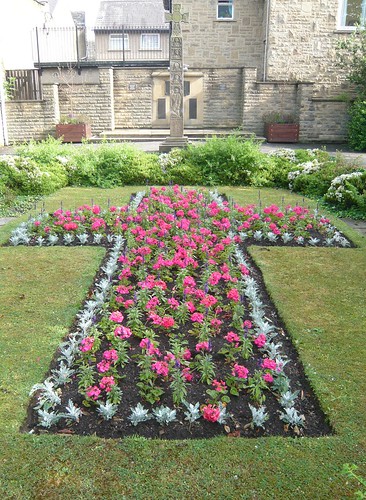
This photograph is not a true Coronary garden but a memorial garden in front of the cenotaph at Otley.

Tips for the Coronary Garden (1686)

  • Do not separate off sets from Tulips until they are quite dry.
  • Cotton Lavender makes a foot high hedge or border if kept well clipped.
  • A layer of stable litter under the soil that is planted with Tulips, Anemonies and Ranunculus will help them thrive. They my survive without lifting.
  • To grow Stock Gillyflowers chose a plant with excellent double flowers. Make it beare one branch of flowers and collect the seed. Sow in February in the hot bed and transplant in Michaelmas (September).

Note about Stock Gillyflower. – I originally took it to mean Carnation or Pinks of the Dianthus family but other plant dictionaries include stocks like Matthiola incana, or say stock gillyflower is the Cheiranthus; the queen’s gillyflower is the Hesperis or even any of several Old World plants cultivated for their brightly colored flowers.

Wordswarmnet Dictionary for Stock Gilly Flower

Plants for the Coronary Garden

  • Lilies in red, white, Crown Imperial or Persian.
  • Tulips, Crocus, Narcissus or Anemonie for spring
  • Snap dragons, Sweet Williams and Gladiolus
  • Iris and Fritillaries.
  • Daisies, Pansies and Violets
  • Various annuals or exotics like Amaranthus and Heliotrop.

The tips and flower selection have been taken from ‘ Directions for The Gardiner at Says- Court in 1686’. They were published in a wider more embracing form in ‘Directions for the Gardiner and Other Horticultural Advice’ by John Evelyn the diarist and OUP available via Amazon

The original manuscript was first transcribed in 1932 by Sir Geoffrey Keynes

Book Cover

Growing Coloured Conifers

Growing Coloured Conifers

Burton Agnes Pocklington

Conifer trees and plants are available in a range of colours, shapes and sizes. Sequoia conifers are the largest living thing on the planet. Mature trees reach for the skies but rockery or horizontalis varieties are ground hugging by comparison.

What is a Conifer

  • A conifer is a tree that produces seed but has no true flowers.
  • Many conifers have seeds borne on scales that clump together to form cones which are woody when ripe.
  • Junipers and Yews are conifers without cones, using small berries for seed capsules.
  • The foliage is usually narrow and sharp-pointed or small and scale-like.
  • Most conifers are evergreen though Larches loose there their needles annually

Conifer Families

  • The Pine family includes several popular species of conifer including, Firs (Abies), Spruce (Picea abies), Larch (Larix), and Cedars (Cedrus).
  • The big trees like the giant redwood sequoia are from the Taxiadacea family.
  • Monkey Puzzle trees have very large cones.
  • Cypress family includes the Chamaecyparis, Juniperus, Thuja and Cupressus families most often found in gardens.

Colourful Conifers
There are a range of different greens, blues, gold’s, greys and even bronzes. Have a look around your local garden centre. Five varieties to look out for are:

Read More Read More

Uses for Aromatic Roses

Uses for Aromatic Roses

068

‘Marriage is like life in this….
That it is a field of battle
And not a bed of Roses’

R.L.Stevenson

Uses for Aromatic Roses

  • A large vase of cut flowers, rose buds and full blooms offer a scent experience not to be sniffed at.
  • When drying rose petals, cut out the white heel, dry in an airing cupboard (finish off in a low oven if needed), then use in pot pourri or scent bags.
  • Rose water is meant to be distilled but can be made as follows. Beat a pound of rose petals in a blender and leave to stand in there own juices for 5 hours then cover with water and add a further pound of petals infusing for 24 hours. Boil, strain and bottle leaving it in a sunny position for a couple of weeks. It may need diluting 50% before use.
  • Rose Oil is not for the ordinary gardener as it takes 50,000 roses to make an ounce of oil. Rosa Damascena and Rosa Centifolia are the traditional roses for making oil by distillation but Tea Roses will make a third fragrance of oil.

Cheat your Senses

  • Cheat and grow the rose scented  Pelargonium graveolens.
  • Cheat and buy ready made perfume.
  • Cheat and use synthetic rose oil (not a patch on essential oils though).
  • Do not cheat and be happy to leave the scent in your garden.
  • Grow Old Fashioned Roses (top ten) you will find great perfume and no cheating.

Ehow says ‘… that rose scent is used in various beauty and health treatments and considered a very powerful aphrodisiac? It’s true! The scent of rose is also thought to be a potent scent that heals emotional wounds, anger, resentment, depression, and nervous anxiety. One way to get the full benefits of the rose scent is to use it in combination with bath salts.

Just Joey is as aromatic as its parent Fragrant Cloud.

Roses Cultivation Month by Month

Roses Cultivation Month by Month

Roses a Month by Month Cultivation Guide

Just Joey

Growing good roses is not difficult and plants are reasonable and long lasting. Plant them in good soil feed and care for them and they will reward you with magnificent blooms, scent, cut flowers and a great summer show. As a guide to growing roses there is a list on monthly tips and actions to help get the best from your plants.

January
Prepare sites for new roses to be planted in spring. Double dig the ground and add organic matter, compost, humus and/or manure. Mix in bone meal.
If the soil is frozen or waterlogged and unsuitable for planting heel-in bare rooted roses and plant when conditions improve. Normally planting can take place when the roses are dormant from November to March.
Plant to the same level or depth that the rose was grown to – do not plant any grafting below the soils surface.
Check for wind damage causing plants to rock and prune back autumn planted roses if not already done so.
Spray with tar-oil wash to kill over-wintering pests.

February
If soil is still unsuitable cover bare rooted roses in frost free conditions
Firm in any rose trees loosened by gales or frost
Plant seeds from rosehips and species roses in pots in a cold greenhouse
Plant any bare rooted trees if the conditions allow, steep in water for 24 hours if the roots are dry and put banana skins and bone meal in the hole. I am happy to plant 18inches apart for most trees with a bit more or less space depending on the vigour of the type and variety.
Later in the month in sheltered gardens pruning of established plants can start. Cutting out weak stems and a third of the oldest, woodiest growth will encourage new shoots.
Thin out over grown ramblers but take care or you will loose the years flowers if they are not the repeat flowering varieties.

Rose

March
Complete the spring pruning. Cut at a 45 degree angle just above a bud.
Spray plants and surrounding soil with a fungicide to kill spores of Rust, Black spot and mildew.
Apply rose fertiliser with balanced NPK 5:5:10 and trace elements by raking in the granules
Mulch with bark or well rotted compost. Avoid grass clippings.
Prune in frost free weather. Prune climbers by halving the length of side shoots and removing weak or damaged growth. Cut out frost damaged growth to undamaged buds.

April
Complete the feeding and mulching of established roses. Good mulching will help ward off mildew in the summer.
Water recently planted roses winters can be quite dry.
Weed by hand to avoid damage to roots and encouragement of suckers.
Tie new shoots of climbers and ramblers. Keep growths as horizontal as practical to encourage flowers.
Container grown plants can be planted out in a hole twice the size of the container back filled with good soil enriched with humus and bone meal.
Container plants should be soaked a day before planting, if the root ball is planted dry it is unlikely to become wet and the plant will be stunted and sickly.

Rose

May
Spray roses with a systemic insecticide for saw flies and aphids. Pirmicarb insecticide if you can find it shouldn’t kill beneficial insects.
Spray with a systemic fungicide at the same time
Water young plants if the weather is dry
Under plant formal rose beds with annuals, herbs or violas
Plant container roses like the smaller patio varieties
Try layering to get a new plant. Take a young stem and peg it to the ground about 6 inches from its end. Nick the pegged point so roots can form and put a stone over the peg to conserve moisture.

June
Admire your first flush of flowers of the season – take time out to smell the flowers.
Water during prolonged dry spells but don’t let the soil ‘pan’ – hoe or fork the surface
Keep weeds at bay and don’t damage the rose roots.
For extra large blooms disbud hybrid tea roses by taking out all but one bud per stem to get a show stopping rose.
Deadhead any early flowering roses
Remove suckers by tearing away from the root source not cutting as this encourages twice as many. Suckers have seven leaves whilst most roses have five leaves.
Visit other gardens in bloom and make a note of favourite varieties.

Rose Plaisanterie バラ プレザントゥリ

July
Tie in vigorous shoots on climbers and ramblers- cut up tights are as good as other ties and cheaper.
Feed with a rose fertilizer NPK 5:5:10 – the extra potash is good for flowers
Ensure container grown plants do not dry out after planting
Bud new roses to grafting stock by removing a one inch bud and inserting it into a T cut at top of the root on the stock. Tie it in with raffia. In the spring cut back the grafting stock to the grafted bud.
Deadhead modern roses and climbers cutting back to a leaf joint
Deadhead old fashioned roses except those you want to display hips.
Deadheading hybrid Tea and Floribunda roses encourages a second flush of flowers in late summer.

August
Continue with the good husbandry of watering and spraying for pests and disease. Remove and burn any infected leaves and clear weeds as they start to grow.
Look out for mildew that can be worse in dry conditions so water and mulch.
Give plants a foliar feed as roses can absorb nutrients through the leaves. This may help in alkaline soils where plants find it hard to take up feed.
Continue to deadhead and remove any suckers.
Order new plants for autumn delivery.

Rose Naema バラ ナエマ

September
Apply sulphate of potash to harden new wood. Do not add other feed which encourages sappy growth that won’t survive winter.
Prune and tie up standard and half standard roses so they are not blown around in winter storms
Take 12 inch cuttings of ripe, woody shoots and plant them in a shady spot
Visit an autumn rose show at Harrogate or Malvern

October
Tidy up the rose beds, clear weeds and burn diseased leaves.
As flowers finish cut long stems back by about half to stop wind rocking the plants and damaging the rooting system during winter
Continue to take hardwood cuttings
Prepare any new bed with plenty of manure, mushroom compost or humus rich soil improvers

Rose Hip

November
When planting new rose trees trim any broken or damaged roots and prune out any weak growth.
When planting new trees, add a sprinkling of bone meal in the planting hole. Pack the soil firmly around the rose tree.
Plant climbers 15 inches away from a wall or fence and fan out the main stems

December
Transplant mature trees cutting back roots to about 12 inches. Cut growth back hard.
Sow seeds in a cold frame.
In really cold climates pile straw fir branches or soil around the plants to protect through winter.
Have a last check for ties, damage, diseased leaves and pruning needs.
Add roses or membership of the Royal National Rose Society to your Christmas wish list. http://www.rnrs.org/

Rose Inka バラ インカ


Credits
Rose by clouserw CC BY-NC-SA 2.0
Rose Plaisanterie, Rose Naema and Rose Inka バラ インカ by T.Kiya CC BY-SA 2.0
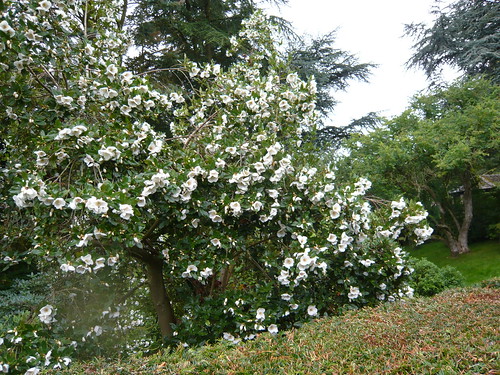
Specimen Eucryphia in Yorkshire Dales

Specimen Eucryphia in Yorkshire Dales

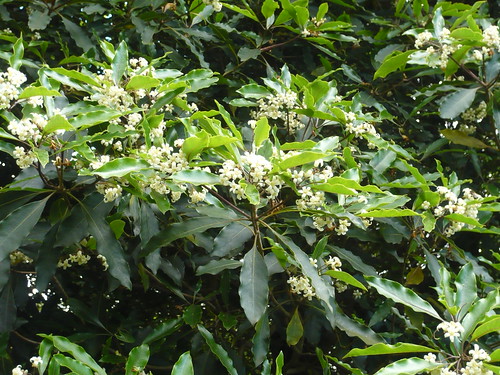
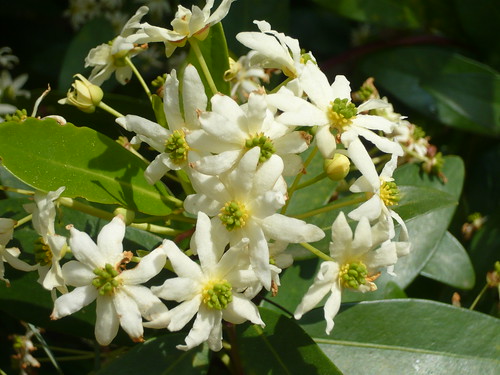
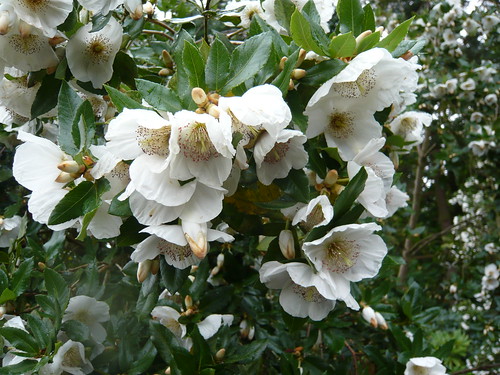
Eucryphia can be amongst the highlights of  summer flowering trees and shrubs. Performing in late summer the profusion of scented white flowers on a conical tree can be exceptional. The flowers also have a further profusion of interesting stamens, distinctly coloured pink or yellow.

Specimen Eucryphia Varieties

  • Eucryphia Nymansay has cup-shaped, fragrant white flowers 3inches across, with very prominent bosses of yellow stamens, and elliptic leaves that are strongly toothed
  • Eucryphia glutinosa, is particularly recommended as it makes a fine 25 foot tree with lots of handsome flowers and leaves that colour up in the autumn.
  • Eucryphia milliganii is a smaller evergreen tree with a narrow growing habit. Even young specimens have freely produced flowers.
  • Eucryphia intermedia is frost hardy and extremely free flowering.

Growing a Specimen Eucryphia.

  • Eucryphias are upright and columnar in shape and make natural specimen plants if given the right conditions.
  • Plant it in early spring in moist acidic soil in a sheltered position where the roots are shaded from the sun yet the branches are in good light.
  • Underplant to cover the roots if necessary to avoid warming sun.
  • A good parent should produce good offspring so select from the species above. There are some Eucrphia that can grow to 120 feet tall in there natural habitat.

Eucryphia growing above a hedge at Parcivall Hall North Yorkshire. The grounds contain several acid loving plants and the under planting included several Hydrangeas. Whislt the gardens are nearly 1000 feet above sea level the shelter of the dales hills and damp conditions suit the Eucryphia down to the ground (Oops)

Yorkshire Gardens Top 10 Visits

Yorkshire Gardens Top 10 Visits

Wentworth Castle 122

Cornwall and the west coast of Scotland have some fine temperate gardens well worth a visit but Yorkshire has the grandeur of the stately home garden.

Starting with an old site a must visit is Yorkshire’s first World Heritage Site, Fountains Abbey and Studley Royal a huge estate of beauty, contrasts and surprises including the largest abbey ruins in the country and one of England’s most spectacular Georgian water gardens.

Castle Howard’s 1,000 acres of Gardens are stunning whatever the time of year, and visitors can find peace and tranquility whichever path they choose. Delightful walks reveal in turn hidden glades and breathtaking views with Azaleas, Rhododendrons and Magnolias to dream about.

RHS Harlow Carr the northern mecca for Royal Horticultural Society members there is much to learn and see with the upgraded facilities now on display. I am looking forward to the opening of a new library in 2010.

Parcevall Hall Gardens, up in the true dales on a steep hillside near Appletreewick, are planted with many specimen trees and shrubs collected from Western China and the Himalayas. Far from main roads this is a retreat in more senses than one.

Helmsley Walled Garden and Duncombe Park can be visited as one but the Parkland was closed when I last visited. The walled garden dating back to 1758, and set against the spectacular backdrop of Helmsley Castle was more than enough to hold my interest.

Thorpe Perrow Arboretum is open all year and has 85 bacres of woodland walks and a display of Falcons and other birds of prey. Look out for spring bulbs and blossom or wait for the autumn foliage.

Ripley Castle has been in the Ingleby family for 700 years but is now open to the public. The walled kitchen garden contains an extensive herb bed and an extraordinary collection of rare vegetables. The pleasure grounds contain a collection of specimen trees from around the world and thousands of spring flowering bulbs, daffodils, narcissi, snowdrops, aconites and bluebells.

York Gate is a one-acre garden tucked away behind the ancient church in Adel that is opened for Perennial the Gardeners Royal Benevolent Society a charity that has been helping horticulturalists since 1839

Newby Hall has sweeping long herbaceous borders and is my current favourite garden to visit. The national collection of Dogwoods is spectacular when in flower.

Burnby Hall Gardens at Pocklington has a national collection of waterlilies and the Stewart Museum. look out for heathers and the old Victorian gardens.

Wentworth Castle’s 50 acres of Grade 1 listed gardens are, historically, some of the most important gardens in the country. There is a fine Fernery and some great Holly behind the castle pictured above.

Gardeners
I didn’t have space for Harewood house (above) in my top ten (which became eleven, so I wonder what else I may have missed, please tell me.